
Research article · 2025 · Full text
International Journal of Agriculture and NutritionInfluence of crop geometry and nutrient levels on growth and yield of baby corn
Volume 7(12) · Pages 97–100 · DOI: 10.33545/26646064.2025.v7.i12b.517 ↗
Research areasCrop Yield and Soil FertilityAgricultural Science and FertilizationPlant Growth and Agriculture Techniques
Abstract
Author-writtenBaby corn is one of those crops where the spacing between plants matters almost as much as what you feed them. This research investigated the combined effect of five crop geometries and four nutrient levels on growth and yield of baby corn (cv. HM-4) during the spring season of 2023 at Kumarganj, Uttar Pradesh. The experiment was laid out in a factorial randomised block design with three replications. Among geometries, 50 × 20 cm produced the highest baby corn yield (10.28 t ha⁻¹ at 150% recommended dose of fertiliser), balancing individual-plant performance with population density. The narrowest spacing (45 × 20 cm) generated the tallest plants but thinner cobs due to intensified competition. Nutrient level at 150% RDF consistently outperformed lower rates, raising yield by 18.7% over 100% RDF. The interaction between geometry and nutrients was significant for cob yield and cob weight. These results point to 50 × 20 cm spacing combined with 150% RDF as the most productive configuration for spring baby corn on alluvial soils in eastern Uttar Pradesh.
Summary
Source-checkedPlain-language reading of the full paper, prepared with AI and checked against the text. Each point links to the authors' own words.
Why it matters
- Unlike grain maize, the goal for baby corn production is to maximize the number of small, uniform cobs per hectare rather than individual ear size. View evidence ↗
- The cultivation area for baby corn in India has grown significantly since the early 2010s due to increasing urban demand for processed foods and salads. View evidence ↗
- Current agronomic guidelines often incorrectly apply grain-maize standards (60 × 20 cm spacing and 120 kg N ha⁻¹) to baby corn, which has different production requirements. View evidence ↗
The question
- The study aimed to determine the optimal combination of crop geometry and nutrient levels for baby corn in the alluvial soils of eastern Uttar Pradesh. View evidence ↗
What they did
- The experiment used baby corn variety HM-4 during the spring of 2023 in Kumarganj, Uttar Pradesh, testing five different crop geometries and four nutrient levels. View evidence ↗
- The research employed a factorial randomised block design with three replications for its treatment combinations. View evidence ↗
- The tested geometries included 45×20, 50×20, 60×20, 45×25, and 50×25 cm, while nutrient levels ranged from 100% to 150% of the Recommended Dose of Fertiliser (RDF), including one organic-supplemented treatment (75% RDF + 10 t FYM ha⁻¹). View evidence ↗
- Statistical analysis was performed using factorial ANOVA in R (v4.3.1), with means compared using the Least Significant Difference (LSD) at a 0.05 significance level. View evidence ↗
What they found
- The 50 × 20 cm crop geometry achieved the maximum yield of 10.28 t ha⁻¹ when combined with 150% of the recommended fertiliser dose. View evidence ↗
- Applying 150% of the RDF consistently increased yields compared to lower rates, specifically providing an 18.7% increase over the 100% RDF level. View evidence ↗
- The tightest spacing (45 × 20 cm) resulted in the tallest plants but produced thinner cobs because of increased competition between plants. View evidence ↗
- The treatment combining 75% RDF with Farm Yard Manure (FYM) performed similarly to 100% RDF, indicating that organic manure did not fully compensate for the mineral nutrient deficit in one season. View evidence ↗
- Narrower spacing increased plant height as a shade-avoidance response but negatively impacted cob diameter and delayed silk emergence by 2-3 days, which shortened the harvest window. View evidence ↗
What it means
- The authors recommend that farmers in eastern Uttar Pradesh use a 50 × 20 cm spacing and apply 150% of the standard RDF (225:90:60 kg N:P₂O₅:K₂O ha⁻¹). View evidence ↗
- The authors conclude that the cost of additional fertiliser is justified as it is recovered multiple times through increased yields at current market prices. View evidence ↗
Visual summary
2 visualsIllustrations explain the paper; charts are replotted from the paper's own table values.
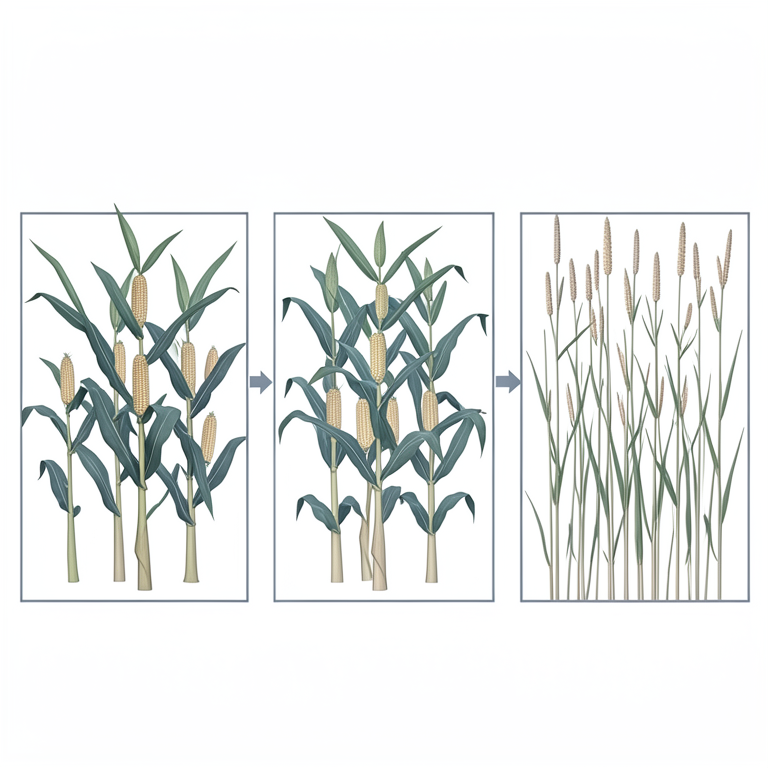
Spacing Trade-off
AI-generated conceptual illustration (baby corn plants). It explains the idea and does not show study data.
View source evidence ↗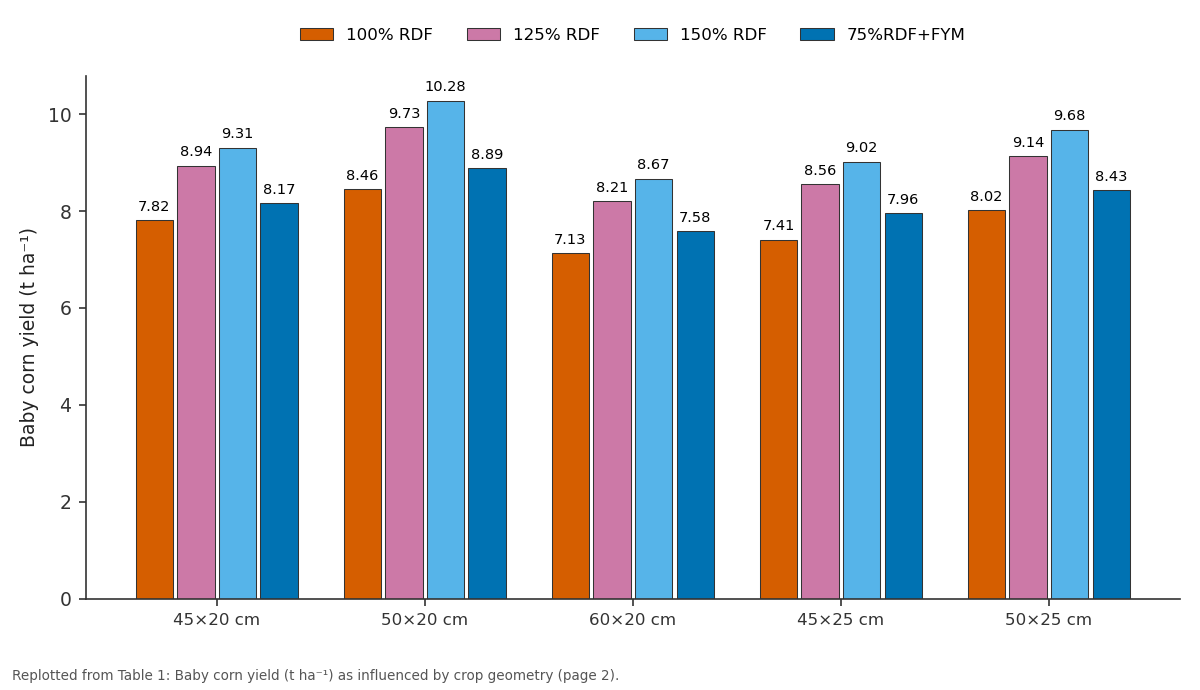
100% RDF and 125% RDF and more: 45×20 cm vs 50×20 cm vs 60×20 cm vs 45×25 cm vs 50×25 cm
Replotted from Table 1 (page 2) of the original paper. Every bar is the paper's own table value.
View source evidence ↗Figures & tables
From the original paper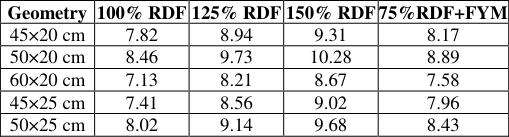 Table 1
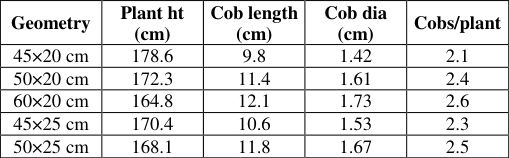 Table 2
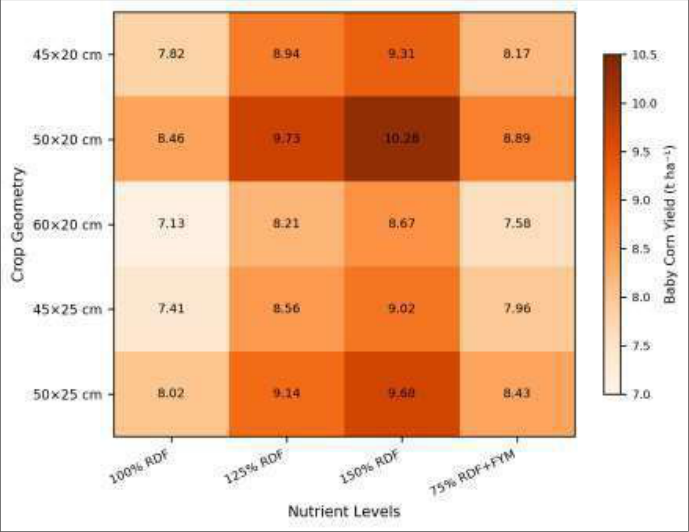 Figure 1
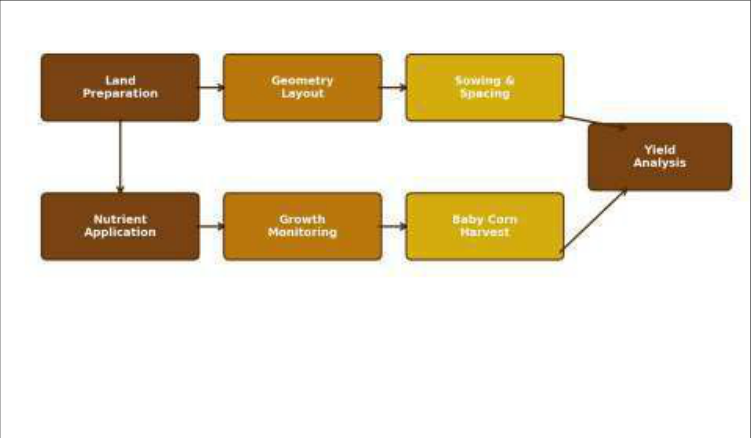 Figure 2
Introduction
Baby corn presents a straightforward problem: you want a lot of small cobs per hectare, not a few big ears. That inverts the usual maize-agronomy logic, where wider spacing and generous nutrients push individual-plant yield. With baby corn, the harvest is the unfertilised young ear, picked just before or at silk emergence, and the market rewards uniformity and tenderness over size [1] . So the grower's task is to pack as many healthy plants into the field as the light, water, and nutrient budgets will supportwithout crowding them into spindly, delayed-silk stands. India's baby corn area has expanded sharply since the early 2010s, driven by urban demand for salads, stir-fries, and processed snack foods [2] . Uttar Pradesh, already the country's second-largest maize producer, is well placed to ride that demand because spring-season temperatures and long days suit rapid vegetative growth [3] . But most agronomic recommendations still default to the grain-maize standard of 60 × 20 cm and 120 kg N ha⁻¹ a geometry and nutrient rate designed for a different end product [4] .
Narrower rows and higher populations can lift baby corn yields by 15-30% [5] , but past a threshold the gain reverses as shading delays silking and weakens stalk integrity. Meanwhile, raising the fertiliser dose can offset some of the competition penalty, though the economic return diminishes beyond a point [6] . Finding the sweet spot between geometry and nutrition for local soil and climate conditions is what this research set out to do at Kumarganj, in the alluvial plains of eastern Uttar Pradesh.
Field Experimental Design
The trial was conducted at the Crop Research Farm of Narendra Deva University of Agriculture and Technology, Kumarganj, Faizabad (26°47′N, 82°12′E; 113 m elevation) during spring 2023. A factorial randomised block design was used with five crop geometries (45 × 20 cm, 50 × 20 cm, 60 × 20 cm, 45 × 25 cm, 50 × 25 cm) and four nutrient levels (100% RDF, 125% RDF, 150% RDF, 75% RDF + 10 t FYM ha⁻¹), giving 20 treatment combinations replicated three times. The RDF for baby corn was fixed at 150:60:40 kg N:P₂O₅:K₂O ha⁻¹ [7] . Each plot measured 5 m × 3.6 m.
Sowing was done on 12 February 2023 using composite variety HM-4.
Crop Growth Stage Documentation
Emergence was recorded 6-8 days after sowing. The V6 stage was reached 26-29 DAS; knee height was attained by 35-38 DAS. Tasseling began 48-52 DAS, and silk emergencethe harvest trigger for baby cornfollowed 1-3 days later. First picking was done when silks were 1-2 cm long, with subsequent pickings at 2-day intervals. Most plots yielded two to three harvests per plant between 50 and 58 DAS.
Material and Methods
Material and Methods
Material
The soil was a sandy loam (Inceptisol) with pH 7.6, organic carbon 0.39%, available N 194 kg ha⁻¹, available P 16.8 kg ha⁻¹, and available K 213 kg ha⁻¹. Nitrogen was applied as urea (50% basal + 50% at V6), phosphorus as DAP at sowing, and potassium as MOP at sowing. FYM (0.48% N) was incorporated two weeks before sowing in the 75% RDF + FYM treatment. Irrigation was given at 7-10-day intervals through border strips, totalling six irrigations over the crop cycle.
Methods
Five randomly selected plants per plot were tagged for biometric observations: plant height, stem girth, leaf area index (at tasseling), and number of cobs per plant. Baby corn yield was recorded as total weight of dehusked cobs (with husk removed immediately after harvest) from the net plot area (4 m × 2.4 m), expressed in t ha⁻¹. Cob length and cob diameter were measured on ten randomly chosen cobs per plot. Green fodder yield was also recorded. Data were analysed using factorial ANOVA in R (v4.3.1), with treatment means compared by LSD at p = 0.05 [8] .
Results
Results
Comprehensive Interpretation
The 50 × 20 cm geometry struck the best compromise between population density and per-plant performance. It accommodated about 100,000 plants ha⁻¹, 11% more than 60 × 20 cm but 10% fewer than 45 × 20 cm. Individual cobs at 50 × 20 cm were longer and thicker than those at the narrowest spacing, and the extra population over 60 × 20 cm more than compensated for the smaller per-plant yield.
Raising nutrients from 100% to 150% RDF lifted yield across all geometries, with the largest absolute gain (1.82 t ha⁻¹) seen at 50 × 20 cm. The 75% RDF + FYM treatment performed similarly to 100% RDF, suggesting that the organic component could not fully replace the 25% mineral shortfall within a single season.
Discussion
The yield advantage of 50 × 20 cm aligns with Thakur et al. [5] , who reported peak baby corn yields at 100,000-111,000 plants ha⁻¹ in Bihar, India. Tighter spacings raised plant heighta classic shade-avoidance responsebut reduced cob diameter and delayed silk emergence by 2-3 days, cutting the harvest window [9] . Wider geometries (60 × 20 cm) gave bigger individual cobs, but fewer of them per hectare. The positive response to 150% RDF is expected for baby corn, which is harvested young and therefore doesn't face the lodging risk that constrains high N rates in grain maize. Pandey et al. [4] observed similar responses up to 180 kg N ha⁻¹ in western UP. The 75% RDF + FYM treatment likely underperformed because FYM releases nitrogen slowly in cool early-spring soils; by the time mineralisation caught up, the crop was already past its main uptake window [10] . For eastern UP farmers, the practical recommendation is clear: sow baby corn at 50 × 20 cm with 225:90:60 kg N:P₂O₅:K₂O ha⁻¹ (150% of the standard RDF). The additional fertiliser cost is modest and is recovered several times over at current baby corn market prices.
Conclusion
Crop geometry of 50 × 20 cm paired with 150% of the recommended dose of fertiliser produced the highest baby corn yield (10.28 t ha⁻¹) in the spring season on alluvial soils at Kumarganj. This combination balanced high plant population with adequate per-plant resource supply, generating cobs of marketable size and weight. Wider spacing reduced population and total yield, while narrower spacing shrank individual cobs. Raising nutrients above 100% RDF consistently improved yield up to 150% RDF, but substituting 25% of the mineral dose with FYM did not match the all-mineral treatment in the first year. These results support the adoption of closer planting at elevated nutrition for spring baby corn in eastern Uttar Pradesh.
Figures and tables from the paper
| Geometry | 100% RDF | 125% RDF | 150% RDF | 75%RDF+FYM |
|---|---|---|---|---|
| 45×20 cm | 7.82 | 8.94 | 9.31 | 8.17 |
| 50×20 cm | 8.46 | 9.73 | 10.28 | 8.89 |
| 60×20 cm | 7.13 | 8.21 | 8.67 | 7.58 |
| 45×25 cm | 7.41 | 8.56 | 9.02 | 7.96 |
| 50×25 cm | 8.02 | 9.14 | 9.68 | 8.43 |
Table text extracted from the original PDF; superscript letters are shown inline. The original table image is below.
View original table image
| Geometry | Plant ht (cm) | Cob length (cm) | Cob dia (cm) | Cobs/plant |
|---|---|---|---|---|
| 45×20 cm | 178.6 | 9.8 | 1.42 | 2.1 |
| 50×20 cm | 172.3 | 11.4 | 1.61 | 2.4 |
| 60×20 cm | 164.8 | 12.1 | 1.73 | 2.6 |
| 45×25 cm | 170.4 | 10.6 | 1.53 | 2.3 |
| 50×25 cm | 168.1 | 11.8 | 1.67 | 2.5 |
Table text extracted from the original PDF; superscript letters are shown inline. The original table image is below.
View original table image
References
17 in the original paper- Galinat WC. Baby corn production: a new way of corn production. Crops Soils Mag. 1985;37(9):16-18.
- Dass S, Kumar A, Jat SL, Parihar CM, Singh AK, Chikkappa GK, et al. Maize holds potential for diversification and livelihood security. Indian J Agron. 2012;57(3 Suppl):32-37.
- Directorate of Economics and Statistics. Agricultural statistics at a glance 2022. New Delhi: Ministry of Agriculture, Government of India; 2023. p. 1-312.
- Pandey AK, Mani VP, Prakash V, Singh RD, Gupta HS. Effect of varieties and plant densities on yield attributes and economics of baby corn. Indian J Agron. 2002;47(2):221-226.
- Thakur DR, Prakash O, Kharwara PC, Bhalla SK. Effect of nitrogen and plant spacing on growth, development and yield of baby corn. Indian J Agron. 1997;42(3):479-483.
- Kumar R, Bohra JS. Effect of NPKS and Zn application on growth, yield and quality of baby corn. Arch Agron Soil Sci. 2014;60(9):1193-1206.
- Singh MK, Singh RN, Singh SP, Shahi B, Ahmad T. Baby corn as a diversified crop. Environ Ecol. 2010;28(1B):540-543.
- Gomez KA, Gomez AA. Statistical procedures for agricultural research. 2nd ed. New York: John Wiley & Sons; 1984. p. 1-680.
- Ramachandrappa BK, Nanjappa HV, Shivakumar HK. Yield and quality of baby corn as influenced by spacing and fertilization levels. Acta Agron Hung. 2004;52(3):237-247.
- Mubarak AR, Rosenani AB, Anuar AR, Zauyah S. Decomposition and nutrient release of maize stover and groundnut haulm under tropical field conditions. Commun Soil Sci Plant Anal. 2002;33(3-4):609-622.
- Sobhana V, Kumar A, Idnani LK, Singh I, Shivadhar. Plant population and nutrient requirement for baby corn hybrids. Indian J Agric Sci. 2012;82(8):679-683.
- Kar PP, Barik KC, Mahapatra PK, Garnayak LM, Rath BS, Bastia DK, et al. Effect of planting geometry and nitrogen on yield and economics of baby corn. Indian J Agron. 2006;51(2):89-91.
- Siam HS, Abd El-Kader MG, El-Alia HI. Yield and yield components of maize as affected by different sources and application rates of nitrogen fertilizer. Res J Agric Biol Sci. 2008;4(5):399-412.
- Asaduzzaman M, Biswas M, Islam MN, Rahman MM, Begum R, Sarkar MAR. Variety and N-fertilizer rate influence the growth, yield and yield parameters of baby corn. J Agric Sci. 2014;6(3):118-131.
- Lone AA, Allai BA, Nehvi FA. Growth, yield and economics of baby corn as influenced by integrated nutrient management practices. Afr J Agric Res. 2013;8(37):4581-4586.
- Thavaprakaash N, Velayudham K, Muthukumar VB. Effect of crop geometry, intercropping systems and integrated nutrient management practices on the productivity of baby corn. Res J Agric Biol Sci. 2005;1(4):295-302.
- Arvadiya LK, Raj VC, Patel TU, Arvadiya MK. Influence of plant population and weed management on weed flora and productivity of sweet corn. Indian J Agron. 2012;57(2):162-167.