
Research article · 2025 · Full text
International Journal of Agriculture and NutritionBiocontrol efficacy of bacillus subtilis formulations against damping-off in vegetable nurseries
Volume 7(5) · Pages 107–109 · DOI: 10.33545/26646064.2025.v7.i5b.570 ↗
Research areasPlant-Microbe Interactions and ImmunityPlant Disease Management TechniquesFungal Plant Pathogen Control
Abstract
Author-writtenCan biological agents replace chemical fungicides for managing damping-off in vegetable nurseries? This research evaluated two Bacillus subtilis strains (BS-12 and BS-27) formulated in talc and vermiculite carriers against Pythium aphanidermatum and Rhizoctonia solani in tomato, pepper, and cucumber nurseries at the Universidad Agraria de Castilla, Valladolid, Spain, across two seasons (2022–2023). A randomized block design with seven treatments and three replications was used. Treatments included individual and combined seed treatment (10 g kg⁻¹) and soil drenching (5 g L⁻¹), a metalaxyl check, and an untreated control. The combined BS-12 and BS-27 vermiculite formulation reduced damping-off by 69.9% and raised seedling vigor indices by 38.6% over the control. Vermiculite carriers retained higher viable counts (6.5 log CFU g⁻¹) than talc (5.3 log CFU g⁻¹) after eight weeks of storage. These findings indicate that dual-strain B. subtilis formulations offer a practical alternative to chemical seed treatments for nursery disease management.
Summary
Source-checkedPlain-language reading of the full paper, prepared with AI and checked against the text. Each point links to the authors' own words.
Why it matters
- Damping-off, primarily caused by Rhizoctonia solani and Pythium spp., is a highly destructive disease in Mediterranean vegetable nurseries that can cause over 60% mortality in young seedlings. View evidence ↗
- While metalaxyl has been the standard chemical treatment, concerns over residue accumulation, pathogen resistance, and EU pesticide restrictions are driving the search for biological alternatives. View evidence ↗
- Bacillus subtilis is a promising biocontrol agent because it can form endospores, trigger systemic resistance in plants, and produce lipopeptide antibiotics that disrupt fungal membranes. View evidence ↗
The question
- The study aimed to evaluate the effectiveness of two locally isolated B. subtilis strains (BS-12 and BS-27) against damping-off in tomato, pepper, and cucumber, testing different carrier materials (talc and vermiculite) and application combinations. View evidence ↗
What they did
- The researchers used two B. subtilis strains, BS-12 and BS-27, which were isolated from healthy tomato rhizosphere soil in Valladolid in 2021. View evidence ↗
- The experiment tested the formulations on three vegetable cultivars: Marmande tomato, Lamuyo pepper, and Marketmore 76 cucumber, with metalaxyl 35% WP used as a chemical control. View evidence ↗
- A randomized block design was used with seven treatments, including an untreated control, single-strain formulations in talc and vermiculite, a dual-strain vermiculite formulation, and a metalaxyl treatment. View evidence ↗
- The biological agents were applied as seed treatments at 10 g per kg of seed or as soil drenches using a 5 g per L suspension. View evidence ↗
- The study measured disease incidence at 15 and 30 days after sowing (DAS), calculated a seedling vigor index based on growth and germination, and monitored bacterial shelf life over 8 weeks. View evidence ↗
What they found
- All tested B. subtilis formulations significantly reduced the incidence of damping-off compared to the untreated control. View evidence ↗
- The dual-strain vermiculite formulation (T6) was the most effective, reducing the mean incidence of damping-off to 12.7%, which represents a 69.9% reduction over the control. View evidence ↗
- The metalaxyl chemical treatment (61.6% reduction) performed similarly to single-strain vermiculite treatments but was less effective than the dual-strain combination. View evidence ↗
- The dual-strain vermiculite treatment produced the highest seedling vigor across all crops, showing an average increase of 38.6% over the control and 6.8% over the metalaxyl treatment. View evidence ↗
- Vermiculite was a superior carrier for shelf life; after 8 weeks, BS-12 and BS-27 retained higher viable counts in vermiculite (6.5 and 5.9 log CFU g⁻¹) compared to talc (5.3 and 4.6 log CFU g⁻¹). View evidence ↗
What it means
- The authors conclude that dual-strain B. subtilis formulations in vermiculite are a reliable and environmentally sound alternative to chemical fungicides for managing nursery diseases. View evidence ↗
- The study was conducted under semi-controlled conditions, and the authors note that open-field nurseries may introduce challenges like competition from native microflora and UV degradation. View evidence ↗
- The authors state that further validation across different agroclimatic zones is needed to strengthen their recommendations. View evidence ↗
Visual summary
3 visualsIllustrations explain the paper; charts are replotted from the paper's own table values.
Comparison of Biocontrol Efficacy and Stability
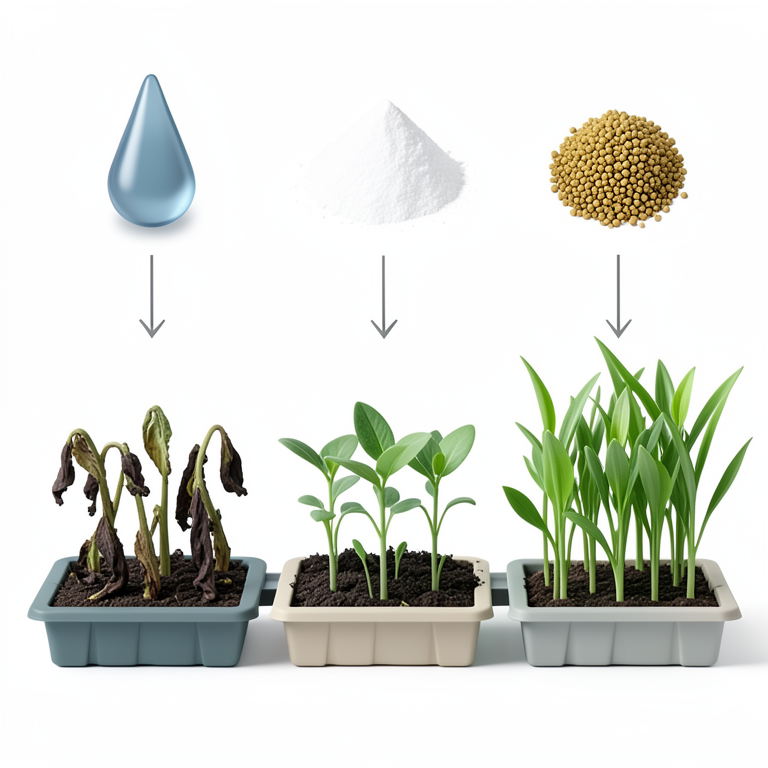
AI-generated conceptual illustration (vegetable seedlings in nursery trays). It explains the idea and does not show study data.
View source evidence ↗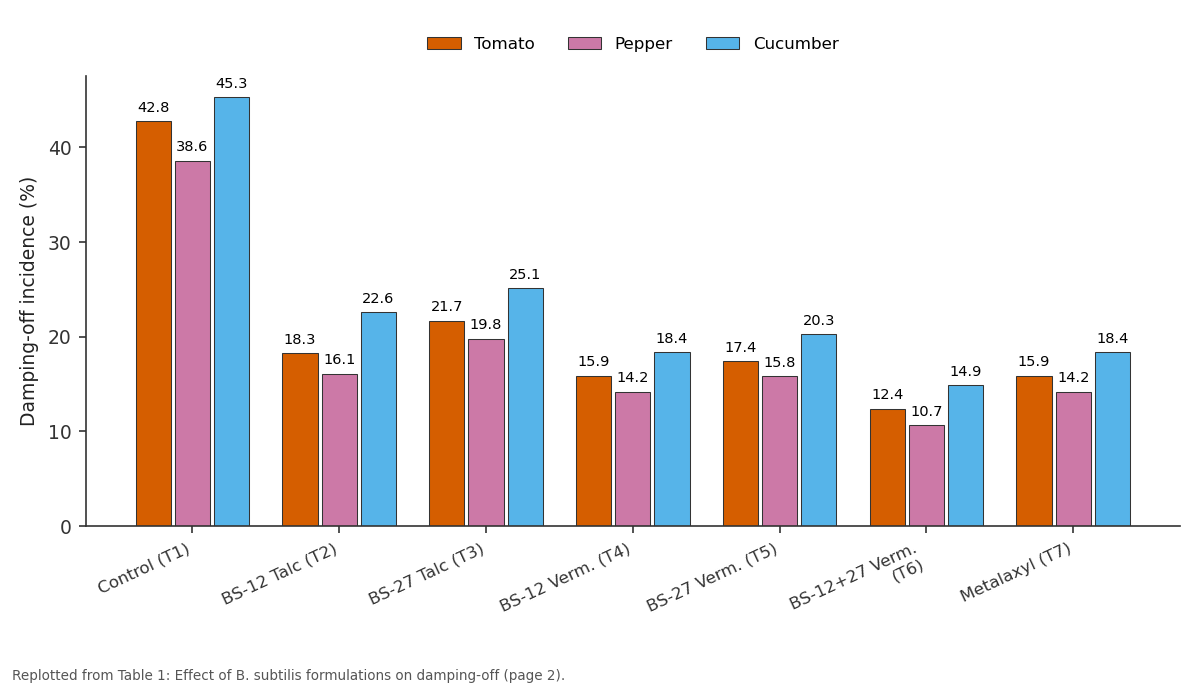
Tomato and Pepper and more: Control (T1) vs BS-12 Talc (T2) vs BS-27 Talc (T3) vs BS-12 Verm. (T4) vs BS-27 Verm. (T5)
Replotted from Table 1 (page 2) of the original paper. Every bar is the paper's own table value.
View source evidence ↗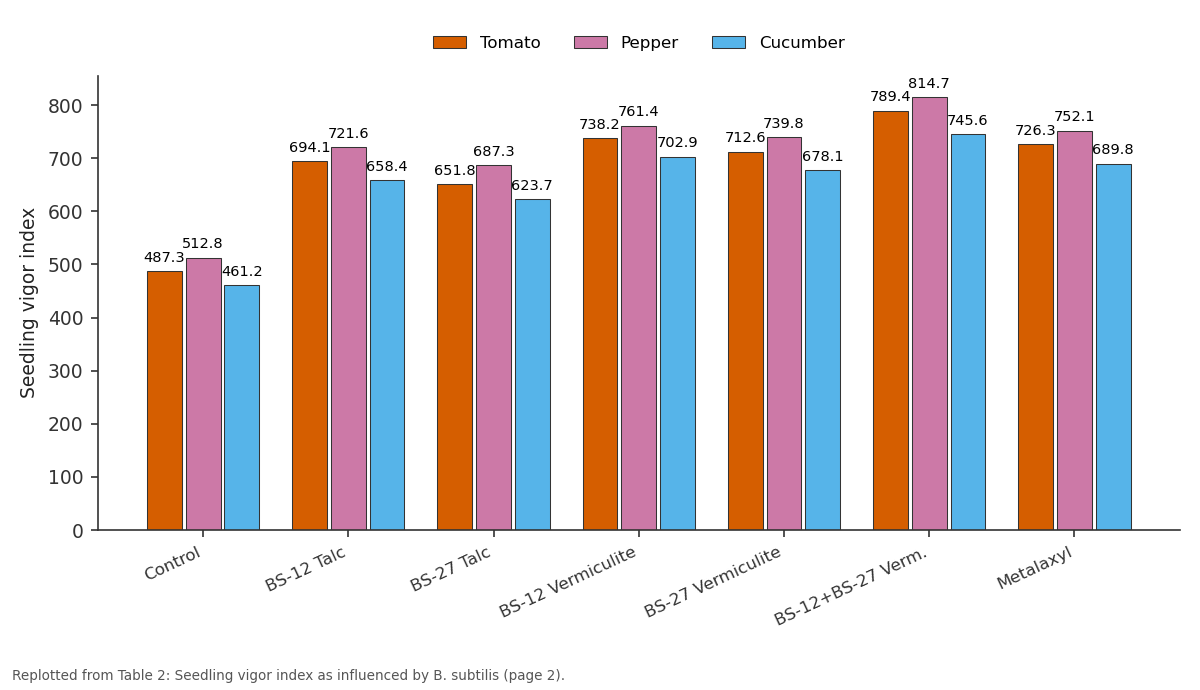
Tomato and Pepper and more: Control vs BS-12 Talc vs BS-27 Talc vs BS-12 Vermiculite vs BS-27 Vermiculite
Replotted from Table 2 (page 2) of the original paper. Every bar is the paper's own table value.
View source evidence ↗Figures & tables
From the original paper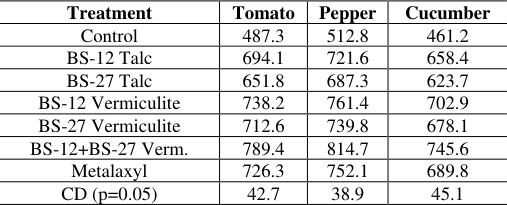 Table 2
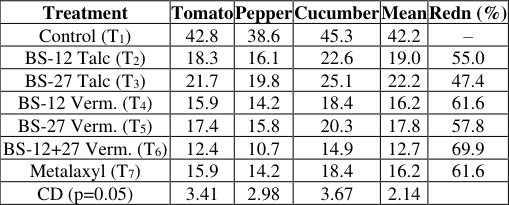 Table 1
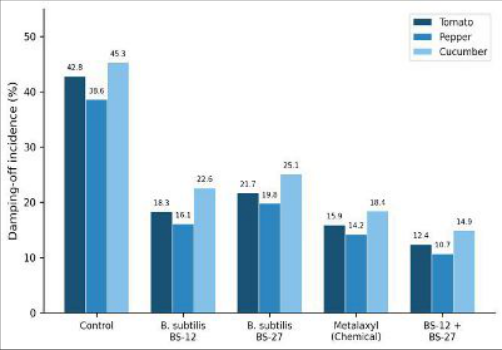 Figure 1
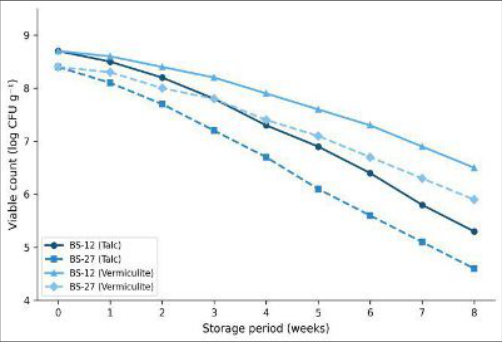 Figure 2
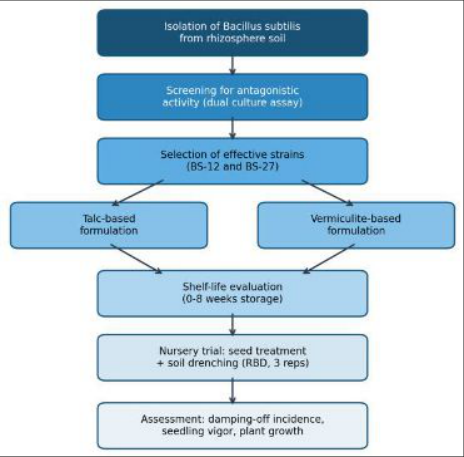 Figure 3
Introduction
What happens when nursery growers lose 30-40% of their seedlings before transplanting? Damping-off, caused mainly by Pythium spp. and Rhizoctonia solani, remains one of the most destructive diseases in vegetable nurseries across Mediterranean regions [1] . The disease attacks seeds and young seedlings, causing pre-and post-emergence mortality exceeding 60% under favorable conditions [2] . In Spain, nursery-raised transplants form the backbone of commercial tomato, pepper, and cucumber production, and disease outbreaks directly increase production costs [3] . Chemical seed treatments with metalaxyl have been the standard approach for decades. But repeated use raises concerns about pathogen resistance and residue accumulation on young tissues [4] . The EU's progressive restriction of pesticides under Directive 2009/128/EC has pushed growers toward biological alternatives [5] . Among biocontrol agents, Bacillus subtilis stands out for its broad antagonistic spectrum and endospore-forming ability [6,7] . Several B. subtilis strains produce lipopeptide antibiotics-iturin, fengycin, and surfactin-that disrupt fungal membranes [8] , and also trigger induced systemic resistance in host plants [9] . However, field performance depends heavily on formulation quality and carrier material [10] . Talc is widely used due to low cost, yet vermiculite shows promise because of higher moisture retention and better protection of bacterial cells [11] . Limited data exist comparing different carrier formulations applied as both seed treatment and soil drenching in nursery settings [12,13] . This research evaluated the biocontrol potential of two locally isolated B. subtilis strains formulated in talc and vermiculite, applied individually and in combination, against damping-off in three vegetable crops under nursery conditions. relative humidity from 65% to 82%. Nursery soil was sandy loam (pH 6.8, organic carbon 0.93%). Pathogen inoculum was maintained at the plant pathology laboratory of the Escuela Superior de Agricultura de Galicia, Santiago de Compostela.
Materials and Methods
Materials and Methods
Materials
Two B. subtilis strains, BS-12 and BS-27, isolated from healthy tomato rhizosphere soil in Valladolid (2021), were identified through 16S rRNA sequencing and maintained on nutrient agar at 4 °C. Test pathogens Pythium aphanidermatum (Pa-Val03) and Rhizoctonia solani (Rs-Val07) were from diseased nursery seedlings. Carriers included pharmaceutical-grade talc (≤45 µm, pH 7.2) and expanded vermiculite (grade 3, 2-4 mm). Seeds of tomato (cv. Marmande), pepper (cv. Lamuyo), and cucumber (cv. Marketmore 76) were obtained from a certified supplier in Valencia. Metalaxyl 35% WP served as chemical check.
Methods
Each strain was grown in nutrient broth at 30 °C (150 rpm, 72 h), mixed with sterilized carrier at 1:2 (v/w) ratio with 1% CMC, shade-dried to ~8% moisture, and packed in sealed polythene bags (~10⁸ CFU g⁻¹). Seed treatment was done at 10 g kg⁻¹ seed using 2% gum arabic adhesive. Soil drenching used 50 mL of 5 g L⁻¹ suspension per tray cell at sowing. Seven treatments in RBD with three reps (each rep = one 128-cell tray per crop per treatment): T 1 (control), T 2 (BS-12 talc), T 3 (BS-27 talc), T 4 (BS-12 vermiculite), T 5 (BS-27 vermiculite), T 6 (BS-12+BS-27 vermiculite), T 7 (metalaxyl 2 g kg⁻¹). Disease incidence was recorded at 15 and 30 DAS. Vigor index = (shoot + root length) × germination% [14] . Shelf life was monitored weekly over 8 weeks by dilution plating. Data were analyzed using ANOVA (SPSS v.26) with Tukey's HSD at p ≤ 0.05.
Experimental Layout
The greenhouse was divided into three east-west blocks, each containing seven randomly assigned treatment plots. Trays sat on metal benches 0.9 m above ground. Buffer rows of untreated trays separated adjacent treatments. Overhead micro-sprinklers delivered 4 L m⁻² twice daily. Temperature and humidity were logged every 30 min using a HOBO data logger at canopy height. The trial was repeated across two consecutive seasons to account for seasonal variation. All B. subtilis treatments significantly (p < 0.05) reduced damping-off compared with the control (Table 1). The dual-strain vermiculite treatment (T 6 ) gave the lowest mean incidence of 12.7%, a 69.9% reduction. Vermiculite formulations consistently outperformed talc. The chemical check matched single-strain vermiculite but was inferior to the dual combination. The dual-strain vermiculite treatment recorded the highest vigor across all crops: 789.4 (tomato), 814.7 (pepper), 745.6 (cucumber)-a 38.6% average increase over the control and 6.8% over metalaxyl (Table 2). Viable counts declined steadily in all formulations, but the rate was slower in vermiculite (Figure 2). At 8 weeks, BS-12 in vermiculite retained 6.5 log CFU g⁻¹ vs. 5.3 in talc;
| Treatment | Tomato | Pepper | Cucumber | Mean | Redn (%) |
|---|---|---|---|---|---|
| Control (T1) | 42.8 | 38.6 | 45.3 | 42.2 | – |
| BS-12 Talc (T2) | 18.3 | 16.1 | 22.6 | 19.0 | 55.0 |
| BS-27 Talc (T3) | 21.7 | 19.8 | 25.1 | 22.2 | 47.4 |
| BS-12 Verm. (T4) | 15.9 | 14.2 | 18.4 | 16.2 | 61.6 |
| BS-27 Verm. (T5) | 17.4 | 15.8 | 20.3 | 17.8 | 57.8 |
| BS-12+27 Verm. (T6) | 12.4 | 10.7 | 14.9 | 12.7 | 69.9 |
| Metalaxyl (T7) | 15.9 | 14.2 | 18.4 | 16.2 | 61.6 |
| CD (p=0.05) | 3.41 | 2.98 | 3.67 | 2.14 |
Table text extracted from the original PDF; superscript letters are shown inline. The original table image is below.
View original table image
| Treatment | Tomato | Pepper | Cucumber |
|---|---|---|---|
| Control | 487.3 | 512.8 | 461.2 |
| BS-12 Talc | 694.1 | 721.6 | 658.4 |
| BS-27 Talc | 651.8 | 687.3 | 623.7 |
| BS-12 Vermiculite | 738.2 | 761.4 | 702.9 |
| BS-27 Vermiculite | 712.6 | 739.8 | 678.1 |
| BS-12+BS-27 Verm. | 789.4 | 814.7 | 745.6 |
| Metalaxyl | 726.3 | 752.1 | 689.8 |
| CD (p=0.05) | 42.7 | 38.9 | 45.1 |
Table text extracted from the original PDF; superscript letters are shown inline. The original table image is below.
View original table image
Results
BS-27 retained 5.9 vs. 4.6. Differences were significant (p < 0.01) from week 4 onward.
Comprehensive Interpretation
A consistent pattern emerged: combined application of two strains outperformed single-strain use, and vermiculite was superior to talc across all variables. The best biocontrol treatment (T 6 ) matched or exceeded the chemical check. Higher bacterial populations in vermiculite at application may explain its stronger initial colonization.
Discussion
These findings align with earlier reports on B. subtilis antagonism against Pythium and Rhizoctonia [6,8] . The dualstrain approach appears to offer a broader spectrum of biocontrol mechanisms-BS-12 showed strong antibiosis while BS-27 excelled in rhizosphere competence. Such complementary action has been documented in other pathosystems [15] . Vermiculite's superiority as a carrier links to its porous, layered structure that retains moisture and physically protects endospores during storage [11] . Similar observations were made with Trichoderma formulations where vermiculite supported higher propagule viability than organic carriers [10] . The slightly higher material cost is offset by longer shelf life and better disease suppression. An interesting observation was that biocontrol treatments improved vigor beyond what disease suppression alone could explain. B. subtilis produces IAA and solubilizes phosphates, stimulating root growth [9] . This dual actionpathogen suppression plus growth promotion-makes it particularly attractive for nurseries where rapid seedling establishment matters.
Figures and tables from the paper
References
16 in the original paper- Lamichhane JR, Venturi V. Synergistic effects of biocontrol agents in managing plant diseases. European Journal of Plant Pathology. 2015;142(3):415-429.
- Al-Hazmi AS, TariqJaveed M. Evaluation of dampingoff pathogens in vegetable nurseries of central Saudi Arabia. Saudi Journal of Biological Sciences. 2016;23(5):612-620.
- García-Mozo H, Serrano-Notivoli R. Climate influence on vegetable nursery production in Mediterranean Spain. Agricultural Systems. 2019;176:102668.
- Brent KJ, Hollomon DW. Fungicide resistance: the assessment of risk. FRAC Monograph. 2007;2:1-48.
- Hillocks RJ. Farming with fewer pesticides: EU pesticide review and resulting challenges for UK agriculture. Crop Protection. 2012;31(1):85-93.
- Fira D, Dimkic I, Beric T, Lozo J, Stankovic S. Biological control of plant pathogens by Bacillus species. Journal of Biotechnology. 2018;285:44-55.
- Shafi J, Tian H, Ji M. Bacillus species as versatile weapons for plant pathogens: a review. Biotechnology and Biotechnological Equipment. 2017;31(3):446-459.
- Ongena M, Jacques P. Bacillus lipopeptides: versatile weapons for plant disease biocontrol. Trends in Microbiology. 2008;16(3):115-125.
- Kloepper JW, Ryu CM, Zhang S. Induced systemic resistance and promotion of plant growth by Bacillus spp. Phytopathology. 2004;94(11):1259-1266.
- Nakkeeran S, Fernando WGD, Siddiqui ZA. Plant growth promoting rhizobacteria formulations and their scope in commercialization for disease management. PGPR: Biocontrol and Biofertilization. 2005;257-296.
- Vidhyasekaran P, Muthamilan M. Development of formulations of Pseudomonas fluorescens for biocontrol of chickpea wilt. Plant Disease. 1995;79(8):782-786.
- Szczech M, Shoda M. Biocontrol of Rhizoctonia damping-off of tomato by Bacillus subtilis combined with Burkholderia cepacia. Journal of Phytopathology. 2004;152(10):549-556.
- Choudhary DK, Johri BN. Interactions of Bacillus spp. and plants with special reference to induced systemic resistance. Microbiological Research. 2009;164(5):493513.
- Abdul-Baki AA, Anderson JD. Vigor determination in soybean seed by multiple criteria. Crop Science. 1973;13(6):630-633.
- Xu XM, Jeffries P, Pautasso M, Jeger MJ. Combined use of biocontrol agents to manage plant diseases in theory and practice. Phytopathology. 2011;101(9):10241031.
- Compant S, Duffy B, Nowak J, Clément C, Barka EA. Use of plant growth-promoting bacteria for biocontrol of plant diseases. Applied and Environmental Microbiology. 2005;71(9):4951-4959.