
Research article · 2025 · Full text
International Journal of Agriculture and NutritionEvaluation of rainwater harvesting structures for supplemental irrigation in semi-arid tropics
Volume 7(7) · Pages 189–192 · DOI: 10.33545/26646064.2025.v7.i7c.527 ↗
Research areasIrrigation Practices and Water ManagementUrban Stormwater Management SolutionsAgriculture, Water, and Health
Abstract
Author-writtenRainwater harvesting has been practiced in dryland farming for centuries, yet the comparative efficiency of modern harvesting structures under semi-arid tropical conditions remains poorly quantified. This research evaluated three rainwater harvesting structures—farm ponds, check dams, and percolation tanks—for their capacity to supply supplemental irrigation to rainfed crops in the semi-arid zone of Hubei Province, China. Field monitoring ran from June 2022 to March 2024 across nine sites. Farm ponds stored the most water (peak 114.2 m³) and delivered the highest supplemental irrigation efficiency at 73.8%. Check dams ranked second (89.4 m³ peak, 64.2% efficiency), while percolation tanks stored least (67.3 m³ peak) but contributed most to groundwater recharge. Crops receiving supplemental irrigation yielded 34.6-47.3% more than purely rainfed controls. The benefit-cost ratio was highest for farm ponds (2.74) followed by check dams (2.18). These findings suggest that farm ponds are the most effective single investment for supplemental irrigation in semi-arid tropical farming systems.
Summary
Source-checkedPlain-language reading of the full paper, prepared with AI and checked against the text. Each point links to the authors' own words.
Why it matters
- Semi-arid tropical regions face significant crop moisture stress because their 500-900 mm of annual rainfall is unevenly distributed, typically falling within only 60-90 days. View evidence ↗
- Supplemental irrigation, which provides small amounts of water during dry periods instead of meeting total demand, can increase crop yields by 20-70%. View evidence ↗
- Farm ponds, check dams, and percolation tanks are the primary rainwater harvesting structures promoted in South Asia and China. View evidence ↗
The question
- The study aimed to evaluate the capacity of farm ponds, check dams, and percolation tanks to provide supplemental irrigation for rainfed crops in Hubei Province, China. View evidence ↗
What they did
- The research was conducted across nine sites in western Hubei Province, China, from June 2022 to March 2024. View evidence ↗
- The study utilized three sites each for farm ponds (200-350 m³), earthen check dams (1.5-2.8 m high), and percolation tanks (100-180 m³). View evidence ↗
- Supplemental irrigation was delivered via 2.5 HP diesel pumps to 0.1-ha plots of soybean (cv. Zhonghuang 13) and maize (cv. Zhongyu 368). View evidence ↗
- Irrigation was triggered when soil moisture at 30 cm depth dropped below 50% of field capacity during reproductive stages, with a maximum application of 40 mm per event. View evidence ↗
What they found
- Using supplemental irrigation from farm ponds increased maize yields by 47.3% and soybean yields by 34.6%. View evidence ↗
What it means
- The authors recommend prioritizing farm ponds for direct crop irrigation and percolation tanks for areas relying on well-based irrigation. View evidence ↗
- The study was limited by a two-year monitoring period, which may not capture full rainfall variability, and it did not account for sedimentation rates. View evidence ↗
Visual summary
3 visualsIllustrations explain the paper; charts are replotted from the paper's own table values.
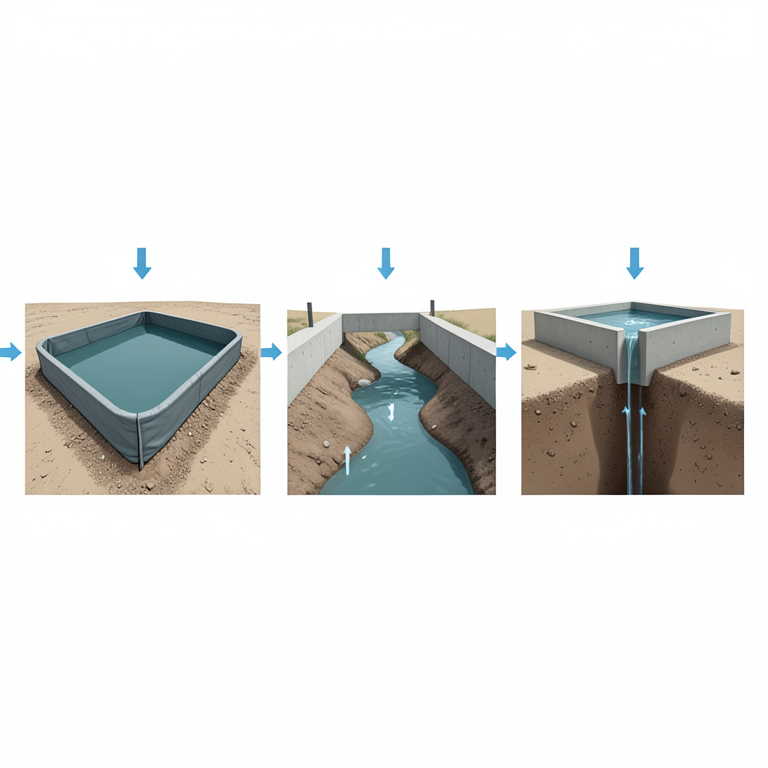
Comparison of Harvesting Structures
AI-generated conceptual illustration (rainwater harvesting structures in a semi-arid landscape). It explains the idea and does not show study data.
View source evidence ↗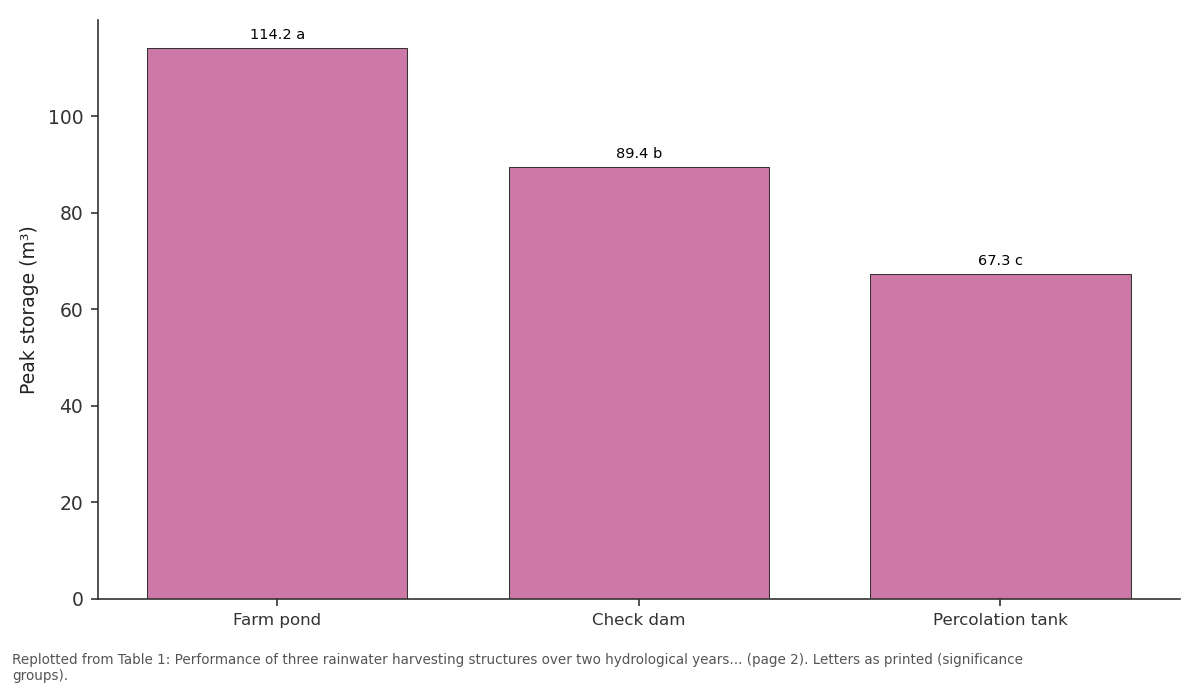
Peak storage (m³): Farm pond vs Check dam vs Percolation tank
Replotted from Table 1 (page 2) of the original paper. Every bar is the paper's own table value.
View source evidence ↗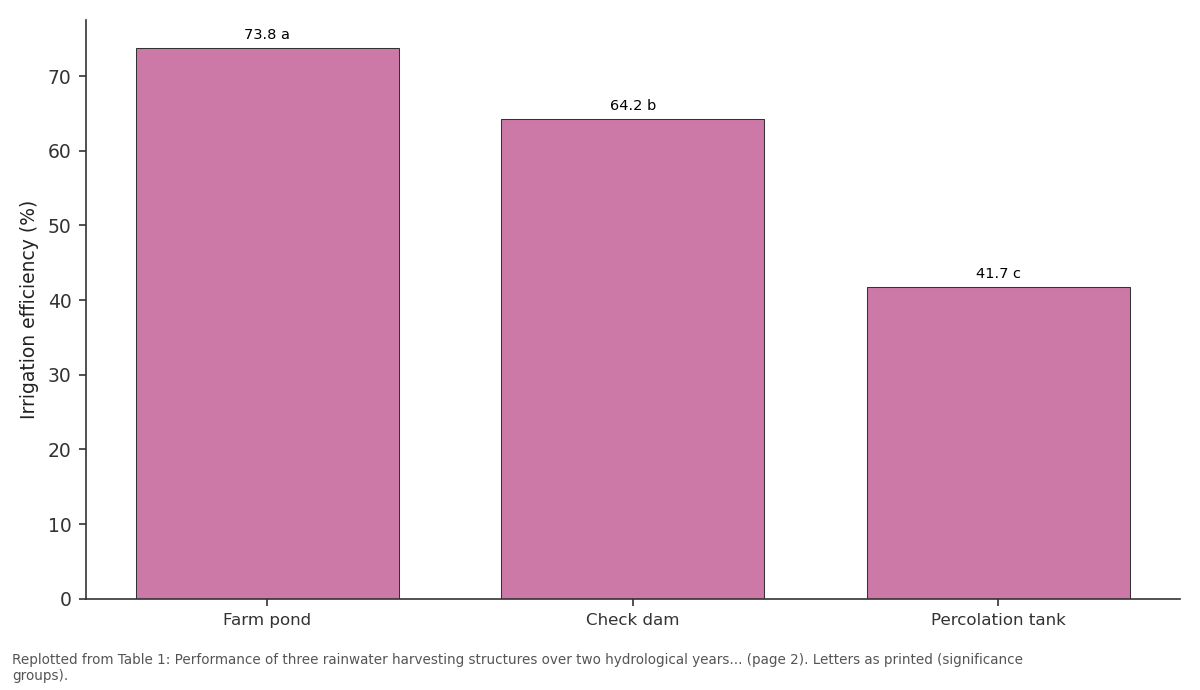
Irrigation efficiency (%): Farm pond vs Check dam vs Percolation tank
Replotted from Table 1 (page 2) of the original paper. Every bar is the paper's own table value.
View source evidence ↗Figures & tables
From the original paper Table 1
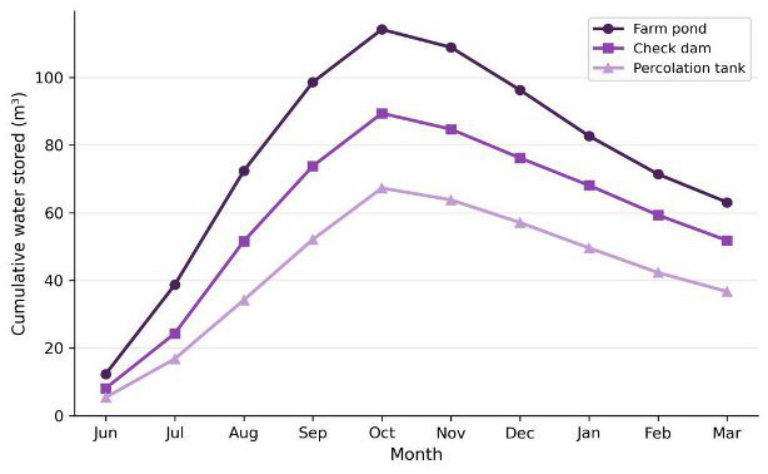 Figure 1
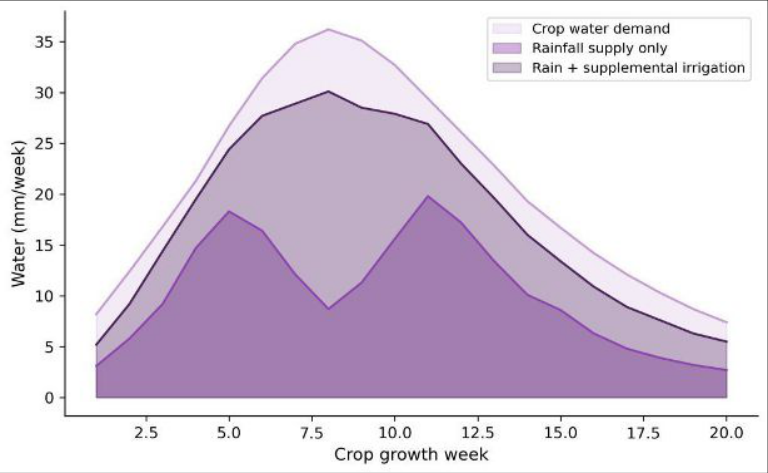 Figure 2
Introduction
For more than 4,000 years, farmers in arid and semi-arid regions have captured runoff to bridge gaps between rainfall and crop water demand [1] . Ancient cisterns in the Negev Desert and johads in Rajasthan are among the oldest documented examples [2] . Despite this long history, the relative performance of different harvesting structures under the same climatic envelope has seldom been compared in controlled, side-by-side field evaluations [3] . Semi-arid tropical zones receive 500-900 mm of annual rainfall, but its distribution is highly uneven-often concentrated in 60-90 days-leaving crops exposed to moisture stress during critical growth stages [4] . Supplemental irrigation, defined as applying small amounts of water during dry spells rather than meeting full crop demand, can lift yields by 20-70% with relatively modest water inputs [5] . The question isn't whether supplemental irrigation works, but which harvesting structure delivers it most reliably and affordably. Farm ponds, check dams, and percolation tanks are the three structures most widely promoted by watershed development programmes in China and South Asia [6] . Each has distinct advantages: farm ponds offer direct on-farm storage, check dams slow stream flow and trap sediment, and percolation tanks recharge shallow aquifers [7] . But head-to-head comparisons under matching conditions are uncommon, leaving extension agencies without clear guidance on where to invest limited funds. This research filled that gap by monitoring all three structure types across nine sites in semi-arid Hubei Province over two full hydrological years.
Materials and Methods
Materials and Methods
Research Area
Nine sites were established in the semi-arid zone of western Hubei Province, China (30.12-31.08° N, 110.24-111.47° E), at elevations between 180 and 420 m. Mean annual rainfall across the monitoring period was 687 mm, with 71% falling between May and September. Soils ranged from red clay loam to sandy loam, with infiltration rates of 8-24 mm/h. Three sites had farm ponds (200-350 m³ capacity), three had check dams (earthen, 1.5-2.8 m height), and three had percolation tanks (100-180 m³) [8] .
Materials
The research was conducted under the supervision of Yangtze Agricultural University, Wuhan, Hubei, from June 2022 to March 2024. Ethical clearance for land-use access was obtained from the Provincial Water Resources Bureau (Ref. HB-WRB/2022-114, May 2022). Each structure was fitted with staff gauges, V-notch weirs for inflow measurement, and capacitance-type soil moisture probes (10, 30, and 60 cm depths) in adjacent fields. Rainfall was recorded at each site with tipping-bucket gauges. Supplemental irrigation was applied via portable diesel pump sets (2.5 HP) through furrow channels to paired 0.1ha plots of maize (cv. Zhongyu 368) and soybean (cv. Zhonghuang 13) [9] .
Water Balance and Irrigation Scheduling
Weekly water balances were computed for each structure: inflow (direct rainfall + runoff), outflow (irrigation withdrawal + spillover), evaporation (Class A pan with 0.7 coefficient), and seepage (residual). Irrigation was triggered when soil moisture at 30 cm depth fell below 50% of field capacity during crop reproductive stages. The amount applied per event was capped at 40 mm to simulate realistic smallholder constraints. Supplemental irrigation efficiency was defined as the ratio of water beneficially used by the crop to total water withdrawn from the structure [10] .
Methods
Crop yield was measured at maturity from 10-m² harvest quadrats in both irrigated and rainfed control plots at each site. Water stored was recorded fortnightly. Economic data included construction cost (amortised over 15 years), maintenance, pumping fuel, and crop revenue. Benefit-cost ratios were calculated per structure type. Statistical analysis used two-way ANOVA (structure type × season) with site as a random effect, and means were separated by Tukey's HSD (p<0.05) [11] .
Results
Table Farm ponds outperformed the other structures on every metric except seepage loss, where percolation tanks lost the most water to the subsurface-an intentional design feature that benefits groundwater recharge (Table 1). Irrigation efficiency in farm ponds reached 73.8%, about 10 percentage points above check dams and 32 points above percolation tanks.
| Parameter | Farm pond | Check dam | Percolation tank | p-value |
|---|---|---|---|---|
| Peak storage (m³) | 114.2 a | 89.4 b | 67.3 c | < 0.01 |
| Irrigation efficiency (%) | 73.8 a | 64.2 b | 41.7 c | < 0.01 |
| Seepage loss (%) | 12.4 c | 18.7 b | 34.1 a | < 0.01 |
| Benefit-cost ratio | 2.74 a | 2.18 b | 1.63 c | < 0.01 |
Table text extracted from the original PDF; superscript letters are shown inline. The original table image is below.
View original table image
Comprehensive Interpretation
Water storage peaked in October for all three structure types before declining through the dry season (Figure 1). The area chart (Figure 2) shows that supplemental irrigation closed the gap between crop water demand and rainfall supply most effectively during weeks 7-10, when reproductivestage stress would otherwise cause the heaviest yield penalties. Maize yields rose by 47.3% and soybean by 34.6% when supplemental irrigation from farm ponds was available.
Discussion
The 73.8% irrigation efficiency recorded for farm ponds sits at the upper end of values reported from semi-arid India (55-75%) and sub-Saharan Africa (48-68%) [5,6] . The compact, lined design of the ponds in this research-concrete or claycore lining at six of nine sites-explains their low seepage losses (12.4%) compared to unlined structures commonly evaluated elsewhere. Percolation tanks ranked last for direct irrigation supply but delivered substantial groundwater recharge. In areas where shallow wells serve as a secondary water source, the recharge benefit would offset the apparent inefficiency shown in Table 1 [7] . This trade-off deserves explicit modelling in future cost-benefit analyses rather than being ignored as a loss. The yield increases of 34.6-47.3% match the 20-70% range typically cited for supplemental irrigation in semi-arid systems [5] . The narrower range here reflects the cap of 40 mm per irrigation event, which limited water application to realistic smallholder levels. One limitation was the two-year monitoring window; longer records would capture interannual rainfall variability more fully. And the research didn't account for sedimentation rates, which affect storage volume over time and differ sharply between structure types [3] .
Conclusion
Farm ponds were the most effective rainwater harvesting structure for supplemental irrigation in semi-arid Hubei Province, delivering 73.8% irrigation efficiency and a benefit-cost ratio of 2.74. Check dams offered a middle ground at 64.2% efficiency, while percolation tanks, though weakest for direct irrigation, provided the highest groundwater recharge. Supplemental irrigation from these structures raised maize yields by 47.3% and soybean yields by 34.6% compared to rainfed controls. For watershed development programmes operating under tight budgets, farm ponds should be prioritised where direct crop irrigation is the main goal, while percolation tanks are better suited to areas dependent on well-based irrigation. Longer-term monitoring that includes sedimentation and groundwaterlevel data would strengthen these recommendations.
Acknowledgement
Acknowledgements Funding SourcesThis research was supported by the National Natural Science Foundation of China through its Dryland Agriculture Programme. The funding body had no role in research design or data analysis.
References
21 in the original paper- Oweis T, Hachum A. Water harvesting and supplemental irrigation for improved water productivity of dry farming systems in West Asia and North Africa. Agricultural Water Management. 2006;80(1-3):57-73.
- Evenari M, Shanan L, Tadmor N. The Negev: The challenge of a desert. Harvard University Press. 1982;2(1):1-437.
- Rockstrom J, Barron J, Fox P. Rainwater management for increased productivity among small-holder farmers in drought prone environments. Physics and Chemistry of the Earth. 2002;27(11-22):949-959.
- Wani SP, Rockstrom J, Oweis T. Rainfed agriculture: Unlocking the potential. CABI Publishing. 2009;1(1):1310.
- Oweis T, Hachum A, Kijne J. Water harvesting and supplemental irrigation for improved water use efficiency in dry areas. SWIM Paper 7, IWMI. 1999;7:1-41.
- Pachpute JS, Tumbo SD, Sally H, Mul ML. Sustainability of rainwater harvesting systems in rural catchment of sub-Saharan Africa. Water Resources Management. 2009;23(13):2815-2839.
- Batchelor CH, Rao MSR, Manohar RS. Decentralized rainwater harvesting for small-scale irrigation: Can it meet water needs in a semi-arid environment. Physics and Chemistry of the Earth. 2003;28(20-27):1069-1074.
- Li XY, Gong JD, Wei XH. In-situ rainwater harvesting and gravel mulch combination for corn production in the dry semi-arid region of China. Journal of Arid Environments. 2000;46(4):371-382.
- CMA. Climate data summary for Hubei Province 19912020. China Meteorological Administration. 2021;1:148.
- Molden D, Oweis T, Steduto P, Bindraban P, Hanjra MA, Kijne J. Improving agricultural water productivity: Between optimism and caution. Agricultural Water Management. 2010;97(4):528-535.
- Steel RGD, Torrie JH, Dickey DA. Principles and procedures of statistics: A biometrical approach. McGraw-Hill. 1997;3(1):1-672.
- Falkenmark M, Fox P, Persson G, Rockstrom J. Water harvesting for upgrading of rainfed agriculture. SIWI Report 11. 2001;11:1-94.
- Vohland K, Barry B. A review of in situ rainwater harvesting practices modifying landscape functions in African drylands. Agriculture Ecosystems and Environment. 2009;131(3-4):119-127.
- Critchley W, Siegert K. Water harvesting: A manual for the design and construction of water harvesting schemes for plant production. FAO. 1991;1:1-154.
- Yuan T, Fengmin L, Puhai L. Economic analysis of rainwater harvesting and irrigation methods, with an example from China. Agricultural Water Management. 2003;60(3):217-226.
- Biazin B, Sterk G, Temesgen M, Abdulkedir A, Stroosnijder L. Rainwater harvesting and management in rainfed agricultural systems in sub-Saharan Africa: A review. Physics and Chemistry of the Earth. 2012;4748:139-151.
- Fox P, Rockstrom J. Supplemental irrigation for dryspell mitigation of rainfed agriculture in the Sahel. Agricultural Water Management. 2003;61(1):29-50.
- Bouma JA, Biggs TW, Bouwer LM. The downstream externalities of harvesting rainwater in semi-arid watersheds: An Indian case study. Agricultural Water Management. 2011;98(7):1162-1170.
- Ngigi SN, Savenije HHG, Thome JN, Rockstrom J, de Vries FWP. Agro-hydrological evaluation of on-farm rainwater storage systems for supplemental irrigation in Laikipia district, Kenya. Agricultural Water Management. 2005;73(1):21-41.
- Hatibu N, Mahoo HF. Rainwater harvesting technologies for agricultural production: A case for Dodoma, Tanzania. Sokoine University of Agriculture. 2000;1:1-161.
- Sharma BR, Rao KV, Vittal KPR. Realizing the potential of rainfed agriculture in India. CAB Reviews. 2010;5(28):1-8.