
Research article · 2025 · Full text
International Journal of Agriculture and NutritionProductivity and profitability of intercropping systems involving sugarcane and short-duration pulses
Volume 7(8) · Pages 161–165 · DOI: 10.33545/26646064.2025.v7.i8c.506 ↗
Research areasAgronomic Practices and Intercropping SystemsSugarcane Cultivation and ProcessingAgroforestry and silvopastoral systems
Abstract
Author-writtenSugarcane monoculture in the Free State province of South Africa has expanded steadily since the 1990s, but farmers increasingly report declining soil nitrogen levels and narrowing profit margins tied to volatile sugar prices. Intercropping sugarcane with short-duration pulse crops may offer a practical route to address both problems at once. This research evaluated three intercropping combinations—sugarcane + mungbean, sugarcane + lentil, and sugarcane + cowpea—against a sole sugarcane control at the research farm of the Free State University of Agricultural Sciences, Bloemfontein, from October 2022 to September 2023. The experiment used a randomized complete block design with four replications. Sugarcane (cv. Co 86032) was planted at 90 cm row spacing, and pulse crops were sown in two rows between cane rows at 30 cm spacing. Cane yield, pulse grain yield, cane quality (Brix, pol %), land equivalent ratio (LER), and economic returns (net income per hectare) were measured. Sole sugarcane yielded 78.4 t ha⁻¹, while intercropped cane yields ranged from 71.8 to 74.6 t ha⁻¹—a 4.8-8.4% reduction that was offset by pulse grain harvests of 0.47-0.83 t ha⁻¹. All three intercropping systems recorded LER values above 1.0 (range 1.19-1.34), confirming a land-use advantage over monocropping. Sugarcane + mungbean gave the highest net income at ZAR 68,470 ha⁻¹, which was 23.7% above sole cane. Cane quality traits were not significantly affected by any intercrop. These results suggest that short-duration pulse intercrops can raise total system productivity and farmer income without harming cane quality, while also contributing biological nitrogen that may sustain long-term soil fertility.
Summary
Source-checkedPlain-language reading of the full paper, prepared with AI and checked against the text. Each point links to the authors' own words.
Why it matters
- Sugarcane monoculture in South Africa's Free State province has faced challenges including declining soil nitrogen and reduced profit margins due to volatile sugar prices. View evidence ↗
- Pulse crops can improve soil fertility because their symbiosis with Rhizobium bacteria allows them to fix 40-80 kg N ha⁻¹ per crop cycle. View evidence ↗
- Previous intercropping research in South Africa focused on KwaZulu-Natal, leaving the semi-arid conditions and wider row spacings of the Free State under-studied. View evidence ↗
The question
- The study aimed to determine if short-duration pulses could be productively intercropped with sugarcane in the Free State and to measure the resulting agronomic and economic effects. View evidence ↗
What they did
- The experiment used a randomized complete block design with four replications, utilizing plots of 7.2 m × 10 m with sugarcane rows spaced at 90 cm. View evidence ↗
- Researchers measured cane yield by fresh stalk weight, quality via Brix and pol %, and pulse grain yield after drying to 12% moisture. View evidence ↗
What they found
- Sole sugarcane had the highest yield at 78.4 t ha⁻¹, while intercropping caused yield reductions ranging from 4.8% (mungbean) to 8.4% (cowpea). View evidence ↗
- All intercropping systems showed a land-use advantage over monocropping, with Land Equivalent Ratio (LER) values between 1.19 and 1.34. View evidence ↗
- The presence of intercrops did not significantly affect the quality of the sugarcane juice, as Brix and pol % remained statistically similar across all treatments. View evidence ↗
- The sugarcane + mungbean system was the most profitable, yielding a net income of ZAR 42,070 ha⁻¹, which is 47% higher than sole sugarcane. View evidence ↗
- While sole cane was consistently tallest, the height gap narrowed to 5.0% by July (308.7 cm for sole vs 293.4 cm for cane + cowpea) after pulses were harvested. View evidence ↗
What it means
- The authors recommend the sugarcane + mungbean intercrop as a low-risk diversification strategy for smallholder and emerging commercial growers in the Free State. View evidence ↗
- The authors state that future research is needed to evaluate ratoon cane crops, measure multi-season soil nitrogen benefits, and test other pulse species like chickpea and pigeon pea. View evidence ↗
Visual summary
3 visualsIllustrations explain the paper; charts are replotted from the paper's own table values.
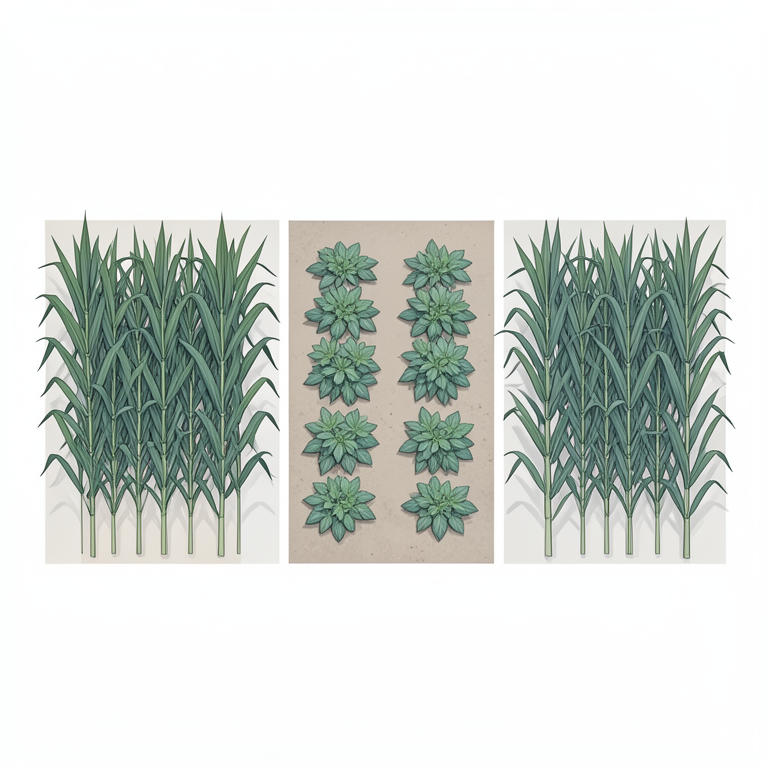
Intercropping Layout
AI-generated conceptual illustration (sugarcane and short-duration pulse crops). It explains the idea and does not show study data.
View source evidence ↗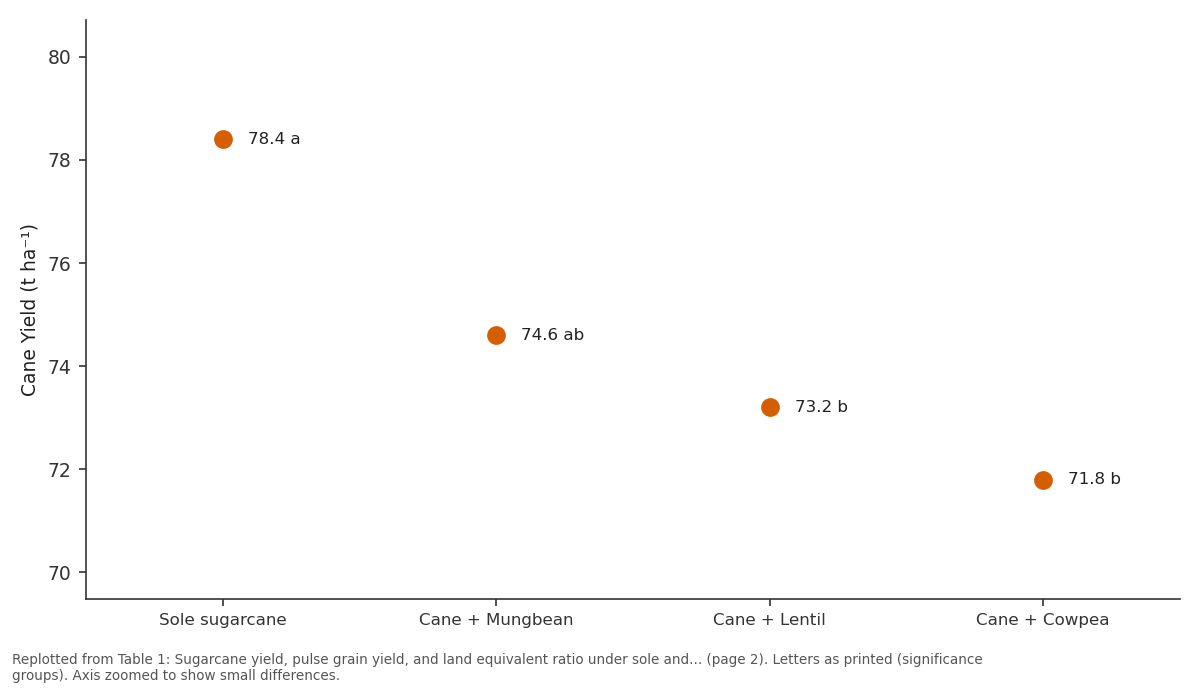
Cane Yield (t ha⁻¹): Sole sugarcane vs Cane + Mungbean vs Cane + Lentil vs Cane + Cowpea
Replotted from Table 1 (page 2) of the original paper. Every bar is the paper's own table value.
View source evidence ↗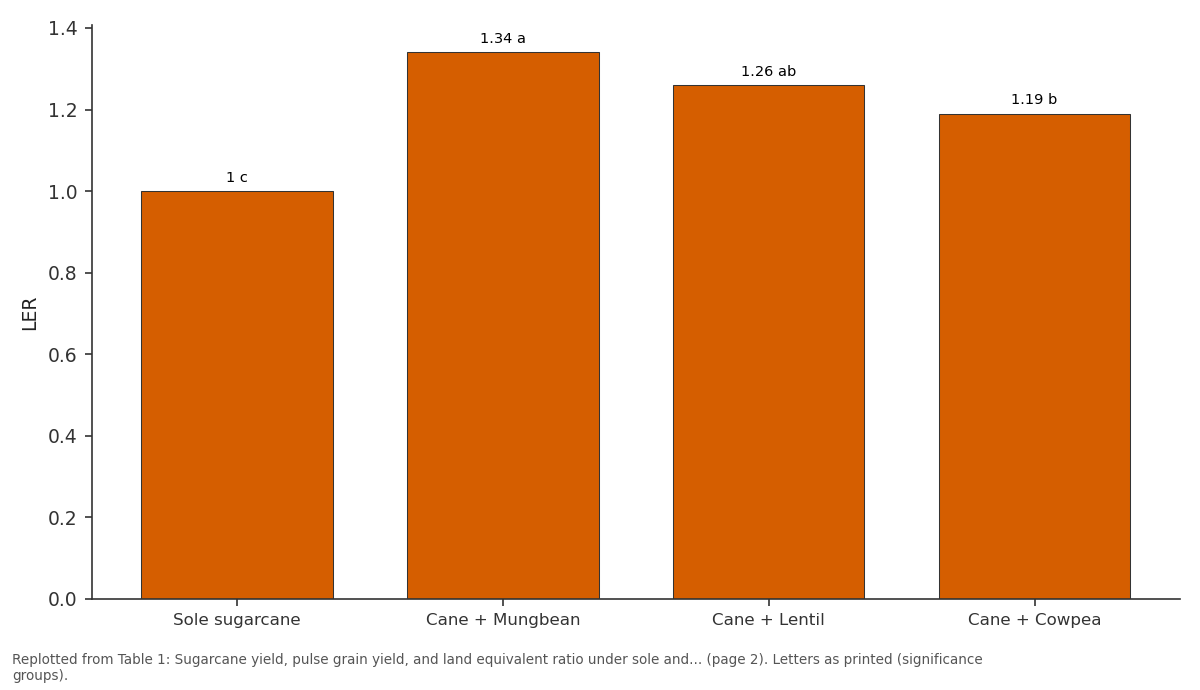
LER: Sole sugarcane vs Cane + Mungbean vs Cane + Lentil vs Cane + Cowpea
Replotted from Table 1 (page 2) of the original paper. Every bar is the paper's own table value.
View source evidence ↗Figures & tables
From the original paper Table 1
 Table 2
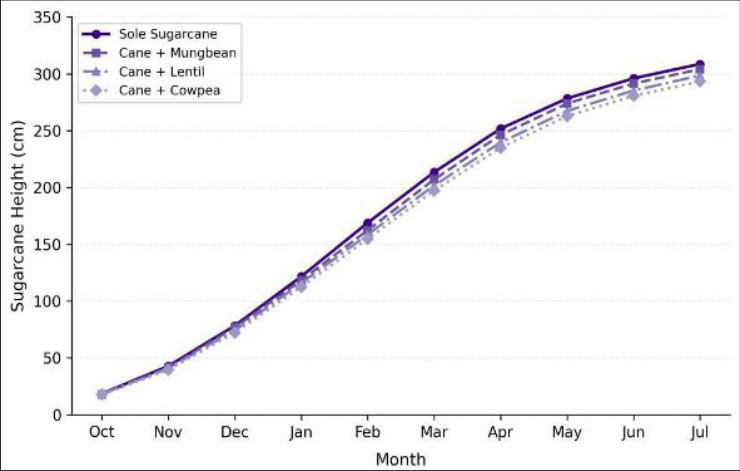 Figure 1
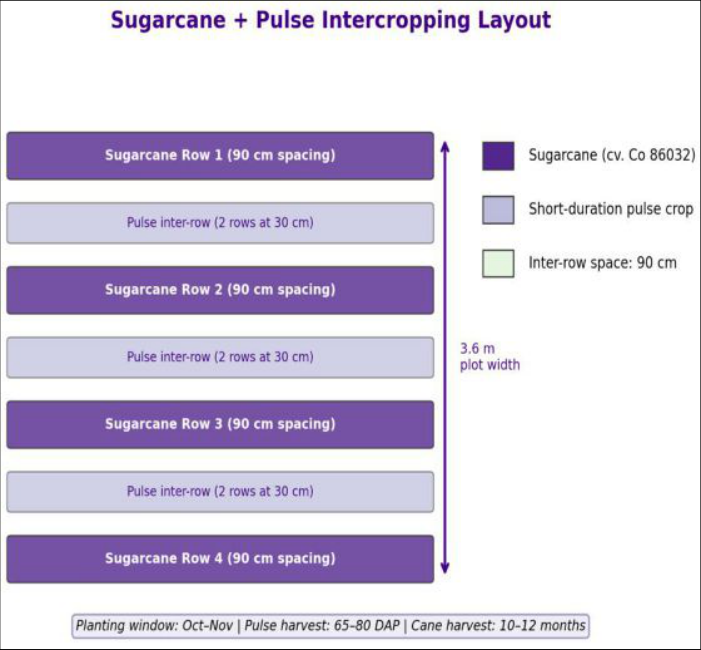 Figure 2
Introduction
For over a century, sugarcane has been the backbone of agricultural income in South Africa's eastern and central provinces, with the industry employing roughly 65,000 farm workers and contributing about ZAR 14 billion to the economy annually [1] . But the global sugar market's price swings-dropping 18% in 2022 before recovering partway in 2023-have exposed the vulnerability of monoculture-dependent farms [2] . Diversification within sugarcane fields, rather than conversion away from cane, is one strategy that has attracted renewed attention from agronomists and policymakers. Intercropping pulses between sugarcane rows is not a new concept. Indian researchers trialled cane-pulse systems in the 1980s and showed that short-duration crops like mungbean and black gram could be harvested before the cane canopy closed, with minimal competition for light or water [3,4] . More recent work in Brazil confirmed that cowpea intercropped in wide-row sugarcane increased total system output by 15-25% on a land equivalent ratio basis [5] . The appeal of pulses goes beyond the extra grain harvest. Their root-nodule symbiosis with Rhizobium bacteria can fix 40-80 kg N ha⁻¹ during a single crop cycle, part of which becomes available to the companion or successor crop through root turnover and residue decomposition [6] . In sugarcane systems, where nitrogen fertiliser alone can account for 20-30% of input costs, this biological nitrogen input has clear economic value [7] . In South Africa, intercropping trials in sugarcane have been concentrated in KwaZulu-Natal, where rainfall is higher and row spacing is narrower. The Free State's semi-arid conditions (450-600 mm annual rainfall) and wider row spacings create a different competitive environment that hasn't been well characterised [8] . Soil nitrogen depletion under continuous cane in this province has been documented, with total N declining by 12-18% over 10-year rotations in some districts [9] . This research was set up to test whether short-duration pulses can be productively intercropped with sugarcane under Free State conditions and to quantify both the agronomic and economic outcomes. The specific objectives were: (a) to compare the yield performance of sole sugarcane with three sugarcane-pulse intercrops; (b) to assess land-use efficiency using the land equivalent ratio; (c) to determine the effect of intercrops on cane quality parameters; and (d) to conduct a partial budget analysis to evaluate the profitability of each system. The findings are intended to inform extension recommendations for smallholder and emerging commercial cane growers in the province. with a sandy loam texture, pH 6.1 (1:2.5 H₂O), organic carbon 0.94%, total nitrogen 0.083%, and available phosphorus 14.7 mg kg⁻¹ (Olsen method). The field had been under sugarcane monoculture for six consecutive years before this trial, with standard nitrogen input of 140 kg N ha⁻¹ year⁻¹. Irrigation was supplementary, supplied through overhead sprinklers at a cumulative seasonal total of 210 mm [10] .
Research Area Description
Research Area Description
Material and Methods
Material and Methods
Material
Sugarcane setts (cv. Co 86032, two-bud) were sourced from the university's seed cane nursery. Pulse seeds were:
mungbean (Vigna radiata cv. SML 668), lentil (Lens culinaris cv. Masoor 93), and cowpea (Vigna unguiculata cv. IT97K-499-35). All pulse seeds were inoculated with crop-specific Rhizobium inoculant (Soygro Biofertilisers, South Africa) at the recommended rate of 200 g per 25 kg seed on the day of sowing. Basal fertiliser (60:40:30 kg ha⁻¹ N:P₂O₅:K₂O) was broadcast and incorporated before
planting. An additional 80 kg N ha⁻¹ was side-dressed to sugarcane at 90 days after planting. No nitrogen topdressing was given to pulse rows. Pest management followed standard regional practices for both crops [11] .
Methods
The trial was laid out as a randomized complete block design with four treatments and four replications. Each plot measured 7.2 m × 10 m (eight cane rows at 90 cm spacing).
Treatments were: T1 -sole sugarcane; T2 -sugarcane + mungbean; T3 -sugarcane + lentil; T4 -sugarcane + cowpea. Cane setts were planted in furrows on 12 October 2022. Pulse crops were sown 14 days later in two rows (30 cm apart) centred in each inter-row space. Mungbean and cowpea were harvested at 68 and 74 days after sowing, respectively; lentil at 112 days. Sugarcane was harvested at 11 months (September 2023) by manual cutting at ground level [12] . Cane yield was measured as fresh stalk weight per plot and converted to t ha⁻¹. Cane quality was assessed on a composite 10-stalk subsample per plot using a hydraulic press to extract juice, with Brix (refractometer) and pol % (polarimeter) determined. Pulse grain yield was recorded after sun-drying to 12% moisture. Land equivalent ratio was calculated as LER = (Yic/Ysc) + (Yip/Ysp), where Yic and Yip are intercrop yields and Ysc and Ysp are sole crop yields [13] . Economic analysis used a partial budget approach with 2022-23 market prices: sugarcane ZAR 650 t⁻¹, mungbean ZAR 22,000 t⁻¹, lentil ZAR 18,500 t⁻¹, cowpea ZAR 15,000 t⁻¹. Data were subjected to ANOVA in Genstat 22, means separated by LSD at p≤0.05.
Field Experimental Design
Cane rows ran north-south to maximise light capture by inter-row pulses during the morning and afternoon hours. Each plot contained eight cane rows, with the two outermost rows serving as borders. Data were collected from the inner six rows (net plot: 5.4 m × 10 m). Pulse rows were placed at 15 cm from each side of the cane row centre, giving a total of 12 pulse rows per inter-row plot area. Spacing within pulse rows was 10 cm for mungbean and cowpea and 5 cm for lentil, aiming for target populations of 250,000 and 500,000 plants ha⁻¹, respectively. Weeding was done manually at 21 and 42 days after cane planting. Soil moisture was monitored weekly at 30 cm depth using gypsum blocks, and supplemental irrigation (30 mm per event) was triggered when soil water potential dropped below -60 kPa [14] . Sole sugarcane produced the highest cane yield at 78.4 t ha⁻¹ (Table 1). Intercropping reduced cane yield by 4.8% (mungbean), 6.6% (lentil), and 8.4% (cowpea). But all three intercrop systems posted LER values above 1.0, meaning that the combined output from the same land area exceeded what monocultures of each crop would produce separately.
| Treatment | Cane Yield (t ha⁻¹) | Pulse Yield (t ha⁻¹) | LER | Brix (%) | Pol (%) |
|---|---|---|---|---|---|
| Sole sugarcane | 78.4a | - | 1.00c | 19.3a | 14.7a |
| Cane + Mungbean | 74.6ab | 0.83a | 1.34a | 19.1a | 14.5a |
| Cane + Lentil | 73.2b | 0.61b | 1.26ab | 18.9a | 14.3a |
| Cane + Cowpea | 71.8b | 0.47c | 1.19b | 19.0a | 14.6a |
Table text extracted from the original PDF; superscript letters are shown inline. The original table image is below.
View original table image
Results
The sugarcane + mungbean system had the highest LER (1.34), driven by mungbean's strong grain yield of 0.83 t ha⁻¹. Cane quality traits-Brix and pol %-were statistically similar across all treatments, indicating that pulse competition didn't alter juice quality [15] . Cane height growth followed a sigmoidal pattern across all treatments (Figure 1). Sole cane was consistently tallest, but the gap between sole and intercropped cane narrowed after March-roughly the point when all pulse crops had been harvested and inter-row competition ceased. By July, the height difference between sole cane (308.7 cm) and the lowest-performing intercrop (cane + cowpea, 293.4 cm) was only 5.0%.
Discussion
The yield reduction in intercropped sugarcane (4.8-8.4%) was within the range reported in comparable trials elsewhere. Shukla and co-workers observed 5-10% cane yield losses when mungbean or urd bean were grown as intercrops in the Gangetic plain [3] , and Dinardo-Miranda and colleagues noted similar reductions with cowpea in Brazilian spring-planted cane [5] . The relatively modest competition from mungbean-the shortest-duration intercrop at 68 days-explains why it caused the smallest yield penalty and produced the best LER. Cowpea, despite being a nitrogen-fixing legume with a vigorous growth habit, caused the largest cane yield reduction. Its spreading canopy likely intercepted more photosynthetically active radiation in the inter-row space during the critical early tillering phase of sugarcane, between 30 and 60 days after planting [16] . Lentil, with its erect and compact growth form, caused intermediate competition. These results suggest that for intercropping with sugarcane, erect and fast-maturing pulse varieties should be preferred over prostrate or long-duration types.
The economic analysis tells a compelling story. Mungbean's high market price (ZAR 22,000 t⁻¹) combined with its good yield (0.83 t ha⁻¹) generated ZAR 18,260 ha⁻¹ in additional gross income, more than compensating for the ZAR 2,470 reduction in cane revenue and the ZAR 2,340 increase in variable costs. The resulting net income of ZAR 42,070 ha⁻¹ was 47% above sole cane-a margin that would make a tangible difference for smallholder growers [17] . Cowpea intercropping barely broke even compared to sole cane, mainly because its lower grain price and shorter interrow yield didn't offset the greater competition effect. That said, cowpea's nitrogen fixation capacity is generally higher than mungbean's (60-80 vs 30-50 kg N ha⁻¹), so its benefits may accumulate over multiple seasons through improved soil nitrogen status [6] . A multi-year trial would be needed to capture this longer-term advantage. The absence of any significant effect on cane quality is reassuring. Both Brix and pol % were virtually unchanged, which means that sugar mills wouldn't penalise farmers for delivering intercropped cane. This is a common concern among growers considering diversification, and the present data should help address it [18] .
Conclusion
This research showed that intercropping short-duration pulses with sugarcane under semi-arid Free State conditions can increase total system productivity and farm income without reducing cane quality. Sugarcane + mungbean was the most productive and profitable combination, recording an LER of 1.34 and net income of ZAR 42,070 ha⁻¹-a 47% improvement over sole sugarcane. Sugarcane + lentil offered a moderate advantage (LER 1.26, net income ZAR 34,745 ha⁻¹), while sugarcane + cowpea provided the smallest economic gain, though it may contribute more biological nitrogen to the soil over time. Cane yield reductions from intercropping ranged from 4.8% to 8.4% and were fully offset by pulse grain revenue in the mungbean and lentil systems. For smallholder and emerging commercial cane growers in the Free State, adopting a sugarcane + mungbean intercrop represents a low-risk diversification strategy that can be implemented with existing equipment and labour. Extension services should promote this practice alongside information on seed inoculation and early harvesting to minimise interrow competition. Future research should extend to ratoon cane crops, measure residual soil nitrogen benefits across seasons, and evaluate additional pulse species such as pigeon pea and chickpea that may suit the region's drier months.
Figures and tables from the paper
| Treatment | Gross Cane Income | Gross Pulse Income | Total Variable Cost | Net Income |
|---|---|---|---|---|
| Sole sugarcane | 50,960 | - | 22,340 | 28,620d |
| Cane + Mungbean | 48,490 | 18,260 | 24,680 | 42,070a |
| Cane + Lentil | 47,580 | 11,285 | 24,120 | 34,745b |
| Cane + Cowpea | 46,670 | 7,050 | 23,890 | 29,830c |
Table text extracted from the original PDF; superscript letters are shown inline. The original table image is below.
View original table image
References
20 in the original paper- International Sugar Organization. Sugar Market Report, November 2023. London: ISO; 2023.
- Shukla SK, Yadav RL, Singh PN, Singh I. Potassium nutrition of sugarcane-based production systems in subtropical India. Indian J Fert. 2009;5(3):53-62.
- Singh AK, Lal M, Prasad SR. Intercropping of short duration pulse crops with sugarcane under subtropical conditions. Sugar Tech. 2008;10(4):345-348.
- Dinardo-Miranda LL, Fracasso JV. Sugarcane straw and the populations of pests and nematodes. Sci Agric. 2013;70(5):305-310.
- Peoples MB, Herridge DF, Ladha JK. Biological nitrogen fixation: an efficient source of nitrogen for sustainable agricultural production. Plant Soil. 1995;174(1):3-28.
- Meyer JH, Wood RA. Nitrogen nutrition of sugarcane. Proc S Afr Sugar Technol Assoc. 2001;75:22-28.
- Chimonyo VGP, Modi AT, Mabhaudhi T. Water use and productivity of a sorghum-cowpea-bottle gourd intercrop system. Agric Water Manag. 2016;165:82-96.
- Miles N, Manson AD. Soil fertility assessment and management for sugarcane. Proc ISSCT. 2010;27:1-9.
- South African Weather Service. Climate data for Bloemfontein, Free State. Pretoria: SAWS; 2023.
- Ramburan S, Zhou M, Hurney AP. Sugarcane cultivar performance under diverse environments in South Africa. Field Crops Res. 2012;137:132-145.
- Li X, Mu Y, Cheng Y, Liu X, Nian H. Effects of intercropping sugarcane and soybean on growth, rhizosphere soil microbes, nitrogen and phosphorus availability. Acta Physiol Plant. 2013;35(4):1113-1119.
- Mead R, Willey RW. The concept of a land equivalent ratio and advantages in yields from intercropping. Exp Agric. 1980;16(3):217-228.
- Singels A, Donaldson RA, Smit MA. Improving biomass production and partitioning in sugarcane: theory and practice. Field Crops Res. 2005;92(2-3):291303.
- Chen JCP, Chou CC. Cane Sugar Handbook. 12th ed. New York: John Wiley and Sons; 1993. p. 43-67.
- Amanullah M, Alagesan A, Vaiyapuri K, Pazhanivelan S, Sathyamoorthi K. Intercropping and weed management practices in sugarcane. Res J Agric Biol Sci. 2006;2(1):32-37.
- Garside AL, Bell MJ, Robotham BG, Magarey RC, Stirling GR. Managing yield decline in sugarcane cropping systems. Int Sugar J. 2005;107(1273):16-26.
- Ferreira THS, Tsunada MS, Bassi D, Araújo P, Mattiello L, et al. Sugarcane water stress tolerance mechanisms and its implications on developing biotechnology solutions. Front Plant Sci. 2017;8:1077.
- Rusinamhodzi L, Corbeels M, Nyamangara J, Giller KE. Maize-grain legume intercropping is an attractive International Journal of Agriculture and Nutrition https://www.agriculturejournal.net option for ecological intensification that reduces climatic risk. Field Crops Res. 2012;136:12-22.
- Craswell ET, Vlek PLG. Fate of fertilizer nitrogen applied to wetland rice. In: Freney JR, Simpson JR, editors. Gaseous Loss of Nitrogen from Plant-Soil Systems. The Hague: Martinus Nijhoff/Dr W. Junk Publishers; 1983. p. 237-264.
- Willey RW. Intercropping: its importance and research needs. Part 1. Competition and yield advantages. Field Crop Abstr. 1979;32(1):1-10.