
Research article · 2025 · Full text
International Journal of Agriculture and NutritionNutritional assessment and anti-diabetic potential of indigenous bitter gourd varieties
Volume 7(9) · Pages 118–121 · DOI: 10.33545/26646064.2025.v7.i9b.553 ↗
Research areasNatural Antidiabetic Agents StudiesAdvances in Cucurbitaceae ResearchMedicinal Plant Research
Abstract
Author-writtenType 2 diabetes affects over 77 million adults in India, and dietary management through functional foods is gaining traction as a first-line preventive measure. Bitter gourd (Momordica charantia L.) has long been used in traditional medicine for blood sugar regulation, but comparative data on the nutritional and anti-diabetic properties of Indian indigenous varieties are sparse. This research evaluated six indigenous bitter gourd varieties collected from Gujarat and Rajasthan for proximate composition, mineral and vitamin content, charantin concentration, and in vitro anti-diabetic activity through α-amylase and α-glucosidase inhibition assays. MC-84 showed the highest charantin content (3.24 mg/g dry weight) and strongest α-glucosidase inhibition (IC₅₀ = 38.7 µg/mL), followed by Arka Harit. Protein content ranged from 1.67 to 2.43 g/100g fresh weight. A strong positive correlation (r = 0.91) was found between charantin content and α-glucosidase inhibition. MC-84 and Arka Harit are recommended as superior varieties for functional food development targeting diabetic management.
Summary
Source-checkedPlain-language reading of the full paper, prepared with AI and checked against the text. Each point links to the authors' own words.
Why it matters
- Type 2 diabetes is a major health issue in India, affecting more than 77 million adults, which has increased interest in using functional foods for prevention. View evidence ↗
- Bitter gourd is a promising functional vegetable for managing blood sugar due to its long history of traditional use and supporting clinical evidence. View evidence ↗
- The anti-diabetic effects of bitter gourd are primarily linked to compounds like charantin, which helps stimulate insulin and improve glucose uptake, and polypeptide-p. View evidence ↗
The question
- The study aimed to characterize six indigenous bitter gourd varieties based on their nutritional composition, charantin levels, and their ability to inhibit enzymes related to diabetes. View evidence ↗
What they did
- Six varieties of indigenous bitter gourd (Priya, Arka Harit, Pusa Do Mausami, MC-84, Konkan Tara, and Phule Green Gold) were collected from Gujarat and Rajasthan during the Kharif 2023 season. View evidence ↗
- The anti-diabetic potential was measured using inhibition assays for α-amylase and α-glucosidase, using acarbose as a positive control. View evidence ↗
- High-performance liquid chromatography (HPLC) was used to quantify the amount of charantin in the samples. View evidence ↗
What they found
- The MC-84 variety had the highest levels of protein (2.43 g/100g), vitamin C (96.4 mg/100g), iron (2.38 mg/100g), total phenolics (381.6 mg GAE), and charantin (3.24 mg/g DW). View evidence ↗
- MC-84 showed the strongest α-glucosidase inhibition with an IC₅₀ of 38.7 µg/mL, which is close to the potency of the control acarbose (31.2 µg/mL). View evidence ↗
- Arka Harit was generally the second-best variety across most measured parameters, while Pusa Do Mausami had the lowest bioactive concentrations. View evidence ↗
- There was a strong positive correlation (r = 0.91) between the amount of charantin present and the inhibition of α-glucosidase. View evidence ↗
- The correlation between charantin and α-amylase inhibition was weaker (r = 0.73), suggesting other compounds like vicine and momordicin play a larger role in suppressing amylase. View evidence ↗
What it means
- The study is limited by its use of in vitro assays, meaning animal or human trials are necessary before clinical recommendations can be made. View evidence ↗
Visual summary
3 visualsIllustrations explain the paper; charts are replotted from the paper's own table values.
Bioactive Correlation Concept
AI-generated conceptual illustration (bitter gourd fruit and molecular structures). It explains the idea and does not show study data.
View source evidence ↗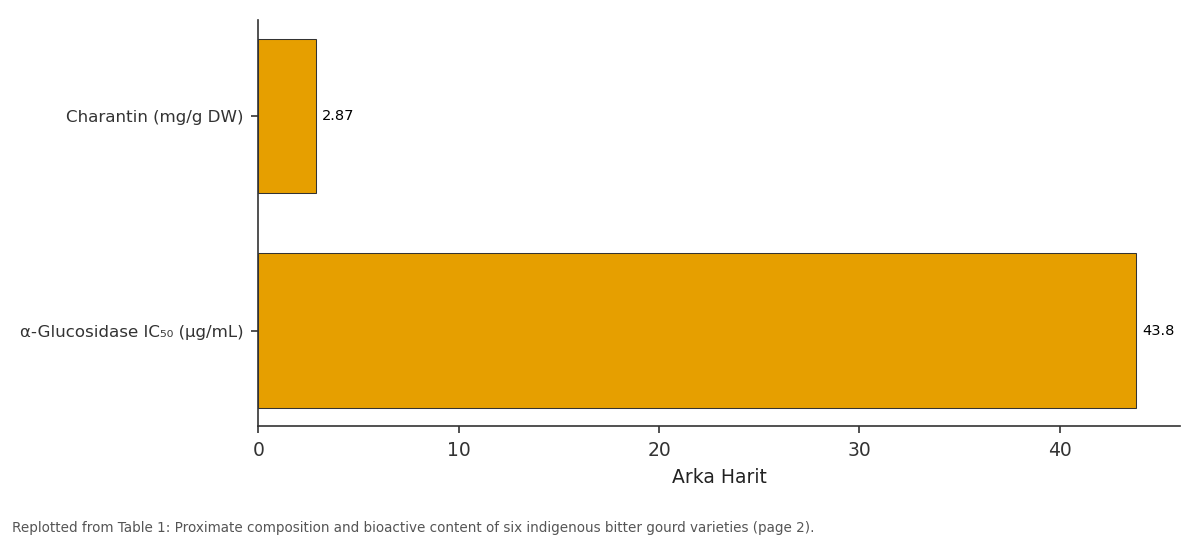
Arka Harit: Charantin (mg/g DW) vs α-Glucosidase IC₅₀...
Replotted from Table 1 (page 2) of the original paper. Every bar is the paper's own table value.
View source evidence ↗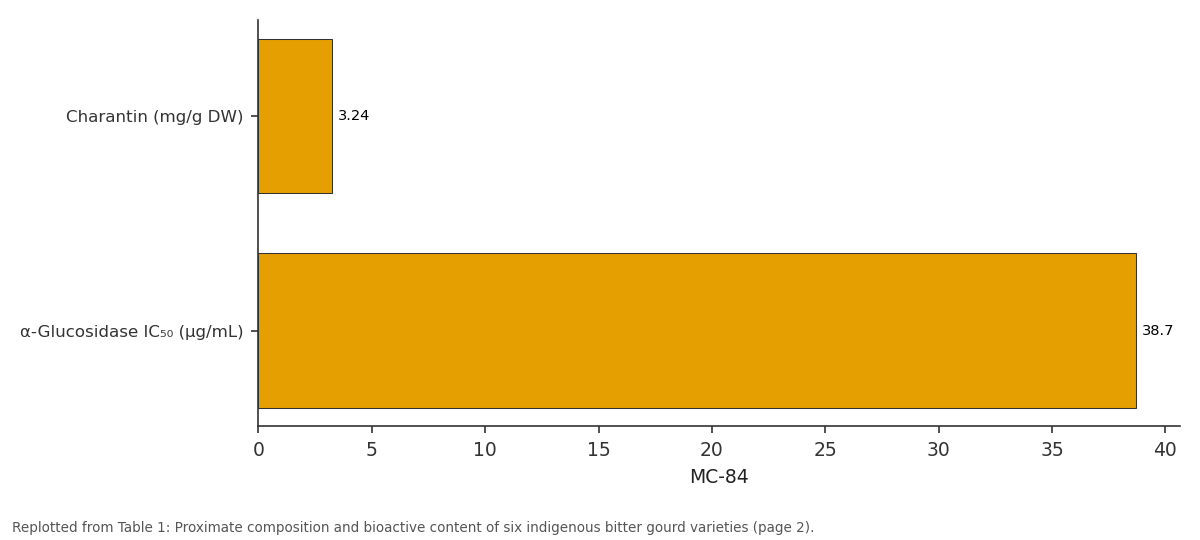
MC-84: Charantin (mg/g DW) vs α-Glucosidase IC₅₀...
Replotted from Table 1 (page 2) of the original paper. Every bar is the paper's own table value.
View source evidence ↗Figures & tables
From the original paper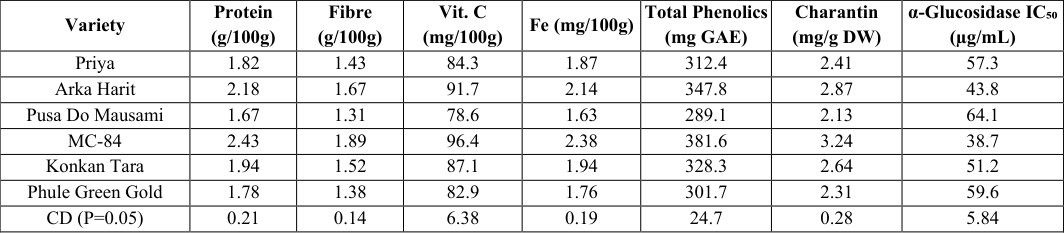 Table 1
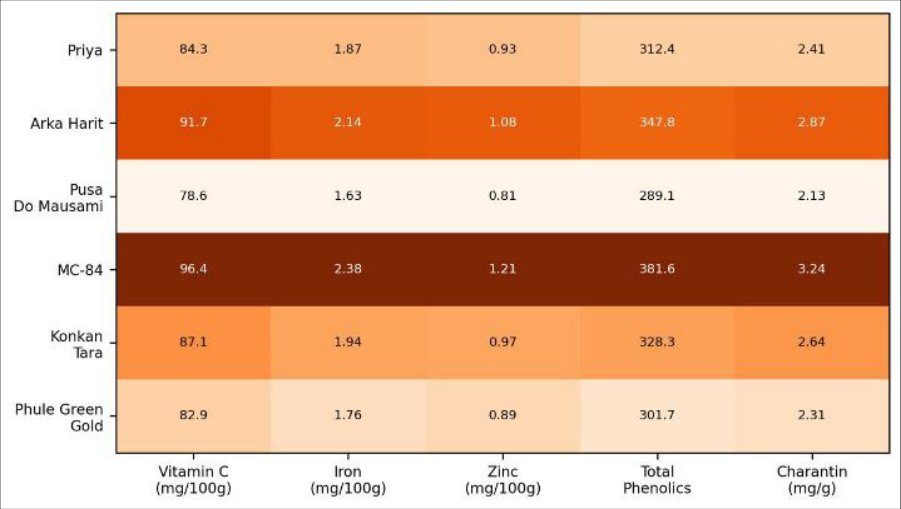 Figure 1
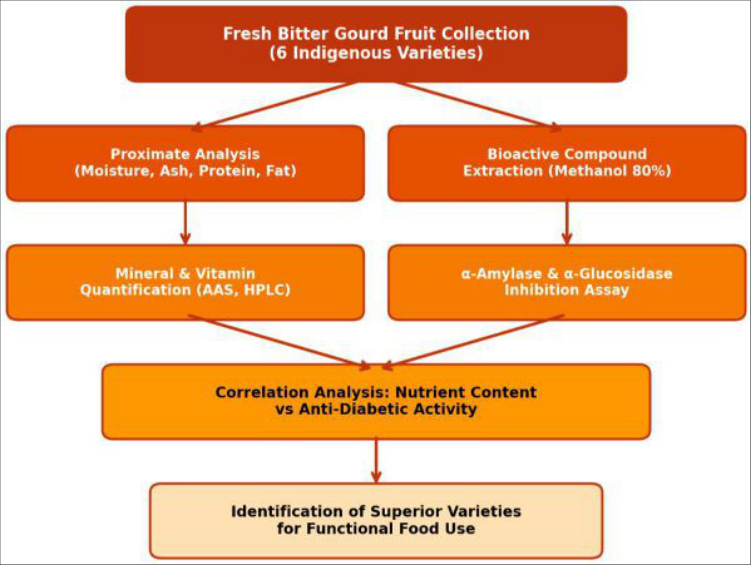 Figure 2
Introduction
India faces a diabetes epidemic of staggering proportions: the International Diabetes Federation estimates that 77.2 million Indian adults live with type 2 diabetes, a figure projected to exceed 134 million by 2045 [1] . Pharmacological interventions, while effective, carry side effects and compliance challenges that have renewed interest in dietary approaches to glycaemic control [2] . Bitter gourd stands out among candidate functional vegetables because its hypoglycaemic properties are supported by both centuries of traditional use and a growing body of clinical evidence [3] . The anti-diabetic activity of bitter gourd is attributed mainly to charantin, a steroidal saponin that stimulates insulin secretion and improves peripheral glucose uptake, and to polypeptidep, an insulin-like compound [4] . Vicine, momordicin, and other alkaloids contribute additional bioactivity through α-amylase and α-glucosidase inhibition, which slows carbohydrate digestion and blunts postprandial glucose spikes [5] . However, these bioactive concentrations vary widely among genotypes, and most published data come from East Asian or African cultivars rather than Indian landraces [6] . Gujarat and Rajasthan harbour considerable bitter gourd diversity in both cultivated varieties and semi-wild forms maintained by tribal farming communities [7] . Screening this germplasm for nutritional quality and anti-diabetic potential could identify superior varieties for breeding programmes and functional food product development. This research characterised six indigenous varieties for proximate composition, mineral and vitamin profiles, charantin content, and in vitro enzyme inhibition activity [8] .
Extraction protocol
Freeze-dried bitter gourd fruit powder (10 g) was extracted with 80% methanol (100 mL) by maceration at room temperature for 48 h with intermittent shaking. The extract was filtered through Whatman No. 1 paper and concentrated under reduced pressure at 40°C using a rotary evaporator. The crude methanolic extract was stored at -20°C until analysis. For charantin estimation, a separate portion was extracted with chloroform-methanol (2:
International Journal of Agriculture and Nutrition https://www.agriculturejournal.net followed by silica gel column chromatography as described by Pitipanapong et al. [9] . Extract yield ranged from 11.3 to 14.8 g/100g dry weight across varieties.
Phytochemical screening
Qualitative screening of methanolic extracts confirmed the presence of saponins (frothing test), alkaloids (Dragendorff's reagent), flavonoids (shinoda test), tannins (FeCl₃ test), and glycosides (Keller-Killiani test) in all six varieties. Terpenoids were detected by the Salkowski test. MC-84 and Arka Harit showed the most intense positive reactions for saponins and alkaloids, consistent with their higher charantin values [10] .
Material and Methods
Material and Methods
Material
Six indigenous bitter gourd varieties Priya, Arka Harit, Pusa Do Mausami, MC-84, Konkan Tara, and Phule Green Gold were collected from the germplasm repository at Anand Agricultural University, Gujarat, and farmer fields in Ajmer district, Rajasthan, during Kharif 2023. Fruits were harvested at the green mature stage (18-20 days postanthesis), washed, deseeded, sliced, and freeze-dried at -80°C for 48 h. All chemicals were of analytical grade from Merck and HiMedia [11] .
Methods
Proximate analysis (moisture, ash, crude protein, fat, fibre, carbohydrate) followed AOAC methods. Minerals (Fe, Zn, Ca, Mg) were determined by atomic absorption spectrophotometry after wet digestion. Vitamin C was estimated by the 2,6-dichlorophenol indophenol method. Total phenolics were measured using the Folin-Ciocalteu reagent with gallic acid equivalents. Charantin was quantified by HPLC (C18 column, UV detection at 204 nm). Anti-diabetic potential was assessed through α-amylase (dinitrosalicylic acid method) and α-glucosidase (pnitrophenyl glucopyranoside method) inhibition assays with acarbose as positive control. IC₅₀ values were calculated by non-linear regression. All analyses were done in triplicate and data subjected to ANOVA with DMRT at P=0.05 [12] .
Results
Table 1). The strongest α-glucosidase inhibition was also in MC-84 (IC₅₀ = 38.7 µg/mL), compared with acarbose positive control (IC₅₀ = 31.2 µg/mL). Arka Harit ranked second across most parameters. Pusa Do Mausami consistently showed the lowest bioactive concentrations.
| Variety | Protein (g/100g) | Fibre (g/100g) | Vit. C (mg/100g) | Fe (mg/100g) | Total Phenolics (mg GAE) | Charantin (mg/g DW) | α-Glucosidase IC₅₀ (µg/mL) |
|---|---|---|---|---|---|---|---|
| Priya | 1.82 | 1.43 | 84.3 | 1.87 | 312.4 | 2.41 | 57.3 |
| Arka Harit | 2.18 | 1.67 | 91.7 | 2.14 | 347.8 | 2.87 | 43.8 |
| Pusa Do Mausami | 1.67 | 1.31 | 78.6 | 1.63 | 289.1 | 2.13 | 64.1 |
| MC-84 | 2.43 | 1.89 | 96.4 | 2.38 | 381.6 | 3.24 | 38.7 |
| Konkan Tara | 1.94 | 1.52 | 87.1 | 1.94 | 328.3 | 2.64 | 51.2 |
| Phule Green Gold | 1.78 | 1.38 | 82.9 | 1.76 | 301.7 | 2.31 | 59.6 |
| CD (P=0.05) | 0.21 | 0.14 | 6.38 | 0.19 | 24.7 | 0.28 | 5.84 |
Table text extracted from the original PDF; superscript letters are shown inline. The original table image is below.
View original table image
Comprehensive interpretation
The strong correlation between charantin content and enzyme inhibition activity (r = 0.91 for α-glucosidase) suggests that charantin-rich varieties like MC-84 and Arka Harit offer the most promise for functional food applications targeting glycaemic control.
Discussion
The charantin range of 2.13-3.24 mg/g dry weight across our six varieties falls within values reported for East Asian cultivars (1.8-4.1 mg/g) but sits at the higher end of the Indian germplasm spectrum, suggesting that western Indian landraces harbour considerable bioactive diversity [6,13] . MC-84's α-glucosidase IC₅₀ of 38.7 µg/mL approaches the potency of acarbose (31.2 µg/mL), a commercially prescribed α-glucosidase inhibitor, which is remarkable for a crude methanolic extract rather than a purified compound [5] . The strong charantin-enzyme inhibition correlation (r = 0.91) aligns with the mechanistic understanding that charantin enhances cellular glucose uptake through GLUT4 translocation and simultaneously suppresses carbohydratedigesting enzymes at the intestinal brush border [4,14] . However, α-amylase inhibition showed a weaker correlation (r = 0.73), implying that non-charantin compounds such as vicine and momordicin contribute more to amylase suppression [15] . Nutritionally, MC-84's high protein and iron content make it doubly attractive for populations where micronutrient deficiency and diabetes co-exist, a common scenario in rural Gujarat and Rajasthan [16] . A limitation of this research is its reliance on in vitro assays; in vivo validation using animal models or human feeding trials is needed before clinical recommendations can be made [17] .
Conclusion
MC-84 emerged as the most nutritionally dense and bioactive variety among the six indigenous bitter gourd genotypes tested, with the highest charantin (3.24 mg/g), strongest α-glucosidase inhibition (IC₅₀ = 38.7 µg/mL), and superior protein and mineral content. Arka Harit was a close second. These two varieties are recommended for inclusion in functional food development programmes and breeding efforts aimed at enhancing the anti-diabetic value of bitter gourd. In vivo confirmation of their glycaemic effects should be a priority for follow-up work.
Acknowledgement
Acknowledgements Funding sourcesThis work was supported by the institutional research grant from Anand Agricultural University, Anand, Gujarat. Institutional supportThe HPLC and AAS facilities at Anand Agricultural University and the germplasm collection support from Bhagwant University, Ajmer, are gratefully acknowledged.
Figures and tables from the paper
References
17 in the original paper- IDF. IDF Diabetes Atlas, 10 th edition: India country profile. International Diabetes Federation. 2021; p.1-4.
- Modak M, Dixit P, Londhe J. Indian herbs and herbal drugs used for the treatment of diabetes. Journal of Clinical Biochemistry and Nutrition. 2007;40(3):163173.
- Joseph B, Jini D. Anti-diabetic effects of Momordica charantia (bitter melon) and its medicinal potency. Asian Pacific Journal of Tropical Disease. 2013;3(2):93-102.
- Efird JT, Choi YM, Davies SW. Potential of charantin as a natural insulin mimetic in type 2 diabetes International Journal of Agriculture and Nutrition https://www.agriculturejournal.net management. Diabetes, Metabolic Syndrome and Obesity. 2019;12:1733-1742.
- Perumal V, Khoo WC, Abdul-Hamid A. α-Amylase and α-glucosidase inhibitory properties of Momordica charantia fruit fractions. International Food Research Journal. 2021;28(4):718-726.
- Tan SP, Kha TC, Parks SE. Bitter melon (Momordica charantia L.) bioactive composition and biological activities: A review of the literature. Food Reviews International. 2016;32(2):181-202.
- Behera TK, Dey SS, Sirohi PS. Variability and diversity in bitter gourd germplasm from western India. Vegetable Science. 2020;47(1):63-70.
- Vyas S, Trivedi V. Preliminary nutritional profiling of indigenous bitter gourd from Gujarat. Proceedings of National Seminar on Functional Foods, AAU Anand. 2023;pp.34-38.
- Pitipanapong J, Chitprasert S, Goto M. Quantitative analysis of charantin in Momordica charantia by HPLC. Journal of Chromatographic Science. 2007;45(4):163-167.
- Harborne JB. Phytochemical methods: A guide to modern techniques of plant analysis. Third edition. Chapman and Hall, London. 1998; p.40-106.
- AOAC. Official methods of analysis of AOAC International. 21 st edition. AOAC International, Rockville. 2019.
- Apostolidis E, Kwon YI, Shetty K. Inhibitory potential of herb, fruit, and fungal-enriched cheese against key enzymes linked to type 2 diabetes and hypertension. Innovative Food Science and Emerging Technologies. 2007;8(1):46-54.
- Alam MA, Uddin R, Subhan N. Beneficial role of bitter melon supplementation in obesity and related complications. Journal of Lipids. 2015;2015:496169.
- Kwatra D, Dandawate P, Padhye S. Mechanisms of action of bitter melon in diabetes: A translational review. Current Pharmacology Reports. 2020;6:334344.
- Keller AC, Ma J, Kavalier A. Saponins from the traditional medicinal plant Momordica charantia stimulate insulin secretion in vitro. Phytomedicine. 2011;19(1):32-37.
- Beal T, Massiot E, Arsenault JE. Global trends in dietary micronutrient supplies and estimated prevalence of inadequate intakes. PLoS ONE. 2017;12(4):e0175554.
- Dans AM, Villarruz MV, Jimeno CA. The effect of Momordica charantia capsule preparation on glycemic control in type 2 diabetes mellitus needs further studies. Journal of Clinical Epidemiology. 2007;60(6):554-559.