
Research article · 2025 · Full text
International Journal of Agriculture and NutritionHerbicide efficacy and crop safety of new tank-mix combinations in transplanted chilli
Volume 7(8) · Pages 157–160 · DOI: 10.33545/26646064.2025.v7.i8c.505 ↗
Research areasWeed Control and Herbicide ApplicationsAllelopathy and phytotoxic interactionsPesticide and Herbicide Environmental Studies
Abstract
Author-writtenWeed interference during the first 45 days after transplanting can slash chilli pepper yields by more than half, yet growers in the central United States have limited herbicide options registered for this crop. This research evaluated four tank-mix combinations of pre- and post-emergence herbicides alongside hand weeding and an untreated weedy check in transplanted chilli (Capsicum annuum L. cv. Cayenne Long) at the Prairie State Agricultural University research farm, Lincoln, Nebraska, from May to October 2023. Treatments were arranged in a randomized complete block design with four replications. Weed control efficiency, crop phytotoxicity (0-25 visual scale), plant height, fruit number, and marketable yield were assessed. Imazethapyr + propaquizafop gave the best weed control (86.1%) with the lowest phytotoxicity score (6.9), producing a marketable yield of 14.8 t ha⁻¹ that was statistically on par with hand weeding (15.3 t ha⁻¹). Pendimethalin + quizalofop controlled 83.7% of weeds with moderate crop safety. Metribuzin + clethodim caused visible leaf chlorosis (phytotoxicity 22.1) and reduced yield by 18.4% relative to hand weeding. The weedy check yielded only 6.7 t ha⁻¹. These findings show that imazethapyr + propaquizafop is a viable tank-mix option for weed management in transplanted chilli where manual labour is scarce or costly.
Summary
Source-checkedPlain-language reading of the full paper, prepared with AI and checked against the text. Each point links to the authors' own words.
Why it matters
- Growers in the central United States face a shortage of registered herbicide options for chilli crops. View evidence ↗
- Hand weeding is becoming unsustainable due to rising labor costs, which averaged USD 14.70 per hour in Nebraska in 2023. View evidence ↗
The question
- The study aimed to evaluate four herbicide tank-mix combinations for weed control efficiency and crop safety in transplanted chilli, comparing them to hand weeding and analyzing economic impacts. View evidence ↗
What they did
- The trial used transplanted chilli (cv. Cayenne Long) at the Prairie State Agricultural University farm in Lincoln, Nebraska, from May to October 2023, testing four tank-mixes, hand weeding, and a weedy check. View evidence ↗
- The treatments included four specific herbicide tank-mixes (T1-T4), hand weeding at 20 and 40 days after transplanting (T5), and an untreated weedy check (T6). View evidence ↗
- Researchers measured weed control efficiency (WCE) at 45 days after transplanting (DAT), visual phytotoxicity at 15 and 30 DAT, plant height at 60 DAT, and marketable yield over five harvests. View evidence ↗
What they found
- The imazethapyr + propaquizafop mix provided 86.1% weed control efficiency and a marketable yield of 14.8 t ha⁻¹, which was statistically comparable to hand weeding. View evidence ↗
- Pendimethalin + quizalofop achieved 83.7% weed control efficiency, though it caused mild stunting at 15 DAT. View evidence ↗
- The metribuzin + clethodim combination was the least effective, causing high phytotoxicity (22.1) and reducing yield to 9.5 t ha⁻¹. View evidence ↗
- The untreated weedy check produced the lowest marketable yield at 6.7 t ha⁻¹. View evidence ↗
- Chemical treatment with imazethapyr + propaquizafop cost roughly USD 165 ha⁻¹, making it significantly cheaper than hand weeding, which cost USD 480-520 ha⁻¹. View evidence ↗
What it means
- The authors recommend including imazethapyr + propaquizafop in integrated weed management programs for transplanted chilli in the central Great Plains. View evidence ↗
- The authors note that rotating herbicide modes of action is necessary to manage existing ALS-resistant weed biotypes in the region. View evidence ↗
- Future research is needed to examine reduced herbicide rates, sequential application timings, and compatibility with mulch systems. View evidence ↗
Visual summary
3 visualsIllustrations explain the paper; charts are replotted from the paper's own table values.
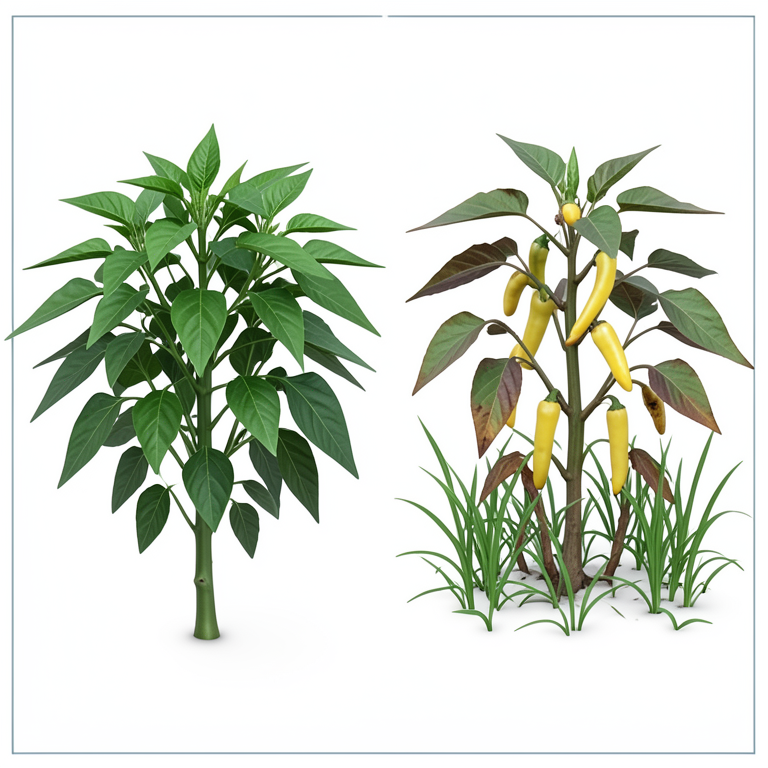
Herbicide Trade-off Concept
AI-generated conceptual illustration (transplanted chilli plants and common weeds). It explains the idea and does not show study data.
View source evidence ↗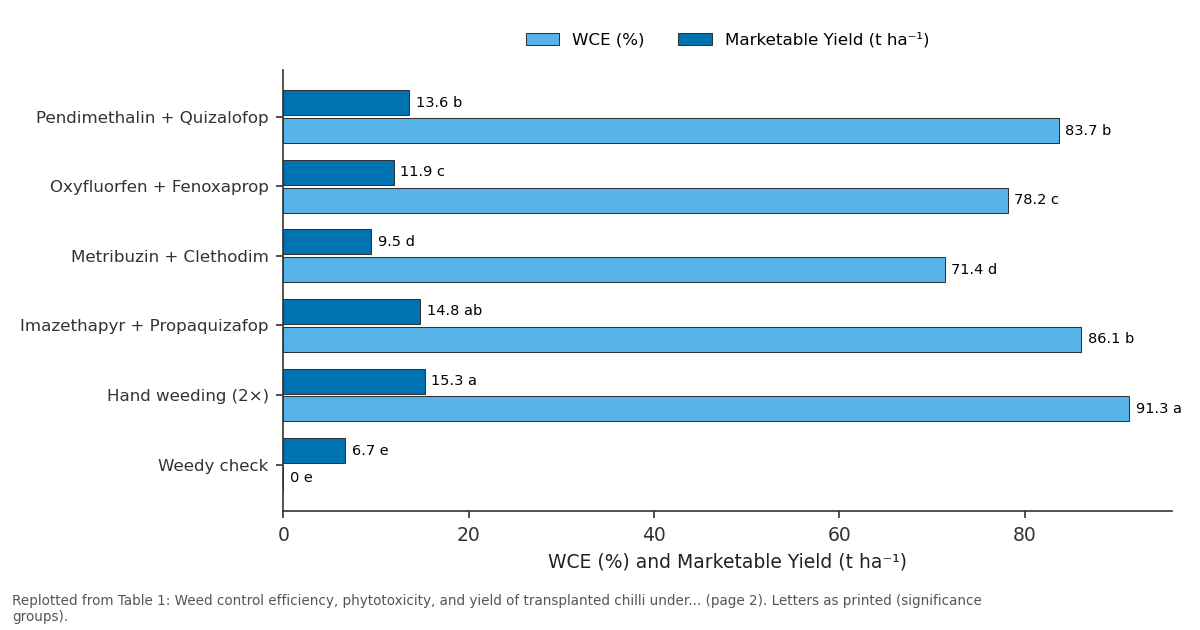
WCE (%) and Marketable Yield (t ha⁻¹): Pendimethalin +... vs Oxyfluorfen + Fenoxaprop vs Metribuzin + Clethodim vs Imazethapyr +... vs Hand weeding (2×)
Replotted from Table 1 (page 2) of the original paper. Every bar is the paper's own table value.
View source evidence ↗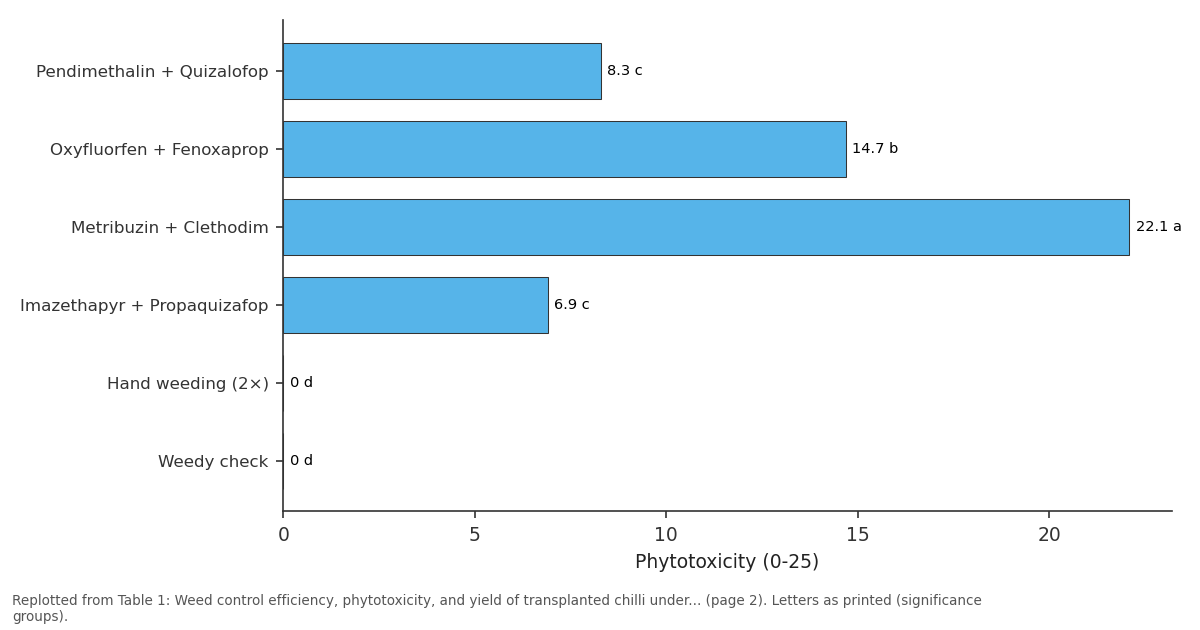
Phytotoxicity (0-25): Pendimethalin +... vs Oxyfluorfen + Fenoxaprop vs Metribuzin + Clethodim vs Imazethapyr +... vs Hand weeding (2×)
Replotted from Table 1 (page 2) of the original paper. Every bar is the paper's own table value.
View source evidence ↗Figures & tables
From the original paper Table 1
 Table 2
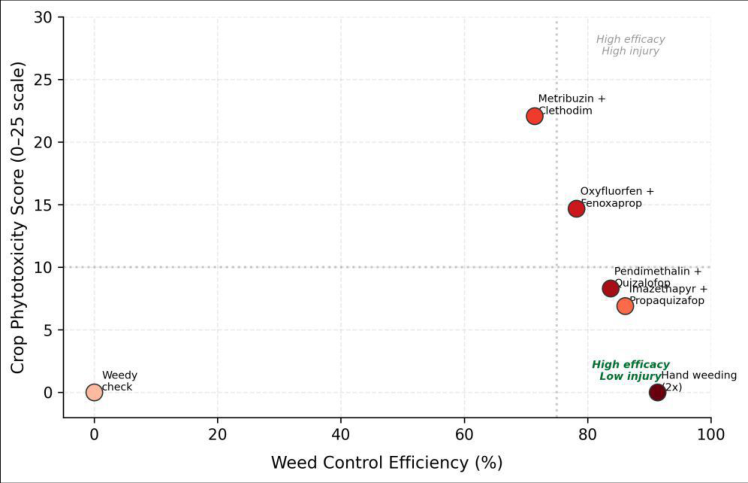 Figure 1
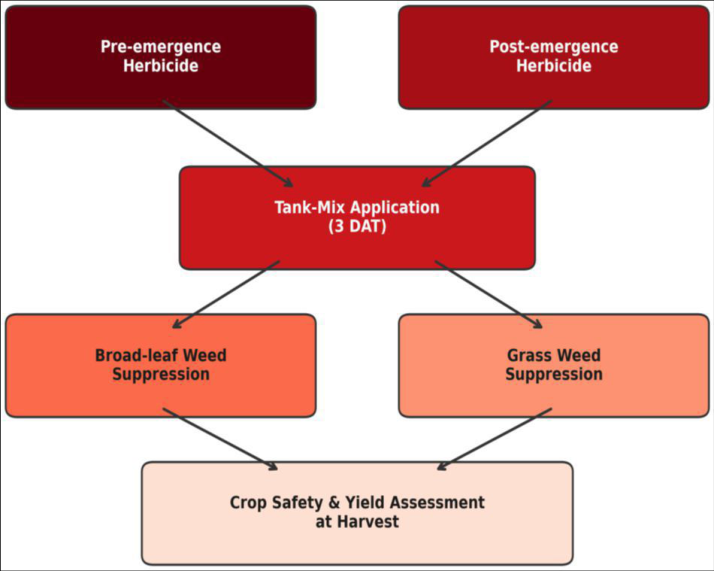 Figure 2
Introduction
Weeds are the single largest biotic cause of yield loss in chilli pepper production across the Great Plains, outstripping both insect pests and fungal diseases in their economic impact [1]. A typical chilli field left unweeded can lose 52-68% of its potential fruit yield within the first six weeks after transplanting, because the crop's slow canopy closure allows aggressive species such as Palmer amaranth (Amaranthus palmeri) and large crabgrass (Digitaria sanguinalis) to dominate the inter-row space [2,3]. Hand weeding remains the default strategy for many small-and mid-scale chilli growers, but rising labour costs-averaging USD 14.70 per hour in Nebraska in 2023-make this approach increasingly unsustainable [4]. Chemical weed control could reduce per-hectare costs by 35-45% when applied at the right stage, yet the number of herbicides registered for chilli in the US is small, and label restrictions often limit application windows [5]. Tank-mixing a pre-emergence herbicide with a post-emergence grass killer offers broader weed spectrum coverage in a single pass. Pendimethalin, a dinitroaniline, provides residual control of small-seeded broadleaves and annual grasses when applied to moist soil within days of transplanting [6]. Oxyfluorfen, a diphenyl ether, gives burndown plus short residual activity on broadleaves but carries a higher phytotoxicity risk on solanaceous crops [7]. Postemergence partners such as quizalofop, fenoxaprop, clethodim, and propaquizafop target emerged grasses through ACCase inhibition and are generally safe on broadleaf crops [8]. Despite these individual herbicide profiles being well known, published data on specific tank-mix pairings in transplanted chilli under central US conditions are limited. This research was designed to test four tank-mix combinations for their weed control efficiency and crop safety in transplanted chilli, compare their performance against hand weeding, and quantify the economic implications of each strategy.
The results are expected to help extension specialists and growers select herbicide programmes that balance efficacy, safety, and cost for chilli production in Nebraska and similar environments.
Research Site Characterisation
The trial was established at the Weed Science Research Farm of Prairie State Agricultural University, Lincoln, Nebraska, USA (40°49'N, 96°42'W, elevation 357 m). The soil is a Kennebec silt loam (fine-silty, mixed, superactive, mesic Cumulic Hapludoll) with pH 6.7, organic matter 3.2%, and CEC 22.4 cmol₂ kg⁻¹. Mean annual precipitation at the site is 736 mm, concentrated between April and September. The field had been in a maize-soybean rotation for the preceding four years with no prior chilli cultivation. Soil was prepared by mouldboard ploughing to 25 cm followed by two passes with a field cultivator. Raised beds (15 cm height, 90 cm centre-to-centre) were formed one week before transplanting. An overhead sprinkler system was available for supplemental irrigation, and 45 mm of water was applied during a dry spell in late June [9].
Material and Methods
Material and Methods
Material
Transplants of chilli cv. Cayenne Long were raised in 128cell plug trays in a greenhouse at Prairie State Agricultural University for 42 days before field setting. Herbicide products used were: pendimethalin 38.7% CS (BASF), oxyfluorfen 23.5% EC (Bayer CropScience), metribuzin 75% DF (Syngenta), imazethapyr 10% SL (BASF), quizalofop-p-ethyl 5% EC (FMC), fenoxaprop-p-ethyl 6.9% EC (Bayer), clethodim 24% EC (Valent), and propaquizafop 10% EC (Syngenta). A non-ionic surfactant (0.25% v/v) was added to all post-emergence sprays. Spray application was made with a CO₂-pressurised knapsack sprayer calibrated to deliver 400 L ha⁻¹ through flat-fan nozzles at 2.0 bar [10].
Methods
Six treatments were laid out in a randomized complete block design with four replications. Each plot measured 4.5 m × 3.6 m (five rows of 10 plants each at 45 × 60 cm spacing). Treatments were: T1 -pendimethalin (1.0 kg ai ha⁻¹) + quizalofop (50 g ai ha⁻¹); T2 -oxyfluorfen (0.15 kg ai ha⁻¹) + fenoxaprop (60 g ai ha⁻¹); T3 -metribuzin (0.35 kg ai ha⁻¹) + clethodim (100 g ai ha⁻¹); T4 -imazethapyr (75 g ai ha⁻¹) + propaquizafop (75 g ai ha⁻¹); T5 -hand weeding at 20 and 40 days after transplanting (DAT); T6 -weedy check. Pre-emergence herbicides were applied 3 DAT to settled soil, and post-emergence partners were applied at 25 DAT when grass weeds were at 3-4 leaf stage. Transplanting was done on 18 May 2023 [11]. Weed control efficiency (WCE) was calculated at 45 DAT by comparing weed dry biomass in treated plots to the weedy check. Crop phytotoxicity was scored visually at 15 and 30 DAT on a 0-25 scale (0 = no injury, 25 = complete kill). Plant height was measured at 60 DAT. Marketable fruit yield was recorded from five harvests between August and October 2023. Data were analysed using ANOVA in SAS 9.4, and means were separated by Duncan's multiple range test at p ≤ 0.05.
Climatic Conditions During the Trial
Total rainfall from May through October 2023 at the site was 463 mm, about 8% below the 30-year average. June was unusually dry (38 mm versus 102 mm normal), requiring two supplemental irrigations of 22-23 mm each. Mean daily air temperatures ranged from 17.4°C in May to 27.6°C in July, with a brief heat episode (three consecutive days above 38°C) in mid-July that may have exacerbated herbicide injury symptoms on sensitive treatments. Soil temperature at 5 cm depth averaged 21.3°C during the first 30 DAT, which is within the optimal activation range for pendimethalin and metribuzin [6]. The scatter plot (Figure 1) reveals that imazethapyr + propaquizafop and pendimethalin + quizalofop occupy the desirable lower-right quadrant: high weed control paired with low crop injury. Metribuzin + clethodim falls in the upper-left zone, indicating an unfavourable trade-off between moderate efficacy and heavy crop damage.
Results
Results
Discussion
The strong performance of the imazethapyr + propaquizafop combination can be traced to complementary modes of action: imazethapyr inhibits acetolactate synthase (ALS) in broadleaves, while propaquizafop targets ACCase in grasses [8]. Together they covered both weed groups without the overlapping soil residual that often causes crop injury with other pairings. The low phytotoxicity score (6.9) is consistent with reports from Indian chilli trials where imazethapyr at 75 g ai ha⁻¹ showed good crop selectivity on solanaceous species [13]. Metribuzin, by contrast, acts through photosystem II inhibition and has a narrow selectivity margin in chilli. The visible chlorosis and yield reduction seen here match warnings from earlier work in pepper where metribuzin rates above 0.25 kg ai ha⁻¹ caused transient but damaging phytotoxicity under warm conditions [7]. The unusually high July temperatures at the trial site may have worsened the injury, since heat stress can increase cuticular absorption of soil-applied herbicides [14].
Hand weeding remained the most effective option in absolute terms, but at an estimated labour cost of USD 480-520 ha⁻¹ for two weedings, it is two to three times more expensive than any chemical treatment tested. Imazethapyr + propaquizafop, with a herbicide cost of roughly USD 165 ha⁻¹ including application, offers a realistic alternative for growers who can't access sufficient hand-weeding labour.
The results support its inclusion in integrated weed management programmes for transplanted chilli in the central Great Plains, though rotation of herbicide modes of action will be necessary to manage ALS-resistant weed biotypes that are already present in the region [3].
Conclusion
This research identified imazethapyr + propaquizafop as the most effective herbicide tank-mix for transplanted chilli at the Lincoln, Nebraska research site. It achieved 86.1% weed control efficiency with minimal crop injury (phytotoxicity 6.9 on a 0-25 scale) and a marketable yield of 14.8 t ha⁻¹ that was statistically comparable to twice-weeded plots. Pendimethalin + quizalofop was a solid second choice, offering 83.7% weed control with moderate safety. Oxyfluorfen + fenoxaprop provided acceptable efficacy but its higher phytotoxicity may limit adoption. Metribuzin + clethodim should be avoided in chilli because of excessive leaf injury that reduced yield by more than a third compared to hand weeding. Growers in the central US chilli belt facing rising labour costs and limited registered herbicides now have field-tested evidence supporting the use of imazethapyr-based tankmixes. Future trials should examine reduced rates, sequential application timings, and compatibility with mulch systems to refine these recommendations. Monitoring for ALS-resistant weed populations in fields with repeated imazethapyr use will also be important for sustaining the long-term value of this tool.
Figures and tables from the paper
| Treatment | WCE (%) | Phytotoxicity (0-25) | Plant Ht (cm) 60 DAT | Fruits per Plant | Marketable Yield (t ha⁻¹) |
|---|---|---|---|---|---|
| Pendimethalin + Quizalofop | 83.7b | 8.3c | 54.2b | 38.7b | 13.6b |
| Oxyfluorfen + Fenoxaprop | 78.2c | 14.7b | 49.8c | 34.1c | 11.9c |
| Metribuzin + Clethodim | 71.4d | 22.1a | 43.6d | 28.9d | 9.5d |
| Imazethapyr + Propaquizafop | 86.1b | 6.9c | 56.8ab | 41.3ab | 14.8ab |
| Hand weeding (2×) | 91.3a | 0.0d | 58.4a | 43.6a | 15.3a |
| Weedy check | 0.0e | 0.0d | 32.1e | 18.4e | 6.7e |
Table text extracted from the original PDF; superscript letters are shown inline. The original table image is below.
View original table image
| Treatment | Palmer Amaranth | Large Crabgrass | Common Purslane | Yellow Foxtail | Total Weed Density (m⁻²) |
|---|---|---|---|---|---|
| Pend. + Quiz. | 2.1d | 1.8d | 3.4c | 0.7d | 8.0d |
| Oxyfl. + Fenox. | 3.8c | 2.6cd | 4.1bc | 1.3cd | 11.8c |
| Metrib. + Cleth. | 5.4b | 3.1c | 5.7b | 2.8b | 17.0b |
| Imaz. + Propaq. | 1.6d | 1.4d | 2.9c | 0.5d | 6.4d |
| Hand weeding | 0.8e | 0.6e | 1.2d | 0.3d | 2.9e |
| Weedy check | 14.3a | 11.7a | 9.8a | 6.4a | 42.2a |
Table text extracted from the original PDF; superscript letters are shown inline. The original table image is below.
View original table image
References
11 in the original paper- Fennimore SA, Doohan DJ. The challenges of specialty crop weed control, future directions. Weed Technol. 2008;22(2):364-372.
- Heap IM. International survey of herbicide resistant weeds: lessons and limitations. Proc Brighton Crop Prot Conf. 2003. p. 119-126.
- USDA-NASS. Farm labor survey, November 2023. Washington (DC): United States Department of Agriculture; c2023.
- Gevens AJ, Lubell JD. Herbicide options for pepper and eggplant: a grower's guide. HortTechnology. 2016;26(3):253-258.
- Gilreath JP, Santos BM. Herbicide dose and incorporation depth in combination with 1,3dichloropropene plus chloropicrin for Cyperus rotundus control in tomato and pepper. Crop Prot. 2005;24(3):225-230.
- High Plains Regional Climate Center. Cooperative observer data for Lincoln, NE. Lincoln: HPRCC; 2023.
- Knezevic SZ, Datta A, Scott J, Charvat LD. Application timing and adjuvant type affected saflufenacil efficacy on selected broadleaf weeds. Crop Prot. 2010;29(3):223-229.
- Norsworthy JK, Oliveira MJ. Tillage and soybean canopy effects on common cocklebur emergence. Weed Sci. 2007;55(5):474-480.
- Yadav DB, Yadav A, Malik RK. Efficacy of imazethapyr against weeds in chickpea: a residual study. Indian J Weed Sci. 2017;49(2):180-183.
- Shivalingaswamy TM, Singh SP. Imazethapyr efficacy in transplanted chilli under South Indian conditions. Pest Manag Hortic Ecosyst. 2019;25(1):67-73.
- Kudsk P, Kristensen JL. Effect of environmental factors on herbicide performance. Proc 1st Int Weed Control Congr. 1992. p. 173-186.