
Research article · 2026 · Full text
International Journal of Biology SciencesBiochar: A pathway to soil health and environmental sustainability
Volume 8(4) · Pages 131–136 · DOI: 10.33545/26649926.2026.v8.i4b.807 ↗
Research areasSoil Carbon and Nitrogen DynamicsThermochemical Biomass Conversion ProcessesAgricultural Science and Fertilization
Abstract
Author-writtenA promising method for improving soil health and promoting environmental sustainability is biochar, a carbon-rich substance made by pyrolyzing biomass, and stable carbon content—make it an effective soil amendment with multiple ecological benefits. When incorporated into agricultural systems, biochar improves soil structure, enhances water retention, and increases nutrient availability, thereby fostering healthier plant growth and greater crop productivity. Moreover, biochar’s ability to immobilize heavy metals and reduce nutrient leaching contributes to improved soil quality and resilience against degradation. From an environmental perspective, biochar plays a crucial role in climate change mitigation. By stabilizing carbon in a solid form, it acts as a long-term carbon sink, reducing greenhouse gas emissions and contributing to carbon sequestration strategies. Its application also lowers nitrous oxide emissions from soils, further decreasing the agricultural sector’s carbon footprint. Additionally, biochar can be produced from diverse organic waste streams, including crop residues, forestry by-products, and municipal green waste, thereby offering a sustainable pathway for waste management and circular economy practices. The multifunctional benefits of biochar extend beyond agriculture. In water treatment, biochar serves as an effective adsorbent for pollutants, improving water quality and reducing contamination risks. In degraded lands, biochar application accelerates ecological restoration by enhancing microbial activity and nutrient cycling. Despite these advantages, challenges remain in standardizing biochar production methods, ensuring quality consistency, and scaling its adoption across diverse agro-ecological zones. Economic feasibility and farmer awareness also play critical roles in determining its widespread implementation.
Summary
Source-checkedPlain-language reading of the full paper, prepared with AI and checked against the text. Each point links to the authors' own words.
Why it matters
- Biochar is a carbon-rich material produced through the pyrolysis of biomass, serving as an effective soil amendment to improve soil health and environmental sustainability. View evidence ↗
- Biochar helps mitigate climate change by acting as a long-term carbon sink, which reduces greenhouse gas emissions. View evidence ↗
- The production of biochar from organic waste streams like crop residues and municipal green waste supports sustainable waste management and circular economy practices. View evidence ↗
The question
- The paper aims to summarize current biochar applications and the mechanisms behind them to provide a reference for future research. View evidence ↗
What they did
- Biochar is produced via the thermal breakdown of organic material at temperatures below 700 °C under restricted oxygen conditions. View evidence ↗
- Among production methods, slow pyrolysis produces biochar with the highest aromaticity, most abundant pore structure, and largest specific surface area. View evidence ↗
What they found
- Biochar application can reduce soil bulk density by 3–31% and increase soil porosity by 14–64%. View evidence ↗
- The carbon content of biochar is highly variable, ranging from 172 to 905 g C kg⁻¹. View evidence ↗
- Nutrient contents in biochar vary widely, with Nitrogen ranging from 1.7 to 78.2 g kg⁻¹, Phosphorus from 0.2 to 73 g kg⁻¹, and Potassium from 1.0 to 58 g kg⁻¹. View evidence ↗
- Biochar is highly resistant to decomposition, with estimated carbon residence times in soil between 1,000 and 10,000 years (commonly estimated at 5,000 years). View evidence ↗
- Adding 3 Mg ha⁻¹ of biochar has been shown to increase average crop yields by approximately 10% in the first year, though results vary. View evidence ↗
- Biochar's effect on crop yield is region-dependent: it generally has little impact in temperate latitudes but can increase yields by 25% in the tropics. View evidence ↗
What it means
- The authors conclude that future research should focus on advanced production and modification techniques to enhance the effectiveness of biochar applications. View evidence ↗
- A significant limitation is that the pyrolysis process can produce toxic compounds (such as dioxins and PAHs) regardless of the feedstock used, which may adversely affect plants and soil microbes. View evidence ↗
Visual summary
1 visualsIllustrations explain the paper; they do not show study data.
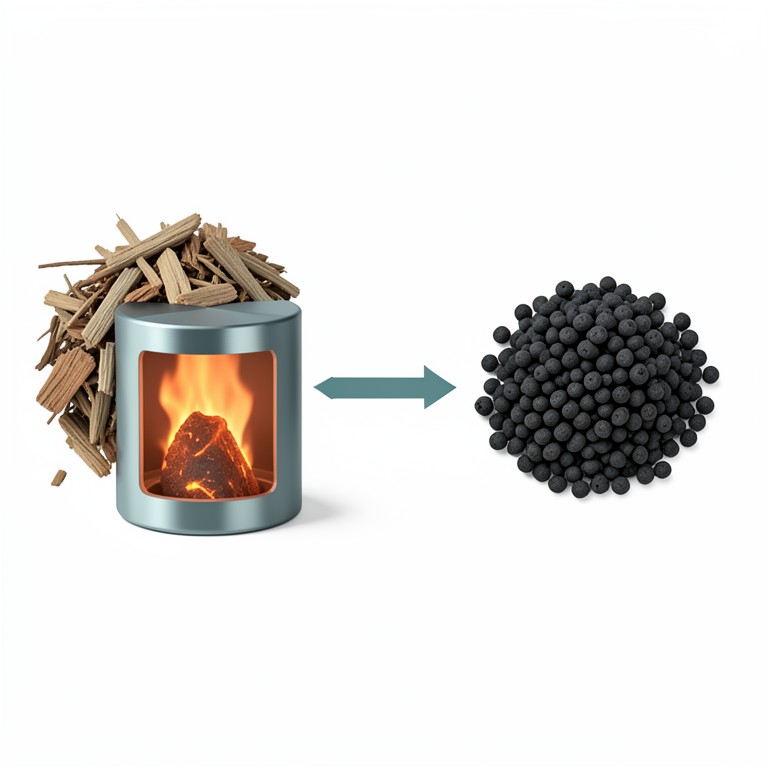
Biochar Production Process
AI-generated conceptual illustration (wood chips and crop residues in a pyrolysis reactor). It explains the idea and does not show study data.
View source evidence ↗Introduction Biochar
Biochar represents a synergistic solution that addresses soil fertility, climate resilience, and environmental protection simultaneously. Its integration into sustainable land management practices offers a pathway toward regenerative agriculture and ecological balance. Future research should focus on optimizing biochar properties for specific soil types, developing cost-effective production technologies, and establishing policy frameworks that encourage its adoption. By bridging scientific innovation with practical application, biochar can become a cornerstone of sustainable development, ensuring healthier soils, reduced environmental impacts, and a more resilient agricultural future. A carbon-enriched byproduct of producing bioenergy, biochar is produced when plant-derived fuel, including organic matter, is pyrolyzed, or heated with little oxygen. Technically speaking, biochar is created through the so-called thermal breakdown of organic material at a temperature of less than 700 C and with a restricted supply of oxygen (O2). This procedure frequently resembles the manufacturing of charcoal, one of the oldest industrial technologies ever created by humans. However, it distinguishes itself from charcoal by the fact that biochar is produced with the indent to be applied to the soil as a means of improving soil productivity, carbon (C) storage and filtration of percolating water. hulls, pecan shells, bark, rice, sugarcane, leaves, paper sludge, cow dung, poultry litter, sewage sludge, and aquaculture waste are a few typical feedstocks (Atkinson et al., 2010; Barrow, 2012) [4,6] . The thermochemical processes of biochar production are grouped into subclasses according to the temperature, heating rate, pressure, and residence time used, i.e., slow pyrolysis (Kung et al. 2015; Lee et al. 2017) [33, 35] , fast pyrolysis (Choi et al. 2015) [13] , hydrothermal carbonization (HTC) (Zhou et al. 2017) [17] , gasification (Feng et al. 2017; Hansen et al. 2017) [21,27] , flash carbonization (Conti et al. 2014), and torrefaction (Zhang et al. 2017) [12] . Some commonly used biochar production technologies are as under:
Slow Pyrolysis: Relatively low reactor temperatures (450-650 °C), operating at atmospheric pressure and very low heating rates, ranging from 0.01-2.0 °C/s. Fast Pyrolysis: A significantly higher percentage of bio-oil and less charcoal are produced when feedstock is heated extremely quickly.
Intermediate Pyrolysis: A hybrid of slow and fast pyrolysis.
Torrefaction: Pyrolysis in the temperature range between 200 and 300 °C is referred to as torrefaction. The main goal is to retain and concentrate most of the energy content in the solid, and significantly improve mechanical properties of the biomass (such as grindability), which may otherwise be limiting for some applications. The destruction of the hemicellulose in the biomass is the main process in torrefaction.
Carbonization: A variety of pyrolysis techniques that yield biochar with the highest carbon content and most closely match conventional, fundamental methods of producing charcoal. Even more. There are two kinds of it: Hydrothermal Carbonization: A biomass suspended in a liquid under high air pressure is subjected to a high pyrolytic temperature (200250 °C) for several hours in order to produce biochar. Flash Carbonization: A flash fire is lights up at an elevated pressure at the underneath of a packed bed biomass. In opposition to the downward flow of air provided to the process, the fire moves upward via the carbonization bed.
Gasification: Gasification is a high-temperature, controlledoxygen process that turns any carbonaceous substance into a stream of hydrogen and carbon monoxide. In the gasification chamber, the biomass feedstock is partially oxidized at a temperature of roughly 800 °C under atmospheric or increased pressure. The thermochemical processes convert biomass into biochar, bio-oil, and syngas, with the latter two functioning as energy sources. The different process has its own cons and pros. Flash carbonization takes place at the greatest processing temperature and the shortest residence time of all the thermochemical processes. In general, gasification generates more syngas than the other methods (Xin et al). However, the manufacturing requirements and high pressure-resistant equipment are necessary for gasification and flash carbonization. Compared to slow pyrolysis, HTC, and torrefaction, fast pyrolysis yields the most bio-oil and the least charcoal (Dai et al. 2017) [17] . The biochar from slow pyrolysis has the largest specific surface area, most abundant pore structure and highest aromaticity compared with HTC and torrefaction (Yu et al. 2009) [16] . Even though there exist disadvantages of long production duration (Meyer et al. 2011), slow pyrolysis is still regarded as the chief process for the biochar production due to the comparatively higher biochar yield and the wider application scope in the environmental restoration. As for HTC and fast pyrolysis, they are also used for producing biochar of applying to environmental renovation. However, biochar produced through gasification, flash carbonization, and torrefaction has rarely been reported to be applied in environmental remediation.
Biochar and Soil Health
Biochar is a kind of environmentally friendly, economic, and renewable material. Owing to its advantageous physical, chemical and biological properties, Soil enriched with biochar improves soil health (physical, chemical and biological properties) explained below.
Impact on Physical Properties of Soil
Scanning electron microscopy (SEM) can be used to describe the physical structure of biochar (Sohi et al). Most of the surface area of biochar is located in pores < 2 nm in diameter which may be responsible for high adsorptive capacities for small molecules such as gases. These nanopores are especially formed when biochar is produced at high charring intensity (Keiluweit et al. 2010) [31] . Biochar potentially improves the soil physical environment (Blanco-Canqui 2017) [8] . Specifically, biochar may reduce soil bulk density by 3 31%, increase porosity by 14 64%, but may have only limited effects on penetration resistance. Biochar may improve soil consistency and raise wet aggregate stability by 3,226%, although it may have conflicting impacts on dry soil aggregate stability. Additionally, biochar has the potential to boost water availability by 4130%. After applying biochar, saturated hydraulic conductivity may rise in fine-textured soils but fall in coarse-textured soils. There are few studies on other physical characteristics, but they indicate that biochar is a low-density substance that lowers soil bulk density (Laird et al. 2010) [34] , increasing water infiltration, root penetration, soil aeration, and soil aggregate stability (Glaser et al., 2002) [25] . It may have little impact on soil water repellency, but it may decrease tensile strength and particle density, change water infiltration, and regulate soil thermal characteristics (Blanco-Canqui 2017; Mukherjee and Lal) [8] . Sandy soils may respond more to biochar than clayey soils because its specific surfaces are higher than those of sand and comparable to or higher than those of clay (Downie et al. 2009). Further, biochar effectiveness potentially increases as the amount of biochar applied increases. A decrease in biochar particle size may increase water retention but may reduce saturated flow. (Blanco-Canqui 2017; Mukherjee and Lal) [8] .
Impact on Chemical Properties of Soil
The defining chemical property of biochar is the high C content in the organic portion and the high aromatic (aryl) C content (Krull et al. 2009; Lehmann and Joseph 2009) [32,36] . Carbon contents may range from 172 to 905 g C kg 1 (Chan and Xu 2009) [11] . It contains most of the plant nutrients also contained in the biomass feedstock as much of the mineral content in the feedstock is carried over into the biochar where it is concentrated due to loss of C, H, and O during pyrolysis (Amonette and Joseph 2009) [3] . Only scant information is available about plant macro and micronutrient contents in biochar, but contents appear to be highly variable (Chan and Xu 2009). For example, N contents may range from 1.7 to 78.2 g N kg 1, P contents from 0.2 to 73 g P kg 1, and K contents from 1.0 to 58 g K kg 1, respectively (Chan and Xu 2009) [11] . Thus, N and P contents in biochars cover wider ranges than those observed in other organic amendments used in agriculture for fertilization. Important for soil organic carbon (SOC) sequestration is the organo-chemical composition of biochar as pyrolysis converts organic compounds (Smernik 2002) [5] . The proportions of hemicellulose, cellulose, and lignin in the feedstock influence the proportion of C stabilized in biochar (Sohi et al). However, potentially toxic compounds such as acrolein and other toxic carbonyl compounds, cresols, dioxins, formaldehyde, polycyclic aromatic compounds (PAHs), xylenols, volatile organic compounds (VOCs), and carbon (aceous) nanoparticles may also be formed upon pyrolysis of any feedstock (Sohi et al., Thies and Rillig). Such pollutants could have adverse effects on the plant growth as well as microbial community in soil (Dutta et al. 2017) [20] . Biochar is alkaline in pH and it is, probably, one of the most influential biochar properties, because changes in pH have cascading impacts on many soil processes, including N mineralization, mineral precipitation, ion exchange, and GHG emissions (Fidel et al. 2017) [22] . In fact, many studies have shown that biochar amendments to soils increase and buffer soil pH (Fidel et al. 2017) [22] . However, functional groups on mineral phase surfaces can change into oxides, which could affect the surface charge (Amonette and Joseph 2009) [3] . In addition to the carboxylate groups on the surface of the biochar (Liang et al.), transformation into oxides during pyrolysis contributes to the cation exchange capacity (CEC) of biochars, which is higher than that of whole soils, clay, and SOM after extended periods of time in the soil (Sohi et al). High contents of Cu, Zn, Cr, and Ni have been reported for char from sewage sludge, and very high Cr contents are observed in char from tannery waste (Muralidhara; Bridle and Pritchard 2004) [9] . For example, poultry litter-based activated C is high in Cu and Zn which may pose an environmental risk if this material is applied to soil (Qiu and Guo).
Impact on Biological Properties of Soil
Pyrolysis at lower temperatures produces biochar containing microbial oxidizable compounds such as dehydrated forms of cellulose, polysaccharides, and alcohols, whereas higher temperatures result in the formation of less microbial available condensed aryl and O-aryl furan structures (Baldock and Smernik 2002) [5] . Low-temperature biochar may also be more attractive for microbial decomposition because of narrower C: N ratios compared to biochar produced at higher temperatures. Biochar may be a suitable habitat for soil microorganisms as presence and size distribution of pores protects them from predation and desiccation, and biochar provides C sources, energy, and mineral nutrients (Thies and Rillig). In particular, bacteria, actinomycetes, and arbuscular mycorrhizal fungi may preferentially colonize biochar depending on its characteristics. The typical sizes of soil bacteria and fungal hyphae are 1 to 4 µm and 2 to 64 µm, respectively, according to Swift et al. However, charcoal and biochar may also contain chemicals that are detrimental to soil fauna. For example, it is believed that genotoxic compounds in biomass burning residues cause strand breaks in the DNA of the earthworm Eisenia fetida (Cui et al. 2009) [16] . However, in addition to the microbial food, pyrolysis condensates may also include compounds that are detrimental to bacteria and fungi (Thies and Rillig). Further, biochar contains ethylene which is an important plant hormone as well as an inhibitor for soil microbial processes (Spokas et al). Thus, the observed ethylene production in biochar-amended soils may impact soil microbial and plant processes.
Potential Application of Biochar in Environmental Management
Given its potential for environmental applications, biochar has been extensively researched in recent years. This section summarizes the current biochar applications and mechanisms, and is aimed to be served as references for future biochar application studies.
Biochar and Carbon Sequestration
The issue of global warming urgently requires that effective measures are taken to augment carbon sequestration and decrease the CO2 concentration in the atmosphere. Making waste biomass into biochar leads to carbon sequestration due to the stable and carbon-rich nature of biochar. It provides a pool of carbon that is resistant to mineralization and that decreases the turnover rate of recent carbon due to better physical protection or carbon saturation of microbial processes. Because it is considered to be relatively resistant against decomposition, biochar carbon residence times in soil may be in the range of 1,000 to 10,000 years with a common estimate of 5,000 years (Warnock et al). Soil respiration and N2O flux may change as a result of the biochar-induced modifications to the structure and function of the soil microbial community. It can reduce greenhouse gas emissions, such as CO2 (Case et al., 2014) [10] , CH4 (Karhu et al., 2011) [30] , and N2O (Wang et al., 2012). Thus, it can not only sequestrate carbon following its application in soil, but also reduce the amount of released CO2, N2O, and CH4 in the soil, thus helping to alleviate the greenhouse effect. In order to achieve better carbon sequestration effect, biochar should be applied in neutral and alkaline soils rather than in acidic soils due to acceleration degradation of soil organic carbon and biochar (Sheng et al).
Biochar and Environmental Remediation
Because of its high surface area, microporosity, and negatively and positively charged surface functional groups, biochar is a perfect choice for environmental remediation of organic and inorganic pollutants for contaminated water and soils (Ahmad et al., 2014) [2] . Because of their toxicity and buildup, heavy metals are dangerous for ecosystems, food safety, and human health (Galal and Shehata 2015; Singh and Kumar) [23] . According to studies, biochar may change the availability and solubility of heavy metals, which could have an impact on how they behave in the environment (Lu et al. Lucchini et al). According to research, biochar may sequester heavy metals in contaminated soil and effectively remove heavy metals from waste water (Lu et al).
According to the analysis, the phytoavailability and the extractable fraction of the heavy metals decline after application of biochar. Liang et al. have showed that adsorption and precipitation are predominant mechanisms for the heavy metal stabilization in the biochar. Lyu et al. have found that the main mechanisms of biochar immobilizing of heavy metals are adsorption, surface complexation, electrostatic interaction, and chemical precipitation. Although biochar can be used to sorb organic pollutants like pesticides and herbicides, it also makes it harder for microbes to break down these molecules, which prolongs their presence in the environment (Xie et al). As for applying in adsorbing organic contaminants, the main mechanisms of biochar are partly different from removal of heavy metals. The multiple mechanisms predominate the adsorption of organic pollutants on biochar, such as (1) partitioning mechanisms, wherein the nonpolar organic pollutants are adsorbed by the incomplete carbonated organic matter on the surface of biochar; (2) hydrophobic effects, wherein the hydrophobic organic compounds combine with hydrophobic groups on the surface of biochar (Gu et al. 2016) [26] ; (3) hydrogen bond formation between functional groups on the biochar and the organic contaminants (Chen et al. 2017) [12] ; (4) micropore filling, wherein the microporous structure and functional groups in biochar pores adsorb and immobilize organic pollutants, swelling following adsorption and thus inhibiting desorption (Ren et al); (5) physical adsorption, wherein adsorption sites on the specific surface area and pore structure of biochar adsorb organic pollutants.
Biochar as Plant Growth and Yield Booster
The research has suggested that the application of biochar has a beneficial effect on the plant growth (Mollinedo et al).
In regard to the prospect of enhancing plant yields in the field, the influencing factors include pyrolysis feedstock type, genetic composition of the crop being examined, and specific environmental facets of field location (Mollinedo et al). Ancient societies that inadvertently produced terra preta soils in the Amazonian region were already aware of the beneficial effects of applying charcoal on crop output (Soentgen et al.; Glaser 2007) [24] . After applying biochar, agricultural productivity frequently rises, however there is a lot of variation and little is understood about how soil characteristics, weather patterns, and plant species affect yield response (Blackwell et al. 2009) [7] . According to Crane-Droesch et al. (2013) [15] , adding 3 Mg ha 1 of biochar increased crop yield on average by about 10% in the first year following treatment, although there was a lot of variation. According to a global meta-analysis, biochar generally has little impact on crop output in temperate latitudes (Jeffery et al. 2017) [28] . In contrast, yields increased by 25% in the tropics. Here, biochar increased yield through liming by biochar alkalis (Fidel et al. 2017) [22] , and fertilization, consistent with the low soil pH, low fertility, and low fertilizer inputs typical of arable tropical soils (Agegnehu et al. 2017) [1] . Arable soils in temperate locations, on the other hand, have a moderate pH, are more fertile, and typically receive larger fertilizer inputs. As a result, there is minimal opportunity for biochar to increase crop output (Jeffery et al. 2017) [28] .
It has been hypothesized that reduction in soil acidity, improvements in CEC, pH, water-holding capacity and a favorable habitat for soil microorganisms are major reasons for productivity improvements. Similarly, Scott et al. found evidence to suggest that biochar may improve nutrient availability indirectly through changes in pH, CEC, soil structure, improved fertilizer efficiency, decreased nutrient leaching, and may affect nutrient availability by changing gaseous N release and the soil microbial community.
and Waste Management
Farmers bum most waste biomass at the farm level by a technique called as slash and burn. This farm waste can be collected to produce biochar. This would prevent the harmful release of greenhouse gases at the same time it would be ecology clean and efficient way to manage waste related problems. Besides, organic waste of different origin (rural, urban, sewage sludge, aquaculture, sugar mill, wool industries etc) can be used to produce biochar.
Potential Drawbacks of Biochar
Although biochar can help with many soil issues, the procedure is not simple. Selecting a feedstock with a low moisture content is a problem in the production of biochar. Although certain techniques are effective with wetter feedstocks, the biochar they produce has a high oxygen-tocarbon ratio, which leads to a reduced aromatic structure that is more easily broken down in soil (Spokas et al). These kinds of biochar are less effective at sequestering carbon than more resistant biochar because of the structural differences. Wetter feedstock can be dried off, although doing so can increase manufacturing costs and time. The concentration of the original feedstock's constituent elements is another crucial feature, since the final product frequently has higher concentrations of these elements (Spokas et al). Therefore, a feedstock that contains a lot of compounds that are known to be hazardous to plants would not produce biochar that is suitable for crop development. Acrolein and other toxic carbonyl compounds, cresols, dioxins, formaldehyde, polycyclic aromatic compounds (PAHs), xylenols, volatile organic compounds (VOCs), and carbon (aceous) nanoparticles can all be produced from any feedstock during the pyrolysis process (Sohi et al; Thies and Rillig). Such pollutants could have adverse effects on the plant growth as well as microbial community in soil (Dutta et al. 2017) [20] . Another factor adding to the complex issue of biochar as a soil supplement is the variety of agricultural management practices that impact soil performance. This includes tillage practices, crop rotation strategies, fertilizer type and rate, and the agricultural history of the land being farmed (Karhu et al., 2011 Major et al) [30] . Even when fertilizer and biochar are applied, crop yields do not always increase; therefore, increased nutrient availability is not the sole factor that contributes to improved crop yields; other factors also play a role (Spokas et al). Because biochar is extremely stable and almost impossible to remove from the soil, it is crucial to determine what it accomplishes there (Barrow, 2012; Jones et al., 2012) [6,29] . Therefore, there was nothing that could be done to swiftly correct the situation if negative repercussions were to develop.
Future Research Needs
Despite the fact that biochar has been extensively studied, many questions remain. The biochar's long-term impacts and its resilience under field conditions are two unknowns. More research is required to understand the mechanisms underlying how biochar affects the soil environment, including modifications to the physical and chemical characteristics of the soil as well as the effects of biochar on the microbial communities in the soil, particularly with regard to alterations in biogeochemical cycles (Ding et al., 2016) [18] . Further investigation is required to determine how to modify biochar to further lower greenhouse gas emissions when added to soils, particularly in field tests (Mandal et al.). Furthermore, extensive outdoor testing of biochar as a means of rehabilitating contaminated soils and evaluating how long biochar holds onto the metals as it ages in the field (Zhang et al., 2014) [2] . Generalizations on the effects of biochar on soil organic carbon sequestration are very ambiguous due to the wide variations in soil qualities, landuse types, agricultural techniques, and biochar characteristics in agricultural soils and related land uses. Studies of charcoal from natural fires, new charcoal made using conventional techniques, or comparable processes carried out in the lab provide a large portion of the existing understanding of the long-term dynamics of biochar (Sohi et al). Biochar and natural charcoal, however, might not be ideal substitutes for one another (Santin et al. 2017). Last but not least, a better understanding of how to use customized biochar feedstocks and pyrolysis procedures to create designer biochars that target particular soil shortages (Ding et al., 2016) [18] . Given the challenges of extracting biochar from the environment, these uncertainties must be addressed as biochar is still used as a soil conditioner.
Conclusions
Biochar is a carbon-rich pyrolysis product manufactured under oxygen-deficient or no oxygen conditions using plant residue, sewage sludge, or animal litter feedstocks. Accordingly, biochar is a kind of environmentally friendly, economic, and renewable material. Owing to its advantageous physical, chemical and biological properties, biochar has been applied in many environmental fields, i.e., carbon sequestration, remediation of heavy metals contaminated environment, adsorbing organic pollutants, soil health improvements, ameliorating acidic soil, boosting crop growth and yield. Although biochar shows marvelous application prospects, researchers still face enormous challenges with regard to its large-scale application in the actual environment. Future studies ought to be focused on the advanced techniques for biochar production and modification to improve its application effects.
References
35 in the original paper- Agegnehu G, Srivastava AK, Bird MI. The role of biochar and biochar-compost in improving soil quality and crop performance: a review. Appl Soil Ecol. 2017;119:156-170.
- Ahmad M, Rajapaksha AU, Lim JE, Zhang M, Bolan N, Mohan D, et al. Biochar as a sorbent for contaminant management in soil and water: A review. Chemosphere. 2014;99:19-33. https://doi.org/10.1016/j.chemosphere.2013.10.071.
- Amonette JE, Joseph S. Characteristics of biochar: microchemical properties. In: Lehmann J, Joseph S, editors. Biochar for environmental management. London: Earthscan; 2009. p. 33-52.
- Atkinson CJ, Fitzgerald JD, Hipps NA. Potential mechanisms for achieving agricultural benefits from biochar application to temperate soils: A review. Plant Soil. 2010;337(1-2):1-18. https://doi.org/10.1007/s11104-010-0464-5.
- Baldock JA, Smernik RJ. Chemical composition and bioavailability of thermally altered Pinus resinosa (Red pine) wood. Org Geochem. 2002;33:1093-1109.
- Barrow CJ. Biochar: potential for countering land degradation and for improving agriculture. Appl Geogr. 2012;34:21-28. https://doi.org/10.1016/j.apgeog.2011.09.008.
- Blackwell P, Riethmuller G, Collins M. Biochar application to soil. In: Lehmann J, Joseph S, editors. Biochar for environmental management. London: Earthscan; 2009. p. 207-226.
- Blanco-Canqui H. Biochar and soil physical properties. Soil Sci Soc Am J. 2017;81:687-711. https://doi.org/10.2136/sssaj2017.01.0017.
- Bridle TR, Pritchard D. Energy and nutrient recovery from sewage sludge via pyrolysis. Water Sci Technol. 2004;50:169-175.
- Case SDC, McNamara NP, Reay DS, Whitaker J. Can biochar reduce soil greenhouse gas emissions from a miscanthus bioenergy crop? GCB Bioenergy. 2014;6(1):76-89. https://doi.org/10.1111/gcbb.12052.
- Chan KY, Xu Z. Biochar: nutrient properties and their enhancement. In: Lehmann J, Joseph S, editors. Biochar for environmental management. London: Earthscan; 2009. p. 67-84.
- Chen J, Zhang D, Zhang H, Ghosh S, Pan B. Fast and slow adsorption of carbamazepine on biochar as affected by carbon structure and mineral composition. Sci Total Environ. 2017;579:598-605.
- Choi G, Oh S, Lee S, Kim J. Production of bio-based phenolic resin and activated carbon from bio-oil and biochar derived from fast pyrolysis of palm kernel shells. Bioresour Technol. 2015;178:99-107.
- Conti R, Rombolà AG, Modelli A, Torri C, Fabbri D. Evaluation of the thermal and environmental stability of switchgrass biochars by Py-GC-MS. J Anal Appl Pyrolysis. 2014;110:239-247.
- Crane-Droesch A, Abiven S, Jeffery S, Torn MS. Heterogeneous global crop yield response to biochar: a meta-regression analysis. Environ Res Lett. 2013;8:044049. https://doi.org/10.1088/17489326/8/4/044049.
- Cui X, Wang H, Lou L, Chen X, Yu Y, Shi J, et al. Sorption and genotoxicity of sediment-associated pentachlorophenol and pyrene influenced by crop residue ash. J Soils Sediments. 2009;9:604-612.
- Ding Y, Liu Y, Liu S, Li Z, Tan X, Huang X, et al. Biochar to improve soil fertility. A review. Agron Sustain Dev. 2016;36(2):36. https://doi.org/10.1007/s13593-016-0372-z.
- Downie A, Crosky A, Munroe P. Physical properties of biochar. In: Lehmann J, Joseph S, editors. Biochar for environmental management. London: Earthscan; 2009. p. 13-32.
- Dutta T, Kwon E, Bhattacharya SS, et al. Polycyclic aromatic hydrocarbons and volatile organic compounds in biochar and biochar-amended soil: a review. GCB Bioenerg. 2017;9:990-1004. https://doi.org/10.1111/gcbb.12363.
- Feng D, Zhao Y, Zhang Y, Zhang Z, Sun S. Roles and fates of K and Ca species on biochar structure during in-situ tar H2O reforming over nascent biochar. Int J Hydrog Energy. 2017;42:21686-21696.
- Fidel RB, Laird DA, Thompson ML, Lawrinenko M. Characterization and quantification of biochar alkalinity. Chemosphere. 2017;167:367-373.
- Galal TM, Shehata HS. Impact of nutrients and heavy metals capture by weeds on the growth and production of rice (Oryza sativa L.) irrigated with different water sources. Ecol Indic. 2015;54:108-115.
- Glaser B. Prehistorically modified soils of central Amazonia: a model for sustainable agriculture in the twenty-first century. Philos Trans R Soc B. 2007;362:187-196.
- Glaser B, Lehmann J, Zech W. Ameliorating physical and chemical properties of highly weathered soils in the tropics with charcoal -a review. Biol Fertil Soils. 2002;35(4):219-230.
- Gu J, Zhou W, Jiang B, Wang L, Ma Y, Guo H, et al. Effects of biochar on the transformation and earthworm bioaccumulation of organic pollutants in soil. Chemosphere. 2016;145:431-437.
- Hansen V, Müller-St Ver D, Imparato V, Krogh PH, Jensen LS, Dolmer A, et al. The effects of straw or straw-derived gasification biochar applications on soil quality and crop productivity: a farm case study. J Environ Manag. 2017;186(1):88-95.
- Jeffery S, Abalos D, Prodana M, et al. Biochar boosts tropical but not temperate crop yields. Environ Res Lett. 2017;12:053001.
- Jones DL, Rousk J, Edwards-Jones G, DeLuca TH, Murphy DV. Biochar-mediated changes in soil quality and plant growth in a three-year field trial. Soil Biol Biochem. 2012;45:113-124. https://doi.org/10.1016/j.soilbio.2011.10.012.
- Karhu K, Mattila T, Bergstrom I, Regina K. Biochar addition to agricultural soil increased CH4 uptake and water holding capacity-Results from a short-term pilot field study. Agric Ecosyst Environ. 2011;140(1-2):309313. https://doi.org/10.1016/j.agee.2010.12.005.
- Keiluweit M, Nico PS, Johnson MG, Kleber M. Dynamic molecular structure of plant biomass-derived black carbon (biochar). Environ Sci Technol. 2010;44:1247-1253.
- Krull ES, Baldock JA, Skjemstad JO, Smernik RJ. Characteristics of biochar: organo-chemical properties. In: Lehmann J, Joseph S, editors. Biochar for environmental management. London: Earthscan; 2009. p. 53-65.
- Kung C, Kong F, Choi Y. Pyrolysis and biochar potential using crop residues and agricultural wastes in China. Ecol Indic. 2015;51:139-145.
- Laird DA, Fleming PD, Davis DD, Horton R, Wang B, Karlen DL. Impact of biochar amendments on the quality of a typical Midwestern agricultural soil. Geoderma. 2010;158:443-449.
- Lee XJ, Lee LY, Gan S, Thangalazhy-Gopakumar S, Ng HK. Biochar potential evaluation of palm oil wastes through slow pyrolysis: thermochemical characterization and pyrolytic kinetic studies. Bioresour Technol. 2017;236:155-163.
- Lehmann J, Joseph S. Biochar for environmental management: an introduction. In: Lehmann J, Joseph S, editors. Biochar for environmental management. London: Earthscan; 2009. p. 1-12.