
Research article · 2024 · Full text
International Journal of Agriculture and NutritionDevelopment of early maturing Pigeonpea lines through induced mutagenesis
Volume 6(1) · Pages 167–170 · DOI: 10.33545/26646064.2024.v6.i1c.406 ↗
Research areasPlant Genetic and Mutation StudiesGenetic and Environmental Crop StudiesGenetics and Plant Breeding
Abstract
Author-writtenNearly 85% of the world's pigeonpea is grown in India, yet average national productivity has stagnated around 780 kg/ha — partly because most cultivated genotypes take 160-200 days to mature, limiting their fit in intensive cereal-based rotations. This research used induced mutagenesis to develop early maturing pigeonpea lines from two parent cultivars, Pusa 992 and UPAS 120. Seeds were treated with ethyl methanesulfonate (EMS) at 0.2%, 0.4%, and 0.6% concentrations and gamma radiation at 200, 300, and 400 Gy doses. Mutant populations were advanced through four generations (M₁ to M₄) at Pantnagar, Uttarakhand, during 2019-2022. Of 2,174 M₂ plants screened, 28.3% exhibited early flowering (less than 90 days after sowing). By M₄, seven stable mutant lines flowered 23-38 days earlier than their parents while retaining acceptable seed weight and yield. The line PM-EMS-4-17 combined the earliest maturity (118 days) with a grain yield of 1,463 kg/ha, exceeding the UPAS 120 parent by 18.7%. EMS at 0.4% proved the most effective mutagen for generating desirable variation. These findings point to a viable path for incorporating early maturity into pigeonpea improvement programmes targeting short-duration cropping windows.
Summary
Source-checkedPlain-language reading of the full paper, prepared with AI and checked against the text. Each point links to the authors' own words.
Why it matters
- India produces the vast majority of the world's pigeonpea, but productivity is limited because most varieties take 160-200 days to mature, making them difficult to integrate into intensive cereal rotations. View evidence ↗
- Developing pigeonpea lines that mature within 110-140 days would allow farmers to fit the crop into tight rotations with rabi cereals or wheat. View evidence ↗
The question
- The study aimed to use EMS and gamma radiation to create genetic variability for maturity in two pigeonpea cultivars, stabilize early maturing lines over four generations, and test their yield potential. View evidence ↗
What they did
- The researchers used two base cultivars: Pusa 992 (155-160 days maturity) and UPAS 120 (140-148 days maturity). View evidence ↗
- Mutagenesis was induced using EMS at concentrations of 0.2%, 0.4%, and 0.6%, and gamma radiation at doses of 200, 300, and 400 Gy. View evidence ↗
- The study advanced mutant populations from M₁ (2019) to M₄ (2022), selecting M₂ plants that flowered before 90 days after sowing and stabilizing seven lines for final yield trials. View evidence ↗
What they found
- Out of 2,174 M₂ plants screened, 28.3% were identified as early flowering mutants. View evidence ↗
- The highest dose of gamma radiation (400 Gy) resulted in the most non-desirable mutants, including those that were sterile or chlorophyll-deficient. View evidence ↗
- The seven stable mutant lines in the M₄ trial matured in 118 to 128 days, which is 15 to 38 days earlier than the parent cultivars. View evidence ↗
- The line PM-EMS-4-17 was the earliest to mature (118 days) and achieved a yield of 1,463 kg/ha. View evidence ↗
- Mutant lines showed a slight reduction in seed size, with 100-seed weights between 8.7 and 10.2 g compared to 10.8 g for Pusa 992 and 9.7 g for UPAS 120. View evidence ↗
- The increased yield in early mutants is attributed to 'drought escape,' where the plants complete grain filling before the onset of late-season moisture stress and low temperatures. View evidence ↗
What it means
- The authors conclude that induced mutagenesis, particularly using 0.4% EMS, is an effective way to shorten pigeonpea maturity while maintaining or increasing yield. View evidence ↗
- The lines PM-EMS-4-17 and PU-EMS-4-06 are recommended for multi-location testing and potential release as short-duration varieties for northern India. View evidence ↗
- The authors state that future work should include wider adaptability trials across the Indo-Gangetic plains and evaluations in intercropping systems. View evidence ↗
- The study notes that molecular characterization is needed to understand the genetic basis of the early flowering phenotype to assist in transferring the trait to other backgrounds. View evidence ↗
Visual summary
2 visualsIllustrations explain the paper; charts are replotted from the paper's own table values.
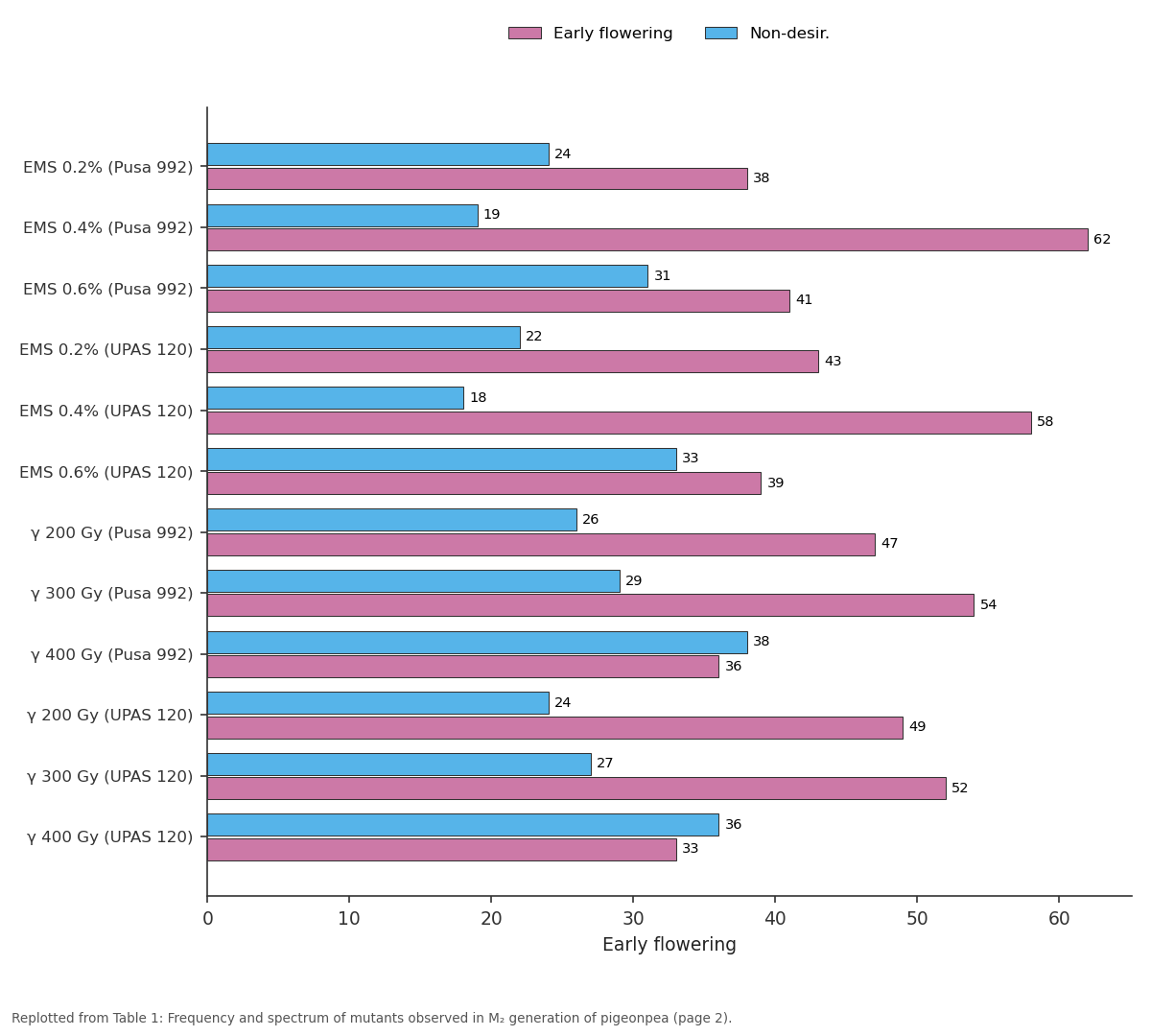
Early flowering and Non-desir.: EMS 0.2% (Pusa 992) vs EMS 0.4% (Pusa 992) vs EMS 0.6% (Pusa 992) vs EMS 0.2% (UPAS 120) vs EMS 0.4% (UPAS 120)
Replotted from Table 1 (page 2) of the original paper. Every bar is the paper's own table value.
View source evidence ↗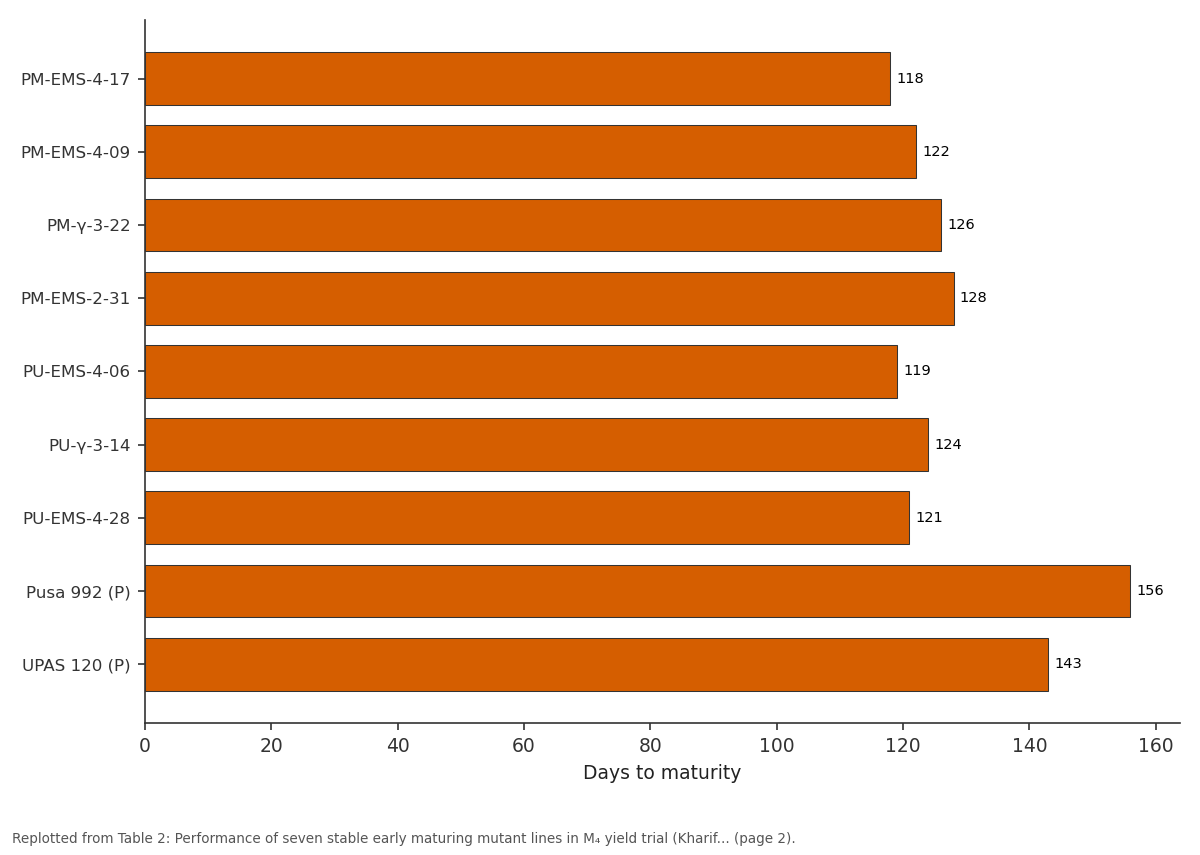
Days to maturity: PM-EMS-4-17 vs PM-EMS-4-09 vs PM-γ-3-22 vs PM-EMS-2-31 vs PU-EMS-4-06
Replotted from Table 2 (page 2) of the original paper. Every bar is the paper's own table value.
View source evidence ↗Figures & tables
From the original paper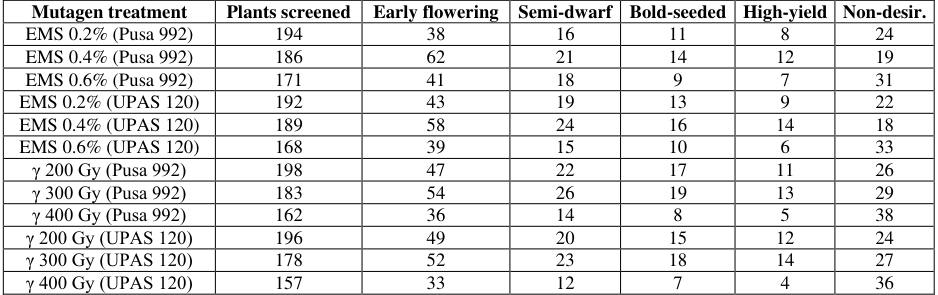 Table 1
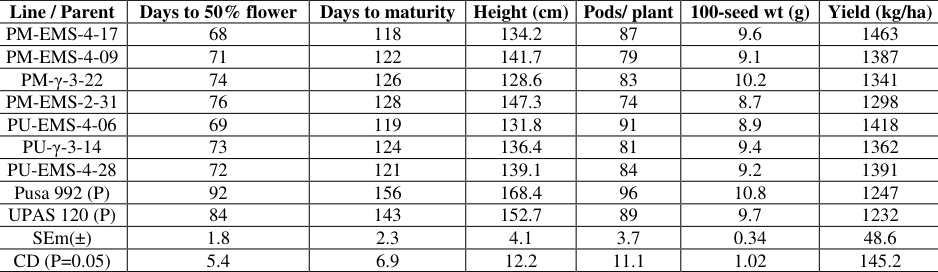 Table 2
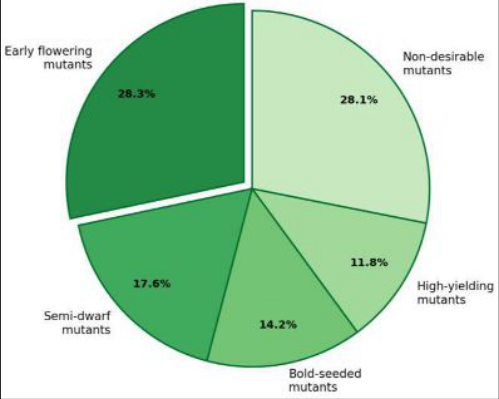 Figure 1
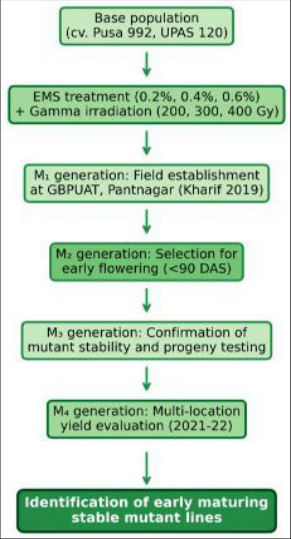 Figure 2
Introduction
India produces about 4.29 million tonnes of pigeonpea (Cajanus cajan L. Millsp.) annually on roughly 5.4 million hectares, accounting for close to 72% of global output [1] . But the crop's average yieldhovering near 780 kg/hahas barely moved in two decades, leaving a persistent gap between supply and domestic demand for dal. One structural reason is the long maturity duration of popular cultivars, which typically require 160-200 days from sowing to harvest and therefore don't fit easily into rice-wheat or maize-wheat rotations that dominate northern and central India [2] . Short-duration pigeonpea lines maturing in 110-140 days could resolve this bottleneck. They'd allow sowing after a rabi cereal harvest or ahead of a wheat crop without squeezing either season. Breeding for earliness through conventional hybridisation has yielded some progress -UPAS 120 and Pusa 992 flower earlier than traditional genotypesbut these lines still take 140-155 days to reach harvest maturity, which is too long for truly tight rotations in the Indo-Gangetic plains [3] . Induced mutagenesis offers a faster route. Chemical agents such as ethyl methanesulfonate (EMS) primarily cause point mutations through alkylation of guanine bases, generating highfrequency small-effect changes that can shift quantitative traits like flowering time without dismantling the genetic background [4] . Physical mutagens like gamma rays produce a broader spectrum of chromosomal damage, occasionally yielding dramatic phenotypic shifts. The combination of both mutagen types in a breeding programme widens the mutation spectrum and raises the odds of recovering desirable variants [5] . Several pulse cropschickpea, mungbean, urdbeanhave benefited from mutation breeding, with released varieties tracing their origin to irradiated or EMS-treated seed lots [6] . In pigeonpea, however, mutagenesis work remains limited, and most published reports stop at M₂ generation observations without advancing promising mutants to yield testing [7] . This research aimed to (a) induce genetic variability for maturity-related traits in two pigeonpea cultivars using EMS and gamma radiation, (b) identify and stabilise early maturing mutant lines through four generations, and (c) evaluate the yield potential of selected mutants under field conditions at Pantnagar, Uttarakhand [8] .
Material and Methods
Material and Methods
Research Area and Seasonal Context
The research was carried out at the Norman E. Borlaug Crop Research Centre of Govind Ballabh Pant University of Agriculture and Technology, Pantnagar, Uttarakhand (29.02°N, 79.49°E; 243.8 m altitude). The area sits in the Tarai belt with a humid subtropical climate, receiving about 1,400 mm of annual rainfall. Kharif-season temperatures during June-October ranged from 24 °C to 36 °C in 2019-2022. Soils are alluvial silty clay loam (Mollisol) with pH 7.1 and organic carbon 0.78%.
Material
Two released pigeonpea cultivars -Pusa 992 (medium duration, 155-160 days) and UPAS 120 (early-medium, 140-148 days)served as base populations. Certified seeds were procured from the Pulse Research Division, IARI, New Delhi. Chemical mutagenesis used EMS (Sigma-Aldrich, ≥99% purity) at three concentrations: 0.2%, 0.4%, and 0.6% (v/v) in phosphate buffer (pH 7.0). Physical mutagenesis employed ⁶⁰Co gamma radiation at 200, 300, and 400 Gy at the National Botanical Research Institute, Lucknow. An untreated control lot accompanied each parent [9] . Methods EMS-treated seeds (500 per treatment) were soaked for 6 hours at 25 °C, washed in running water for 30 minutes, and sown within 24 hours. Gamma-irradiated seeds were sown directly. The M₁ generation was raised during Kharif 2019 with 75 × 30 cm spacing. All surviving M₁ plants were harvested individually and their progeny sown as M₂ plantto-row progenies in Kharif 2020. In M₂, plants flowering before 90 days after sowing (DAS) were tagged, and those also bearing at least three productive pods per primary branch were selected. In M₃ (Kharif 2021), progenies of selected M₂ plants were tested for trait stability. Seven lines showing consistent early flowering and acceptable seed weight entered M₄ yield trials during Kharif 2022 using a randomised block design with three replications, each plot measuring 4 rows × 4 m. Days to 50% flowering, days to maturity, plant height, pods per plant, 100-seed weight, and grain yield per hectare were recorded [10] . Data were analysed by ANOVA and treatment means compared using CD at 5% probability [11] . Across all mutagen treatments and both parents, 2,174 M₂ plants were screened. Early flowering mutants constituted 28.3% of the total, followed by semi-dwarf types (17.6%) and bold-seeded variants (14.2%). EMS at 0.4% generated the highest proportion of desirable mutants in both cultivars -62 early flowering plants from Pusa 992 and 58 from UPAS 120with the lowest frequency of non-desirable types. Gamma radiation at 400 Gy produced the highest proportion of non-desirable (chlorophyll-deficient, sterile) mutants, confirming the harsher chromosomal damage at elevated doses [4,5] . In the M₄ trial, all seven mutant lines matured between 118
Results
and 128 days -15 to 38 days earlier than their respective parents. PM-EMS-4-17 (derived from Pusa 992 via 0.4% EMS) was the earliest, reaching maturity in 118 days with a yield of 1,463 kg/ha. PU-EMS-4-06, from UPAS 120 treated with 0.4% EMS, matured in 119 days and yielded 1,418 kg/ha. Both lines significantly outyielded their parents despite shorter crop duration, pointing to improved harvest index. The 100-seed weight of mutant lines ranged from 8.7 to 10.2 g, compared with 10.8 g (Pusa 992) and 9.7 g (UPAS 120), suggesting minor trade-offs in seed size [7,10] . Comprehensive Interpretation EMS at 0.4% was the most effective mutagen across both parent cultivars, producing the highest frequency of early flowering mutants and the lowest proportion of undesirable variants. The seven selected lines demonstrated that maturity duration can be shortened by 15-38 days without yield penaltyindeed, three lines exceeded parental yields. This apparent paradox likely reflects improved reproductive efficiency: shorter vegetative phases channelled more assimilates towards pods during the still-favourable September-October period, before terminal drought sets in [2, 8] .
Discussion
The mutation frequency pattern observed here -EMS at intermediate doses outperforming both lower and higher concentrationsaligns with classical mutagenesis theory. At 0.2% EMS, the alkylation load may have been too mild to generate enough variation, while at 0.6%, excessive DNA damage raised sterility and lethality, narrowing the pool of viable mutants [4] . The 0.4% dose evidently struck the right balance between mutagenic efficiency and plant survival. A similar dose-response curve was reported in mungbean by Wani and Khan (2006) and in urdbean by Singh et al.
(2013) [12,13] . Gamma irradiation at 300 Gy also produced a useful mutation spectrum, though the proportion of chlorophylldeficient and sterile types was higher than with EMSa known consequence of the double-strand breaks and large deletions that ionising radiation tends to cause [5] . The lower effectiveness of 400 Gy in both parents reinforces the idea that exceeding the LD₅₀ threshold reduces recoverable variation rather than expanding it. That mutant lines outyielded their parents despite shorter duration deserves emphasis. Conventional wisdom assumes a positive correlation between crop duration and yield in pigeonpea because longer growth periods allow more dry matter accumulation. But in northern India's tarai belt, lateseason moisture stress and low temperatures during November-December can curtail pod filling in long-duration genotypes [2] . Early mutants escaped this terminal stress and completed grain filling under more favourable conditions. This mechanismsometimes called drought escapehas been documented in chickpea and lentil as well [14] . The modest reduction in 100-seed weight among mutant lines (8.7-10.2 g vs parental 9.7-10.8 g) is a trade-off worth monitoring. While seed boldness matters commercially, the yield advantage and cropping-system flexibility offered by early maturity are likely to outweigh a minor decrease in seed size for most farmers [15] .
Conclusion
This research confirmed that induced mutagenesis can effectively shorten the maturity duration of pigeonpea while maintaining or improving grain yield. EMS at 0.4% concentration was the most efficient mutagen, producing the highest frequency of agronomically desirable variants and the lowest proportion of lethal or sterile mutants across both Pusa 992 and UPAS 120 backgrounds. Seven stable mutant lines were identified by M₄, all maturing between 118 and 128 days -15 to 38 days earlier than their parents. PM-EMS-4-17 and PU-EMS-4-06 stood out as the most promising, combining early maturity with yields exceeding 1,400 kg/ha. These lines are candidates for multi-location testing and potential release as short-duration varieties suited to the intensive cereal-based rotations of northern India. Future efforts should subject these mutant lines to wider adaptability trials across the Indo-Gangetic plains and evaluate their performance in intercropping systems with short-duration cereals. Molecular characterisation of the mutations underlying the early flowering phenotype would help understand the genetic basis and aid marker-assisted transfer to other genetic backgrounds.
Figures and tables from the paper
| Mutagen treatment | Plants screened | Early flowering | Semi-dwarf | Bold-seeded | High-yield | Non-desir. |
|---|---|---|---|---|---|---|
| EMS 0.2% (Pusa 992) | 194 | 38 | 16 | 11 | 8 | 24 |
| EMS 0.4% (Pusa 992) | 186 | 62 | 21 | 14 | 12 | 19 |
| EMS 0.6% (Pusa 992) | 171 | 41 | 18 | 9 | 7 | 31 |
| EMS 0.2% (UPAS 120) | 192 | 43 | 19 | 13 | 9 | 22 |
| EMS 0.4% (UPAS 120) | 189 | 58 | 24 | 16 | 14 | 18 |
| EMS 0.6% (UPAS 120) | 168 | 39 | 15 | 10 | 6 | 33 |
| γ 200 Gy (Pusa 992) | 198 | 47 | 22 | 17 | 11 | 26 |
| γ 300 Gy (Pusa 992) | 183 | 54 | 26 | 19 | 13 | 29 |
| γ 400 Gy (Pusa 992) | 162 | 36 | 14 | 8 | 5 | 38 |
| γ 200 Gy (UPAS 120) | 196 | 49 | 20 | 15 | 12 | 24 |
| γ 300 Gy (UPAS 120) | 178 | 52 | 23 | 18 | 14 | 27 |
| γ 400 Gy (UPAS 120) | 157 | 33 | 12 | 7 | 4 | 36 |
Table text extracted from the original PDF; superscript letters are shown inline. The original table image is below.
View original table image
| Line / Parent | Days to 50% flower | Days to maturity | Height (cm) | Pods/ plant | 100-seed wt (g) | Yield (kg/ha) |
|---|---|---|---|---|---|---|
| PM-EMS-4-17 | 68 | 118 | 134.2 | 87 | 9.6 | 1463 |
| PM-EMS-4-09 | 71 | 122 | 141.7 | 79 | 9.1 | 1387 |
| PM-γ-3-22 | 74 | 126 | 128.6 | 83 | 10.2 | 1341 |
| PM-EMS-2-31 | 76 | 128 | 147.3 | 74 | 8.7 | 1298 |
| PU-EMS-4-06 | 69 | 119 | 131.8 | 91 | 8.9 | 1418 |
| PU-γ-3-14 | 73 | 124 | 136.4 | 81 | 9.4 | 1362 |
| PU-EMS-4-28 | 72 | 121 | 139.1 | 84 | 9.2 | 1391 |
| Pusa 992 (P) | 92 | 156 | 168.4 | 96 | 10.8 | 1247 |
| UPAS 120 (P) | 84 | 143 | 152.7 | 89 | 9.7 | 1232 |
| SEm(±) | 1.8 | 2.3 | 4.1 | 3.7 | 0.34 | 48.6 |
| CD (P=0.05) | 5.4 | 6.9 | 12.2 | 11.1 | 1.02 | 145.2 |
Table text extracted from the original PDF; superscript letters are shown inline. The original table image is below.
View original table image
References
14 in the original paper- Saxena KB, Kumar RV, Rao PV. Pigeonpea nutrition and its improvement. J Crop Prod. 2002;5(1):227-260.
- Chauhan YS, Johansen C, Saxena KB. Physiological basis of yield variation in short-duration pigeonpea grown in different environments. J Agron Crop Sci. 1995;174(3):163-171.
- Sharma D, Green JM. Pigeonpea breeding. In: Nene YL, Hall SD, Sheila VK, editors. The Pigeonpea. Wallingford (UK): CAB International; 1990. p. 375399.
- Siddiqui SA, Singh S. Induced mutagenesis in grain legumes: a review. Plant Breed. 2010;129(5):485-492.
- Gaul H. Mutations in plant breeding. Radiat Bot. 1964;4(3):155-232.
- Ahloowalia BS, Maluszynski M, Nichterlein K. Global impact of mutation-derived varieties. Euphytica. 2004;135(2):187-204.
- Verma AK, Chand P. Mutation studies in pigeonpea: a brief review. Legume Res. 2005;28(1):1-8.
- Konzak CF, Nilan RA, Wagner J, Foster RJ. Efficient chemical mutagenesis. Radiat Bot. 1965;5(Suppl):4970.
- Indian Institute of Pulses Research. Improved production technology of pigeonpea. Kanpur: IIPR Bulletin; 2018. p. 1-44.
- Wani AA, Khan MH. Estimates of genetic variability in mutated populations and the scope of selection for yield attributes in Vigna radiata. Egypt J Biol. 2006;8:1-6.
- Singh VP, Singh M, Lal JP. Gamma ray and EMS induced genetic variability for quantitative traits in urdbean. Indian J Genet. 2013;60(1):89-96.
- Kumar J, Abbo S. Genetics of flowering time in chickpea and its bearing on productivity. Adv Agron. 2001;72:107-138.
- Tikle AN, Mishra SP, Gupta N. Genetic improvement of pigeonpea through mutagenesis. Res J Agric Sci. 2013;4(4):478-482.
- Khan S, Goyal S. Improvement of mungbean varieties through induced mutations. Afr J Plant Sci. 2009;3(8):174-180.