
Research article · 2024 · Full text
International Journal of Agriculture and NutritionPhotosynthetic response and water relations of drought-stressed sorghum under deficit irrigation
Volume 6(1) · Pages 171–174 · DOI: 10.33545/26646064.2024.v6.i1c.407 ↗
Research areasIrrigation Practices and Water ManagementPlant Stress Responses and ToleranceGenetics and Plant Breeding
Abstract
Author-writtenSorghum can survive drought better than most cereals, yet the physiological cost of that survival in terms of lost photosynthetic capacity and grain yield remains poorly quantified under managed deficit irrigation. This research measured photosynthetic rate, stomatal conductance, leaf water potential, relative water content, and proline accumulation in three sorghum genotypes (CSV 20, CSV 27, and SPV 2217) subjected to three irrigation regimes — 100%, 75%, and 50% of crop evapotranspiration (ETc) — at Vikram Dev Agricultural College, Jeypore, Odisha, during Kharif 2021. Severe deficit (50% ETc) reduced net photosynthesis by 47-54% and stomatal conductance by 62-71% compared with full irrigation. Leaf water potential dropped to −1.83 MPa in the most affected treatment. CSV 27 maintained the highest relative water content (68.4%) and proline levels (14.7 µmol/g FW) under severe stress, suggesting stronger osmotic adjustment. Grain yield declined 31-43% under 50% ETc, with CSV 27 recording the smallest loss. These results show that genotypic variation in water-relation traits can be exploited to select sorghum lines that sustain reasonable productivity under limited water supply.
Summary
Source-checkedPlain-language reading of the full paper, prepared with AI and checked against the text. Each point links to the authors' own words.
Why it matters
- Drought is the primary abiotic factor limiting global cereal production, with sorghum being particularly exposed. View evidence ↗
- While sorghum is known for drought tolerance, prolonged water shortages still significantly reduce its photosynthetic carbon gain and final grain yield. View evidence ↗
- Deficit irrigation provides a controlled method to study plant responses by maintaining water supply below the crop's full demand. View evidence ↗
The question
- The study aimed to quantify how 75% and 50% crop evapotranspiration (ETc) levels affect photosynthesis and stomatal conductance, compare how different genotypes handle osmotic adjustment and water status, and link these to grain yield. View evidence ↗
What they did
- The experiment used three sorghum genotypes: CSV 20 (high-yielding hybrid), CSV 27 (drought-tolerant), and SPV 2217 (advanced breeding line). View evidence ↗
- After the boot stage (55 days after sowing), plants were subjected to one of three irrigation regimes: 100%, 75%, or 50% of crop evapotranspiration (ETc). View evidence ↗
- Net photosynthetic rate and stomatal conductance were measured at the flag-leaf level using a portable system at 70, 85, and 100 days after sowing. View evidence ↗
- The researchers measured pre-dawn leaf water potential, relative water content (RWC), and free proline levels. View evidence ↗
What they found
- Severe water deficit (50% ETc) reduced net photosynthesis by 47-54% compared to full irrigation, with CSV 27 showing the least decline (42.7%) and SPV 2217 the most (52.5%). View evidence ↗
- Under severe deficit (50% ETc), stomatal conductance decreased by 62-71%. View evidence ↗
- Under severe stress, the CSV 27 genotype maintained the highest relative water content (68.4%) and the highest proline accumulation (14.7 µmol/g FW). View evidence ↗
- The lowest leaf water potential recorded was −1.83 MPa, observed in the SPV 2217 genotype under 50% ETc. View evidence ↗
- Severe deficit caused a 31-43% drop in grain yield; CSV 27 had the smallest loss (31%, from 3,612 to 2,497 kg/ha) and SPV 2217 the largest (43%, from 3,524 to 2,017 kg/ha). View evidence ↗
- A strong positive correlation (r² = 0.93) between stomatal conductance and net photosynthesis indicates that stomatal limitation was the main cause of photosynthetic decline. View evidence ↗
- The 75% ETc regime saved 25% of irrigation water while only reducing grain yield by 16-24%. View evidence ↗
What it means
- The authors conclude that CSV 27 is the most resilient genotype due to its superior osmotic adjustment capacity, which minimized yield losses under water stress. View evidence ↗
- The authors state that future research should pair gas-exchange traits with molecular markers for osmotic adjustment genes to speed up cultivar development. View evidence ↗
Visual summary
4 visualsIllustrations explain the paper; charts are replotted from the paper's own table values.
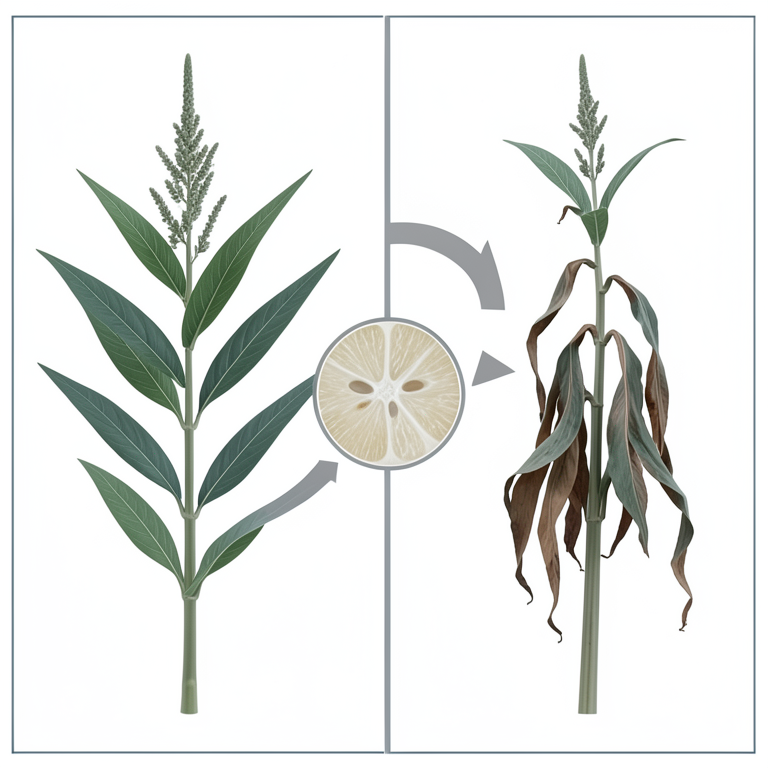
Stomatal Limitation Cascade
AI-generated conceptual illustration (sorghum plants). It explains the idea and does not show study data.
View source evidence ↗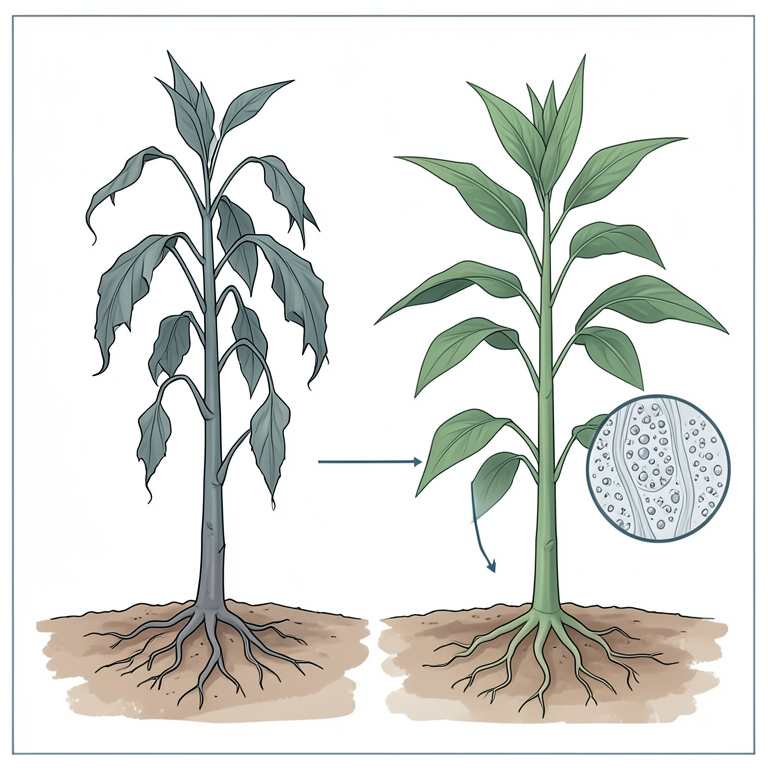
Osmotic Adjustment Mechanism
AI-generated conceptual illustration (sorghum plants). It explains the idea and does not show study data.
View source evidence ↗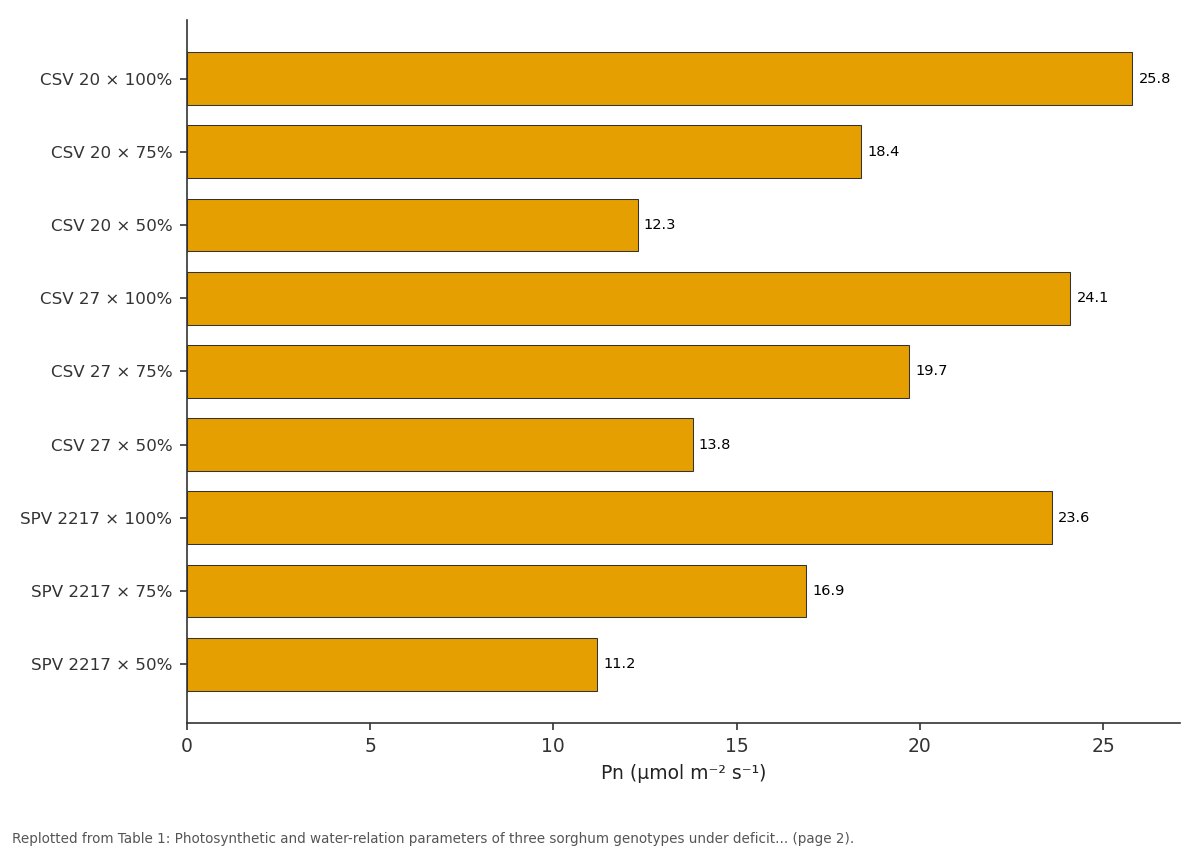
Pn (µmol m⁻² s⁻¹): CSV 20 × 100% vs CSV 20 × 75% vs CSV 20 × 50% vs CSV 27 × 100% vs CSV 27 × 75%
Replotted from Table 1 (page 2) of the original paper. Every bar is the paper's own table value.
View source evidence ↗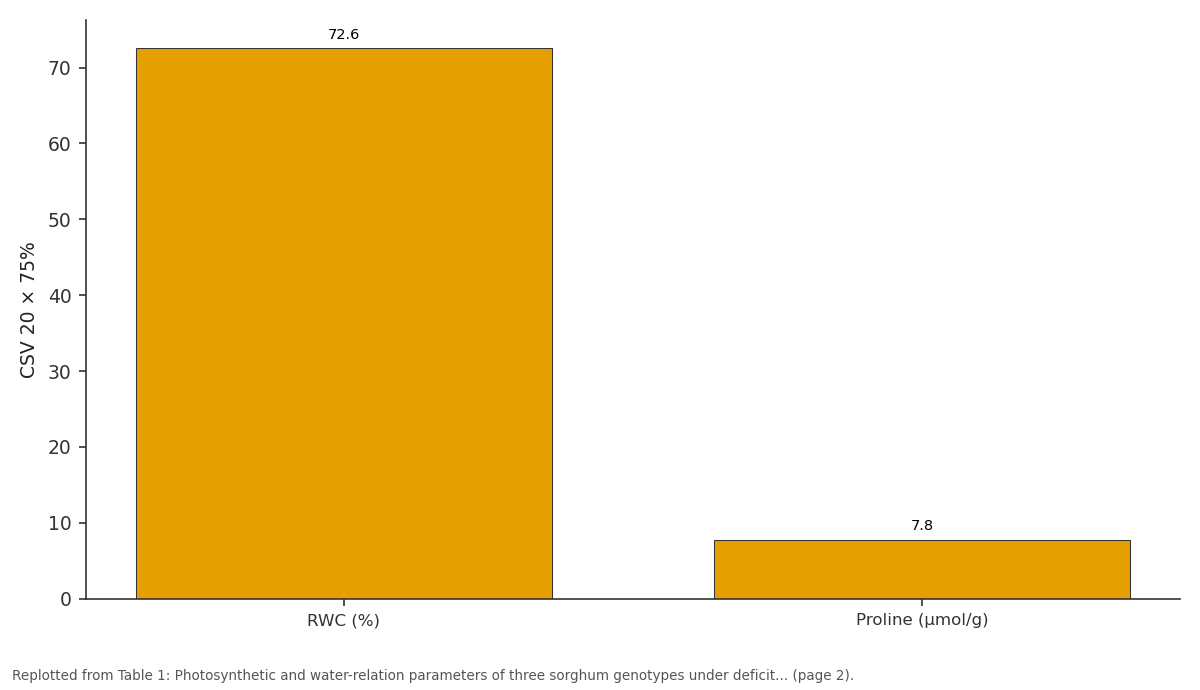
CSV 20 × 75%: RWC (%) vs Proline (µmol/g)
Replotted from Table 1 (page 2) of the original paper. Every bar is the paper's own table value.
View source evidence ↗Figures & tables
From the original paper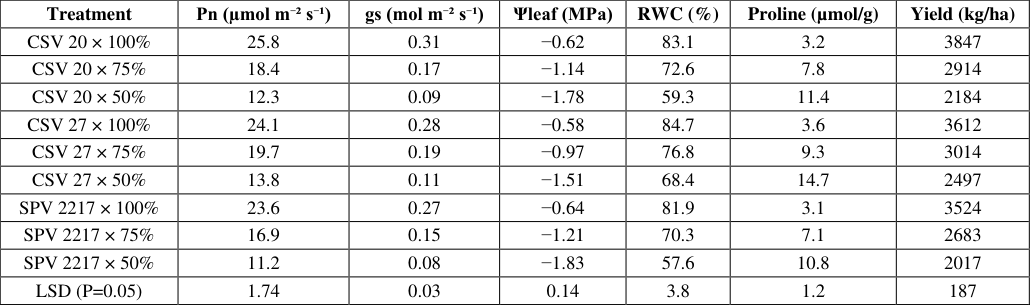 Table 1
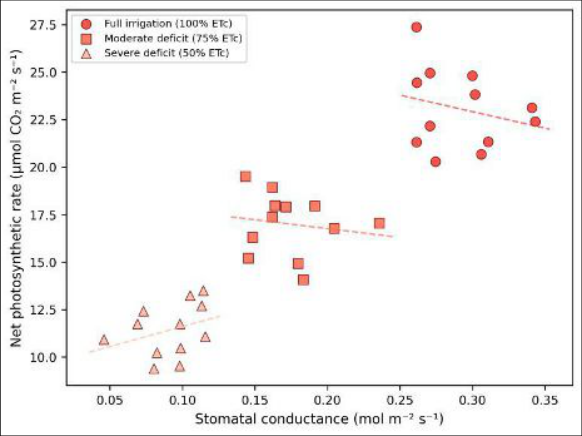 Figure 1
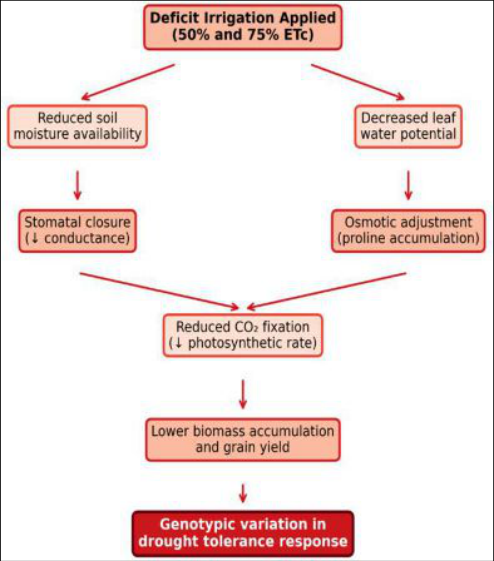 Figure 2
Introduction
Drought is the single largest abiotic constraint on global cereal production, and sorghum (Sorghum bicoloriL. Moench) sits at the front line. Grown overwhelmingly under rainfed conditions across semi-arid Africa and Asia, sorghum encounters soil moisture deficits in most seasonsand climate projections indicate that dry spells will intensify in the coming decades [1] . The crop's reputation as drought tolerant is well earned, but tolerance is not immunity; sustained water shortage still exacts a heavy penalty on photosynthetic carbon gain and ultimately on grain yield [2] . The physiological responses to water deficit are well characterised in broad terms. Stomatal closure limits transpirational water loss but simultaneously restricts CO₂ entry, lowering the substrate supply for the Calvin cycle and depressing net photosynthesis [3] . At the cellular level, osmotic adjustmentthe active accumulation of compatible solutes such as proline and glycine betainehelps maintain turgor pressure and enzyme function under low water potentials [4] . But the magnitude of these responses varies among genotypes, and it is this variation that breeders can target. Deficit irrigation, where water supply is deliberately maintained below full crop demand, offers a practical framework for studying these responses under controlled stress [5] . Unlike terminal drought in rainfed fields, deficit irrigation allows researchers to impose precise, repeatable stress levels at specific growth stages, teasing apart genotypic and environmental effects more cleanly. This research imposed three deficit irrigation levels on three sorghum genotypes during the grain-filling stagethe phase most sensitive to water shortageand measured a suite of photosynthetic and water-relation parameters. The objectives were (a) to quantify the depression in photosynthetic rate and stomatal conductance under 75% and 50% ETc, (b) to compare genotypic differences in osmotic adjustment and leaf water status, and (c) to link these physiological responses with grain yield outcomes [6] .
Material and Methods
Material and Methods
Research Area Description
The field experiment was conducted at the research farm of Vikram Dev Agricultural College, Jeypore, Odisha (18.85°N, 82.57°E; 580 m elevation). The area receives about 1,520 mm of annual rainfall, primarily during June-September. Soils are lateritic sandy loam (Oxisol) with pH 5.8, organic carbon 0.52%, and available N, P, K of 196, 18.3, and 174 kg/ha. Mean temperatures during the experimental period (July-November 2021) ranged from 22 °C (night minimum) to 34 °C (day maximum).
Material
Three sorghum genotypes -CSV 20 (a widely grown, high-yielding hybrid check), CSV 27 (a drought-tolerant release from NRCS, Hyderabad), and SPV 2217 (an advanced breeding line with good grain quality)were sown on 8 July 2021 at 45 × 15 cm spacing. Recommended basal fertilisation of 80:40:40 kg/ha N:P₂O₅:K₂O was applied, with half the nitrogen top-dressed at knee height [7] . The crop was irrigated uniformly until boot stage (55 DAS), after which three irrigation regimes were imposed: 100% ETc (full), 75% ETc (moderate deficit), and 50% ETc (severe deficit). ETc was estimated using the pan evaporation method with a crop coefficient of 0.75 for the reproductive phase [8] .
Methods
Net photosynthetic rate (Pn) and stomatal conductance (gs) were measured at flag-leaf level using a portable photosynthesis system (LI-6400XT, LI-COR, USA) between 09:00 and 11:00 h at 70, 85, and 100 DAS. Leaf water potential (Ψleaf) was determined pre-dawn using a Scholander-type pressure chamber (PMS 600, PMS Instruments, USA). Relative water content (RWC) was calculated as (FW -DW)/(TW -DW) × 100. Free proline was estimated by the acid-ninhydrin method of Bates et al. (1973) [9] . Grain yield was recorded at physiological maturity on a plot basis and converted to kg/ha. The experiment followed a split-plot design with irrigation regimes as main plots and genotypes as subplots, replicated three times. Data were analysed by ANOVA and means separated by LSD at p≤0.05 [10] .
Climatic Conditions during the Trial
Total rainfall during July-November 2021 was 1,187 mm, with 89% falling before September. October and November received only 67 mm combined, which helped maintain clear stress differentiation across irrigation treatments during the reproductive phase. Maximum daily temperatures during grain filling (September-October) ranged from 31 to 36 °C. [2,6] .
Results
Results
Comprehensive Interpretation
The tight positive relationship between stomatal conductance and net photosynthesis across all genotypeirrigation combinations (r² = 0.93) confirms that stomatal limitation was the primary driver of photosynthetic decline under deficit irrigation. CSV 27 maintained higher conductance values under stress, which sustained its photosynthetic rate and translated into a smaller yield penalty. The proline data support the interpretation that CSV 27 possesses a more active osmotic adjustment mechanism, enabling it to sustain turgor and gas exchange longer into a drying cycle [4,9] .
Discussion
The 47-54% reduction in net photosynthesis under 50% ETc is consistent with findings in sorghum by Vaadia et al.
(1961) and more recent work by Hasan et al. (2017), who reported 40-55% declines in similar stress ranges [2,3] . The near-linear relationship between stomatal conductance and photosynthetic rate suggests that non-stomatal limitationssuch as mesophyll conductance or Rubisco inhibitionplayed a secondary role at the stress levels imposed here. This interpretation aligns with Cornic (2000), who argued that stomatal effects dominate until leaf water potential drops below -2.0 MPa [11] .
CSV 27's superior performance can be attributed to its higher proline accumulation (14.7 µmol/g vs 10.8-11.4 µmol/g in other genotypes). Proline serves a dual role as osmolyte and free-radical scavenger, protecting both membrane integrity and photosynthetic electron transport [4] . The 68.4% RWC maintained by CSV 27 under severe deficitcompared with 57-59% in the otherstranslates to more functional photosynthetic machinery during the critical grain-filling window.
From an agronomic standpoint, the 75% ETc treatment offers a pragmatic compromise. It saved 25% of irrigation water while reducing yield by only 16-24%, depending on genotype. For water-scarce regions like southern Odisha, pairing CSV 27 with a 75% ETc regime could sustain reasonable productivity at lower water cost.
Conclusion
Deficit irrigation at 50% ETc imposed severe photosynthetic depression (47-54%) and substantial yield losses (31-43%) in sorghum, but the magnitude of these reductions varied clearly among genotypes. CSV 27 showed the strongest osmotic adjustment capacityevidenced by higher proline accumulation and better-maintained relative water content and consequently suffered the smallest yield penalty under both moderate and severe deficit regimes. The tight coupling between stomatal conductance and photosynthetic rate across all treatments confirms that stomatal limitation was the main bottleneck, and that genotypes capable of sustaining even marginally higher conductance under stress can preserve meaningful photosynthetic carbon gain. The 75% ETc regime appears to offer a practical water-saving strategy, reducing input by one-quarter with yield losses of 16-24%. Breeders targeting drought-prone sorghum belts should consider proline accumulation and RWC maintenance as physiological selection markers alongside grain yield. Further research pairing these gas-exchange traits with molecular markers for osmotic adjustment genes would accelerate the development of water-efficient sorghum cultivars.
Figures and tables from the paper
| Treatment | Pn (µmol m⁻² s⁻¹) | gs (mol m⁻² s⁻¹) | Ψleaf (MPa) | RWC (%) | Proline (µmol/g) | Yield (kg/ha) |
|---|---|---|---|---|---|---|
| CSV 20 × 100% | 25.8 | 0.31 | −0.62 | 83.1 | 3.2 | 3847 |
| CSV 20 × 75% | 18.4 | 0.17 | −1.14 | 72.6 | 7.8 | 2914 |
| CSV 20 × 50% | 12.3 | 0.09 | −1.78 | 59.3 | 11.4 | 2184 |
| CSV 27 × 100% | 24.1 | 0.28 | −0.58 | 84.7 | 3.6 | 3612 |
| CSV 27 × 75% | 19.7 | 0.19 | −0.97 | 76.8 | 9.3 | 3014 |
| CSV 27 × 50% | 13.8 | 0.11 | −1.51 | 68.4 | 14.7 | 2497 |
| SPV 2217 × 100% | 23.6 | 0.27 | −0.64 | 81.9 | 3.1 | 3524 |
| SPV 2217 × 75% | 16.9 | 0.15 | −1.21 | 70.3 | 7.1 | 2683 |
| SPV 2217 × 50% | 11.2 | 0.08 | −1.83 | 57.6 | 10.8 | 2017 |
| LSD (P=0.05) | 1.74 | 0.03 | 0.14 | 3.8 | 1.2 | 187 |
Table text extracted from the original PDF; superscript letters are shown inline. The original table image is below.
View original table image
References
14 in the original paper- Lobell DB, Burke MB, Tebaldi C, Mastrandrea MD, Falcon WP, Naylor RL. Prioritizing climate change adaptation needs for food security in 2030. Science. 2008;319(5863):607-610.
- Hasan MK, Cheng Y, Kanwar MK, Chu XY, Ahammed GJ, Qi ZY. Responses of plant proteins to heavy metal stress: a review. Front Plant Sci. 2017;8:1492.
- Cornic G. Drought stress inhibits photosynthesis by decreasing stomatal aperture -not by affecting ATP synthesis. Trends Plant Sci. 2000;5(5):187-188.
- Ashraf M, Foolad MR. Roles of glycine betaine and proline in improving plant abiotic stress resistance. Environ Exp Bot. 2007;59(2):206-216.
- Fereres E, Soriano MA. Deficit irrigation for reducing agricultural water use. J Exp Bot. 2007;58(2):147-159.
- Borrell AK, Hammer GL, Douglas ACL. Does maintaining green leaf area in sorghum improve yield under drought? I. Leaf growth and senescence. Crop Sci. 2000;40(4):1026-1037.
- All India Coordinated Sorghum Improvement Project. Annual Report 2020-21. Hyderabad: Indian Institute of Millets Research; 2021. p. 1-186.
- Allen RG, Pereira LS, Raes D, Smith M. Crop evapotranspiration: guidelines for computing crop water requirements. FAO Irrigation and Drainage Paper 56. Rome: FAO; 1998. p. 1-300.
- Bates LS, Waldren RP, Teare ID. Rapid determination of free proline for water stress studies. Plant Soil. 1973;39(1):205-207.
- Steel RGD, Torrie JH. Principles and Procedures of Statistics: A Biometrical Approach. 2nd ed. New York: McGraw-Hill; 1980. p. 1-633.
- Vaadia Y, Raney FC, Hagan RM. Plant water deficits and physiological processes. Annu Rev Plant Physiol. 1961;12:265-292.
- Blum A. Drought resistance, water use efficiency, and yield potential -are they compatible, dissonant, or mutually exclusive? Aust J Agric Res. 2005;56(11):1159-1168.
- Turner NC. Further progress in crop water relations. Adv Agron. 1997;58:293-338.
- Munns R, Tester M. Mechanisms of salinity tolerance. Annu Rev Plant Biol. 2008;59:651-681.