
Research article · 2024 · Full text
International Journal of Agriculture and NutritionEffect of foliar application of micronutrients on growth and yield of groundnut
Volume 6(1) · Pages 175–178 · DOI: 10.33545/26646064.2024.v6.i1c.408 ↗
Research areasPlant Micronutrient Interactions and EffectsAgricultural Science and FertilizationPeanut Plant Research Studies
Abstract
Author-writtenGroundnut (Arachis hypogaea L.) is one of India's most important oilseed crops, yet its yield potential is seldom realised because soil-applied micronutrients often remain unavailable in calcareous or high-pH soils. This research examined the effect of foliar sprays of zinc sulphate (0.5%), ferrous sulphate (0.5%), borax (0.2%), and their combination on growth and yield of groundnut (cv. Konkan Gaurav) at Dr. Balasaheb Sawant Konkan Agricultural University, Dapoli, Maharashtra, during Kharif 2021. A randomised block design with seven treatments and three replications was used. Two foliar applications were given at 30 and 50 days after sowing. The combined Zn+Fe+B treatment produced the tallest plants (48.3 cm), highest number of branches per plant (8.7), and greatest pod yield (2,316 kg/ha) — an increase of 27.4% over the untreated control (1,818 kg/ha). Kernel yield and shelling percentage followed the same trend. Among single-nutrient sprays, ZnSO₄ performed best, raising pod yield by 18.6%. Foliar boron improved flower retention by 14.2% relative to control. These results indicate that a combined Zn+Fe+B foliar spray at flowering and pegging stages can meaningfully boost groundnut productivity in the lateritic soils of the Konkan coast.
Summary
Source-checkedPlain-language reading of the full paper, prepared with AI and checked against the text. Each point links to the authors' own words.
Why it matters
- Groundnut is a critical oilseed crop in India, but its full yield potential is rarely met because micronutrients applied to the soil often become unavailable in high-pH or calcareous soils. View evidence ↗
- In the coastal plains of western India, acidic and iron-rich lateritic soils bind zinc and boron, making them unavailable to plant roots and widening the yield gap. View evidence ↗
- Foliar feeding avoids soil-based nutrient fixation by delivering micronutrients directly to the leaf mesophyll via stomatal and cuticular absorption. View evidence ↗
The question
- The study aimed to determine if applying zinc sulphate, ferrous sulphate, and borax, either alone or combined, via foliar spray could enhance the growth, flowering, and pod yield of groundnuts in Konkan lateritic soils. View evidence ↗
What they did
- The research used a randomised block design with seven treatments and three replications, conducted during Kharif 2021 at the Agronomy Research Farm in Dapoli, Maharashtra. View evidence ↗
- The seven treatments included a water spray control, individual applications of 0.5% ZnSO₄, 0.5% FeSO₄, and 0.2% borax, as well as various combinations of these three nutrients. View evidence ↗
- Two foliar applications were administered using a knapsack sprayer at 500 L/ha, timed at 30 days after sowing (flowering) and 50 days after sowing (pegging). View evidence ↗
- The researchers measured growth parameters (height, branches, leaf area index), flower retention, and various yield components (pods per plant, kernel yield, shelling percentage, and 100-kernel weight). View evidence ↗
What they found
- The combined Zn+Fe+B treatment (T7) was the most effective, achieving a pod yield of 2,316 kg/ha, which is a 27.4% increase compared to the control. View evidence ↗
- Among the single-nutrient treatments, zinc sulphate (ZnSO₄) performed the best, increasing pod yield by 18.6% over the control. View evidence ↗
- The combined treatment (T7) improved the shelling percentage from 67.2% to 73.4% and increased the 100-kernel weight from 36.8 g to 41.7 g. View evidence ↗
- Treatments containing borax resulted in a 14.2% increase in flower retention compared to the control. View evidence ↗
- Nutrient budget analysis revealed that the apparent foliar recovery rates were 14.8% for zinc, 11.3% for iron, and 9.6% for boron. View evidence ↗
What it means
- The authors conclude that two foliar applications of the combined Zn+Fe+B spray provide a cost-effective way for growers in western Maharashtra to avoid soil nutrient fixation and increase yields. View evidence ↗
- The authors noted that iron had lower foliar recovery, suggesting that future research should test chelated iron formulations to improve uptake. View evidence ↗
Visual summary
3 visualsIllustrations explain the paper; charts are replotted from the paper's own table values.
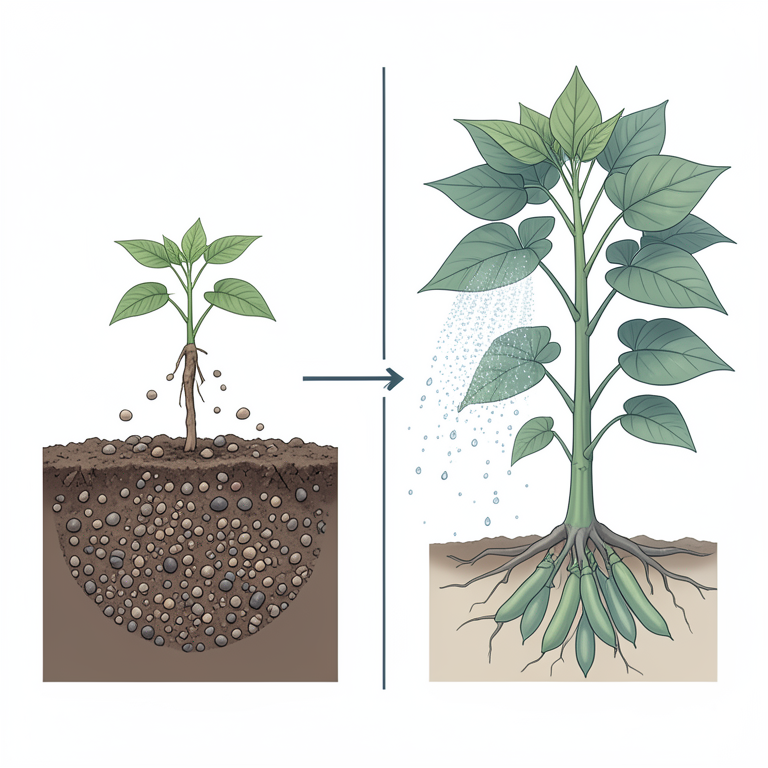
Comparison of Nutrient Application Methods
AI-generated conceptual illustration (groundnut plants). It explains the idea and does not show study data.
View source evidence ↗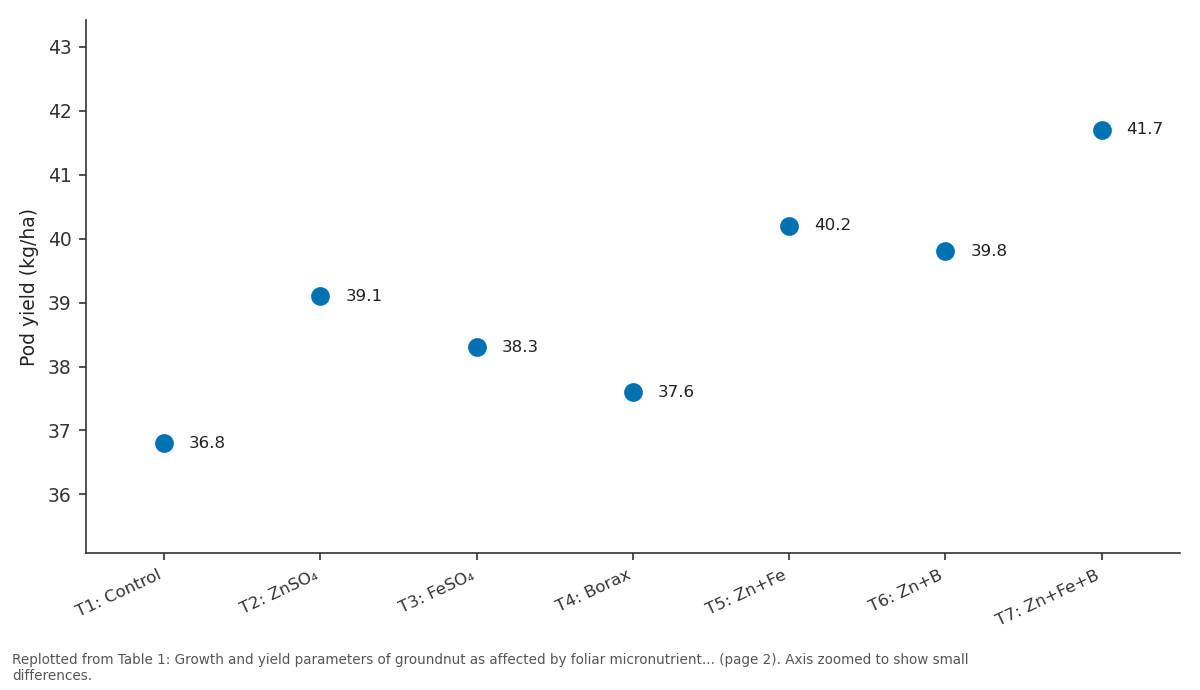
100-K wt (g): T1: Control vs T2: ZnSO₄ vs T3: FeSO₄ vs T4: Borax vs T5: Zn+Fe
Replotted from Table 1 (page 2) of the original paper. Every bar is the paper's own table value.
View source evidence ↗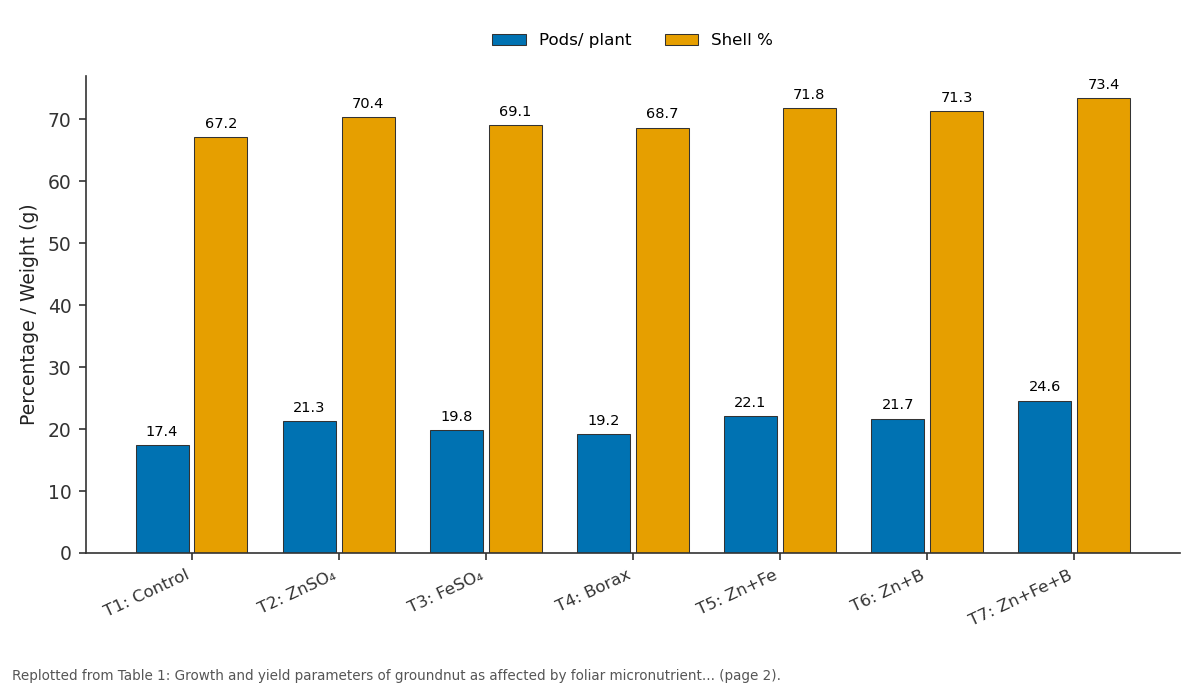
Pods/ plant and Shell %: T1: Control vs T2: ZnSO₄ vs T3: FeSO₄ vs T4: Borax vs T5: Zn+Fe
Replotted from Table 1 (page 2) of the original paper. Every bar is the paper's own table value.
View source evidence ↗Figures & tables
From the original paper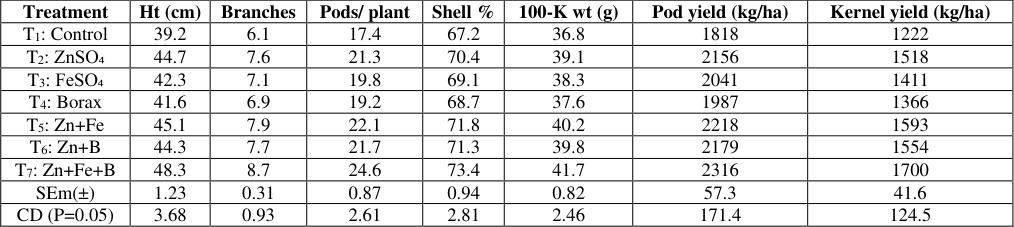 Table 1
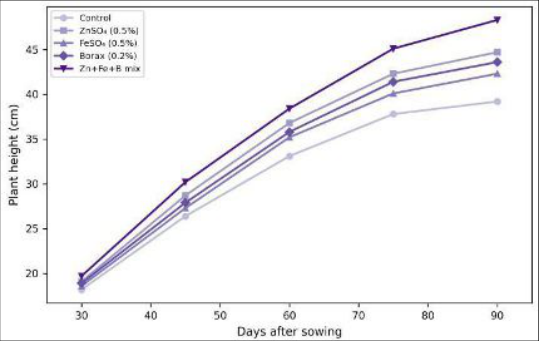 Figure 1
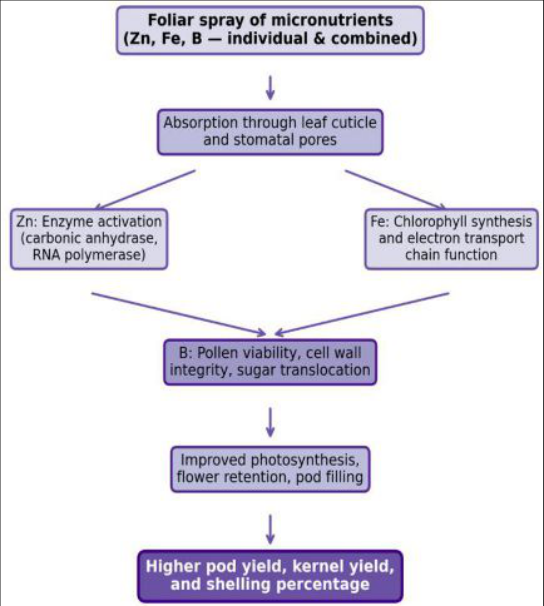 Figure 2
Introduction
For centuries, groundnut has served as a dual-purpose crop in tropical agricultureits kernels supplying edible oil and protein while its residues feed livestock and enrich soils through nitrogen fixation. India, the world's second-largest producer after China, harvested about 10.1 million tonnes from 5.8 million hectares in 2020-21, but average yields remain around 1,700 kg/habarely half the potential demonstrated on research stations [1] . The gap between achievable and actual yield is widest in the lateritic and coastal plains of western India, where inherently acidic, iron-rich soils paradoxically bind zinc and boron into forms unavailable to roots [2] . Soil application of micronutrients in such conditions often proves inefficient because the applied ions get fixed within hours of incorporation. Foliar feeding bypasses this problem entirely: spraying a dilute micronutrient solution onto actively growing leaves delivers the element directly to the mesophyll through cuticular and stomatal absorption [3] . Zinc is a cofactor for carbonic anhydrase, alcohol dehydrogenase, and RNA polymeraseenzymes central to carbon fixation, auxin metabolism, and protein synthesis. Iron drives chlorophyll formation and is embedded in the electron transport chain at photosystem I. Boron governs pollen tube growth, cell wall integrity, and sugar translocation from source to sink [4] . Earlier work on groundnut has mostly tested individual micronutrients or relied on soil application alone. Research combining foliar zinc, iron, and boron on a single crop is relatively uncommon, especially under Konkan coastal conditions where lateritic soils create a unique set of nutrient limitations [5] . And among the few combined-spray trials reported, most were conducted in the semi-arid Deccan, not in the high-humidity, high-rainfall Konkan belt where foliar absorption dynamics may differ due to thicker leaf cuticles and more frequent rain washing [6] . This research tested whether foliar application of ZnSO₄, FeSO₄, and boraxindividually and in combinationcould improve growth, flowering efficiency, and pod yield of groundnut under Konkan lateritic soil conditions. The trial was carried out at Dapoli, Maharashtra during Kharif 2021 [7] .
Material and Methods
Material and Methods
Field Experimental Design
The experiment was laid out in a randomised block design with seven treatments and three replications at the Agronomy Research Farm of Dr. Balasaheb Sawant Konkan Agricultural University, Dapoli, Maharashtra (17.76°N, 73.19°E; 250 m elevation) during Kharif 2021. Each plot measured 5 m × 3 m (gross area 15 m²). Treatments comprised: T 1control (water spray), T 2 -ZnSO₄ (0.5%), T 3 -FeSO₄ (0.5%), T 4borax (0.2%), T 5 -ZnSO₄ + FeSO₄, T 6 -ZnSO₄ + borax, and T 7 -ZnSO₄ + FeSO₄ + borax (combined). Randomisation was carried out using a random number table, and buffer rows of one metre separated adjacent plots to prevent spray drift contamination.
Material
Groundnut cv. Konkan Gaurav (a semi-spreading, mediumduration variety recommended for the Konkan region) was sown on 18 June 2021 at a spacing of 30 × 10 cm. Seed was treated with Rhizobium (200 g/kg seed) and Trichoderma viride (4 g/kg seed) before sowing. A basal dose of 25:50:00 kg/ha N:P₂O₅ was applied through urea and single super phosphate. FYM at 5 t/ha was incorporated two weeks before sowing [8] . Foliar sprays were applied at 30 DAS (onset of flowering) and 50 DAS (pegging stage) using a knapsack sprayer calibrated to deliver 500 L/ha. Analyticalgrade ZnSO₄•7H₂O, FeSO₄•7H₂O, and borax (Na₂B₄O₇•10H₂O) were dissolved in water at the specified concentrations, with 0.1% Tween-80 as a surfactant. Spraying was done in the late afternoon (16:00-17:00 h) to minimise evaporative loss [9] .
Methods
Observations were recorded on five randomly tagged plants per plot. Growth parametersplant height, number of branches, leaf area indexwere measured at 30, 60, and 90 DAS. Flower count was taken at peak flowering (45-50 DAS), and flower retention percentage was calculated as (pods formed / total flowers) × 100. Yield componentspods per plant, pod weight per plant, kernel yield, shelling percentage, and 100-kernel weightwere recorded at harvest. Pod yield and haulm yield were recorded on a whole-plot basis and converted to kg/ha. Data were analysed by ANOVA, and treatment means were compared using Duncan's multiple range test at p≤0.05 [10] .
Nutrient Budget
Soil samples (0-20 cm) were collected before sowing and after harvest from each plot. Available Zn (DTPAextractable), Fe (DTPA-extractable), and hot-water-soluble B were analysed to estimate the net change in available micronutrient status. The apparent recovery of foliar-applied nutrients was calculated as (nutrient uptake in treatednutrient uptake in control) / (nutrient applied via spray) × 100 [11] . The combined Zn+Fe+B treatment (T 7 ) produced the highest values across all parameters. Pod yield reached 2,316 kg/haa 27.4% increase over controland was significantly superior to all single-nutrient treatments. Among individual sprays, ZnSO₄ (T 2 ) gave the best response, raising pod yield by 18.6% over control. Two-nutrient combinations (T 5 , T 6 ) were intermediate. Shelling percentage improved from 67.2% (control) to 73.4% (T 7 ), and 100-kernel weight increased from 36.8 g to 41.7 g. Flower retention was 14.2% higher in the borax-containing treatments, pointing to boron's specific role in pollen viability and tube elongation [4,9] .
Results
Results
Comprehensive Interpretation
The additive response seen in T 7 suggests that Zn, Fe, and B act through complementary pathways -Zn boosting enzyme activity, Fe supporting chlorophyll and electron transport, and B securing reproductive successand that correcting all three deficiencies simultaneously removes a broader set of physiological bottlenecks than addressing any single nutrient alone [3,4] . The nutrient budget analysis showed apparent foliar recovery of 14.8% for Zn, 11.3% for Fe, and 9.6% for B, which are within ranges reported for foliar feeding in oilseed crops [11] .
Discussion
The 27.4% pod yield increase with combined Zn+Fe+B foliar spray aligns with reports by Chitdeshwari et al. (2011) from Tamil Nadu, who recorded a 22-30% yield gain in groundnut receiving similar combinations [12] . The stronger response compared with soil application is expected given Dapoli's lateritic soils, where high iron oxide content binds added zinc and boron into unavailable forms within days of application. Foliar delivery avoided this fixation entirely [2,5] . Zinc's contribution was the largest among single nutrients, likely because Zn deficiency impairs the activity of carbonic anhydrase, limiting CO₂ hydration at the chloroplast level and therefore constraining photosynthesis [3] . The 18.6% yield gain from ZnSO₄ alone is consistent with Cakmak's (2008) meta-analysis showing zinc as the most yieldresponsive foliar micronutrient in legumes [13] . Boron's primary value was in reproductive biology. The 14.2% improvement in flower retention matches Marschner's (1995) description of boron's role in pollen germination and tube elongationprocesses that directly determine peg formation and, consequently, pod number [14] . That borax alone increased pod yield by only 9.3% while its combination with Zn and Fe gave 27.4% suggests synergistic rather than merely additive effects, possibly because boron-mediated sugar translocation is more efficient when zinc-dependent enzyme systems and irondependent electron transport are also operating at full capacity.
The slightly lower apparent recovery of Fe (11.3%) compared with Zn (14.8%) likely reflects iron's tendency to form insoluble oxides on the leaf surface before complete absorptiona known challenge with foliar iron applications in humid climates [15] . Including a chelating agent such as Fe-EDTA in future trials could improve uptake efficiency.
Conclusion
Conclusion
Figures and tables from the paper
| Treatment | Ht (cm) | Branches | Pods/ plant | Shell % | 100-K wt (g) | Pod yield (kg/ha) | Kernel yield (kg/ha) |
|---|---|---|---|---|---|---|---|
| T1: Control | 39.2 | 6.1 | 17.4 | 67.2 | 36.8 | 1818 | 1222 |
| T2: ZnSO₄ | 44.7 | 7.6 | 21.3 | 70.4 | 39.1 | 2156 | 1518 |
| T3: FeSO₄ | 42.3 | 7.1 | 19.8 | 69.1 | 38.3 | 2041 | 1411 |
| T4: Borax | 41.6 | 6.9 | 19.2 | 68.7 | 37.6 | 1987 | 1366 |
| T5: Zn+Fe | 45.1 | 7.9 | 22.1 | 71.8 | 40.2 | 2218 | 1593 |
| T6: Zn+B | 44.3 | 7.7 | 21.7 | 71.3 | 39.8 | 2179 | 1554 |
| T7: Zn+Fe+B | 48.3 | 8.7 | 24.6 | 73.4 | 41.7 | 2316 | 1700 |
| SEm(±) | 1.23 | 0.31 | 0.87 | 0.94 | 0.82 | 57.3 | 41.6 |
| CD (P=0.05) | 3.68 | 0.93 | 2.61 | 2.81 | 2.46 | 171.4 | 124.5 |
Table text extracted from the original PDF; superscript letters are shown inline. The original table image is below.
View original table image
References
21 in the original paper- Directorate of Economics and Statistics. Agricultural Statistics at a Glance 2021. New Delhi: Ministry of Agriculture, Government of India; 2022. p. 1-315.
- Katyal JC, Rattan RK. Distribution of zinc in Indian soils. Fertiliser News. 2003;48(4):15-26.
- Cakmak I. Enrichment of cereal grains with zinc: agronomic or genetic biofortification? Plant Soil. 2008;302(1):1-17.
- Marschner H. Mineral Nutrition of Higher Plants. 2nd ed. London: Academic Press; 1995. p. 1-889.
- Naik SK, Das DK. Relative performance of chelated and non-chelated micronutrients on groundnut in an Alfisol. Indian J Fert. 2008;4(8):81-88.
- Waghmare RG, Shinde HJ, Patil PS. Response of groundnut to micronutrient application in lateritic soils. J Maharashtra Agric Univ. 2010;35(2):241-244.
- Reddy SR. Principles of Crop Production. 4th ed. New Delhi: Kalyani Publishers; 2015. p. 1-684.
- Dapoli Research Station. Package of Practices for Konkan Region Crops. Dapoli: DBSKKV Publication; 2019. p. 1-98.
- Kannan S. Mechanisms of foliar uptake of plant nutrients: accomplishments and prospects. J Plant Nutr. 2010;33(5):717-737.
- Panse VG, Sukhatme PV. Statistical Methods for Agricultural Workers. New Delhi: ICAR; 1985. p. 1381.
- Fernandez V, Eichert T. Uptake of hydrophilic solutes through plant leaves: current state of knowledge and perspectives of foliar fertilisation. Crit Rev Plant Sci. 2009;28(1-2):36-68.
- Chitdeshwari T, Savithri P, Mahimairaja S. Effect of foliar application of micronutrients on yield and nutrient uptake of groundnut. Madras Agric J. 2011;98(1-3):76-79.
- Cakmak I, Pfeiffer WH, McClafferty B. Biofortification of durum wheat with zinc and iron. Cereal Chem. 2010;87(1):10-20.
- Shorrocks VM. The occurrence and correction of boron deficiency. Plant Soil. 1997;193(1):121-148.
- Fernandez V, Brown PH. From plant surface to plant metabolism: the uncertain fate of foliar-applied nutrients. Front Plant Sci. 2013;4:289.
- Prasad R, Shivay YS, Kumar D. Agronomic biofortification of cereal grains with iron and zinc. Adv Agron. 2014;125:55-91.
- Singh AL, Basu MS, Singh NB. Mineral Disorders of Groundnut. Junagadh: National Research Centre for Groundnut; 2004. p. 1-85.
- Jat SL, Shivay YS, Parihar CM. Dual-purpose summer legumes: a strategy for improving soil health. Indian Farming. 2012;62(8):27-31.
- Rathore VS, Nathawat NS, Bhardwaj S, Yadav BM, Kumar M. Yield, water and nitrogen use efficiencies of groundnut under deficit irrigation. Agric Water Manag. 2014;146:237-245.
- Ramesh K, Thirumurugan V. Effect of seed pelleting and foliar nutrition on growth and yield of soybean. Madras Agric J. 2001;88(7-9):465-468.
- Tiwari KN, Dwivedi BS, Subba Rao A. Potassium and micronutrient management for improving crop yield in India. Indian J Fert. 2006;2(4):11-24.
Cited by 6
From OpenAlex, OpenCitations and reference lists read by Scinovex
- Enhancing growth and yield potential of sesame through interactive effects of nutrient management and growth regulation strategies
S Aruna, S Kandasamy, R Raman, M Meyyappan, K Dhanasekaran · International Journal of Research in Agronomy · 2026
To understand how the integrated use of nutrient management and growth regulation strategies can synergistically enhance growth and yield dynamics of sesame, this field experiment was conducted in the experimental farm, Faculty of Agriculture, Annamalai University, to evaluate the interactive effects of nutrient management and growth enhancement practices by involving foliar spray of plant growth regulators, micronutrients, NPK combinations and manual clipping practices. The experiment was laid out in a randomized block design with ten treatments replicated thrice comprising same levels (100 p
- Effect of mulching and foliar application on yield attributes of white sesame (Sesamum indicum L.)
Tsering Yangzom, Lipi Rina, Kasinam Doruk, Raja Hussain · International Journal of Research in Agronomy · 2026
A field experiment was conducted at Himalayan University, Jollang, Itanagar, Arunachal Pradesh., during the kharif season of 2025–2026 to study the effect of Mulching and Foliar Application on yield attribute of White Sesame (Sesamum indicum L.). The experiment was laid out in a Randomized Block Design (RBD) with seven treatments and three replications, combining mulching practices (stone and biodegradable) with foliar sprays (moringa leaf extract, seaweed extract, and fish meal) against a control. The results revealed that T₆ (Biodegradable mulch + Seaweed extract @ 0.5%) gave superior perfor
- Effect of foliar micronutrient application on morphological traits and seed yield of sesame (Sesamum indicum L.)
Ingole DR, SM Shinde, SJ Gahukar, Tayade AK, RA Sayyad, Deshmukh YR · International Journal of Advanced Biochemistry Research · 2026
A field experiment was conducted during Kharif 2025 at the Department of Agricultural Botany, Dr. Panjabrao Deshmukh Krishi Vidyapeeth, Akola, to evaluate the response of sesame (Sesamum indicum L.) variety AKT 64 to foliar micronutrient application. The experiment was laid out in a Randomized Block Design with three replications and eight treatments - T1: Boron (100 ppm); T2: Molybdenum (50 ppm); T3: Iron (100 ppm); T4: Zinc (100 ppm); T5: Manganese (100 ppm); T6: Zn+B+Fe (100+75+100 ppm); T7: Zn+B+Fe (100+100+100 ppm); and T8: Control (water spray) applied at 30, 45, and 60 days after sowing
- Influence of foliar applied micronutrients on seed quality characteristics of sesame (Sesamum indicum L.)
CL Sakhare, AM Misal, AH Rathod, HS Pedhekar, AR Gaikwad, SD Gulwade · International Journal of Advanced Biochemistry Research · 2026
A field experiment was conducted at the Quality Seed Production Unit, Khanapur-A, VNMKV, Parbhani, during the summer season of 2025–26 to evaluate the effect of foliar application of micronutrients on seed quality parameters of sesame (Sesamum indicum L.). The experiment comprised nine treatments laid out in a Randomized Block Design with three replications using the variety ‘TLT-10’. The treatments were: T1 – Control; T2 – Boron (Borax) @ 0.3 g/L; T3 – Zinc (ZnSO4) @ 0.3 g/L; T4 – Ferrous (FeSO4) @ 0.4 g/L; T5 – Manganese (MnSO4) @ 0.2 g/L; T6 – Boron + Ferrous; T7 – Zinc + Ferrous; T8 – Ferr
- Response of seed yield and quality parameters of sesame (Sesamum indicum L.) to foliar application of micronutrients
CL Sakhare, AM Misal, AH Rathod, SN Devkule, MP Wankhade, S.M. UMATE · International Journal of Advanced Biochemistry Research · 2026
A field experiment entitled “Effect of foliar application of micronutrients on seed yield and seed quality parameters in sesame (Sesamum indicum L.)” was conducted at the Experimental Farm of the Quality Seed Production Unit, Khanapur-A, Vasantrao Naik Marathwada Krishi Vidyapeeth, Parbhani, during the summer season of 2025–26, using sesame variety ‘TLT-10’. The experiment was conducted to determine the effects of different micronutrient treatments on growth, yield-attributing characters and seed quality parameters in sesame. The experiment was laid out in a Randomized Block Design (RBD) with
- Studies on the effect of foliar application of micronutrients on growth and yield attributes of sesame (Sesamum indicum) TMV 4 ↗
N Purushothaman, R. Rajavarthini, C Vengatesan, S. Anusha, JS Sarasdhana, V Manikandan et al. · The Pharma Innovation · 2024
A field experiment was conducted at experimental farm, Department of Agronomy, Imayam Institute of Agriculture and Technology during 2024 to study the effect of foliar application of micronutrients on growth and yield attributes of sesame crop. Sesame variety TMV 4 used as test crop. The field experiments were laid out in a Randomized Block Design with 8 treatments and 3