
Research article · 2024 · Full text
International Journal of Agriculture and NutritionHormonal regulation of pod setting and seed development in chickpea under temperature extremes
Volume 6(1) · Pages 179–182 · DOI: 10.33545/26646064.2024.v6.i1c.409 ↗
Research areasGenetic and Environmental Crop StudiesPlant Stress Responses and TolerancePlant Physiology and Cultivation Studies
Abstract
Author-writtenReproductive failure remains the principal cause of chickpea yield loss when temperatures deviate from the 15-25 °C comfort zone during flowering and podding. This research quantified the endogenous levels of five hormones — indole-3-acetic acid (IAA), gibberellic acid (GA₃), abscisic acid (ABA), cytokinin, and ethylene — in two chickpea genotypes (ICC 4958 and Pusa 362) exposed to optimal (20-25 °C), heat (35-40 °C), and cold (8-12 °C) regimes at Acharya Narendra Deva University of Agriculture, Ayodhya, during Rabi 2020-21. Plants were grown in temperature-controlled polyhouse chambers. Heat stress raised ABA by 157% and ethylene by 131% relative to optimal, while GA₃ and IAA declined by 40% and 31%, respectively. Cold stress produced intermediate hormonal shifts. Pod set dropped 34-52% under heat and 22-38% under cold. ICC 4958 maintained 18% higher cytokinin levels in developing seeds under heat, correlating with better seed filling and 14% higher 100-seed weight compared with Pusa 362. Correlation analysis revealed a strong negative association between ABA concentration and pod retention (r = −0.84). These results indicate that the ABA-ethylene surge and cytokinin deficit during reproductive stages are key hormonal drivers of yield loss under temperature extremes.
Summary
Source-checkedPlain-language reading of the full paper, prepared with AI and checked against the text. Each point links to the authors' own words.
Why it matters
- Chickpea yields are primarily reduced by reproductive failure when temperatures move outside the ideal range of 15-25 °C during the flowering and podding stages. View evidence ↗
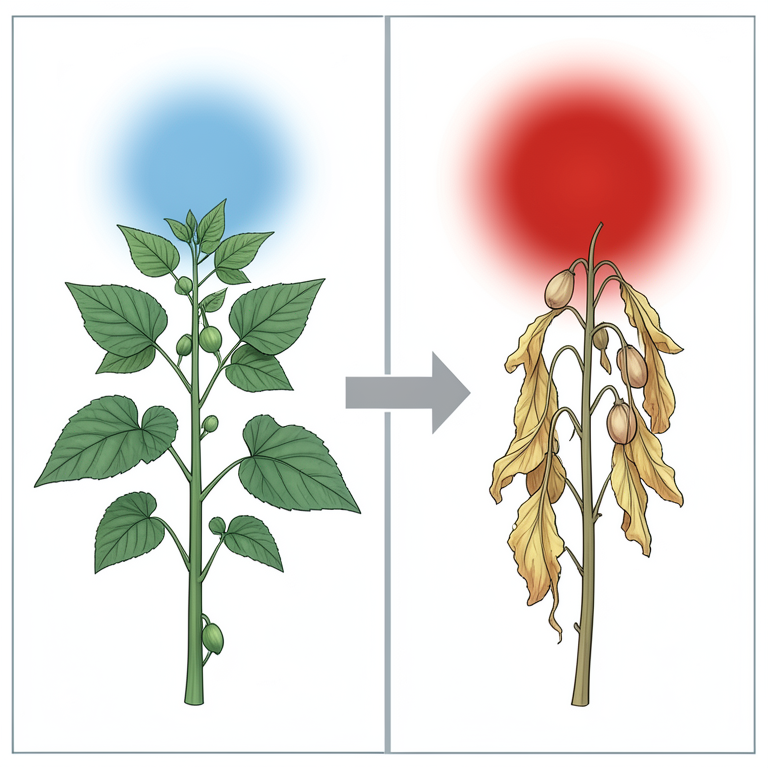
- Temperature stress typically disrupts the hormonal balance in plants, increasing inhibitors like abscisic acid (ABA) and ethylene while decreasing promoters like gibberellins and auxins. View evidence ↗
- Previous research has largely focused on the cellular results of temperature damage, such as pollen viability, rather than the upstream hormonal signals that cause these effects. View evidence ↗
The question
- The study aimed to quantify hormonal changes under different temperature regimes, link these changes to reproductive outcomes, and compare how different genotypes responded. View evidence ↗
What they did
- The experiment used two genotypes, the heat-tolerant ICC 4958 and the moderately sensitive Pusa 362, grown in 12-litre pots in Ayodhya during the 2020-21 Rabi season. View evidence ↗
- Plants were exposed to three temperature regimes starting at flowering: optimal (20/15 °C), heat (38/28 °C), and cold (12/6 °C). View evidence ↗
- IAA, GA₃, ABA, and cytokinins were quantified using HPLC-MS/MS after extraction in cold 80% methanol and C18 purification. View evidence ↗
- Ethylene evolution was measured via gas chromatography by sampling headspace gas from flower pedicels and young pods sealed in 50 mL vials for 2 hours. View evidence ↗
What they found
- Heat stress caused the most significant hormonal changes, increasing ABA by 157% (31.6 vs 12.3 ng/g FW) and ethylene by 131% (14.8 vs 6.4 nL/g/h) compared to optimal conditions. View evidence ↗
- Under heat stress, the growth-promoting hormones GA₃ and IAA declined by 39.8% and 30.6%, respectively. View evidence ↗
- Heat stress reduced pod set by 35.2% in the heat-tolerant ICC 4958 and by 51.8% in the sensitive Pusa 362. View evidence ↗
- Under heat stress, ICC 4958 outperformed Pusa 362 with 14% higher 100-seed weight (18.4 vs 15.7 g) and 41% higher seed yield per plant (8.3 vs 5.9 g). View evidence ↗
- The better seed filling in ICC 4958 under heat stress was linked to its ability to maintain 18% higher cytokinin levels in developing seeds. View evidence ↗
- Flower ABA concentration showed a strong negative correlation with pod set (r = -0.84), while GA₃ showed a strong positive correlation (r = 0.78). View evidence ↗
- A composite hormonal balance index, comparing promoters to inhibitors, explained 81% of the variation in pod set. View evidence ↗
What it means
- The authors recommend that breeders target the maintenance of cytokinin in developing seeds to improve temperature resilience, in addition to monitoring pollen viability. View evidence ↗
- The authors suggest that future research should investigate using exogenous growth regulators, such as gibberellic acid and synthetic cytokinins, to mitigate temperature-induced hormonal imbalances in the field. View evidence ↗
Visual summary
4 visualsIllustrations explain the paper; charts are replotted from the paper's own table values.
Hormonal Shift under Heat Stress
AI-generated conceptual illustration (chickpea plants (Cicer arietinum)). It explains the idea and does not show study data.
View source evidence ↗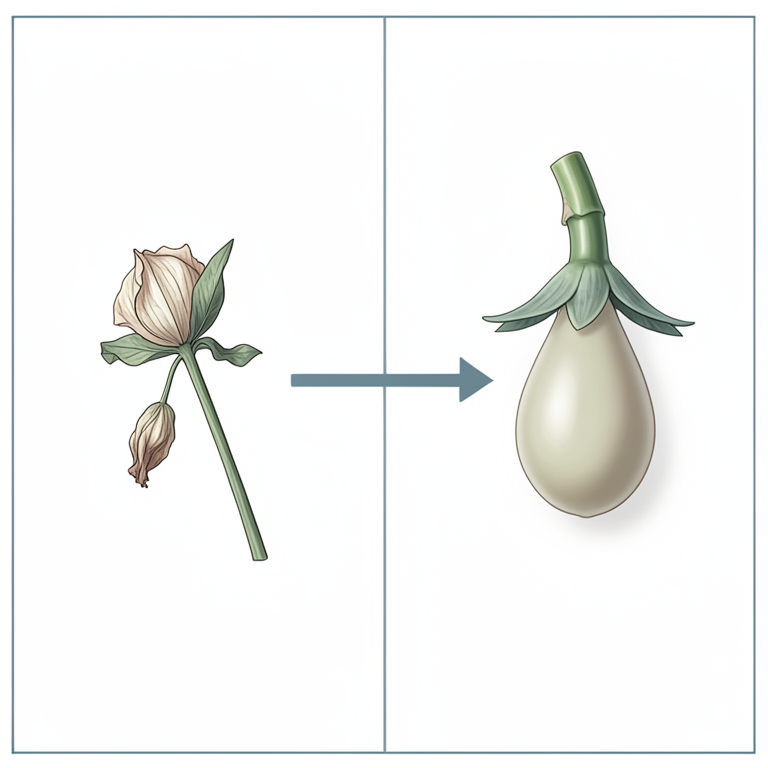
Hormonal Influence on Pod Set
AI-generated conceptual illustration (chickpea plants (Cicer arietinum)). It explains the idea and does not show study data.
View source evidence ↗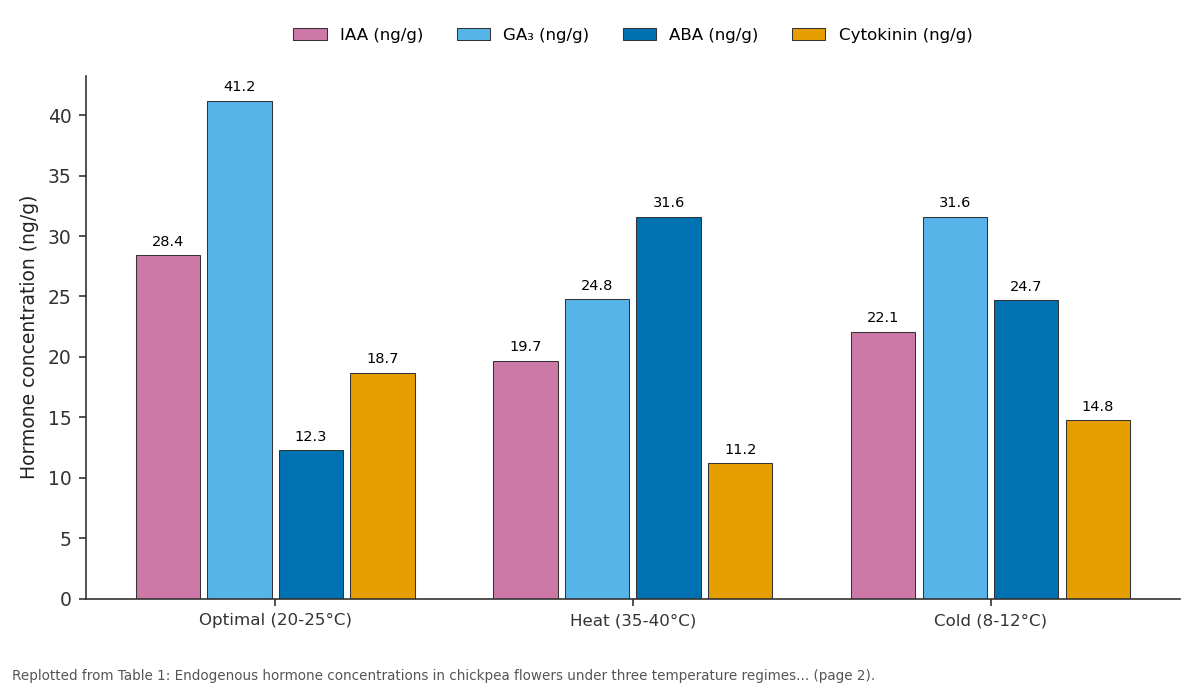
IAA (ng/g) and GA₃ (ng/g) and more: Optimal (20-25°C) vs Heat (35-40°C) vs Cold (8-12°C)
Replotted from Table 1 (page 2) of the original paper. Every bar is the paper's own table value.
View source evidence ↗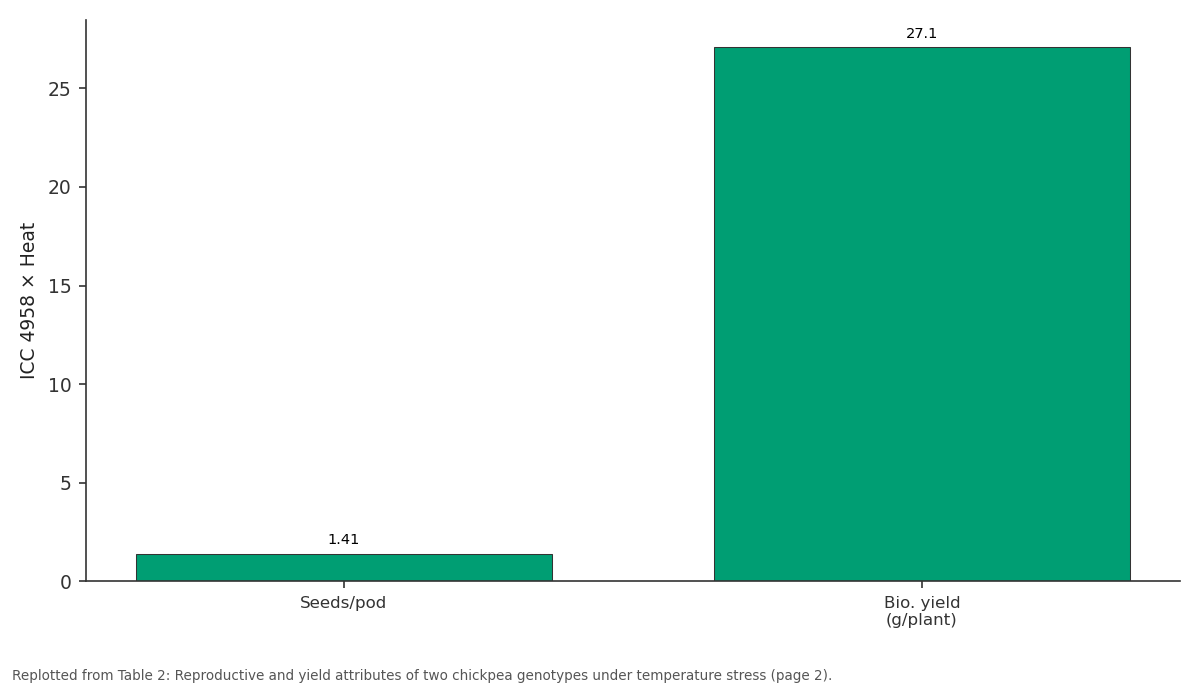
ICC 4958 × Heat: Seeds/pod vs Bio. yield (g/plant)
Replotted from Table 2 (page 2) of the original paper. Every bar is the paper's own table value.
View source evidence ↗Figures & tables
From the original paper Table 1
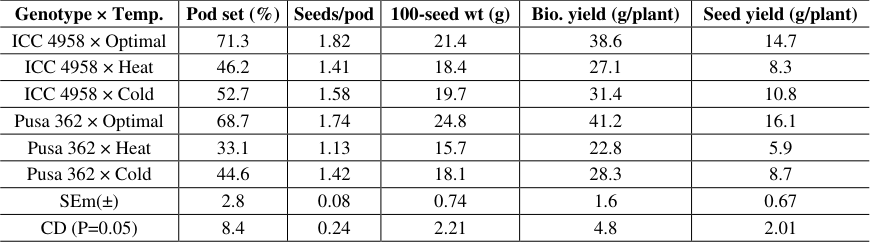 Table 2
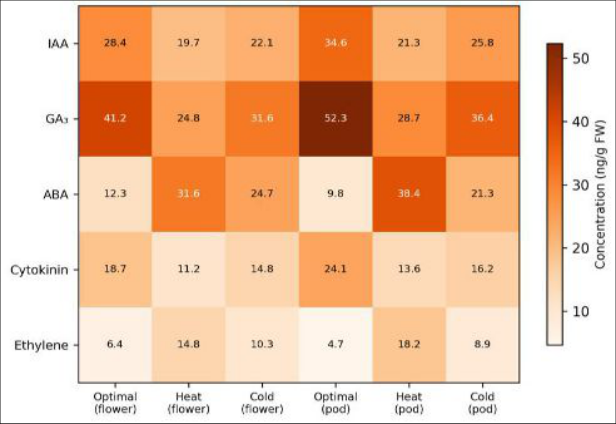 Figure 1
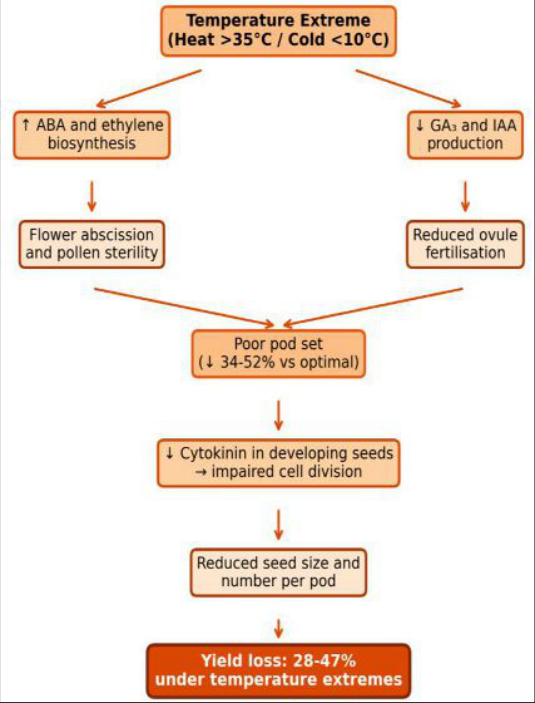 Figure 2
Introduction
Chickpea (Cicer arietinum L.) ranks as the world's third most-produced food legume, yet its yields collapse with distressing regularity when flowering coincides with temperature spikes or late-season cold waves. In the Indo-Gangetic plains, where the crop occupies nearly 8.5 million hectares, terminal heat above 35 °C during March is a near-annual event, while earlyseason cold below 10 °C in December-January damages flower buds in northern districts [1,2] . The physiological mediators of this damage are, overwhelmingly, hormones. Plant hormones coordinate every step of reproductive development: floral initiation, anther dehiscence, pollen germination, ovule fertilisation, pod retention, and seed filling. When temperature falls outside the permissive range, the hormonal balance shiftstypically towards elevated abscisic acid (ABA) and ethylene, and reduced gibberellins and auxins [3] . ABA triggers stomatal closure and flower abscission; ethylene accelerates senescence of floral organs. Together, they create a hostile internal environment for pod set. Meanwhile, declining cytokinin levels in developing seeds slow cell division, shrinking final seed size [4] . Most published work on chickpea reproductive stress has focused on pollen viability and stigma receptivitythe cellular endpoints of temperature damage. Far fewer reports have traced the upstream hormonal signals that govern those cellular outcomes [5] . And the handful that have measured endogenous hormone concentrations typically examined only one or two hormones, missing the interplay among the five major classes. This gap is important because hormones don't act in isolation; the ratio of promoters (GA₃, IAA, cytokinins) to inhibitors (ABA, ethylene) may matter more than the absolute level of any single hormone [6] . This research profiled all five major hormones in two chickpea genotypes exposed to controlled heat, cold, and optimal temperatures at Ayodhya, Uttar Pradesh. The objectives were (a) to quantify hormonal changes during flowering and pod development under each regime, (b) to link those changes with pod set, seed number, and seed weight, and (c) to compare genotypic differences in hormonal response [7] .
Material and Methods Crop Growth Stage Documentation
Chickpea growth stages were recorded following the BBCH decimal scale adapted for grain legumes. Key stages monitored were: BBCH 60 (first flower open), BBCH 65 (full flowering, 50% open flowers), BBCH 71 (first visible pods), BBCH 75 (50% pods at final length), and BBCH 89 (full maturity). Temperature treatments were imposed from BBCH 60 through BBCH 79 to capture the entire floweringto-pod-filling window, which lasted 28-34 days depending on genotype and temperature regime [8] .
Material
Two chickpea genotypes -ICC 4958 (heat-tolerant, desi type) and Pusa 362 (moderately sensitive, kabuli type)were grown in 12-litre pots filled with sterilised field soil (sandy loam, pH 7.4, OC 0.53%) at the Plant Physiology glasshouse complex, ANDUA, Ayodhya, during Rabi 2020-21. Sowing was done on 5 November 2020. Plants received recommended fertilisation (20:40:20 kg/ha N:P₂O₅:K₂O equivalent) and were irrigated to field capacity twice weekly. At the onset of flowering (approximately 50 DAS), pots were transferred to three temperature-controlled polyhouse chambers: optimal (20/15 °C day/night), heat (38/28 °C day/night), and cold (12/6 °C day/night). Relative humidity was maintained at 55-65% in all chambers. Each treatment-genotype combination had 15 replicate pots [9] .
Methods
Flower buds, open flowers, young pods (7 days after anthesis), and developing seeds (21 days after anthesis) were sampled from five plants per treatment at each stage. Endogenous IAA, GA₃, ABA, and cytokinins (zeatin + zeatin riboside) were extracted in cold 80% methanol, purified by C18 solid-phase extraction, and quantified by HPLC-MS/MS (Agilent 6460 Triple Quad) using deuterated internal standards [10] . Ethylene evolution was measured using a gas chromatograph (Shimadzu GC-2014) fitted with a flame ionisation detector; flower pedicels and young pods were sealed in 50 mL vials for 2 hours, and headspace gas was sampled with a gas-tight syringe. Pod set was recorded as the percentage of flowers forming pods at maturity. Seed number per pod, 100-seed weight, and biological yield per plant were measured at harvest. Data were analysed as a factorial CRD (2 genotypes × 3 temperatures) with five replications, using ANOVA and Tukey's HSD at P ≤ 0.05 [11] . [3,4] . ICC 4958's superior seed filling corresponded with 18% higher cytokinin levels in its developing seeds under heat (data from individual genotype analysis), suggesting that cytokinin-mediated cell division in the seed coat and endosperm was better sustained [4,6] .
Results
Results
Comprehensive Interpretation
Correlation analysis across all genotype-temperature combinations revealed that ABA concentration in flowers was negatively associated with pod set (r = -0.84, P<0.01), while GA₃ was positively associated (r = 0.78, P<0.01). The ratio of (GA₃ + IAA + cytokinin) to (ABA + ethylene)a composite hormonal balance indexexplained 81% of the variation in pod set (R² = 0.81), underscoring that the promoter-to-inhibitor balance drives reproductive success more than any single hormone [5,6] .
Discussion
The 157% surge in ABA under heat stress is among the highest reported for chickpea reproductive tissue. 90-140% range depending on the heat-tolerant or sensitive status of the line [3,12] . The higher magnitude here may reflect the slightly more extreme night temperature (28 °C vs 25 °C in earlier trials), which prevents overnight recovery of hormone homeostasis. Ethylene's parallel rise aligns with its known role as a senescence-promoting hormone that accelerates abscission zone formation in pedicels. When ABA and ethylene peak simultaneously, flower drop becomes almost inevitablea pattern well documented in soybean and common bean [13] .
The fact that ICC 4958 sustained 35% pod set even under this hormonal onslaught suggests that its pedicel abscission zone may be less sensitive to ethylene signalling, a trait worth investigating at the molecular level. The cytokinin deficit in developing seeds provides a mechanistic explanation for reduced seed size. Cytokinins regulate endosperm cell division during the first 14-21 days after fertilisation; their decline under heat directly limits the storage sink that later accumulates starch and protein [4] . ICC 4958's ability to maintain 18% higher cytokinin under heat correlates with its 14% heavier seeds, suggesting that even partial hormonal buffering translates into a measurable yield component advantage.
The composite hormonal balance index (R² = 0.81 for pod set prediction) could serve as a screening tool in breeding programmes. Measuring five hormones by HPLC-MS/MS is expensive, but a simplified index based on ABA and cytokinin alone explained 73% of variation and may be more practical for large-scale phenotyping [14] .
Conclusion
Temperature extremes during reproductive stages disrupted the endogenous hormonal balance in chickpea, with heat stress causing more severe shifts than cold. The ABAethylene surge and concurrent decline in GA₃, IAA, and cytokinin collectively reduced pod set by 35-52% and seed yield by 43-63% relative to optimal conditions. ICC 4958 demonstrated stronger hormonal buffering under heatparticularly in maintaining cytokinin levels during seed developmentwhich translated into better seed filling and smaller yield losses. The strong negative correlation between ABA and pod retention (r = -0.84) and the high explanatory power of the composite hormonal balance index (R² = 0.81) suggest that hormonal profiling can complement traditional phenotyping in selecting heat-tolerant chickpea lines. Breeders working on temperature resilience should consider cytokinin maintenance in developing seeds as a target trait, alongside the more commonly measured pollen viability. Future work should explore exogenous application of growth regulatorsparticularly gibberellic acid and synthetic cytokininsas a management strategy to partially counteract the hormonal imbalance caused by temperature stress in field conditions.
Figures and tables from the paper
| Temperature | IAA (ng/g) | GA₃ (ng/g) | ABA (ng/g) | Cytokinin (ng/g) | Ethylene (nL/g/h) |
|---|---|---|---|---|---|
| Optimal (20-25°C) | 28.4 | 41.2 | 12.3 | 18.7 | 6.4 |
| Heat (35-40°C) | 19.7 | 24.8 | 31.6 | 11.2 | 14.8 |
| Cold (8-12°C) | 22.1 | 31.6 | 24.7 | 14.8 | 10.3 |
| SEm(±) | 1.3 | 2.1 | 1.7 | 0.9 | 0.8 |
| CD (P=0.05) | 3.9 | 6.3 | 5.1 | 2.7 | 2.4 |
Table text extracted from the original PDF; superscript letters are shown inline. The original table image is below.
View original table image
| Genotype × Temp. | Pod set (%) | Seeds/pod | 100-seed wt (g) | Bio. yield (g/plant) | Seed yield (g/plant) |
|---|---|---|---|---|---|
| ICC 4958 × Optimal | 71.3 | 1.82 | 21.4 | 38.6 | 14.7 |
| ICC 4958 × Heat | 46.2 | 1.41 | 18.4 | 27.1 | 8.3 |
| ICC 4958 × Cold | 52.7 | 1.58 | 19.7 | 31.4 | 10.8 |
| Pusa 362 × Optimal | 68.7 | 1.74 | 24.8 | 41.2 | 16.1 |
| Pusa 362 × Heat | 33.1 | 1.13 | 15.7 | 22.8 | 5.9 |
| Pusa 362 × Cold | 44.6 | 1.42 | 18.1 | 28.3 | 8.7 |
| SEm(±) | 2.8 | 0.08 | 0.74 | 1.6 | 0.67 |
| CD (P=0.05) | 8.4 | 0.24 | 2.21 | 4.8 | 2.01 |
Table text extracted from the original PDF; superscript letters are shown inline. The original table image is below.
View original table image
References
17 in the original paper- Gaur PM, Jukanti AK, Varshney RK. Impact of genomic technologies on chickpea breeding strategies. Agronomy. 2012;2(3):199-221.
- Devasirvatham V, Tan DKY. Impact of high temperature and drought stresses on chickpea production. Agronomy. 2018;8(8):145.
- Nayyar H, Bains T, Kumar S. Low temperature induced floral abortion in chickpea: relationship to abscisic acid and cryoprotectants. Environmental and Experimental Botany. 2005;53(1):39-47.
- Yang J, Zhang J, Wang Z, Zhu Q, Liu L. Abscisic acid and cytokinins in the root exudates and leaves and their relationship to senescence and remobilisation of carbon reserves in rice. Planta. 2002;215(4):645-652.
- Sita K, Sehgal A, HanumanthaRao B, Nair RM, Prasad PVV, Kumar S, Gaur PM, Farooq M, Siddique KHM, Varshney RK, Nayyar H. Food legumes and rising temperatures: effects, adaptive functional mechanisms specific to reproductive growth stage and strategies to improve heat tolerance. Frontiers in Plant Science. 2017;8:1658.
- Croser JS, Clarke HJ, Siddique KHM, Khan TN. Lowtemperature stress: implications for chickpea improvement. Critical Reviews in Plant Sciences. 2003;22(2):185-219.
- AICRP. Annual Report 2020-21, All India Coordinated Research Project on Chickpea. Indian Institute of Pulses Research, Kanpur. 2021:1-212.
- Erskine W, Muehlbauer FJ, Sarker A, Sharma B (eds). The Lentil: Botany, Production and Uses. CABI, Wallingford. 2009:1-457.
- Krishnamurthy L, Gaur PM, Basu PS, Chaturvedi SK. Screening chickpea genotypes for temperature tolerance. Crop Science. 2011;51(5):2079-2094.
- Pan X, Welti R, Wang X. Quantitative analysis of major plant hormones in crude plant extracts by highperformance liquid chromatography-mass spectrometry. Nature Protocols. 2010;5(6):986-992.
- Snedecor GW, Cochran WG. Statistical Methods. 8th ed. Iowa State University Press, Ames. 1989:1-503.
- Kaushal N, Gupta K, Bhandhari K, Kumar S, Thakur P, Nayyar H. Proline induces heat tolerance in chickpea plants when it is applied during the reproductive stage. Journal of Plant Physiology. 2013;170(18):1517-1523.
- Djanaguiraman M, Prasad PVV. Ethylene production under high temperature stress causes premature leaf senescence in soybean. Functional Plant Biology. 2010;37(11):1071-1084.
- Clarke HJ, Siddique KHM. Response of chickpea genotypes to low temperature stress during reproductive development. Field Crops Research. 2004;90(2):323334.
- Farooq M, Nadeem F, Gogoi N, Ullah A, Alghamdi SS, Nayyar H, Siddique KHM. Heat stress in grain legumes during reproductive and grain-filling phases. Crop and Pasture Science. 2017;68(11):985-1005.
- Bhandari K, Siddique KHM, Turner NC, Kaur J, Singh S, Agrawal SK, Nayyar H. Heat stress at reproductive stage disrupts leaf carbohydrate metabolism, impairs reproductive function, and severely reduces seed yield in lentil. Journal of Crop Improvement. 2016;30(2):118-151.
- Sharma KD, Singh A, Sharma S. Role of plant hormones under temperature stress in legumes: a review. Physiology and Molecular Biology of Plants. 2019;25(3):589-608.