
Research article · 2025 · Full text
International Journal of Agriculture and NutritionIntegration of livestock and crop production for nutrient recycling in small farms
Volume 7(4) · Pages 113–116 · DOI: 10.33545/26646064.2025.v7.i4b.398 ↗
Research areasSustainable Agricultural Systems AnalysisAgricultural Science and FertilizationAgricultural Systems and Practices
Abstract
Author-writtenA small farmer in Upper Egypt faces a daily dilemma: buy expensive synthetic fertilizer for crops or feed that money to livestock—but rarely both. Integrated crop-livestock systems (ICLS) resolve this tension by recycling animal manure as crop fertilizer and crop residues as animal feed, creating a closed nutrient loop that reduces purchased input costs. This research quantified nutrient recycling efficiency, soil health changes, and economic outcomes in 60 integrated versus 60 crop-only small farms (< 2 feddan each) across Assiut governorate, Egypt, over three cropping seasons (2020-21 to 2022-23). Data were collected through farm surveys, soil sampling, and production records at the Upper Egypt Institute of Agricultural Sciences. Integrated farms recycled an average of 4.8 t of manure ha⁻¹ year⁻¹, supplying 38.4 percent of crop nitrogen demand and reducing synthetic fertilizer expenditure by EGP 8,740 ha⁻¹ (38.4%). Soil organic carbon increased by 0.21 percentage points over three years in ICLS farms versus 0.04 in crop-only farms. Wheat grain yield was 8.7 percent higher and berseem forage yield 14.3 percent higher under ICLS. Net farm income was 42.1 percent greater in integrated systems—EGP 34,680 versus EGP 24,410 per feddan. These findings demonstrate that even the smallest farms in Upper Egypt can benefit from structured crop-livestock integration as a pathway to sustainable intensification.
Summary
Source-checkedPlain-language reading of the full paper, prepared with AI and checked against the text. Each point links to the authors' own words.
Why it matters
- Small farmers in Upper Egypt often struggle to afford both synthetic fertilizers for their crops and feed for their livestock. View evidence ↗
- Integrated crop-livestock systems (ICLS) can reduce costs by creating a closed loop where manure fertilizes crops and crop residues feed animals. View evidence ↗
- There is limited research on ICLS in Upper Egypt, particularly regarding farm-level economic assessments in areas with high poverty and very small farms. View evidence ↗
The question
- The study aimed to quantify nutrient recycling from manure, measure changes in soil health over three seasons, and compare the economic outcomes of integrated versus crop-only small farms. View evidence ↗
What they did
- The study compared 60 integrated farms and 60 crop-only farms, each smaller than 2 feddan, in the Assiut governorate of Egypt from 2020-21 to 2022-23. View evidence ↗
- Integrated farms in the study typically kept 2-3 cattle, 5-8 goats, and 10-20 poultry. View evidence ↗
- Soil health was measured at a depth of 0-20 cm, analyzing pH, EC, available nitrogen, available phosphorus, exchangeable potassium, and organic carbon. View evidence ↗
- Economic performance was evaluated using a cost-of-cultivation framework that tracked variable costs and gross returns from crops, livestock, and manure. View evidence ↗
What they found
- Integrated farms applied 4.8 t ha⁻¹ yr⁻¹ of manure, which met 38.4% of crop nitrogen demand and reduced synthetic nitrogen use by 38.8% compared to crop-only farms. View evidence ↗
- At the end of the trial, soils in integrated systems had significantly higher levels of available nitrogen and phosphorus than those in crop-only systems. View evidence ↗
- Integrated farms achieved higher yields than crop-only farms, with wheat yields 8.7% higher (2.74 vs 2.52 t/fed) and berseem yields 14.3% higher (28.6 vs 25.0 t/fed). View evidence ↗
- Fertilizer costs were 38.4% lower for integrated farms (14,020 EGP/fed) compared to crop-only farms (22,760 EGP/fed). View evidence ↗
- Integrated farms had 42.1% higher net income (EGP 34,680 vs EGP 24,410 per feddan) despite having 15.4% higher total costs due to livestock expenses. View evidence ↗
What it means
- The authors conclude that structured integration of livestock and crops provides a realistic way for resource-constrained farmers in the Nile Valley to achieve sustainable intensification without needing more land or capital. View evidence ↗
- The authors note that integrated farming requires more labor and management skill than crop-only systems, which may be a challenge for labor-constrained households. View evidence ↗
Visual summary
3 visualsIllustrations explain the paper; charts are replotted from the paper's own table values.
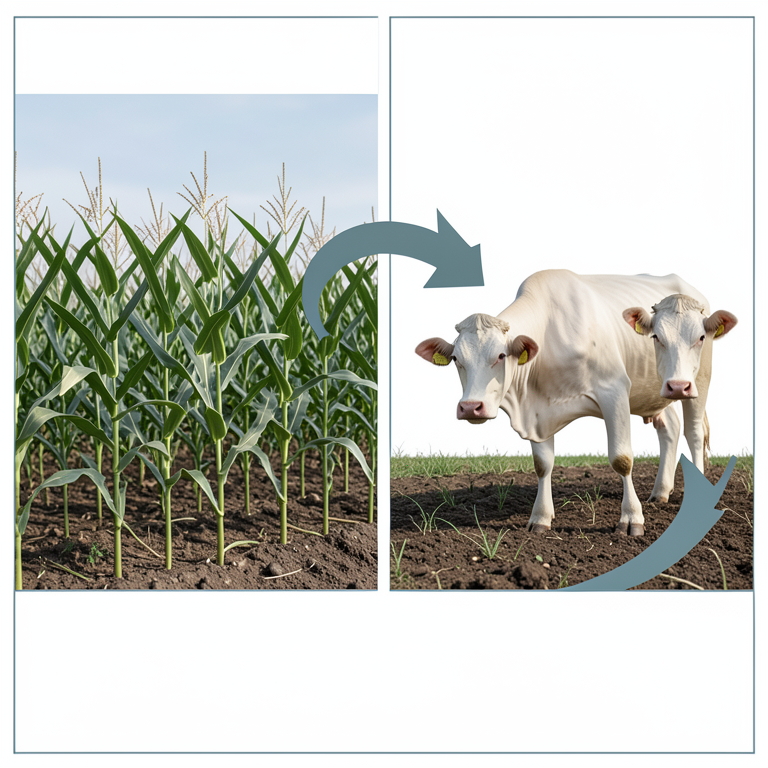
The ICLS Nutrient Loop
AI-generated conceptual illustration (cattle and maize plants on a small farm). It explains the idea and does not show study data.
View source evidence ↗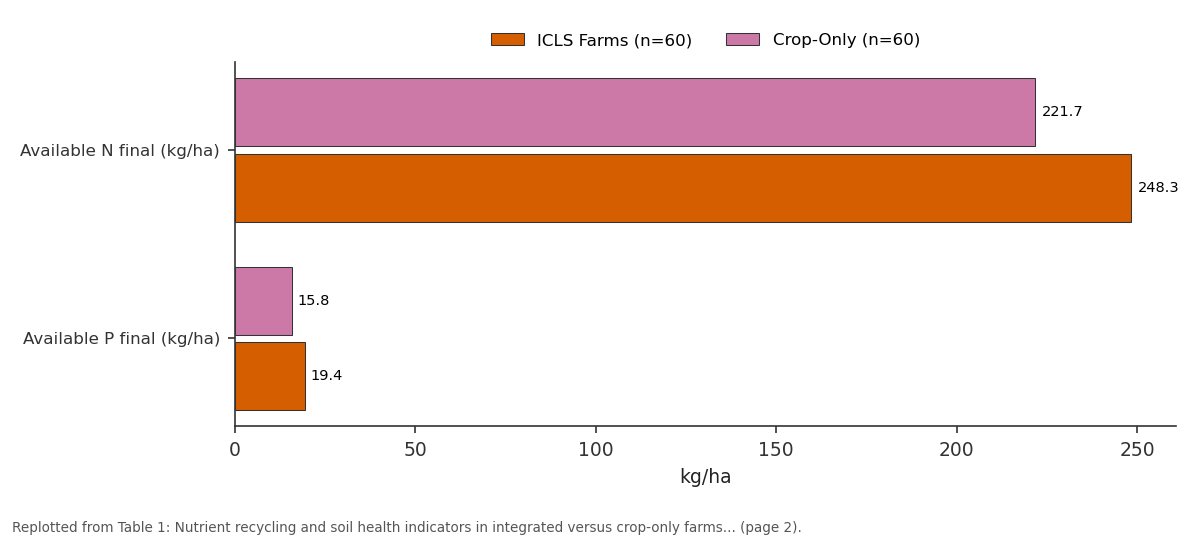
ICLS Farms (n=60) and Crop-Only (n=60): Available N final... vs Available P final...
Replotted from Table 1 (page 2) of the original paper. Every bar is the paper's own table value.
View source evidence ↗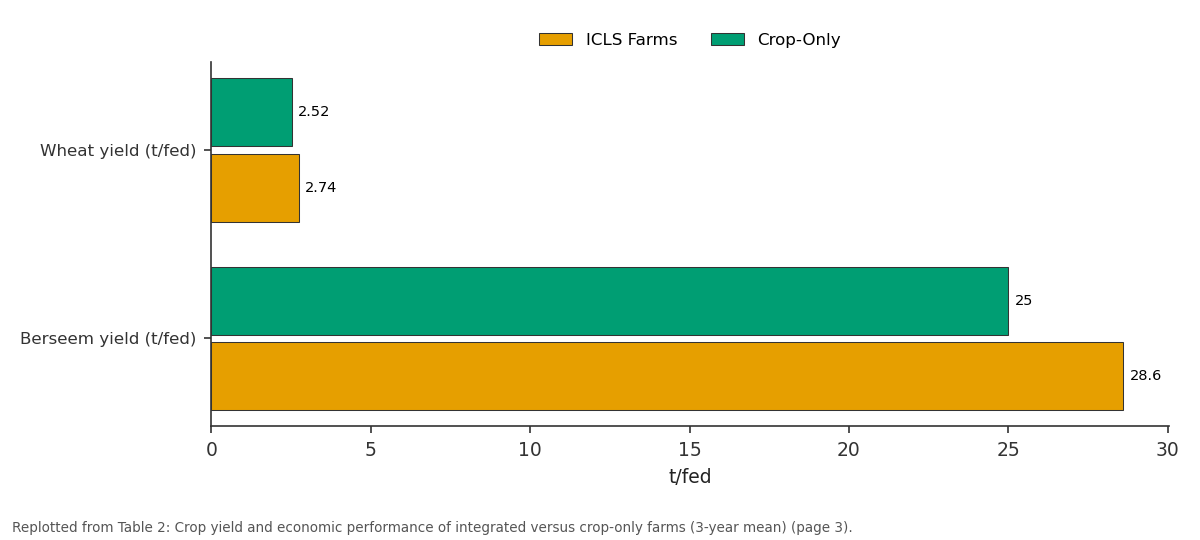
ICLS Farms and Crop-Only: Wheat yield (t/fed) vs Berseem yield (t/fed)
Replotted from Table 2 (page 3) of the original paper. Every bar is the paper's own table value.
View source evidence ↗Figures & tables
From the original paper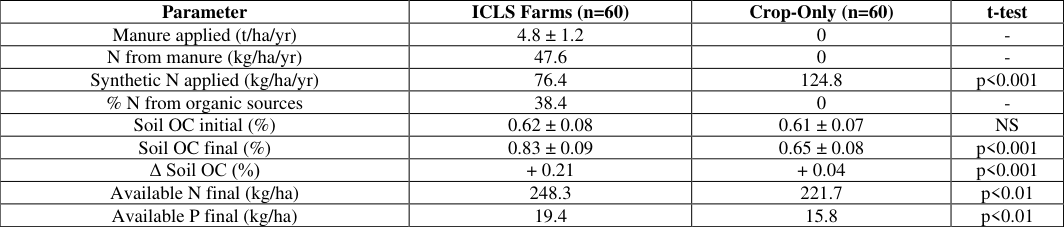 Table 1
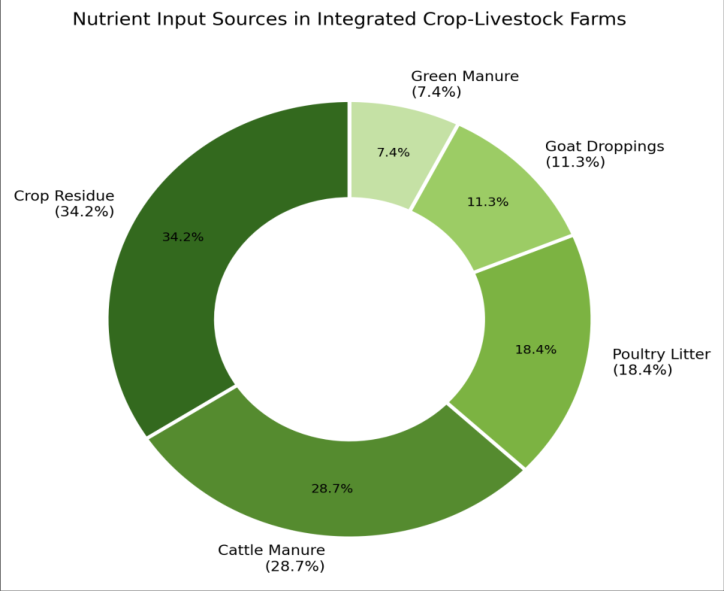 Figure 1
 Table 2
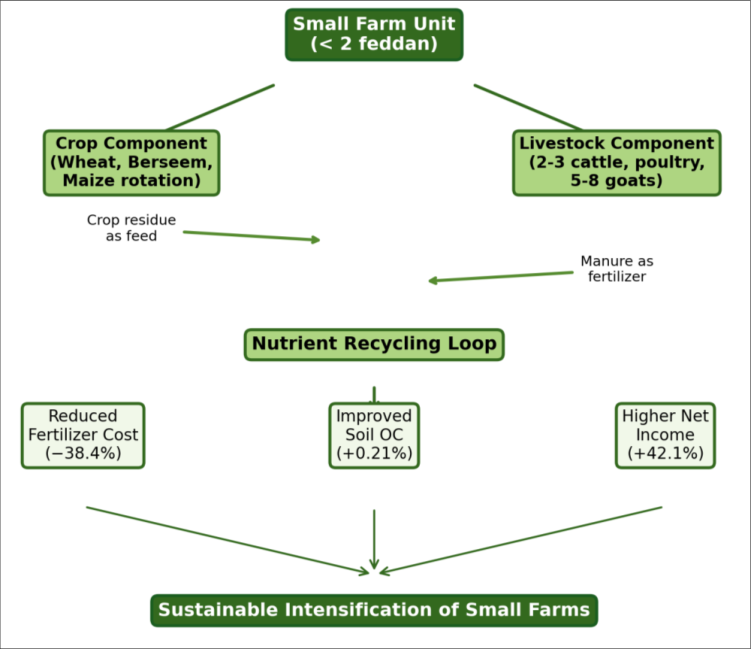 Figure 2
Introduction
Across Upper Egypt's Nile Valley, small farms of 1 to 2 feddan (0.42-0.84 ha) support both crop cultivation and a handful of livestock-typically 2 to 3 cattle, a few goats, and some poultry. But these two enterprises usually operate in parallel rather than in deliberate integration. Crop residues are burned or left to decompose in field margins, and manure piles up near animal shelters without systematic collection or composting [1] . The result is a double waste: nutrients that could feed the soil are lost, and the farmer spends money on synthetic fertilizers that organic sources could partly replace [2] . Integrated crop-livestock systems formalize the nutrient link between animals and crops. Crop residues and by-products become feed; manure and bedding return to the field as organic fertilizer; and the cycling of nitrogen, phosphorus, and potassium between compartments reduces the farm's dependence on external inputs [3] . In sub-Saharan Africa and South Asia, ICLS have been shown to increase net farm income by 20 to 50 percent while improving soil organic matter and reducing greenhouse gas intensity per unit of food produced [4,5] . In Egypt, the research base on ICLS is thin-most agronomic trials focus on either crops or livestock in isolation, and farm-level economic assessments of integration are rare for the Upper Egypt context where farms are smallest and poverty rates highest [6] . This research was designed to (i) quantify manure-based nutrient recycling in integrated versus crop-only small farms, (ii) measure soil health changes over three seasons, and (iii) compare the economics of the two systems.
Materials and Methods
Materials and Methods
Materials
The research was conducted from October 2020 to May 2023 across 120 small farms in three districts of Assiut governorate (27.18°N, 31.18°E): Abnoub, El-Fath, and Sahel Selim. Farms were purposively selected as matched pairs-60 integrated (crop + livestock) and 60 crop-only-based on similar land area (1.0-2.0 feddan), soil type (alluvial clay loam), and access to canal irrigation. The main crop rotation was wheat (rabi) -maize or berseem (summer/kharif) -fallow or catch crop. Integrated farms maintained 2-3 cattle (Baladi or crossbred), 5-8 goats, and 10-20 poultry. Data were collected through seasonal farm surveys (input use, production, sales), soil sampling (0-20 cm) at the start and end of the 3-year period, and manure quantity/quality assessments. All laboratory analyses were performed at the Upper Egypt Institute of Agricultural Sciences, Assiut.
Nutrient Budget Methodology
Nutrient inputs (N, P₂O₅, K₂O) tracked from all sources: synthetic fertilizer, manure, crop residue incorporation, and biological N fixation by berseem. Outputs were measured as nutrient removal in harvested grain, forage, and animal products. The partial nutrient balance was calculated as total inputs minus total outputs per hectare per year. Manure quality (N, P, K content) was analysed from composite samples collected quarterly from each integrated farm. Nitrogen contribution from manure was adjusted for 40 percent first-year availability following FAO guidelines [7] .
Methods
Soil organic carbon (Walkley-Black), pH, EC, available N (alkaline permanganate), available P (Olsen), and exchangeable K (ammonium acetate) were determined at 0-20 cm depth. Crop yields were recorded from 10 × 10 m harvest plots in each farm. Economic analysis used the costof-cultivation framework: total variable costs (seed, fertilizer, irrigation, labour, feed, veterinary) and gross returns (crop sales, livestock products, manure value). Net income and benefit-cost ratios were calculated. Data were analysed using independent t-tests (ICLS vs crop-only) and paired t-tests (initial vs final soil parameters) in SPSS 28. ICLS farms over three years-five times the gain in croponly farms (0.04%). Available N and P were also significantly higher in ICLS soils at the end of the trial. Despite 15.4 percent higher total costs (due to livestock feed and veterinary expenses), ICLS farms earned 42.1 percent higher net income-EGP 34,680 versus 24,410 per feddan-driven by both higher crop yields and additional income from milk, eggs, and live animal sales. The B:C ratio was 1.83 for ICLS versus 1.67 for crop-only systems.
Results
Results
Discussion
The 0.21 percentage point gain in soil OC over three years is notable for the hot, arid climate of Upper Egypt, where organic matter decomposition is rapid and OC values in conventional fields typically stagnate below 0.7 percent [8] .
Regular manure application appears to have shifted the carbon balance from near-zero to positive accumulation. Similar OC gains (0.15-0.30% over 3-5 years) have been reported from ICLS trials in semi-arid West Africa [9] and the Indo-Gangetic plains [4] . The 38.4 percent reduction in synthetic fertilizer use translates directly into cost savings for farmers who are acutely price-sensitive. With urea prices in Egypt rising by 40 percent between 2020 and 2023 [10] , the economic advantage of manure-based N supply has widened. And because manure also supplies P, K, and micronutrients, the soil fertility benefits extend beyond nitrogen alone. The 42.1 percent income advantage of ICLS comes with a caveat: integrated farming demands more labour and management skill than crop-only systems. Farmers must coordinate feeding schedules, manure collection, composting, and application timing-tasks that add complexity to an already labour-constrained household [3] . Extension programs that provide practical training on manure management and ICLS planning would be essential for scaling adoption.
Conclusion
Integrated crop-livestock farming on small farms in Upper Egypt recycled 38.4 percent of crop nitrogen demand through manure, raised soil organic carbon by 0.21 percentage points over three years, improved wheat and berseem yields by 8.7 and 14.3 percent, and increased net farm income by 42.1 percent compared with crop-only systems.
For the smallest and most resource-constrained farmers in the Nile Valley, structured integration of existing livestock and crop enterprises offers a realistic pathway to sustainable intensification without additional land or major capital investment. Extension support focused on manure composting technique and nutrient budgeting would accelerate adoption.
Figures and tables from the paper
| Parameter | ICLS Farms (n=60) | Crop-Only (n=60) | t-test |
|---|---|---|---|
| Manure applied (t/ha/yr) | 4.8 ± 1.2 | 0 | - |
| N from manure (kg/ha/yr) | 47.6 | 0 | - |
| Synthetic N applied (kg/ha/yr) | 76.4 | 124.8 | p<0.001 |
| % N from organic sources | 38.4 | 0 | - |
| Soil OC initial (%) | 0.62 ± 0.08 | 0.61 ± 0.07 | NS |
| Soil OC final (%) | 0.83 ± 0.09 | 0.65 ± 0.08 | p<0.001 |
| Δ Soil OC (%) | + 0.21 | + 0.04 | p<0.001 |
| Available N final (kg/ha) | 248.3 | 221.7 | p<0.01 |
| Available P final (kg/ha) | 19.4 | 15.8 | p<0.01 |
Table text extracted from the original PDF; superscript letters are shown inline. The original table image is below.
View original table image
| Parameter | ICLS Farms | Crop-Only | Difference |
|---|---|---|---|
| Wheat yield (t/fed) | 2.74 | 2.52 | +8.7% |
| Berseem yield (t/fed) | 28.6 | 25.0 | +14.3% |
| Fertilizer cost (EGP/fed) | 14,020 | 22,760 | −38.4% |
| Total cost (EGP/fed) | 41,830 | 36,240 | +15.4% |
| Gross return (EGP/fed) | 76,510 | 60,650 | +26.1% |
| Net income (EGP/fed) | 34,680 | 24,410 | +42.1% |
| B:C ratio | 1.83 | 1.67 | +9.6% |
Table text extracted from the original PDF; superscript letters are shown inline. The original table image is below.
View original table image
References
21 in the original paper- Abou-Zeid ST, El-Damarawy YA. Crop residue management practices in the Nile Valley. Egyptian Journal of Soil Science. 2018;58(3):287-296.
- Tittonell P, Giller KE. When yield gaps are poverty traps: the paradigm of ecological intensification in African smallholder agriculture. Field Crops Research. 2013;143:76-90.
- Herrero M, Thornton PK, Notenbaert AM. Smart investments in sustainable food production: revisiting mixed crop-livestock systems. Science. 2010;327(5967):822-825.
- Behera UK, Sharma AR, Das TK. Integrated croplivestock farming systems for the livelihood security of small and marginal farmers in India. Current Science. 2015;108(7):1311-1317.
- Lemaire G, Franzluebbers A, Carvalho PCF. Integrated crop-livestock systems: strategies to achieve synergy between agricultural production and environmental quality. Agriculture, Ecosystems and Environment. 2014;190:4-8.
- El-Nahrawy MA. Country pasture/forage resource profiles: Egypt. FAO; 2011. Rome.
- FAO. Fertilizer use by crop in Egypt. Food and Agriculture Organization of the United Nations; 2005. Rome.
- Abdel-Fattah MK, Merwad AMA. Soil organic carbon dynamics in arid and semi-arid Egyptian soils. Archives of Agronomy and Soil Science. 2019;65(11):15711583.
- Rufino MC, Rowe EC, Delve RJ. Nitrogen cycling efficiencies through resource-poor African croplivestock systems. Agriculture, Ecosystems and Environment. 2006;112(4):261-282.
- CAPMAS. Annual bulletin of fertilizer prices and distribution in Egypt. Central Agency for Public Mobilization and Statistics; 2023. Cairo.
- Powell JM, Pearson RA, Hiernaux PH. Crop-livestock interactions in the West African drylands. Agronomy Journal. 2004;96(2):469-483.
- Lal R. Soil carbon sequestration impacts on global climate change and food security. Science. 2004;304(5677):1623-1627.
- Devendra C, Thomas D. Smallholder farming systems in Asia. Agricultural Systems. 2002;71(1-2):17-25.
- Thornton PK, Herrero M. Potential for reduced methane and carbon dioxide emissions from livestock and pasture management in the tropics. Proceedings of the National Academy of Sciences. 2010;107(46):1966719672.
- Russelle MP, Entz MH, Franzluebbers AJ. Reconsidering integrated crop-livestock systems in North America. Agronomy Journal. 2007;99(2):325334.
- Sumberg J. Livestock nutrition and foodstuff research in Africa: when is a nutritional constraint not a constraint? Animal Science. 2002;75(3):332-338.
- Hendrickson JR, Hanson JD, Tanaka DL. Principles of integrated agricultural systems: introduction to processes and definition. Renewable Agriculture and Food Systems. 2008;23(4):265-271.
- Ibrahim M, Guerra L, Casasola F. Importance of silvopastoral systems for mitigation of climate change and harnessing of environmental benefits. Tropical and Subtropical Agroecosystems. 2010;12(1):71-80.
- De Wit J, Oldenbroek JK, Van der Kamp H. Livestock component in mixed farming systems in developing countries. Livestock Production Science. 1995;42(23):213-227.
- Staal SJ, Baltenweck I, Waithaka MM. From household to regional level impacts of dairy production in Kenya. Kenya Agricultural Research Institute; 2002. Smallholder Dairy Project Report.
- Tarawali SA, Herrero M, Descheemaeker K. Economic and environmental impacts of improved crop-livestock production systems in developing countries. Livestock Science. 2011;139(1-2):72-85.