
Research article · 2026 · Full text
International Journal of Biology SciencesConservation agriculture in tropical cropping systems: Implications for soil health and productivity
Volume 8(4) · Pages 109–115 · DOI: 10.33545/26649926.2026.v8.i4b.802 ↗
Research areasSoil Management and Crop YieldPlant and soil sciencesSoil Science and Environmental Management
Abstract
Author-writtenConservation agriculture (CA) has emerged as an effective strategy to improve soil health, enhance crop productivity, and promote sustainability in tropical cropping systems (Lal, 2015). Tropical agro-ecosystems frequently experience challenges such as soil erosion, nutrient depletion, land degradation, erratic rainfall, and climate change vulnerability that threaten long-term agricultural productivity (FAO, 2017). Conservation agriculture is based on three core principles: minimum soil disturbance, permanent soil cover, and diversified crop rotations that support ecological balance and soil functioning (Hobbs et al., 2008). These practices improve soil structure, enhance microbial diversity, increase soil organic carbon, and promote efficient nutrient cycling processes (Six et al., 2004). Research indicates that CA systems enhance soil physical, chemical, and biological properties, resulting in improved soil fertility and resilience (Palm et al., 2014). Residue retention and cover cropping significantly increase biomass inputs and contribute to soil organic carbon accumulation in tropical soils (Blanco-Canqui & Lal, 2008). Improved soil aggregation and organic matter stabilization under CA enhance water retention capacity and nutrient availability (Bronick & Lal, 2005). Several studies demonstrate that conservation agriculture increases soil carbon sequestration potential and strengthens climate resilience in agricultural systems (Paustian et al., 2016). Long-term experimental evidence suggests that CA improves soil organic carbon stocks and contributes to sustainable soil management (Powlson et al., 2014). CA practices also reduce soil erosion losses and improve water use efficiency, which is critical for tropical rainfed agriculture (Thierfelder & Wall, 2010). Yield stability under CA systems has been reported in many tropical cropping systems due to improved soil moisture retention and nutrient availability (Kassam et al., 2012). Thus, conservation agriculture is widely recognized as a climate-resilient approach that enhances resource use efficiency and environmental sustainability (Montgomery, 2007). This review synthesizes recent findings on conservation agriculture in tropical systems, focusing on soil health indicators, productivity benefits, challenges, and future research needs (Pretty & Bharucha, 2014).
Summary
Source-checkedPlain-language reading of the full paper, prepared with AI and checked against the text. Each point links to the authors' own words.
Why it matters
- Tropical agricultural systems are threatened by soil erosion, nutrient loss, and climate vulnerability, which jeopardize long-term productivity. View evidence ↗
- Conventional intensive tillage is harmful because it speeds up soil degradation, lowers organic matter, and increases greenhouse gas emissions. View evidence ↗
- Conservation agriculture (CA) relies on three main pillars: minimizing soil disturbance, maintaining permanent soil cover, and diversifying crop rotations. View evidence ↗
The question
- The objective of this review is to synthesize findings regarding the impact of conservation agriculture on soil health and productivity in tropical systems, while identifying challenges and research needs. View evidence ↗
What they did
- The authors conducted a review of recent scientific literature to analyze the effects of CA in tropical regions. View evidence ↗
What they found
- Reducing or eliminating tillage preserves the soil structure and the habitats of microbes necessary for biological functioning. View evidence ↗
- Maintaining surface residue cover helps conserve soil moisture by reducing evaporation, which is especially beneficial in tropical climates. View evidence ↗
- Diversifying crops helps disrupt the cycles of pests and diseases, leading to a lower dependence on chemical pesticides. View evidence ↗
- CA increases the accumulation of soil organic carbon by retaining residues and reducing the oxidation of organic matter. View evidence ↗
- Compared to conventional tillage, CA systems show an increase in the availability of key nutrients, including nitrogen, phosphorus, and potassium. View evidence ↗
- CA enhances soil biodiversity by promoting the growth of essential bacteria, fungi, and actinomycetes. View evidence ↗
- CA improves crop performance and reduces yield variability during climatic stresses, such as droughts. View evidence ↗
- The adoption of CA by smallholder farmers is limited by a lack of specialized machinery, such as residue management equipment and zero-till seed drills. View evidence ↗
- In tropical regions, using crop residues for fuel or livestock feed creates a conflict that limits the amount of residue available for soil cover. View evidence ↗
What it means
- The authors conclude that conservation agriculture is a sustainable, climate-resilient method for improving soil health and ensuring long-term productivity in the tropics. View evidence ↗
- Future research needs to develop location-specific CA practices that account for differences in climate, soil type, and cropping systems. View evidence ↗
Visual summary
1 visualsIllustrations explain the paper; they do not show study data.
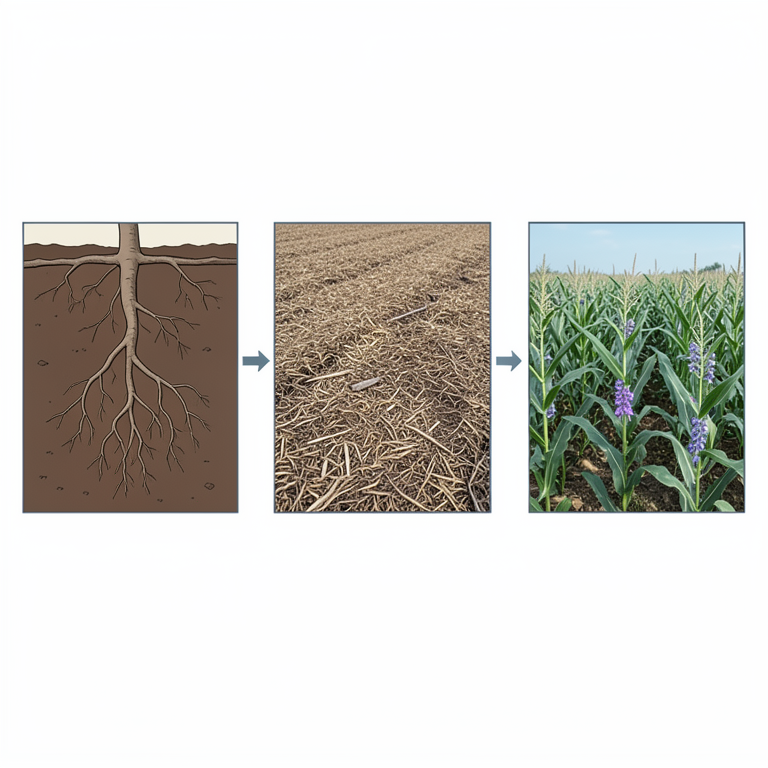
The Three Pillars of Conservation Agriculture
AI-generated conceptual illustration (Tropical maize and legume crops in soil). It explains the idea and does not show study data.
View source evidence ↗Introduction
Agriculture in tropical regions faces multiple constraints including soil erosion, declining soil fertility, water scarcity, and climate variability that significantly affect long-term productivity (Lal, 2016) [14] . Intensive conventional tillage practices accelerate soil degradation, reduce soil organic matter content, and increase greenhouse gas emissions, thereby threatening sustainability of agroecosystems (Zheng et al., 2018) [15] . Conservation agriculture has been widely promoted as a sustainable alternative capable of improving soil health and maintaining crop productivity while conserving natural resources (Hobbs et al., 2008) [3] . Conservation agriculture is based on three interlinked principles that include minimum soil disturbance, permanent soil cover, and crop diversification which together enhance agroecosystem stability (Kassam et al., 2012) [11] . Minimum soil disturbance through zero or reduced tillage helps preserve soil structure and microbial habitats essential for soil biological functioning (Six et al., 2004) [4] . Permanent soil cover using crop residues or cover crops protects the soil surface from erosion and improves soil moisture conservation (Blanco-Canqui & Lal, 2009) [17] .
International Journal of Biology Sciences https://www.biologyjournal.net
Crop diversification through rotations or intercropping improves nutrient cycling and enhances biodiversity within agricultural systems (Lin, 2011) [18] . Agriculture in tropical regions faces multiple constraints including soil erosion, declining soil fertility, water scarcity, and climate variability that significantly affect long-term productivity (Lal, 2016) [14] . Intensive conventional tillage practices accelerate soil degradation, reduce soil organic matter content, and increase greenhouse gas emissions, thereby threatening sustainability of agroecosystems (Zheng et al., 2018) [15] . Conservation agriculture has been widely promoted as a sustainable alternative capable of improving soil health and maintaining crop productivity while conserving natural resources (Hobbs et al., 2008) [3] . Conservation agriculture is based on three interlinked principles that include minimum soil disturbance, permanent soil cover, and crop diversification which together enhance agroecosystem stability (Kassam et al., 2012) [11] . Minimum soil disturbance through zero or reduced tillage helps preserve soil structure and microbial habitats essential for soil biological functioning (Six et al., 2004) [4] . Permanent soil cover using crop residues or cover crops protects the soil surface from erosion and improves soil moisture conservation (Blanco-Canqui & Lal, 2009) [17] . Crop diversification through rotations or intercropping improves nutrient cycling and enhances biodiversity within agricultural systems (Lin, 2011) [18] . These practices enhance soil biological activity, improve soil aggregation, and significantly reduce soil erosion losses especially in fragile tropical ecosystems (Bronick & Lal, 2005) [7] . Tropical cropping systems such as rice-wheat systems have demonstrated improved soil fertility and yield stability under conservation agriculture practices (Jat et al., 2014) [19] . Maize-legume based conservation agriculture systems improve soil organic carbon accumulation and nutrient availability (Thierfelder et al., 2012) [20] . Rice-maize cropping systems under conservation agriculture improve soil structure, water retention, and productivity compared with conventional tillage systems (Parihar et al., 2016) [21] . Sugarcane-based conservation agriculture systems enhance soil microbial activity and nutrient use efficiency leading to improved productivity (Govaerts et al., 2009) [22] .
Principles of Conservation Agriculture Minimum Soil Disturbance
Reduced or zero tillage minimizes soil disturbance and preserves soil structural stability, which is essential for maintaining soil quality (Hobbs et al., 2008) [3] . Minimum soil disturbance improves soil aggregation and enhances pore continuity, allowing better root penetration and aeration (Six et al., 2000) [23] . Conservation tillage practices enhance water infiltration and reduce runoff losses, thereby improving water availability in crop root zones (Lal, 2015) [1] . Reduced tillage also minimizes oxidation of soil organic matter and helps maintain soil carbon stocks essential for long-term soil fertility (Paustian et al., 1997) [24] . Zero tillage systems create favorable conditions for soil microbial growth and activity, enhancing soil biological processes (Nannipieri et al., 2003) [25] . Earthworm populations and soil macrofauna are generally higher under reduced tillage systems, contributing to improved soil porosity and nutrient cycling (Edwards & Bohlen, 1996) [26] . Enhanced biological activity under minimum soil disturbance improves nutrient mineralization and overall soil fertility in tropical agroecosystems (Franzluebbers, 2002) [27] .
Permanent Soil Cover
Retention of crop residues or cover crops on the soil surface protects soil from erosion caused by rainfall impact and wind forces (Montgomery, 2007) [12] . Surface residue cover reduces evaporation losses and improves soil moisture conservation, particularly in tropical climates (Unger & McCalla, 1980) [28] . Permanent soil cover moderates soil temperature fluctuations and creates favorable soil microclimatic conditions for crop growth (Mulumba & Lal, 2008) [29] . Residue mulching enhances soil organic matter accumulation and improves soil nutrient availability through gradual decomposition (Blanco-Canqui & Lal, 2007) [30] . Surface mulch promotes nutrient cycling by adding organic inputs that enhance microbial decomposition processes (Palm et al., 2001) [31] . Crop residues on the soil surface also suppress weed growth by limiting light availability and modifying soil environmental conditions (Teasdale & Mohler, 2000) [32] .
Crop Diversification
Crop rotation improves soil nutrient balance by alternating crops with different nutrient requirements and rooting characteristics (Karlen et al., 1994) [33] . Intercropping systems enhance nutrient use efficiency and improve resource utilization by reducing competition among crops (Lithourgidis et al., 2011) [34] . Crop diversification helps break pest and disease cycles and reduces reliance on chemical pesticides in cropping systems (Altieri, 1999) [35] . Diverse cropping systems enhance soil biological diversity including beneficial microorganisms that support soil health (Drinkwater et al., 1995) [36] . Crop rotation contributes to improved soil organic carbon dynamics and enhances longterm soil fertility (West & Post, 2002) [37,80] . Diversified cropping systems improve resilience of agricultural production systems against climate variability and environmental stresses (Lin, 2011) [18] .
Conservation Agriculture in Tropical Cropping Systems Rice-Wheat Cropping System
Rice-wheat is one of the most dominant cropping systems in tropical and subtropical regions, contributing significantly to global food security (Ladha et al., 2003) [38] . Continuous intensive tillage in rice-wheat systems has resulted in soil degradation, declining factor productivity, and increasing cost of cultivation (Gupta & Seth, 2007) [39] . Conventional puddling and repeated ploughing adversely affect soil structure and reduce long-term sustainability of the production system (Hobbs & Gupta, 2003) [40] . Conservation agriculture practices such as zero tillage help reduce soil disturbance and improve soil physical properties (Erenstein & Laxmi, 2008) [41] . Residue retention under CA enhances soil organic carbon accumulation and improves nutrient cycling in rice-wheat systems (Jat et al., 2014) [19] . Zero tillage combined with residue management improves water productivity and reduces irrigation requirements (Gathala et al., 2011) [43] . Adoption of conservation agriculture improves crop yield stability and enhances sustainability of rice-wheat production systems (Kassam et al., 2012) [11] .
Maize-Based Cropping Systems
Maize-based cropping systems are widely adopted in tropical agriculture due to their high productivity potential and adaptability (Shiferaw et al., 2011) [44] . Maize-legume rotations improve soil nitrogen availability through biological nitrogen fixation processes (Giller, 2001) [45] . Legume integration enhances soil fertility by increasing nitrogen contribution to subsequent crops (Peoples et al., 2009) [46] . Conservation agriculture practices improve soil organic matter accumulation in maize-based systems (Thierfelder & Wall, 2010) [10] . Improved soil structure enhances root proliferation and nutrient uptake efficiency in maize cropping systems (Blanco-Canqui et al., 2012) [48] . Increased soil organic matter improves water retention and enhances crop productivity under conservation management (Verhulst et al., 2010) [49] . Conservation agriculture practices improve long-term sustainability and resilience of maize-based production systems (Thierfelder et al., 2012) [20] .
Rice-Maize Cropping System
Rice-maize cropping systems are increasingly popular in tropical regions due to their productivity advantages (Timsina et al., 2010) [50] . Continuous intensive tillage in rice-maize systems can reduce soil aggregation and nutrient availability (Choudhary et al., 2018) [51] . Conservation agriculture practices improve soil aggregation and stability through improved soil organic matter content (Six et al., 2002) [52] . Microbial biomass carbon increases significantly under conservation agriculture practices due to improved organic residue inputs (Zuber & Villamil, 2016) [53] . Improved nutrient availability enhances crop growth and productivity in conservation agriculture-based systems (Palm et al., 2014) [5] . Conservation agriculture improves system productivity and enhances long-term sustainability of rice-maize cropping systems (Jat et al., 2018) [54] . Improved soil health under CA contributes to stable crop yields under varying climatic conditions (Lal, 2015) [1] .
Agroforestry and Mixed Cropping Systems
Agroforestry systems integrate trees with crops and livestock to improve resource use efficiency and sustainability (Nair, 2011) [56] . Integration of trees in cropping systems improves carbon sequestration potential and reduces atmospheric carbon dioxide levels (Albrecht & Kandji, 2003) [57] . Tree-based systems improve soil structure through root biomass addition and organic matter inputs (Young, 1997) [58] . Agroforestry practices enhance biodiversity and promote ecological balance in agricultural landscapes (Jose, 2009) [59] . Mixed cropping systems improve soil fertility through improved nutrient cycling and organic matter addition (Drinkwater et al., 1998) [60] . Agroforestry-based conservation agriculture systems improve resilience against climate variability and extreme weather conditions (Garrity, 2004) [61] . Integration of trees with crops improves long-term productivity and sustainability in tropical agroecosystems (Nair et al., 2010) [62] .
Impact of Conservation Agriculture on Soil Health Physical Properties
Conservation agriculture improves soil structure by promoting the formation of stable aggregates that enhance soil resilience against erosion (Six et al., 2002) [52] . Improved aggregate stability under conservation agriculture enhances soil porosity and aeration (Bronick & Lal, 2005) [7] . CA practices increase water infiltration rate by improving soil pore continuity and reducing surface crust formation (Franzluebbers, 2002) [27] . Residue retention and reduced tillage improve soil water holding capacity by increasing soil organic matter content (Blanco-Canqui et al., 2015) [64] . Reduced tillage decreases soil compaction and bulk density, thereby improving soil physical condition (Hamza & Anderson, 2005) [65] . Improved soil structure under conservation agriculture enhances root penetration and root proliferation (Batey, 2009) [66] . Improved soil physical properties contribute to better crop establishment and productivity under conservation systems (Lal, 2015) [1] .
Chemical Properties
Soil organic carbon is considered a key indicator of soil health and sustainability in agricultural systems (Lal, 2004) [68] . Conservation agriculture increases soil organic carbon accumulation through residue retention and reduced oxidation of soil organic matter (Paustian et al., 2016) [8] . Reduced tillage practices help protect soil organic matter from rapid decomposition and enhance carbon stabilization (West & Post, 2002) [37,80] . Increased soil organic carbon improves cation exchange capacity and nutrient retention ability of soils (Brady & Weil, 2016) [69] . Studies report increased availability of essential nutrients such as nitrogen, phosphorus, and potassium under conservation agriculture systems compared with conventional tillage (Govaerts et al., 2009) [22] . Residue decomposition contributes to gradual nutrient release and improves soil fertility (Palm et al., 2001) [31] . Improved nutrient availability under conservation agriculture enhances crop growth and productivity (Drinkwater & Snapp, 2007) [70] .
Biological Properties
Conservation agriculture enhances microbial biomass carbon due to increased organic matter inputs and reduced soil disturbance (Zuber & Villamil, 2016) [53] . Soil enzyme activity increases under conservation agriculture due to improved microbial functioning and substrate availability (Dick, 1994) [71] . Conservation agriculture promotes soil biodiversity including bacteria, fungi, and actinomycetes essential for soil health (Nannipieri et al., 2003) [25] . Increased microbial activity improves nutrient cycling and enhances soil fertility (Smith & Paul, 1990) [73] . Residue retention provides energy sources for soil microorganisms and improves microbial population diversity (Wardle, 1995) [74] . Earthworm populations increase under reduced tillage systems due to favorable soil habitat conditions (Edwards & Bohlen, 1996) [26] . Increased abundance of beneficial microorganisms improves soil aggregation and nutrient mineralization (Six et al., 2006) [75] . Improved soil biological activity enhances long-term sustainability of agricultural systems (Lori et al., 2017) [76] .
Impact of Conservation Agriculture on Crop Productivity
Crop productivity under conservation agriculture systems is influenced by improved soil moisture conservation, enhanced nutrient availability, and reduced soil erosion losses (Lal, 2015) [1] . Improved soil structure and residue retention under CA practices increase water infiltration and reduce evaporation losses, thereby improving crop growth conditions (Verhulst et al., 2010) [49] . Long-term experiments indicate that conservation agriculture can maintain or increase crop yields compared to conventional tillage systems due to improved soil quality (Pittelkow et al., 2015) [78] . Increased soil organic carbon under CA enhances nutrient supply capacity and improves crop productivity (Paustian et al., 2016) [8] . Conservation agriculture practices improve water use efficiency by optimizing soil moisture availability throughout crop growth stages (Rockström et al., 2009) [79] . Research findings indicate that CA reduces yield variability and improves crop performance under climatic stress conditions such as drought (Thierfelder & Wall, 2010) [10] . Residue retention and reduced tillage improve soil moisture storage which supports crop growth during dry spells (Blanco-Canqui et al., 2015) [64] . Yield advantages under conservation agriculture are often more pronounced in rainfed tropical systems where soil moisture conservation is critical for crop productivity (Kassam et al., 2012) [11] . Improved root growth and nutrient uptake under CA contribute to stable yields under water-limited conditions (Jat et al., 2014) [19] . Conservation agriculture enhances resilience of cropping systems and improves long-term productivity sustainability (Pretty & Bharucha, 2014) [13] .
Environmental Benefits of Conservation Agriculture Climate Change Mitigation
Conservation agriculture enhances carbon sequestration by increasing soil organic carbon through residue retention and reduced soil disturbance (Lal, 2004) [68] . Reduced tillage minimizes oxidation of soil organic matter and helps store carbon in stable soil aggregates (Six et al., 2002) [52] . Conservation agriculture reduces greenhouse gas emissions by lowering fuel consumption and minimizing soil disturbance intensity (West & Marland, 2002) [37,80] . Increased biomass input under CA improves long-term carbon storage potential in agricultural soils (Paustian et al., 2016) [8] . Improved soil carbon sequestration contributes to climate change mitigation and enhances environmental sustainability (Powlson et al., 2014) [9] .
Soil Erosion Control
Crop residue cover protects soil surface from rainfall impact and reduces detachment of soil particles (Montgomery, 2007) [12] . Surface mulch reduces runoff velocity and minimizes soil erosion losses in sloping lands (Lal, 1998) [81] . Conservation agriculture improves soil aggregation which increases resistance to erosion processes (Bronick & Lal, 2005) [7] . Reduced tillage practices help maintain soil structure and decrease susceptibility to wind and water erosion (Holland, 2004) [82] . Improved soil cover reduces sediment loss and enhances long-term soil sustainability (Blanco-Canqui & Lal, 2008) [6] .
Water Conservation
Conservation agriculture improves soil infiltration rate by maintaining soil structure and pore continuity (Franzluebbers, 2002) [27] . Residue retention reduces evaporation losses and improves soil moisture conservation (Unger & Parker, 1976) [83] . Improved soil organic matter enhances soil water holding capacity and moisture availability to crops (Hudson, 1994) [84] . Reduced runoff losses under CA improve water use efficiency in rainfed cropping systems (Rockström et al., 2009) [79] . Conservation agriculture is particularly beneficial in drought-prone tropical regions due to improved soil moisture storage (Kassam et al., 2012) [11] .
Biodiversity Enhancement
Conservation agriculture promotes soil biodiversity by creating favorable habitat for microorganisms and soil fauna (Nannipieri et al., 2003) [25] . Residue retention provides organic substrates that support microbial growth and activity (Wardle, 1995) [74] . Reduced tillage enhances population of beneficial insects and earthworms which improve soil aeration and nutrient cycling (Edwards & Bohlen, 1996) [26] . Increased microbial diversity improves soil ecological stability and resilience (Brussaard et al., 2007) [85] . Conservation agriculture enhances ecosystem functioning through improved biological interactions in soil systems (Giller et al., 1997) [86] .
Constraints in Adoption of Conservation Agriculture in Tropical Regions
Despite multiple agronomic and environmental benefits, the adoption of conservation agriculture (CA) in tropical regions faces several technical, socio-economic, and institutional constraints (Knowler & Bradshaw, 2007). Lack of suitable machinery such as zero-till seed drills and residue management equipment limits adoption among smallholder farmers (Erenstein et al., 2012). Small farm size and fragmented landholdings reduce the economic feasibility of investing in CA machinery in many developing tropical countries (Giller et al., 2009). Limited awareness and inadequate technical knowledge regarding CA practices also restrict adoption among farmers (Kassam et al., 2014). Initial yield fluctuations are often observed during the transition period from conventional tillage to conservation agriculture due to changes in soil biological and physical processes (Pittelkow et al., 2015) [78] . Crop residue management poses challenges in tropical regions where residues are often used as livestock feed or fuel, limiting their availability for soil cover (Valbuena et al., 2012). Weed management is another major constraint under zero tillage systems due to reduced soil disturbance, which may initially increase weed pressure (Chauhan et al., 2012). Limited policy support, lack of financial incentives, and inadequate extension services further restrict large-scale adoption of conservation agriculture (Corbeels et al., 2014). Socio-economic constraints such as limited access to credit, labour availability, and market uncertainties influence farmers' decision to adopt CA practices (Feder et al., 1985).
Institutional barriers and absence of location-specific recommendations also hinder adoption in diverse tropical agro-ecosystems (Govaerts et al., 2009) [22] . Addressing these constraints through research support, policy interventions, and capacity building is essential for wider adoption of conservation agriculture in tropical regions (Lahmar, 2010).
Future Research Needs
Future research should focus on the development of location-specific conservation agriculture (CA) practices that consider variability in soil type, climate, and cropping systems across tropical agro-ecosystems (Kassam et al., 2019) 2015) [1] . Long-duration studies help in understanding soil carbon dynamics, nutrient cycling, and productivity stability in CA-based cropping systems (Paustian et al., 2016) [8] .
Conclusion
Conservation agriculture plays a significant role in improving soil health and sustaining crop productivity in tropical cropping systems through the combined effects of minimum soil disturbance, permanent soil cover, and crop diversification (Lal, 2015) [1] . These core principles enhance soil structure, improve aggregation, and increase soil organic carbon, thereby strengthening the physical foundation of productive soils (Six et al., 2002) [52] . Reduced tillage and residue retention practices stimulate microbial activity and improve nutrient cycling, contributing to enhanced soil fertility and biological functioning (Nannipieri et al., 2003) [25] . Crop diversification through rotations and intercropping improves nutrient balance and supports long-term soil productivity (Kassam et al., 2012) [11] .
Conservation agriculture provides multiple environmental benefits including increased carbon sequestration, reduced soil erosion, improved water use efficiency, and enhanced resilience to climate variability (Paustian et al., 2016) [8] . Residue retention protects soil surface from erosion and reduces runoff losses, thereby maintaining soil depth and productivity (Montgomery, 2007) [12] . Improved soil organic matter enhances soil moisture retention and supports crop growth under droughtprone tropical conditions (Rockström et al., 2009) [79] . Adoption of conservation agriculture contributes to climate change mitigation by reducing greenhouse gas emissions and improving carbon storage in soils (Powlson et al., 2014) [9] . Although several challenges such as limited machinery availability, residue management constraints, and socioeconomic barriers affect adoption, appropriate policy support, capacity building, and technological innovations can significantly improve adoption rates (Knowler & Bradshaw, 2007). Research advancements in precision agriculture, climate-smart technologies, and soil biological management can further strengthen conservation agriculture systems in tropical regions (Gebbers & Adamchuk, 2010). Increased farmer awareness and extension support are essential for large-scale adoption of conservation agriculture practices (Corbeels et al., 2014). Overall, conservation agriculture represents a sustainable and climate-resilient approach for improving soil health, enhancing resource use efficiency, and ensuring long-term productivity in tropical agroecosystems (Pretty & Bharucha, 2014) [13] . Integration of scientific innovations with traditional knowledge can further promote sustainable intensification and environmental conservation in tropical agriculture (Giller et al., 2009).
References
86 in the original paper- Lal R. A system approach to conservation agriculture. Journal of Soil and Water Conservation. 2015;70(4):82A-88A.
- FAO. Conservation agriculture for sustainable crop production. Food and Agriculture Organization of the United Nations; 2017.
- Hobbs PR, Sayre K, Gupta R. The role of conservation agriculture in sustainable agriculture. Philosophical Transactions of the Royal Society B. 2008;363:543555.
- Six J, Bossuyt H, Degryze S, Denef K. A history of research on soil structure and organic matter dynamics. Soil and Tillage Research. 2004;79:7-31.
- Palm C, Blanco-Canqui H, DeClerck F, Gatere L, Grace P. Conservation agriculture and ecosystem services. Agriculture, Ecosystems and Environment. 2014;187:87-105.
- Blanco-Canqui H, Lal R. Principles of soil conservation and management. New York: Springer; 2008.
- Bronick CJ, Lal R. Soil structure and management: a review. Geoderma. 2005;124:3-22.
- Paustian K, Lehmann J, Ogle S, Reay D, Robertson GP, Smith P. Climate-smart soils. Nature. 2016;532:49-57.
- Powlson DS, Stirling CM, Jat ML, Gerard BG, Palm CA, Sanchez PA, et al. Limited potential of no-till agriculture for climate change mitigation. Nature Climate Change. 2014;4:678-683.
- Thierfelder C, Wall PC. Investigating conservation agriculture systems in Zambia and Zimbabwe. Field Crops Research. 2010;116:260-268.
- Kassam A, Friedrich T, Shaxson F, Pretty J. The spread of conservation agriculture. International Journal of Agricultural Sustainability. 2012;10:1-29.
- Montgomery DR. Soil erosion and agricultural sustainability. Proceedings of the National Academy of Sciences of the United States of America. 2007;104:13268-13272.
- Pretty J, Bharucha ZP. Sustainable intensification in agricultural systems. Annals of Botany. 2014;114:15711596.
- Lal R. Soil health and carbon management. Food and Energy Security. 2016;5:212-222.
- Zheng H, Liu W, Zheng J, Luo Y, Li R, Wang H, et al. Effect of long-term tillage on soil aggregates and International Journal of Biology Sciences https://www.biologyjournal.net carbon storage. Soil and Tillage Research. 2018;178:57-63.
- Six J, Frey S, Thiet R, Batten K. Bacterial and fungal contributions to soil aggregation. Soil Biology and Biochemistry. 2004;36:1599-1610.
- Blanco-Canqui H, Lal R. Crop residue removal impacts on soil productivity. Critical Reviews in Plant Sciences. 2009;28:139-163.
- Lin BB. Resilience in agriculture through crop diversification. BioScience. 2011;61:183-193.
- Jat RK, Saharawat YS, Gupta R, Singh Y. Conservation agriculture in rice-wheat systems improves productivity. Field Crops Research. 2014;164:199-210.
- Thierfelder C, Cheesman S, Rusinamhodzi L. Conservation agriculture benefits in maize-legume systems. Agriculture, Ecosystems and Environment. 2012;155:17-26.
- Parihar CM, Jat SL, Singh AK, Kumar B, Yadav RK. Long-term effects of conservation agriculture in ricemaize systems. Soil and Tillage Research. 2016;155:110.
- Govaerts B, Sayre KD, Deckers J. Conservation agriculture effects on soil quality and productivity. Plant and Soil. 2009;311:1-14.
- Six J, Elliott ET, Paustian K. Soil macroaggregate turnover and microaggregate formation. Soil Science Society of America Journal. 2000;64:1042-1049.
- Paustian K, Collins HP, Paul EA. Management controls on soil carbon. Soil Science Society of America Journal. 1997;61:911-915.
- Nannipieri P, Ascher J, Ceccherini M, Landi L, Pietramellara G, Renella G. Microbial diversity and soil functions. European Journal of Soil Science. 2003;54:655-670.
- Edwards CA, Bohlen PJ. Biology and ecology of earthworms. London: Chapman & Hall; 1996.
- Franzluebbers AJ. Soil organic matter stratification under conservation tillage. Soil and Tillage Research. 2002;66:197-205.
- Unger PW, McCalla TM. Conservation tillage systems. Advances in Agronomy. 1980;33:1-58.
- Mulumba LN, Lal R. Mulching effects on soil properties. Soil and Tillage Research. 2008;98:106-111.
- Blanco-Canqui H, Lal R. Soil structure response to crop residue retention. Soil Science Society of America Journal. 2007;71:1424-1434.
- Palm CA, Gachengo CN, Delve RJ, Cadisch G, Giller KE. Organic inputs for soil fertility management. Agriculture, Ecosystems and Environment. 2001;83:2742.
- Teasdale JR, Mohler CL. The relationship between weed emergence and residue cover. Weed Science. 2000;48:385-392.
- Karlen DL, Varvel GE, Bullock DG, Cruse RM. Crop rotations for soil improvement. Advances in Agronomy. 1994;53:1-45.
- Lithourgidis AS, Dordas CA, Damalas CA, Vlachostergios D. Intercropping benefits in agriculture. European Journal of Agronomy. 2011;34:29-38.
- Altieri MA. Ecological impacts of diversified agriculture. Agriculture, Ecosystems and Environment. 1999;74:19-31.
- Drinkwater LE, Letourneau DK, Workneh F, Van Bruggen AHC, Shennan C. Fundamental differences between conventional and diversified systems. Nature. 1995;374:262-265.
- West TO, Post WM. Soil carbon sequestration by crop rotation. Soil Science Society of America Journal. 2002;66:1930-1946.
- Ladha JK, Dawe D, Pathak H, Padre AT, Yadav RL, Singh B, et al. How extensive are yield declines in long-term rice-wheat experiments? Field Crops Research. 2003;81:159-180.
- Gupta R, Seth A. A review of resource conserving technologies. Soil and Tillage Research. 2007;97:1-15.
- Hobbs PR, Gupta RK. Resource-conserving technologies for wheat. Outlook on Agriculture. 2003;32:253-258.
- Erenstein O, Laxmi V. Zero tillage impacts in ricewheat systems. Soil and Tillage Research. 2008;100:114.
- Jat ML, Saharawat YS, Gupta R, Singh Y. Conservation agriculture in rice-wheat systems. Field Crops Research. 2014;164:199-210.
- Gathala MK, Ladha JK, Kumar V, Saharawat YS, Kumar V, Sharma PK, et al. Tillage and crop establishment impacts. Field Crops Research. 2011;120:112-126.
- Shiferaw B, Prasanna BM, Hellin J, Banziger M. Crops that feed the world: maize. Food Security. 2011;3:307327.
- Giller KE. Nitrogen fixation in tropical cropping systems. CAB International; 2001.
- Peoples MB, Herridge DF, Ladha JK. Biological nitrogen fixation. Plant and Soil. 2009;311:1-18.
- Thierfelder C, Wall PC. Conservation agriculture benefits in maize systems. Agriculture, Ecosystems and Environment. 2010;137:237-244.
- Blanco-Canqui H, Mikha MM, Presley DR, Claassen MM. Soil physical properties in cropping systems. Soil Science Society of America Journal. 2012;76:17991808.
- Verhulst N, Govaerts B, Verachtert E, CastellanosNavarrete A, Mezzalama M, Wall P, et al. Conservation agriculture effects on soil quality. Soil and Tillage Research. 2010;106:103-112.
- Timsina J, Jat ML, Majumdar K. Rice-maize systems. Field Crops Research. 2010;118:1-11.
- Choudhary M, Rana KS, Bana RS, Sepat S. Conservation agriculture in maize systems. Soil and Tillage Research. 2018;181:173-183.
- Six J, Conant RT, Paul EA, Paustian K. Stabilization of soil organic matter. Plant and Soil. 2002;241:155-176.
- Zuber SM, Villamil MB. Meta-analysis of conservation agriculture impacts. Soil Biology and Biochemistry. 2016;92:84-99.
- Jat HS, Datta A, Sharma PC, Kumar V, Yadav AK, Choudhary M, et al. Climate smart agriculture. Agricultural Systems. 2018;159:91-103.
- Lal R. Soil carbon sequestration impacts. Journal of Soil and Water Conservation. 2015;70:55A-62A.
- Nair PKR. Agroforestry systems and environmental quality. Agroforestry Systems. 2011;76:1-10.
- Albrecht A, Kandji ST. Carbon sequestration in tropical agroforestry. Agriculture, Ecosystems and Environment. 2003;99:15-27.
- Young A. Agroforestry for soil management. CAB International; 1997.
- Jose S. Agroforestry for ecosystem services. Agroforestry Systems. 2009;76:1-10.
- Drinkwater LE, Wagoner P, Sarrantonio M. Legumebased cropping systems. Nature. 1998;396:262-265.
- Garrity DP. Agroforestry and sustainable agriculture. Agroforestry Systems. 2004;61:5-17.
- Nair PKR, Kumar BM, Nair VD. Carbon sequestration in agroforestry systems. Advances in Agronomy. 2010;108:237-307.
- Franzluebbers AJ. Water infiltration and soil structure under conservation systems. Soil and Tillage Research. 2002;66:197-205.
- Blanco-Canqui H, Ruis SJ, Presley DR. Soil water retention under conservation agriculture. Soil Science Society of America Journal. 2015;79:122-131.
- Hamza MA, Anderson WK. Soil compaction effects on crop growth. Soil and Tillage Research. 2005;82:121145.
- Batey T. Soil compaction and soil management review. Soil Use and Management. 2009;25:335-345.
- Lal R. Soil health and carbon management. Journal of Soil and Water Conservation. 2015;70:55A-62A.
- Lal R. Soil carbon sequestration impacts on climate. Science. 2004;304:1623-1627.
- Brady NC, Weil RR. The nature and properties of soils. Pearson Education; 2016.
- Drinkwater LE, Snapp SS. Nutrient cycling in sustainable systems. Advances in Agronomy. 2007;92:1-40.
- Dick RP. Soil enzyme activities as indicators of soil quality. Soil Science Society of America Journal. 1994;58:159-167.
- Nannipieri P, Kandeler E, Ruggiero P. Enzyme activities and soil microbial diversity. Biology and Fertility of Soils. 2003;37:1-12.
- Smith JL, Paul EA. The significance of soil microbial biomass. Soil Biochemistry. 1990;6:357-396.
- Wardle DA. Impacts of disturbance on soil microbial communities. Biological Reviews. 1995;70:1-29.
- Six J, Frey SD, Thiet RK, Batten KM. Bacterial and fungal contributions to soil aggregation. Soil Biology and Biochemistry. 2006;38:2004-2014.
- Lori M, Symnaczik S, Mäder P, De Deyn G, Gattinger A. Organic farming and soil biological quality. Scientific Reports. 2017;7:1-9.
- Lal R. Restoring soil quality to mitigate soil degradation. Journal of Soil and Water Conservation. 2015;70:55A-62A.
- Pittelkow CM, Liang X, Linquist BA, van Groenigen KJ, Lee J, Lundy ME, et al. Productivity limits and potentials of conservation agriculture. Nature. 2015;517:365-368.
- Rockström J, Kaumbutho P, Mwalley J, Nzabi A, Temesgen M, Mawenya L, et al. Conservation farming strategies in rainfed agriculture. Agricultural Water Management. 2009;96:1557-1567.
- West TO, Marland G. Net carbon flux from agricultural ecosystems. Agriculture, Ecosystems and Environment. 2002;91:217-232.
- Lal R. Soil erosion impact on agronomic productivity. Advances in Agronomy. 1998;65:1-55.
- Holland JM. Conservation tillage and soil health. Agriculture, Ecosystems and Environment. 2004;103:125.
- Unger PW, Parker JJ. Evaporation reduction by crop residues. Soil Science Society of America Journal. 1976;40:938-942.
- Hudson BD. Soil organic matter and water holding capacity. Journal of Soil and Water Conservation. 1994;49:189-194.
- Brussaard L, de Ruiter PC, Brown GG. Soil biodiversity and ecosystem services. European Journal of Soil Science. 2007;58:1-14.
- Giller KE, Beare MH, Lavelle P, Izac AM, Swift MJ. Agricultural intensification and soil biodiversity. Applied Soil Ecology. 1997;6:3-16.