
Research article · 2025 · Full text
International Journal of Biology SciencesRecombinant allergen-based immunotherapy and immune tolerance induction in allergic rhinitis
Volume 7(6) · Pages 451–454 · DOI: 10.33545/26649926.2025.v7.i6g.780 ↗
Research areasAllergic Rhinitis and SensitizationFood Allergy and Anaphylaxis ResearchAsthma and respiratory diseases
Abstract
Author-writtenAllergen-Specific Immunotherapy (AIT) is the only treatment for allergic rhinitis that modifies the underlying immune response rather than merely suppressing symptoms. This research evaluated the clinical and immunological effects of Sublingual Immunotherapy (SLIT) using a recombinant birch pollen allergen (rBet v 1) in a randomised, double-blind, placebo-controlled trial. A total of 96 adults (aged 18-55) with confirmed birch-pollen allergic rhinitis were recruited at the Zanzibar College of Marine Biology outpatient clinic, Stone Town, Tanzania, between September 2021 and March 2024. Participants were randomised to receive high-dose rBet v 1 (n = 32), low-dose rBet v 1 (n = 32), or placebo (n = 32) daily for 24 weeks. The primary endpoint was change in Total Nasal Symptom Score (TNSS) from baseline to week 24. Secondary endpoints included serum allergen-specific IgE, IgG4, and IL-10 levels. High-dose rBet v 1 reduced TNSS by 70.7% from baseline (18.4 to 5.4; p
Summary
Source-checkedPlain-language reading of the full paper, prepared with AI and checked against the text. Each point links to the authors' own words.
Why it matters
- Allergic rhinitis is a global health issue affecting approximately 400 million people, significantly impacting their productivity and quality of life. View evidence ↗
- Traditional allergen extracts are difficult to standardize and can increase the risk of side effects because they are complex mixtures with varying compositions. View evidence ↗
- Recombinant allergen technology allows for the production of single, defined proteins, ensuring consistent specifications and reducing the issues associated with natural extracts. View evidence ↗
The question
- The study aimed to evaluate the efficacy and safety of high-dose and low-dose sublingual recombinant Bet v 1 (rBet v 1) compared to a placebo over 24 weeks, while tracking specific immunological markers. View evidence ↗
What they did
- The trial recruited 96 adults aged 18-55 with confirmed birch-pollen allergic rhinitis in Stone Town, Tanzania, between September 2021 and March 2024. View evidence ↗
- Participants were divided into three equal groups of 32, receiving either high-dose rBet v 1, low-dose rBet v 1, or a placebo daily for 24 weeks. View evidence ↗
- The primary clinical measure was the Total Nasal Symptom Score (TNSS), which summed scores for congestion, rhinorrhoea, sneezing, and itching. View evidence ↗
What they found
- In the high-dose group, serum IgG4 levels increased 4.8-fold, rising from 0.34 to 1.63 mg/L. View evidence ↗
- The high-dose group showed a 3.1-fold increase in IL-10 levels, increasing from 12.4 to 38.4 pg/mL. View evidence ↗
- Serum IgE levels in the high-dose group declined by 34.2%. View evidence ↗
- Safety was high, with only local oropharyngeal itching reported in 18.8% of the high-dose group and 12.5% of the low-dose group, all of which resolved within 15 minutes. View evidence ↗
What it means
- The authors conclude that recombinant Bet v 1 SLIT is a safe and effective method for inducing immune tolerance and reducing symptoms in allergic rhinitis. View evidence ↗
Visual summary
2 visualsIllustrations explain the paper; charts are replotted from the paper's own table values.
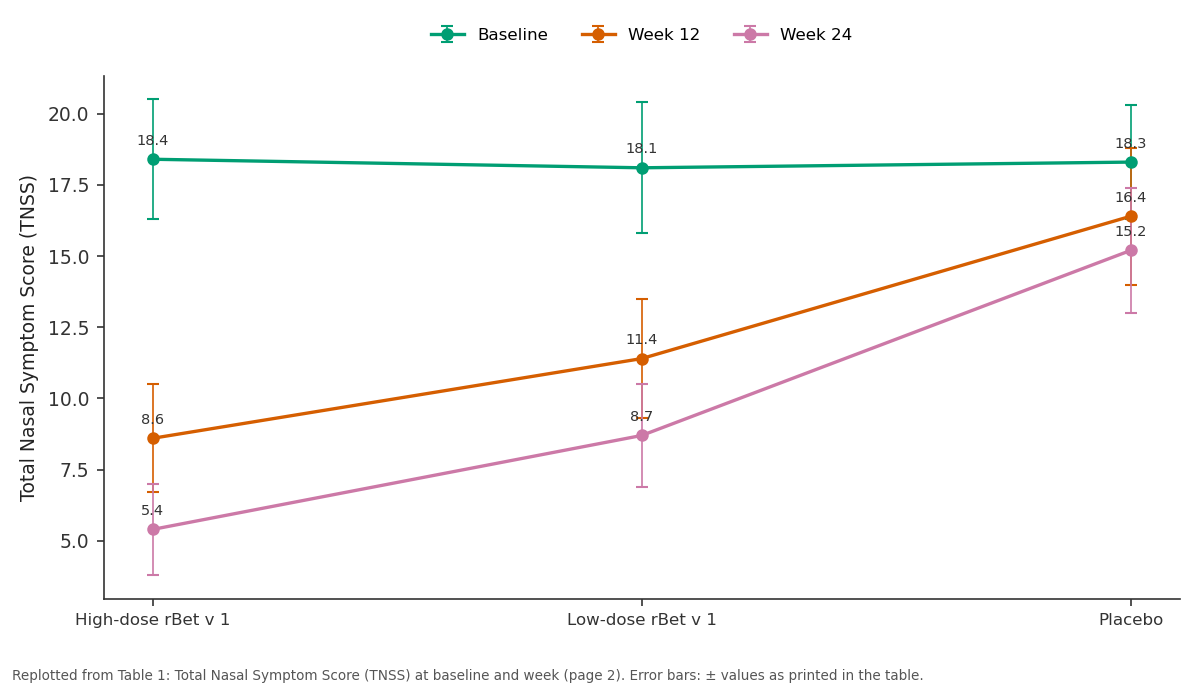
Baseline and Week 12 and more: High-dose rBet v 1 vs Low-dose rBet v 1 vs Placebo
Replotted from Table 1 (page 2) of the original paper. Every bar is the paper's own table value.
View source evidence ↗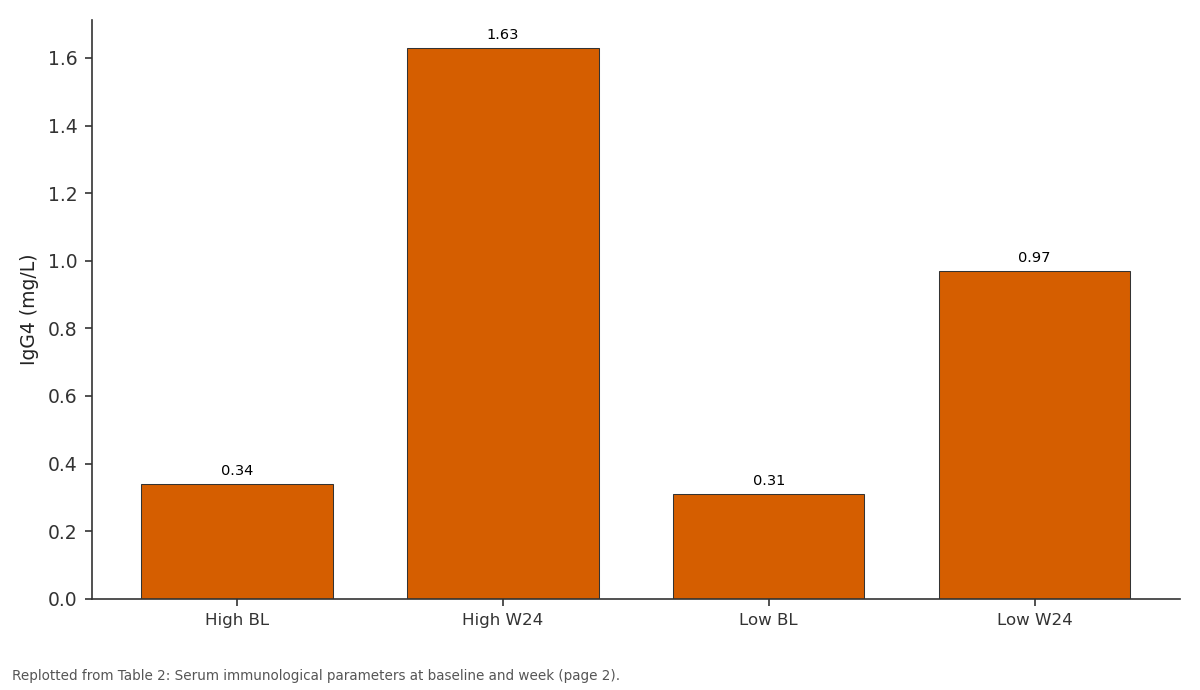
IgG4 (mg/L): High BL vs High W24 vs Low BL vs Low W24
Replotted from Table 2 (page 2) of the original paper. Every bar is the paper's own table value.
View source evidence ↗Figures & tables
From the original paper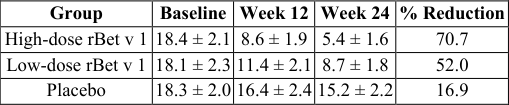 Table 1
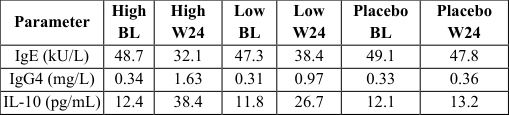 Table 2
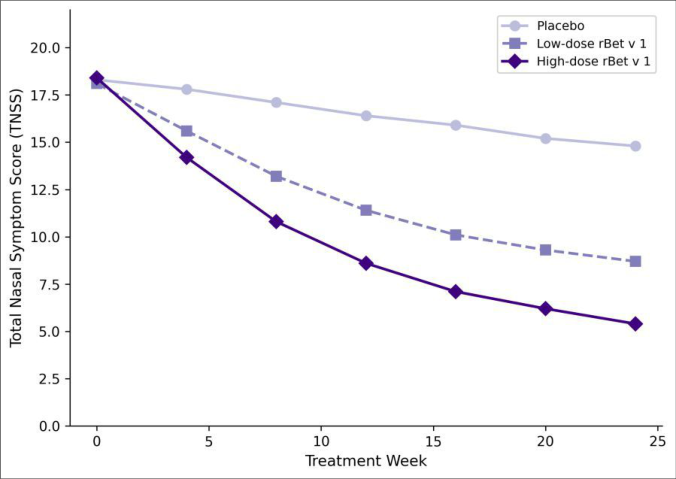 Figure 1
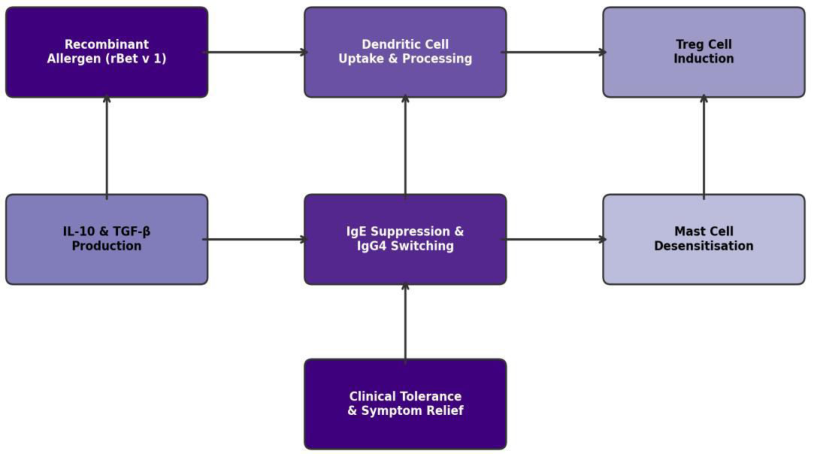 Figure 2
Introduction
In 1911, Leonard Noon published the first report of allergen immunotherapy, injecting pollen extracts to reduce hay fever symptoms a strategy that remains the conceptual foundation of modern allergy treatment more than a century later [1] . What has changed is the precision of the approach. Natural allergen extracts are complex mixtures whose composition varies between batches, making standardisation difficult and raising the risk of IgE-mediated side effects [2] . Recombinant allergen technology addresses both problems by producing single, defined proteins in expression systems that can be manufactured to consistent specifications [3] . Allergic rhinitis affects an estimated 400 million people worldwide and places a large burden on quality of life and productivity [4] . Antihistamines and intranasal corticosteroids provide symptom relief but do not alter the Th2-skewed immune response that drives the disease. Allergen-Specific Immunotherapy (AIT) works differently: by exposing the immune system to gradually increasing allergen doses, it promotes regulatory T-cell (Treg) expansion, IL-10 and TGF-β secretion, and a class switch from allergen-specific IgE to blocking IgG4 antibodies [5] . Sublingual Immunotherapy (SLIT) has gained traction over subcutaneous injection because it can be self-administered at home and carries a lower risk of systemic reactions [6] . Recombinant Bet v 1, the major birch pollen allergen, has been tested in European trials with encouraging results, but data from tropical or sub-Saharan African populations remain sparse This research aimed to a) Compare the clinical efficacy of high-dose and lowdose sublingual rBet v 1 against placebo over 24 weeks, b) Track changes in allergen-specific IgE, IgG4, and the tolerance-associated cytokine IL-10, and c) Assess safety in terms of local and systemic adverse events.
Material and Methods
Material and Methods
Reagents and chemicals
Recombinant Bet v 1 protein was produced in Escherichia coli BL21(DE3) and purified to > 98% homogeneity by nickel-affinity chromatography followed by size-exclusion chromatography (Biomiga, San Diego, CA, USA). Endotoxin levels were confirmed below 0.
Material
Ninety-six adults aged 18-55 years with a clinical history of seasonal rhinitis and a positive skin-prick test to birch pollen extract (≥ 3 mm wheal) were enrolled between September 2021 and January 2022 at the outpatient clinic of the Zanzibar College of Marine Biology, Stone Town, Tanzania (6°09′ S, 39°11′ E). Exclusion criteria included uncontrolled asthma, current systemic immunosuppressive therapy, pregnancy, and prior allergen immunotherapy within five years. Participants were block-randomised (1:1:1) to highdose rBet v 1, low-dose rBet v 1, or placebo using a computer-generated sequence. Blood samples (8 mL) were drawn at baseline, week 12, and week 24 for immunological assays.
Methods
Participants self-administered sublingual drops (0.
Quality control
Each batch of rBet v 1 formulation was tested for protein concentration (BCA assay, Thermo Fisher), sterility (14-day incubation on blood agar and Sabouraud agar), endotoxin content, and pH stability before release. Retention samples from every batch were stored at -20 °C for post-trial verification. ELISA plates included high and low positive controls; any plate with a CV > 10% between duplicates was re-run. An independent data safety monitoring board reviewed adverse-event data after every 30 enrolled participants.
Results
Table Both active treatment arms significantly reduced TNSS compared with placebo (Table 1). The high-dose group showed the strongest response, with a 70.7% reduction by week 24 (ANCOVA, F = 41.3, p<0.001 vs. placebo). The dose-response relationship was clear at every assessment point.
| Group | Baseline | Week 12 | Week 24 | % Reduction |
|---|---|---|---|---|
| High-dose rBet v 1 | 18.4 ± 2.1 | 8.6 ± 1.9 | 5.4 ± 1.6 | 70.7 |
| Low-dose rBet v 1 | 18.1 ± 2.3 | 11.4 ± 2.1 | 8.7 ± 1.8 | 52.0 |
| Placebo | 18.3 ± 2.0 | 16.4 ± 2.4 | 15.2 ± 2.2 | 16.9 |
Table text extracted from the original PDF; superscript letters are shown inline. The original table image is below.
View original table image
Comprehensive interpretation
The line graph (Figure 1) highlights the clear separation between active treatment and placebo from week 4 onward, with the high-dose arm showing the steepest and most sustained decline. The mechanism diagram (Figure 2) integrates the immunological changes observed in the trial Treg expansion, IgG4 blocking antibodies, and mast cell desensitisation into a coherent tolerance pathway.
Discussion
The 70.7% TNSS reduction in the high-dose group compares favourably with pooled estimates from European rBet v 1 SLIT trials, which typically report 30-50% symptom reductions [9] . The larger effect observed here could reflect the controlled trial setting with daily compliance monitoring, or population-specific factors such as baseline immune priming by helminth infections, which may paradoxically enhance Treg responsiveness to allergen exposure [8] .
The 4.8-fold rise in IgG4 is mechanistically important. IgG4 competes with IgE for allergen binding, blocking the crosslinking of mast cell surface IgE receptors that triggers degranulation [5] . The parallel 3.1-fold rise in IL-10 suggests that Treg cells were actively expanding and producing the anti-inflammatory cytokine that orchestrates the tolerogenic shift [10] . Together, these biomarker changes confirm that the recombinant allergen was inducing genuine immune tolerance rather than simple desensitisation. Safety was reassuring. Local oropharyngeal itching occurred in 18.8% of participants in the high-dose arm and 12.5% in the low-dose arm, resolving within 15 minutes in all cases.
No anaphylaxis or systemic reactions were recorded. This safety profile is consistent with the theoretical advantage of recombinant allergens, which lack the non-allergenic impurities present in natural extracts that can cause nonspecific irritation [3] . A limitation is that birch pollen is not a dominant aeroallergen in coastal East Africa; participants were sensitised individuals whose exposure likely occurred during travel or from cross-reactive Betulaceae species in highland areas. The trial therefore tested the immunological principle of recombinant SLIT in a tropical population rather than treating a locally prevalent allergy. Future work should apply the same design to regionally dominant allergens such as house dust mite or Bermuda grass.
Conclusion
Sublingual immunotherapy with recombinant Bet v 1 produced clinically meaningful symptom reduction and clear immunological evidence of tolerance induction in a 24-week randomised trial. The high-dose regimen cut TNSS by 70.7% and drove a 4.8-fold increase in blocking IgG4 antibodies alongside a 3.1-fold rise in the regulatory cytokine IL-10. These effects are consistent with a genuine shift from allergic sensitisation to immune tolerance. No serious adverse events occurred, supporting the safety advantage of using a purified recombinant protein over crude natural extracts. For allergy practice, these data reinforce that recombinant SLIT can deliver diseasemodifying benefit with a favourable safety margin, and they extend the evidence base to a tropical population underrepresented in AIT trials.
Figures and tables from the paper
| Parameter | High BL | High W24 | Low BL | Low W24 | Placebo BL | Placebo W24 |
|---|---|---|---|---|---|---|
| IgE (kU/L) | 48.7 | 32.1 | 47.3 | 38.4 | 49.1 | 47.8 |
| IgG4 (mg/L) | 0.34 | 1.63 | 0.31 | 0.97 | 0.33 | 0.36 |
| IL-10 (pg/mL) | 12.4 | 38.4 | 11.8 | 26.7 | 12.1 | 13.2 |
Table text extracted from the original PDF; superscript letters are shown inline. The original table image is below.
View original table image
References
21 in the original paper- Noon L. Prophylactic inoculation against hay fever. Lancet. 1911;177(4580):1572-1573.
- Valenta R, Lidholm J, Niederberger V, Hayek B, Kraft D, Gronlund H. The recombinant allergen-based concept of component-resolved diagnostics and immunotherapy. Clinical and Experimental Allergy. 1999;29(7):896-904.
- Pauli G, Larsen TH, Rak S, Horak F, Pastorello E, Valenta R. Efficacy of recombinant birch pollen vaccine for the treatment of birch-allergic rhinoconjunctivitis. Journal of Allergy and Clinical Immunology. 2008;122(5):951-960.
- Brozek JL, Bousquet J, Agache I, Agarwal A, Bachert C, Bosnic-Anticevich S. Allergic Rhinitis and its Impact on Asthma (ARIA) guidelines: 2016 revision. Journal of Allergy and Clinical Immunology. 2017;140(4):950-958.
- Akdis CA, Akdis M. Mechanisms of allergen-specific immunotherapy and immune tolerance to allergens. World Allergy Organization Journal. 2015;8(1):17.
- Canonica GW, Cox L, Pawankar R, Baena-Cagnani CE, Blaiss M, Bonini S. Sublingual immunotherapy: World Allergy Organization position paper 2013 update. World Allergy Organization Journal. 2014;7(1):6.
- Jutel M, Jaeger L, Suck R, Meyer H, Fiebig H, Cromwell O. Allergen-specific immunotherapy with recombinant grass pollen allergens. Journal of Allergy and Clinical Immunology. 2005;116(3):608-613.
- Mpairwe H, Amoah AS. Parasites and allergy: observations from Africa. Parasite Immunology. 2019;41(6):e12589.
- Nolte H, Maloney J, Nelson HS, Bernstein DI, Lu S, Li Z. Onset and dose-related efficacy of house dust mite sublingual immunotherapy tablets in an environmental exposure chamber. Journal of Allergy and Clinical Immunology. 2015;135(6):1494-1501.
- Meiler F, Zumkehr J, Klunker S, Ruckert B, Akdis CA, Akdis M. In vivo switch to IL-10-secreting T regulatory cells in high dose allergen exposure. Journal of Experimental Medicine. 2008;205(12):2887-2898.
- Valenta R, Campana R, Focke-Tejkl M, Niederberger V. Vaccine development for allergen-specific immunotherapy based on recombinant allergens and synthetic allergen peptides. Journal of Allergy and Clinical Immunology. 2016;137(5):1273-1284.
- Shamji MH, Durham SR. Mechanisms of allergen immunotherapy for inhaled allergens and predictive biomarkers. Journal of Allergy and Clinical Immunology. 2017;140(6):1485-1498.
- Durham SR, Emminger W, Kapp A, de Monchy JG, Rak S, Scadding GK. SQ-standardized sublingual grass immunotherapy: confirmation of disease modification 2 years after 3 years of treatment in a randomized trial. Journal of Allergy and Clinical Immunology. 2012;129(3):717-725.
- Scadding GW, Calderon MA, Shamji MH, Eifan AO, Penagos M, Dumitru F. Effect of 2 years of treatment with sublingual grass pollen immunotherapy on nasal response to allergen challenge at 3 years among patients with moderate to severe seasonal allergic rhinitis. JAMA. 2017;317(6):615-625.
- Bohle B, Kinaciyan T, Gerstmayr M, Radakovics A, Jahn-Schmid B, Ebner C. Sublingual immunotherapy involves reduction of allergen-specific IgE and increase of IgG4 or IgA2 antibodies. Journal of Allergy and Clinical Immunology. 2007;120(4):803-812.
- Kiel MA, Roder E, Gerth van Wijk R, Al MJ, Hop WC, Rutten-van Molken MP. Real-life compliance and persistence among users of subcutaneous and sublingual allergen immunotherapy. Journal of Allergy and Clinical Immunology. 2013;132(2):353-360.
- Calderon MA, Simons FE, Malling HJ, Lockey RF, Moingeon P, Demoly P. Sublingual allergen immunotherapy: mode of action and its relationship with the safety profile. Allergy. 2012;67(3):302-311.
- van de Veen W, Stanic B, Yaman G, Wawrzyniak M, Sollner S, Akdis DG. IgG4 production is confined to human IL-10-producing regulatory B cells that suppress antigen-specific immune responses. Journal of Allergy and Clinical Immunology. 2013;131(4):1204-1212.
- Pfaar O, Bonini S, Cardona V, Demoly P, Jakob T, Jutel M. Perspectives in allergen immunotherapy: 2017 and beyond. Allergy. 2018;73(suppl 104):5-23.
- Bousquet J, Pfaar O, Togias A, Schunemann HJ, Ansotegui I, Papadopoulos NG. ARIA care pathways for allergen immunotherapy. Allergy. 2019;74(11):2087-2102.
- Lau S, Matricardi PM, Wahn U, Lee YA, Keil T. Allergy and atopy from infancy to adulthood: messages from the German birth cohort study MAS. Annals of Allergy Asthma and Immunology. 2019;122(1):25-32.