
Research article · 2025 · Full text
International Journal of Biology SciencesComplement system activation and its role in thromboinflammation during sepsis
Volume 7(11) · Pages 146–148 · DOI: 10.33545/26649926.2025.v7.i11c.715 ↗
Research areasComplement system in diseasesSepsis Diagnosis and TreatmentCoagulation, Bradykinin, Polyphosphates, and Angioedema
Abstract
Author-writtenWhile immunologists and hematologists have traditionally studied inflammation and coagulation as separate systems, sepsis exposes their deep entanglement. This research measured complement activation markers (C3a, C5a, sC5b-9) alongside coagulation parameters (D-dimer, thrombin-antithrombin complexes, platelet counts) in 94 sepsis patients admitted to the ICU of a teaching hospital affiliated with Guilan University, Rasht, Iran, from April 2023 to September 2024. Serial blood samples were collected at days 1, 3, and 7 of ICU admission. Complement markers were measured by ELISA. C5a levels peaked on day 1 (mean 124.7 ng/mL vs 48.2 ng/mL in healthy controls, p
Summary
Source-checkedPlain-language reading of the full paper, prepared with AI and checked against the text. Each point links to the authors' own words.
Why it matters
- In sepsis, the complement system can become overactive, producing anaphylatoxins like C3a and C5a that trigger inflammation and the coagulation cascade. View evidence ↗
- The interaction between the complement and coagulation systems, known as thromboinflammation, is a key driver of organ damage during sepsis. View evidence ↗
- Specific complement components drive coagulation: C5a activates tissue factor on cells, and the C5b-9 complex triggers platelet activation. View evidence ↗
The question
- The study aimed to track complement and coagulation markers over time in sepsis patients to determine their correlation and if they could predict the development of disseminated intravascular coagulation (DIC). View evidence ↗
What they did
- Blood samples were collected from participants at three time points: day 1 (admission), day 3, and day 7. View evidence ↗
- Complement markers (C3a, C5a, sC5b-9) were measured via ELISA, while coagulation was assessed using D-dimer (immunoturbidimetry), TAT complexes (ELISA), and automated platelet counts. View evidence ↗
- The researchers used the ISTH overt DIC criteria to score disseminated intravascular coagulation. View evidence ↗
What they found
- There was a significant positive correlation (r = 0.67, p<0.001) between C5a and D-dimer concentrations, linking complement activation to coagulation. View evidence ↗
- Patients who developed DIC had significantly higher C5a levels at admission than those who did not (p = 0.002). View evidence ↗
- ROC analysis showed that C5a has a moderate predictive value for DIC development, with an area under the curve (AUC) of 0.78. View evidence ↗
What it means
- The authors conclude that C5a can serve as a biomarker for thromboinflammatory risk and may be a viable therapeutic target for treating sepsis. View evidence ↗
Visual summary
3 visualsIllustrations explain the paper; charts are replotted from the paper's own table values.
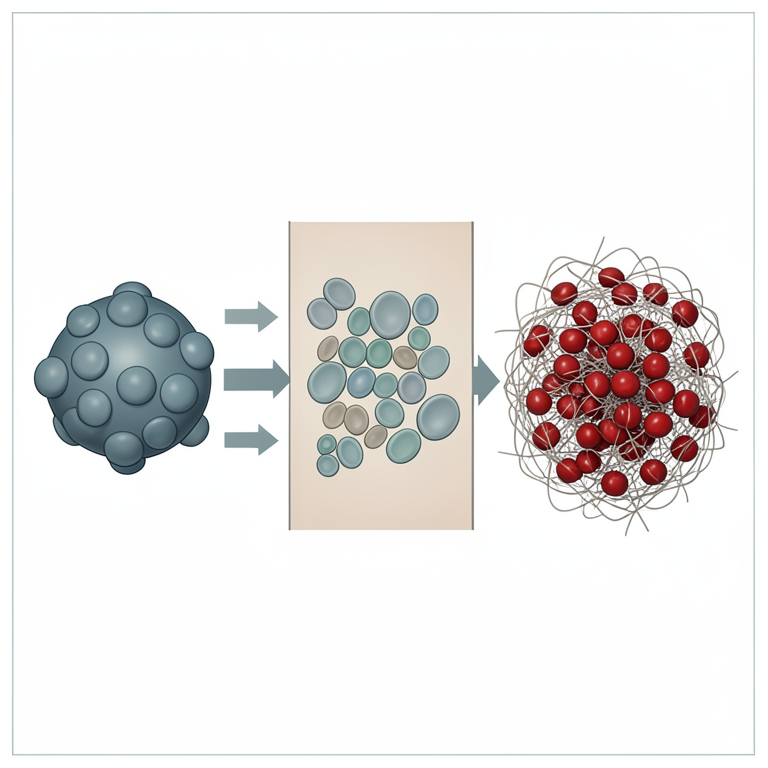
The Complement-Coagulation Axis
AI-generated conceptual illustration (human blood vessel wall and circulating blood components). It explains the idea and does not show study data.
View source evidence ↗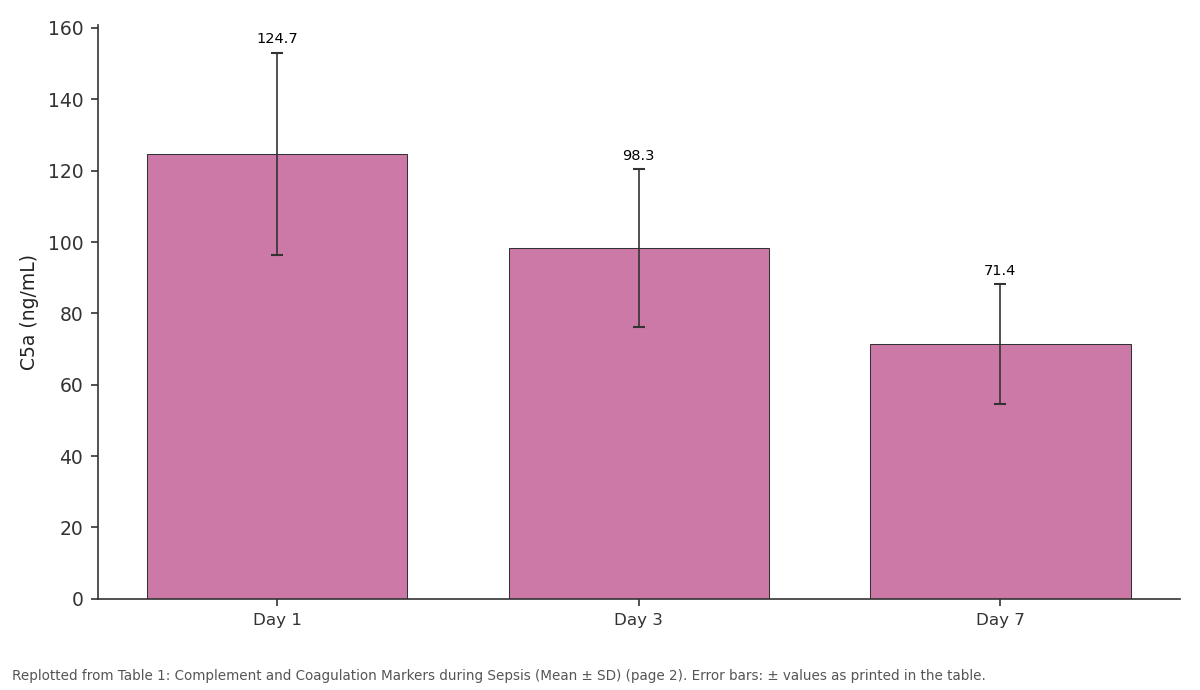
C5a (ng/mL): Day 1 vs Day 3 vs Day 7
Replotted from Table 1 (page 2) of the original paper. Every bar is the paper's own table value.
View source evidence ↗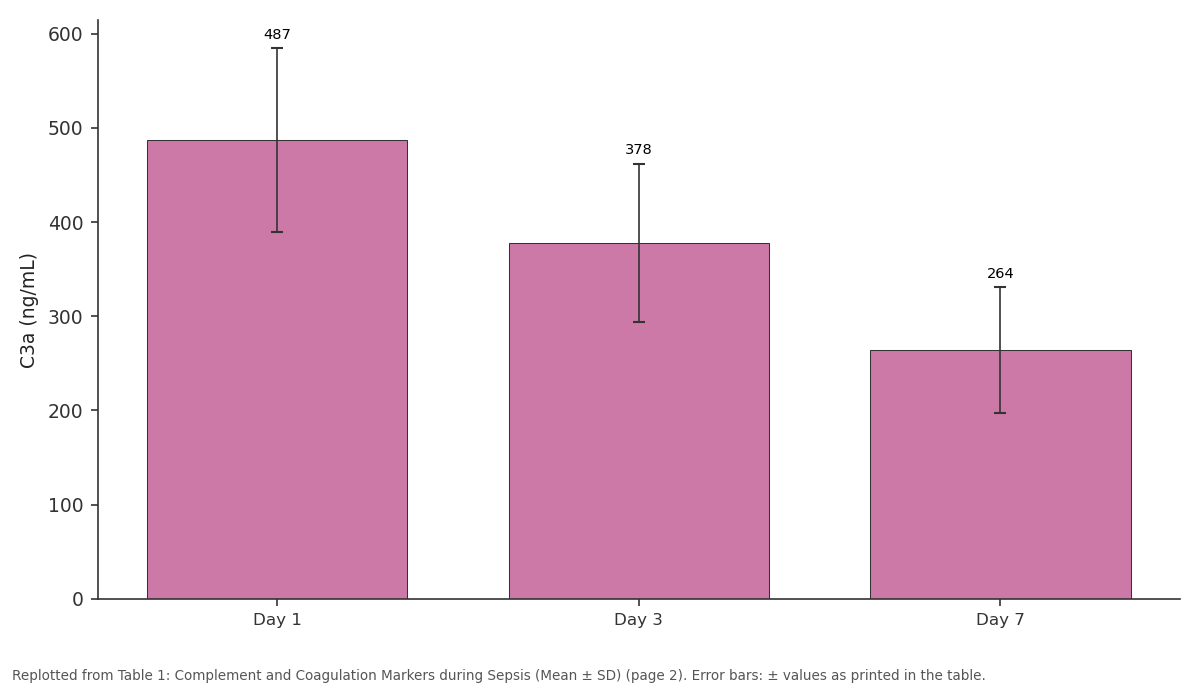
C3a (ng/mL): Day 1 vs Day 3 vs Day 7
Replotted from Table 1 (page 2) of the original paper. Every bar is the paper's own table value.
View source evidence ↗Figures & tables
From the original paper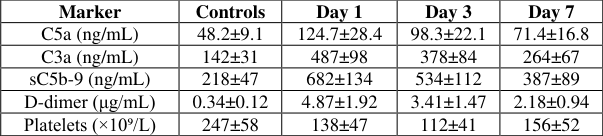 Table 1
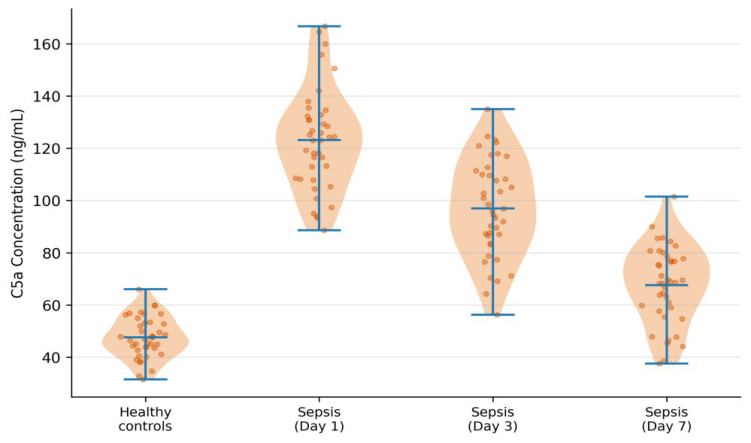 Figure 1
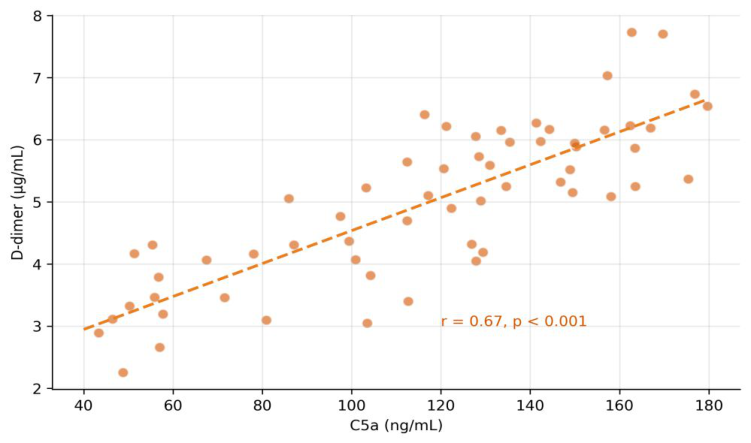 Figure 2
Introduction
Compared to autoimmune diseases where the immune system attacks self, sepsis presents a different kind of immunological crisis-the immune system's own defensive response becomes the primary source of tissue damage. The complement system, one of the oldest arms of innate immunity, is designed to tag pathogens for destruction. But in sepsis, uncontrolled complement activation generates excessive amounts of anaphylatoxins C3a and C5a, which drive inflammation, neutrophil dysfunction, and-importantly-activation of the coagulation cascade [1] . This intersection of complement and coagulation, termed thromboinflammation, has emerged as a central mechanism of organ damage in sepsis [2] . C5a directly activates tissue factor expression on monocytes and endothelial cells, while the membrane attack complex (C5b-9) triggers platelet activation and procoagulant microvesicle release [3] . Despite these mechanistic links, prospective clinical data correlating complement activation markers with coagulation parameters during sepsis progression remain limited [4] . This research aimed to measure serial complement and coagulation markers in sepsis patients and assess their correlation and prognostic value for DIC development.
Materials and Methods
Materials and Methods
Materials
This prospective observational research was conducted at the Department of Clinical Immunology, Guilan University of Marine Biology, Rasht, Iran, from April 2023 to September 2024. The Institutional Ethics Committee approved the protocol (GUMB-IEC/2023-047, March 15, 2023). Ninety-four patients meeting Sepsis-3 criteria (SOFA score ≥ 2 with suspected infection) [5] were enrolled from the ICU of Razi Teaching Hospital, Rasht. Thirty age-and sex-matched healthy volunteers served as controls. Exclusion criteria included known complement deficiency, chronic liver disease, or anticoagulant therapy. Blood samples (10 mL) were drawn at admission (day 1) and days 3 and 7 into EDTA and citrate tubes.
Methods
C3a, C5a, and soluble C5b-9 (sC5b-9) were measured by commercial ELISA kits (Quidel, San Diego, CA, USA) following manufacturer protocols [6] . D-dimer was measured by immunoturbidimetry (Stago STA-R Max), thrombinantithrombin (TAT) complexes by ELISA (Siemens), and platelet counts by automated hematology analyzer. DIC was scored using the ISTH overt DIC criteria [7] . Correlations between complement and coagulation markers used Spearman's rank correlation. Comparisons between DIC and non-DIC groups used Mann-Whitney U tests. Receiver operating characteristic (ROC) curves assessed C5a's predictive value for DIC development. Analysis was performed in SPSS v28. All complement markers were significantly elevated at day 1 compared to controls (p<0.001 for each) and declined over the subsequent week. D-dimer peaked at day 1 while platelet counts reached their nadir at day 3. Twenty-three patients (24.5%) developed overt DIC during the observation period.
Results
Results
Discussion
The 2.6-fold elevation of C5a at sepsis admission confirms early and vigorous complement activation, consistent with findings from smaller European cohorts [1,4] . The positive correlation between C5a and D-dimer supports the mechanistic link between complement activation and coagulation amplification-C5a induces tissue factor expression on monocytes and endothelial cells, directly triggering the extrinsic coagulation pathway [3] . The higher admission C5a in patients who later developed DIC (p = 0.002) suggests that early complement activation intensity may predict thromboinflammatory complications. The ROC analysis for C5a predicting DIC yielded an AUC of 0.78 (95% CI: 0.68-0.88), which is moderate but potentially useful in combination with existing DIC scoring criteria [7] . The progressive decline in complement markers from day 1 to day 7 likely reflects both consumption of complement proteins and possible anti-inflammatory counter-regulation [2] . Therapeutic targeting of C5a-through antibodies like eculizumab or C5a receptor antagonists-has shown promise in sepsis animal models and early-phase human trials [8] .
Conclusion
This research demonstrated strong complement activation during sepsis that correlated with coagulation disturbance. C5a peaked at ICU admission and positively correlated with D-dimer, supporting the complement-coagulation axis in thromboinflammation. Higher admission C5a predicted subsequent DIC development. These findings support C5a as both a biomarker for thromboinflammatory risk and a potential therapeutic target in sepsis management.
Acknowledgement
Acknowledgements Funding SourcesInternal funds from Guilan University of Marine Biology supported this work. Institutional SupportThe authors thank Guilan University and Razi Teaching Hospital for ICU access and laboratory facilities. Contributions Not Qualifying for AuthorshipICU nursing staff who collected serial blood samples are gratefully acknowledged.
Figures and tables from the paper
| Marker | Controls | Day 1 | Day 3 | Day 7 |
|---|---|---|---|---|
| C5a (ng/mL) | 48.2±9.1 | 124.7±28.4 | 98.3±22.1 | 71.4±16.8 |
| C3a (ng/mL) | 142±31 | 487±98 | 378±84 | 264±67 |
| sC5b-9 (ng/mL) | 218±47 | 682±134 | 534±112 | 387±89 |
| D-dimer (μg/mL) | 0.34±0.12 | 4.87±1.92 | 3.41±1.47 | 2.18±0.94 |
| Platelets (×10⁹/L) | 247±58 | 138±47 | 112±41 | 156±52 |
Table text extracted from the original PDF; superscript letters are shown inline. The original table image is below.
View original table image
References
8 in the original paper- Ward PA. The dark side of C5a in sepsis. Nature Reviews Immunology. 2004;4(2):133-142.
- Markiewski MM, DeAngelis RA, Lambris JD. Complexity of complement activation in sepsis. Journal of Cellular and Molecular Medicine. 2008;12(6A):2245-2254.
- Oikonomopoulou K, Ricklin D, Ward PA, Lambris JD. Interactions between coagulation and complementtheir role in inflammation. Seminars in Immunopathology. 2012;34(1):151-165.
- Charchaflieh J, Wei J, Bhatt DL, Bhatt AI, Bhatt RG, Elwell C, et al. The role of complement system in septic shock. Clinical and Developmental Immunology. 2012;2012:407324.
- Singer M, Deutschman CS, Seymour CW, ShankarHari M, Annane D, Bauer M, et al. The Third International Consensus Definitions for Sepsis and Septic Shock (Sepsis-3). JAMA. 2016;315(8):801-810.
- Mollnes TE, Brekke OL, Fung M, Fure H, Christiansen D, Bergseth G, et al. Essential role of the C5a receptor in E. coli-induced oxidative burst and phagocytosis. Blood. 2002;100(5):1869-1877.
- Taylor FB, Toh CH, Hoots WK, Wada H, Levi M. Towards definition, clinical and laboratory criteria, and a scoring system for disseminated intravascular coagulation. Thrombosis and Haemostasis. 2001;86(5):1327-1330.
- Vlaar APJ, de Bruin S, Busch M, Wolf JM, van den Brom CE. Anti-C5a antibody IFX-1 (vilobelimab) treatment versus best supportive care for patients with severe COVID-19. Lancet Rheumatology. 2020;2(12):e764-e773.
Cited by 1
From OpenAlex, OpenCitations and reference lists read by Scinovex
- Crosstalk between innate immune signaling pathways and integrated TLR, NLRP3 inflammasome, cGAS–STING, and NF-κB networks in sepsis ↗
Xiaoxi Du, Han Qiao · Frontiers in Cell and Developmental Biology · 2026
Sepsis is a life-threatening syndrome characterized by a dysregulated host response to infection that culminates in systemic inflammation, immune dysfunction, and multiple organ failure. Despite advances in supportive care, the molecular mechanisms underlying sepsis remain incompletely understood, largely due to the complex interplay among innate immune signaling pathways rather than the activation of individual pathways in isolation. Recent evidence indicates…
❝ 0PDF