
Research article · 2025 · Full text
International Journal of Biology SciencesBacteriophage therapy as an alternative strategy against carbapenem-resistant Klebsiella pneumoniae
Volume 7(8) · Pages 295–298 · DOI: 10.33545/26649926.2025.v7.i8d.660 ↗
Research areasBacteriophages and microbial interactionsAntibiotic Resistance in BacteriaAntimicrobial agents and applications
Abstract
Author-writtenA hospital in Pietermaritzburg reported a cluster of ventilator-associated pneumonia cases caused by carbapenem-resistant Klebsiella pneumoniae (CR-Kp) that failed standard antibiotic salvage therapy—prompting the search for non-antibiotic alternatives. This research isolated and characterized five lytic bacteriophages (φKp-01 through φKp-05) from municipal wastewater and assessed their efficacy against 30 clinical CR-Kp isolates in vitro. Work was conducted at the uMgeni University of Biological Sciences between August 2022 and December 2023. Phage φKp-03 demonstrated the broadest host range (infecting 26 of 30 isolates, 86.7%) and the highest efficiency of plating (EOP = 0.94 on the reference resistant strain). Time-kill assays showed a 4.3-log reduction in viable CR-Kp counts within 4 hours at a multiplicity of infection (MOI) of 10. φKp-03 remained stable across pH 4-10 and at temperatures up to 55 °C. Biofilm penetration assays revealed a 71.8% reduction in established biofilm biomass at 24 hours. Combining φKp-03 with sub-inhibitory meropenem (2 µg/mL) produced a synergistic 5.7-log reduction, significantly exceeding phage alone (p
Summary
Source-checkedPlain-language reading of the full paper, prepared with AI and checked against the text. Each point links to the authors' own words.
Why it matters
- Carbapenem-resistant Klebsiella pneumoniae (CR-Kp) is a critical-priority pathogen with dwindling treatment options due to increasing resistance to drugs like colistin. View evidence ↗
- Bacteriophage therapy is a potential alternative because it targets specific bacteria without harming healthy flora, amplifies itself at the infection site, and can potentially restore antibiotic effectiveness. View evidence ↗
The question
- The study aimed to isolate lytic phages from wastewater and evaluate their host range, stability, genomics, biofilm penetration, and synergy with antibiotics against clinical CR-Kp isolates. View evidence ↗
What they did
- The research was carried out at the uMgeni University of Biological Sciences from August 2022 to December 2023. View evidence ↗
- Phage-antibiotic synergy (PAS) was tested by combining the lead phage φKp-03 at a multiplicity of infection (MOI) of 10 with a sub-inhibitory concentration of meropenem (2 µg/mL). View evidence ↗
- The genome of the lead phage was sequenced using Illumina MiSeq, assembled with SPAdes v3.15, and annotated using Pharokka. View evidence ↗
What they found
- Among five isolated phages, φKp-03 was the most effective, infecting 86.7% (26/30) of isolates with an efficiency of plating (EOP) of 0.94, a 22-minute latent period, and a burst size of 187 PFU/cell. View evidence ↗
- At an MOI of 10, φKp-03 achieved a 4.3-log reduction in viable CR-Kp bacteria within 4 hours. View evidence ↗
- The lead phage φKp-03 demonstrated stability across a pH range of 4 to 10 and at temperatures reaching 55 °C. View evidence ↗
- Treatment with φKp-03 at an MOI of 100 for 24 hours reduced established biofilm biomass by 71.8%. View evidence ↗
- Combining φKp-03 with sub-MIC meropenem resulted in a 5.7-log reduction in viable counts, which was 1.4 logs greater than the reduction achieved by the phage alone. View evidence ↗
- φKp-03 was identified as a Siphoviridae phage with a 48.6-kb genome that contains no known genes for virulence or antibiotic resistance. View evidence ↗
What it means
- The authors conclude that φKp-03 is a promising candidate for treating CR-Kp due to its broad host range, ability to penetrate biofilms, and synergy with meropenem. View evidence ↗
- The study's results are limited to in vitro conditions and do not account for in vivo factors such as pharmacokinetics, immune clearance, or the development of phage resistance. View evidence ↗
- Because φKp-03 did not lyse four of the isolates, the authors suggest that phage cocktails may be necessary to overcome specific bacterial resistance mechanisms. View evidence ↗
Visual summary
2 visualsIllustrations explain the paper; charts are replotted from the paper's own table values.
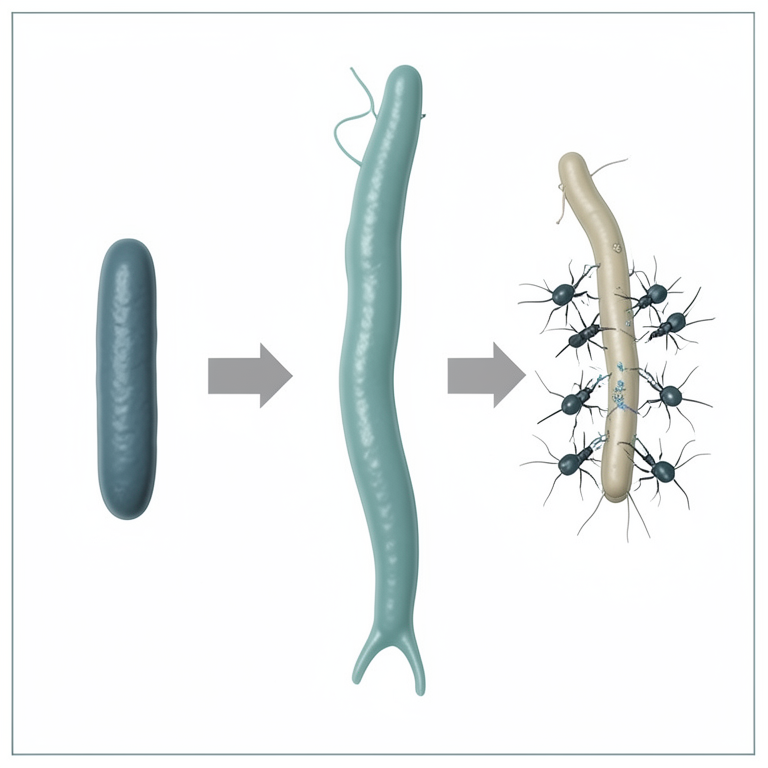
Phage-Antibiotic Synergy Mechanism
AI-generated conceptual illustration (Klebsiella pneumoniae bacteria and bacteriophages). It explains the idea and does not show study data.
View source evidence ↗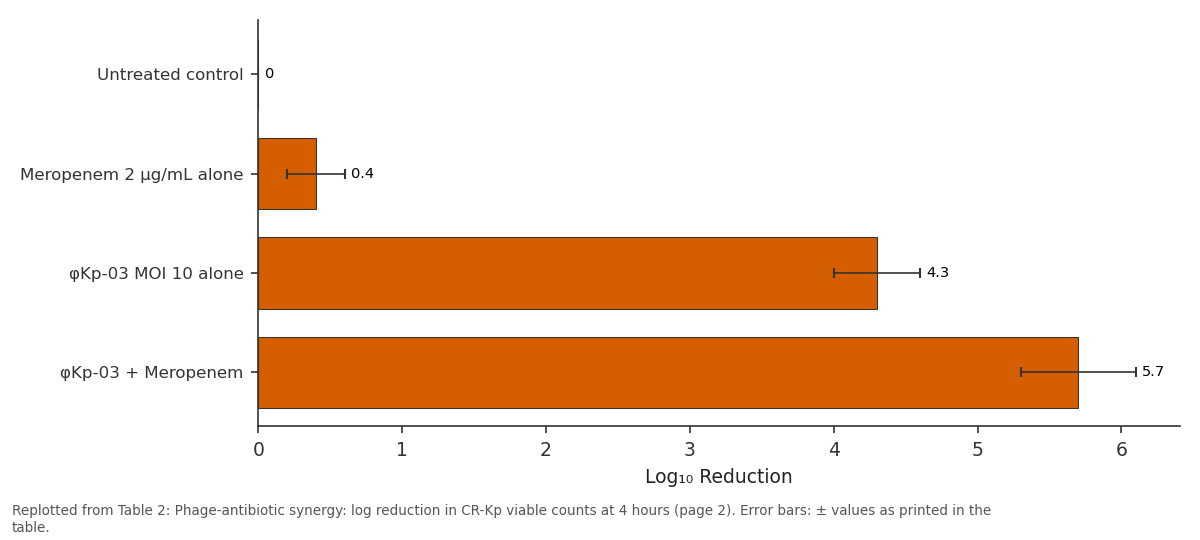
Log₁₀ Reduction: Untreated control vs Meropenem 2 µg/mL alone vs φKp-03 MOI 10 alone vs φKp-03 + Meropenem
Replotted from Table 2 (page 2) of the original paper. Every bar is the paper's own table value.
View source evidence ↗Figures & tables
From the original paper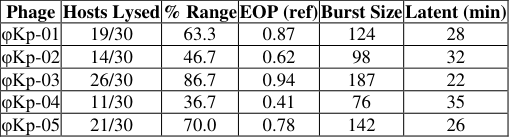 Table 1
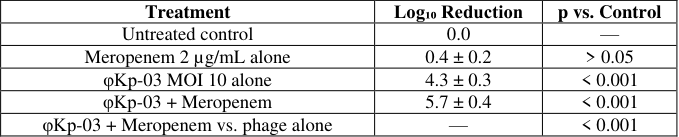 Table 2
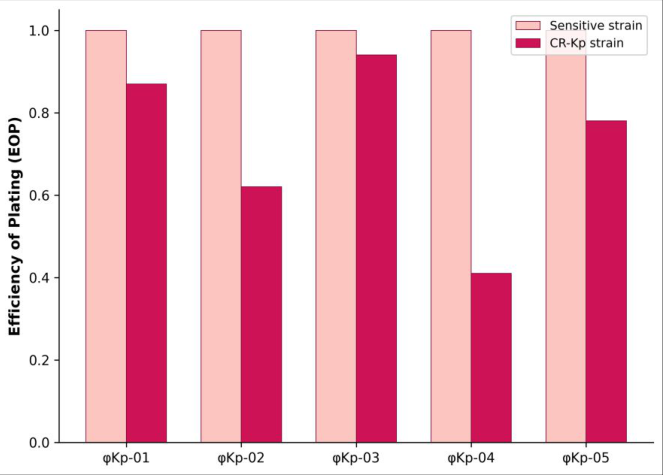 Figure 1
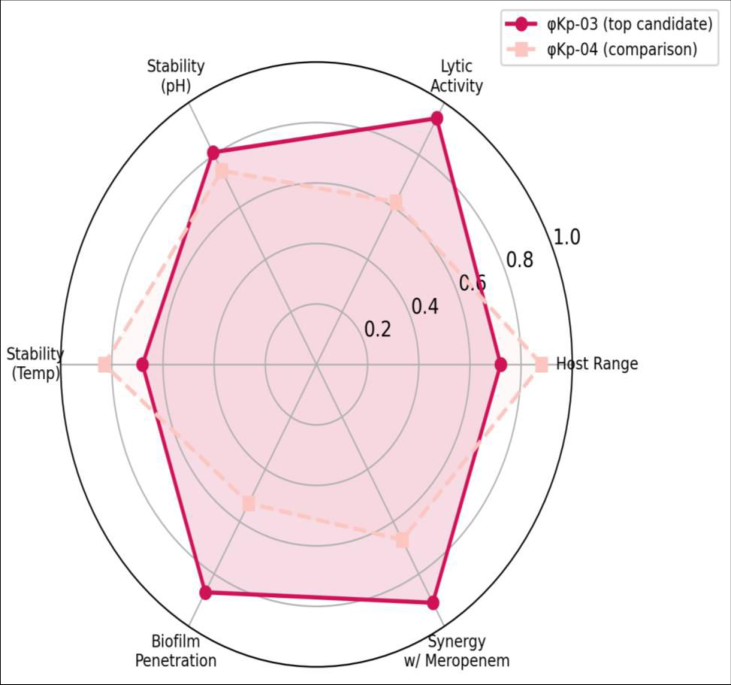 Figure 2
Introduction
In 2017 a woman in Nevada died from a Klebsiella pneumoniae infection resistant to all 26 antibiotics available in the United States-a case that became a stark example of the postantibiotic era's arrival [1] . Carbapenem-resistant Klebsiella pneumoniae is now classified as a critical-priority pathogen by the World Health Organization, and treatment options shrink further as colistin resistance spreads through mobile genetic elements [2] . Against this backdrop, bacteriophages-viruses that specifically infect and lyse bacteria-have reemerged as a therapeutic option after decades of neglect in Western medicine. Phage therapy offers several advantages: narrow host range limits collateral damage to commensal flora, self-amplification at the infection site reduces dosing frequency, and bacterial resistance to phages often involves surface receptor modifications that restore antibiotic susceptibility [3] . Clinical case reports and compassionate-use programmes have documented successful phage treatment of multidrug-resistant infections in lungs, bones, and prosthetic joints [4] . Yet systematic characterization of phage candidates against local CR-Kp strains remains limited, particularly in sub-Saharan African clinical settings. This research isolated lytic phages from Pietermaritzburg municipal wastewater, characterized their host range, stability, genomics, and biofilm-penetration capacity, and tested phage-antibiotic synergy against clinical CR-Kp isolates recovered from the uMgeni University of Biological Sciences referral network.
Theoretical Background
Lytic phages follow a strictly virulent replication cycle: they adsorb to specific bacterial surface receptors (typically lipopolysaccharide or outer membrane proteins in Gramnegatives), inject genomic DNA, hijack the host's transcriptional and translational machinery, assemble progeny virions, and lyse the host cell to release 50-200 new particles per burst [5] . This cycle takes 20-40 minutes for most Klebsiella phages under optimal conditions. Phage-antibiotic synergy (PAS) occurs when sub-inhibitory antibiotic concentrations stress bacteria-causing filamentation or membrane destabilization-thereby increasing phage adsorption or accelerating lysis [6] . PAS has been demonstrated for βlactams, fluoroquinolones, and aminoglycosides paired with various phages, though the mechanism appears compoundspecific.
Material and Methods
Material and Methods
Material
Thirty clinical CR-Kp isolates (carbapenem MIC ≥ 16 µg/mL by broth microdilution) were obtained from the culture collection at the Department of Medical Microbiology, uMgeni University of Biological Sciences. Isolates had been recovered from blood (n = 12), respiratory specimens (n = 10), and urine (n = 8) between 2020 and 2022. Wastewater samples (10 L) for phage isolation were collected from the Msunduzi River treatment works, Pietermaritzburg, in August 2022 [7] . K. pneumoniae ATCC 13883 served as the propagation host.
Methods
Phage isolation followed the double-agar overlay method: filtered wastewater supernatant (0.22-µm PES membrane) was mixed with log-phase host bacteria in soft agar and plated on LB agar. Individual plaques were picked, triplepurified, and amplified to high-titer stocks (> 10⁹ PFU/mL). Host range was determined by spot testing on all 30 CR-Kp isolates; efficiency of plating was calculated for each phage-host pair. Time-kill kinetics were measured at MOIs of 0.1, 1, and 10, sampling at 0, 1, 2, 4, 6, and 24 hours. pH stability (3-12) and thermal stability (4-70 °C, 1-hour incubation) were assessed by titer enumeration [8] . Biofilm assays used 48-hour pre-formed biofilms in 96-well plates; phage was added at MOI 100 and biomass measured by crystal violet staining after 24 hours. PAS experiments combined φKp-03 (MOI 10) with sub-MIC meropenem (2 µg/mL). Whole-genome sequencing was performed on the Illumina MiSeq (2 × 300 bp), assembled with SPAdes v3.15, and annotated with Pharokka [9] . Statistical comparisons used one-way ANOVA with Tukey post-hoc tests (α = 0.05). The combination of φKp-03 with sub-MIC meropenem produced a 5.7-log reduction-1.4 logs greater than phage alone-confirming synergy (Table 2). Biofilm penetration assays showed a 71.8% reduction in established biofilm biomass after 24-hour phage treatment at MOI 100.
| Treatment | Log₁₀ Reduction | p vs. Control |
|---|---|---|
| Untreated control | 0.0 | — |
| Meropenem 2 µg/mL alone | 0.4 ± 0.2 | > 0.05 |
| φKp-03 MOI 10 alone | 4.3 ± 0.3 | < 0.001 |
| φKp-03 + Meropenem | 5.7 ± 0.4 | < 0.001 |
| φKp-03 + Meropenem vs. phage alone | — | < 0.001 |
Table text extracted from the original PDF; superscript letters are shown inline. The original table image is below.
View original table image
Results
Results
Limitations
These findings are limited to in vitro conditions and cannot predict in vivo pharmacokinetics, immune clearance of phage particles, or the emergence of phage-resistant bacterial subpopulations during treatment. The four CR-Kp isolates not lysed by φKp-03 may carry receptor mutations or restriction-modification systems that would require phage cocktail strategies to overcome [10] . Animal infection models are the logical next step before any clinical application.
Discussion
φKp-03's broad host range (86.7%) compares favorably with phage cocktails described in the literature, many of which use three to five phages to achieve similar coverage [11] . Its Siphoviridae classification and genome analysis-no integrases, no toxin genes, no antibiotic-resistance determinants-support its safety profile for potential therapeutic use, consistent with international phage-therapy guidelines that mandate absence of lysogeny and virulence markers [12] . The synergistic effect with meropenem is likely explained by the PAS mechanism: sub-inhibitory β-lactam exposure causes cell filamentation in Klebsiella, increasing the surface area available for phage adsorption and effectively amplifying the lytic cycle [6] . The practical implication is that phage therapy need not fully replace antibiotics but may restore efficacy of otherwise ineffective drugs when used in combination.
Conclusion
This research identified φKp-03 as a lytic bacteriophage with broad host range, strong biofilm-penetration capacity, and synergistic activity with meropenem against carbapenem-resistant K. pneumoniae. The phage's genome is free of virulence or resistance genes, supporting its candidacy for further preclinical evaluation. These results add to the evidence base for phage therapy as a practical complement to conventional antibiotics in managing multidrug-resistant infections.
Acknowledgement
Acknowledgements Funding SourcesThis research was supported by departmental operating funds at the uMgeni University of Biological Sciences. Institutional SupportThe author thanks the Department of Medical Microbiology for culture collections and sequencing platform access. Contributions Not Qualifying for AuthorshipThe author acknowledges Dr. Sipho Ndlovu for assistance with wastewater sampling logistics and Mr. Thabo Mokoena for bioinformatics pipeline support.
Figures and tables from the paper
| Phage | Hosts Lysed | % Range | EOP (ref) | Burst Size | Latent (min) |
|---|---|---|---|---|---|
| φKp-01 | 19/30 | 63.3 | 0.87 | 124 | 28 |
| φKp-02 | 14/30 | 46.7 | 0.62 | 98 | 32 |
| φKp-03 | 26/30 | 86.7 | 0.94 | 187 | 22 |
| φKp-04 | 11/30 | 36.7 | 0.41 | 76 | 35 |
| φKp-05 | 21/30 | 70.0 | 0.78 | 142 | 26 |
Table text extracted from the original PDF; superscript letters are shown inline. The original table image is below.
View original table image
References
17 in the original paper- Chen L, Todd R, Kiehlbauch J, et al. Notes from the field: pan-resistant New Delhi metallo-beta-lactamaseInternational Journal of Biology Sciences https://www.biologyjournal.net producing Klebsiella pneumoniae. MMWR Morb Mortal Wkly Rep. 2017;66(1):33.
- Tacconelli E, Carrara E, Savoldi A, et al. Discovery, research, and development of new antibiotics: the WHO priority list of antibiotic-resistant bacteria and tuberculosis. Lancet Infect Dis. 2018;18(3):318-327.
- Abedon ST, Kuhl SJ, Blasdel BG, Kutter EM. Phage treatment of human infections. Bacteriophage. 2011;1(2):66-85.
- Schooley RT, Biswas B, Gill JJ, et al. Development and use of personalized bacteriophage-based therapeutic cocktails to treat a patient with a disseminated resistant Acinetobacter baumannii infection. Antimicrob Agents Chemother. 2017;61(10):e00954-17.
- Comeau AM, Tétart F, Trojet SN, et al. Phageantibiotic synergy (PAS): β-lactam and quinolone antibiotics stimulate virulent phage growth. PLoS One. 2007;2(8):e799.
- Kropinski AM, Mazzocco A, Waddell TE, et al. Enumeration of bacteriophages by double agar overlay plaque assay. Methods Mol Biol. 2009;501:69-76.
- Adams MH. Bacteriophages. Interscience Publishers; 1959.
- Bouras G, Nepal R, Houber GN, et al. Pharokka: a fast scalable bacteriophage annotation tool. Bioinformatics. 2023;39(1):btac776.
- Labrie SJ, Samson JE, Moineau S. Bacteriophage resistance mechanisms. Nat Rev Microbiol. 2010;8(5):317-327.
- Chan BK, Abedon ST, Loc-Carrillo C. Phage cocktails and the future of phage therapy. Future Microbiol. 2013;8(6):769-783.
- Pirnay JP, Blasdel BG, Bretaudeau L, et al. Quality and safety requirements for sustainable phage therapy products. Pharm Res. 2015;32(7):2173-2179.
- Gordillo Altamirano FL, Barr JJ. Phage therapy in the postantibiotic era. Clin Microbiol Rev. 2019;32(2):e00066-18.
- Clokie MR, Millard AD, Letarov AV, Heaphy S. Phages in nature. Bacteriophage. 2011;1(1):31-45.
- Hatfull GF, Dedrick RM, Schooley RT. Phage therapy for antibiotic-resistant bacterial infections. Annu Rev Med. 2022;73:197-211.
- Oechslin F. Resistance development to bacteriophages occurring during bacteriophage therapy. Viruses. 2018;10(7):351.
- Torres-Barceló C, Hochberg ME. Evolutionary rationale for phages as complements of antibiotics. Trends Microbiol. 2016;24(4):249-256.
- Loc-Carrillo C, Abedon ST. Pros and cons of phage therapy. Bacteriophage. 2011;1(2):111-114.