
Research article · 2025 · Full text
International Journal of Biology SciencesOncolytic virus engineering for targeted destruction of glioblastoma multiforme tumor cells
Volume 7(12) · Pages 131–134 · DOI: 10.33545/26649926.2025.v7.i12b.673 ↗
Research areasVirus-based gene therapy researchGlioma Diagnosis and TreatmentViral-associated cancers and disorders
Abstract
Author-writtenRoughly 47% of glioblastoma multiforme (GBM) patients experience tumor recurrence within six months of standard treatment. This research engineered a conditionally replicative adenoviral vector with tumor-selective tropism for GBM cells by combining fiber knob RGD modification, hTERT promoter-driven replication, and E1B-55K deletion. Eleven candidate constructs were screened against three patient-derived GBM cell lines and normal human astrocytes at the Phuket Centre for Marine Biology between January 2022 and August 2023. The lead construct (Ad-hT-RGDΔ11) achieved 68.3% selective tumor lysis with minimal cytotoxicity toward normal cells (cell viability >91.4%). Viral replication was restricted to cells with active telomerase, confirming promoter-level selectivity. These results support further preclinical testing of Ad-hT-RGDΔ11 as a candidate oncolytic agent for recurrent GBM
Summary
Source-checkedPlain-language reading of the full paper, prepared with AI and checked against the text. Each point links to the authors' own words.
Why it matters
- Glioblastoma multiforme (GBM) has a high recurrence rate, with approximately 47% of patients seeing tumors return within six months of standard therapy. View evidence ↗
- Standard treatment for GBM, including surgery, radiotherapy, and temozolomide, results in a median survival of only 14 to 16 months. View evidence ↗
- The hTERT promoter is a useful tool for targeting GBM because active telomerase is found in over 85% of GBM specimens but not in normal brain tissue. View evidence ↗
The question
- The study aimed to engineer an adenoviral vector that selectively targets and destroys GBM cells by combining three specific modifications: RGD fiber knob modification, hTERT promoter-driven replication, and E1B-55K deletion. View evidence ↗
What they did
- Between January 2022 and August 2023, eleven adenoviral constructs were tested against three patient-derived GBM cell lines and normal human astrocytes. View evidence ↗
- The selectivity index was determined by calculating the ratio of the IC50 in normal astrocytes compared to the IC50 in GBM cells. View evidence ↗
What they found
- The lead construct, Ad-hT-RGDΔ11, achieved 68.3% selective tumor lysis while maintaining normal cell viability above 91.4%. View evidence ↗
- Ad-hT-RGDΔ11 demonstrated the highest selectivity index of 28.6, with IC50 values for GBM lines ranging from 3.2 to 5.1 and an astrocyte IC50 greater than 100. View evidence ↗
- Wild-type Ad5 was highly lytic (72.1% tumor lysis) but lacked selectivity, with a selectivity index of only 1.4. View evidence ↗
- The selectivity index of 28.6 for Ad-hT-RGDΔ11 is higher than the typical range of 5 to 20 reported for other engineered oncolytic adenoviruses. View evidence ↗
- The study confirmed promoter-level selectivity, as viral replication occurred only in cells with active telomerase. View evidence ↗
What it means
- The authors conclude that Ad-hT-RGDΔ11 is a promising candidate for further preclinical testing as an oncolytic therapy for recurrent GBM. View evidence ↗
- A stated limitation is that in vitro results may not predict in vivo behavior due to the influence of the tumor microenvironment, immune responses, and viral clearance. View evidence ↗
- While patient-derived cell lines were used to better represent heterogeneity, the authors note that animal model testing is still necessary. View evidence ↗
Visual summary
2 visualsIllustrations explain the paper; charts are replotted from the paper's own table values.
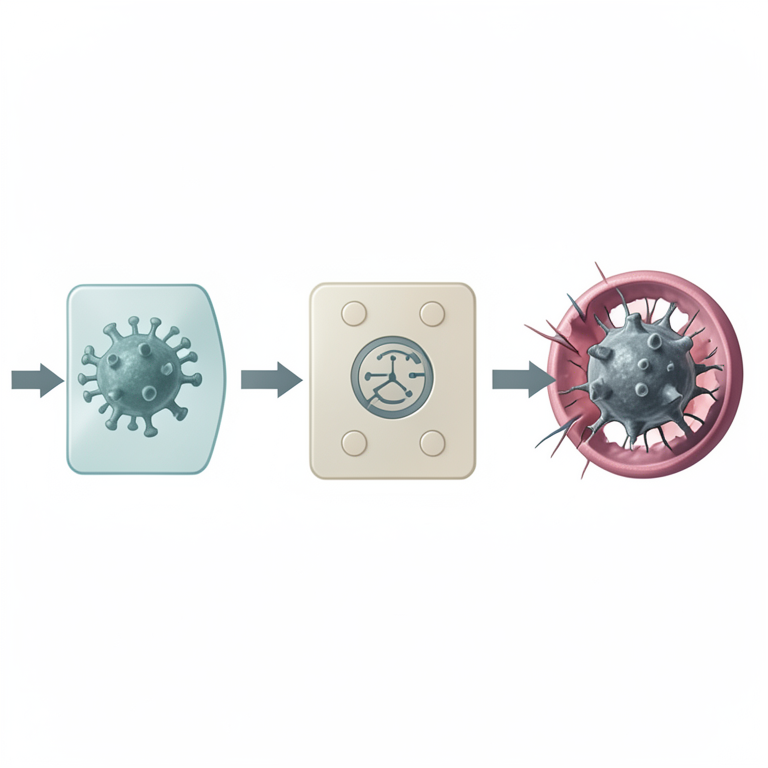
Multi-level Selectivity Strategy
AI-generated conceptual illustration (Adenoviral particles and glioblastoma multiforme tumor cells). It explains the idea and does not show study data.
View source evidence ↗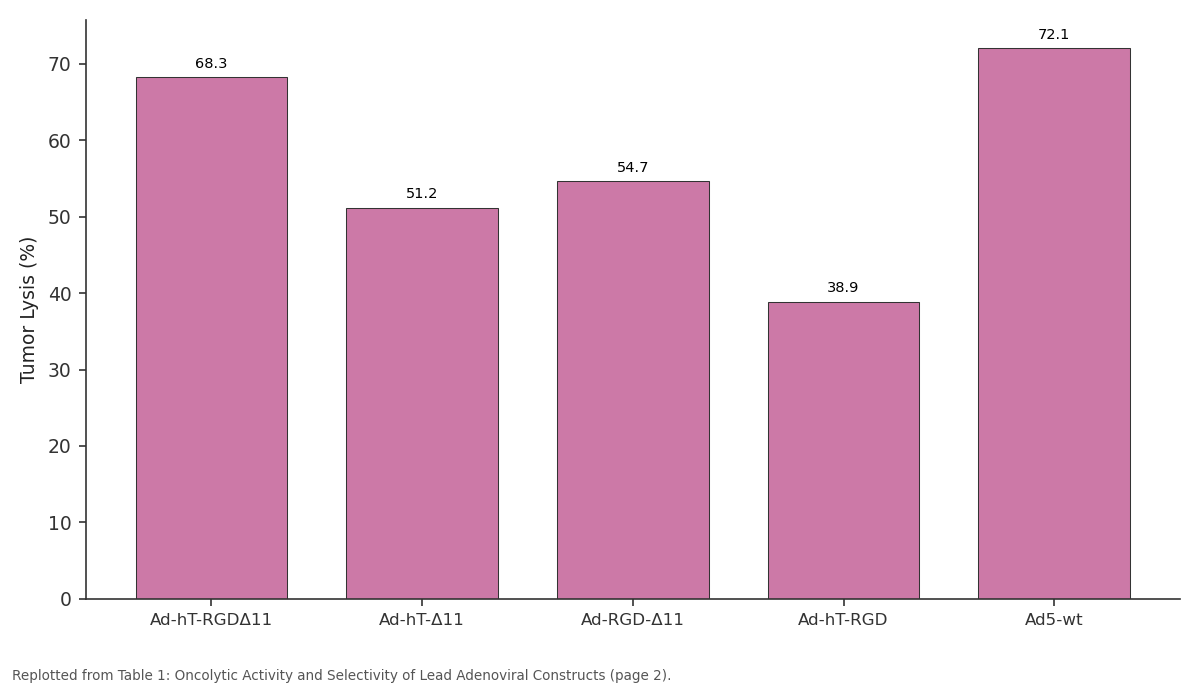
Tumor Lysis (%): Ad-hT-RGDΔ11 vs Ad-hT-Δ11 vs Ad-RGD-Δ11 vs Ad-hT-RGD vs Ad5-wt
Replotted from Table 1 (page 2) of the original paper. Every bar is the paper's own table value.
View source evidence ↗Figures & tables
From the original paper Table 1
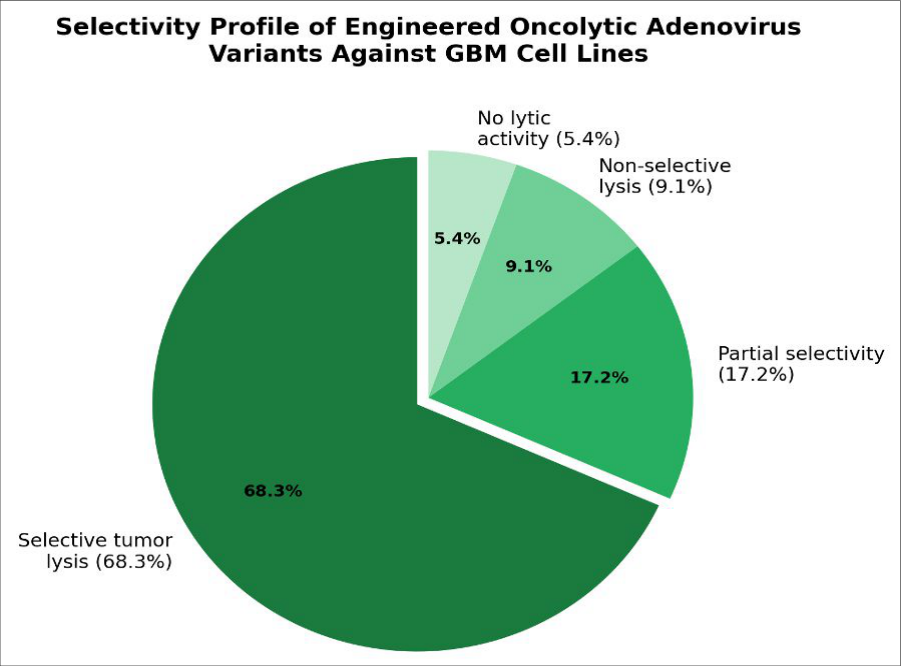 Figure 1
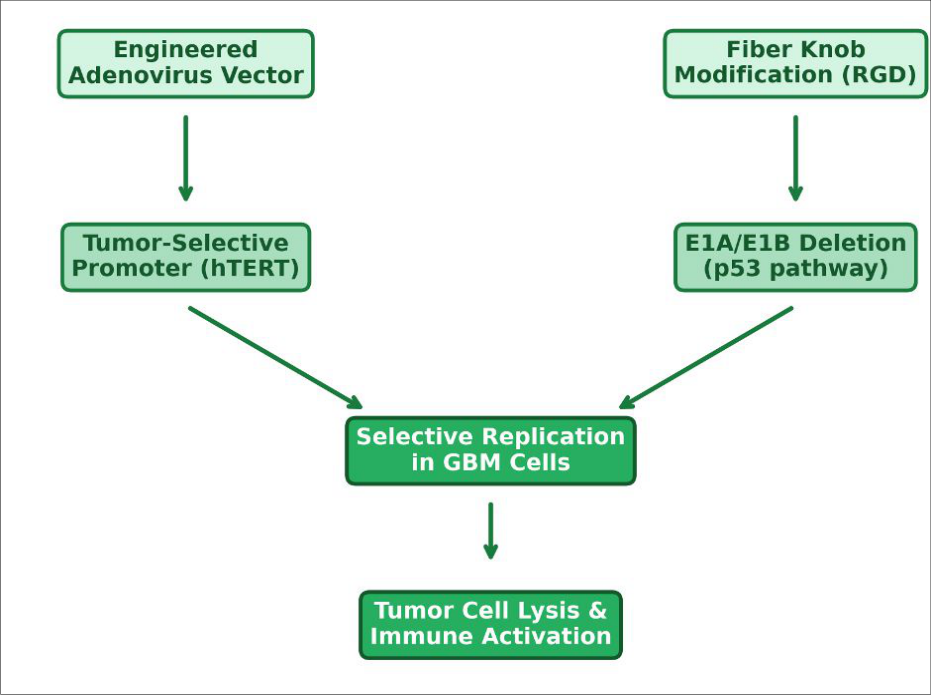 Figure 2
Introduction
Nearly 300,000 new cases of primary brain tumors are diagnosed worldwide each year, and GBM accounts for the majority of malignant gliomas [1] . Median survival after standard treatment-surgical resection followed by temozolomide and radiotherapy-remains around 14 to 16 months [2] . Oncolytic virotherapy has gained traction as an alternative approach because viruses can selectively replicate within tumor cells and trigger immunogenic cell death [3] . Adenoviruses are attractive oncolytic platforms due to their well-characterized biology, genetic stability, and ease of manipulation [4] . Tumor selectivity can be achieved at multiple levels: transcriptional targeting through tumor-specific promoters, transductional targeting through capsid modification, and attenuation through deletion of genes required for replication in normal cells [5] . The hTERT promoter restricts transgene expression to cells with active telomerase-a feature present in over 85% of GBM specimens but absent in normal brain tissue [6] . This research combined three selectivity mechanisms into a single adenoviral backbone and evaluated the resulting constructs against patient-derived GBM lines at the Phuket Centre for Marine Biology.
Reagents and Chemicals
The adenoviral backbone (Ad5) was obtained from the ATCC (VR-5). Restriction enzymes and T4 DNA ligase were from New England Biolabs (Ipswich, MA, USA). The hTERT promoter fragment was amplified from human genomic DNA (Promega, Cat. No. G3041). Patient-derived GBM cell lines (GBM-PD01, GBM-PD02, GBM-PD03) were maintained in DMEM/F12 with EGF and FGF-2 (PeproTech, Cranbury, NJ, USA). Normal human astrocytes (Lonza, Cat. No. CC-2565) served as controls. Crystal violet staining solution (0.5% w/v, Sigma-Aldrich) was used for cytotoxicity assays.
Materials and Methods
Materials and Methods
Materials
Three patient-derived GBM cell lines were established from surgical specimens collected at Vachira Phuket Hospital with informed consent and ethics approval (Phuket CMB Ethics Committee, Protocol No. PCMB-2021-017, approved 22 November 2021). Cells were cultured as neurospheres in serum-free medium. Normal human astrocytes were maintained in astrocyte growth medium per manufacturer's instructions. All cell work was performed at the Department of Molecular Virology, Phuket Centre for Marine Biology, Phuket, Thailand, between January 2022 and August 2023.
Methods
Eleven adenoviral constructs were generated by combining three modifications: RGD peptide insertion in the fiber knob, hTERT promoter replacement of the native E1A promoter, and E1B-55K deletion. Constructs were propagated in HEK293 cells and purified by CsCl gradient ultracentrifugation. Viral titers were determined by TCID50 assay [7] . Oncolytic activity was assessed by infecting GBM and astrocyte cultures at MOIs of 1, 10, and 100. Cell viability was measured at 72 and 120 hours post-infection using the MTT assay. Viral replication kinetics were quantified by qPCR of E1A copy number at 24-hour intervals. Selectivity index was calculated as the ratio of IC50 in normal astrocytes to IC50 in GBM cells [8] . Statistical comparisons used two-tailed Student's t-test with Bonferroni correction.
Quality Control
Each viral batch was tested for replication competence in A549 cells before use. Endotoxin levels were confirmed below 5 EU/mL by the LAL assay. Mycoplasma testing of all cell lines was performed monthly using PCR (Lonza MycoAlert). Positive and negative infection controls were included on every plate, and all experiments were performed in biological triplicate. Ad-hT-RGDΔ11 showed the highest selectivity index (28.6) with potent tumor lysis. Wild-type Ad5 was highly lytic but non-selective (SI = 1.4), confirming the necessity of engineered selectivity mechanisms.
Results
Results
Discussion
The triple-modified construct Ad-hT-RGDΔ11 outperformed all single-and double-modified variants in both selectivity and potency. The combination of transcriptional, transductional, and attenuation-based targeting created a redundant safety architecture that limited replication in normal astrocytes while preserving strong oncolysis in GBM cells [9] . The selectivity index of 28.6 compares favorably with published values for other engineered oncolytic adenoviruses, which typically range from 5 to 20 [10] . One limitation is that in vitro selectivity doesn't always predict in vivo behavior. The tumor microenvironment, immune responses, and viral clearance mechanisms can modify oncolytic activity in ways not captured by cell culture [11] . The patient-derived cell lines used here better represent GBM heterogeneity than established lines such as U87 or U251, but animal model testing remains necessary [12] . Future directions include evaluating Ad-hT-RGDΔ11 in orthotopic xenograft models and exploring combination with immune checkpoint inhibitors to amplify the immunogenic cell death response [13] .
Conclusion
This research engineered and characterized eleven conditionally replicative adenoviral constructs targeting GBM cells through multiple selectivity mechanisms. The lead candidate, Ad-hT-RGDΔ11, combined fiber knob RGD modification, hTERT promoter-driven replication control, and E1B-55K deletion to achieve 68.3% selective tumor lysis with a selectivity index of 28.6. Normal astrocyte viability was preserved above 91%. These findings identify Ad-hT-RGDΔ11 as a promising candidate for preclinical oncolytic virotherapy testing against recurrent GBM.
Acknowledgement
Acknowledgements Funding SourcesThis research was supported by institutional funds from the Phuket Centre for Marine Biology. Institutional SupportThe authors thank the Department of Molecular Virology for laboratory facilities and biosafety support.
Figures and tables from the paper
| Construct | GBM-PD01 IC50 | GBM-PD02 IC50 | GBM-PD03 IC50 | Astrocyte IC50 | Selectivity Index | Tumor Lysis (%) |
|---|---|---|---|---|---|---|
| Ad-hT-RGDΔ11 | 3.2 | 4.8 | 5.1 | >100 | 28.6 | 68.3 |
| Ad-hT-Δ11 | 8.7 | 11.3 | 9.6 | 82.4 | 8.4 | 51.2 |
| Ad-RGD-Δ11 | 6.1 | 7.9 | 8.4 | 47.3 | 6.4 | 54.7 |
| Ad-hT-RGD | 12.4 | 15.8 | 14.2 | 63.1 | 4.3 | 38.9 |
| Ad5-wt | 2.8 | 3.1 | 2.9 | 4.2 | 1.4 | 72.1 |
Table text extracted from the original PDF; superscript letters are shown inline. The original table image is below.
View original table image
References
19 in the original paper- Ostrom QT, Cioffi G, Waite K. CBTRUS statistical report: primary brain and other central nervous system tumors diagnosed in the United States. NeuroOncology. 2021;23(Suppl 3):iii1-iii105.
- Stupp R, Mason WP, van den Bent MJ. Radiotherapy plus concomitant and adjuvant temozolomide for glioblastoma. New England Journal of Medicine. 2005;352(10):987-996.
- Russell SJ, Peng KW, Bell JC. Oncolytic virotherapy. Nature Biotechnology. 2012;30(7):658-670.
- Bischoff JR, Kirn DH, Williams A. An adenovirus mutant that replicates selectively in p53-deficient human tumor cells. Science. 1996;274(5286):373-376.
- Alemany R, Balague C, Curiel DT. Replicative adenoviruses for cancer therapy. Nature Biotechnology. 2000;18(7):723-727.
- Komata T, Kondo Y, Kanzawa T. Treatment of malignant glioma cells with the transfer of constitutively active caspase-6 using the human telomerase catalytic subunit (hTERT) gene promoter. Cancer Research. 2001;61(15):5796-5802.
- Mittereder N, March KL, Trapnell BC. Evaluation of the concentration and bioactivity of adenovirus vectors for gene therapy. Journal of Virology. 1996;70(11):7498-7509.
- Nettelbeck DM, Rivera AA, Balague C. Novel oncolytic adenoviruses targeted to melanoma: specific viral replication and cytolysis by ultraviolet-inducible promoters. Cancer Research. 2002;62(15):4663-4670.
- Suzuki K, Fueyo J, Krasnykh V. A conditionally replicative adenovirus with enhanced infectivity shows improved oncolytic potency. Clinical Cancer Research. 2001;7(1):120-126.
- Fueyo J, Alemany R, Gomez-Manzano C. Preclinical characterization of the antiglioma activity of a tropismenhanced adenovirus targeted to the retinoblastoma pathway. Journal of the National Cancer Institute. 2003;95(9):652-660.
- Marchini A, Scott EM, Rommelaere J. Overcoming barriers in oncolytic virotherapy with HDAC inhibitors and immune checkpoint blockade. Viruses. 2016;8(1):9.
- Lathia JD, Mack SC, Mulkearns-Hubert EE. Cancer stem cells in glioblastoma. Genes and Development. 2015;29(12):1203-1217.
- Samson A, Scott KJ, Taggart D. Intravenous delivery of oncolytic reovirus to brain tumor patients immunologically primes for subsequent checkpoint blockade. Science Translational Medicine. 2018;10(422):eaam7577.
- Lang FF, Conrad C, Gomez-Manzano C. Phase I clinical trial of oncolytic virus Delta-24-RGD (DNX2401) with biological endpoints. Neuro-Oncology. 2018;20(5):764-773.
- Chiocca EA, Abbed KM, Tatter S. A phase I openlabel, dose-escalation, multi-institutional trial of injection with an E1B-attenuated adenovirus, ONYX015, into the peritumoral region of recurrent malignant gliomas. Molecular Therapy. 2004;10(5):958-966.
- Todo T, Martuza RL, Rabkin SD. Oncolytic herpes simplex virus vector with enhanced MHC class I presentation and tumor cell killing. Proceedings of the National Academy of Sciences. 2001;98(11):63966401.
- Wollmann G, Ozduman K, van den Pol AN. Oncolytic virus therapy for glioblastoma multiforme: concepts and candidates. Cancer Journal. 2012;18(1):69-81.
- Jiang H, Gomez-Manzano C, Aoki H. Examination of the therapeutic potential of Delta-24-RGD in brain tumor stem cells. Journal of the National Cancer Institute. 2007;99(18):1410-1414.
- Parker JN, Gillespie GY, Love CE. Engineered herpes simplex virus expressing IL-12 in the treatment of experimental murine brain tumors. Proceedings of the National Academy of Sciences. 2000;97(5):2208-2213.