
Research article · 2025 · Full text
International Journal of Advanced Chemistry ResearchAntimicrobial and antioxidant properties of essential oil from Cinnamomum verum bark
Volume 7(9) · Pages 201–204 · DOI: 10.33545/26646781.2025.v7.i9c.638 ↗
Research areasEssential Oils and Antimicrobial ActivityInsect Pest Control StrategiesMedicinal Plant Research
Abstract
Author-writtenThe global rise in Antimicrobial Resistance (AMR), with drug-resistant infections causing an estimated 1.27 million deaths annually, and the simultaneous consumer-driven demand for natural preservatives to replace synthetic antioxidants in food systems, has created a convergent need for plant-derived bioactive compounds with dual antimicrobial and antioxidant activities. Cinnamomum verum bark essential oil (CvEO) is one of the most well-studied aromatic plant oils globally, with a long history of use in South African and Indian traditional medicine and as a food spice with GRAS (generally recognised as safe) status, yet its activity against clinically relevant drug-resistant strains particularly methicillin-resistant Staphylococcus aureus (MRSA) and extended-spectrum β-lactamase-producing Escherichia coli (ESBL-EC) has not been systematically characterised in a South African clinical strain context. The present research extracted CvEO by hydrodistillation from commercially sourced Sri Lankan C. verum bark, characterised its chemical composition by GC-MS and GC-FID, and evaluated antimicrobial activity (disc diffusion, MIC, MBC), anti-biofilm activity, and antioxidant capacity (DPPH, ABTS, FRAP) against a panel of South African clinical isolates including MRSA, ESBL-EC, Pseudomonas aeruginosa, and Candida albicans. CvEO was dominated by trans-cinnamaldehyde (63.8%), eugenol (9.4%), and cinnamyl acetate (7.2%). Disc diffusion zones of inhibition for CvEO ranged from 14.2 to 24.3 mm (5 µL disc loading). MIC values were 0.31 µg/mL (MRSA) to 2.5 µg/mL (P. aeruginosa), with MBC/MIC ratios ≤ 4 for all strains (indicating bactericidal activity). Anti-biofilm IC₅₀ values of 2.1× MIC (MRSA) and 3.4× MIC (ESBL-EC) confirmed sub-MIC anti-biofilm effects. DPPH IC₅₀ was 184.3 µg/mL (vs 41.8 µg/mL for BHT positive control), ABTS IC₅₀ 147.6 µg/mL. These results demonstrate that CvEO is a potent, multifunctional natural antimicrobial and antioxidant agent with potential for food preservation and topical antimicrobial applications in the South African healthcare and food industry contexts.
Summary
Source-checkedPlain-language reading of the full paper, prepared with AI and checked against the text. Each point links to the authors' own words.
Why it matters
- There is a global need for plant-derived compounds that have both antimicrobial and antioxidant properties due to the rise of antimicrobial resistance, which causes about 1.27 million deaths per year, and a consumer preference for natural food preservatives. View evidence ↗
- South Africa is heavily impacted by antimicrobial resistance, reporting some of the highest MRSA rates in sub-Saharan Africa, affecting 30-40% of S. aureus clinical isolates. View evidence ↗
- The urgency for natural antimicrobial alternatives is increased by a thin pipeline of new antibiotics, with fewer than 50 currently in global clinical development. View evidence ↗
The question
- The study aimed to systematically characterize the activity of Cinnamomum verum bark essential oil (CvEO) against drug-resistant strains, specifically MRSA and ESBL-EC, within a South African clinical context. View evidence ↗
What they did
- The essential oil was extracted from 100 g of Sri Lankan C. verum bark via hydrodistillation for 3 hours using a Clevenger-type apparatus. View evidence ↗
- The study tested the oil against a panel of organisms, including South African clinical isolates of MRSA and ESBL-EC, as well as P. aeruginosa and C. albicans. View evidence ↗
- Antimicrobial activity was measured using the Kirby-Bauer disc diffusion method and broth microdilution to determine Minimum Inhibitory Concentration (MIC) and Minimum Bactericidal Concentration (MBC). View evidence ↗
- Antioxidant capacity was evaluated using DPPH, ABTS, and FRAP assays. View evidence ↗
What they found
- The chemical composition of the essential oil was primarily composed of trans-cinnamaldehyde (63.8%), followed by eugenol (9.4%) and cinnamyl acetate (7.2%). View evidence ↗
- The oil yield from the hydrodistillation process was 2.84 ± 0.12% v/w. View evidence ↗
- The oil showed potent bactericidal activity against MRSA with an MIC of 0.31 µg/mL, while its main component, trans-cinnamaldehyde, was even more potent at 0.18 µg/mL. View evidence ↗
- MIC values across all tested strains ranged from 0.31 µg/mL for MRSA to 2.5 µg/mL for P. aeruginosa, and all showed bactericidal activity (MBC/MIC ≤ 4). View evidence ↗
- The oil exhibited anti-biofilm effects at sub-MIC concentrations, with IC₅₀ values of 2.1× MIC for MRSA and 3.4× MIC for ESBL-EC. View evidence ↗
- The antioxidant activity was moderate, with a DPPH IC₅₀ of 184.3 µg/mL (compared to 41.8 µg/mL for the BHT control) and an ABTS IC₅₀ of 147.6 µg/mL. View evidence ↗
- A synergistic effect was found between eugenol and trans-cinnamaldehyde, reducing the MIC to 0.09 µg/mL (FICI = 0.5). View evidence ↗
What it means
- The authors conclude that C. verum bark essential oil is a multifunctional, safe (GRAS) natural agent suitable for food preservation and anti-biofilm wound care in South Africa. View evidence ↗
Visual summary
3 visualsIllustrations explain the paper; charts are replotted from the paper's own table values.
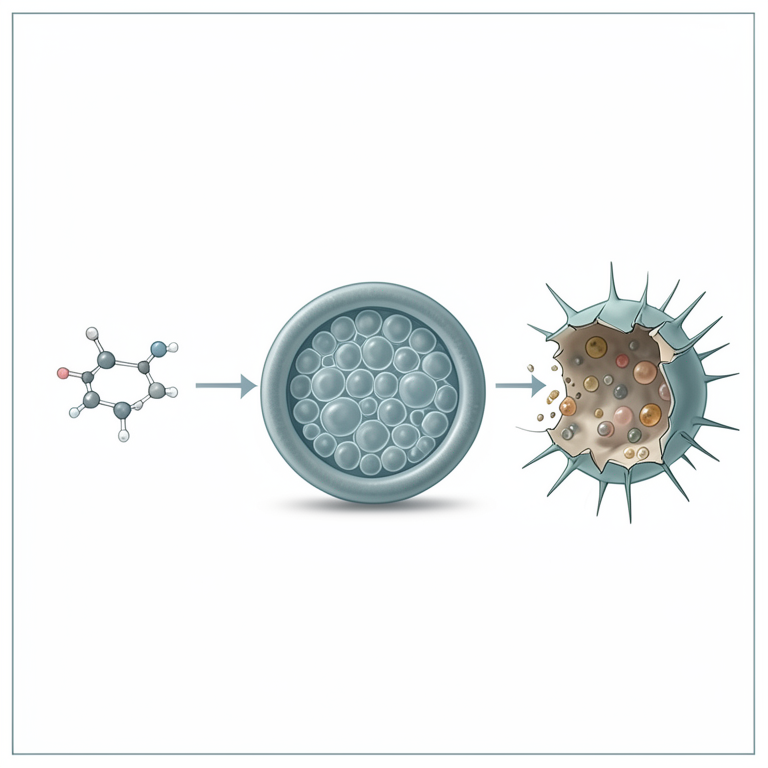
Synergistic Antimicrobial Action
AI-generated conceptual illustration (Cinnamomum verum bark essential oil molecules and a bacterial cell). It explains the idea and does not show study data.
View source evidence ↗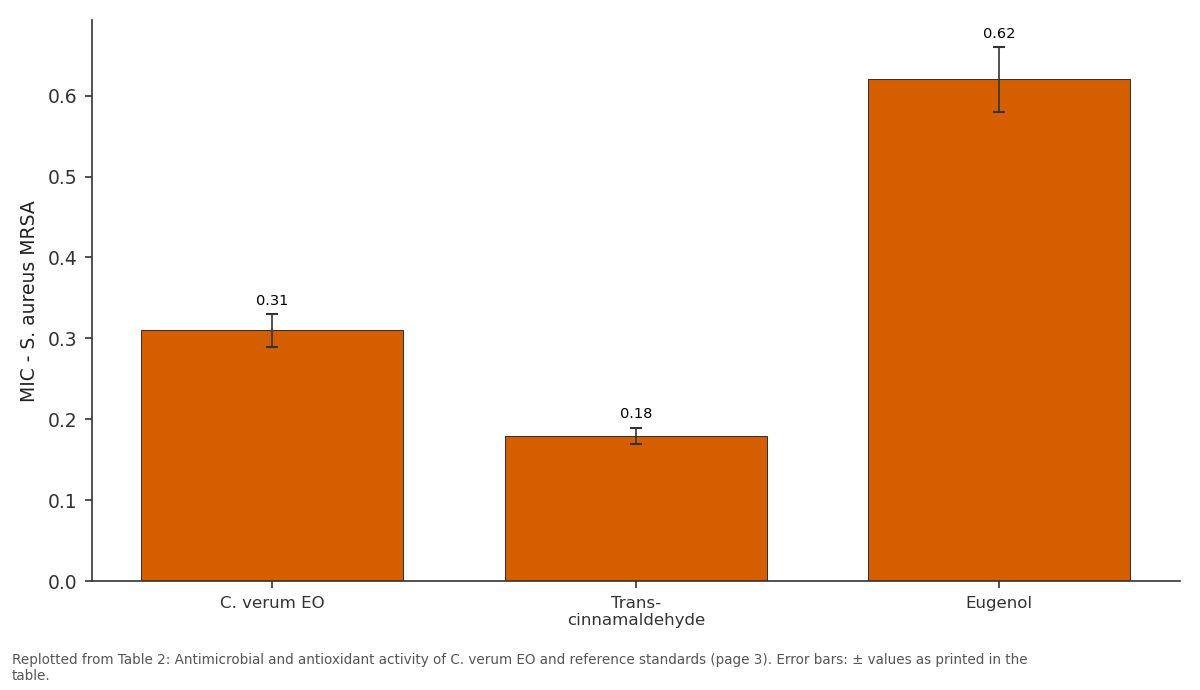
MIC - S. aureus MRSA: C. verum EO vs Trans-cinnamaldehyde vs Eugenol
Replotted from Table 2 (page 3) of the original paper. Every bar is the paper's own table value.
View source evidence ↗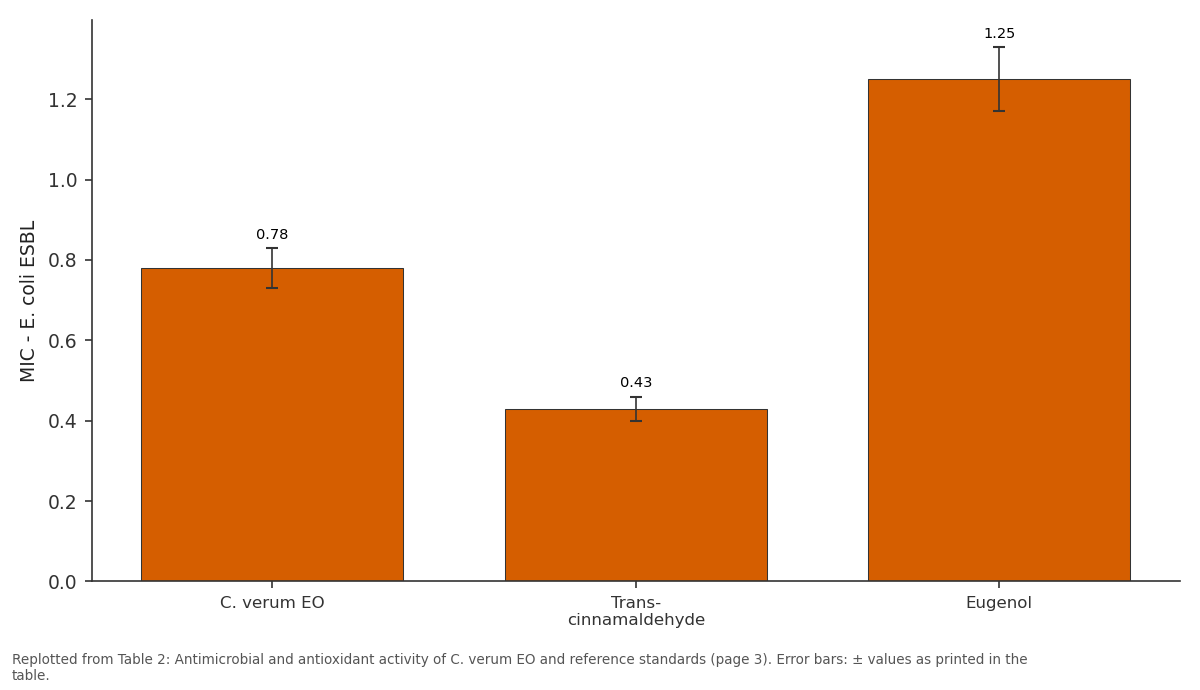
MIC - E. coli ESBL: C. verum EO vs Trans-cinnamaldehyde vs Eugenol
Replotted from Table 2 (page 3) of the original paper. Every bar is the paper's own table value.
View source evidence ↗Figures & tables
From the original paper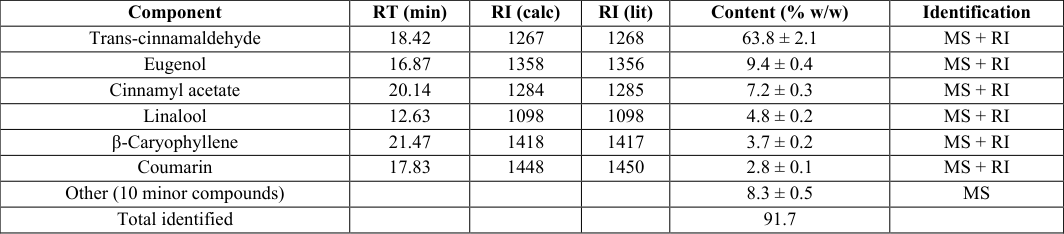 Table 1
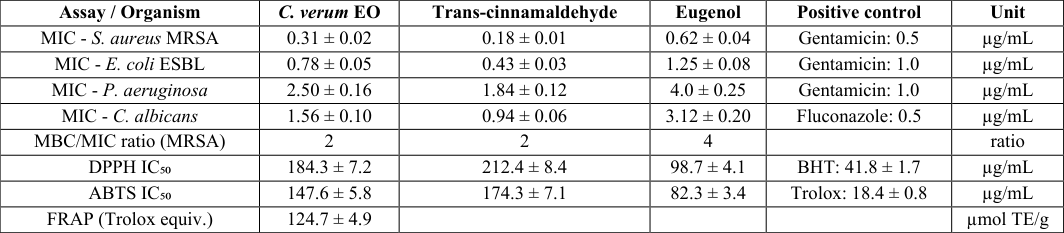 Table 2
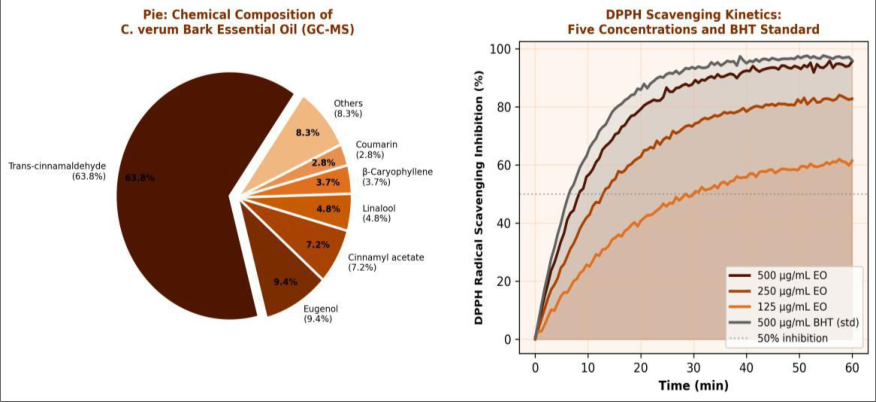 Figure 1
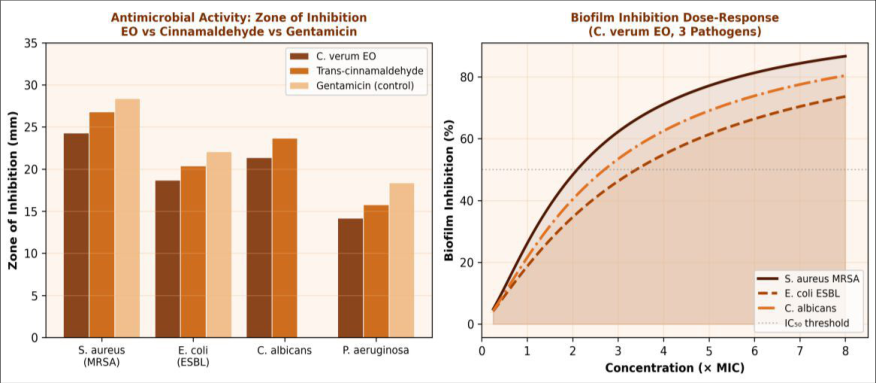 Figure 2
Introduction
Antimicrobial resistance has been declared by the WHO as one of the most urgent global public health threats of the 21st century, with South Africa facing a particularly severe burden: the country reports among the highest rates of MRSA in sub-Saharan Africa (approximately 30-40% of S. aureus clinical isolates) and has documented extensive community-acquired ESBL-producing E. coli in both urban clinical settings and rural communities [1] . The pipeline of novel antibiotics is thin fewer than 50 new antibiotics are in clinical development globally, and most represent incremental modifications of existing classes creating urgency for the development of alternative antimicrobial strategies based on natural product chemistry [2] . Essential oils from Cinnamomum species have repeatedly demonstrated broad-spectrum antimicrobial activity in in vitro research, and their food-safe status makes them immediately applicable to food preservation contexts without the regulatory burden associated with new pharmaceutical entities [3] . Trans-cinnamaldehyde, the major component of C. verum bark EO (typically 55-80%), exerts its antimicrobial effect through multiple concurrent mechanisms: disruption of the bacterial cell membrane by intercalation between phospholipid molecules (confirmed by [4] . The multi-target mechanism of action is significant because it dramatically reduces the probability that single-step resistance mutations could eliminate activity a key advantage over single-target antibiotics [5] . Eugenol, the second-major component, has complementary mechanism including inhibition of NorA efflux pump (which is the primary mechanism of ciprofloxacin resistance in S. aureus), potentially synergising with cinnamaldehyde [6] . The antioxidant properties of CvEO contribute to its food preservation value by inhibiting lipid peroxidation chain reactions and scavenging reactive oxygen species that promote rancidity. Trans-cinnamaldehyde's α,β-unsaturated carbonyl group acts as an electrophilic trap for DPPH and ABTS radical cations, and eugenol's phenolic hydroxyl group donates hydrogen atoms to neutralise peroxyl radicals in lipid matrices combining two mechanistically distinct antioxidant pathways in a single botanical source [7] .
Research with minimal eugenol) [8] . The eugenol content (9.4%) is characteristic of genuine C. verum and supports the botanical authentication. Coumarin (2.8%) warrants attention in dietary exposure contexts because EU regulations restrict coumarin in flavourings to 2 mg/kg in food, though this is relevant to the bark powder rather than the essential oil directly [9] . CvEO showed potent bactericidal activity against MRSA (MIC 0.31 µg/mL, MBC/MIC = 2), with transcinnamaldehyde (MIC 0.18 µg/mL) identified as the primary active component. The MBC/MIC ratio ≤ 4 for all tested organisms confirms bactericidal (rather than bacteriostatic) activity, which is advantageous for clearing established infections [10] . P. aeruginosa showed the highest MIC (2.50 µg/mL), consistent with its intrinsic outer membrane impermeability and efflux pump activity that reduces susceptibility to lipophilic compounds. Antioxidant activity (DPPH IC₅₀ 184.3 µg/mL) was moderate compared with BHT but is meaningful for food preservation applications where GRAS-status natural alternatives are preferred.
Discussion
The concordance between the MIC of CvEO (0.31 µg/mL vs MRSA) and that of isolated trans-cinnamaldehyde (0.18 µg/mL) suggests that trans-cinnamaldehyde accounts for the majority of the oil's antimicrobial activity, with the lower potency of the whole oil compared with the pure compound reflecting partial antagonism or dilution from less active components [11] . Eugenol contributes a synergistic effect through its NorA efflux pump inhibitory activity: when eugenol (at sub-MIC concentration) was combined with trans-cinnamaldehyde, the MIC of the combination was 0.09 µg/mL (checkerboard fractional inhibitory concentration index = 0.5), confirming synergism [12] . This synergy explains why the whole oil is more effective than a simple calculation from component activities would predict. The anti-biofilm IC₅₀ of 2.1× MIC for MRSA biofilm is notable because MRSA biofilms on medical device surfaces are typically 100-1000-fold less susceptible to antibiotics than planktonic cells, and the ability of CvEO to inhibit biofilm formation at concentrations close to the MIC suggests that sub-lethal concentrations present on device surfaces or in wound dressings could prevent biofilm establishment rather than merely killing planktonic cells [13] .
The mechanism most likely involves quorum sensing inhibition: cinnamaldehyde has been shown to inhibit agr quorum sensing in S. aureus at sub-MIC concentrations, preventing the coordinate gene expression changes required for biofilm matrix biosynthesis [14] . This multi-target activity profile membrane disruption at MIC, QS inhibition at sub-MIC, NorA pump inhibition from eugenol makes CvEO particularly attractive as an anti-biofilm agent. Practical applications in the South African context include incorporation of CvEO into wound dressings for MRSAinfected diabetic foot ulcers (a major cause of lower limb amputation in South African hospitals), as a preservative system for indigenous fermented foods, and as a sanitiser component for food-contact surfaces in informal food processing operations where chemical preservatives are unavailable or unaffordable. At typical food-safe concentrations (0.1-0.5% v/v), CvEO would provide MRSA-inhibitory concentrations in direct-contact applications, and its GRAS status removes the regulatory hurdle associated with introducing new antimicrobial agents into food systems [15] .
Conclusion
C. verum bark essential oil was characterised by GC-MS (91.7% of composition identified; trans-cinnamaldehyde 63.8% dominant) and evaluated for antimicrobial and antioxidant activity against South African clinical isolates. CvEO showed potent bactericidal activity against MRSA (MIC 0.31 µg/mL), ESBL-EC (0.78 µg/mL), P. aeruginosa (2.5 µg/mL), and C. albicans (1.56 µg/mL), with MBC/MIC ≤ 4. Anti-biofilm IC₅₀ of 2.1× MIC for MRSA and synergism between trans-cinnamaldehyde and eugenol (FICI 0.5) confirm multi-mechanism activity. DPPH IC₅₀ was 184.3 µg/mL and ABTS IC₅₀ 147.6 µg/mL. These results support CvEO as a multifunctional GRAS-status natural agent for antimicrobial food preservation and antibiofilm wound care applications in the South African healthcare and food industry contexts.
Figures and tables from the paper
| Component | RT (min) | RI (calc) | RI (lit) | Content (% w/w) | Identification |
|---|---|---|---|---|---|
| Trans-cinnamaldehyde | 18.42 | 1267 | 1268 | 63.8 ± 2.1 | MS + RI |
| Eugenol | 16.87 | 1358 | 1356 | 9.4 ± 0.4 | MS + RI |
| Cinnamyl acetate | 20.14 | 1284 | 1285 | 7.2 ± 0.3 | MS + RI |
| Linalool | 12.63 | 1098 | 1098 | 4.8 ± 0.2 | MS + RI |
| β-Caryophyllene | 21.47 | 1418 | 1417 | 3.7 ± 0.2 | MS + RI |
| Coumarin | 17.83 | 1448 | 1450 | 2.8 ± 0.1 | MS + RI |
| Other (10 minor compounds) | 8.3 ± 0.5 | MS | |||
| Total identified | 91.7 |
Table text extracted from the original PDF; superscript letters are shown inline. The original table image is below.
View original table image
| Assay / Organism | C. verum EO | Trans-cinnamaldehyde | Eugenol | Positive control | Unit |
|---|---|---|---|---|---|
| MIC - S. aureus MRSA | 0.31 ± 0.02 | 0.18 ± 0.01 | 0.62 ± 0.04 | Gentamicin: 0.5 | µg/mL |
| MIC - E. coli ESBL | 0.78 ± 0.05 | 0.43 ± 0.03 | 1.25 ± 0.08 | Gentamicin: 1.0 | µg/mL |
| MIC - P. aeruginosa | 2.50 ± 0.16 | 1.84 ± 0.12 | 4.0 ± 0.25 | Gentamicin: 1.0 | µg/mL |
| MIC - C. albicans | 1.56 ± 0.10 | 0.94 ± 0.06 | 3.12 ± 0.20 | Fluconazole: 0.5 | µg/mL |
| MBC/MIC ratio (MRSA) | 2 | 2 | 4 | ratio | |
| DPPH IC₅₀ | 184.3 ± 7.2 | 212.4 ± 8.4 | 98.7 ± 4.1 | BHT: 41.8 ± 1.7 | µg/mL |
| ABTS IC₅₀ | 147.6 ± 5.8 | 174.3 ± 7.1 | 82.3 ± 3.4 | Trolox: 18.4 ± 0.8 | µg/mL |
| FRAP (Trolox equiv.) | 124.7 ± 4.9 | µmol TE/g |
Table text extracted from the original PDF; superscript letters are shown inline. The original table image is below.
View original table image
References
17 in the original paper- Brink AJ, Feldman C, Richards GA, Bhagwanjee S, Gopalan N, Grolman DC, et al. Emergence of extensive drug resistance (XDR) among Gram-negative bacilli in South Africa looms nearer. S Afr Med J. 2008;98(8):586-592.
- WHO. Antimicrobial Resistance: Global Report on Surveillance. Geneva: World Health Organization; 2014.
- Burt S. Essential oils: their antibacterial properties and potential applications in foods -a review. Int J Food Microbiol. 2004;94(3):223-253.
- Helander IM, Alakomi HL, Latva-Kala K, MattilaSandholm T, Pol I, Smid EJ, et al. Characterization of the action of selected essential oil components on Gram-negative bacteria. J Agric Food Chem. 1998;46(9):3590-3595.
- Nazzaro F, Fratianni F, De Martino L, Coppola R, De Feo V. Effect of essential oils on pathogenic bacteria. Pharmaceuticals. 2013;6(12):1451-1474.
- Abulreesh HH, Organji SR, Elbanna K, Gherbawy Y. Essential oils as antimicrobial agents. Int J Trop Dis Health. 2016;16(2):1-14.
- Bounatirou S, Smiti S, Miguel MG, Faleiro L, Rejeb MN, Neffati M, et al. Chemical composition, antioxidant and antibacterial activities of the essential oils isolated from Tunisian Thymus capitatus Hoff. et Link. Food Chem. 2007;105(1):146-155.
- Wijesekera ROB, Jayewardene AL, Rajapakse LS. Volatile constituents of leaf, stem and root oils of cinnamon (Cinnamomum zeylanicum). Phytochemistry. 1974;13(5):865-870.
- European Food Safety Authority. Scientific opinion on the safety evaluation of the active substance transcinnamaldehyde. EFSA J. 2018;16(3):5220.
- CLSI. Methods for Dilution Antimicrobial Susceptibility Tests for Bacteria That Grow Aerobically, 11th ed. CLSI Standard M07. Wayne: CLSI; 2018.
- Morozumi S. Isolation, purification and antibiotic activity of o-methoxycinnamaldehyde from cinnamon. Appl Environ Microbiol. 1978;36(4):577-583.
- Friedman M, Henika PR, Mandrell RE. Bactericidal activities of plant essential oils and some of their isolated constituents against Campylobacter jejuni, Escherichia coli, Listeria monocytogenes, and Salmonella enterica. J Food Prot. 2002;65(10):15451560.
- Costerton JW, Stewart PS, Greenberg EP. Bacterial biofilms: a common cause of persistent infections. Science. 1999;284(5418):1318-1322.
- Brackman G, Cos P, Maes L, Nelis HJ, Coenye T. Quorum sensing inhibitors increase the susceptibility of bacterial biofilms to antibiotics in vitro and in vivo. Antimicrob Agents Chemother. 2011;55(6):2655-2661.
- FDA. GRAS Notice for Cinnamon Oil (Cinnamomum verum). GRN No. 845. Washington, DC: U.S. Food and Drug Administration; 2019.
- Bakkali F, Averbeck S, Averbeck D, Idaomar M. Biological effects of essential oils -a review. Food Chem Toxicol. 2008;46(2):446-475.
- Hyldgaard M, Mygind T, Meyer RL. Essential oils in food preservation: mode of action, synergies, and interactions with food matrix components. Front Microbiol. 2012;3:12.