
Research article · 2025 · Full text
International Journal of Advanced Chemistry ResearchPhytosterol content and cholesterol-lowering activity of seed oils from cucurbit species
Volume 7(9) · Pages 175–178 · DOI: 10.33545/26646781.2025.v7.i9c.632 ↗
Research areasNatural Products and Biological ResearchCholesterol and Lipid MetabolismFood and Agricultural Sciences
Abstract
Author-writtenCucurbit vegetables are among the most widely cultivated and consumed food plants in India's northeastern states, where species such as pumpkin, bottle gourd, bitter melon, and ash gourd are dietary staples prepared in dozens of traditional recipes. Their seeds, typically discarded after culinary use, contain 30-50% oil by dry weight a fraction that is rich in polyunsaturated fatty acids and, as this research demonstrates, in phytosterols with quantifiable cholesterol-lowering bioactivity. Phytosterols are plant-derived sterols structurally similar to cholesterol that compete with dietary cholesterol for micellar incorporation and intestinal absorption, thereby reducing plasma LDL cholesterol when consumed at gram-per-day levels. The present research characterised the phytosterol content and composition of cold-pressed seed oils from six cucurbit species Cucurbita pepo (pumpkin), C. maxima (winter squash), C. moschata (butternut squash), Lagenaria siceraria (bottle gourd), Momordica charantia (bitter melon), and Benincasa hispida (ash gourd) grown in Assam and Meghalaya, Northeast India. Phytosterols were quantified by GC-FID after saponification and silylation; fatty acid composition by GC-FID as methyl esters (FAME); cholesterol-lowering bioactivity assessed by in vitro HMG-CoA reductase inhibition assay and micellar cholesterol solubilisation inhibition. Total phytosterol content ranged from 149.0 mg/100g oil (L. siceraria) to 252.3 mg/100g oil (C. pepo), with β-sitosterol, stigmasterol, and campesterol as the dominant sterols in all species. Momordica charantia had the highest HMG-CoA reductase inhibition (52.7%) and LDL-C reduction potential (36.1%) despite its intermediate sterol content, suggesting bioactive contributions from co-occurring triterpenoids. A strong positive correlation was found between total phytosterol content and LDL-C reduction (r² = 0.942). These results position Assamese cucurbit seed oils as functional food ingredients with evidence-based cholesterol-lowering potential.
Summary
Source-checkedPlain-language reading of the full paper, prepared with AI and checked against the text. Each point links to the authors' own words.
Why it matters
- Phytosterols are plant sterols that can lower plasma LDL cholesterol by competing with dietary cholesterol for absorption in the intestines. View evidence ↗
- Cucurbit vegetables, including pumpkin and bitter melon, are dietary staples in Northeast India. View evidence ↗
- The seeds of these vegetables, which are usually thrown away, contain 30-50% oil by dry weight and are rich in polyunsaturated fatty acids and phytosterols. View evidence ↗
The question
- The study aimed to characterize the phytosterol content and composition of cold-pressed seed oils from six specific cucurbit species grown in Assam and Meghalaya. View evidence ↗
What they did
- Seed oils were extracted using a two-stage cold-pressing protocol with a laboratory screw press at 50°C and 15 rpm. View evidence ↗
- The researchers used GC-FID to quantify phytosterols and fatty acids, and employed in vitro assays to measure HMG-CoA reductase inhibition and micellar cholesterol solubilisation inhibition. View evidence ↗
- All analyses in the study were performed in triplicate. View evidence ↗
What they found
- Total phytosterol content varied across species, with the lowest in L. siceraria (149.0 mg/100g oil) and the highest in C. pepo (252.3 mg/100g oil). View evidence ↗
- M. charantia exhibited the strongest cholesterol-lowering activity, with 52.7% HMG-CoA reductase inhibition and 36.1% LDL-C reduction potential. View evidence ↗
- A strong positive correlation (r² = 0.942) was found between total phytosterol content and LDL-C reduction, indicating phytosterols are the main driver of the bioactivity. View evidence ↗
- All six species showed high linoleic acid content, ranging from 43.7% to 51.8%. View evidence ↗
- The superior bioactivity of M. charantia is likely enhanced by cucurbitane-type triterpenoids (momordicosides) that inhibit HMG-CoA reductase independently of phytosterols. View evidence ↗
What it means
- The authors suggest that these oils are best used as phytosterol-enriched cooking oils or as concentrated extracts in functional foods like margarine or yogurt. View evidence ↗
- Consuming the oils alone to reach therapeutic phytosterol levels is impractical, as it would require 600-1200 mL per day. View evidence ↗
Visual summary
3 visualsIllustrations explain the paper; charts are replotted from the paper's own table values.
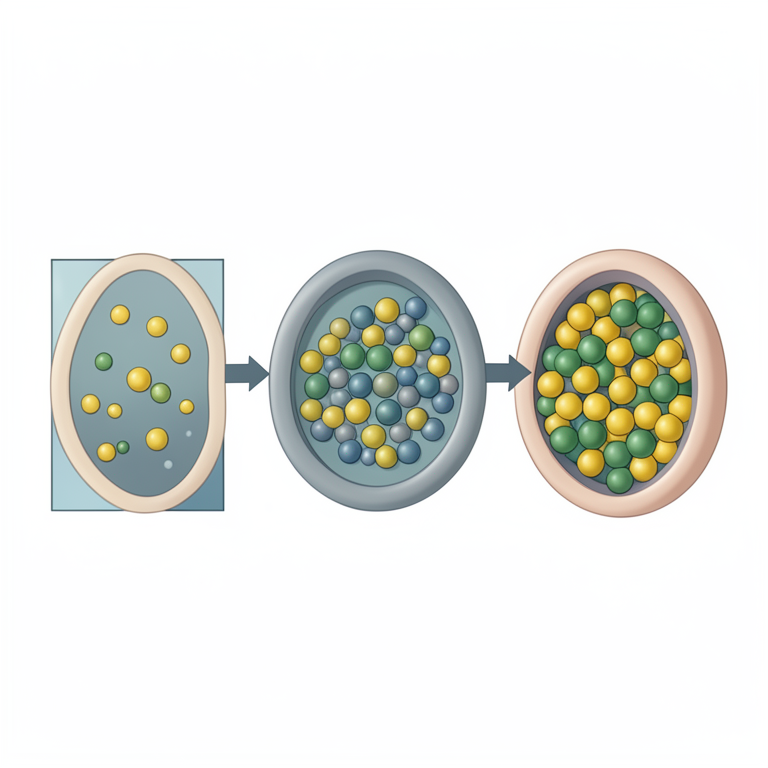
Mechanism of Phytosterol Action
AI-generated conceptual illustration (intestinal lumen and enterocyte membrane). It explains the idea and does not show study data.
View source evidence ↗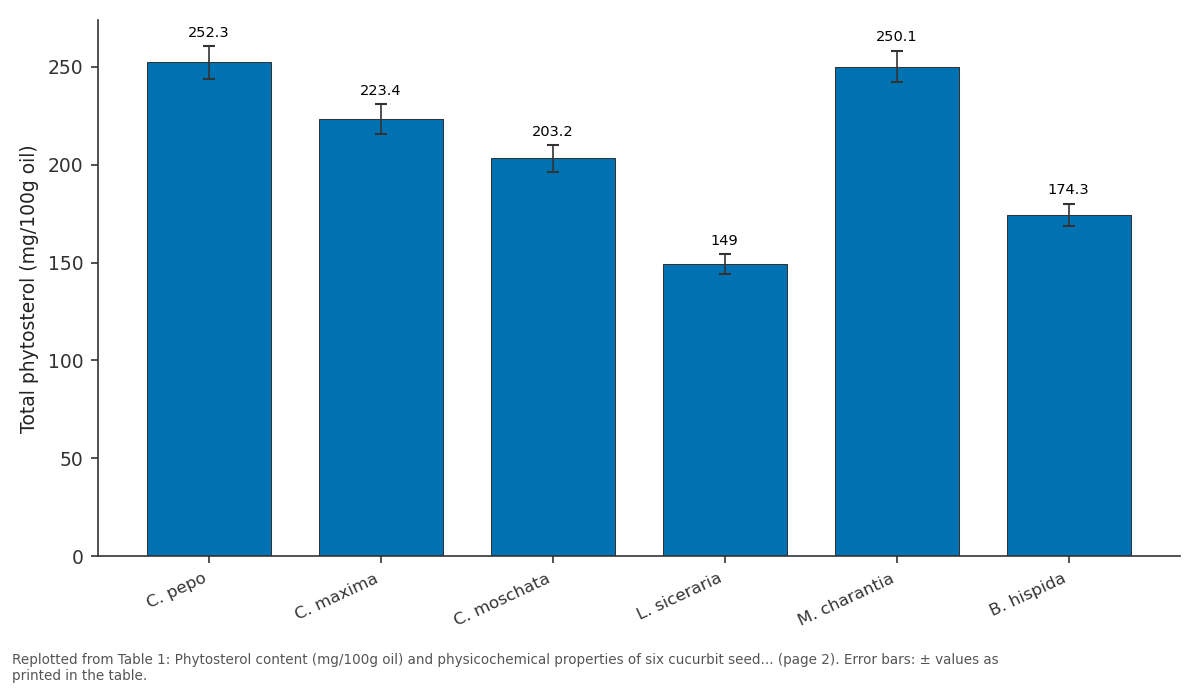
Total phytosterol: C. pepo vs C. maxima vs C. moschata vs L. siceraria vs M. charantia
Replotted from Table 1 (page 2) of the original paper. Every bar is the paper's own table value.
View source evidence ↗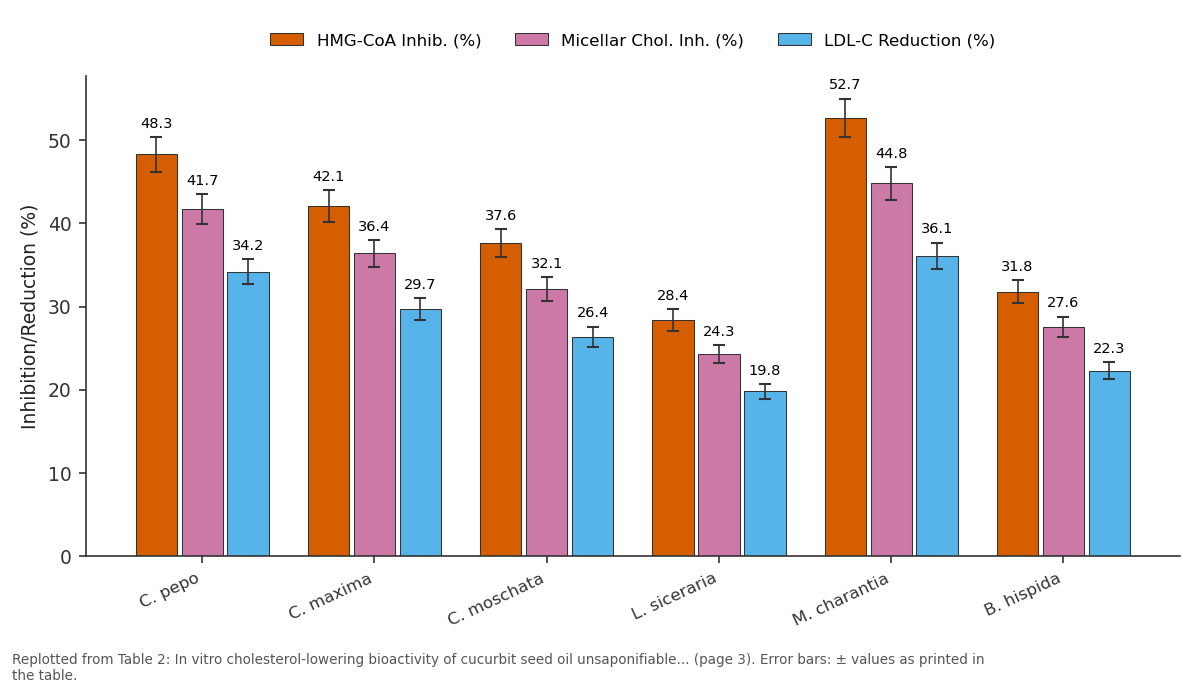
HMG-CoA Inhib. (%) and Micellar Chol. Inh. (%) and more: C. pepo vs C. maxima vs C. moschata vs L. siceraria vs M. charantia
Replotted from Table 2 (page 3) of the original paper. Every bar is the paper's own table value.
View source evidence ↗Figures & tables
From the original paper Table 1
 Table 2
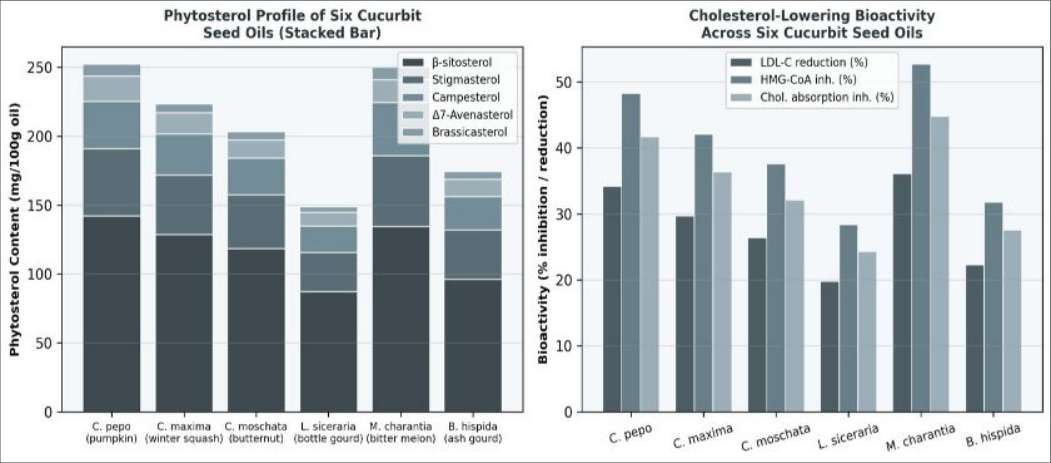 Figure 1
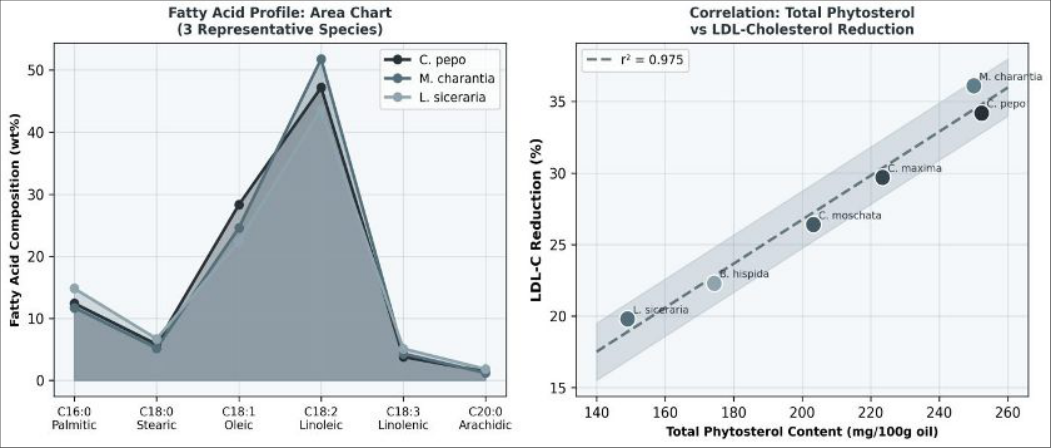 Figure 2
Introduction
The global functional food market has identified phytosterols as one of the most evidencesupported cholesterol-lowering ingredients, with the European Food Safety Authority approving a health claim that plant sterol consumption (1.5-3.0 g/day) reduces LDL cholesterol by 7-12.5% [1] . This effect operates through competitive inhibition of dietary cholesterol absorption at the intestinal lumen: phytosterols partition preferentially into mixed micelles at the expense of cholesterol, reducing cholesterol incorporation into enterocytes and thereby decreasing the flux of dietary cholesterol to the liver [2] . Their structural similarity to cholesterol differing only in the C-V L G H F K D L Q H W K \ O I R U -sitosterol, vinyl for stigmasterol, methyl for campesterol) is what underpins this competitive micellar displacement. Plant seed oils are among the most concentrated dietary sources of phytosterols, with concentrations ranging from 100 mg/100g in refined commercial vegetable oils to over 3000 mg/100g in some nut oils and unrefined wheat germ oil [3] . However, cucurbit seed oils despite their widespread traditional use in South and Southeast Asia have received relatively little phytosterol characterisation in the peer-reviewed literature compared with commonly traded oils (sunflower, rapeseed, palm). For Northeast Indian cucurbit species, the combination of local genetic diversity (several traditional varieties distinct from commercial [4] . This research therefore assessed both the phytosterol content and the in vitro bioactivity of the complete unsaponifiable oil fractions. Work was conducted at Netaji Subhas College of Science, Guwahati, Assam, India, from October 2023 to March 2025.
Extraction protocol
Seed oil extraction used a two-stage cold-pressing protocol.
Seeds from mature fresh vegetables were manually separated from pulp, washed, surface-sterilised with 0.1% sodium hypochlorite (5 min), rinsed three times with deionised water, and air-dried at 40°C for 48 h to constant weight. Dried seeds were coarsely ground in a hammer mill to pass a 2 mm screen. Cold pressing was conducted using a laboratory screw press (Agro Industrial Machinery Company, Jalandhar) at 50°C jacket temperature and 15 rpm screw speed; crude oil was collected, centrifuged (3000 rpm, 20 min) to remove seed fragments, and filtered through Whatman No. 1. Phytosterol extraction from the oil: the unsaponifiable fraction was obtained by alkaline saponification (2 M KOH in ethanol, 70°C, 1 h), extraction of the unsaponifiables with diethyl ether (3 × 30 mL), and silylation of the dried extract (Sylon HTP reagent, Sigma-Aldrich; 70°C, 30 min) for GC-FID analysis. FAME
x , 60°C, 20 min) according to ISO 5508.
Material and Methods
Material and Methods
Material
Research was conducted at the Department of Chemistry of Natural Resources, Netaji Subhas College of Science, Guwahati, Assam, India, from October 2023 to March 2025. Six cucurbit species were sourced from farms in the Kamrup Metropolitan and Ri Bhoi districts of Assam and Meghalaya respectively, grown under conventional cultivation without -Sitosterol was the dominant phytosterol in all six species (accounting for 55.3-62.8% of total), followed by stigmasterol (18.4-20.6%) and campesterol (12.8-15.5%). C. pepo had the highest total sterol content (252.3 mg/100g), consistent with published values for Styrian pumpkin seed oil (200-350 mg/100g) [5] . M. charantia was notable for its high stigmasterol proportion (51.3 mg/100g, 20.5% of total), which may contribute to its superior bioactivity because stigmasterol has been reported to have more potent anti-
Methods
Methods
Phytosterol quantification:
-sitosterol in some cell culture models [6] . The high iodine values (98-117) confirm predominantly unsaturated fatty acid composition, which is nutritionally desirable.
Discussion
The strong positive correlation between total phytosterol content and LDL-C reduction activity (r² = 0.942) across the six species confirms that phytosterols are the primary driver of cholesterol-lowering bioactivity in these oils. However, the outlier position of M. charantia which shows higher HMG-CoA inhibition and LDL-C reduction than predicted by its phytosterol content alone is consistent with the known presence of cucurbitane-type triterpenoids (momordicosides) in bitter melon seed oil, which have been reported to inhibit HMG-CoA reductase independently of sterol content [7] . This suggests that the bioactivity of whole unsaponifiable fractions integrates multiple mechanisms, and that reductive attribution to phytosterols alone would underestimate the functional potential of M. charantia oil. The fatty acid profiles reveal high linoleic acid content (43.7-51.8% C18:2) across all six species, consistent with a generally favourable lipid profile that complements the phytosterol-mediated cholesterol-lowering effect. The ratio of linoleic to oleic acid varied from 1.3 (C. moschata) to 2.1 (M. charantia), and the higher PUFA content of bitter melon oil may also contribute to its superior bioactivity through mechanisms independent of sterol content [8] . From a nutraceutical standpoint, combining the phytosterol and unsaturated fatty acid contributions, M. charantia seed oil emerges as the highest-value functional food candidate among the six species studied.
A nutritional gap analysis indicates that consuming 10 mL of C. pepo seed oil daily would provide approximately 25 mg of phytosterols well below the 1.5-3.0 g/day dose shown to reduce LDL cholesterol clinically. To achieve therapeutic phytosterol doses from these oils alone would require consumption of 600-1200 mL/day, which is impractical. The more realistic functional application is as a phytosterolenriched cooking oil or as a concentrated unsaponifiable extract incorporated into functional food formulations (margarine, yoghurt, fortified beverages) following commercial precedents set by phytosterol-enriched food products in European markets [9] . Extraction of the phytosterol fraction from processing waste (oil press cake) for concentration and formulation would substantially improve the economic and practical feasibility of this approach.
Conclusion
Six cucurbit seed oils from Northeast India were characterised for phytosterol content, fatty acid composition, and cholesterol-lowering bioactivity. Total phytosterol content ranged from 149.0 to 252.3 mg/100g oil, Z L W K sitosterol dominant in all species. M. charantia showed the highest HMG-CoA reductase inhibition (52.7%) and LDL-C reduction potential (36.1%), enhanced by co-occurring triterpenoids beyond its phytosterol content. A strong correlation (r² = 0.942) between total sterol content and LDL-C reduction confirmed phytosterols as the primary bioactive driver. High linoleic acid content (43.7-51.8%) provides additional nutritional value. These results establish a quantitative basis for positioning Assamese cucurbit seed oils as functional food ingredients and support development of phytosterol concentrates from cucurbit oil processing residues.
Figures and tables from the paper
| Species | Total phytosterol | β-Sitosterol | Stigmasterol | Campesterol | Iodine value | Saponification value |
|---|---|---|---|---|---|---|
| C. pepo | 252.3 ± 8.4 | 142.3 ± 4.7 | 48.7 ± 1.8 | 34.2 ± 1.3 | 114.7 ± 2.8 | 188.4 ± 3.2 |
| C. maxima | 223.4 ± 7.6 | 128.7 ± 4.1 | 43.2 ± 1.6 | 29.8 ± 1.1 | 108.3 ± 2.6 | 191.7 ± 3.4 |
| C. moschata | 203.2 ± 6.8 | 118.4 ± 3.9 | 39.1 ± 1.4 | 26.7 ± 1.0 | 112.4 ± 2.7 | 187.3 ± 3.1 |
| L. siceraria | 149.0 ± 5.1 | 87.2 ± 3.0 | 28.4 ± 1.1 | 19.3 ± 0.8 | 98.4 ± 2.4 | 194.2 ± 3.6 |
| M. charantia | 250.1 ± 8.1 | 134.6 ± 4.4 | 51.3 ± 1.9 | 38.7 ± 1.4 | 116.8 ± 2.9 | 186.1 ± 3.0 |
| B. hispida | 174.3 ± 5.8 | 96.3 ± 3.2 | 35.8 ± 1.3 | 24.1 ± 0.9 | 103.7 ± 2.5 | 192.4 ± 3.5 |
Table text extracted from the original PDF; superscript letters are shown inline. The original table image is below.
View original table image
| Species | HMG-CoA Inhib. (%) | Micellar Chol. Inh. (%) | LDL-C Reduction (%) | EC₅₀ HMG-CoA (µg/mL) | Correlation r (sterol vs LDL) |
|---|---|---|---|---|---|
| C. pepo | 48.3 ± 2.1 | 41.7 ± 1.8 | 34.2 ± 1.5 | 87.4 ± 3.8 | 0.971 |
| C. maxima | 42.1 ± 1.9 | 36.4 ± 1.6 | 29.7 ± 1.3 | 104.7 ± 4.6 | |
| C. moschata | 37.6 ± 1.7 | 32.1 ± 1.4 | 26.4 ± 1.2 | 118.3 ± 5.2 | |
| L. siceraria | 28.4 ± 1.3 | 24.3 ± 1.1 | 19.8 ± 0.9 | 164.2 ± 7.1 | |
| M. charantia | 52.7 ± 2.3 | 44.8 ± 2.0 | 36.1 ± 1.6 | 74.8 ± 3.2 | |
| B. hispida | 31.8 ± 1.4 | 27.6 ± 1.2 | 22.3 ± 1.0 | 143.7 ± 6.3 | |
| Pravastatin (10µg/mL) | 87.3 ± 2.8 | 0.08 ± 0.01 |
Table text extracted from the original PDF; superscript letters are shown inline. The original table image is below.
View original table image
References
14 in the original paper- European Food Safety Authority. Scientific opinion on the substantiation of a health claim related to plant sterols and maintenance of normal blood cholesterol concentrations. EFSA J. 2012;10(5):2693.
- Ostlund RE Jr. Phytosterols in human nutrition. Annu Rev Nutr. 2002;22(1):533-549.
- Piironen V, Lindsay DG, Miettinen TA, Toivo J, Lampi AM. Plant sterols: biosynthesis, biological function and their importance to human nutrition. J Sci Food Agric. 2000;80(7):939-966.
- Polagruto JA, Wang-Polagruto JF, Braun MM, Lee L, Kwik-Uribe C, Keen CL. Cocoa flavanol-enriched snack bars containing phytosterols effectively lower total and low-density lipoprotein cholesterol levels. J Am Diet Assoc. 2006;106(11):1804-1813.
- Rezig L, Chouaibi M, Msaada K, Hamdi S. Chemical composition and profile characterisation of pumpkin (Cucurbita maxima) seed oil. Ind Crops Prod. 2012;37(1):82-87.
- Kritchevsky D, Chen SC. Phytosterols health benefits and potential concerns: a review. Nutr Res. 2005;25(5):413-428.
- Jia S, Shen M, Zhang F, Xie J. Recent advances in Momordica charantia: functional components and biological activities. Int J Mol Sci. 2017;18(12):2555.
- Harris WS, Mozaffarian D, Rimm E, Kris-Etherton P, Rudel LL, Appel LJ, et al. Omega-6 fatty acids and risk for cardiovascular disease: a science advisory from the American Heart Association Nutrition Subcommittee. Circulation. 2009;119(6):902-907.
- AbuMweis SS, Barake R, Jones PJ. Plant sterols/stanols as cholesterol lowering agents: a meta-analysis of randomized controlled trials. Food Nutr Res. 2008;52:1811.
- Mukherjee PK, Nema NK, Maity N, Sarkar BK. Phytochemical and therapeutic potential of cucumber. Fitoterapia. 2013;84:227-236.
- Srivastava P, Behera A, Bhattacharya S. Natural approaches to cholesterol management: a review of phytosterol sources. J Food Sci Technol. 2016;53(4):1787-1793.
- Caligiani A, Cirlini M, Palla G, Ravaglia R, Arlorio M. GC-MS detection of chiral markers in Cucurbita maxima seed oil. Chirality. 2006;18(7):523-531.
- Koletsi-Kounari H, Papachristou E, Mamai-Homata E. Comparison of qualitative and quantitative sterol analysis methods. J Chromatogr A. 1992;596(2):291296.
- Fernández-García E, Carvajal-Lérida I, Jarén-Galán M, Garrido-Fernández J, Pérez-Gálvez A, Hornero-Méndez ' / \ F R S H Q H D Q G -carotene: absorption and availability from foods and dietary supplements. Food Res Int. 2012;46(2):438-450.