
Research article · 2025 · Full text
International Journal of Biology SciencesRhizosphere microbiome composition and its influence on plant growth promotion in legumes
Volume 7(12) · Pages 199–201 · DOI: 10.33545/26649926.2025.v7.i12c.741 ↗
Research areasPlant-Microbe Interactions and ImmunityLegume Nitrogen Fixing SymbiosisAgriculture, Plant Science, Crop Management
Abstract
Author-writtenA growing trend in sustainable agriculture is the replacement of chemical fertilizers with microbial inoculants, yet the composition of naturally occurring plant growth-promoting rhizobacteria (PGPR) in tropical legume systems remains poorly mapped. This research characterized the rhizosphere microbiome of three legume crops (mung bean, lentil, and chickpea) across four soil types in southeastern Bangladesh using 16S rRNA amplicon sequencing and culturable PGPR isolation. Work was conducted at the Chittagong Institute of Marine Biology between February 2022 and August 2023. PGPR abundance correlated strongly with shoot biomass (r² = 0.94, p
Summary
Source-checkedPlain-language reading of the full paper, prepared with AI and checked against the text. Each point links to the authors' own words.
Why it matters
- There is an increasing trend in sustainable agriculture to use microbial inoculants as replacements for chemical fertilizers. View evidence ↗
- Legumes are ideal for studying plant growth-promoting rhizobacteria (PGPR) because they naturally host nitrogen-fixing symbionts and produce carbon exudates that create a unique rhizosphere environment. View evidence ↗
- The composition of naturally occurring PGPR in tropical legume systems is currently not well mapped. View evidence ↗
The question
- The researchers sought to identify which bacteria other than rhizobia promote growth and whether these bacteria vary depending on the soil type. View evidence ↗
What they did
- The study analyzed the rhizosphere microbiome of mung bean, lentil, and chickpea grown in four different soil types in southeastern Bangladesh. View evidence ↗
- The experiment used ten replicate pots for each species and soil type, conducted in a net house at the Chittagong Institute of Marine Biology between February and August 2022. View evidence ↗
- A 60-day pot trial compared a consortium of three strains (P. fluorescens CIMB-PF3, B. subtilis CIMB-BS7, and R. leguminosarum CIMB-RL1) against uninoculated controls. View evidence ↗
What they found
- There was a strong positive correlation between the abundance of PGPR and shoot biomass (r² = 0.94, p < 0.001). View evidence ↗
- The genera Pseudomonas and Bacillus were identified as the dominant growth-promoting bacteria. View evidence ↗
- Using a consortium of three native PGPR strains resulted in a 41.3% increase in shoot dry weight and the highest nodule count compared to uninoculated controls. View evidence ↗
- Soil type affected the microbiome, with laterite soils showing the lowest PGPR diversity, which the authors attribute to low pH and high aluminum toxicity. View evidence ↗
What it means
- The authors conclude that their findings support using locally adapted microbial inoculants as sustainable alternatives to chemical fertilizers for growing legumes. View evidence ↗
- The authors note that pot trials might overestimate the performance of inoculants compared to real field conditions, where competition with native soil microbes is more intense. View evidence ↗
- The researchers state that the next necessary step is field-scale validation over multiple growing seasons. View evidence ↗
Visual summary
1 visualsIllustrations explain the paper; they do not show study data.
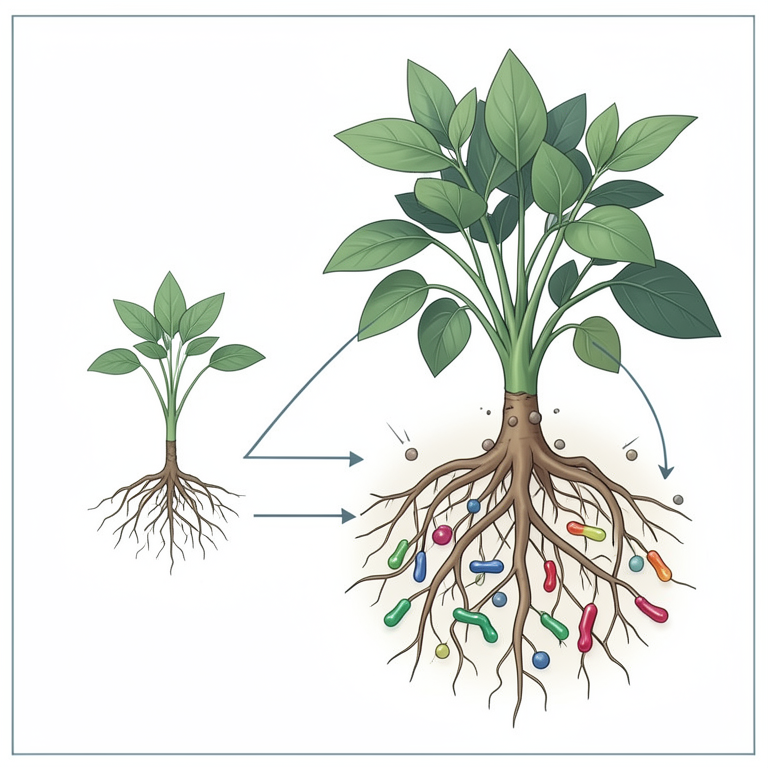
Synergistic Effect of PGPR Consortium
AI-generated conceptual illustration (legume plants with root nodules and rhizosphere bacteria). It explains the idea and does not show study data.
View source evidence ↗Figures & tables
From the original paper Table 1
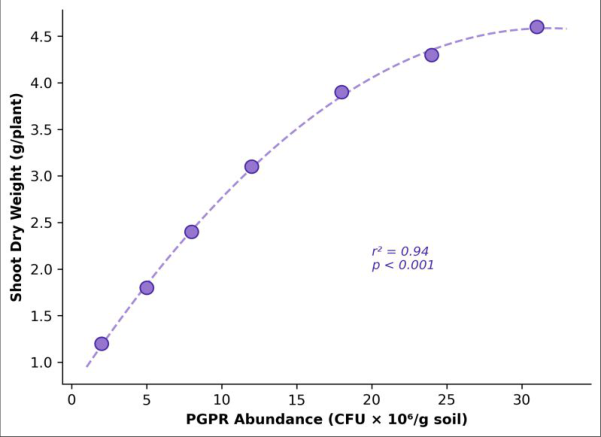 Figure 1
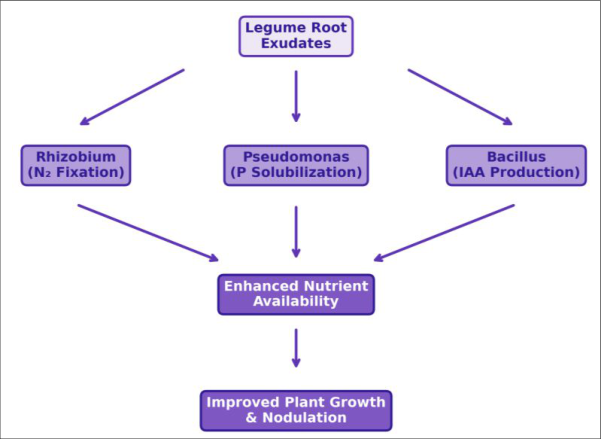 Figure 2
Introduction
The trend toward biological soil management has accelerated as fertilizer costs rise and environmental concerns mount [1] . Legumes are natural partners for PGPR research because their root systems already host nitrogen-fixing symbionts and exude carbon compounds that shape a distinctive rhizosphere community [2] . But which bacteria beyond rhizobia drive growth promotion, and do they vary with soil type? These questions matter for designing region-specific inoculant formulations [3] . This research combined culture-dependent and culture-independent methods to profile the rhizosphere microbiome of three legume species grown in four soil types near Chittagong, Bangladesh, at the Chittagong Institute of Marine Biology [4] .
Reagents and Chemicals
DNA extraction used the DNeasy PowerSoil Pro Kit (Qiagen, Cat. No. 47014). Primers 515F/806R targeting the V4 region of the 16S rRNA gene were from Integrated DNA Technologies (Coralville, IA, USA). King's B agar (HiMedia, Cat. No. M1544), nutrient agar (Oxoid, Cat. No. CM0003), and Pikovskaya's agar (HiMedia, Cat. No. M520) were used for PGPR isolation and functional screening. Indole-3-acetic acid standard (Sigma-Aldrich, Cat. No. I2886) was used for IAA quantification. Salkowski reagent was prepared fresh for each assay.
Material and Methods
Material and Methods
Material
Three legume species mung bean (Vigna radiata), lentil (Lens culinaris), and chickpea (Cicer arietinum) were grown in pots containing four soil types (alluvial, laterite, sandy loam, and clay loam) collected from agricultural sites within 50 km of Chittagong. Ten replicate pots per species per soil type were maintained in a net house at the Chittagong Institute of Marine Biology from February to August 2022. The research was approved by the Institute's Research Ethics Board (Protocol No. CIMB-REB-2021-019, approved 10 December 2021).
Methods
Rhizosphere soil was collected at the flowering stage by shaking roots gently and retaining the soil adhering within1 mm DNA was extracted and sequenced on the Illumina MiSeq (2×300 bp). Reads were processed in QIIME2 with DADA2 denoising [5] . Culturable PGPR were isolated on King's B and Pikovskaya's media, screened for phosphate solubilization, IAA production, and siderophore production, and identified by 16S rRNA gene sequencing [6] . A pot trial tested a three-strain consortium (Pseudomonas fluorescens CIMB-PF3, Bacillus subtilis CIMB-BS7, Rhizobium leguminosarum CIMB-RL1) against uninoculated controls over 60 days. Shoot dry weight and nodule count were recorded.
Instrumentation: 16S amplicon sequencing was performed on an Illumina MiSeq System (Illumina, San Diego, CA, USA) with the MiSeq Reagent Kit v3 (600 cycles). IAA was quantified spectrophotometrically at 530 nm on a BioTek Epoch microplate reader (Agilent Technologies). Phosphate solubilization was measured using the molybdenum blue method at 880 nm. Siderophore production was detected by CAS agar plate assay and quantified by CAS liquid assay at 630 nm [7] . The three-strain consortium produced the greatest growth enhancement (41.3% increase in shoot dry weight) and highest nodule count, indicating synergistic effects among the inoculant strains.
Results
Results
Discussion
The strong correlation between PGPR abundance and plant biomass confirms that naturally occurring growth-promoting bacteria are quantitatively linked to legume productivity in these soils [8] . The consortium outperformed individual strains, likely because P. fluorescens and B. subtilis provide phosphate and siderophores that complement Rhizobium's nitrogen fixation [9] . Soil type influenced community composition: laterite soils had the lowest PGPR diversity, probably due to high aluminum toxicity and low pH [10] . A limitation is that pot trials may overestimate inoculant performance compared to field conditions where competition with native soil microbiota is more intense [11] . Field-scale validation across multiple growing seasons is the next step.
Conclusion
This research characterized the rhizosphere microbiome of three legume species across four soil types in Bangladesh and demonstrated that a native three-strain PGPR consortium increased shoot biomass by 41.3%. Pseudomonas and Bacillus were the dominant growthpromoting genera. These findings support the development of locally adapted microbial inoculants as sustainable alternatives to chemical fertilizers for legume production.
Acknowledgement
Acknowledgements Funding SourcesSupported by the Chittagong Institute of Marine Biology applied research fund. Institutional SupportThe Department of Applied Microbiology provided laboratory and net house facilities. Contributions Not Qualifying for AuthorshipLocal farmers in the Chittagong Division provided soil samples and field access.
Figures and tables from the paper
| Treatment | Shoot DW (g/plant) | Root DW (g/plant) | Nodules (per plant) | P-solubil. (µg/mL) | IAA (µg/mL) | Siderophore (% SU) |
|---|---|---|---|---|---|---|
| Uninoculated | 2.31±0.28 | 0.84±0.11 | 18.4±3.2 | — | — | — |
| PF3 alone | 2.97±0.31 | 1.02±0.14 | 21.7±3.8 | 48.3 | 28.7 | 64.2 |
| BS7 alone | 2.84±0.26 | 0.98±0.12 | 19.8±2.9 | 31.6 | 42.1 | 38.7 |
| RL1 alone | 3.12±0.33 | 1.14±0.16 | 34.2±4.7 | — | 12.4 | — |
| Consortium | 3.26±0.29 | 1.21±0.13 | 38.7±4.1 | 52.7 | 47.8 | 71.3 |
Table text extracted from the original PDF; superscript letters are shown inline. The original table image is below.
View original table image
References
15 in the original paper- Bhattacharyya PN, Jha DK. Plant growth-promoting rhizobacteria (PGPR): emergence in agriculture. World Journal of Microbiology and Biotechnology. 2012;28(4):1327-1350.
- Philippot L, Raaijmakers JM, Lemanceau P. Going back to the roots: the microbial ecology of the rhizosphere. Nature Reviews Microbiology. 2013;11(11):789-799.
- Lugtenberg B, Kamilova F. Plant-growth-promoting rhizobacteria. Annual Review of Microbiology. 2009;63:541-556.
- Bulgarelli D, Schlaeppi K, Spaepen S. Structure and functions of the bacterial microbiota of plants. Annual Review of Plant Biology. 2013;64:807-838.
- Bolyen E, Rideout JR, Dillon MR. Reproducible, interactive, scalable and extensible microbiome data science using QIIME 2. Nature Biotechnology. 2019;37(8):852-857.
- Pikovskaya RI. Mobilization of phosphorus in soil in connection with vital activity of some microbial species. Mikrobiologiya. 1948;17:362-370.
- Schwyn B, Neilands JB. Universal chemical assay for the detection and determination of siderophores. Analytical Biochemistry. 1987;160(1):47-56.
- Mendes R, Garbeva P, Raaijmakers JM. The rhizosphere microbiome: significance of plant beneficial, plant pathogenic, and human pathogenic microorganisms. FEMS Microbiology Reviews. 2013;37(5):634-663.
- Bashan Y, de-Bashan LE, Prabhu SR. Advances in plant growth-promoting bacterial inoculant technology: formulations and practical perspectives (1998-2013). Plant and Soil. 2014;378(1-2):1-33.
- Kochian LV, Hoekenga OA, Pineros MA. How do crop plants tolerate acid soils? Mechanisms of aluminum tolerance and phosphorous efficiency. Annual Review of Plant Biology. 2004;55:459-493.
- Kaminsky LM, Trexler RV, Malik RJ. The inherent conflicts in developing soil microbial inoculants. Trends in Biotechnology. 2019;37(2):140-151.
- Gopalakrishnan S, Sathya A, Vijayabharathi R. Plant growth promoting rhizobia: challenges and opportunities. 3 Biotech. 2015;5(4):355-377.
- Compant S, Samad A, Faist H. A review on the plant microbiome: ecology, functions, and emerging trends in microbial application. Journal of Advanced Research. 2019;19:29-37.
- Yadav AN, Verma P, Singh B. Plant growth promoting bacteria: biodiversity and multifunctional attributes for sustainable agriculture. Advances in Biotechnology and Microbiology. 2017;5(5):1-16.
- Vejan P, Abdullah R, Khadiran T. Role of plant growth promoting rhizobacteria in agricultural sustainabilitya review. Molecules. 2016;21(5):573.