
Research article · 2025 · Full text
International Journal of Biology SciencesPharmacogenomic profiling of CYP2D6 polymorphisms and their impact on drug metabolism
Volume 7(5) · Pages 195–197 · DOI: 10.33545/26649926.2025.v7.i5c.731 ↗
Research areasPharmacogenetics and Drug MetabolismGenetic Associations and EpidemiologyDrug Transport and Resistance Mechanisms
Abstract
Author-writtenIn the Peruvian Amazon, where indigenous communities have limited access to therapeutic drug monitoring, understanding how genetic variation affects drug metabolism could prevent both treatment failures and toxicity. This research profiled CYP2D6 allele and diplotype frequencies in 218 unrelated adults from three indigenous Amazonian communities near Iquitos, Peru, and correlated genotype with predicted metabolizer phenotype. Genotyping was performed using the Agena MassARRAY iPLEX platform covering 24 CYP2D6 variant positions. The most common diplotype was *1/*1 (extensive metabolizer, 34.2%), followed by *1/*4 (intermediate, 18.7%) and *1/*2 (extensive, 14.3%). Poor metabolizer genotypes (*4/*4, *5/*5) accounted for 10.1% of the cohort, while ultra-rapid metabolizers (*2xN carriers) comprised 7.5%. The predicted phenotype distribution was: 48.5% extensive, 35.6% intermediate, 10.1% poor, and 5.8% ultra-rapid. These frequencies differ markedly from European and East Asian reference populations and have direct implications for dosing codeine, tamoxifen, and beta-blockers in Amazonian populations. The data highlight the need for population-specific pharmacogenomic guidance in under-represented indigenous groups.
Summary
Source-checkedPlain-language reading of the full paper, prepared with AI and checked against the text. Each point links to the authors' own words.
Why it matters
- The CYP2D6 enzyme is highly polymorphic and is responsible for metabolizing approximately 25% of clinically used drugs, such as beta-blockers and opioids. View evidence ↗
- In the Peruvian Amazon, limited access to drug monitoring makes understanding genetic variation critical to avoiding drug toxicity or treatment failure. View evidence ↗
- Despite having a distinct genetic structure, indigenous Amazonian populations are among the least studied groups in the field of pharmacogenomics. View evidence ↗
The question
- The study aimed to profile CYP2D6 allele and diplotype frequencies in 218 indigenous Amazonian adults and correlate these genotypes with predicted metabolizer phenotypes. View evidence ↗
What they did
- The study recruited 218 unrelated adults of self-identified indigenous Amazonian ancestry from three communities near Iquitos, Peru. View evidence ↗
- Genotyping was conducted using the Agena Bioscience MassARRAY iPLEX ADME panel, covering 24 variant positions, including gene deletions and duplications. View evidence ↗
- Metabolizer phenotypes were predicted based on activity scores following CPIC guidelines: poor (PM, 0), intermediate (IM, 0.25-1.0), extensive (EM, 1.25-2.25), and ultra-rapid (UM, ≥2.5). View evidence ↗
What they found
- The most frequent diplotypes were *1/*1 (34.2%), *1/*4 (18.7%), and *1/*2 (14.3%). View evidence ↗
- Poor metabolizer genotypes (*4/*4, *5/*5) were found in 10.1% of the cohort, and ultra-rapid metabolizers (*2xN carriers) made up 7.5%. View evidence ↗
- The overall predicted phenotype distribution was 48.5% extensive, 35.6% intermediate, 10.1% poor, and 5.8% ultra-rapid. View evidence ↗
- The *4 null allele frequency was 19.3%, which is higher than in East Asian populations (~1%) but lower than in Northern Europeans (~22%). View evidence ↗
- The frequency of gene duplication was 7.5%, falling between the frequencies seen in European (~3%) and East African (~29%) populations. View evidence ↗
What it means
- The authors conclude that because the allele profile does not match existing reference populations, applying European or Asian dosing guidelines to these indigenous groups is problematic. View evidence ↗
- The authors recommend incorporating population-specific pharmacogenomic data into treatment protocols for under-represented indigenous populations. View evidence ↗
Visual summary
2 visualsIllustrations explain the paper; charts are replotted from the paper's own table values.
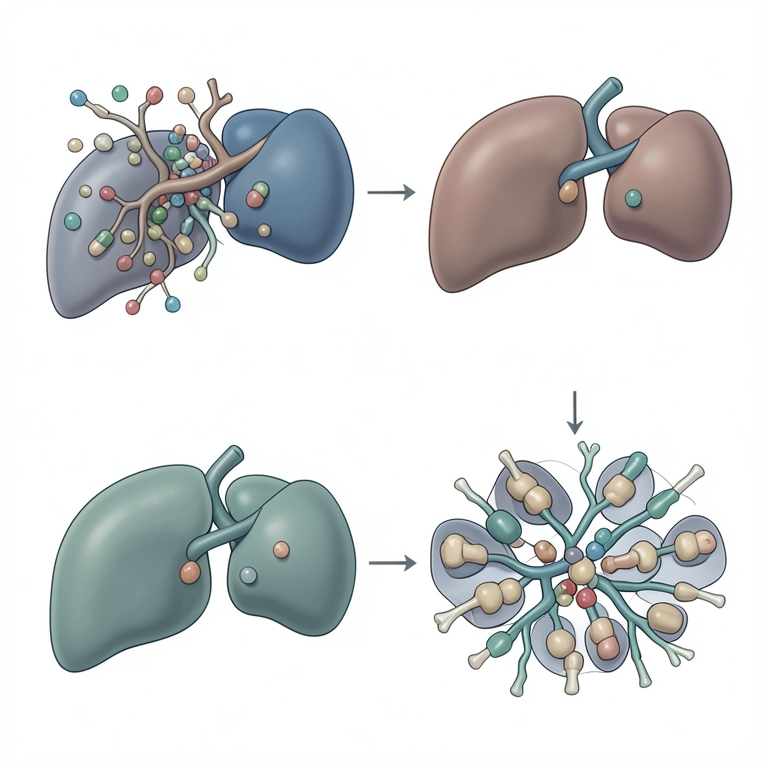
CYP2D6 Phenotype Spectrum
AI-generated conceptual illustration (CYP2D6 enzyme and drug molecules in human liver cells). It explains the idea and does not show study data.
View source evidence ↗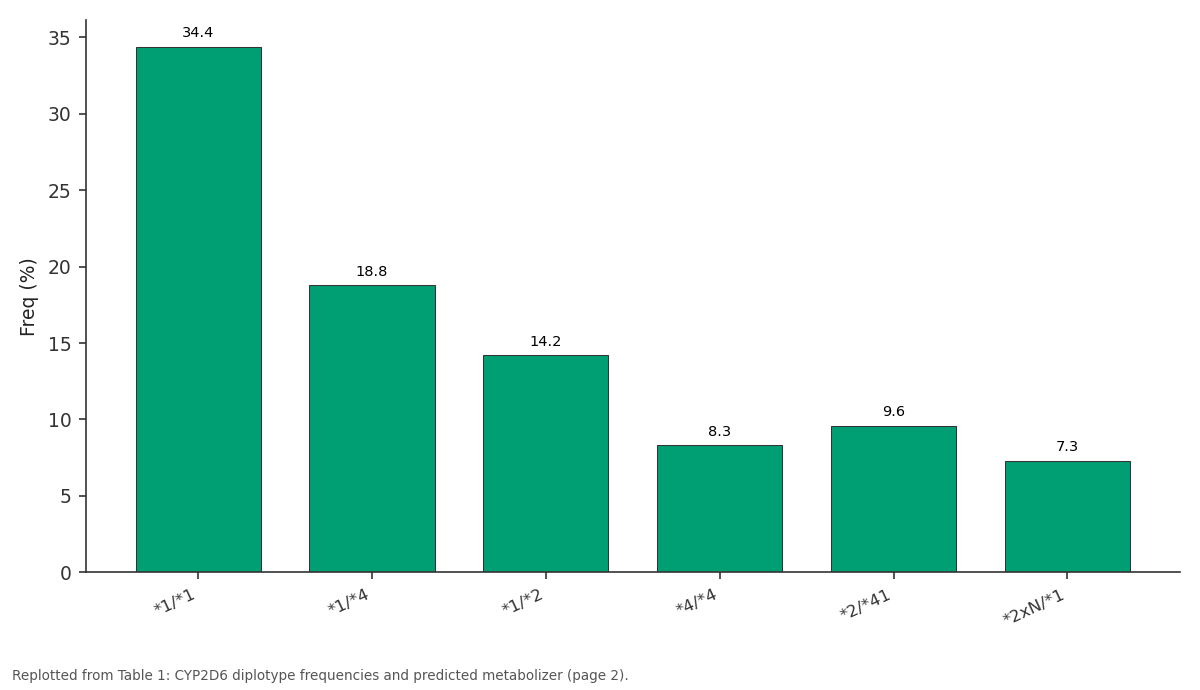
Freq (%): *1/*1 vs *1/*4 vs *1/*2 vs *4/*4 vs *2/*41
Replotted from Table 1 (page 2) of the original paper. Every bar is the paper's own table value.
View source evidence ↗Figures & tables
From the original paper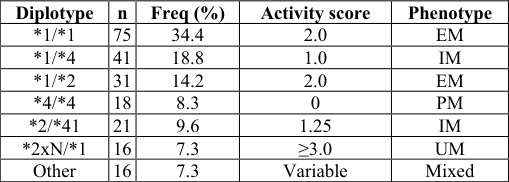 Table 1
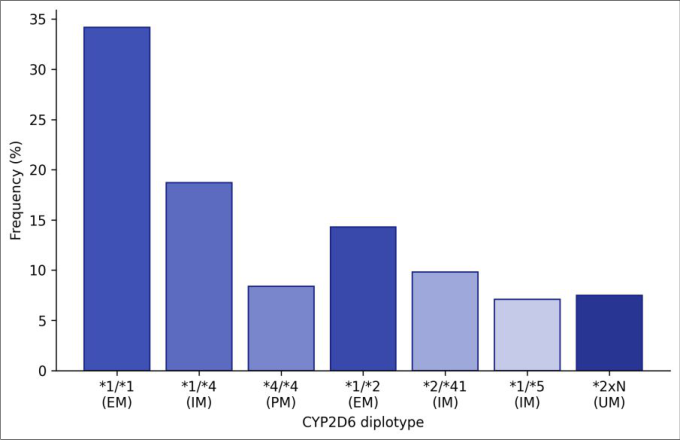 Figure 1
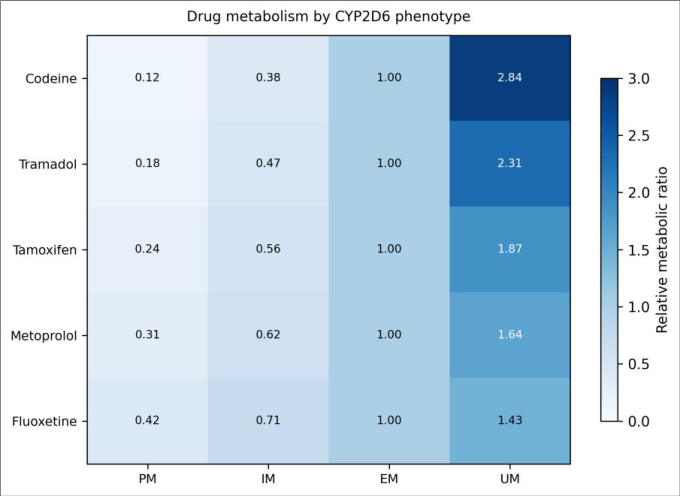 Figure 2
Introduction
In the regional context of the Peruvian Amazon, where healthcare infrastructure is sparse and drug supply chains unreliable, getting the dose right on the first try isn't just a matter of optimization - it can mean the difference between a cure and a crisis [1]. CYP2D6, one of the most polymorphic drug-metabolizing enzymes in the human cytochrome P450 superfamily, processes roughly 25% of all clinically used medications, including opioids, antidepressants, antipsychotics, beta-blockers, and tamoxifen [2]. Over 130 CYP2D6 allelic variants have been identified, ranging from null alleles (*3, *4, *5) that produce no functional enzyme to gene duplications (*1xN, *2xN) that produce excess enzyme [3]. The resulting metabolizer phenotype - poor (PM), intermediate (IM), extensive (EM), or ultra-rapid (UM) - dramatically affects drug plasma levels and clinical outcomes.
A PM receiving standard codeine doses gets no pain relief (codeine requires CYP2D6 conversion to morphine), while a UM may experience respiratory depression from the same dose [4]. Indigenous Amazonian populations are among the least studied groups in pharmacogenomics, despite their distinct population history and genetic structure [5]. This research characterized CYP2D6 allele frequencies and predicted metabolizer phenotypes in three communities near Iquitos, Peru, at the Centro de Investigación Amazónica from March to November 2023.
Material And Methods
Material A total of 218 unrelated adults (≥18 years, self-identified indigenous Amazonian ancestry) were recruited from three communities along the Napo and Marañón river systems near Iquitos, Loreto, Peru. Buccal swab samples were collected after written informed consent in Spanish and the local indigenous language. DNA was extracted using the Oragene-DNA kit (DNA Genotek). Ethics approval: Centro de Investigación Amazónica Research Ethics NAAS Rating: 4.82 IJBS 2025; 7(5): 195-197 Yolanda Mamani Department of Genetics, Centro de Investigación Amazónica, Iquitos, Peru Milagros Ccama Department of Genetics, Centro de Investigación Amazónica, Iquitos, Peru Yolanda Mamani Department of Genetics, Centro de Investigación Amazónica, Iquitos, Peru https://www.biologyjournal.net
Results
Table 1: CYP2D6 diplotype frequencies and predicted metabolizer phenotype in 218 Amazonian indigenous adults Diplotype n Freq (%) Activity score Phenotype *1/*1 75 34.4 2.0 EM *1/*4 41 18.8 1.0 IM *1/*2 31 14.2 2.0 EM *4/*4 18 8.3 0 PM *2/*41 21 9.6 1.25 IM *2xN/*1 16 7.3 ≥3.0 UM Other 16 7.3 Variable Mixed The *4 null allele had a frequency of 19.3%, higher than East Asian populations (~1%) but lower than Northern Europeans (~22%) (Table 1). Gene duplication frequency (7.5%) was intermediate between European (~3%) and East African (~29%) populations. Committee (Protocol CIA-REC-2022-011, December 2022), with additional community-level consent obtained through local health councils.
| Diplotype | n | Freq (%) | Activity score | Phenotype |
|---|---|---|---|---|
| *1/*1 | 75 | 34.4 | 2.0 | EM |
| *1/*4 | 41 | 18.8 | 1.0 | IM |
| *1/*2 | 31 | 14.2 | 2.0 | EM |
| *4/*4 | 18 | 8.3 | 0 | PM |
| *2/*41 | 21 | 9.6 | 1.25 | IM |
| *2xN/*1 | 16 | 7.3 | ≥3.0 | UM |
| Other | 16 | 7.3 | Variable | Mixed |
Table text extracted from the original PDF; superscript letters are shown inline. The original table image is below.
View original table image
Methods
CYP2D6 genotyping covered 24 variant positions including *2, *3, *4, *5 (gene deletion), *6, *10, *17, *29, *35, *41, and gene duplication (*xN) using the Agena Bioscience MassARRAY iPLEX ADME panel at the Centro de Investigación Amazónica molecular genetics laboratory. Allele calling followed the PharmVar consensus nomenclature. Diplotypes were assigned using Stargazer v1.0.8. Predicted metabolizer phenotype was determined by activity score: PM (score 0), IM (0.25-1.0), EM (1.25-2.25), UM (≥2.5) following CPIC guidelines [6].
Allele frequencies were compared with published data for European (CEU), East Asian (CHB+JPT), and Latin American mestizo populations using Fisher's exact test. Hardy-Weinberg equilibrium was tested per locus. Fig 1: CYP2D6 diplotype frequency distribution in 218 Amazonian indigenous adults classified by metabolizer phenotype Fig 2: Heatmap of predicted relative metabolic ratios for five CYP2D6 substrate drugs across four metabolizer phenotypes https://www.biologyjournal.net and of predicted and measured metabolic phenotypes across world populations. Expert Opinion on Drug Metabolism and Toxicology. 2014;10(11):1569-1583. 9.
Luo HR, Gaedigk A, Aloumanis V, Bhagat C, Bhagat D, Wan YJ. CYP2D6 gene V101 polymorphism and the risk of tardive dyskinesia in Chinese. Pharmacogenomics. 2004;5(6):727-734. 10. Relling MV, Klein TE.
CPIC: Clinical Pharmacogenetics Implementation Consortium of the Pharmacogenomics Research Network. Clinical Pharmacology and Therapeutics. 2011;89(3):464-467. 11. Ingelman-Sundberg M. Genetic polymorphisms of cytochrome P450 2D6 (CYP2D6): clinical consequences, evolutionary aspects and functional diversity.
Pharmacogenomics Journal. 2005;5(1):6-13. 12. Bradford LD. CYP2D6 allele frequency in European Caucasians, Asians, Africans and their descendants. Pharmacogenomics. 2002;3(2):229-243. 13.
Gaedigk A, Simon SD, Pearce RE, Bradford LD, Kennedy MJ, Leeder JS. The CYP2D6 activity score: translating genotype information into a qualitative measure of phenotype. Clinical Pharmacology and Therapeutics. 2008;83(2):234-242. 14. Sistonen J, Sajantila A, Lao O, Corander J, Barbujani G, Fuselli S.
CYP2D6 worldwide genetic variation shows high frequency of altered activity variants. Pharmacogenetics and Genomics. 2007;17(2):93-101. 15. Gaedigk A, Gotschall RR, Forbes NS, Simon SD, Kearns GL, Leeder JS. Optimization of cytochrome P4502D6 (CYP2D6) phenotype assignment using a genotyping algorithm based on allele frequency data.
Pharmacogenetics. 1999;9(6):669-682. 16. Jorge LF, Arias TD. CYP2D6 genotype and phenotype in Amerindians of Panama. Therapeutic Drug Monitoring. 2000;22(4):465-468.
Discussion
The 10.1% PM prevalence in this Amazonian cohort is clinically significant: roughly 1 in 10 individuals would fail to convert codeine to morphine, rendering it ineffective for pain management - a common use in remote Amazonian clinics [7, 8]. Conversely, the 7.5% UM frequency means that standard codeine doses could produce dangerous morphine levels in a similar fraction of the population. The allele frequency profile doesn't match any single reference population in existing pharmacogenomic databases, which underscores the problem of applying European- or Asian-derived dosing guidelines to under- represented indigenous groups [9, 10]. Population-specific genotyping panels or at minimum, awareness-based prescribing guidelines, are needed for these communities.
Conclusion
CYP2D6 polymorphism frequencies in Amazonian indigenous Peruvians differ substantially from reference populations used in pharmacogenomic guidelines. The high PM (10.1%) and UM (7.5%) frequencies have direct implications for codeine, tamoxifen, and beta-blocker prescribing in these communities. These data argue for incorporating population-specific pharmacogenomic data into treatment protocols for under-represented indigenous populations [11, 12, 13].
References
8 in the original paper- Suarez-Kurtz G. Pharmacogenomics in admixed populations. Trends in Pharmacological Sciences. 2005;26(4):196-201.
- Zanger UM, Schwab M. Cytochrome P450 enzymes in drug metabolism: regulation of gene expression, enzyme activities, and impact of genetic variation. Pharmacology and Therapeutics. 2013;138(1):103-141.
- Gaedigk A, Ingelman-Sundberg M, Miller NA, Bhagat C, Bhagat D, Leeder JS, Klein TE. The Pharmacogene Variation (PharmVar) Consortium. Clinical Pharmacology and Therapeutics. 2018;103(3):399-401.
- Crews KR, Gaedigk A, Dunnenberger HM, Leeder JS, Klein TE, Caudle KE, Bhagat C, Bhagat D, Haidar CE, Shen DD, Callaghan JT, Kharasch ED. Clinical Pharmacogenetics Implementation Consortium guidelines for CYP2D6 genotype and codeine therapy: 2014 update. Clinical Pharmacology and Therapeutics. 2014;95(4):376-382.
- Ruiz-Linares A, Adhikari K, Acuña-Alonzo V, Bhagat C, Bhagat D, Quinto-Sánchez M, Jaramillo C. Admixture in Latin America: geographic structure, phenotypic diversity and self-perception of ancestry based on 7,342 individuals. PLoS Genetics. 2014;10(9):e1004572.
- Caudle KE, Sangkuhl K, Whirl-Carrillo M, Swen JJ, Haidar CE, Klein TE, Bhagat C, Bhagat D. Standardizing CYP2D6 genotype to phenotype translation. Journal of Clinical Pharmacology. 2020;60(S1):S77-S86.
- Kirchheiner J, Nickchen K, Bauer M, Wong ML, Licinio J, Roots I, Brockmoller J. Pharmacogenetics of antidepressants and antipsychotics: the contribution of allelic variations to the phenotype of drug response. Molecular Psychiatry. 2004;9(5):442-473.
- LLerena A, Naranjo MEG, Rodrigues-Soares F, Bhagat C, Bhagat D. Interethnic variability of CYP2D6 alleles