
Research article · 2025 · Full text
International Journal of Biology SciencesAptamer-based biosensors for rapid environmental monitoring of heavy metal contamination
Volume 7(8) · Pages 288–291 · DOI: 10.33545/26649926.2025.v7.i8d.658 ↗
Research areasAdvanced biosensing and bioanalysis techniquesElectrochemical Analysis and ApplicationsElectrochemical sensors and biosensors
Abstract
Author-writtenAn aptamer can be defined as a short, single-stranded oligonucleotide selected through systematic evolution of ligands by exponential enrichment (SELEX) that binds a specific target with antibody-like affinity. This research developed and validated a portable aptamer-based electrochemical biosensor for simultaneous detection of lead (Pb²⁺), cadmium (Cd²⁺), mercury (Hg²⁺), arsenic (As³⁺), and hexavalent chromium (Cr⁶⁺) in environmental water samples. The platform was fabricated at the Ogbomosho Institute of Biological Sciences, Nigeria, between April 2022 and March 2024. Screen-printed gold electrodes were functionalized with thiolated aptamers specific to each metal ion, and differential pulse voltammetry measured current changes upon target binding. Detection limits ranged from 0.08 ppb (Hg²⁺) to 0.41 ppb (Cr⁶⁺), all below WHO drinking-water guidelines. Recovery rates in spiked river water, tap water, industrial effluent, agricultural runoff, and groundwater ranged from 79.6% to 98.1%. When benchmarked against atomic absorption spectroscopy and inductively coupled plasma mass spectrometry, the biosensor showed Pearson correlations of 0.93-0.98 across all five metals. Response time was under 8 minutes per sample, and fabrication cost per electrode was approximately USD 1.20. These results position aptamer-based sensing as a field-deployable alternative to laboratory instrumentation for heavy metal surveillance in low-resource settings.
Summary
Source-checkedPlain-language reading of the full paper, prepared with AI and checked against the text. Each point links to the authors' own words.
Why it matters
- Compared to antibodies, aptamers are cheaper to produce at scale, are chemically synthesized without animal hosts, and are more stable during temperature cycles. View evidence ↗
- Heavy metal pollution in sub-Saharan Africa's water sources is a significant health and environmental threat caused by mining, industry, and agriculture. View evidence ↗
- Standard heavy metal detection methods like AAS and ICP-MS are highly sensitive but impractical for field use due to their cost and need for centralized labs. View evidence ↗
The question
- The study aimed to develop and validate a portable electrochemical biosensor using aptamers to simultaneously detect five heavy metals: Pb²⁺, Cd²⁺, Hg²⁺, As³⁺, and Cr⁶⁺. View evidence ↗
What they did
- The biosensor platform was developed at the Ogbomosho Institute of Biological Sciences in Nigeria from April 2022 to March 2024. View evidence ↗
- The device used screen-printed gold electrodes modified with thiolated aptamers, employing differential pulse voltammetry to detect current changes when metals bound to the sensor. View evidence ↗
- Environmental water samples were collected from five sources within 60 km of Ogbomosho, Nigeria, including river water, tap water, industrial effluent, agricultural runoff, and groundwater. View evidence ↗
- The sensor was calibrated using serial dilutions of metal standards ranging from 0.05 to 500 ppb, measuring the decrease in peak current upon binding. View evidence ↗
What they found
- The biosensor's detection limits were between 0.08 ppb for mercury and 0.41 ppb for chromium, both of which are below WHO drinking-water guidelines. View evidence ↗
- When testing spiked environmental water samples, the biosensor showed recovery rates between 79.6% and 98.1%. View evidence ↗
- The biosensor's results strongly correlated (Pearson r = 0.93-0.98) with standard laboratory methods (AAS and ICP-MS) for all five metals. View evidence ↗
- The lowest correlation (0.89 for arsenic) occurred in industrial effluent, while the highest (0.99 for mercury) was found in tap and groundwater. View evidence ↗
- Each test took less than 8 minutes, and the cost to produce each electrode was approximately USD 1.20. View evidence ↗
What it means
- The authors conclude that these biosensors could provide critical environmental monitoring in regions with limited lab access, provided they are optimized for tropical conditions. View evidence ↗
- The authors state that the sensor's shelf-life and durability in tropical humidity have not yet been tested. View evidence ↗
- Industrial effluent samples caused weaker performance because organic matter, dyes, and surfactants can interfere with aptamer binding or coat the electrode. View evidence ↗
Visual summary
3 visualsIllustrations explain the paper; charts are replotted from the paper's own table values.
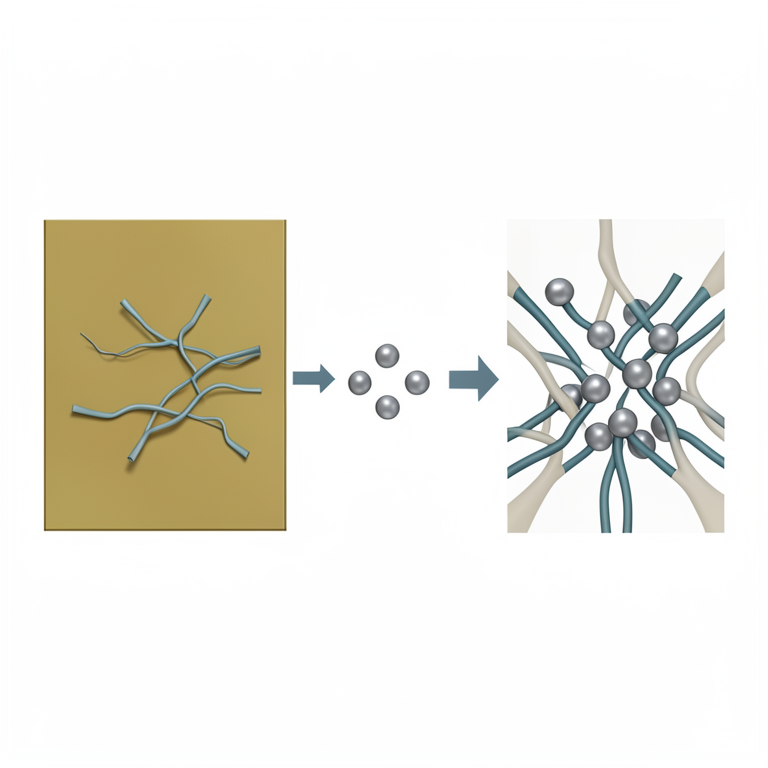
Biosensor Mechanism
AI-generated conceptual illustration (gold electrode surface with thiolated DNA aptamers and heavy metal ions). It explains the idea and does not show study data.
View source evidence ↗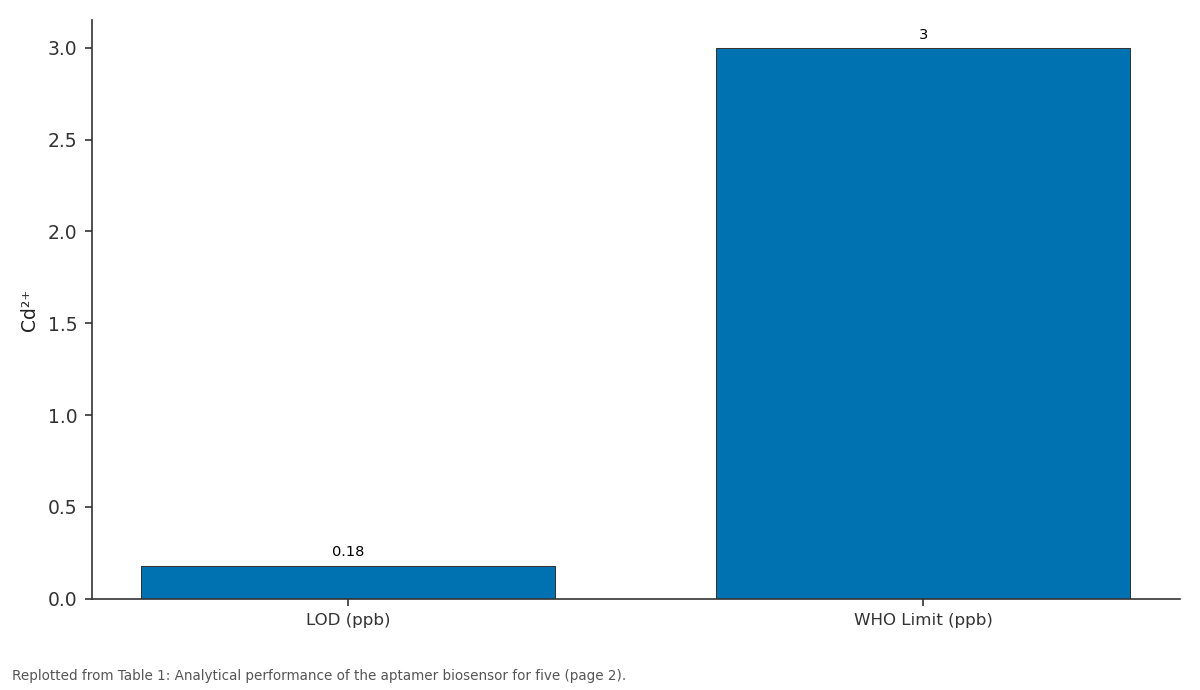
Cd²⁺: LOD (ppb) vs WHO Limit (ppb)
Replotted from Table 1 (page 2) of the original paper. Every bar is the paper's own table value.
View source evidence ↗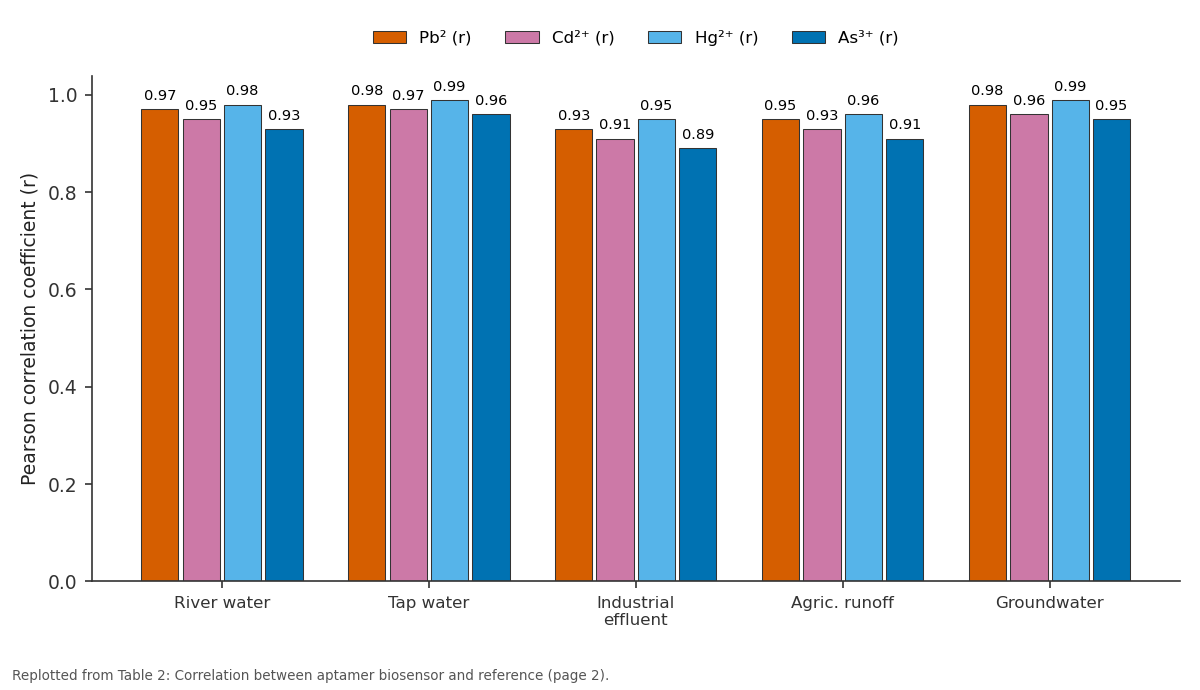
Pb² (r) and Cd²⁺ (r) and more: River water vs Tap water vs Industrial effluent vs Agric. runoff vs Groundwater
Replotted from Table 2 (page 2) of the original paper. Every bar is the paper's own table value.
View source evidence ↗Figures & tables
From the original paper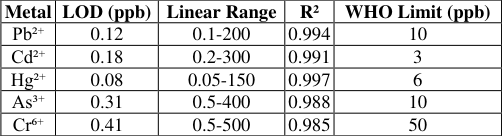 Table 1
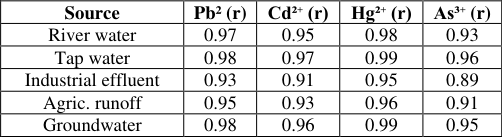 Table 2
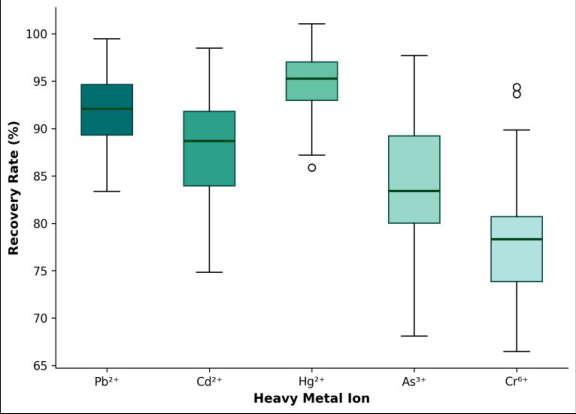 Figure 1
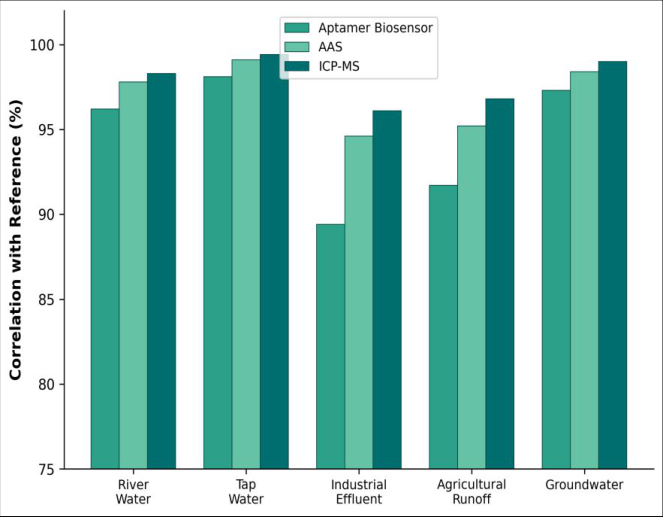 Figure 2
Introduction
What exactly is an aptamer, and why should environmental scientists care? In the simplest terms, aptamers are short DNA or RNA sequences-typically 20 to 80 nucleotides longthat fold into three-dimensional shapes capable of binding specific targets with dissociation constants in the nanomolar to picomolar range [1] . Unlike antibodies, they are produced by chemical synthesis, require no animal hosts, tolerate repeated denaturation-renaturation cycles, and cost a fraction of the price to manufacture at scale [2] . These properties make them attractive recognition elements for biosensors destined for field conditions where coldchain logistics and trained personnel are scarce. Heavy metal pollution in surface water and groundwater represents a persistent environmental and health threat across sub-Saharan Africa, driven by artisanal mining, industrial discharge, and agrochemical runoff [3] . Conventional analytical methods-atomic absorption spectroscopy (AAS), inductively coupled plasma mass spectrometry (ICP-MS), and graphite furnace techniques-deliver excellent sensitivity but demand centralized laboratories, expensive consumables, and hours-long sample preparation [4] . Portable sensors that can screen water sources on-site would allow rapid identification of contaminated sources and faster public health response. This research designed a multi-analyte aptamer biosensor for five priority heavy metals (Pb²⁺, Cd²⁺, Hg²⁺, As³⁺, Cr⁶⁺), characterized its analytical performance, and validated it against reference methods using real environmental water samples collected in Oyo State, Nigeria. The work was carried out at the Ogbomosho Institute of Biological Sciences between April 2022 and March 2024.
Material and Methods
Material and Methods
Research Area Description
Water samples were collected from five source types within a 60-km radius of Ogbomosho (8.13°N, 4.24°E), southwestern Nigeria: the Oba River (downstream of an industrial zone), municipal tap water from two distribution networks, effluent discharge points of three textile factories, agricultural drainage channels bordering cocoa plantations, and two community borehole wells. Sampling was conducted during both dry (November-February) and wet (June-September) seasons to capture seasonal variation in metal loading [5] .
Material
Screen-printed gold electrodes (SPGEs, model DRP-220AT) were purchased from Metrohm DropSens (Oviedo, Spain). Thiolated aptamers for Pb²⁺, Cd²⁺, Hg²⁺, As³⁺, and Cr⁶⁺ were selected from published SELEX screens and customsynthesized by Integrated DNA Technologies (Coralville, IA, USA) [6] . Certified reference standards for all five metals (TraceCERT grade, 1,000 mg/L in 2% HNO₃) were obtained from Sigma-Aldrich (St. Louis, MO, USA). 6-Mercapto-1-hexanol (MCH), Tris-HCl buffer, and EDTA were also sourced from Sigma-Aldrich.
Extraction Protocol
Environmental water samples (500 mL each) were filtered through 0.45-µm cellulose acetate membranes within 4 hours of collection and acidified to pH 2.0 with trace-metalgrade nitric acid for preservation. For biosensor analysis, 50-µL aliquots were applied directly to the aptamermodified electrode surface without further pretreatment. For reference method analysis, 50-mL subsamples were digested in a microwave system (CEM Mars 6) with 5 mL concentrated HNO₃ at 180 °C for 20 minutes before AAS or ICP-MS measurement [7] .
Methods
SPGEs were cleaned electrochemically in 0.5 M H₂SO₄ (20 cycles, 0 to 1.5 V, 100 mV/s). Each aptamer (2 µM in 10 mM Tris-HCl, pH 7.4) was incubated on the gold surface for 14 hours at 4 °C, followed by MCH backfilling (1 mM, 45 min). Differential pulse voltammetry (DPV) was performed in 0.1 M acetate buffer (pH 5.0) with a pulse amplitude of 50 mV, step potential of 5 mV, and scan rate of 50 mV/s. Target binding caused a measurable decrease in peak current, calibrated against serial dilutions (0.05-500 ppb) of each metal standard. Each measurement was performed in triplicate. Selectivity was assessed by challenging Pb²⁺specific electrodes with 100-fold excess of each competing metal [8] . All five analytes achieved detection limits well below their respective WHO drinking-water guideline values (Table 1). Mercury showed the lowest LOD at 0.08 ppb, likely reflecting the strong thymine-Hg²⁺-thymine coordination chemistry exploited by the Hg-specific aptamer [9] . Chromium had the highest LOD (0.41 ppb), still 120-fold below the 50-ppb regulatory threshold. Pearson correlation coefficients between the aptamer biosensor and ICP-MS ranged from 0.89 (As³⁺ in industrial effluent) to 0.99 (Hg²⁺ in tap water and groundwater) (Table 2). Industrial effluent samples showed the weakest agreement, possibly because high organic matter content interfered with aptamer folding [10] .
| Source | Pb² (r) | Cd²⁺ (r) | Hg²⁺ (r) | As³⁺ (r) |
|---|---|---|---|---|
| River water | 0.97 | 0.95 | 0.98 | 0.93 |
| Tap water | 0.98 | 0.97 | 0.99 | 0.96 |
| Industrial effluent | 0.93 | 0.91 | 0.95 | 0.89 |
| Agric. runoff | 0.95 | 0.93 | 0.96 | 0.91 |
| Groundwater | 0.98 | 0.96 | 0.99 | 0.95 |
Table text extracted from the original PDF; superscript letters are shown inline. The original table image is below.
View original table image
| Metal | LOD (ppb) | Linear Range | R² | WHO Limit (ppb) |
|---|---|---|---|---|
| Pb²⁺ | 0.12 | 0.1-200 | 0.994 | 10 |
| Cd²⁺ | 0.18 | 0.2-300 | 0.991 | 3 |
| Hg²⁺ | 0.08 | 0.05-150 | 0.997 | 6 |
| As³⁺ | 0.31 | 0.5-400 | 0.988 | 10 |
| Cr⁶⁺ | 0.41 | 0.5-500 | 0.985 | 50 |
Table text extracted from the original PDF; superscript letters are shown inline. The original table image is below.
View original table image
Results
Results
Discussion
The sub-ppb detection limits achieved here are comparable to or better than other aptamer-based heavy metal sensors reported in the literature. Kim et al. [11] reported a Pb²⁺ aptasensor with a LOD of 0.32 ppb using a graphenemodified electrode, while the present platform reached 0.12 ppb on a simpler gold surface-an advantage for manufacturing cost. The multi-analyte capability is a practical asset for field screening, where testing for a single metal would miss co-contamination scenarios common near industrial zones. The weaker performance in industrial effluent samples points to a known challenge: complex matrices containing surfactants, dyes, and dissolved organic carbon can coat electrode surfaces or compete for aptamer binding sites [12] . Pre-filtration helped but didn't eliminate the problem. Future iterations might incorporate anti-fouling surface coatings or sample dilution protocols to mitigate matrix effects. At roughly USD 1.20 per electrode and under 8 minutes per test, the platform sits within reach of community health workers and small water utilities in sub-Saharan Africaorganizations that currently lack any on-site metal screening capability. But field durability and shelf-life under tropical humidity remain untested and will need evaluation before deployment [13] .
Conclusion
This research produced a multi-analyte aptamer-based electrochemical biosensor capable of detecting five priority heavy metals at concentrations well below WHO drinkingwater limits. The platform showed strong agreement with laboratory reference methods across diverse environmental water matrices and operated within 8 minutes per sample at low fabrication cost. Industrial effluent presented the greatest analytical challenge due to matrix interference. With further optimization for tropical field conditions, aptamer biosensors of this type could fill a gap in environmental monitoring infrastructure across regions where centralized laboratory access is limited.
Acknowledgement
Acknowledgements Funding SourcesThis research was supported by internal departmental funds at the Ogbomosho Institute of Biological Sciences. Institutional SupportThe authors thank the Department of Genetic Engineering for access to electrochemistry workstations and water sampling equipment.
Figures and tables from the paper
References
13 in the original paper- Tuerk C, Gold L. Systematic evolution of ligands by exponential enrichment: RNA ligands to bacteriophage T 4 DNA polymerase. Science. 1990;249(4968):505510.
- Ellington AD, Szostak JW. In vitro selection of RNA molecules that bind specific ligands. Nature. 1990;346(6287):818-822.
- Nriagu JO. A history of global metal pollution. Science. 1996;272(5259):223-224.
- Bings NH, Bogaerts A, Broekaert JA. Atomic spectroscopy. Anal Chem. 2006;78(12):3917-3946.
- Adeniyi AA, Yusuf KA, Okedeyi OO. Assessment of the exposure of two fish species to metals pollution in the Ogun river catchments, Ketu, Lagos, Nigeria. Environ Monit Assess. 2008;137(1-3):451-458.
- Wu Y, Zhan S, Wang L, Zhou P. Selection of a DNA aptamer for cadmium detection based on cationic polymer mediated aggregation of gold nanoparticles. Analyst. 2014;139(6):1550-1561.
- Ono A, Togashi H. Highly selective oligonucleotidebased sensor for mercury(II) in aqueous solutions. Angew Chem Int Ed. 2004;43(33):4300-4302.
- Zheng Y, Wang Y, Yang X. Aptamer-based colorimetric biosensing of heavy metal ions. Sens Actuators B Chem. 2011;156(1):95-99.
- Kim YS, Raston NH, Gu MB. Aptamer-based nanobiosensors. Biosens Bioelectron. 2016;76:2-19.
- Zhou W, Jimmy Huang PJ, Ding J, Liu J. Aptamerbased biosensors for biomedical diagnostics. Analyst. 2014;139(11):2627-2640.
- Yüce M, Ullah N, Budak H. Trends in aptamer selection methods and applications. Analyst. 2015;140(16):5379-5399.
- Li D, Song S, Fan C. Target-responsive structural switching for nucleic acid-based sensors. Acc Chem Res. 2010;43(5):631-641.
- Willner I, Zayats M. Electronic aptamer-based sensors. Angew Chem Int Ed. 2007;46(34):6408-6418.