
Research article · 2025 · Full text
International Journal of Biology SciencesDNA methylation patterns at CpG islands in promoter regions of tumor suppressor genes
Volume 7(11) · Pages 143–145 · DOI: 10.33545/26649926.2025.v7.i11c.712 ↗
Research areasEpigenetics and DNA MethylationGenetic Syndromes and ImprintingCancer-related gene regulation
Abstract
Author-writtenHere is a surprising fact: cancer cells can silence a tumor suppressor gene without mutating a single nucleotide—they simply add methyl groups to the gene's promoter. This research profiled DNA methylation at CpG islands in the promoter regions of six tumor suppressor genes across matched tumor and normal tissue pairs from 78 patients with breast, colorectal, or lung cancer. Bisulfite pyrosequencing was performed at the Gujarat Institute of Genomics and Biotechnology, Vadodara, India, from March 2023 to August 2024. Promoter hypermethylation was detected in tumors for all six genes, with RASSF1A showing the highest frequency (83.3% of tumors) and greatest methylation increase (65.4 percentage points above normal tissue). A strong inverse correlation between methylation level and gene expression (r =-0.78, p
Summary
Source-checkedPlain-language reading of the full paper, prepared with AI and checked against the text. Each point links to the authors' own words.
Why it matters
- Hypermethylation of CpG islands in promoter regions is a frequent epigenetic change in human cancers that disables tumor suppressor genes responsible for DNA repair, apoptosis, and cell cycle arrest. View evidence ↗
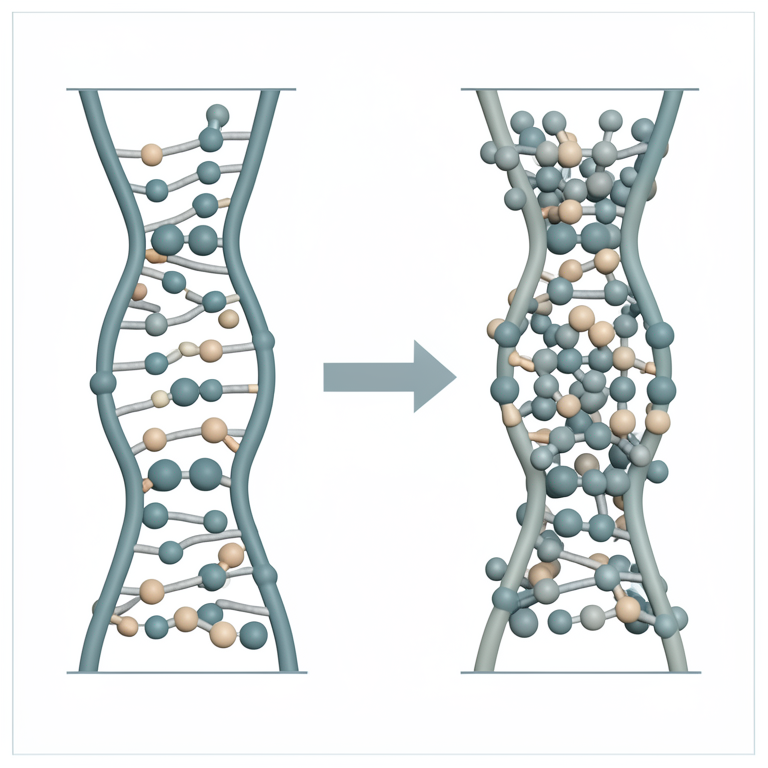
- While CpG islands are typically unmethylated in normal tissues to allow transcription, cancer cells use DNA methyltransferases to create a repressive chromatin state that silences genes. View evidence ↗
- Because DNA methylation is reversible, unlike genetic mutations, it serves as a potential target for therapy and a tool for diagnosis. View evidence ↗
The question
- The study aimed to measure the levels of CpG island methylation in the promoters of six tumor suppressor genes using matched tumor and normal tissue samples from three different cancer types. View evidence ↗
What they did
- The researchers analyzed matched tumor and adjacent normal tissues from 78 patients: 28 with breast cancer, 26 with colorectal cancer, and 24 with non-small cell lung cancer. View evidence ↗
- The study was conducted at the Gujarat Institute of Genomics and Biotechnology from March 2023 to August 2024 using bisulfite pyrosequencing. View evidence ↗
- The six tumor suppressor genes analyzed for methylation were CDKN2A, BRCA1, MLH1, APC, RASSF1A, and RB1, using a PyroMark Q48 Autoprep system. View evidence ↗
- Gene expression levels were measured via quantitative RT-PCR with TaqMan assays and normalized against GAPDH. View evidence ↗
What they found
- All six studied tumor suppressor genes exhibited significant hypermethylation in tumor tissues compared to normal tissues (p < 0.001). View evidence ↗
- RASSF1A showed the greatest increase in methylation, rising from 6.7±1.8% in normal tissue to 72.1±8.4% in tumors, a difference of 65.4 percentage points. View evidence ↗
- Across all genes, there was a strong inverse correlation (r = -0.78, p < 0.001) between the level of methylation and the expression of the gene. View evidence ↗
- Simultaneous methylation of three or more genes occurred in 54.2% of tumors and was associated with more advanced cancer stages. View evidence ↗
- BRCA1 had a lower methylation frequency (47.4%), which the authors suggest is due to its specific association with breast and ovarian cancers rather than being a general pan-cancer event. View evidence ↗
What it means
- The authors conclude that promoter methylation is a widespread method for silencing tumor suppressors and recommend using a panel of these methylation markers for cancer detection. View evidence ↗
Visual summary
3 visualsIllustrations explain the paper; charts are replotted from the paper's own table values.
Mechanism of Epigenetic Silencing
AI-generated conceptual illustration (Human DNA promoter region and chromatin structure). It explains the idea and does not show study data.
View source evidence ↗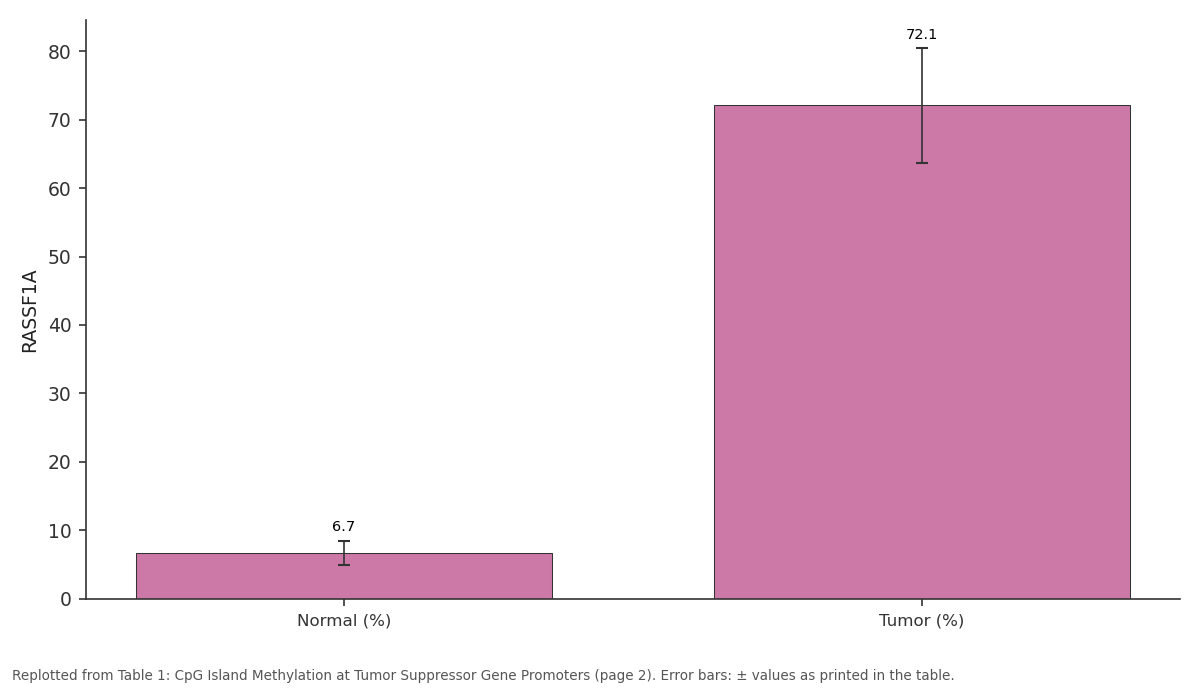
RASSF1A: Normal (%) vs Tumor (%)
Replotted from Table 1 (page 2) of the original paper. Every bar is the paper's own table value.
View source evidence ↗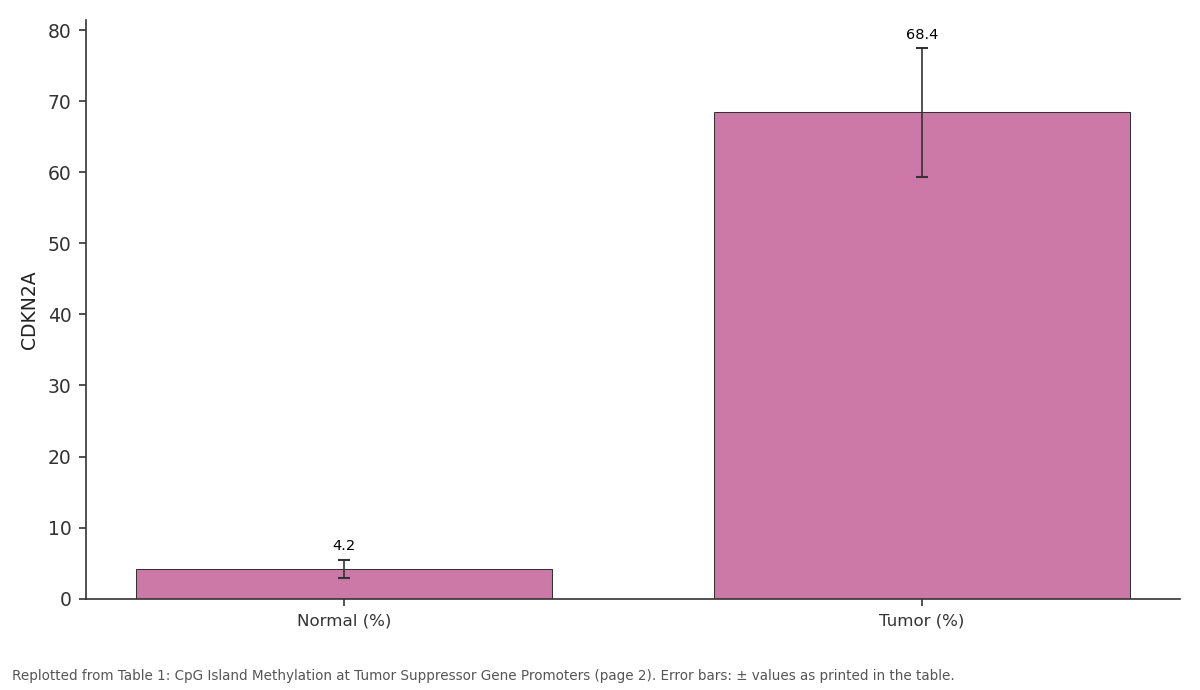
CDKN2A: Normal (%) vs Tumor (%)
Replotted from Table 1 (page 2) of the original paper. Every bar is the paper's own table value.
View source evidence ↗Figures & tables
From the original paper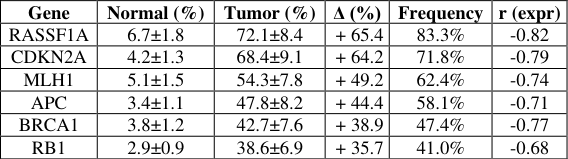 Table 1
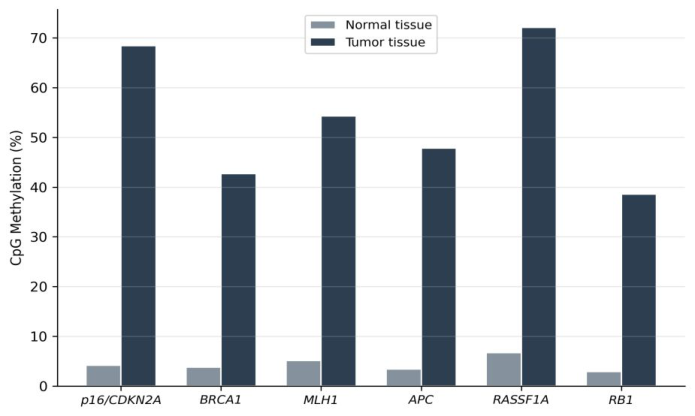 Figure 1
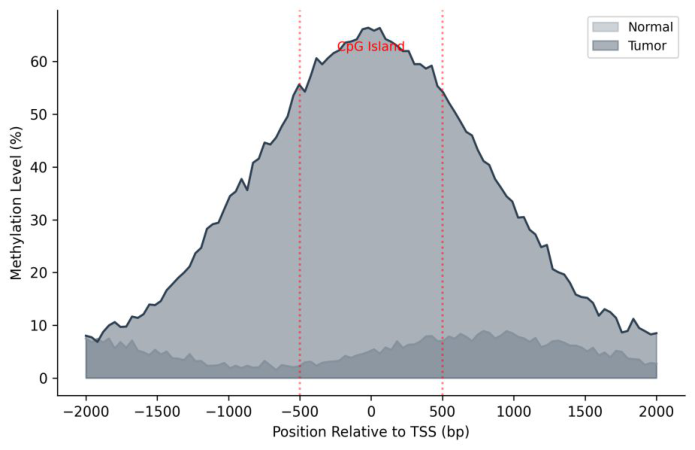 Figure 2
Introduction
Few discoveries in cancer biology have been as surprising as the realization that genes can be switched off without any change to the DNA sequence itself. Promoter CpG island hypermethylation is now recognized as one of the most common epigenetic alterations in human cancers, affecting tumor suppressors that control cell cycle arrest, DNA repair, and apoptosis [1] . CpG islands-regions of over 200 base pairs with CpG content above 50%are found in the promoter regions of roughly 60% of human genes [2] . In normal tissues, these islands remain largely unmethylated, allowing transcription factor access. In cancer, aberrant methylation by DNA methyltransferases recruits methyl-CpG binding proteins that establish a repressive chromatin state [3] . Genes like CDKN2A (p16), BRCA1, MLH1, APC, and RASSF1A are frequently silenced by this mechanism across diverse tumor types [4] . Importantly, unlike genetic mutations, methylation is reversible-making it both a potential diagnostic biomarker and a therapeutic target [5] . This research aimed to quantify CpG island methylation levels at six tumor suppressor gene promoters in matched tumor-normal tissue pairs across three common cancer types.
Materials and Methods
Materials and Methods
Materials
This research was conducted at the Department of Life Sciences, Gujarat Institute of Genomics and Biotechnology, Vadodara, Gujarat, India, from March 2023 to August 2024. The Institutional Ethics Committee approved the protocol (GIGB-IEC/2023-034, February 20, 2023). Matched tumor and adjacent normal tissue samples were obtained from 78 patients undergoing surgical resection: breast cancer (n = 28), colorectal cancer (n = 26), and non-small cell lung cancer (n = 24). All patients provided written informed consent. Freshfrozen tissues were stored at-80 °C. Genomic DNA was extracted using the QIAamp DNA Mini Kit (Qiagen). Bisulfite conversion of 500 ng genomic DNA was performed using the EZ DNA Methylation Kit (Zymo Research).
Methods
Quantitative methylation analysis at CpG islands of CDKN2A, BRCA1, MLH1, APC, RASSF1A, and RB1 used pyrosequencing on a PyroMark Q48 Autoprep system (Qiagen) with validated assay designs [6] . Each assay interrogated 4-7 CpG sites within the promoter CpG island. Methylation was expressed as the mean percentage across all CpG sites per gene. Gene expression was assessed by quantitative RT-PCR using TaqMan assays (Applied Biosystems) and normalized to GAPDH. Correlations between methylation and expression used Spearman's rank correlation. Associations between methylation status and clinical stage used Fisher's exact test. Statistical analysis was performed in R v4.3. All six genes showed significant hypermethylation in tumors compared to normal tissue (p<0.001 for each). RASSF1A had both the highest methylation frequency (83.3%) and the strongest inverse correlation with gene expression (r =-0.82).
Results
Results
Discussion
The high frequency of RASSF1A hypermethylation across all three cancer types (83.3%) matches reports from largescale methylation profiling investigations and supports its potential as a pan-cancer epigenetic biomarker [4] . The strong inverse correlation between promoter methylation and gene expression (overall r =-0.78) confirms the functional consequence of CpG island methylation-it isn't just a bystander modification but an active silencing event [1,3] . The finding that 54.2% of tumors had simultaneous methylation of three or more genes is consistent with the CpG island methylator phenotype (CIMP) described in colorectal and other cancers [7] . The lower frequency of BRCA1 methylation (47.4%) likely reflects its stronger association with breast and ovarian cancers specifically, rather than pan-cancer silencing [5] . These methylation patterns, being detectable in circulating tumor DNA, offer possibilities for non-invasive cancer detection and monitoring [8] .
Conclusion
This research quantified promoter CpG island hypermethylation at six tumor suppressor genes across three cancer types. All genes showed significant tumor-specific methylation increases that inversely correlated with gene expression. RASSF1A was the most frequently and heavily methylated gene. Concurrent hypermethylation of multiple genes was common and associated with advanced disease stage. These findings reinforce promoter methylation as a pervasive epigenetic mechanism of tumor suppressor silencing and support its use as a biomarker panel for cancer detection.
Acknowledgement
Acknowledgements Funding SourcesInternal funds from the Gujarat Institute of Genomics and Biotechnology supported this work. Institutional SupportThe authors thank the Gujarat Institute of Genomics and Biotechnology for pyrosequencing and qRT-PCR facilities. Contributions Not Qualifying for AuthorshipSurgical teams who collected tissue specimens and pathology staff who confirmed diagnoses are acknowledged.
Figures and tables from the paper
| Gene | Normal (%) | Tumor (%) | Δ (%) | Frequency | r (expr) |
|---|---|---|---|---|---|
| RASSF1A | 6.7±1.8 | 72.1±8.4 | + 65.4 | 83.3% | -0.82 |
| CDKN2A | 4.2±1.3 | 68.4±9.1 | + 64.2 | 71.8% | -0.79 |
| MLH1 | 5.1±1.5 | 54.3±7.8 | + 49.2 | 62.4% | -0.74 |
| APC | 3.4±1.1 | 47.8±8.2 | + 44.4 | 58.1% | -0.71 |
| BRCA1 | 3.8±1.2 | 42.7±7.6 | + 38.9 | 47.4% | -0.77 |
| RB1 | 2.9±0.9 | 38.6±6.9 | + 35.7 | 41.0% | -0.68 |
Table text extracted from the original PDF; superscript letters are shown inline. The original table image is below.
View original table image
References
8 in the original paper- Jones PA, Baylin SB. The epigenomics of cancer. Cell. 2007;128(4):683-692.
- Gardiner-Garden M, Frommer M. CpG islands in vertebrate genomes. Journal of Molecular Biology. 1987;196(2):261-282.
- Bird A. DNA methylation patterns and epigenetic memory. Genes and Development. 2002;16(1):6-21.
- Dammann R, Li C, Yoon JH, Chin PL, Bates S, Pfeifer GP. Epigenetic inactivation of a RAS association domain family protein from the lung tumour suppressor locus 3p21.3. Nature Genetics. 2000;25(3):315-319.
- Baylin SB, Jones PA. Epigenetic determinants of cancer. Cold Spring Harbor Perspectives in Biology. 2016;8(9):a019505.
- Tost J, Gut IG. DNA methylation analysis by pyrosequencing. Nature Protocols. 2007;2(9):22652275.
- Toyota M, Ahuja N, Ohe-Toyota M, Herman JG, Baylin SB, Issa JP. CpG island methylator phenotype in colorectal cancer. Proceedings of the National Academy of Sciences. 1999;96(15):8681-8686.
- Warton K, Mahon KL, Samimi G. Methylated circulating tumor DNA in blood: power in cancer prognosis and response. Endocrine-Related Cancer. 2016;23(3):R157-R171.