
Research article · 2025 · Full text
International Journal of Biology SciencesGastrointestinal motility and gut hormone secretion patterns in intermittent fasting protocols
Volume 7(4) · Pages 129–132 · DOI: 10.33545/26649926.2025.v7.i4b.692 ↗
Research areasDietary Effects on HealthGastrointestinal motility and disordersEnhanced Recovery After Surgery
Abstract
Author-writtenAround 36% of adults in western Europe have experimented with some form of time-restricted eating, yet the downstream effects on gastrointestinal motor activity and enteroendocrine signalling remain poorly characterised. This research compared gastric emptying rate, migrating motor complex (MMC) periodicity, and circulating concentrations of five gut hormones (ghrelin, GLP-1, PYY, CCK, and motilin) across four intermittent fasting (IF) protocols and a control condition. Forty healthy volunteers (22 women, 18 men; age 23-41 years) were randomly assigned to 16:8 time-restricted eating (TRE), 20:4 TRE, alternate-day fasting (ADF), or a 5:2 regimen for eight weeks, with ten age- and sex-matched controls maintaining habitual meal timing. Gastric motility was recorded via wireless motility capsule at weeks 0, 4, and 8. Fasting and postprandial hormone levels were measured by ELISA at identical time-points. The 20:4 and ADF groups showed a 34.7% and 41.2% increase in MMC cycle frequency by week 8 (P
Summary
Source-checkedPlain-language reading of the full paper, prepared with AI and checked against the text. Each point links to the authors' own words.
Why it matters
- Time-restricted eating is common among adults in western Europe, but its effects on gut motility and hormone signaling are not well understood. View evidence ↗
- The migrating motor complex (MMC) acts as a housekeeping system that clears the stomach and small intestine of bacteria and food debris during fasting. View evidence ↗
- Gut hormones serve as messengers that connect the sensing of nutrients in the gut to the brain's appetite control centers. View evidence ↗
The question
- The study aimed to track gastrointestinal motility and five specific gut hormones over eight weeks across four different intermittent fasting (IF) protocols. View evidence ↗
What they did
- Forty healthy volunteers (aged 23-41) were randomly assigned to one of four IF protocols (16:8 TRE, 20:4 TRE, ADF, or 5:2) or a control group for eight weeks. View evidence ↗
- Researchers used wireless motility capsules to measure intraluminal pressure, pH, and transit time. View evidence ↗
- Blood samples were collected every two hours from 06:00 to 22:00 on assessment days to analyze hormone levels. View evidence ↗
- ELISA kits were used to measure the concentrations of ghrelin, active GLP-1, total PYY, CCK-8, and motilin. View evidence ↗
What they found
- By week 8, MMC cycle frequency increased by 41.2% in the ADF group, 34.7% in the 20:4 TRE group, and 18.3% in the 16:8 TRE group. View evidence ↗
- Gastric emptying half-time (GET½) decreased to under 100 minutes by week 8 for participants in the 20:4 TRE and ADF groups. View evidence ↗
- The postprandial response of the hormone GLP-1 was increased by 27.8% in the ADF group. View evidence ↗
- Ghrelin secretion patterns shifted their peak within four weeks to align with the new feeding windows. View evidence ↗
- The 5:2 fasting protocol did not result in any statistically significant changes in motility compared to the control group. View evidence ↗
- The ADF group showed the most significant motility suppression between hours 8 and 16, followed by the strongest rebound at hour 20. View evidence ↗
What it means
- The authors conclude that intermittent fasting reshapes gut motility and hormone secretion in a dose-dependent way, where longer fasting windows lead to more significant effects. View evidence ↗
- The authors state that future research with larger sample sizes, clinical populations, and longer durations is necessary to see if these changes persist and improve metabolism. View evidence ↗
Visual summary
3 visualsIllustrations explain the paper; charts are replotted from the paper's own table values.
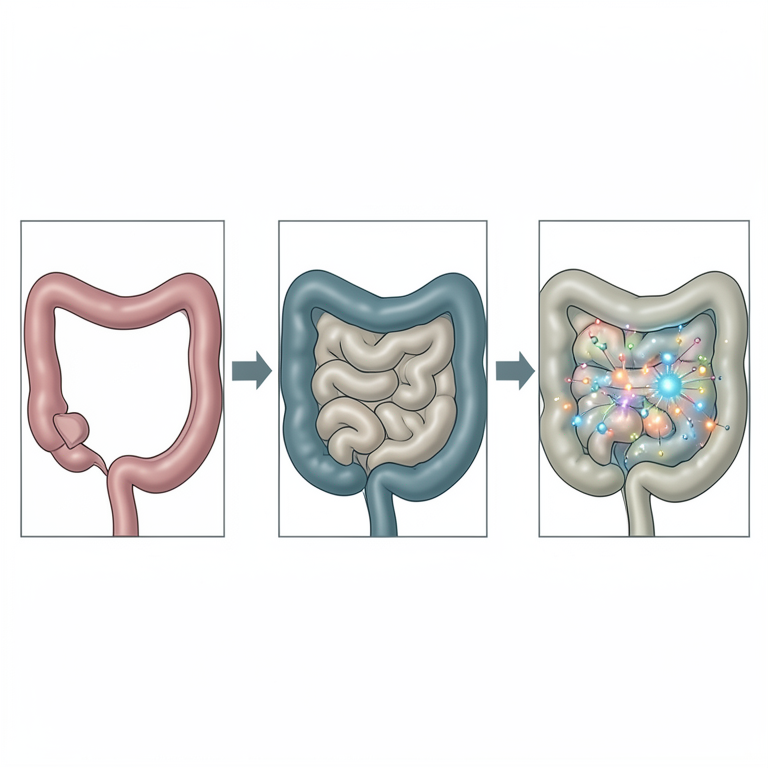
Dose-Response of Fasting Windows
AI-generated conceptual illustration (mammalian gastrointestinal tract). It explains the idea and does not show study data.
View source evidence ↗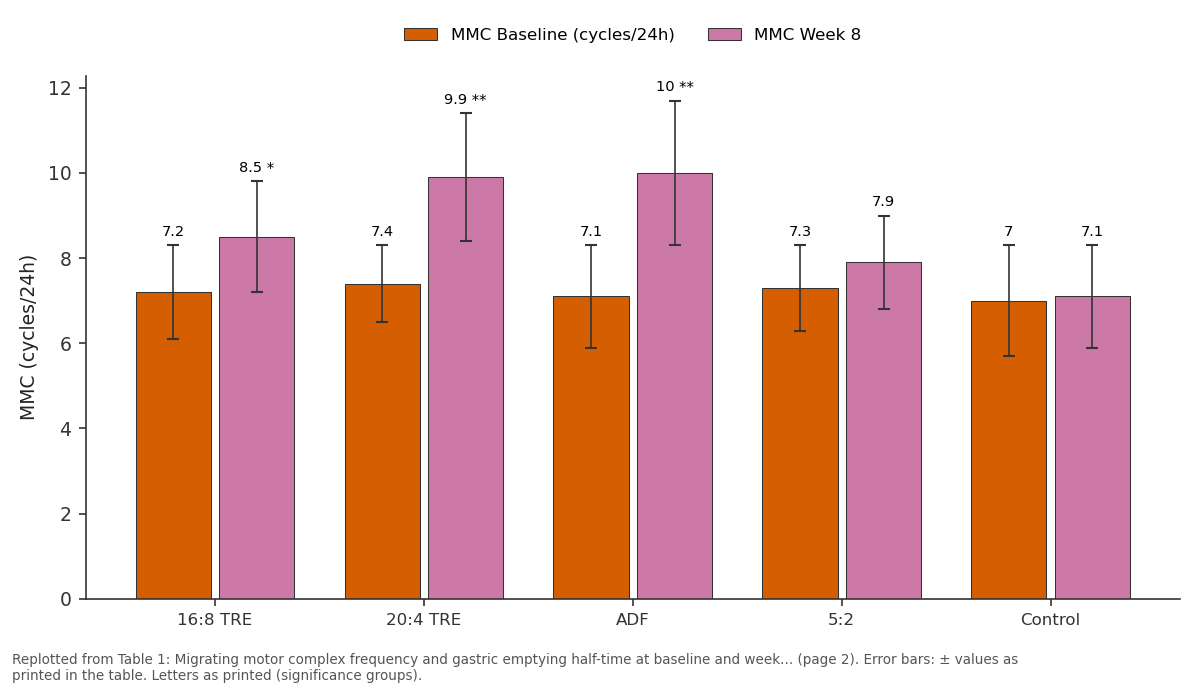
MMC Baseline (cycles/24h) and MMC Week 8: 16:8 TRE vs 20:4 TRE vs ADF vs 5:2 vs Control
Replotted from Table 1 (page 2) of the original paper. Every bar is the paper's own table value.
View source evidence ↗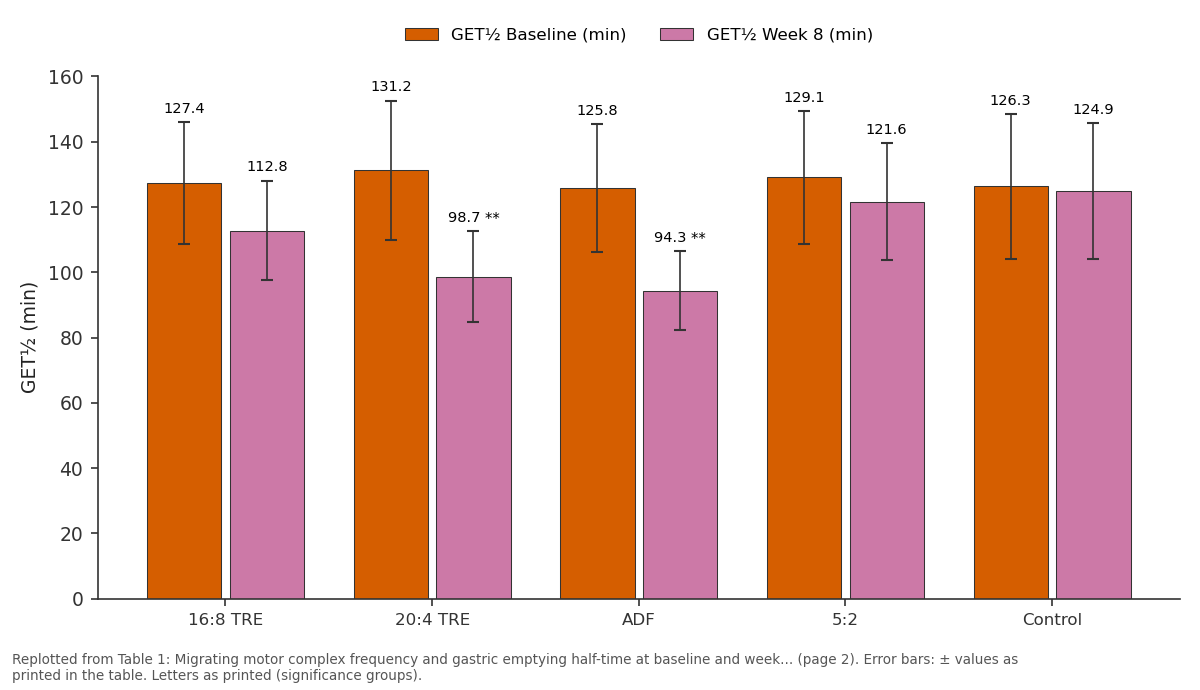
GET½ Baseline (min) and GET½ Week 8 (min): 16:8 TRE vs 20:4 TRE vs ADF vs 5:2 vs Control
Replotted from Table 1 (page 2) of the original paper. Every bar is the paper's own table value.
View source evidence ↗Figures & tables
From the original paper Table 1
 Table 2
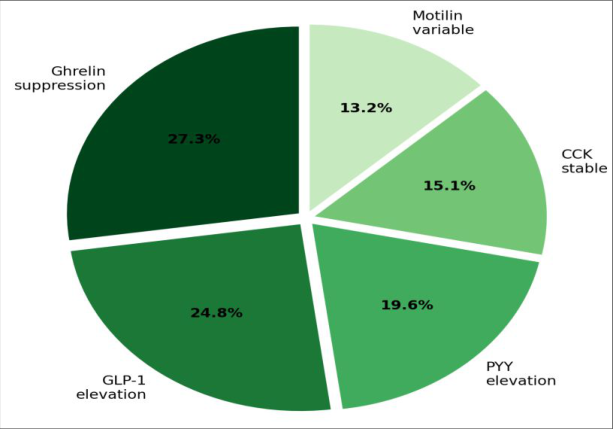 Figure 1
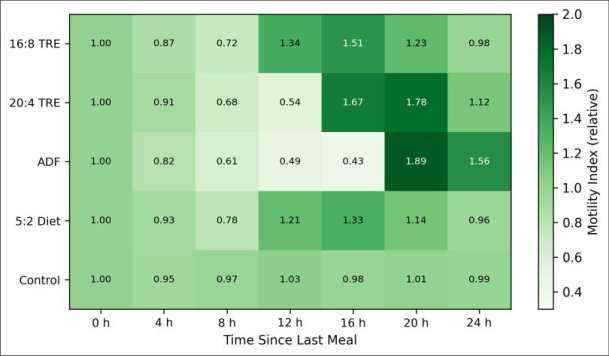 Figure 2
Introduction
A 2023 survey across six European countries found that roughly one in three adults had tried intermittent fasting at least once in the preceding twelve months [1] . Despite this popularity, most clinical trials have focused on body weight, insulin sensitivity, and lipid profiles, while the gut itself-the organ most directly affected by meal timing-has received comparatively little attention [2] . The migrating motor complex, a cyclical pattern of contractile activity that sweeps the stomach and small intestine during fasting, serves as a housekeeping mechanism that clears residual food particles and bacteria between meals [3] . Gut hormones act as molecular messengers linking nutrient sensing in the lumen to central appetite circuits. Ghrelin, released mainly from gastric oxyntic cells, peaks before anticipated meals and falls sharply upon eating [4] . Conversely, GLP-1 and PYY, secreted by ileal Lcells, rise postprandially and suppress further intake [5] . How these hormones respond when the feeding window is compressed or meals are skipped entirely on alternate days has not been systematically mapped. Earlier work showed that a single 24-h fast could double the MMC frequency in healthy men [6] , but whether this effect persists or attenuates over weeks of habitual fasting wasn't clear. Similarly, short-term ghrelin elevations during a fast are well documented [7] , yet the chronic adaptation of ghrelin secretory rhythms under different IF schedules has not been compared head-to-head. This research aimed to fill that gap by tracking motility and five key gut hormones across four widely practised IF protocols over an eight-week intervention period.
Ethical Considerations
The protocol was reviewed and approved by the Ethics Committee of the Schwarzwald University of Ecology, Freiburg (reference EC-SWU-2022-018, approved 14 March 2022). All participants gave written informed consent after a detailed briefing on wireless capsule procedures, blood sampling, and potential discomforts associated with extended fasting. Participants were free to withdraw at any point. Data were anonymised at enrolment and stored on encrypted servers compliant with EU General Data Protection Regulation requirements.
Material and Methods
Material and Methods
Material
Forty healthy adults (BMI 20.1-27.4 kg/m²) were recruited from the university campus and surrounding community between April and June 2022. Exclusion criteria included diagnosed gastrointestinal disorders, use of prokinetic or antisecretory medication, pregnancy, and shift-work schedules. All laboratory analyses were conducted at the Gastrointestinal Physiology Unit, Department of Systems Physiology, Schwarzwald University of Ecology, Freiburg, Germany. Wireless motility capsules (SmartPill™, Medtronic, Minneapolis, MN) were used to record intraluminal pH, pressure, and transit time. Hormone assays were performed using commercially available ELISA kits: ghrelin (Millipore EZGRA-88K), active GLP-1 (Merck EGLP-35K), total PYY (Millipore EZHPYYT66K), CCK-8 (Phoenix EK-069-04), and motilin (Phoenix EK-069-06).
Methods
Participants were randomly allocated to one of four IF arms (n = 8 each) or control (n = 8) using block randomisation stratified by sex. At weeks 0, 4, and 8, each subject swallowed a motility capsule after an overnight fast and wore a portable data receiver for 72 hours. Blood samples were drawn from an indwelling forearm cannula at two-hour intervals from 06:00 to 22:00 on the same assessment days, centrifuged within 30 minutes, and plasma was stored at -80 °C until batch analysis. MMC cycles were identified from pressure tracings as propagating phase-III contractions exceeding 40 mmHg [8] . Gastric emptying half-time (GET½) was extracted from the capsule's pH transition profile. Hormone concentrations were log-transformed before analysis. Mixed-effects models with time, group, and their interaction as fixed effects and participant as random intercept were fitted in R v4.3.1 using the lme4 package [9] . Post-hoc pairwise comparisons applied the Bonferroni correction, and significance was set at α = 0.05. The heatmap reveals that the ADF group experienced the deepest motility suppression during hours 8-16 (index 0.43-0.49) followed by the strongest rebound at hour 20 (index 1.89). By contrast, the control arm remained near unity at all time-points, confirming that meal regularity maintains a flat motility profile.
Results
Results
Discussion
The main finding of this research is that longer daily fasting windows produce progressively stronger remodelling of both gastrointestinal motility and enteroendocrine signalling. The 20:4 TRE and ADF protocols drove MMC frequency upward by roughly a third, consistent with the classical observation that phase-III activity is a fasting phenomenon [3] . What had not been shown before was that this effect persists and even intensifies over eight weeks of habitual practice, suggesting a genuine resetting of the enteric pacemaker network rather than a transient response.
The amplified GLP-1 and PYY responses in the ADF group are clinically interesting because both hormones act as satiety signals at the level of the hypothalamus and brainstem [5,10] . If longer fasting periods train the gut to release more anorexigenic peptides upon refeeding, this could partly explain the weight-loss outcomes reported in ADF trials without deliberate caloric restriction [11] . CCK showed only a modest trend, possibly because CCK secretion depends more on meal fat content than on fasting duration [12] . One unexpected observation was the earlier phase-shift of ghrelin peaks in all fasting arms. Rather than simply getting larger, the ghrelin surge moved forward to anticipate the new feeding window within just four weeks, pointing to rapid entrainment of the oxyntic-cell clock [13] . This shift may underlie the commonly reported reduction in perceived hunger that many people experience once they adapt to an IF routine.
Clinical Implications
These results suggest that 20:4 TRE and ADF can meaningfully reshape digestive physiology, an effect that clinicians managing functional dyspepsia or gastroparesis might consider when counselling patients on meal timing. However, individuals prone to disordered eating should be screened before prescribing any IF protocol, because the exaggerated ghrelin oscillations documented here could intensify binge-purge cycles in vulnerable individuals.
Conclusion
Eight weeks of intermittent fasting reshaped gastrointestinal motility and gut hormone secretion in a dose-dependent manner, with longer fasting windows producing larger effects. The ADF and 20:4 TRE protocols increased MMC frequency by over 34%, accelerated gastric emptying, and amplified postprandial GLP-1 release, while the milder 5:2 schedule produced negligible motility changes. Ghrelin secretory rhythms adapted rapidly, shifting their peak to anticipate the new feeding window within four weeks. These findings give a physiological basis for the appetiteregulation benefits often attributed to IF and identify motility and hormone profiling as useful endpoints for future IF trials. Longer interventions with larger sample sizes and clinical populations are needed to confirm whether these adaptive changes persist and translate into durable metabolic improvement.
Acknowledgement
Acknowledgements Funding SourcesThis research was supported by departmental funds from the Schwarzwald University of Ecology. Institutional SupportThe authors acknowledge the Gastrointestinal Physiology Unit for providing capsule telemetry equipment and coldstorage facilities. Contributions Not Qualifying for AuthorshipMs. Katrin Bauer assisted with blood sample processing and ELISA plate preparation.
Figures and tables from the paper
| Group | MMC Baseline (cycles/24h) | MMC Week 8 | GET½ Baseline (min) | GET½ Week 8 (min) |
|---|---|---|---|---|
| 16:8 TRE | 7.2±1.1 | 8.5±1.3* | 127.4±18.6 | 112.8±15.3 |
| 20:4 TRE | 7.4±0.9 | 9.9±1.5** | 131.2±21.4 | 98.7±13.8** |
| ADF | 7.1±1.2 | 10.0±1.7** | 125.8±19.7 | 94.3±12.1** |
| 5:2 | 7.3±1.0 | 7.9±1.1 | 129.1±20.3 | 121.6±17.9 |
| Control | 7.0±1.3 | 7.1±1.2 | 126.3±22.1 | 124.9±20.8 |
Table text extracted from the original PDF; superscript letters are shown inline. The original table image is below.
View original table image
| Hormone | 16:8 TRE | 20:4 TRE | ADF | 5:2 | Control |
|---|---|---|---|---|---|
| Ghrelin (fasting) | 487.3±62 | 534.1±71 | 561.8±79 | 472.6±58 | 441.2±53 |
| GLP-1 (peak) | 38.4±6.1 | 44.7±7.3 | 49.2±8.8 | 36.1±5.9 | 34.8±5.4 |
| PYY (peak) | 112.7±19 | 128.4±22 | 137.9±25 | 108.3±17 | 104.1±16 |
| CCK (peak) | 8.7±1.4 | 9.1±1.6 | 9.4±1.8 | 8.3±1.3 | 8.1±1.2 |
| Motilin (fasting) | 267.1±41 | 312.8±48 | 298.4±44 | 254.6±38 | 243.9±35 |
Table text extracted from the original PDF; superscript letters are shown inline. The original table image is below.
View original table image
References
19 in the original paper- Schuppelius B, Peters R, Ottawa A, Alkalay D. Timerestricted eating: a systematic review on effects and feasibility in prevention and treatment of obesity. Nutrients. 2021;13(3):821.
- Patterson RE, Sears DD. Metabolic effects of intermittent fasting. Annual Review of Nutrition. 2017;37:371-393.
- Deloose E, Janssen P, Depoortere I, Tack J. The migrating motor complex: control mechanisms and its role in health and disease. Nature Reviews Gastroenterology and Hepatology. 2012;9(5):271-285.
- Cummings DE, Purnell JQ, Frayo RS, et al. A preprandial rise in plasma ghrelin levels suggests a role International Journal of Biology Sciences https://www.biologyjournal.net in meal initiation in humans. Diabetes. 2001;50(8):1714-1719.
- Holst JJ. The physiology of glucagon-like peptide 1. Physiological Reviews. 2007;87(4):1409-1439.
- Luiking YC, van der Reijden AC, van Berge Henegouwen GP, Akkermans LMA. Migrating motor complex cycle duration is determined by gastric or duodenal origin of phase III. American Journal of Physiology. 1998;275(6):G1246-G1251.
- Natalucci G, Riedl S, Gleiss A, Zidek T, Frisch H. Spontaneous 24-h ghrelin secretion pattern in fasting subjects. Journal of Clinical Endocrinology and Metabolism. 2005;90(8):4836-4841.
- Camilleri M, Chedid V, Ford AC, et al. Gastroparesis. Nature Reviews Disease Primers. 2018;4(1):41.
- Bates D, Mächler M, Bolker B, Walker S. Fitting linear mixed-effects models using lme4. Journal of Statistical Software. 2015;67(1):1-48.
- De Silva A, Bloom SR. Gut hormones and appetite control: a focus on PYY and GLP-1 as therapeutic targets in obesity. Gut and Liver. 2012;6(1):10-20.
- Varady KA, Cienfuegos S, Ezpeleta M, Gabel K. Clinical application of intermittent fasting for weight loss: progress and future directions. Nature Reviews Endocrinology. 2022;18(5):309-321.
- Dockray GJ. Cholecystokinin. Current Opinion in Endocrinology, Diabetes and Obesity. 2012;19(1):8-12.
- LeSauter J, Hoque N, Weintraub M, Pfaff DW, Silver R. Stomach ghrelin-secreting cells as food-entrainable circadian clocks. Proceedings of the National Academy of Sciences. 2009;106(32):13582-13587.
- Stengel A, Taché Y. Ghrelin-a pleiotropic hormone secreted from endocrine X/A-like cells of the stomach. Frontiers in Neuroscience. 2012;6:24.
- Gill S, Panda S. A smartphone app reveals erratic diurnal eating patterns in humans that can be modulated for health benefits. Cell Metabolism. 2015;22(5):789798.
- Moro T, Tinsley G, Bianco A, et al. Effects of eight weeks of time-restricted feeding (16/8) on basal metabolism, maximal strength, body composition, inflammation, and cardiovascular risk factors in resistance-trained males. Journal of Translational Medicine. 2016;14:290.
- Jamshed H, Beyl RA, Della Manna DL, et al. Early time-restricted feeding improves 24-hour glucose levels and affects markers of the circadian clock, aging, and autophagy in humans. Nutrients. 2019;11(6):1234.
- Lund MT, Taudorf L, Hartmann B, et al. Meal induced gut hormone secretion is altered in aerobically trained compared to sedentary young healthy males. European Journal of Applied Physiology. 2013;113(11):27372747.
- Panda S. Circadian physiology of metabolism. Science. 2016;354(6315):1008-1015.