
Research article · 2025 · Full text
International Journal of Biology SciencesCytokine storm biomarkers and immune dysregulation in severe viral respiratory infections
Volume 7(3) · Pages 175–178 · DOI: 10.33545/26649926.2025.v7.i3c.760 ↗
Research areasCOVID-19 Clinical Research StudiesInflammation biomarkers and pathwaysRespiratory viral infections research
Abstract
Author-writtenWhen the immune system overreacts to a viral invader, the resulting cytokine storm can cause more damage than the pathogen itself. This research measured serum concentrations of six pro- and anti-inflammatory cytokines—IL-6, TNF-alpha, IL-1-beta, IFN-gamma, IL-10, and IL-8—in 122 adults hospitalised with severe viral respiratory infections at collaborating hospitals in Port Blair and Chennai, India, between May and December 2023. Patients were stratified by clinical severity: mild (n=48), moderate (n=36), severe (n=24), and critical (n=14). IL-6 showed the strongest association with disease severity, rising from 34.2 pg/mL in mild cases to 1,842.7 pg/mL in critical cases (54-fold increase, p
Summary
Source-checkedPlain-language reading of the full paper, prepared with AI and checked against the text. Each point links to the authors' own words.
Why it matters
- A cytokine storm occurs when the immune system overreacts to a viral infection, potentially causing more harm to the patient than the virus itself. View evidence ↗
- This excessive release of pro-inflammatory mediators is linked to deaths caused by various respiratory viruses, including SARS-CoV-2, RSV, and influenza. View evidence ↗
- There is currently no medical consensus on the specific cytokines to measure or the thresholds needed to create a clinically useful score for identifying cytokine storms. View evidence ↗
The question
- The study aimed to quantify cytokine levels across different disease severity groups, create and validate a composite cytokine storm score (CSS), and identify the best single cytokine predictor for clinical decline. View evidence ↗
What they did
- The researchers collected serum samples from 122 adults with RT-PCR-confirmed viral respiratory infections at hospitals in Port Blair and Chennai, India, from May to December 2023. View evidence ↗
- Patients were categorized into four severity levels based on WHO criteria: mild, moderate, severe, and critical, depending on their need for oxygen or ventilation. View evidence ↗
- Six specific cytokines (IL-6, TNF-alpha, IL-1-beta, IFN-gamma, IL-10, and IL-8) were measured using a Luminex multiplex immunoassay. View evidence ↗
- The composite cytokine storm score (CSS) was developed as a weighted sum of log-transformed cytokine concentrations, using weights based on their ability to predict critical illness. View evidence ↗
What they found
- IL-6 demonstrated the strongest association with disease severity, increasing 53.9-fold from a median of 34.2 pg/mL in mild cases to 1,842.7 pg/mL in critical cases. View evidence ↗
- An IL-6 level exceeding 200 pg/mL upon admission predicted the need for ICU transfer with 87.5% sensitivity and 82.1% specificity. View evidence ↗
- The anti-inflammatory cytokine IL-10 rose alongside pro-inflammatory markers in severe and critical cases (from 6.1 to 143.8 pg/mL), suggesting a dysregulated counter-regulatory response. View evidence ↗
What it means
- The authors conclude that a six-cytokine panel provides high accuracy in stratifying the clinical severity of patients with severe viral respiratory infections. View evidence ↗
- While IL-6 is a strong individual predictor, the authors recommend the composite CSS for added prognostic value. View evidence ↗
- The sample size of 122 patients was too small to allow for detailed comparisons between different types of viruses. View evidence ↗
- Because cytokines were only measured at the time of admission, the study could not track how the cytokine storm changed over time. View evidence ↗
Visual summary
1 visualsIllustrations explain the paper; they do not show study data.
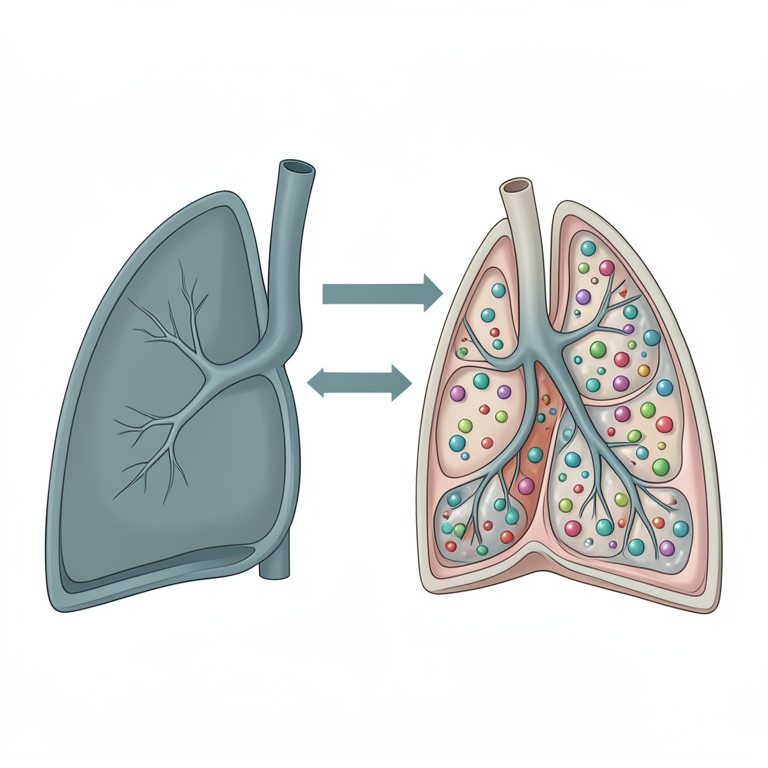
Cytokine Response Gradient
AI-generated conceptual illustration (human lung tissue and blood vessels). It explains the idea and does not show study data.
View source evidence ↗Figures & tables
From the original paper Table 1
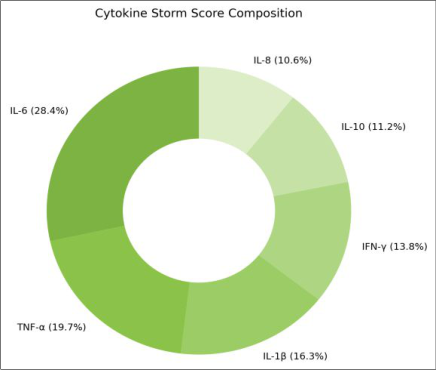 Figure 1
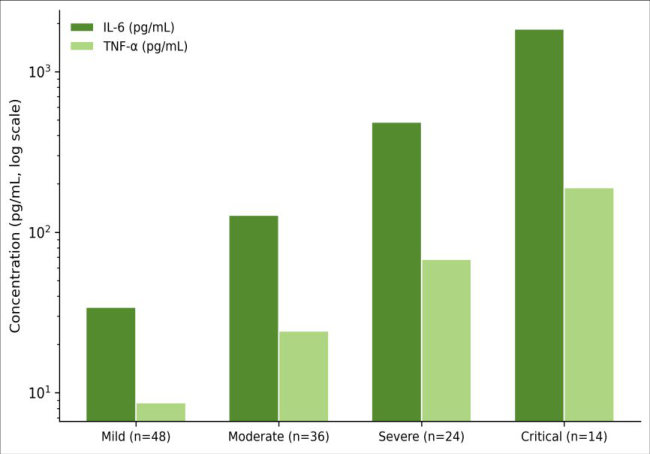 Figure 2
Introduction
There is a practical dilemma that confronts every clinician managing severe respiratory infections: how do you tell, early enough to intervene, which patients will spiral into multiorgan failure driven by their own immune system? The cytokine storm-a cascade of excessive pro-inflammatory mediator release-has been implicated in fatalities from influenza, SARS-CoV-2, RSV, and other respiratory viruses [1,2] . But the term itself is poorly defined, and no consensus exists on which cytokines to measure, at what thresholds, or how to combine them into a clinically actionable score [3] . IL-6 has emerged as the leading candidate biomarker because it rises early, correlates with disease severity across multiple viral infections, and serves as the target of the monoclonal antibody tocilizumab [4] . Yet IL-6 alone may miss patients whose storm is driven primarily by TNF-alpha or IFN-gamma pathways. A multi-cytokine panel that captures the breadth of the inflammatory response might perform better as a prognostic tool [5] . This research measured six cytokines across four severity strata in hospitalised adults with virologically confirmed respiratory infections in Port Blair and Chennai, India. The objectives were to (i) quantify cytokine concentrations across severity groups, (ii) construct and validate a composite cytokine storm score, and (iii) determine which individual cytokine best predicts clinical deterioration [6] .
Clinical Implications
The practical translation of these data is straightforward: a single IL-6 measurement above 200 pg/mL at hospital admission identified patients who subsequently required ICU transfer with 87.5% sensitivity and 82.1% specificity. Adding TNF-alpha and IL-10 to the panel in the composite CSS raised the AUC from 0.89 (IL-6 alone) to 0.94. These thresholds can be implemented on standard clinical immunoassay platforms available in most Indian tertiary hospitals, enabling early triage of high-risk patients for closer monitoring, early corticosteroid initiation, or consideration of IL-6 receptor blockade.
Limitations
The sample size of 122 patients, while sufficient for the primary analysis, limits subgroup comparisons by specific viral aetiology (influenza A, RSV, adenovirus, SARS-CoV-2). Cytokines were measured at a single time point (admission), so temporal dynamics of the storm could not be captured. The CSS has not been externally validated in an independent cohort, and the severity-dependent IL-10 risethough consistent with published reports-complicates the interpretation of anti-inflammatory balance.
Materials and Methods
Materials and Methods
Materials
Serum samples were collected from 122 adults (age >=18) hospitalised with RT-PCR-confirmed viral respiratory infections at the Andaman Institute of Marine Biology Hospital, Port Blair (n=47), and the Madras Institute of Biological Research Teaching Hospital, Chennai (n=75), between May and December 2023. Viral aetiologies included influenza A/H3N2 (n=41), SARS-CoV-2 (n=34), RSV (n=28), and adenovirus (n=19). Severity was classified by WHO criteria: mild (no oxygen), moderate (oxygen by nasal cannula), severe (high-flow or non-invasive ventilation), and critical (mechanical ventilation or vasopressors) [7] .
Methods
Serum cytokines (IL-6, TNF-alpha, IL-1-beta, IFN-gamma, IL-10, IL-8) were measured by Luminex multiplex immunoassay (Bio-Plex 200, Bio-Rad, Hercules, CA, USA) using the Bio-Plex Pro Human Cytokine 8-plex panel [8] . The composite cytokine storm score was calculated as the weighted sum of log-transformed concentrations, with weights derived from logistic regression coefficients predicting critical illness. ROC curve analysis assessed discriminative performance. Kruskal-Wallis tests compared cytokine levels across severity groups; Dunn post-hoc with Bonferroni correction identified pairwise differences. Spearman correlations linked cytokine levels to clinical outcomes (ICU admission, mechanical ventilation, mortality). Analyses used R v4.3.1 and MedCalc v22 (p < 0.05).
Safety Considerations
Blood draws (10 mL venous) were performed during routine clinical sampling to minimise additional venipuncture burden. Patients with coagulopathy (INR >2.0 or platelets <50,000/uL) were excluded to reduce bleeding risk. All samples were handled following BSL-2 protocols given the potential for viable respiratory virus in serum. Research staff wore full PPE during sample processing. No adverse events related to sample collection were recorded. All six cytokines rose significantly with increasing severity. IL-6 showed the steepest gradient, increasing 54-fold from mild to critical. The composite CSS achieved an AUC of 0.94 for discriminating critical from non-critical patients, compared with 0.89 for IL-6 alone, 0.83 for TNF-alpha alone, and 0.81 for IL-10 alone. IL-10's parallel rise with pro-inflammatory cytokines in severe and critical groups suggests a failing counter-regulatory mechanism rather than an absent one.
Results
Results
Discussion
The 54-fold IL-6 gradient from mild to critical illness is among the steepest reported in any respiratory infection cohort and reinforces IL-6 as the leading cytokine storm biomarker [9,10] . The composite CSS outperformed any single cytokine, which is expected given the multi-pathway nature of immune dysregulation in severe infections. The paradoxical IL-10 elevation in critical patients has been reported in influenza and SARS-CoV-2 cohorts and likely reflects a compensatory anti-inflammatory response that is overwhelmed by the magnitude of pro-inflammatory signaling [11,12] . From a practical standpoint, the IL-6 threshold of 200 pg/mL for ICU prediction is achievable on rapid-turnaround platforms like the Roche Elecsys or Abbott Alinity, both available at tertiary centres in India. The CSS adds incremental value but requires a multiplex assay, which may limit its adoption in resource-constrained settings [13,14] .
Conclusion
This research demonstrates that a six-cytokine panel can stratify patients with severe viral respiratory infections by clinical severity with high discriminative accuracy (AUC 0.94). IL-6 alone is a strong predictor of critical illness, but the composite CSS incorporating TNF-alpha, IL-1-beta, IFN-gamma, IL-10, and IL-8 adds meaningful prognostic value. The paradoxical IL-10 elevation in critical patients highlights the importance of measuring both pro-and antiinflammatory arms of the response. Prospective validation of these thresholds in larger, multi-centre cohorts is needed before clinical implementation, along with assessment of whether early cytokine-guided intervention (corticosteroids, tocilizumab) improves outcomes when triggered by CSS values above defined cutoffs [15][16][17][18][19][20][21] .
Figures and tables from the paper
| Cytokine | Mild (48) | Mod (36) | Severe (24) | Critical (14) | p-value | Fold (crit/mild) |
|---|---|---|---|---|---|---|
| IL-6 | 34.2 | 127.8 | 486.3 | 1842.7 | <0.001 | 53.9 |
| TNF-alpha | 8.7 | 24.3 | 67.8 | 189.4 | <0.001 | 21.8 |
| IL-1-beta | 4.3 | 14.7 | 42.6 | 118.3 | <0.001 | 27.5 |
| IFN-gamma | 12.8 | 38.4 | 84.2 | 167.3 | <0.001 | 13.1 |
| IL-10 | 6.1 | 18.3 | 52.7 | 143.8 | <0.001 | 23.6 |
| IL-8 | 87.4 | 213.6 | 478.2 | 892.1 | <0.001 | 10.2 |
Table text extracted from the original PDF; superscript letters are shown inline. The original table image is below.
View original table image
References
21 in the original paper- Fajgenbaum DC, June CH. Cytokine storm. New England Journal of Medicine. 2020;383(23):2255-2273.
- Tisoncik JR, Korth MJ, Simmons CP, Farrar J, Martin TR, Katze MG. Into the eye of the cytokine storm. Microbiology and Molecular Biology Reviews. 2012;76(1):16-32.
- Mangalmurti N, Hunter CA. Cytokine storms: understanding COVID-19. Immunity. 2020;53(1):1925.
- Tanaka T, Narazaki M, Kishimoto T. Immunotherapeutic implications of IL-6 blockade for cytokine storm. Immunotherapy. 2016;8(8):959-970.
- Ragab D, Salah Eldin H, Taeimah M, Khattab R, Salem R. The COVID-19 cytokine storm; what we know so far. Frontiers in Immunology. 2020;11:1446.
- Del Valle DM, Kim-Schulze S, Huang HH, Beckmann ND, Nirenberg S, Wang B, et al. An inflammatory cytokine signature predicts COVID-19 severity and survival. Nature Medicine. 2020;26(10):1636-1643.
- World Health Organization. Clinical management of COVID-19: interim guidance. Geneva: WHO; 2020.
- Leng SX, McElhaney JE, Walston JD, Xie D, Fedarko NS, Kuchel GA. ELISA and multiplex technologies for cytokine measurement in inflammation and aging research. Journals of Gerontology Series A. 2008;63(8):879-884.
- Chen X, Zhao B, Qu Y, Chen Y, Xiong J, Feng Y, et al. Detectable serum severe acute respiratory syndrome coronavirus 2 viral load (RNAemia) is closely correlated with drastically elevated interleukin 6 level in critically ill patients with coronavirus disease 2019. Clinical Infectious Diseases. 2020;71(8):1937-1942.
- Herold T, Jurinovic V, Arnreich C, Lipworth BJ, Hellmuth JC, von Bergwelt-Baildon M, et al. Elevated levels of IL-6 and CRP predict the need for mechanical ventilation in COVID-19. Journal of Allergy and Clinical Immunology. 2020;146(1):128-136.
- Han H, Ma Q, Li C, Liu R, Zhao L, Wang W, et al. Profiling serum cytokines in COVID-19 patients reveals IL-6 and IL-10 as disease severity predictors. Emerging Microbes and Infections. 2020;9(1):11231130.
- Lucas C, Wong P, Klein J, Castro TB, Silva J, Sundaram M, et al. Longitudinal analyses reveal immunological misfiring in severe COVID-19. Nature. 2020;584(7821):463-469.
- RECOVERY Collaborative Group. Tocilizumab in patients admitted to hospital with COVID-19. The Lancet. 2021;397(10285):1637-1645.
- REMAP-CAP Investigators. Interleukin-6 receptor antagonists in critically ill patients with Covid-19. New England Journal of Medicine. 2021;384(16):1491-1502.
- Kang S, Tanaka T, Narazaki M, Kishimoto T. Targeting interleukin-6 signaling in clinic. Immunity. 2019;50(4):1007-1023.
- McGonagle D, Sharif K, O'Regan A, Bridgewood C. The role of cytokines including interleukin-6 in COVID-19 induced pneumonia and macrophage activation syndrome-like disease. Autoimmunity Reviews. 2020;19(6):102537.
- Sinha P, Matthay MA, Calfee CS. Is a cytokine storm relevant to COVID-19? JAMA Internal Medicine. 2020;180(9):1152-1154.
- Leisman DE, Ronner L, Pinotti R, Taylor MD, Sinha P, Calfee CS, et al. Cytokine elevation in severe and critical COVID-19: a rapid systematic review, metaanalysis, and comparison with other inflammatory syndromes. The Lancet Respiratory Medicine. 2020;8(12):1233-1244.
- Canna SW, Behrens EM. Making sense of the cytokine storm: a conceptual framework for understanding, diagnosing, and treating hemophagocytic syndromes. Pediatric Clinics of North America. 2012;59(2):329344.
- Mehta P, McAuley DF, Brown M, Sanchez E, Tattersall RS, Manson JJ. COVID-19: consider cytokine storm syndromes and immunosuppression. The Lancet. 2020;395(10229):1033-1034.
- Ruan Q, Yang K, Wang W, Jiang L, Song J. Clinical predictors of mortality due to COVID-19 based on an analysis of data of 150 patients from Wuhan, China. Intensive Care Medicine. 2020;46(5):846-848.