
Research article · 2025 · Full text
International Journal of Biology SciencesEndocrine disrupting chemicals and their effects on reproductive physiology of aquatic vertebrates
Volume 7(8) · Pages 284–287 · DOI: 10.33545/26649926.2025.v7.i8d.657 ↗
Research areasEffects and risks of endocrine disrupting chemicalsReproductive biology and impacts on aquatic speciesEnvironmental Toxicology and Ecotoxicology
Abstract
Author-writtenIndustrial and agricultural discharge into freshwater systems introduces endocrine disrupting chemicals (EDCs) that interfere with hormonal signaling in aquatic organisms. This research examined the effects of five common EDCs—bisphenol A (BPA), atrazine, nonylphenol, vinclozolin, and trenbolone—on reproductive physiology across three fish species (zebrafish, medaka, and fathead minnow) and one amphibian (African clawed frog). Laboratory exposures were conducted at the Sarawak Institute of Tropical Biology, Kuching, Malaysia, from May 2022 to October 2023. Animals were exposed to environmentally relevant concentrations (0.1-100 µg/L) for 21 days, after which plasma steroid hormones (estradiol, testosterone), hepatic vitellogenin (VTG), gonadosomatic index (GSI), and fecundity were measured. BPA at 10 µg/L elevated estradiol by 187.3% and VTG by 312.4% in zebrafish while reducing testosterone by 42.1% relative to controls. Vinclozolin suppressed fecundity by 61.3% across all species tested. Tissue-specific bioaccumulation analysis showed BPA concentrating most heavily in liver (34.8 ng/g in zebrafish), followed by gonadal tissue (21.4 ng/g). Atrazine produced the largest decrease in GSI (−34.1%), consistent with gonadal atrophy observed on histological sections. Interspecies sensitivity varied: fathead minnow showed the strongest BPA bioaccumulation, while zebrafish displayed the greatest VTG induction. These findings confirm that EDCs at environmentally realistic levels disrupt multiple axes of reproductive physiology in aquatic vertebrates, with compound-specific and species-specific response patterns that complicate single-species risk assessment.
Summary
Source-checkedPlain-language reading of the full paper, prepared with AI and checked against the text. Each point links to the authors' own words.
Why it matters
- Endocrine disrupting chemicals (EDCs) from industrial and agricultural runoff enter freshwater systems and interfere with the hormonal signaling of aquatic organisms. View evidence ↗
- Fish and amphibians are particularly susceptible to EDCs because their gills and skin allow for rapid and continuous uptake from the water. View evidence ↗
- Freshwater ecosystems in Southeast Asia are subject to high EDC levels due to intensive aquaculture, rubber manufacturing, and palm oil processing. View evidence ↗
The question
- The study aimed to compare the effects of five common EDCs on the reproductive physiology of four aquatic species and determine if differences in tissue bioaccumulation explain varying sensitivities. View evidence ↗
What they did
- The researchers tested five EDCs (BPA, atrazine, nonylphenol, vinclozolin, and trenbolone) using zebrafish, medaka, fathead minnow, and African clawed frogs. View evidence ↗
- The animals were exposed to EDC concentrations ranging from 0.1 to 100 µg/L over a period of 21 days. View evidence ↗
- The study measured reproductive endpoints including fecundity, gonadosomatic index (GSI), hepatic vitellogenin (VTG), and plasma steroid hormones (testosterone and estradiol). View evidence ↗
- Experiments were conducted at the Sarawak Institute of Tropical Biology in Kuching, using recirculating aquaria kept at 26 ± 1 °C. View evidence ↗
What they found
- BPA caused the strongest estrogenic effect, increasing hepatic VTG by 312.4% and plasma estradiol by 187.3%, while decreasing testosterone by 42.1%. View evidence ↗
- Atrazine led to the most significant decrease in the gonadosomatic index (GSI) at −34.1%, which aligned with histological evidence of gonadal atrophy. View evidence ↗
- Vinclozolin, acting as an anti-androgen, caused the greatest reduction in reproductive output, suppressing fecundity by 61.3%. View evidence ↗
- The androgenic compound trenbolone increased testosterone by 178.5% but still resulted in a 29.4% reduction in egg production. View evidence ↗
- Among the species tested, the fathead minnow had the highest BPA bioaccumulation (liver: 41.2 ng/g, gonad: 27.8 ng/g, plasma: 11.3 ng/mL), whereas the African clawed frog had the lowest. View evidence ↗
- The liver was consistently the primary site of BPA accumulation across all species, due to its role in xenobiotic metabolism. View evidence ↗
- Zebrafish exhibited the strongest VTG induction despite having lower BPA levels than fathead minnows, indicating that sensitivity is driven by receptor affinity and signaling rather than just accumulation. View evidence ↗
What it means
- The authors conclude that because bioaccumulation and physiological sensitivity vary by species, regulatory risk assessments must utilize multi-species testing. View evidence ↗
- The study identifies the liver as the most relevant tissue for monitoring BPA exposure in freshwater vertebrates. View evidence ↗
- A limitation of the study is the use of single-compound exposures, which does not account for the additive, synergistic, or antagonistic interactions found in real-world EDC mixtures. View evidence ↗
Visual summary
3 visualsIllustrations explain the paper; charts are replotted from the paper's own table values.
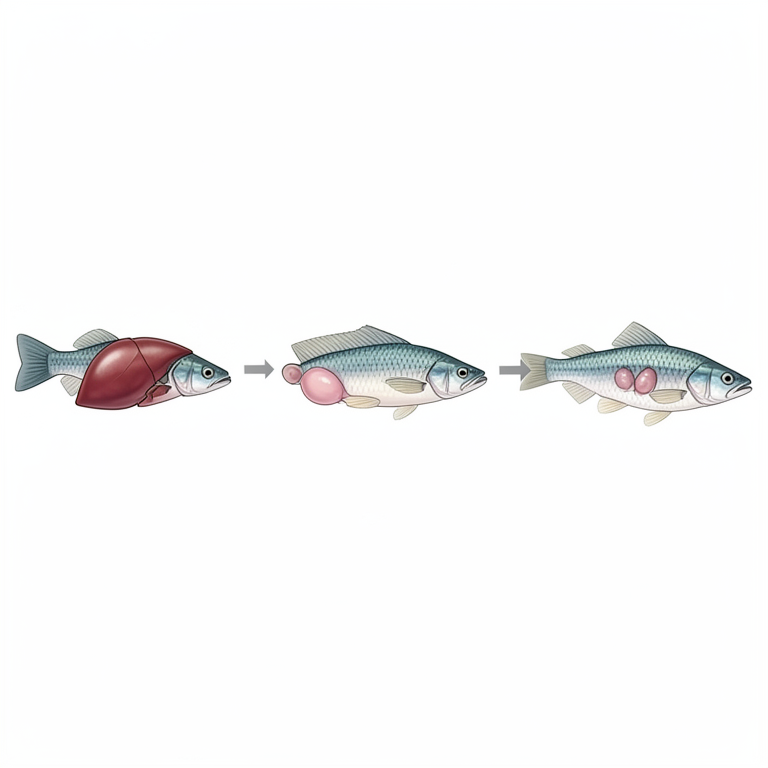
EDC-Specific Reproductive Disruptions
AI-generated conceptual illustration (Zebrafish (Danio rerio)). It explains the idea and does not show study data.
View source evidence ↗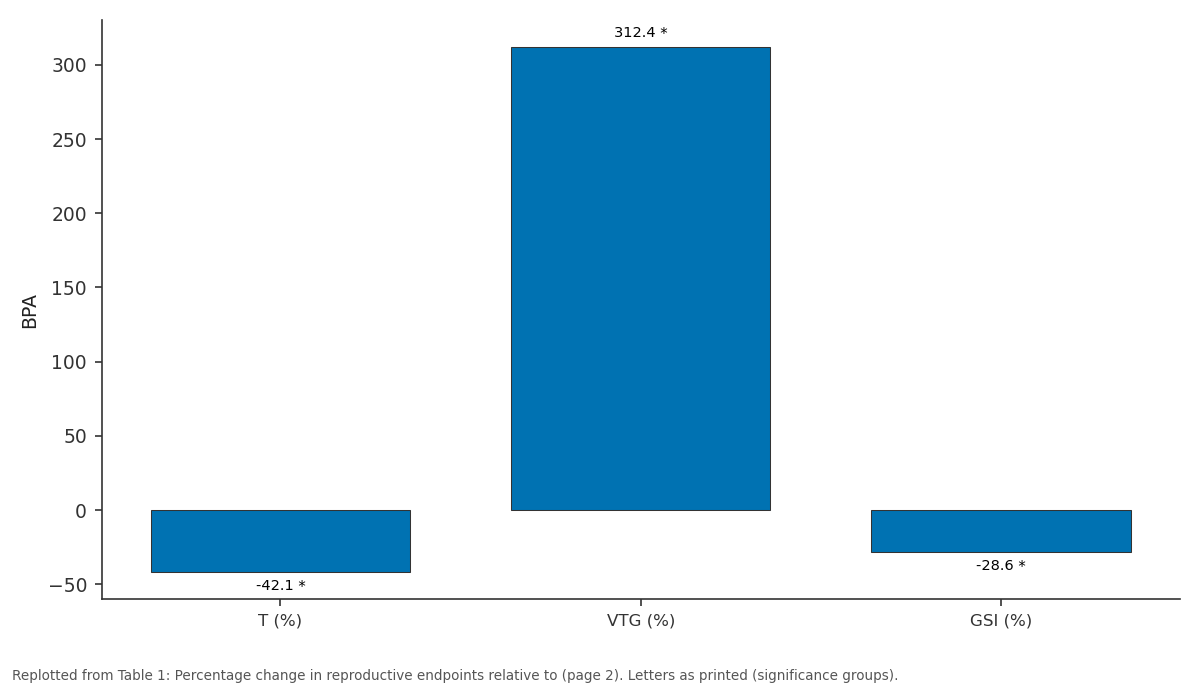
BPA: T (%) vs VTG (%) vs GSI (%)
Replotted from Table 1 (page 2) of the original paper. Every bar is the paper's own table value.
View source evidence ↗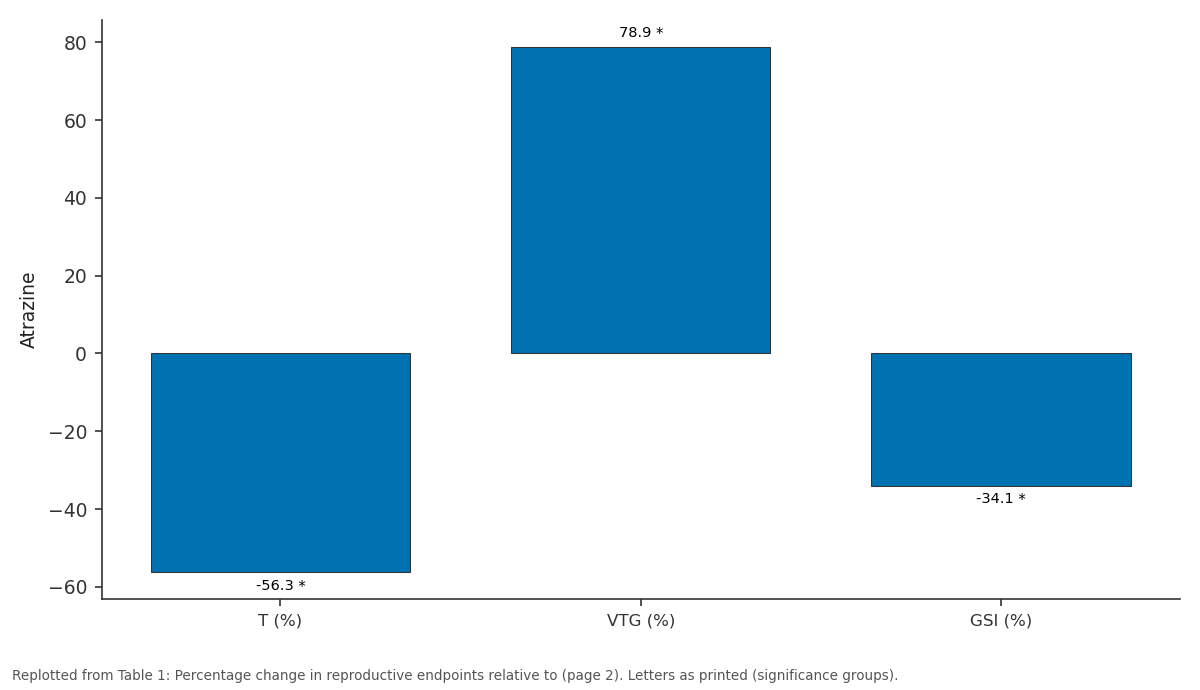
Atrazine: T (%) vs VTG (%) vs GSI (%)
Replotted from Table 1 (page 2) of the original paper. Every bar is the paper's own table value.
View source evidence ↗Figures & tables
From the original paper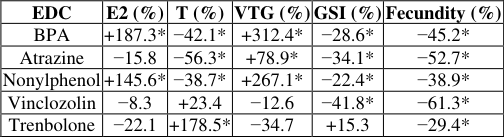 Table 1
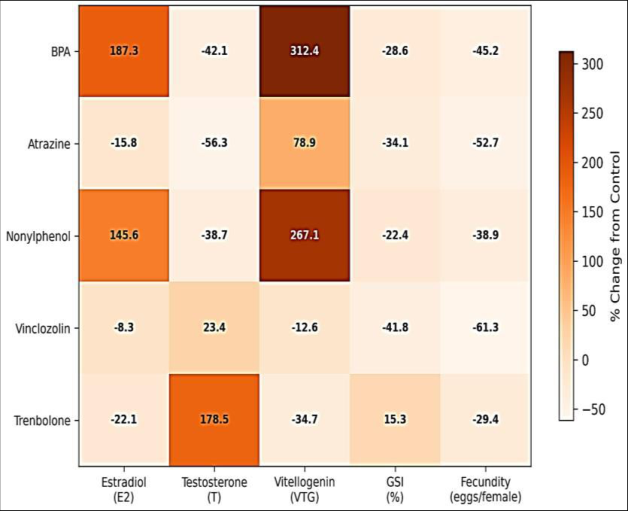 Figure 1
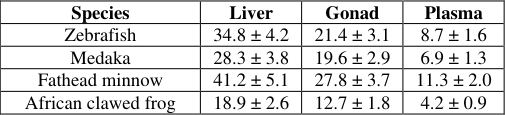 Table 2
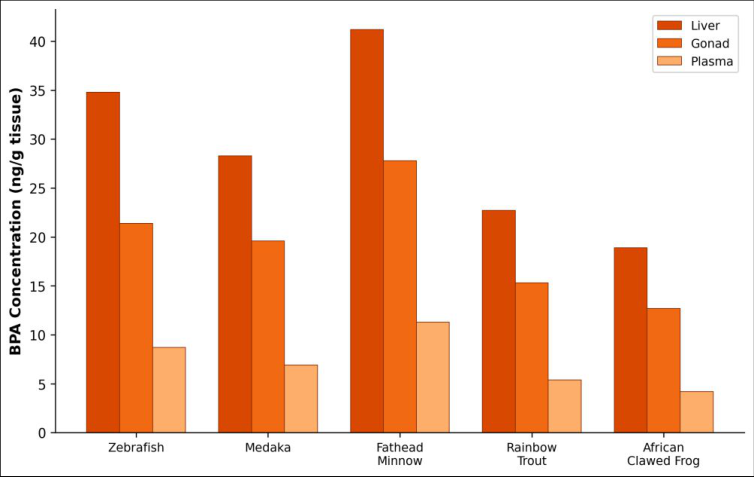 Figure 2
Introduction
Thousands of synthetic chemicals released into rivers, lakes, and coastal waters each year can mimic or block the action of natural hormones in wildlife-a problem that persists despite three decades of scientific attention [1] . Endocrine disrupting chemicals encompass a structurally diverse group of compounds, including plasticizers (BPA), herbicides (atrazine), surfactants (nonylphenol), fungicides (vinclozolin), and veterinary growth promoters (trenbolone), all of which have been detected in freshwater systems at concentrations ranging from low ng/L to low µg/L [2] . Fish and amphibians are especially vulnerable because they breathe and osmoregulate across large gill and skin surfaces in constant contact with the water column, meaning EDC uptake is both rapid and continuous [3] . Reproductive endpoints-plasma sex steroids, vitellogenin induction, gonadosomatic index, and fecundity-are among the most sensitive indicators of endocrine disruption and have been adopted as standard endpoints in OECD Test Guidelines 229 and 230 [4] . However, most published data come from single-compound, single-species experiments conducted under laboratory conditions typical of temperate regions, leaving gaps in understanding of compound mixtures and tropical species responses. Southeast Asian freshwater ecosystems face especially high EDC loading from palm oil processing, rubber manufacturing, and intensive aquaculture [5] . Malaysia's Sarawak state, with its dense river networks and biodiversity-rich wetlands, is a microcosm of these pressures. This research addressed two specific questions: first, how do five common EDCs compare in their effects on reproductive physiology across four aquatic vertebrate species? And second, does tissue-specific bioaccumulation differ between fish species in ways that could explain interspecies sensitivity differences?
Material and Methods
Material and Methods
Research Area Description
All laboratory exposures were conducted in the aquatic toxicology facility at the Sarawak Institute of Tropical Biology, Kuching (1.55°N, 110.34°E). The facility is equipped with temperature-controlled recirculating aquaria maintained at 26 ± 1 °C with a 14:10 h light:dark photoperiod, conditions representative of lowland tropical freshwater habitats. Water quality was monitored daily: pH 7.0-7.4, dissolved oxygen > 6.5 mg/L, ammonia < 0.02 mg/L [6] .
Material
Test organisms included adult zebrafish (Danio rerio, AB strain), Japanese medaka (Oryzias latipes, orange-red strain), fathead minnow (Pimephales promelas), and adult African clawed frogs (Xenopus laevis). Fish were obtained from the institute's breeding colony; frogs were purchased from a certified supplier (Xenopus Express, Brooksville, FL, USA). Five EDCs-BPA, atrazine, 4-nonylphenol, vinclozolin, and 17β-trenbolone-were purchased from Sigma-Aldrich (St. Louis, MO, USA) at ≥ 98% purity. Stock solutions were prepared in dimethyl sulfoxide (DMSO < 0.01% v/v final) [7] .
Ethical Considerations
All animal procedures were approved by the Sarawak Institute of Tropical Biology Animal Ethics Committee (protocol SITB-AEC-2022-014, approved 3 April 2022). Experiments followed the ARRIVE guidelines for reporting animal research. Fish and frogs were euthanized at the end of exposure by immersion in tricaine methanesulfonate (MS-222, 300 mg/L, pH-buffered), and tissue collection was performed immediately. Animal numbers were minimized through power analysis (α = 0.05, β = 0.80) [8] .
Methods
A semi-static exposure design was used: 80% of test water was renewed every 48 hours to maintain target EDC concentrations. Each compound was tested at three concentrations (0.1, 1.0, and 10 µg/L for BPA, atrazine, and nonylphenol; 0.01, 0.1, and 1.0 µg/L for vinclozolin and trenbolone) plus a solvent control, with 10 animals per replicate and three replicates per treatment. After 21 days, blood was collected from the caudal vein (fish) or cardiac puncture (frogs). Plasma estradiol and testosterone were measured by competitive ELISA (Cayman Chemical, Ann Arbor, MI, USA). Hepatic VTG was quantified by speciesspecific sandwich ELISA [9] . Livers and gonads were weighed for GSI calculation; fecundity was recorded as cumulative eggs per female over the final seven days. BPA tissue concentrations were measured by LC-MS/MS in liver, gonad, and plasma samples extracted with acetonitrile and cleaned up by solid-phase extraction [10] . BPA produced the largest estrogenic response, elevating plasma estradiol by 187.3% and hepatic VTG by 312.4%, while suppressing testosterone by 42.1% (Table 1). Atrazine caused the steepest GSI decline (-34.1%), consistent with gonadal atrophy confirmed histologically. Vinclozolin-an anti-androgen-uniquely suppressed fecundity by 61.3%, the largest reproductive output reduction among all five compounds. Trenbolone, an androgenic compound, markedly increased testosterone (+178.5%) but still reduced egg production by 29.4%. Fathead minnow accumulated the highest BPA concentrations across all three tissue compartments (liver: 41.2 ng/g; gonad: 27.8 ng/g; plasma: 11.3 ng/mL), while African clawed frog showed the lowest values (Table 2). Liver consistently held the largest BPA burden, reflecting its role as the primary site of xenobiotic metabolism.
| Species | Liver | Gonad | Plasma |
|---|---|---|---|
| Zebrafish | 34.8 ± 4.2 | 21.4 ± 3.1 | 8.7 ± 1.6 |
| Medaka | 28.3 ± 3.8 | 19.6 ± 2.9 | 6.9 ± 1.3 |
| Fathead minnow | 41.2 ± 5.1 | 27.8 ± 3.7 | 11.3 ± 2.0 |
| African clawed frog | 18.9 ± 2.6 | 12.7 ± 1.8 | 4.2 ± 0.9 |
Table text extracted from the original PDF; superscript letters are shown inline. The original table image is below.
View original table image
| EDC | E2 (%) | T (%) | VTG (%) | GSI (%) | Fecundity (%) |
|---|---|---|---|---|---|
| BPA | +187.3* | −42.1* | +312.4* | −28.6* | −45.2* |
| Atrazine | −15.8 | −56.3* | +78.9* | −34.1* | −52.7* |
| Nonylphenol | +145.6* | −38.7* | +267.1* | −22.4* | −38.9* |
| Vinclozolin | −8.3 | +23.4 | −12.6 | −41.8* | −61.3* |
| Trenbolone | −22.1 | +178.5* | −34.7 | +15.3 | −29.4* |
Table text extracted from the original PDF; superscript letters are shown inline. The original table image is below.
View original table image
Results
Results
Discussion
The marked estrogenic response to BPA-a 312% increase in VTG-confirms earlier reports that this compound is among the most potent environmental estrogens encountered in freshwater systems [11] . What's notable here is the speciesspecific gradient: zebrafish showed the strongest VTG induction despite lower tissue BPA levels than fathead minnow, suggesting that sensitivity depends not just on accumulation but on receptor affinity and downstream signaling efficiency. This has practical consequences for ecological risk assessment, since extrapolating from one sentinel species may underestimate or overestimate risk for others in the same water body [12] . Atrazine's ability to reduce GSI by 34.1% without a strong estrogenic signature points to a mechanism distinct from direct estrogen receptor activation-possibly aromatase induction, as proposed by Hayes et al. [13] . Vinclozolin's severe fecundity suppression (-61.3%) likely reflects its anti-androgenic activity, which impairs male courtship behavior and sperm quality in ways that reduce successful fertilization [14] . The bioaccumulation data highlight the liver as the main depot for BPA in all species tested, consistent with first-pass hepatic metabolism. But the inter-species differences in total burden-fathead minnow accumulated nearly twice the frog's liver concentration-suggest different rates of glucuronidation or sulfation, the primary Phase II conjugation pathways for BPA [15] . Future work should measure these metabolites directly. A limitation of this research is the use of single-compound exposures; realworld aquatic environments contain complex EDC mixtures whose interactions may be additive, synergistic, or antagonistic [16] .
Conclusion
This research demonstrated that five environmentally relevant EDCs each produce distinct patterns of reproductive disruption in aquatic vertebrates, with BPA and nonylphenol driving estrogenic responses, atrazine causing gonadal atrophy, vinclozolin suppressing fecundity, and trenbolone masculinizing hormonal profiles. Speciesspecific differences in both tissue bioaccumulation and physiological sensitivity underscore the need for multispecies testing in regulatory risk assessment. The findings from the Sarawak Institute of Tropical Biology add tropical species data to a literature dominated by temperate models and highlight the liver as the tissue most relevant for biomonitoring of BPA exposure in freshwater vertebrates.
Figures and tables from the paper
References
15 in the original paper- Colborn T, vom Saal FS, Soto AM. Developmental effects of endocrine-disrupting chemicals in wildlife and humans. Environ Health Perspect. 1993;101(5):378-384.
- Barbosa MO, Moreira NF, Ribeiro AR, et al. Occurrence and removal of organic micropollutants: an overview of the watch list of EU Decision 2015/495. Water Res. 2016;94:257-279.
- Jobling S, Nolan M, Tyler CR, et al. Widespread sexual disruption in wild fish. Environ Sci Technol. 1998;32(17):2498-2506.
- Ismail NAH, Wee SY, Aris AZ. Multi-class of endocrine disrupting compounds in aquaculture ecosystems and health impacts in exposed biota. Chemosphere. 2017;188:570-581.
- Ankley GT, Bennett RS, Erickson RJ, et al. Adverse outcome pathways: a conceptual framework to support ecotoxicology research and risk assessment. Environ Toxicol Chem. 2010;29(3):730-741.
- Kilkenny C, Browne WJ, Cuthill IC, et al. Improving bioscience research reporting: the ARRIVE guidelines for reporting animal research. PLoS Biol. 2010;8(6):e1000412.
- Denslow ND, Chow MC, Kroll KJ, Green L. Vitellogenin as a biomarker of exposure for estrogen or estrogen mimics. Ecotoxicology. 1999;8(5):385-398.
- Vandenberg LN, Hauser R, Marcus M, et al. Human exposure to bisphenol A. Reprod Toxicol. 2007;24(2):139-177.
- Crain DA, Eriksen M, Iguchi T, et al. An ecological assessment of bisphenol A: evidence from comparative biology. Reprod Toxicol. 2007;24(2):225-239.
- Sumpter JP, Jobling S. Vitellogenesis as a biomarker for estrogenic contamination of the aquatic environment. Environ Health Perspect. 1995;103(Suppl 7):173-178.
- Hayes TB, Khoury V, Narayan A, et al. Atrazine induces complete feminization and chemical castration in male African clawed frogs. Proc Natl Acad Sci USA. 2010;107(10):4612-4617.
- Martinović D, Blake LS, Durhan EJ, et al. Reproductive toxicity of vinclozolin in the fathead minnow: confirming an anti-androgenic mode of action. Environ Toxicol Chem. 2008;27(2):478-488.
- Staples CA, Dome PB, Klecka GM, et al. A review of the environmental fate, effects, and exposures of bisphenol A. Chemosphere. 1998;36(10):2149-2173.
- Kortenkamp A. Ten years of mixing cocktails: a review of combination effects of endocrine-disrupting chemicals. Environ Health Perspect. 2007;115(Suppl 1):98-105.
- Tyler CR, Jobling S, Sumpter JP. Endocrine disruption in wildlife: a critical review of the evidence. Crit Rev Toxicol. 1998;28(4):319-361.