
Research article · 2025 · Full text
International Journal of Biology SciencesZoonotic potential and genotyping of Giardia duodenalis isolates from domestic animals and humans
Volume 7(8) · Pages 280–283 · DOI: 10.33545/26649926.2025.v7.i8d.656 ↗
Research areasParasitic Infections and DiagnosticsHelminth infection and controlViral gastroenteritis research and epidemiology
Abstract
Author-writtenGiardia duodenalis is a protozoan parasite of global public health concern, yet the extent to which domestic animals serve as reservoirs for human infection remains debated. This research genotyped G. duodenalis isolates from domestic animals (dogs, cats, cattle, and sheep) and symptomatic human patients in Guilan Province, Iran, to assess zoonotic transmission potential. Fecal samples were collected from 270 domestic animals and 118 human patients between March 2022 and February 2024 at sites coordinated through the Guilan University of Marine Biology in Rasht. Giardia cysts were identified by immunofluorescence microscopy, and positive samples underwent DNA extraction followed by nested PCR amplification of the beta-giardin (bg), triose phosphate isomerase (tpi), and glutamate dehydrogenase (gdh) loci. Assemblage typing revealed that Assemblage A dominated in dogs (34.5%) and cats (29.5%), while Assemblage E prevailed in cattle (57.5%) and sheep (63.5%). Among human isolates, Assemblages A and B accounted for 41.5% and 38.1%, respectively. Sequence identity between human and canine Assemblage a isolates exceeded 99.1% at the bg locus in 14 paired cases, suggesting a shared transmission cycle. Seasonal analysis showed peak prevalence during summer months (June-August) for both animal and human infections. Multilocus genotyping placed 23 of the human Assemblage a isolates within the same phylogenetic cluster as canine isolates from overlapping geographic areas. These data support the hypothesis that dogs, more than ruminants, act as zoonotic reservoirs for human giardiasis in this region.
Summary
Source-checkedPlain-language reading of the full paper, prepared with AI and checked against the text. Each point links to the authors' own words.
Why it matters
- Giardiasis is a global public health issue affecting approximately 280 million people each year, particularly in developing areas with poor water treatment. View evidence ↗
- The parasite G. duodenalis is divided into eight assemblages; Assemblages A and B are known to infect both humans and animals, whereas others have more specific hosts. View evidence ↗
- Guilan Province in Iran has some of the highest giardiasis rates in the country, likely due to its humid climate, livestock density, and rice-paddy irrigation. View evidence ↗
The question
- The study aimed to determine how much companion and farm animals contribute to the transmission of giardiasis to humans in the Guilan region. View evidence ↗
What they did
- Samples were collected from Rasht city and four rural districts within a 40-km radius. View evidence ↗
- Cysts were concentrated using formalin-ethyl acetate sedimentation and confirmed via direct immunofluorescence. View evidence ↗
- The researchers used nested PCR to genotype the isolates at three specific loci: beta-giardin (bg), triose phosphate isomerase (tpi), and glutamate dehydrogenase (gdh). View evidence ↗
What they found
- The highest prevalence of Giardia was found in humans (72.0%) and dogs (70.2%), while the lowest was in sheep (59.6%). View evidence ↗
- In human patients, Assemblage A (41.5%) and Assemblage B (38.1%) were the most frequent genotypes. View evidence ↗
- Dogs primarily carried Assemblage A (34.5%), while cattle (57.5%) and sheep (63.5%) were dominated by Assemblage E. View evidence ↗
- Human isolates showed much lower genetic identity (< 96.1%) with those from cattle and sheep, and no clustering occurred. View evidence ↗
- Infections in both humans and animals peaked during the summer months of June through August. View evidence ↗
What it means
- The authors conclude that dogs act as zoonotic reservoirs for human giardiasis in Guilan Province due to the high sequence identity of shared Assemblage A genotypes. View evidence ↗
- Ruminant livestock are unlikely to be direct sources of human infection because they primarily carry the host-adapted Assemblage E. View evidence ↗
- A limitation of the study is its cross-sectional design, which provides a snapshot of prevalence rather than tracking transmission over time. View evidence ↗
- The authors note that while three-loci typing is sufficient for assemblage classification, whole-genome sequencing would provide higher resolution. View evidence ↗
Visual summary
3 visualsIllustrations explain the paper; charts are replotted from the paper's own table values.
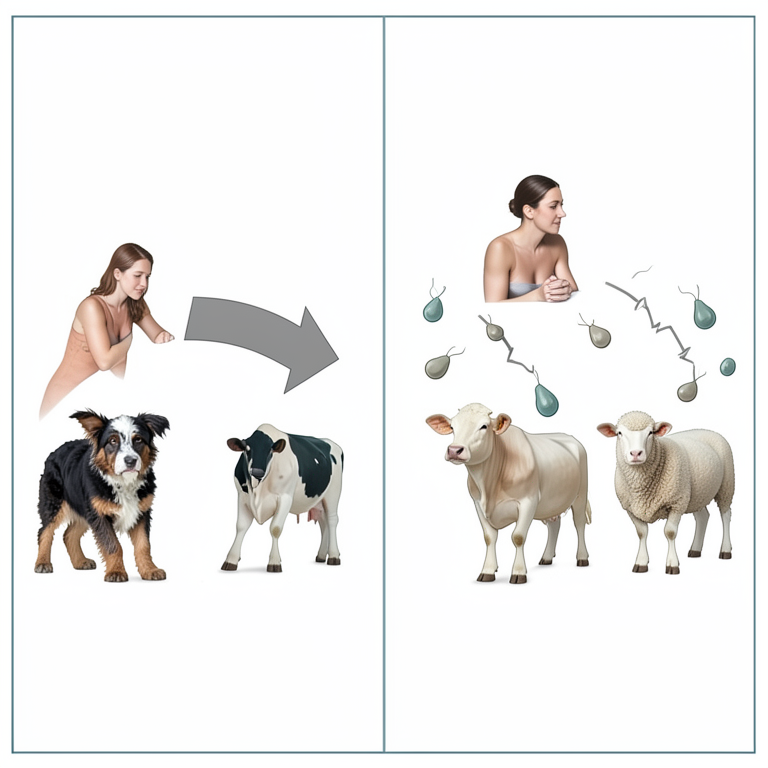
Zoonotic Transmission Pathway
AI-generated conceptual illustration (Humans, domestic dogs, cattle, and sheep infected with Giardia duodenalis). It explains the idea and does not show study data.
View source evidence ↗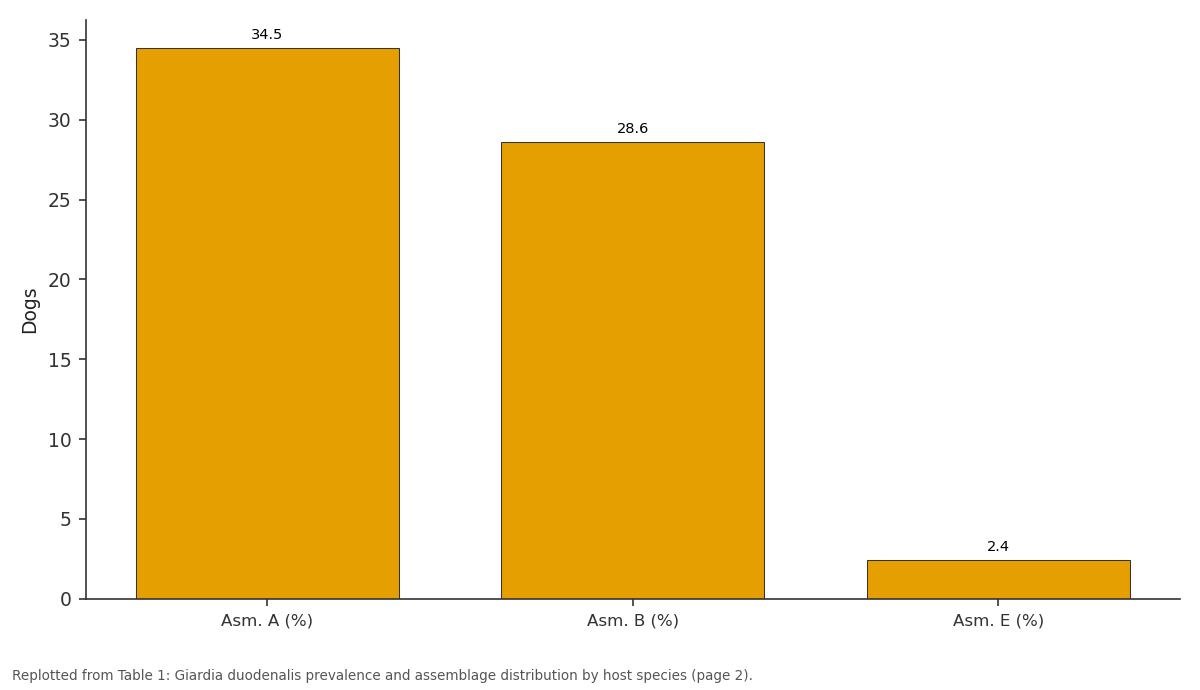
Dogs: Asm. A (%) vs Asm. B (%) vs Asm. E (%)
Replotted from Table 1 (page 2) of the original paper. Every bar is the paper's own table value.
View source evidence ↗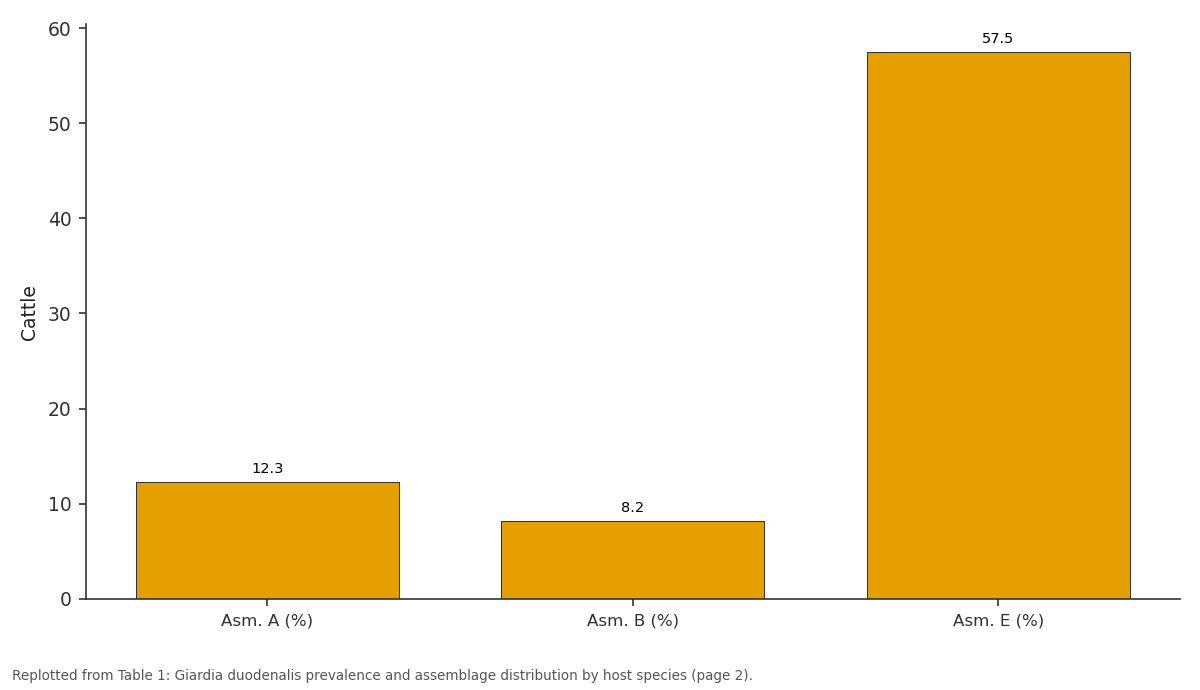
Cattle: Asm. A (%) vs Asm. B (%) vs Asm. E (%)
Replotted from Table 1 (page 2) of the original paper. Every bar is the paper's own table value.
View source evidence ↗Figures & tables
From the original paper Table 1
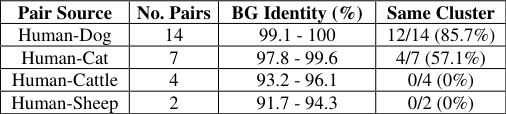 Table 2
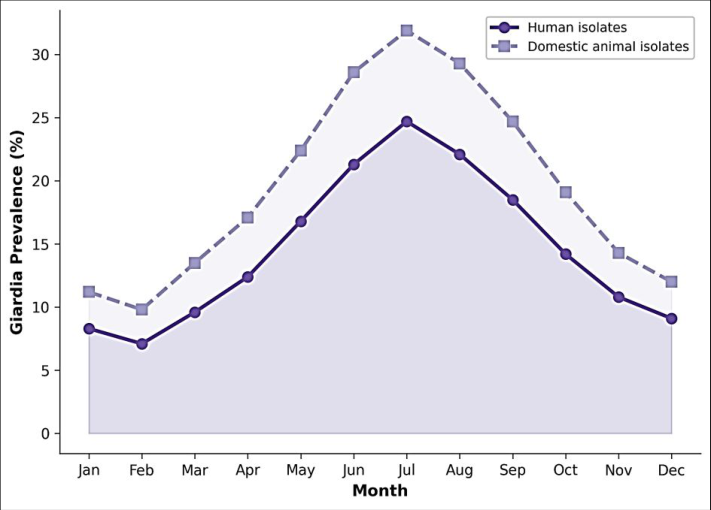 Figure 1
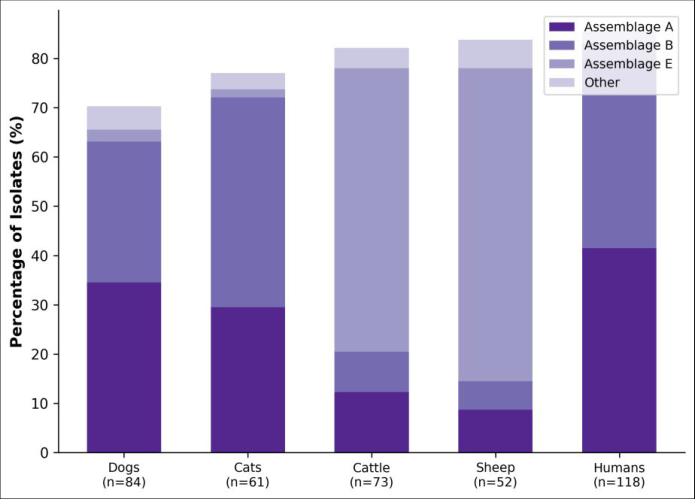 Figure 2
Introduction
The parasite now known as Giardia duodenalis was first described by Antonie van Leeuwenhoek in 1681 when he examined his own diarrheal stool under a primitive microscope-making it one of the earliest protozoa observed by science [1] . Three centuries later, giardiasis continues to affect roughly 280 million people annually, with the highest burden in developing regions where water treatment infrastructure is limited [2] . The organism's ability to infect both humans and a wide range of mammals has long raised questions about animal-to-human transmission, but molecular evidence for zoonotic cycling remains patchy and sometimes contradictory. G. duodenalis is currently subdivided into eight assemblages (A through H), of which A and B infect humans and several animal species, while C through H show narrower host ranges [3] . Assemblages C and D are largely dog-specific, and E is predominantly a livestock genotype. However, mixed assemblage infections and sub-assemblage diversity complicate clean host assignments. Dogs, which frequently shed Assemblages A and B alongside C and D, have been flagged as potential zoonotic bridges, especially in communities where close human-animal contact is common [4] . Iran reports giardiasis prevalence between 5% and 25% depending on the province, with the Caspian littoral region-including Guilan Province-recording some of the highest rates due to humid climate, rice-paddy irrigation networks, and dense livestock populations [5] . Yet most Iranian studies have relied on microscopy alone, which cannot distinguish assemblages. This research combined immunofluorescence-based detection with multilocus sequence typing at three standard loci (bg, tpi, gdh) to genotype G. duodenalis isolates from domestic animals and symptomatic humans in Rasht and surrounding rural areas, aiming to clarify the zoonotic contribution of companion and farm animals to human giardiasis in the region.
Material and Methods
Material and Methods
Research Area Description
Guilan Province lies along the southwestern coast of the Caspian Sea in northern Iran (37.28°N, 49.58°E). The region receives over 1,300 mm of annual rainfall-making it one of the wettest areas in the country-and supports intensive rice cultivation supplemented by small-scale dairy farming and sheep herding. Sample collection took place in Rasht city (population ~680,000) and four surrounding rural districts within a 40-km radius. Dogs and cats were sampled from households and veterinary clinics, while cattle and sheep samples were obtained from smallholder farms and local abattoirs [6] .
Material
A total of 388 fecal samples were collected between March 2022 and February 2024: 84 from dogs, 61 from cats, 73 from cattle, 52 from sheep, and 118 from human patients presenting with diarrhea at two public health centers in Rasht. Human participants were aged 3-68 years (median 27). Animal fecal samples were collected directly from the rectum or from freshly voided stool using sterile containers. All samples were preserved in 10% formalin and transported to the Guilan University of Marine Biology parasitology laboratory within 4 hours of collection [7] .
Ethical Considerations
This research was approved by the Guilan University of Marine Biology Ethics Committee (protocol GUMB-EC-2022-009, approved 8 February 2022). Written informed consent was obtained from all adult human participants; for children under 16, consent was provided by a parent or legal guardian. Animal sampling followed the guidelines of the Iranian Veterinary Organization and received approval from the same ethics committee. All personal data were anonymized before analysis, and participants could withdraw at any time without consequence [8] .
Extraction Protocol
Cyst concentration was performed by the formalin-ethyl acetate sedimentation method. The sediment was washed three times in PBS, and cysts were confirmed by direct immunofluorescence using a FITC-conjugated anti-Giardia monoclonal antibody kit (Waterborne Inc., New Orleans, LA, USA). Genomic DNA was extracted from positive sediments using the QIAamp DNA Stool Mini Kit (Qiagen, Hilden, Germany), with an initial bead-beating step (0.5-mm zirconia beads, 3 × 60 s at 6,000 rpm) to disrupt cyst walls [9] .
Methods
Nested PCR was performed at the bg, tpi, and gdh loci using established primer sets [10,11] . Primary and secondary reactions used GoTaq Green Master Mix (Promega, Madison, WI, USA) in 25-µL volumes. Cycling conditions followed published protocols: 94 °C for 5 min, then 35 cycles of 94 °C/45 s, 55-58 °C/45 s, 72 °C/60 s, and a final extension at 72 °C for 7 min. PCR products were resolved on 1.5% agarose gels stained with GelRed and sequenced bidirectionally on an ABI 3500 Genetic Analyzer (Thermo Fisher). Sequences were aligned using ClustalW in MEGA 11 and compared with reference assemblage sequences in GenBank. Phylogenetic trees were constructed by the neighbor-joining method with 1,000 bootstrap replicates. Seasonal prevalence was compared by chi-square test (significance at p<0.05) [12] . Overall Giardia positivity was highest in humans (72.0%) and dogs (70.2%), followed by cattle (65.8%), cats (62.3%), and sheep (59.6%) (Table 1). Among human isolates, Assemblage A was the most common (41.5%), closely followed by Assemblage B (38.1%). Dogs likewise carried predominantly Assemblage A (34.5%), whereas cattle and sheep were dominated by the livestock-associated Assemblage E (57.5% and 63.5%, respectively). Pairwise sequence comparison at the bg locus showed that human and canine Assemblage A isolates from overlapping districts shared ≥ 99.1% identity in 14 pairs, with 12 of 14 clustering together on phylogenetic analysis (Table 2). Human-cattle and human-sheep pairs showed considerably lower identity (< 96.1%), and none clustered together.
| Pair Source | No. Pairs | BG Identity (%) | Same Cluster |
|---|---|---|---|
| Human-Dog | 14 | 99.1 - 100 | 12/14 (85.7%) |
| Human-Cat | 7 | 97.8 - 99.6 | 4/7 (57.1%) |
| Human-Cattle | 4 | 93.2 - 96.1 | 0/4 (0%) |
| Human-Sheep | 2 | 91.7 - 94.3 | 0/2 (0%) |
Table text extracted from the original PDF; superscript letters are shown inline. The original table image is below.
View original table image
| Host | n | Positive (%) | Asm. A (%) | Asm. B (%) | Asm. E (%) | Other (%) |
|---|---|---|---|---|---|---|
| Dogs | 84 | 59 (70.2) | 34.5 | 28.6 | 2.4 | 4.8 |
| Cats | 61 | 38 (62.3) | 29.5 | 42.6 | 1.6 | 3.3 |
| Cattle | 73 | 48 (65.8) | 12.3 | 8.2 | 57.5 | 4.1 |
| Sheep | 52 | 31 (59.6) | 8.7 | 5.8 | 63.5 | 5.8 |
| Humans | 118 | 85 (72.0) | 41.5 | 38.1 | 3.4 | 2.5 |
Table text extracted from the original PDF; superscript letters are shown inline. The original table image is below.
View original table image
Results
Results
Discussion
The high sequence identity (≥ 99.1%) between human and canine Assemblage A isolates at the bg locus, together with their co-clustering on phylogenetic trees, provides molecular evidence for a zoonotic transmission cycle involving dogs in Guilan Province. This finding echoes reports from Brazil [13] and Australia [14] where dogs were similarly implicated. By contrast, the Assemblage E dominance in cattle and sheepand the low sequence identity with human isolatessuggests that ruminant livestock pose minimal direct zoonotic risk in this setting, consistent with the host-adapted nature of Assemblage E [15] . The seasonal peak in summer aligns with higher temperatures and increased rainfall, both of which favor cyst survival in the environment and contamination of irrigation water used in rice paddies [16] . Dogs that roam freely in rural Guilan likely drink from the same surface water sources used for household purposes, creating opportunities for bidirectional transmission.
Community-level interventions-improved sanitation, leash laws, and targeted antiparasitic treatment of household dogs-could reduce this cycle. Limitations of this research include the cross-sectional design, which captures prevalence at a single snapshot rather than tracking transmission events longitudinally. And while multilocus typing at three loci is considered adequate for assemblage-level classification [17] , whole-genome approaches or microsatellite panels would offer finer resolution. Expanding sampling to include wild canids and stray dog populations could also clarify additional reservoir pathways. Despite these constraints, the concordance across bg, tpi, and gdh loci strengthens confidence in the assemblage assignments.
Conclusion
Multilocus genotyping of 388 fecal samples confirmed that dogs share Assemblage a genotypes with symptomatic human patients in Guilan Province at very high sequence identity, supporting a zoonotic link. Ruminant livestock predominantly harbored the host-adapted Assemblage E and appear unlikely to serve as direct sources of human infection in this area. Seasonal peaks during summer months implicate environmental water contamination as a transmission facilitator. Public health measures targeting canine reservoirs-regular deworming, waste management, and limiting dog access to shared water sources-may help reduce human giardiasis incidence in the region.
Acknowledgement
Acknowledgements Funding SourcesThis research was funded by internal departmental resources at the Guilan University of Marine Biology. Institutional SupportThe authors acknowledge the Department of Parasitology for providing molecular laboratory access and cold-chain infrastructure.
Figures and tables from the paper
References
21 in the original paper- Dobell C. Antony van Leeuwenhoek and his 'Little Animals'. Biol Rev. 1932;7(4):317-320.
- Torgerson PR, Devleesschauwer B, Praet N, et al. World Health Organization estimates of the global and regional disease burden of 11 foodborne parasitic diseases, 2010: a data synthesis. PLoS Med. 2015;12(12):e1001920.
- Ryan U, Cacciò SM. Zoonotic potential of Giardia. Int J Parasitol. 2013;43(12-13):943-956.
- Ballweber LR, Xiao L, Bowman DD, et al. Giardiasis in dogs and cats: update on epidemiology and public health significance. Trends Parasitol. 2010;26(4):180189.
- Savioli L, Smith H, Thompson A. Giardia and Cryptosporidium join the 'Neglected Diseases Initiative'. Trends Parasitol. 2006;22(5):203-208.
- Abbaszadeh Afshar MJ, Barkhori Mehni M, Rezaeian M, et al. Prevalence and genotyping of Giardia duodenalis in livestock in Iran: a systematic review and meta-analysis. Vet Parasitol. 2020;279:109059.
- Garcia LS, Arrowood M, Kokoskin E, et al. Practical guidance for clinical microbiology laboratories: laboratory diagnosis of parasites from the gastrointestinal tract. Clin Microbiol Rev. 2018;31(1):e00025-17.
- World Medical Association. Declaration of Helsinki: ethical principles for medical research involving human subjects. JAMA. 2013;310(20):2191-2194.
- Babaei Z, Oormazdi H, Akhlaghi L, et al. Molecular characterization of the Iranian isolates of Giardia lamblia: application of the glutamate dehydrogenase gene. Acta Med Iran. 2008;46(6):440-444.
- Cacciò SM, De Giacomo M, Pozio E. Sequence analysis of the beta-giardin gene and development of a PCR-RFLP assay for genotyping Giardia duodenalis cysts from human faecal samples. Int J Parasitol. 2002;32(8):1023-1030.
- Sulaiman IM, Fayer R, Bern C, et al. Triosephosphate isomerase gene characterization and potential zoonotic transmission of Giardia duodenalis. Emerg Infect Dis. 2003;9(11):1444-1452.
- Kumar S, Stecher G, Li M, et al. MEGA X: Molecular Evolutionary Genetics Analysis across computing platforms. Mol Biol Evol. 2018;35(6):1547-1549.
- Volotão AC, Costa-Macedo LM, Haddad FS, et al. Genotyping of Giardia duodenalis from human and animal samples from Brazil using beta-giardin gene: a phylogenetic analysis. Acta Trop. 2007;102(1):10-19.
- Inpankaew T, Traub R, Thompson RC, Sukthana Y. Canine parasitic zoonoses in Bangkok temples. Southeast Asian J Trop Med Public Health. 2007;38(2):247-255.
- Feng Y, Xiao L. Zoonotic potential and molecular epidemiology of Giardia species and giardiasis. Clin Microbiol Rev. 2011;24(1):110-140.
- Erickson MC, Ortega YR. Inactivation of protozoan parasites in food, water, and environmental systems. J Food Prot. 2006;69(11):2786-2808.
- Cacciò SM, Beck R, Lalle M, et al. Multilocus genotyping of Giardia duodenalis reveals striking differences between assemblages A and B. Int J Parasitol. 2008;38(13):1523-1531.
- Thompson RC. Giardiasis as a re-emerging infectious disease and its zoonotic potential. Int J Parasitol. 2000;30(12-13):1259-1267.
- Siripattanapipong S, Leelayoova S, Mungthin M, et al. Clonal diversity of the glutamate dehydrogenase gene in Giardia duodenalis from Thai isolates: evidence of genetic exchange or mixed infections. BMC Microbiol. 2011;11:206.
- Heyworth MF. Giardia duodenalis genetic assemblages and hosts. Parasite. 2016;23:13.
- Adam RD. Biology of Giardia lamblia. Clin Microbiol Rev. 2001;14(3):447-475.