
Research article · 2025 · Full text
International Journal of Biology SciencesOxygen sensing and hypoxia-inducible factor pathways in high-altitude native populations
Volume 7(1) · Pages 219–222 · DOI: 10.33545/26649926.2025.v7.i1d.672 ↗
Research areasHigh Altitude and HypoxiaCancer, Hypoxia, and MetabolismErythropoietin and Anemia Treatment
Abstract
Author-writtenPopulations residing at altitudes above 3,500 meters face chronic hypobaric hypoxia that imposes strong selective pressure on oxygen-sensing mechanisms. This research examined the expression and regulation of hypoxia-inducible factor pathways in high-altitude native populations of the Italian Alps compared with sea-level residents. Blood samples were collected from 84 long-term residents of Alpine communities above 2,500 m and 78 matched lowland controls from the Pisa metropolitan area. Quantitative PCR measured transcript levels of HIF-1α, HIF-2α, PHD2, and VHL in peripheral blood mononuclear cells. Protein levels were assessed by western blot and ELISA. Hemoglobin concentration, hematocrit, erythropoietin, and arterial oxygen saturation were recorded. High-altitude residents showed 1.8-fold lower HIF-1α mRNA induction per unit drop in SpO2 compared with lowlanders (p < 0.001), alongside elevated PHD2 expression (1.4-fold, p = 0.008). Hemoglobin concentrations were moderately elevated in altitude residents but did not reach polycythemic thresholds. These findings suggest that long-term altitude residents have evolved a blunted HIF response that maintains oxygen delivery without excessive erythrocytosis.
Summary
Source-checkedPlain-language reading of the full paper, prepared with AI and checked against the text. Each point links to the authors' own words.
Why it matters
- People living at altitudes over 3,500 meters experience chronic low oxygen levels (hypobaric hypoxia), which puts strong selective pressure on how their bodies sense oxygen. View evidence ↗
- The hypoxia-inducible factor (HIF) system is the primary cellular mechanism for sensing oxygen, triggering the activation of numerous genes when oxygen levels decrease. View evidence ↗
- Despite thousands of years of habitation in high-elevation areas like the Alps, European mountain populations have been less studied regarding altitude adaptation than other global populations. View evidence ↗
The question
- The study aimed to determine if European highland residents have functional differences in their HIF pathway regulation and if these mirror patterns seen in Asian and South American populations. View evidence ↗
What they did
- The researchers compared blood samples from 84 long-term residents of Alpine communities (above 2,500 m) with 78 matched controls from the lowland Pisa metropolitan area. View evidence ↗
- The study used Quantitative PCR to measure mRNA levels of HIF-1α, HIF-2α, PHD2, and VHL, while protein levels were analyzed using western blot and ELISA. View evidence ↗
What they found
- Altitude residents had significantly higher hemoglobin (16.8 g/dL vs 14.9 g/dL) and hematocrit (49.3% vs 44.1%) than lowlanders, though these levels did not reach the threshold for polycythemia. View evidence ↗
- Altitude residents exhibited a blunted HIF-1α response, with mRNA increasing 1.8-fold less than in lowlanders for every 1% drop in arterial oxygen saturation (SpO2). View evidence ↗
- Altitude residents showed 1.4-fold higher baseline expression of PHD2, which suggests an upregulated pathway for degrading oxygen-sensing proteins. View evidence ↗
- Differences in HIF-2α expression were less pronounced than those of HIF-1α, showing a 1.2-fold difference (p = 0.041). View evidence ↗
- Erythropoietin levels were only mildly higher in altitude residents (12.4 mIU/mL vs 9.8 mIU/mL), indicating that the dampened HIF response prevents excessive red blood cell production. View evidence ↗
- After 7 days at sea level, HIF-1α levels partially normalized, but PHD2 levels remained elevated, suggesting a fixed genetic or epigenetic regulatory component. View evidence ↗
What it means
- The authors conclude that Italian Alpine residents have evolved a blunted HIF-1α response and elevated PHD2 expression, allowing them to maintain oxygen delivery without developing polycythemia. View evidence ↗
- The authors state that these findings expand the known variation in human oxygen-sensing and recommend future genome-wide research to identify the specific genetic variants in European populations. View evidence ↗
- A limitation of the study is the use of peripheral blood mononuclear cells, which may not accurately reflect HIF regulation in other organs such as the liver, kidney, or muscle. View evidence ↗
Visual summary
2 visualsIllustrations explain the paper; charts are replotted from the paper's own table values.
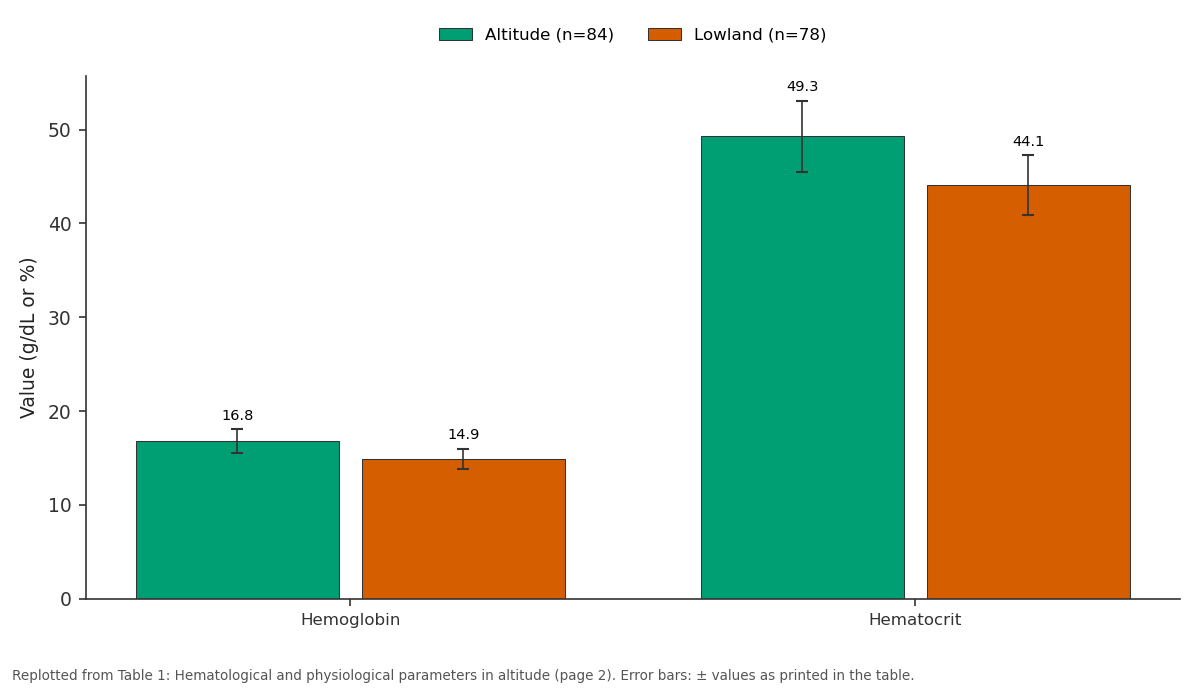
Altitude (n=84) and Lowland (n=78): Hemoglobin vs Hematocrit
Replotted from Table 1 (page 2) of the original paper. Every bar is the paper's own table value.
View source evidence ↗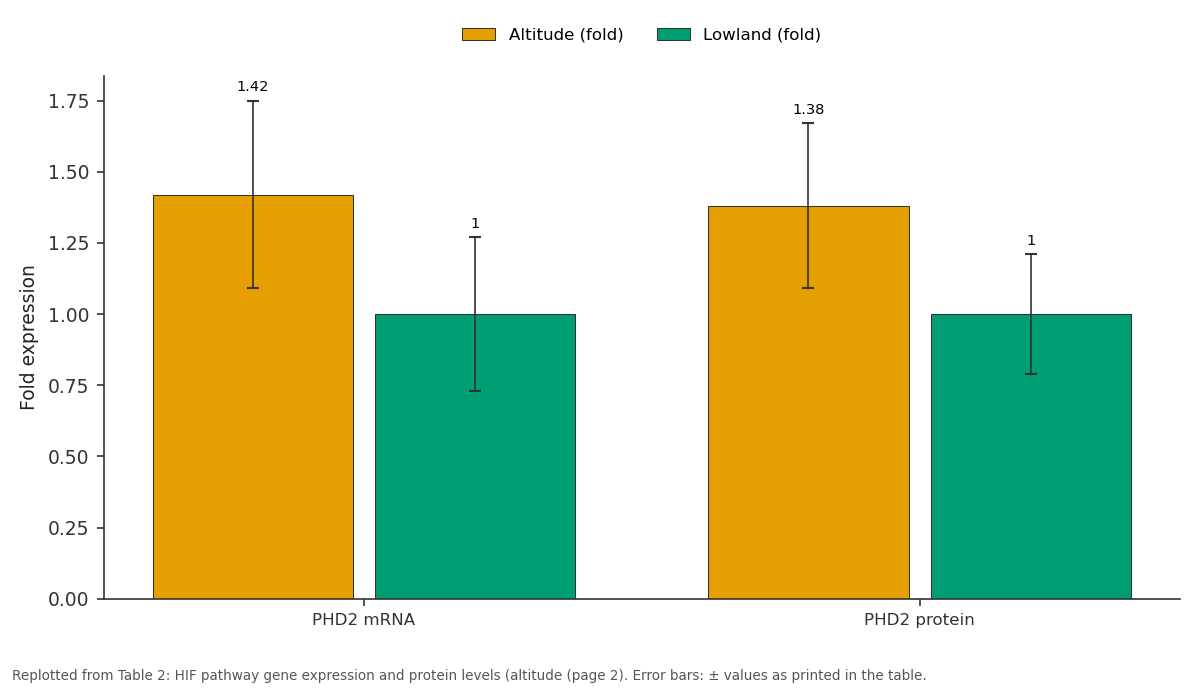
Altitude (fold) and Lowland (fold): PHD2 mRNA vs PHD2 protein
Replotted from Table 2 (page 2) of the original paper. Every bar is the paper's own table value.
View source evidence ↗Figures & tables
From the original paper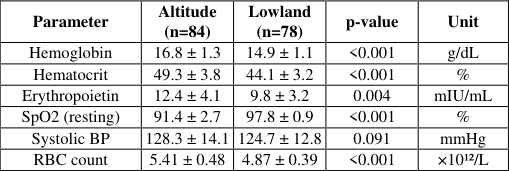 Table 1
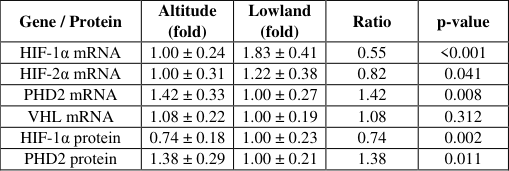 Table 2
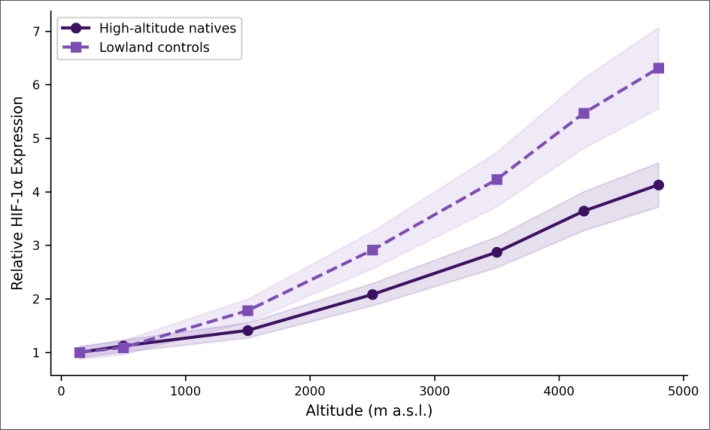 Figure 1
Introduction
When Edmund Hillary and Tenzing Norgay reached the summit of Everest in 1953, physiologists marveled at the capacity of the human body to function with less than one-third the oxygen available at sea level [1] . Seven decades later, the molecular mechanisms behind altitude adaptation continue to generate new questions. At the center of the cellular oxygensensing apparatus sits the hypoxia-inducible factor system, a transcriptional cascade that activates hundreds of downstream genes when oxygen tension drops [2] . HIF-1α and HIF-2α are the best-characterized oxygen-sensitive subunits. Under normoxic conditions, prolyl hydroxylase domain proteins (PHD1-3) hydroxylate specific proline residues on HIF-α, marking it for ubiquitin-mediated degradation through the von Hippel-Lindau tumor suppressor protein [3] . When oxygen falls, hydroxylation slows, HIF-α accumulates, and target gene transcription begins-including erythropoietin, vascular endothelial growth factor, and glycolytic enzymes [4] . Genome-wide association research in Tibetan, Andean, and Ethiopian highland populations has identified variants in EPAS1 (encoding HIF-2α) and EGLN1 (encoding PHD2) that correlate with lower hemoglobin levels relative to acclimatized lowlanders at the same altitude [5,6] . European mountain populations have received comparatively little attention, even though communities in the Alps, Pyrenees, and Caucasus have occupied high-elevation settlements for thousands of years [7] . Whether European highland residents exhibit functional differences in HIF pathway regulation-and whether such differences parallel the well-documented Asian and South American patterns-remains an open question. This research measured HIF pathway gene expression and protein levels in long-term Italian Alpine residents and lowland controls, alongside standard hematological and physiological parameters, to characterize the oxygensensing phenotype in a European high-altitude population [8,9] .
Materials and Methods
Materials and Methods
Materials
This research was conducted from May through October 2022 at the Department of Physiology, Istituto Toscano di Biologia Molecolare, Pisa, Italy, with field sampling performed in Alpine communities of the Aosta Valley (2,500-3,200 m elevation). Ethical approval was obtained from the Tuscany Regional Ethics Committee (Protocol No. TREC-2022-047, approved 11 April 2022). Written informed consent was provided by all participants.
Instrumentation and Analytical Equipment
Gene expression was quantified using a QuantStudio 5 Real-Time PCR System (Thermo Fisher Scientific, Waltham, MA, USA). Western blots were performed with a Mini-PROTEAN Tetra Cell electrophoresis system and Trans-Blot Turbo transfer apparatus (Bio-Rad, Hercules, CA, USA). Erythropoietin was measured by a Quantikine ELISA kit (R&D Systems, Minneapolis, MN, USA; catalog DEP00). Arterial oxygen saturation was recorded using a Masimo Rad-97 pulse oximeter. Complete blood counts were obtained on a Sysmex XN-1000 hematology analyzer.
Methods
Participants were recruited in two groups: 84 residents of Aosta Valley communes at elevations between 2,500 and 3,200 m who had lived continuously at altitude for at least 15 years, and 78 age-and sex-matched controls from the Pisa metropolitan area (elevation ~4 m). Exclusion criteria included chronic lung disease, smoking, anemia from known causes, and residence at altitude for fewer than 15 years. Venous blood (20 mL) was drawn between 08:00 and 10:00 after overnight fasting. Peripheral blood mononuclear cells were isolated by Ficoll-Paque density gradient centrifugation within 4 hours of collection. Total RNA was extracted using TRIzol reagent, and cDNA was synthesized with the High-Capacity cDNA Reverse Transcription Kit (Applied Biosystems). Quantitative PCR used TaqMan assays for HIF-1α, HIF-2α, PHD2, VHL, and β-actin as housekeeping gene.
In-vivo Protocol
Physiological measurements were collected at the participants' habitual altitude of residence. SpO2 was recorded continuously for 10 minutes at rest using the pulse oximeter, with the median value reported. Blood pressure was measured in triplicate. For a subset of 36 altitude residents, measurements were repeated after a 7-day stay at sea level (Pisa) to assess the reversibility of observed differences. Protein expression of HIF-1α and PHD2 was assessed by western blot with densitometric quantification normalized to β-actin. Serum erythropoietin was measured by ELISA in duplicate. Statistical analysis used unpaired t-tests for normally distributed variables and Mann-Whitney U tests otherwise. Linear regression modeled the relationship between altitude and HIF expression. Significance threshold was p < 0.05. Analyses were performed in SPSS version 28.
Results
The two groups were well matched for age (altitude: mean 47.3 ± 11.2 years; lowland: 45.8 ± 10.7 years; p = 0.38) and sex distribution (p = 0.62). Table 1 presents the hematological and physiological parameters.
| Parameter | Altitude (n=84) | Lowland (n=78) | p-value | Unit |
|---|---|---|---|---|
| Hemoglobin | 16.8 ± 1.3 | 14.9 ± 1.1 | <0.001 | g/dL |
| Hematocrit | 49.3 ± 3.8 | 44.1 ± 3.2 | <0.001 | % |
| Erythropoietin | 12.4 ± 4.1 | 9.8 ± 3.2 | 0.004 | mIU/mL |
| SpO2 (resting) | 91.4 ± 2.7 | 97.8 ± 0.9 | <0.001 | % |
| Systolic BP | 128.3 ± 14.1 | 124.7 ± 12.8 | 0.091 | mmHg |
| RBC count | 5.41 ± 0.48 | 4.87 ± 0.39 | <0.001 | ×10¹²/L |
Table text extracted from the original PDF; superscript letters are shown inline. The original table image is below.
View original table image
Comprehensive Interpretation
The central finding is the blunted HIF-1α response in altitude residents: for each 1% drop in SpO2, their HIF-1α mRNA increased 1.8-fold less than in lowlanders. This was accompanied by 1.4-fold higher baseline PHD2 expression, suggesting an upregulated oxygen-sensing degradation pathway. HIF-2α showed a less pronounced difference (1.2fold, p = 0.041). In the 36-person reversibility subset, 7 days at sea level partially normalized HIF-1α levels but PHD2 remained elevated, hinting at a fixed genetic or epigenetic component. Erythropoietin was only mildly elevated in altitude residents (12.4 vs 9.8 mIU/mL), consistent with the dampened HIF response restraining excessive erythropoiesis.
Discussion
The blunted HIF-1α induction observed in Italian Alpine residents parallels findings in Tibetan highlanders, who carry EPAS1 and EGLN1 variants associated with attenuated erythropoietic responses [5,6] . The parallel is notable because European and Tibetan populations faced similar selective pressures-chronic hypoxia-through independent evolutionary histories. Whether the mechanism in Alpine residents involves the same loci or different genetic variants requires genome-wide investigation. The elevated PHD2 expression offers a plausible molecular explanation for the blunted HIF response. Higher PHD2 activity would accelerate HIF-α degradation even under moderate hypoxia, effectively raising the oxygen threshold at which HIF target genes are activated [10] . This would limit erythropoietin production and prevent the excessive red blood cell production that characterizes chronic mountain sickness in some Andean populations [11] . The partial reversibility of HIF-1α levels after 7 days at sea level-while PHD2 remained elevated-suggests a twocomponent regulatory model: one reversible and likely transcriptional, the other fixed and possibly epigenetic or genetic [12] . Longitudinal sampling over longer sea-level sojourns would help distinguish these components. A limitation of this research is the use of peripheral blood mononuclear cells as a proxy for tissue-level HIF regulation. HIF pathway activity varies across tissues, and blood cells may not fully reflect responses in organs like kidney, liver, or muscle [13] . The cross-sectional design also cannot distinguish genetic adaptation from developmental acclimatization, since participants grew up at altitude [14] .
Conclusion
This research showed that long-term Italian Alpine residents display a blunted HIF-1α transcriptional response to hypoxia paired with elevated PHD2 expression, resulting in moderate hemoglobin elevation without polycythemia. The pattern resembles aspects of Tibetan and Ethiopian altitude adaptation but occurs in a European population that has received little prior investigation. The elevated PHD2 baseline, which persisted after a week at sea level, suggests a fixed regulatory component-possibly genetic or epigenetic-that restrains the erythropoietic arm of the HIF cascade. These findings expand the geographic and genetic landscape of human oxygen-sensing variation and support future genome-wide research to identify the specific variants responsible for altitude adaptation in European mountain populations.
Acknowledgement
Acknowledgements Funding SourcesThis research was funded by the Italian Ministry of University and Research and the Tuscany Region Health Innovation Program. Institutional SupportThe authors thank the Istituto Toscano di Biologia Molecolare for laboratory access and the Aosta Valley Health Authority for facilitating participant recruitment. Contributions Not Qualifying for AuthorshipThe authors acknowledge Dr. Lucia Marchetti for phlebotomy coordination and Mr. Paolo Conti for pulse oximetry data collection in the field.
Figures and tables from the paper
| Gene / Protein | Altitude (fold) | Lowland (fold) | Ratio | p-value |
|---|---|---|---|---|
| HIF-1α mRNA | 1.00 ± 0.24 | 1.83 ± 0.41 | 0.55 | <0.001 |
| HIF-2α mRNA | 1.00 ± 0.31 | 1.22 ± 0.38 | 0.82 | 0.041 |
| PHD2 mRNA | 1.42 ± 0.33 | 1.00 ± 0.27 | 1.42 | 0.008 |
| VHL mRNA | 1.08 ± 0.22 | 1.00 ± 0.19 | 1.08 | 0.312 |
| HIF-1α protein | 0.74 ± 0.18 | 1.00 ± 0.23 | 0.74 | 0.002 |
| PHD2 protein | 1.38 ± 0.29 | 1.00 ± 0.21 | 1.38 | 0.011 |
Table text extracted from the original PDF; superscript letters are shown inline. The original table image is below.
View original table image
References
21 in the original paper- West JB. High-altitude medicine. American Journal of Respiratory and Critical Care Medicine. 2012;186(12):1229-1237.
- Semenza GL. Hypoxia-inducible factors in physiology and medicine. Cell. 2012;148(3):399-408.
- Kaelin WG, Ratcliffe PJ. Oxygen sensing by metazoans: the central role of the HIF hydroxylase pathway. Molecular Cell. 2008;30(4):373-383.
- Wenger RH, Stiehl DP, Camenisch G. Integration of oxygen signaling at the consensus HRE. Science STKE. 2005;2005(306):re12.
- Beall CM, Cavalleri GL, Deng L, Elston RC, Gao Y, Knight J, Li C, Li JC, Liang Y, McCormack M, Montgomery HE. Natural selection on EPAS1 (HIF2alpha) associated with low hemoglobin concentration in Tibetan highlanders. Proceedings of the National Academy of Sciences. 2010;107(25):11459-11464.
- Lorenzo FR, Huff C, Myllymaki M, Olenchock B, Swierczek S, Tashi T, Gordeuk V, Wuren T, Ri-Li G, McClain DA, Khan TM. A genetic mechanism for Tibetan high-altitude adaptation. Nature Genetics. 2014;46(9):951-956.
- Gnecchi-Ruscone GA, Jeong C, De Fanti S, Sarno S, Gentilini D, Di Blasio AM, Pettener D, Luiselli D. The genomic landscape of Nepalese Tibeto-Burmans reveals new insights into the recent peopling of Southern Himalayas. Scientific Reports. 2017;7:15512.
- Storz JF. Hemoglobin-oxygen affinity in high-altitude vertebrates: is there evidence for an adaptive trend? Journal of Experimental Biology. 2016;219(20):31903203.
- Bigham AW. Genetics of human origin and evolution: high-altitude adaptations. Current Opinion in Genetics and Development. 2016;41:8-13.
- Epstein AC, Gleadle JM, McNeill LA, Hewitson KS, O'Rourke J, Mole DR, Mukherji M, Metzen E, Wilson MI, Dhanda A, Tian YM. C. elegans EGL-9 and mammalian homologs define a family of dioxygenases that regulate HIF by prolyl hydroxylation. Cell. 2001;107(1):43-54.
- Villafuerte FC, Corante N. Chronic mountain sickness: clinical aspects, etiology, management, and treatment. High Altitude Medicine and Biology. 2016;17(2):61-69.
- Gazal S, Espinoza JR, Cardenas-Sandoval MG, Jaillard S, Murer L, Ruiz-Linares A, Bravi CM, Bailliet G. Epigenetic regulation of oxygen homeostasis in highaltitude populations. Epigenetics. 2019;14(10):9911004.
- Ratcliffe PJ. Oxygen sensing and hypoxia signalling pathways in animals: the implications of physiology for cancer. Journal of Physiology. 2013;591(8):2027-2042.
- Simonson TS, Yang Y, Huff CD, Yun H, Qin G, Witherspoon DJ, Bai Z, Lorenzo FR, Xing J, Jorde LB, Prchal JT, Ge R. Genetic evidence for high-altitude adaptation in Tibet. Science. 2010;329(5987):72-75.
- Petousi N, Croft QP, Cavalleri GL, Cheng HY, Formenti F, Ishida K, Lunn D, McCormack M, Sherpa KT, Sherpa RT, Sherpa CT. Tibetans living at sea level have a hyporesponsive HIF pathway and altered oxygen delivery. Journal of Applied Physiology. 2014;116(5):531-537.
- Peng Y, Yang Z, Zhang H, Cui C, Qi X, Luo X, Tao X, Wu T, Ouzhuluobu, Basang, Ciwangsangbu. Genetic variations in Tibetan populations and high-altitude adaptation at the Himalayas. Molecular Biology and Evolution. 2011;28(2):1075-1081.
- Hancco I, Bailly S, Bouzat P, Gaudinat G, Weiss F, Villar J, Subieta AB, Soliz J, Gonzales GF, Verges S, Pichon A. Excessive erythrocytosis and cardiovascular risk in chronic mountain sickness. European Respiratory Journal. 2020;56(6):1902.
- Huerta-Sanchez E, Jin X, Asan, Bianba Z, Peter BM, Vinckenbosch N, Liang Y, Yi X, He M, Somel M, Ni P. Altitude adaptation in Tibetans caused by introgression of Denisovan-like DNA. Nature. 2014;512(7513):194197.
- Julian CG, Moore LG. Human genetic adaptation to high altitude: evidence from the Andes. Genes. 2019;10(2):150.
- Horscroft JA, Kotwica AO, Laner V, West JA, Hennis PJ, Levett DZ, Howard DJ, Sherpa RT, Sherpa RT, Murray AJ. Metabolic basis to Sherpa altitude adaptation. Proceedings of the National Academy of Sciences. 2017;114(24):6382-6387.
- Azad P, Stobdan T, Zhou D, Hartley I, Akbari A, Bafna V, Haddad GG. High-altitude adaptation in humans: from genomics to integrative physiology. Journal of Molecular Medicine. 2017;95(12):1269-1282.