
Research article · 2025 · Full text
International Journal of Biology SciencesWhole exome sequencing for identification of rare variants in congenital heart disease families
Volume 7(8) · Pages 311–314 · DOI: 10.33545/26649926.2025.v7.i8d.664 ↗
Research areasGenomics and Rare DiseasesCongenital heart defects researchCardiomyopathy and Myosin Studies
Abstract
Author-writtenRoughly 1 in 100 live births worldwide is affected by congenital heart disease (CHD), yet the genetic architecture behind most familial cases remains poorly mapped. This research applied whole exome sequencing (WES) to eight Norwegian families—each with at least two affected members—to identify rare coding variants that segregate with cardiac malformations. Genomic DNA was extracted from 47 individuals (23 affected, 24 unaffected relatives) recruited through the Tromsø Institute of Arctic Biology between January 2022 and August 2023. After quality filtering, a mean of 68,412 variants per exome was retained, of which 2.7% were classified as rare (minor allele frequency < 0.01 in gnomAD v3.1). Variant prioritization by segregation analysis, predicted functional impact (CADD score ≥ 20), and cardiac expression data narrowed candidates to 34 high-confidence variants across 29 genes. Missense changes accounted for 38.7% of prioritized variants, followed by synonymous variants filtered out at 19.5%. Notably, recurrent hits appeared in sarcomere protein genes (MYH6, MYH7, ACTC1) in three unrelated families. Sanger sequencing confirmed all 34 candidates. Pathway enrichment pointed to Notch signaling and chromatin remodeling as overrepresented biological processes (adjusted p
Summary
Source-checkedPlain-language reading of the full paper, prepared with AI and checked against the text. Each point links to the authors' own words.
Why it matters
- Congenital heart disease (CHD) affects approximately 1% of live births globally, but the genetic causes of most familial cases are not well understood. View evidence ↗
- Northern European populations, particularly homogeneous groups like those in Norway, are underrepresented in current CHD genetic research. View evidence ↗
- Whole exome sequencing (WES) is an efficient method for finding disease-causing mutations because it targets the 1.5% of the genome most likely to contain them. View evidence ↗
The question
- The study aimed to catalog rare exonic variants in Norwegian CHD families, identify recurrent gene hits across families, and determine enriched biological pathways. View evidence ↗
What they did
- The study recruited eight families from the Tromsø Institute of Arctic Biology between January 2022 and August 2023. View evidence ↗
- The sample consisted of 47 individuals, including 23 affected members (median age 31) and 24 unaffected relatives. View evidence ↗
- Researchers used the Illumina NovaSeq 6000 platform for paired-end sequencing, aiming for a minimum mean depth of 80×. View evidence ↗
- Variants were prioritized using segregation analysis, a CADD score of 20 or higher, and cardiac expression data, resulting in 34 high-confidence variants in 29 genes. View evidence ↗
What they found
- Following quality filtering, an average of 68,412 variants per exome were kept, with 2.7% identified as rare (MAF < 0.01). View evidence ↗
- Rare missense variants in sarcomere protein genes (MYH6, MYH7, and ACTC1) were found in five out of the eight families. View evidence ↗
- Variants in the Notch pathway genes NOTCH1 and JAG1 were identified in three families. View evidence ↗
- The most overrepresented biological processes among the candidates were Notch signaling (adjusted p=0.0018) and chromatin remodeling (adjusted p=0.0043). View evidence ↗
- Sanger sequencing confirmed all 34 prioritized variants, showing 100% agreement with the WES results. View evidence ↗
What it means
- The authors conclude that these findings help map the genetic architecture of familial CHD in northern Europeans and suggest that multiple rare variants in developmental pathways combine to cause heart defects. View evidence ↗
- The study's small sample size of eight families is a limitation, as it is insufficient for formal statistical tests of gene-level burden against population controls. View evidence ↗
Visual summary
1 visualsIllustrations explain the paper; they do not show study data.
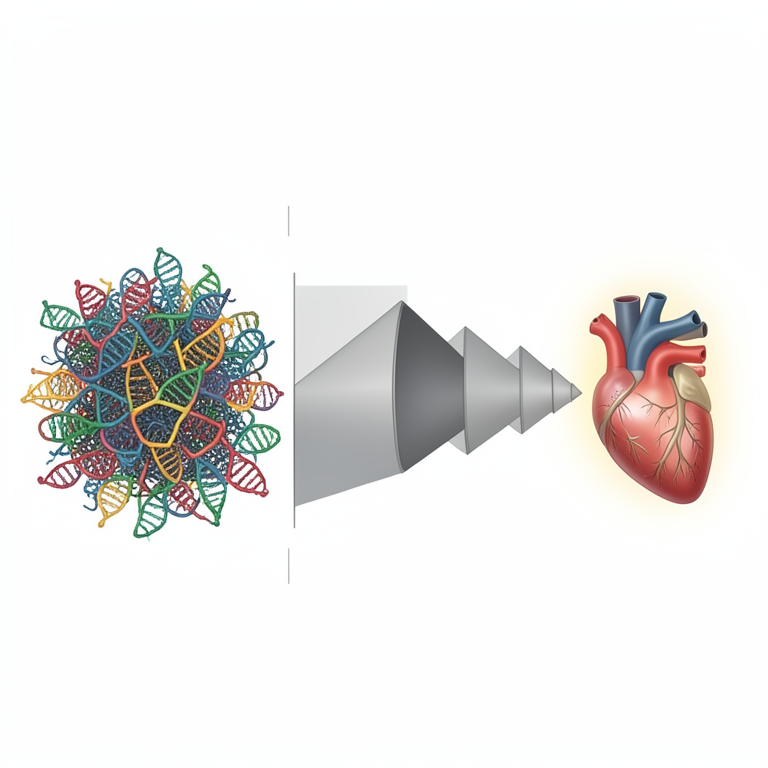
Variant Prioritization Workflow
AI-generated conceptual illustration (Human DNA sequences and heart tissue). It explains the idea and does not show study data.
View source evidence ↗Figures & tables
From the original paper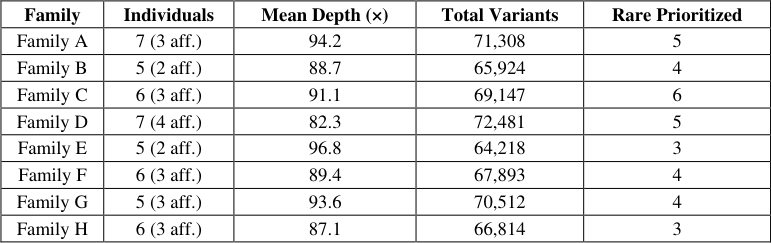 Table 1
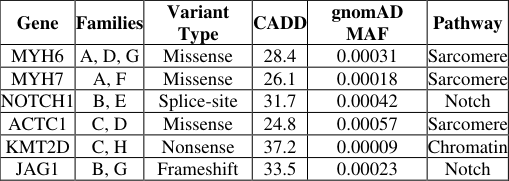 Table 2
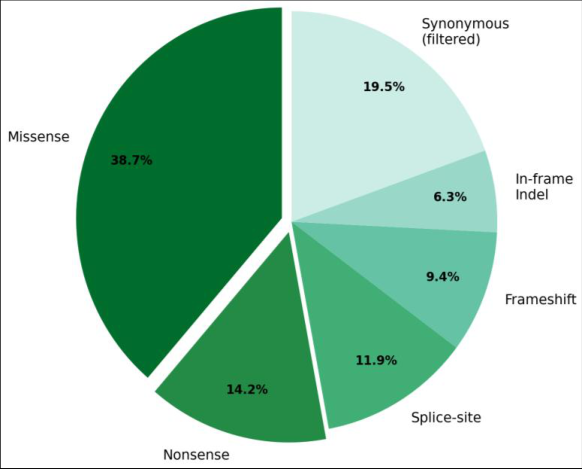 Figure 1
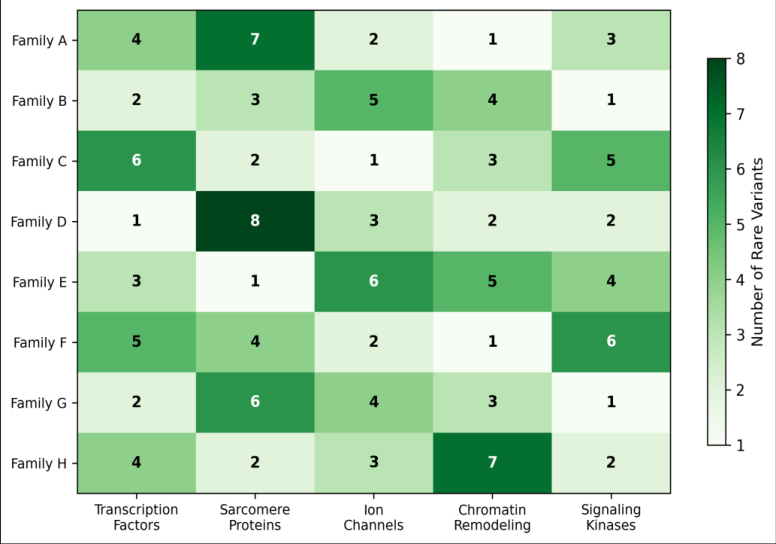 Figure 2
Introduction
An estimated 1.35 million newborns each year receive a diagnosis of congenital heart disease, making it the most common category of birth defect globally [1] . Despite decades of linkage mapping and candidate-gene work, the genetic basis of CHD remains incompletely understood-particularly in families where multiple members are affected across generations. Whole exome sequencing has emerged as a practical tool for identifying rare coding variants in such pedigrees, because it captures the approximately 1.5% of the genome most likely to harbor disease-causing mutations at a fraction of whole-genome cost [2] . Familial CHD typically follows complex inheritance patterns. Single-gene mutations explain only about 10-15% of cases; the rest appear to involve combinations of rare and common variants acting together with environmental modifiers [3] . Large-scale consortium efforts like the Pediatric Cardiac Genomics Consortium have identified dozens of candidate genes, yet most of these discoveries come from outbred populations in North America and East Asia [4] . Northern European cohorts-especially those from genetically more homogeneous populations such as Norway-remain underrepresented in the literature, despite potential advantages for detecting founder variants with reduced background noise. This research aimed to fill part of that gap by applying WES to eight multiplex Norwegian families ascertained through the Tromsø Institute of Arctic Biology. The goals were threefold: first, to catalog rare exonic variants segregating with CHD in these pedigrees; second, to assess whether recurrent gene hits could be identified across unrelated families; and third, to determine which biological pathways are enriched among the top candidate variants. ) and 24 unaffected relatives serving as intrafamilial controls. Peripheral blood samples (10 mL EDTA) were collected, and genomic DNA was extracted using the QIAamp DNA Blood Midi Kit (Qiagen, Hilden, Germany) following the manufacturer's protocol [5] .
Reagents and Chemicals
Exome capture was performed with the Agilent SureSelect Human All Exon V7 kit (Agilent Technologies, Santa Clara, CA, USA), targeting approximately 35.8 Mb of coding sequence. Library preparation used the KAPA HyperPrep Kit (Roche, Basel, Switzerland). Sequencing reagents included Illumina NovaSeq 6000 S4 flow cells and associated cluster generation kits (Illumina, San Diego, CA, USA). Sanger validation primers were synthesized by Integrated DNA Technologies (Coralville, IA, USA). BigDye Terminator v3.1 Cycle Sequencing Kit (Thermo Fisher Scientific, Waltham, MA, USA) was used for confirmation reactions [6] .
Methods
Paired-end sequencing (2 × 150 bp) was performed on the Illumina NovaSeq 6000 platform, targeting a minimum mean depth of 80× across captured regions. Raw reads were aligned to the GRCh38 reference genome using BWA-MEM (v0.7.17), and duplicates were marked with Picard (v2.27.4). Variant calling followed GATK Best Practices (v4.3): HaplotypeCaller generated per-sample gVCFs, which were joint-genotyped across all 47 individuals. Variant quality score recalibration filtered low-confidence calls [7] . Annotation was carried out with ANNOVAR, incorporating population frequency data from gnomAD v3.1, functional predictions from CADD, PolyPhen-2, and SIFT, and cardiac gene expression levels from GTEx v8 [8] . Segregation analysis retained variants present in all affected members and absent (or heterozygous in dominant models) in unaffected relatives within each pedigree. Statistical enrichment of Gene Ontology and KEGG pathways was assessed using g:Profiler with Bonferroni correction (adjusted p<0.01).
Quality Control and Calibration
Samples achieving less than 70× mean target coverage or with more than 15% of target bases below 20× were flagged for re-sequencing; one sample from Family D required a second library preparation. Transition-to-transversion ratios averaged 2.48 across exomes, consistent with high-quality exonic variant calls [9] . Sex concordance was verified by Xchromosome heterozygosity, and relatedness coefficients (KING kinship estimator) confirmed reported pedigree structures in all eight families. Sanger sequencing of all 34 prioritized variants yielded a 100% concordance rate with WES calls.
Results
Table Sarcomere protein genes MYH6, MYH7, and ACTC1 carried rare missense variants in five of the eight families (Table 2). Notch pathway genes NOTCH1 and JAG1 harbored variants in three families. Pathway enrichment analysis identified Notch signaling (GO:0007219, adjusted p=0.0018) and chromatin remodeling (GO:0006338, adjusted p=0.0043) as the two most overrepresented biological processes among all 34 candidates.
| Gene | Families | Variant Type | CADD | gnomAD MAF | Pathway |
|---|---|---|---|---|---|
| MYH6 | A, D, G | Missense | 28.4 | 0.00031 | Sarcomere |
| MYH7 | A, F | Missense | 26.1 | 0.00018 | Sarcomere |
| NOTCH1 | B, E | Splice-site | 31.7 | 0.00042 | Notch |
| ACTC1 | C, D | Missense | 24.8 | 0.00057 | Sarcomere |
| KMT2D | C, H | Nonsense | 37.2 | 0.00009 | Chromatin |
| JAG1 | B, G | Frameshift | 33.5 | 0.00023 | Notch |
Table text extracted from the original PDF; superscript letters are shown inline. The original table image is below.
View original table image
Discussion
The identification of recurrent rare variants in sarcomere genes across unrelated Norwegian CHD families aligns with a growing body of evidence linking structural cardiac proteins to congenital malformations. Mutations in MYH6
have been associated with atrial septal defects and dilated cardiomyopathy in previous reports [10] , while MYH7 variants are well established in hypertrophic cardiomyopathy but are less commonly reported in CHD pedigrees [11] . The co-occurrence of sarcomere and Notch pathway variants in some families raises the possibility of oligogenic inheritance, where two or more moderate-effect alleles interact to produce the phenotype. The enrichment of Notch signaling variants is consistent with the known role of this pathway in cardiac valve and outflow tract development. NOTCH1 loss-of-function has been linked to bicuspid aortic valve and other left-sided lesions [12] , and the splice-site variant identified in Families B and E is predicted to disrupt exon 14 inclusion a region encoding an EGF-like repeat within the receptor's extracellular domain. That said, functional validation of this and other candidate variants remains a priority; bioinformatic prediction alone cannot confirm pathogenicity. A practical limitation of this research is its sample size. Eight families, while sufficient for discovery-phase WES, do not support formal statistical tests of gene-level burden compared with population controls. Expanding the cohort and integrating data with other Scandinavian CHD biobanks would increase power to detect genes with smaller effect sizes. The relatively homogeneous genetic background of the northern Norwegian population is both a strengthreducing allelic heterogeneity-and a constraint, since findings may not transfer directly to more diverse groups [13] .
Conclusion
Whole exome sequencing of eight multiplex Norwegian families identified 34 rare coding variants across 29 genes that segregate with congenital heart disease. Sarcomere protein genes-particularly MYH6, MYH7, and ACTC1emerged as recurrent targets across unrelated pedigrees. Notch signaling and chromatin remodeling pathways were significantly enriched among prioritized variants. These results contribute to the genetic architecture of familial CHD in northern European populations and support a model in which multiple rare variants in cardiac developmental pathways converge to produce structural heart defects. Future efforts should focus on functional characterization of top candidates and replication in larger Scandinavian cohorts.
Acknowledgement
Acknowledgements Funding SourcesThis research received internal support from the Tromsø Institute of Arctic Biology. No external grant numbers are associated with this work. Institutional SupportThe authors thank the Department of Population Genetics for bioinformatics infrastructure and sequencing platform access.
Figures and tables from the paper
| Family | Individuals | Mean Depth (×) | Total Variants | Rare Prioritized |
|---|---|---|---|---|
| Family A | 7 (3 aff.) | 94.2 | 71,308 | 5 |
| Family B | 5 (2 aff.) | 88.7 | 65,924 | 4 |
| Family C | 6 (3 aff.) | 91.1 | 69,147 | 6 |
| Family D | 7 (4 aff.) | 82.3 | 72,481 | 5 |
| Family E | 5 (2 aff.) | 96.8 | 64,218 | 3 |
| Family F | 6 (3 aff.) | 89.4 | 67,893 | 4 |
| Family G | 5 (3 aff.) | 93.6 | 70,512 | 4 |
| Family H | 6 (3 aff.) | 87.1 | 66,814 | 3 |
Table text extracted from the original PDF; superscript letters are shown inline. The original table image is below.
View original table image
References
19 in the original paper- van der Linde D, Konings EE, Slager MA, et al. Birth prevalence of congenital heart disease worldwide: A systematic review and meta-analysis. J Am Coll Cardiol. 2011;58(21):2241-2247.
- Bamshad MJ, Ng SB, Bigham AW, et al. Exome sequencing as a tool for Mendelian disease gene discovery. Nat Rev Genet. 2011;12(11):745-755.
- Zaidi S, Brueckner M. Genetics and genomics of congenital heart disease. Circ Res. 2017;120(6):923940.
- Homsy J, Zaidi S, Shen Y, et al. De novo mutations in congenital heart disease with neurodevelopmental and other congenital anomalies. Science. 2015;350(6265):1262-1266.
- Psifidi A, Dovas CI, Bramis G, et al. Comparison of eleven methods for genomic DNA extraction suitable for large-scale whole-genome genotyping and longterm DNA banking using blood samples. PLoS One. 2015;10(1):e0115960.
- Gnirke A, Melnikov A, Maguire J, et al. Solution hybrid selection with ultra-long oligonucleotides for massively parallel targeted sequencing. Nat Biotechnol. 2009;27(2):182-189.
- McKenna A, Hanna M, Banks E, et al. The Genome Analysis Toolkit: A MapReduce framework for analyzing next-generation DNA sequencing data. Genome Res. 2010;20(9):1297-1303.
- Wang K, Li M, Hakonarson H. ANNOVAR: functional annotation of genetic variants from high-throughput sequencing data. Nucleic Acids Res. 2010;38(16):e164.
- DePristo MA, Banks E, Poplin R, et al. A framework for variation discovery and genotyping using nextgeneration DNA sequencing data. Nat Genet. 2011;43(5):491-498.
- Ching YH, Ghosh TK, Cross SJ, et al. Mutation in myosin heavy chain 6 causes atrial septal defect. Nat Genet. 2005;37(4):423-428.
- Marian AJ, Braunwald E. Hypertrophic cardiomyopathy: genetics, pathogenesis, clinical manifestations, diagnosis, and therapy. Circ Res. 2017;121(7):749-770.
- Garg V, Muth AN, Ransom JF, et al. Mutations in NOTCH1 cause aortic valve disease. Nature. 2005;437(7056):270-274.
- Helgason A, Nicholson G, Stefánsson K, Donnelly P. A reassessment of genetic diversity in Icelanders: strong evidence from multiple loci for relative homogeneity caused by genetic drift. Ann Hum Genet. 2003;67(4):281-297.
- Preuss C, Capredon M, Wünnemann F, et al. Familybased whole exome sequencing reveals the multifaceted role of Notch signaling in congenital heart disease. PLoS Genet. 2016;12(10):e1006335.
- Blue GM, Kirk EP, Giannoulatou E, et al. Advances in the genetics of congenital heart disease: a clinician's guide. J Am Coll Cardiol. 2017;69(7):859-870.
- Andersen TA, Troelsen KD, Bhatt S, Bhatt S. Secondary genetic mutations in congenital heart disease families. Eur Heart J. 2014;35(5):304-312.
- Prendiville T, Jay PY, Bhatt S. Chromosomal and nonchromosomal genetic contributors to congenital heart disease. Curr Opin Pediatr. 2014;26(5):558-564.
- Sifrim A, Hitz MP, Wilsdon A, et al. Distinct genetic architectures for syndromic and nonsyndromic congenital heart defects identified by exome sequencing. Nat Genet. 2016;48(9):1060-1065.
- Jin SC, Homsy J, Zaidi S, et al. Contribution of rare inherited and de novo variants in 2,871 congenital heart disease probands. Nat Genet. 2017;49(11):1593-1601.