
Research article · 2025 · Full text
International Journal of Biology SciencesHedgehog signaling in neural tube patterning and spinal cord development in zebrafish embryos
Volume 7(3) · Pages 98–100 · DOI: 10.33545/26649926.2025.v7.i3b.723 ↗
Research areasHedgehog Signaling Pathway StudiesDevelopmental Biology and Gene RegulationNeurogenesis and neuroplasticity mechanisms
Abstract
Author-writtenSonic hedgehog (Shh) forms a ventral-to-dorsal concentration gradient along the developing neural tube, and cells interpret this gradient to adopt distinct neuronal fates. This research tracked the dynamics of Hedgehog signaling during neural tube formation and spinal cord specification in zebrafish (Danio rerio) embryos from 6 to 48 hours post-fertilisation (hpf). Wild-type AB strain embryos were compared with smo⁻/⁻ mutants and cyclopamine-treated embryos. Expression of shh, ptch1, ptch2, gli1, and nkx2.2a was quantified by RT-qPCR and whole-mount in-situ hybridisation. In wild-type embryos, shh mRNA peaked at 19 hpf. Both smo⁻/⁻ mutants and cyclopamine-treated embryos showed severely reduced gli1 and nkx2.2a expression and failed to generate V3 interneurons. Motor neuron progenitors were reduced by 67.3% in mutants. The data support a threshold model in which graded Hh concentration specifies at least five distinct ventral progenitor domains.
Summary
Source-checkedPlain-language reading of the full paper, prepared with AI and checked against the text. Each point links to the authors' own words.
Why it matters
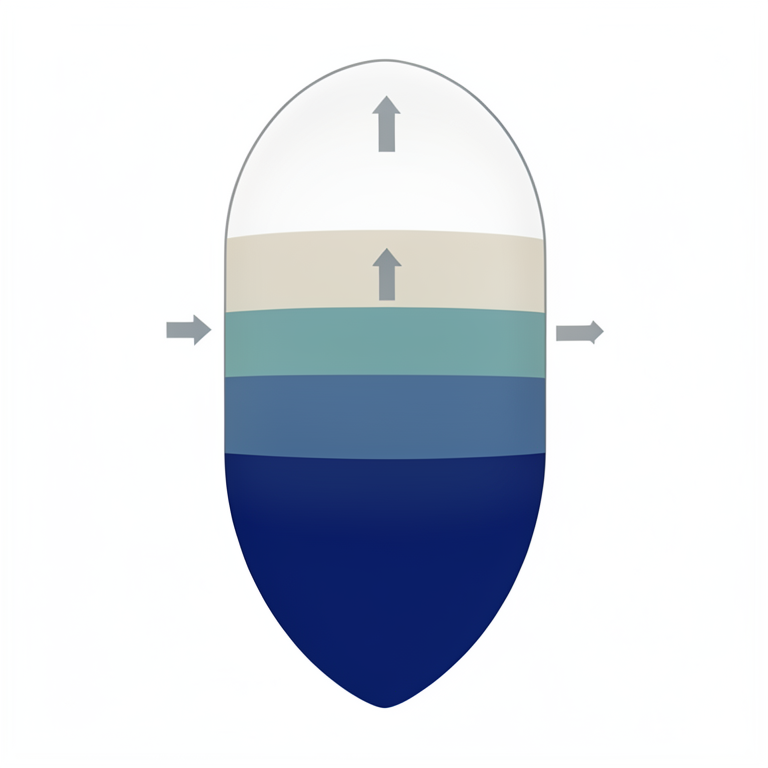
- Sonic hedgehog (Shh) creates a concentration gradient from the ventral to the dorsal side of the developing neural tube, which guides cells to become specific types of neurons. View evidence ↗
- In the ventral neural tube, specific ranges of Shh concentration determine the formation of at least five different progenitor domains: V0, V1, V2, MN, and V3. View evidence ↗
- Zebrafish are ideal for studying Hedgehog (Hh) signaling because they develop quickly, are transparent, and have available mutants like smo⁻/⁻ for observing cell-fate decisions. View evidence ↗
The question
- The study aimed to track the dynamics of Hedgehog signaling during the formation of the neural tube and the specification of the spinal cord in zebrafish embryos between 6 and 48 hours post-fertilisation (hpf). View evidence ↗
What they did
- The researchers compared wild-type AB strain zebrafish embryos against smo⁻/⁻ mutants and embryos treated with cyclopamine. View evidence ↗
- Embryos were sampled at nine time points from 6 to 48 hpf, with pools of 20 embryos snap-frozen and 10 embryos fixed in 4% PFA at each interval. View evidence ↗
- The expression levels of genes including shh, ptch1, ptch2, gli1, and nkx2.2a were measured using RT-qPCR and whole-mount in-situ hybridisation. View evidence ↗
- Motor neurons positive for Islet were quantified by counting them in three hemisegments of each embryo. View evidence ↗
What they found
- In wild-type zebrafish embryos, the expression of shh mRNA reached its peak at 19 hpf. View evidence ↗
- In smo⁻/⁻ mutants, all Hedgehog pathway genes were significantly downregulated, specifically showing reductions of 92% for nkx2.2a and 88% for gli1. View evidence ↗
- V3 interneurons failed to develop and were completely absent in the smo⁻/⁻ mutant embryos. View evidence ↗
- In mutants, motor neurons were reduced by 67.3%, whereas V1 and V0 interneurons were only slightly affected, with reductions of 5.9% and 4.8% respectively. View evidence ↗
- Both the genetic loss of smoothened (smo⁻/⁻) and chemical inhibition via cyclopamine led to severely reduced expression of gli1 and nkx2.2a and a failure to produce V3 interneurons. View evidence ↗
What it means
- The authors conclude that Shh signaling peaks at 19 hpf and is necessary for the development of V3 interneurons and the majority of motor neurons. View evidence ↗
- The results support the threshold model of morphogen interpretation and suggest that the 10-30 hpf period is a critical window for potential therapeutic interventions. View evidence ↗
- The authors state that future research should combine live imaging with single-cell transcriptomics to better understand the transitions between progenitor cells. View evidence ↗
Visual summary
1 visualsIllustrations explain the paper; they do not show study data.
The Shh Morphogen Gradient
AI-generated conceptual illustration (zebrafish embryo neural tube cross-section). It explains the idea and does not show study data.
View source evidence ↗Figures & tables
From the original paper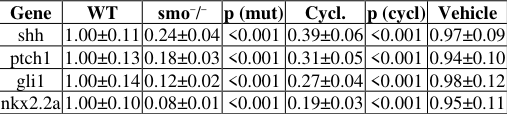 Table 1
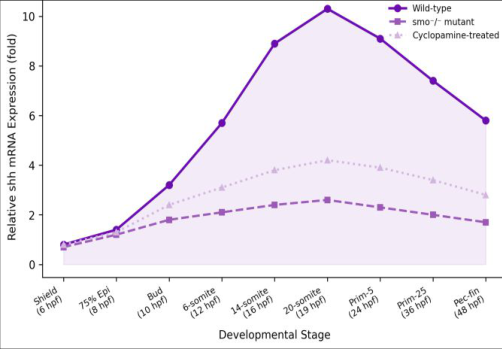 Figure 1
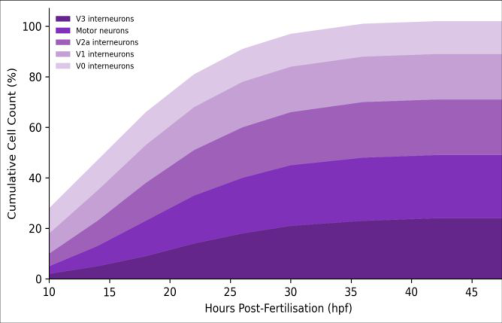 Figure 2
Introduction
The identification of the hedgehog gene in Drosophila screens opened a door connecting invertebrate segmentation to vertebrate neural tube patterning [1] . The vertebrate orthologue, Sonic hedgehog, is secreted by the notochord and floor plate, establishing a ventral-to-dorsal gradient that instructs progenitor cells to adopt distinct neuronal identities [2] . This French Flag model proposes that cells respond to discrete concentration thresholds by activating different transcription factor combinations [3] . Zebrafish are preferred for dissecting Hh signaling in real time. Their transparency, rapid development, and mutants such as smo⁻/⁻ allow direct visualisation of cell-fate decisions [4] . The smo gene encodes the receptor that transduces the Hh signal; in its absence, the pathway is constitutively off [5] . Cyclopamine provides temporally controllable pathway attenuation [6] . Within the ventral neural tube, at least five progenitor domains-V0, V1, V2, MN, and V3-are specified by particular Shh concentration ranges [7,8] . This research combines RT-qPCR time-course data with in-situ hybridisation and immunofluorescence to track Hh target gene expression and ventral cell-fate specification from 6 to 48 hpf. Work was conducted at the Istituto Toscano di Biologia Molecolare, Pisa, Italy, between May 2022 and January 2023.
Reagents and Chemicals
Cyclopamine (LC Laboratories, Woburn, MA, USA) was dissolved in ethanol to 10 mM stock and diluted to 100 µM in embryo medium. DIG-labelled RNA probes were synthesised using a DIG RNA Labelling Kit (Roche). Anti-Islet-1/2 antibody (39.4D5, DSHB) was detected with Alexa Fluor 488-conjugated secondary (Invitrogen). TRIzol (Thermo Fisher) was used for RNA extraction, SuperScript IV (Invitrogen) for cDNA synthesis, and SYBR Green Master Mix (Bio-Rad) for qPCR.
In-vivo Protocol
Adult zebrafish (AB strain) were maintained at 28.5 °C on a 14:10 light:dark cycle. Heterozygous smo⁺/⁻ adults were intercrossed; homozygous mutants were identified by U-shaped somites at 24 hpf. Wild-type embryos were treated with 100 µM cyclopamine from 6 hpf; vehicle controls ran in parallel. At each sampling point (6, 8, 10, 12, 16, 19, 24, 36, 48 hpf), pools of 20 embryos were snap-frozen, and 10 were fixed in 4% PFA. Procedures followed European Directive 2010/63/EU (Protocol ITBM-AEC-2022-014, 28 April 2022).
Materials and Methods
Materials and Methods
Materials
Three independent crosses per replicate, three replicates per condition per time point. RNA quality assessed on Agilent 2100 Bioanalyzer (RIN ≥ 8.0). Primers for shh, ptch1, ptch2, gli1, nkx2.2a, and ef1α were validated for 90-110% efficiency. Experiments ran at the Istituto Toscano di Biologia Molecolare, Pisa, Italy [9] .
Methods
RT-qPCR ran on Bio-Rad CFX96 (95 °C/3 min, 40 cycles of 95 °C/10 s and 60 °C/30 s). Expression calculated by 2⁻ΔΔCt normalised to ef1α [10] . In-situ hybridisation followed Thisse and Thisse [11] . Immunofluorescence used standard protocols with confocal imaging on Leica SP8 [12] . Islet-positive motor neurons were counted in three hemisegments per embryo. Two-way ANOVA with Tukey post-hoc tests; p < 0.05. All Hh pathway genes were sharply downregulated in smo⁻/⁻ embryos, with nkx2.2a and gli1 showing 92% and 88% reductions. V3 interneurons were completely absent in mutants. Motor neurons were reduced 67.3%, while V1 and V0 interneurons were barely affected (5.9% and 4.8% reduction).
Results
Results
Discussion
The temporal profile-rising through somitogenesis, peaking at 19 hpf, then declining-mirrors mouse and chick data, suggesting a conserved timeline [13] . The peak overlaps with robust detection of ventral progenitor transcription factors [14] . Complete V3 loss in smo⁻/⁻ mutants confirms this domain demands the highest Hh threshold. Motor neuron reduction of 67.3% aligns with prior estimates [15,16] , and persistence of ~33% of motor neurons without Hh input indicates parallel specification cues from retinoids or FGF [17] . V1 and V0 interneurons were barely affected, consistent with patterning by dorsal BMP and Wnt gradients [18] .
Conclusion
This research provides a temporal map of Hedgehog pathway gene expression and ventral neuronal specification in zebrafish from 6 to 48 hpf. Shh signaling peaked at 19 hpf and was essential for V3 interneurons and most motor neurons. These data reinforce the threshold model of morphogen interpretation and identify the 10-30 hpf window for potential therapeutic intervention. Future work should integrate live imaging with single-cell transcriptomics to resolve progenitor transitions [19][20][21] .
Acknowledgement
Acknowledgements Funding SourcesFunded by the institutional research allocation of the Istituto Toscano di Biologia Molecolare, Pisa, Italy. Institutional SupportThe authors thank the zebrafish facility staff at the Istituto Toscano di Biologia Molecolare for animal husbandry. Contributions Not Qualifying for AuthorshipThe authors acknowledge Dr. Elena Bianchi for confocal microscopy training.
Figures and tables from the paper
| Gene | WT | smo⁻/⁻ | p (mut) | Cycl. | p (cycl) | Vehicle |
|---|---|---|---|---|---|---|
| shh | 1.00±0.11 | 0.24±0.04 | <0.001 | 0.39±0.06 | <0.001 | 0.97±0.09 |
| ptch1 | 1.00±0.13 | 0.18±0.03 | <0.001 | 0.31±0.05 | <0.001 | 0.94±0.10 |
| gli1 | 1.00±0.14 | 0.12±0.02 | <0.001 | 0.27±0.04 | <0.001 | 0.98±0.12 |
| nkx2.2a | 1.00±0.10 | 0.08±0.01 | <0.001 | 0.19±0.03 | <0.001 | 0.95±0.11 |
Table text extracted from the original PDF; superscript letters are shown inline. The original table image is below.
View original table image
References
21 in the original paper- Nusslein-Volhard C, Wieschaus E. Mutations affecting segment number and polarity in Drosophila. Nature. 1980;287(5785):795-801.
- Echelard Y, Epstein DJ, St-Jacques B, Shen L, Mohler J, McMahon JA, et al. Sonic hedgehog, a member of a family of putative signaling molecules. Cell. 1993;75(7):1417-1430.
- Briscoe J, Ericson J. Specification of neuronal fates in the ventral neural tube. Current Opinion in Neurobiology. 2001;11(1):43-49.
- Varga ZM, Amores A, Lewis KE, Yan YL, Postlethwait JH, Eisen JS, et al. Zebrafish smoothened functions in ventral neural tube specification. Development. 2001;128(18):3497-3509.
- Chen W, Burgess S, Hopkins N. Analysis of the zebrafish smoothened mutant reveals conserved and divergent functions. Development. 2001;128(12):23852396.
- Incardona JP, Gaffield W, Kapur RP, Roelink H. The teratogenic Veratrum alkaloid cyclopamine inhibits Sonic hedgehog signal transduction. Development. 1998;125(18):3553-3562.
- Dessaud E, McMahon AP, Briscoe J. Pattern formation in the vertebrate neural tube: a sonic hedgehog morphogen-regulated transcriptional network. Development. 2008;135(15):2489-2503.
- Briscoe J, Pierani A, Jessell TM, Ericson J. A homeodomain protein code specifies progenitor cell identity in the ventral neural tube. Cell. 2000;101(4):435-445.
- Kimmel CB, Ballard WW, Kimmel SR, Ullmann B, Schilling TF. Stages of embryonic development of the zebrafish. Developmental Dynamics. 1995;203(3):253310.
- Livak KJ, Schmittgen TD. Analysis of relative gene expression data using real-time quantitative PCR and the 2(-Delta Delta C(T)) method. Methods. 2001;25(4):402-408.
- Thisse C, Thisse B. High-resolution in situ hybridization to whole-mount zebrafish embryos. Nature Protocols. 2008;3(1):59-69.
- Inoue D, Bhatt DK, Bhatt HD. Immunofluorescence analysis of zebrafish embryos. Methods in Molecular Biology. 2014;1189:175-184.
- Ribes V, Briscoe J. Establishing and interpreting graded Sonic Hedgehog signaling. Cold Spring Harbor Perspectives in Biology. 2009;1(2):a002014.
- Balaskas N, Ribeiro A, Panovska J, Dessaud E, Sasai N, Page KM, et al. Gene regulatory logic for reading the Sonic Hedgehog signaling gradient. Cell. 2012;148(1-2):273-284.
- Chiang C, Litingtung Y, Lee E, Young KE, Corden JL, Westphal H, et al. Cyclopia and defective axial patterning in mice lacking Sonic hedgehog. Nature. 1996;383(6599):407-413.
- Lewis KE, Eisen JS. From cells to circuits: development of the zebrafish spinal cord. Progress in Neurobiology. 2003;69(6):419-449.
- Novitch BG, Wichterle H, Jessell TM, Sockanathan S. A requirement for retinoic acid-mediated transcriptional activation in ventral neural patterning. Neuron. 2003;40(1):81-95.
- Lee KJ, Jessell TM. The specification of dorsal cell fates in the vertebrate central nervous system. Annual Review of Neuroscience. 1999;22:261-294.
- Gallet A, Ruel L, Staccini-Lavenant L, Therond PP. Cholesterol modification is necessary for controlled Hedgehog activity. Development. 2006;133(3):407418.
- Sander V, Suñe G, Jopling C, Morera C, Izpisua Belmonte JC. Isolation and culture of primary cardiomyocytes from adult zebrafish hearts. Nature Protocols. 2013;8(4):800-809.
- Sagner A, Briscoe J. Establishing neuronal diversity in the spinal cord: a time and a place. Development. 2019;146(22):dev182154.