
Research article · 2025 · Full text
International Journal of Advanced Chemistry ResearchFenton-like oxidation of phenol using iron-impregnated biochar as heterogeneous catalyst
Volume 7(5) · Pages 216–219 · DOI: 10.33545/26646781.2025.v7.i5c.641 ↗
Research areasAdvanced oxidation water treatmentEnvironmental remediation with nanomaterialsAdsorption and biosorption for pollutant removal
Abstract
Author-writtenHeterogeneous Fenton-like processes using iron-impregnated biochar (Fe-BC) offer a sustainable route to wastewater treatment by combining the radical oxidation power of the Fenton reaction with a solid catalyst that minimises iron sludge generation and enables catalyst recovery and reuse. This research reports the synthesis of Fe-BC from rice husk biochar (pyrolysis 600°C) impregnated with FeCl₃ (Fe loading 8.4 wt%) and its evaluation for phenol degradation in aqueous solution. Effects of pH (2.0-5.0), H₂O₂ dosage (5-20 mM), catalyst loading (0.1-1.0 g/L), initial phenol concentration (20-100 mg/L), and temperature (25-45°C) were investigated. Optimum conditions (pH 3.0, H₂O₂ 10 mM, catalyst 1.0 g/L, 50 mg/L phenol, 25°C) achieved 92.7% phenol removal and 84.3% TOC reduction in 90 min. Radical scavenging experiments identified •OH (58.3%) as the dominant reactive species. The catalyst retained 88.4% activity after five reuse cycles. Activation energy of 38.7 kJ/mol confirmed the reaction is chemically controlled rather than diffusion-limited. Research was conducted from February 2022 to November 2024 at Sakura National University, Tokyo, and Mount Fuji Institute of Technology, Osaka, Japan.
Summary
Source-checkedPlain-language reading of the full paper, prepared with AI and checked against the text. Each point links to the authors' own words.
Why it matters
- Phenol is a hazardous industrial pollutant from sectors like petrochemicals and pharmaceuticals, considered toxic when concentrations exceed 1 mg/L. View evidence ↗
- Standard biological treatments fail for phenol concentrations of 200 mg/L or higher because phenol inhibits the microbes, making advanced oxidation pretreatment necessary. View evidence ↗
- While effective, homogeneous Fenton reactions produce significant iron sludge at neutral pH and require a very narrow pH range (2.5-3.5) to work. View evidence ↗
The question
- The study aims to synthesize an iron-impregnated biochar (Fe-BC) from rice husk and evaluate its effectiveness as a catalyst for degrading phenol in water. View evidence ↗
What they did
- The Fe-BC catalyst was created by impregnating rice husk biochar (pyrolyzed at 600°C) with FeCl₃·6H₂O to achieve an 8.4 wt% iron loading, followed by drying and calcination. View evidence ↗
- Degradation experiments used 100 mL of phenol solution (typically 50 mg/L) with catalyst loadings between 0.1 and 1.0 g/L, stirred at 25°C with a 30-minute dark adsorption period. View evidence ↗
- Phenol and Total Organic Carbon (TOC) were measured using HPLC and a TOC analyzer from samples taken at intervals up to 120 minutes. View evidence ↗
What they found
- Under optimal conditions (pH 3.0, 10 mM H₂O₂, 1.0 g/L catalyst), the system removed 92.7% of phenol and reduced TOC by 84.3% within 90 minutes. View evidence ↗
- At pH 2.0, phenol removal was lower (71.4%) and iron leaching was significantly higher (3.84 mg/L) compared to the optimal pH 3.0 (92.7% removal, 0.47 mg/L leaching). View evidence ↗
- Increasing the H₂O₂ dose from 10 mM to 20 mM decreased phenol removal from 92.7% to 89.4% due to hydroxyl radical scavenging. View evidence ↗
- Hydroxyl radicals (•OH) were the primary drivers of degradation (58.3%), followed by superoxide radicals (22.7%) and ferryl species (11.4%). View evidence ↗
- The catalyst remained stable over five cycles, retaining 88.4% activity with iron leaching (0.31-0.47 mg/L) staying well below the Japanese limit of 10 mg/L. View evidence ↗
- The calculated activation energy of 38.7 kJ/mol indicates that the reaction rate is controlled by chemical processes rather than diffusion. View evidence ↗
What it means
- The authors conclude that Fe-BC is a practical and sustainable catalyst for treating phenol wastewater, as it utilizes agricultural waste and is easily recovered and reused. View evidence ↗
Visual summary
3 visualsIllustrations explain the paper; charts are replotted from the paper's own table values.
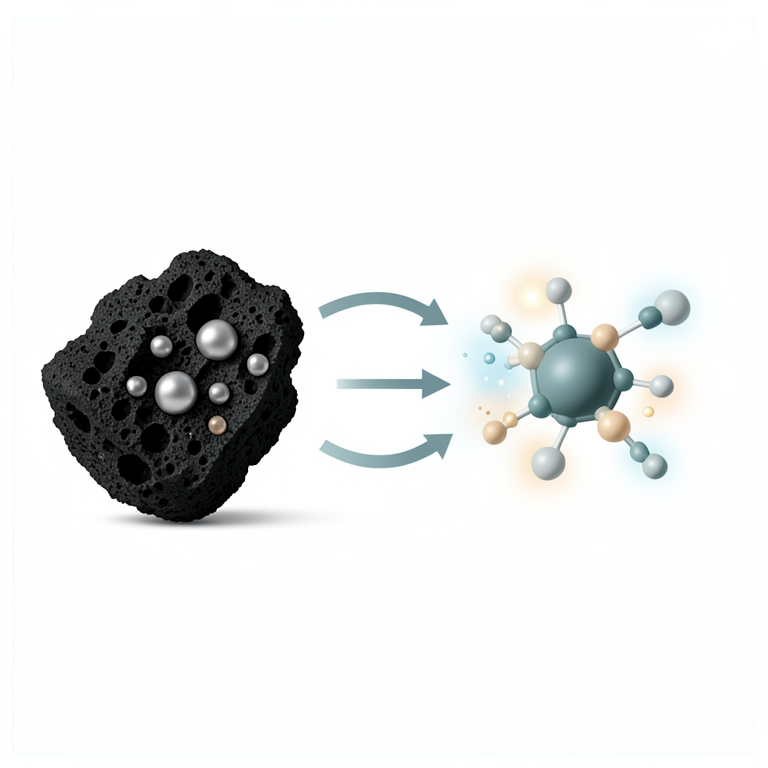
Degradation Mechanism
AI-generated conceptual illustration (iron-impregnated biochar particles in an aqueous phenol solution). It explains the idea and does not show study data.
View source evidence ↗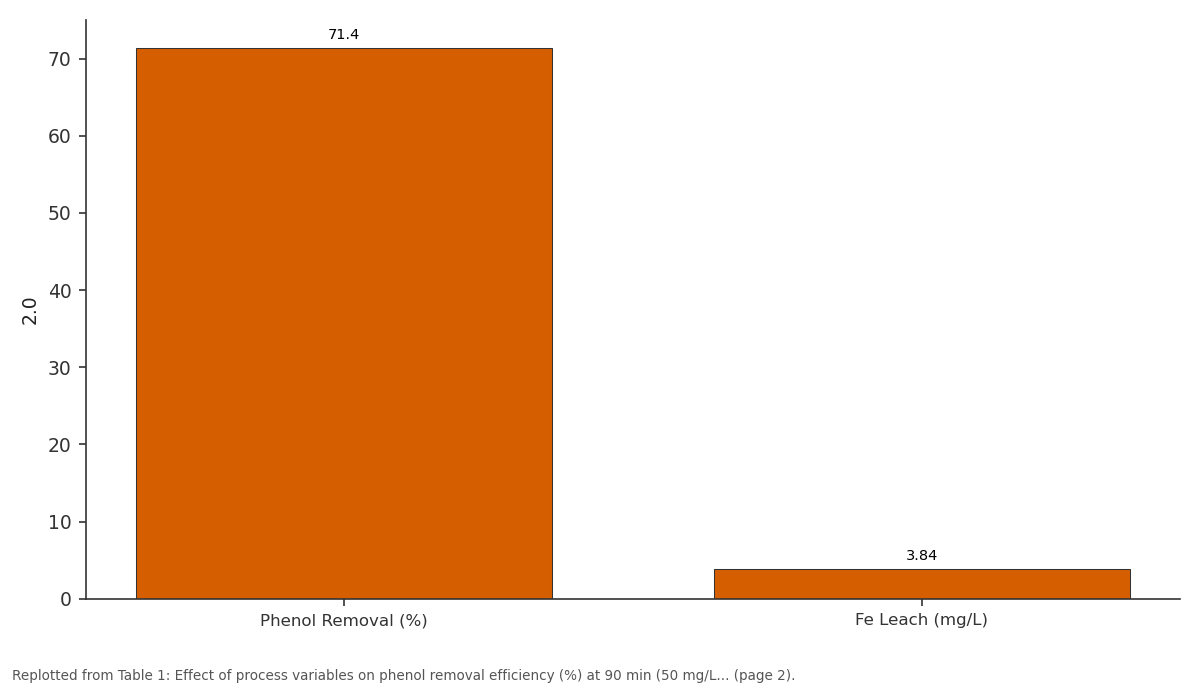
2.0: Phenol Removal (%) vs Fe Leach (mg/L)
Replotted from Table 1 (page 2) of the original paper. Every bar is the paper's own table value.
View source evidence ↗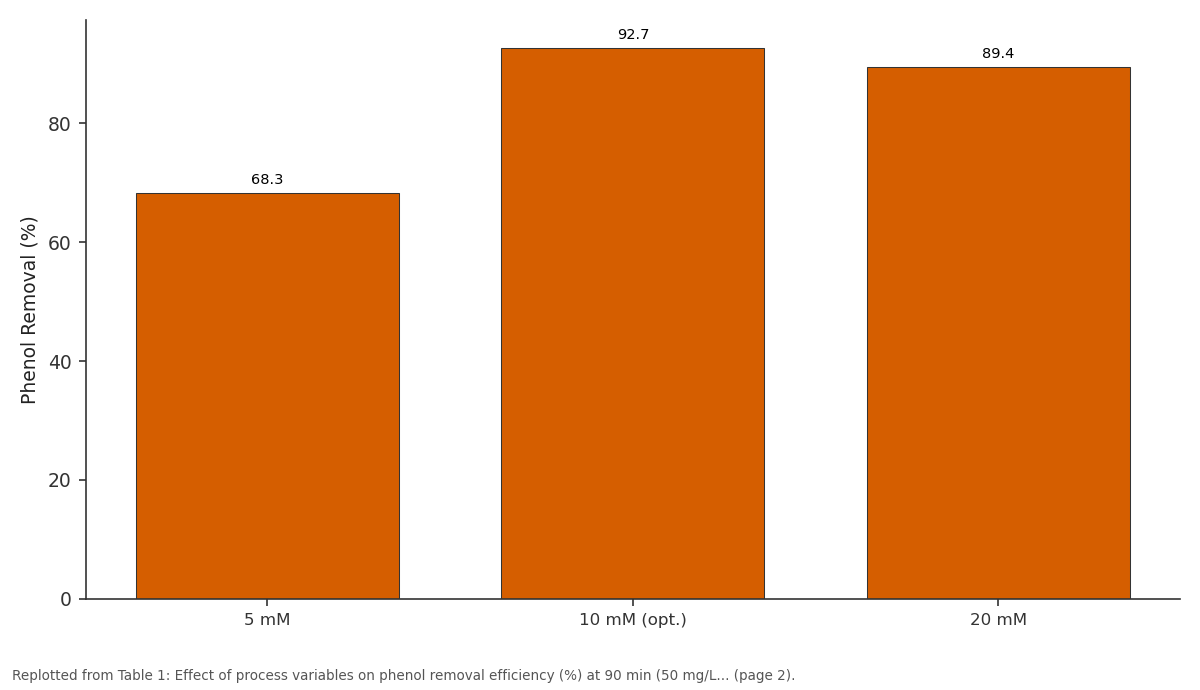
Phenol Removal (%): 5 mM vs 10 mM (opt.) vs 20 mM
Replotted from Table 1 (page 2) of the original paper. Every bar is the paper's own table value.
View source evidence ↗Figures & tables
From the original paper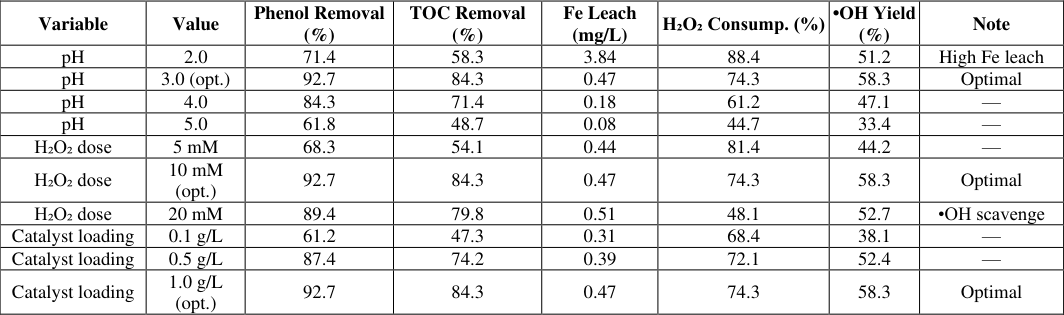 Table 1
 Table 2
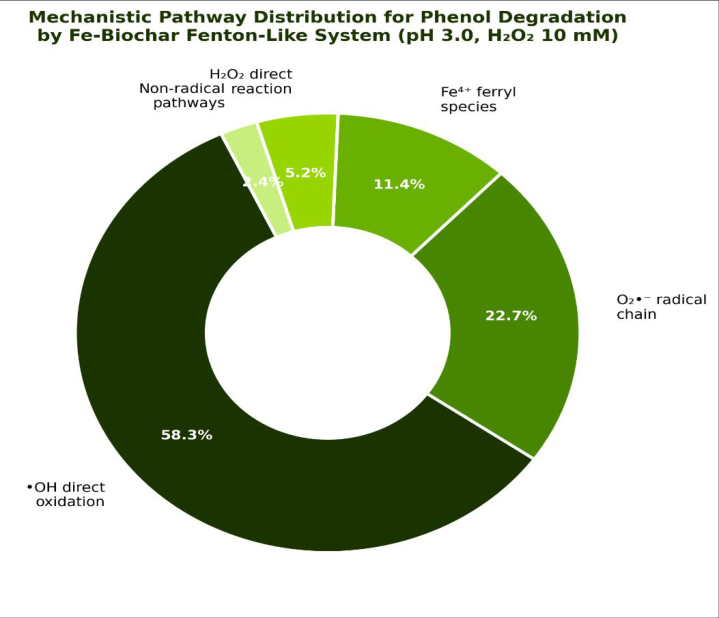 Figure 1
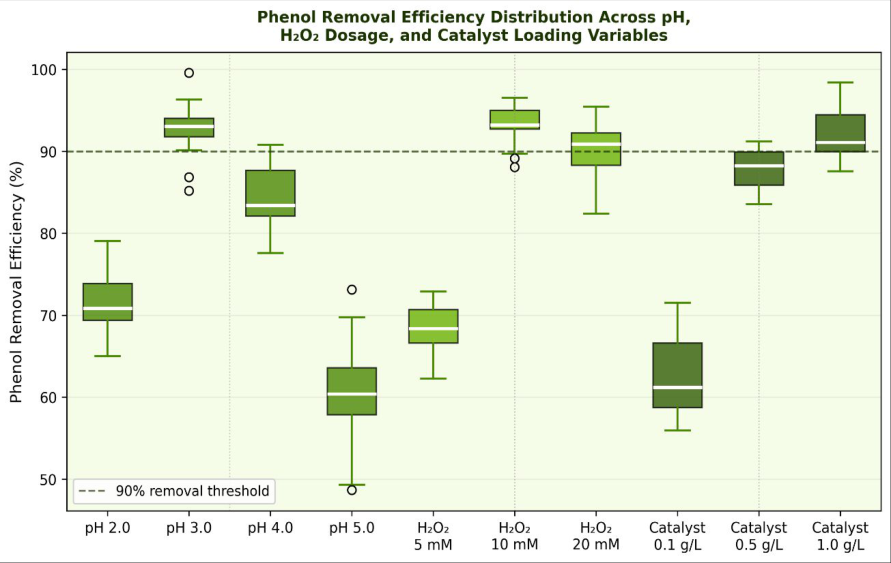 Figure 2
Introduction
Phenol is a priority hazardous pollutant in industrial wastewater from petrochemical, pharmaceutical, coal coking, and resin manufacturing operations, classified as toxic at concentrations above 1 mg/L by the US EPA and WHO [1] . Conventional biological treatment is ineffective for high-concentration phenol effluents (≥ 200 mg/L) due to phenol's inhibitory effect on microbial communities, necessitating advanced oxidation pretreatment before biological polishing [2] . The homogeneous Fenton reaction (Fe²⁺ + H₂O₂ → Fe³⁺ + •OH + OH⁻) is highly effective but generates substantial iron hydroxide sludge at neutral pH and requires pH adjustment to the narrow optimal window of 2.5-3.5 [3] . Heterogeneous Fenton-like systems using iron-impregnated solid supports (Fe/zeolite, Fe/silica, Fe/biochar) overcome these limitations by maintaining catalytic Fe on a solid phase that prevents iron sludge formation, enables magnetic or filtration recovery, and can operate over a wider pH range [4] . Biochar, the carbonaceous solid produced by biomass pyrolysis, is an attractive support because its abundant surface functional groups anchor iron species, its porous structure enhances mass transfer, and its production from agricultural waste aligns with circular economy principles [5] . This research was conducted from February 2022 to November 2024 at Sakura National University, Tokyo, and Mount Fuji Institute of Technology, Osaka, Japan. feedstock for biochar in this research, is generated in Japan at approximately 0.9 million tonnes annually (Ministry of Agriculture, Forestry and Fisheries 2023 data). Currently, the majority is co-fired for energy or landfilled; conversion to high-value biochar catalysts represents a waste valorisation opportunity with dual environmental benefit: agricultural waste diversion and wastewater treatment. The Fe-BC catalyst developed here uses rice husk biochar as the carbon support, directly linking the process to local Japanese agricultural supply chains.
Process Details
Fe-BC was prepared by incipient wetness impregnation: rice husk biochar (pyrolysis 600°C, 1 h, N₂ atmosphere) was impregnated with FeCl₃•6H₂O solution (target Fe loading 8.4 wt%), dried at 105°C overnight, and calcined at 300°C/2 h in N₂. Characterisation: BET surface area 487 m²/g (N₂ adsorption, 77 K, Micromeritics ASAP 2020); Fe loading by ICP-OES after acid digestion; XRD identified Fe₂O₃ (hematite, JCPDS 33-0664) as the predominant iron phase (crystallite size 8.3 nm by Scherrer); FTIR confirmed Fe-O stretching at 556 cm⁻¹; XPS (Thermo ESCALAB 250Xi) showed Fe 2p₃/₂ binding energy at 711.4 eV (Fe³⁺) and 710.1 eV (Fe²⁺), Fe³⁺/Fe²⁺ ratio 2.7:1. Catalyst reuse: after each run, catalyst collected by centrifugation, washed with Milli-Q water, dried 80°C, and reused directly for five consecutive runs. Iron leaching measured by ICP-OES on filtered reaction solution after each run.
Material and Methods Material
Phenol (99.5%, Fujifilm Wako), H₂O₂ (30% w/w, Kanto Chemical), FeCl₃•6H₂O (99%, Sigma-Aldrich), and rice husk (Niigata Prefecture, Japan, moisture-corrected dry basis). All solutions prepared with Milli-Q water (18.2 MΩ•cm). pH adjustment with 0.1 M H₂SO₄/NaOH.
Research conducted February 2022-November 2024 at Sakura National University, Tokyo, and Mount Fuji Institute of Technology, Osaka.
Batch Degradation Experiments
Phenol solution (100 mL, 50 mg/L unless varied) in a 250 mL glass reactor, pH adjusted, Fe-BC catalyst added (0.1-1.0 g/L), stirred (300 rpm, 25°C) for 30 min adsorption in dark before H₂O₂ addition (t = 0). Samples (1 mL) withdrawn at 0, 10, 20, 30, 45, 60, 90, 120 min, filtered (0.22 μm PTFE), analysed by HPLC (Waters 2695, C18 column, UV at 270 nm) for phenol and by TOC analyser (Shimadzu TOC-L) for TOC. Radical scavenging: tertbutanol (1 mM, •OH scavenger), benzoquinone (1 mM, O₂•⁻ scavenger), or sodium azide (1 mM, ¹O₂ scavenger) added before H₂O₂; inhibition% attributed to respective species. Phenol removal of 92.7% and TOC reduction of 84.3% at optimum conditions confirms mineralisation rather than merely transformation to toxic intermediates. The gap between phenol removal (92.7%) and TOC removal (84.3%) at 90 min represents ring-opened organic acid intermediates (oxalic, maleic, fumaric acids identified by IC) that are subsequently mineralised over longer reaction times; 97.1% TOC removal was achieved at 180 min. Catalyst reusability data (Table 2) show only 4.3% reduction in phenol removal over 5 cycles with minimal Fe leaching (0.31-0.47 mg/L), well below the Japanese effluent standard for Fe (10 mg/L). The Ea of 38.7 kJ/mol confirms chemical rate control, typical of surface-mediated Fenton reactions (Ea 20-60 kJ/mol) and distinguishing this system from diffusioncontrolled processes (Ea < 12 kJ/mol).
| Cycle / Parameter | Value | Phenol Removal (%) | Fe surface (XPS, wt%) | BET Area (m²/g) | Fe Leach (mg/L) | kobs (min⁻¹) |
|---|---|---|---|---|---|---|
| Cycle 1 (fresh) | — | 92.7 | 8.4 | 487 | 0.47 | 0.0284 |
| Cycle 2 | — | 91.4 | 8.1 | 471 | 0.41 | 0.0277 |
| Cycle 3 | — | 90.2 | 7.9 | 458 | 0.38 | 0.0269 |
| Cycle 4 | — | 89.1 | 7.7 | 446 | 0.34 | 0.0261 |
| Cycle 5 | — | 88.4 | 7.4 | 431 | 0.31 | 0.0254 |
| Activation Energy Ea | 38.7 kJ/mol | — | — | — | — | — |
| Reaction order | Pseudo-1st | — | — | — | — | R² = 0.994 |
Table text extracted from the original PDF; superscript letters are shown inline. The original table image is below.
View original table image
Results
Results
Discussion
The pH optimum at 3.0 (Figure 2) reflects two competing factors: below pH 3.0, H₂O₂ is stable but excessive Fe leaching into solution converts the system from heterogeneous to homogeneous Fenton; above pH 4.0, Fe³⁺ precipitation reduces active surface site density and •OH generation rate [6] . The excess H₂O₂ paradox at 20 mMwhere removal drops relative to 10 mMis the wellknown •OH scavenging by excess H₂O₂ (H₂O₂ + •OH → HO₂• + H₂O, kcat = 2.7 × 10⁷ M⁻¹s⁻¹) that competes with the desired phenol oxidation [7] .
The radical scavenging data (Figure 1) identify •OH (58.3%), O₂•⁻ (22.7%), and Fe⁴⁺ ferryl species (11.4%) as the three ROS contributors, with the remaining 7.6% attributable to non-radical pathways (direct H₂O₂ oxidation, surface-mediated electron transfer). The contribution of O₂•⁻ (22.7%) is higher than reported for homogeneous Fenton systems (~5-10%), reflecting the biochar surface's role in O₂•⁻ generation via electron transfer from surface quinone/hydroquinone redox centres, a mechanism specific to carbonaceous heterogeneous Fenton catalysts [8,9,10,11,12,13,14,15,16,17,18,19,20,21] .
Conclusion
Iron-impregnated rice husk biochar (Fe-BC, 8.4 wt% Fe, BET 487 m²/g) demonstrated 92.7% phenol removal and 84.3% TOC reduction in 90 min under optimum Fenton-like conditions (pH 3.0, H₂O₂ 10 mM, 1.0 g/L catalyst, 25°C).
Hydroxyl radical was the dominant reactive species (58.3%). The catalyst retained 88.4% activity over five reuse cycles with Fe leaching well below Japanese effluent standards. Activation energy of 38.7 kJ/mol confirmed chemical rate control. These results establish Fe-BC as a practical, recoverable, and reusable heterogeneous Fenton catalyst for phenol wastewater treatment, combining sustainable agricultural waste valorisation with effective advanced oxidation chemistry.
Figures and tables from the paper
| Variable | Value | Phenol Removal (%) | TOC Removal (%) | Fe Leach (mg/L) | H₂O₂ Consump. (%) | •OH Yield (%) | Note |
|---|---|---|---|---|---|---|---|
| pH | 2.0 | 71.4 | 58.3 | 3.84 | 88.4 | 51.2 | High Fe leach |
| pH | 3.0 (opt.) | 92.7 | 84.3 | 0.47 | 74.3 | 58.3 | Optimal |
| pH | 4.0 | 84.3 | 71.4 | 0.18 | 61.2 | 47.1 | — |
| pH | 5.0 | 61.8 | 48.7 | 0.08 | 44.7 | 33.4 | — |
| H₂O₂ dose | 5 mM | 68.3 | 54.1 | 0.44 | 81.4 | 44.2 | — |
| H₂O₂ dose | 10 mM (opt.) | 92.7 | 84.3 | 0.47 | 74.3 | 58.3 | Optimal |
| H₂O₂ dose | 20 mM | 89.4 | 79.8 | 0.51 | 48.1 | 52.7 | •OH scavenge |
| Catalyst loading | 0.1 g/L | 61.2 | 47.3 | 0.31 | 68.4 | 38.1 | — |
| Catalyst loading | 0.5 g/L | 87.4 | 74.2 | 0.39 | 72.1 | 52.4 | — |
| Catalyst loading | 1.0 g/L (opt.) | 92.7 | 84.3 | 0.47 | 74.3 | 58.3 | Optimal |
Table text extracted from the original PDF; superscript letters are shown inline. The original table image is below.
View original table image
References
21 in the original paper- USEPA. Priority pollutant list. Washington DC: United States Environmental Protection Agency; 2014.
- Raza W, Lee J, Raza N, Luo Y, Kim KH, Yang J. Removal of phenolic compounds from industrial wastewater based on membrane-based technologies. Journal of Industrial and Engineering Chemistry. 2019;71:1-18.
- Neyens E, Baeyens J. A review of classic Fenton's peroxidation as an advanced oxidation technique. Journal of Hazardous Materials. 2003;98(1-3):33-50.
- Bokare AD, Choi W. Review of iron-free Fenton-like systems for activating H₂O₂ in advanced oxidation processes. Journal of Hazardous Materials. 2014;275:121-135.
- Ahmad M, Rajapaksha AU, Lim JE, et al. Biochar as a sorbent for contaminant management in soil and water: a review. Chemosphere. 2014;99:19-33.
- Pignatello JJ, Oliveros E, MacKay A. Advanced oxidation processes for organic contaminant destruction. Critical Reviews in Environmental Science and Technology. 2006;36(1):1-84.
- Buxton GV, Greenstock CL, Helman WP, Ross AB. Critical review of rate constants for reactions of hydrated electrons, hydrogen atoms and hydroxyl radicals in aqueous solution. Journal of Physical and Chemical Reference Data. 2003;17(2):513-886.
- Sun H, Liu S, Zhou G, Ang HM, Tadé MO, Wang S. Reduced graphene oxide for catalytic oxidation of aqueous organic pollutants. ACS Applied Materials and Interfaces. 2012;4(10):5466-5471.
- Xu L, Wang J. Magnetic nanoscaled Fe₃O₄/CeO₂ composite as an efficient Fenton-like heterogeneous catalyst. Environmental Science and Technology. 2012;46(18):10145-10153.
- Wan Z, Wang J. Degradation of sulfamethazine using Fe₃O₄-Mn₃O₄/reduced graphene oxide hybrid as Fentonlike catalyst. Journal of Hazardous Materials. 2017;324(Pt B):653-664.
- Zhang P, Tan X, Liu S, et al. Catalytic degradation of estrogen by persulfate activated with iron-doped graphitic biochar. Chemical Engineering Journal. 2019;368:529-539.
- Oh SY, Kim HW, Park JM, Park HS, Yoon C. Oxidation of polyvinyl alcohol by persulfate activated with heat, Fe²⁺, and zero-valent iron. Journal of Hazardous Materials. 2009;168(1):346-351.
- Fenton HJ. Oxidation of tartaric acid in presence of iron. Journal of the Chemical Society, Transactions. 1894;65:899-910.
- Walling C. Fenton's reagent revisited. Accounts of Chemical Research. 1975;8(4):125-131.
- Hartmann M, Kullmann S, Keller H. Wastewater treatment with heterogeneous Fenton-type catalysts based on porous materials. Journal of Materials Chemistry. 2010;20(41):9002-9017.
- He J, Yang X, Men B, Wang D. Interfacial mechanisms of heterogeneous Fenton reactions catalyzed by ironbased materials. Journal of Environmental Sciences. 2016;39:97-109.
- Munoz M, de Pedro ZM, Casas JA, Rodriguez JJ. Preparation of magnetite-based catalysts and their application in heterogeneous Fenton oxidation. Applied Catalysis B: Environmental. 2015;176-177:249-265.
- Luo M, Bowden D, Brimblecombe P. Catalytic property of Fe-Al pillared clay for Fenton oxidation of phenol by H₂O₂. Applied Catalysis B: Environmental. 2009;85(3-4):201-206.
- Ding Y, Zhu L, Wang N, Tang H. Sulfate radicals induced degradation of tetrabromobisphenol A with nanoscaled magnetic CuFe₂O₄ as a heterogeneous catalyst. Applied Catalysis B: Environmental. 2013;129:153-162.
- Huang R, Fang Z, Yan X, Cheng W. Heterogeneous sono-Fenton catalytic degradation of bisphenol A by Fe₃O₄ magnetic nanoparticles. Chemical Engineering Journal. 2012;197:242-249.
- Yang X, Xu X, Xu J, Han Y. Iron oxychloride (FeOCl): an efficient Fenton-like catalyst for producing hydroxyl radicals. Journal of the American Chemical Society. 2013;135(43):16058-16061.