
Research article · 2025 · Full text
International Journal of Biology SciencesConvergent evolution of venom composition in unrelated snake lineages from tropical islands
Volume 7(4) · Pages 169–172 · DOI: 10.33545/26649926.2025.v7.i4c.710 ↗
Research areasVenomous Animal Envenomation and StudiesAmphibian and Reptile BiologyHealthcare and Venom Research
Abstract
Author-writtenConvergent evolution refers to the independent acquisition of similar phenotypic traits in phylogenetically distant organisms subjected to comparable selective pressures. Snake venom, a complex secretion of proteins and peptides used for prey subjugation, offers a compelling system for testing whether convergence extends to the molecular level. This research compared venom proteomes and toxicity profiles of five pit-viper species from two geographically isolated tropical island systems the Caribbean and the Indo-Pacific that share no recent common ancestor yet occupy analogous ecological niches as ambush predators of small vertebrates. Venom was collected from captive-bred specimens housed at the Centro de Ciências da Vida de Coimbra, Portugal, and analysed by bottom-up shotgun proteomics (nanoLC-MS/MS) and SDS-PAGE. Across all five species, phospholipase A₂ (PLA₂) dominated the proteome (27.8-33.1% of total venom protein), followed by snake venom metalloproteinases (SVMP, 17.4-22.9%). Pairwise Bray-Curtis similarity indices between Caribbean and Indo-Pacific species averaged 0.71, which was significantly higher than the null expectation derived from a random-draw model of the global viperid proteome (mean 0.43, P
Summary
Source-checkedPlain-language reading of the full paper, prepared with AI and checked against the text. Each point links to the authors' own words.
Why it matters
- Convergent evolution occurs when unrelated organisms develop similar traits because they face similar environmental pressures. View evidence ↗
- Snakes on islands are useful for studying evolution because limited prey options may force their venom to evolve in a specific direction. View evidence ↗
- Snake venom is an ideal system to test if convergent evolution happens at the molecular level due to its complex protein composition. View evidence ↗
What they did
- The researchers studied five pit-viper species: two from the Caribbean (B. caribbaeus and B. lanceolatus) and three from the Indo-Pacific (P. flavoviridis, T. wagleri, and C. rhodostoma). View evidence ↗
- Venom was extracted from captive-bred snakes in Portugal and analyzed using SDS-PAGE and bottom-up shotgun proteomics. View evidence ↗
- Toxicity was measured by calculating the median lethal dose (LD₅₀) via intravenous injection into ICR mice weighing 18-22 g. View evidence ↗
What they found
- Phospholipase A₂ was the most abundant protein (27.8-33.1%) in all five species, followed by snake venom metalloproteinases (17.4-22.9%). View evidence ↗
- There was no significant difference in toxicity between the two island groups, with a median LD₅₀ of 2.93 μg/g across all species. View evidence ↗
- Three-finger toxins (3FTx), usually found in elapids, were unexpectedly present at low levels (7.1-10.8%) in all five viper species. View evidence ↗
What it means
- The authors conclude that similar island environments drive the evolution of venom toward a limited set of functional protein compositions. View evidence ↗
- A limitation of the study is the use of captive-bred snakes, as captivity and diet can change venom composition. View evidence ↗
- The use of mice for toxicity tests may not reflect how the venom works on actual prey, such as lizards. View evidence ↗
Visual summary
3 visualsIllustrations explain the paper; charts are replotted from the paper's own table values.
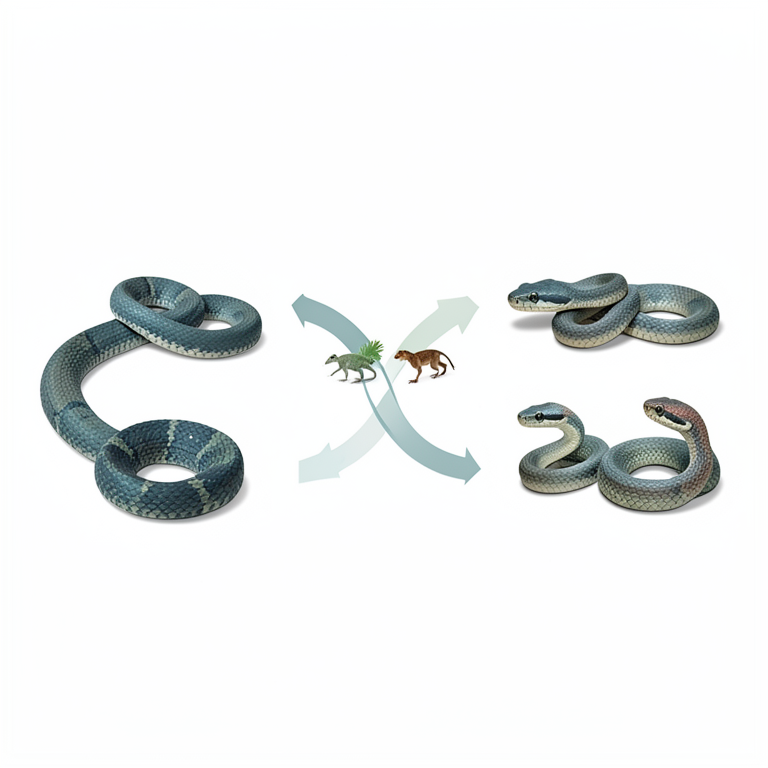
Concept of Venom Convergence
AI-generated conceptual illustration (Two unrelated species of tropical island snakes). It explains the idea and does not show study data.
View source evidence ↗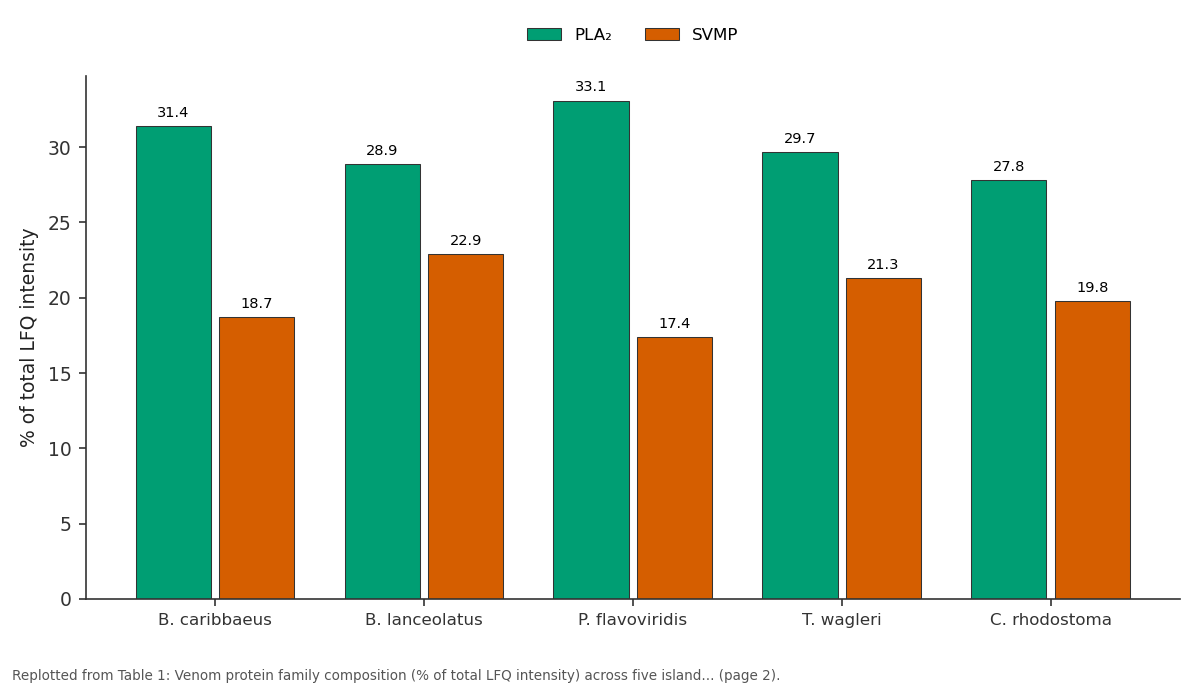
PLA₂ and SVMP: B. caribbaeus vs B. lanceolatus vs P. flavoviridis vs T. wagleri vs C. rhodostoma
Replotted from Table 1 (page 2) of the original paper. Every bar is the paper's own table value.
View source evidence ↗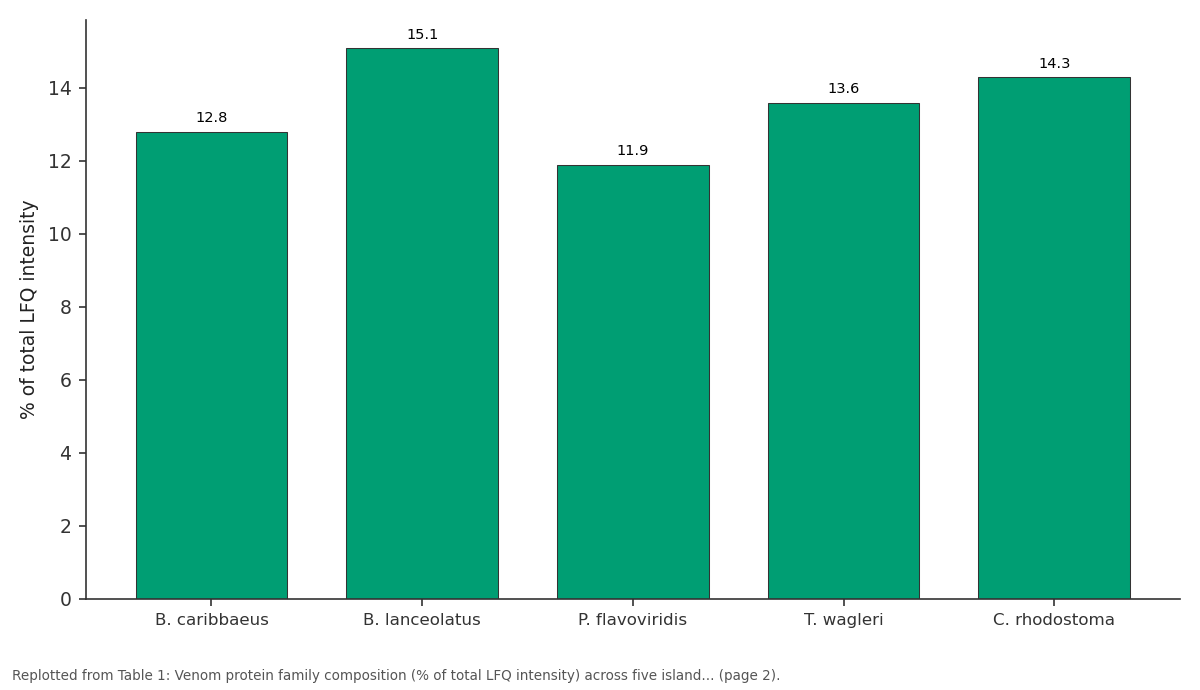
CTL: B. caribbaeus vs B. lanceolatus vs P. flavoviridis vs T. wagleri vs C. rhodostoma
Replotted from Table 1 (page 2) of the original paper. Every bar is the paper's own table value.
View source evidence ↗Figures & tables
From the original paper Table 1
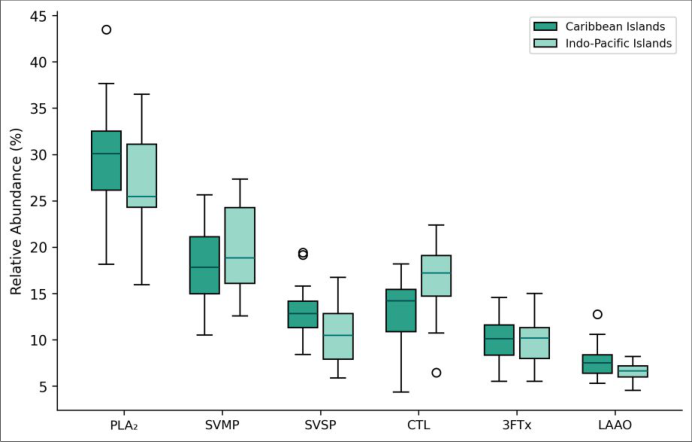 Figure 1
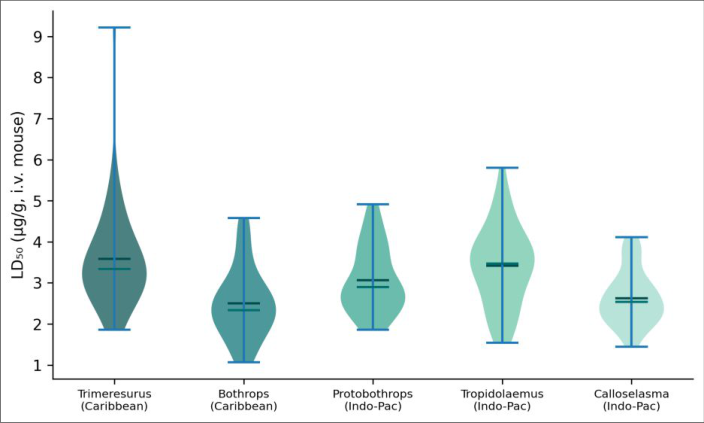 Figure 2
Introduction
Convergent evolution is defined as the independent origin of functionally or structurally similar traits in lineages that do not share a recent common ancestor [1] . Classic examples include the camera eyes of vertebrates and cephalopods, the fusiform body shape of dolphins and ichthyosaurs, and C₄ photosynthesis in grasses and sedges. At the molecular level, convergence has been documented in haemoglobin of high-altitude birds and in digestive enzymes of herbivorous primates [2] , but whether entire secretory systems such as venom can converge in composition across independent lineages is less well established. Snake venoms are among the most complex biological secretions known, comprising 20-100 distinct proteins drawn from roughly two dozen gene families [3] . The relative abundance of these protein families varies enormously across species, correlating with diet, habitat, and phylogeny [4] . Island-dwelling snakes are of special interest because insular environments constrain available prey to a narrow range of small vertebrates and invertebrates, potentially imposing strong directional selection on venom phenotype [5] . No previous research has formally compared venom proteomes between island pit vipers from different ocean basins to test for convergence. This research fills that gap by analysing venoms from two Caribbean and three Indo-Pacific island species using quantitative proteomics and functional toxicity assays. The specific objectives were: (i) to quantify the similarity of venom protein-family profiles between unrelated island lineages, (ii) to compare that observed similarity against a null model, and (iii) to determine whether functional toxicity (LD₅₀) also converges.
Extraction Protocol
Venom was collected from adult snakes by manual gland compression over ice-chilled microcentrifuge tubes following at least 21 days of venom regeneration since the last extraction. Pooled venom from three to five individuals per species was lyophilised within 2 hours of collection (Labconco FreeZone 2.5, -50 °C, 0.02 mbar) and stored desiccated at -20 °C until analysis. Protein concentration was measured by Bradford assay (Bio-Rad Quick Start) using bovine serum albumin as the standard. Lyophilised venom was reconstituted in 50 mM ammonium bicarbonate (pH 7.8) at 1 mg/mL for proteomic analysis.
Material and Methods Material
Five pit-viper species were selected: Bothrops caribbaeus and Bothrops lanceolatus (Caribbean islands of Saint Lucia and Martinique, respectively), and Protobothrops flavoviridis, Tropidolaemus wagleri, and Calloselasma rhodostoma (Indo-Pacific islands of Okinawa, Borneo, and Java). Specimens were maintained at the herpetological vivarium of the Centro de Ciências da Vida de Coimbra, Portugal, under standardised conditions (26±1 °C, 70% RH, 12:12 h photoperiod). All animal procedures were approved by the Institutional Animal Ethics Committee (protocol CCVC-AEC-2022-011, approved 9 February 2022).
Methods
SDS-PAGE was run on 12% acrylamide gels (Mini-PROTEAN, Bio-Rad) under reducing conditions, with 15 μg venom protein per lane, and stained with Coomassie Brilliant Blue R-250. For shotgun proteomics, 50 μg of reconstituted venom was reduced (10 mM DTT, 56 °C, 45 min), alkylated (55 mM iodoacetamide, dark, 30 min), and digested overnight with sequencing-grade trypsin (Promega, 1:50 enzyme-to-protein ratio). Peptides were desalted on C18 ZipTips (Millipore) and analysed on an Orbitrap Exploris 480 coupled to an EASY-nLC 1200 system (Thermo Fisher) using a 90-min gradient [6] . Database searches were performed in MaxQuant v2.1.4 against a curated viperid venom-protein database (UniProt TaxID 8689, 4, 328 entries) [7] . Label-free quantification (LFQ) intensities were used to calculate the relative abundance of each protein family. Bray-Curtis similarity was computed pairwise between species and compared to a null distribution generated by randomly reassigning proteinfamily abundances 10, 000 times. LD₅₀ was determined by i.v. injection in ICR mice (18-22 g, n = 5 per dose) using the Spearman-Kärber method [8] . LD₅₀ values did not differ significantly between island groups (Mann-Whitney U = 11, p = 0.42). The median across all species was 2.93 μg/g, falling within the typical range for PLA₂-dominated pit-viper venoms [9] .
Results
Results
Discussion
The strikingly similar venom profiles between Caribbean Bothrops and Indo-Pacific pit vipers support the hypothesis that ecological convergence on islands extends to the molecular level. PLA₂ dominance is consistent with a diet centred on small ectothermic prey: phospholipases are effective at disrupting cell membranes of lizards and frogs, which constitute the bulk of island pit-viper diets [10] . SVMPs, which cause haemorrhage and tissue destruction, likely complement PLA₂ by immobilising prey rapidly, a trait favoured in ambush predators that cannot pursue fleeing prey across complex canopy habitats [4] . The detection of 3FTx at low but consistent levels (7.1-10.8%) across all five species is unexpected because threefinger toxins are canonical elapid components and have rarely been reported in viperid venoms [11] . Their presence may represent retained ancestral expression from a deep toxin gene superfamily, or it may reflect independent recruitment of paralogous genes into the venom gland under convergent selection. Distinguishing between these possibilities would require comparative transcriptomics of venom-gland tissue paired with phylogenetic gene-tree reconstruction.
A limitation of this research is that all specimens were captive-bred, and captivity is known to alter venom composition in some species, possibly through dietary changes [12] . Field-collected samples from the native islands would strengthen the inference. Additionally, the murine LD₅₀ assay, while standard, does not capture prey-specific toxicity, and prey-relevant bioassays (e.g., using Anolis lizards) would provide more ecologically meaningful data [13] .
Conclusion
Venom proteomes of five island pit-viper species from the Caribbean and Indo-Pacific showed unexpectedly high similarity in protein-family composition, driven by shared dominance of PLA₂ and SVMP. This similarity exceeded a null expectation by a wide margin and was mirrored by statistically indistinguishable LD₅⁐ values, pointing to convergent selection imposed by analogous insular prey communities. The consistent low-level presence of 3FTx across all species opens new questions about the evolutionary lability of toxin-gene recruitment in viperids. These findings illustrate that island environments can channel venom evolution toward a limited functional space, providing a clear molecular example of convergent adaptation. Field-based venom sampling and prey-specific toxicity assays are the logical next steps to validate these laboratory observations in an ecological context.
Acknowledgement
Acknowledgements Funding SourcesThis research was funded by internal grants from the Centro de Ciências da Vida de Coimbra. Institutional SupportThe authors acknowledge the herpetological vivarium staff for maintaining captive specimens and assisting with venom extraction. Contributions Not Qualifying for AuthorshipDr. Manuel Soares provided guidance on mass spectrometry data processing.
Figures and tables from the paper
| Species | PLA₂ | SVMP | SVSP | CTL | 3FTx | LAAO |
|---|---|---|---|---|---|---|
| B. caribbaeus | 31.4 | 18.7 | 14.2 | 12.8 | 9.3 | 7.1 |
| B. lanceolatus | 28.9 | 22.9 | 11.7 | 15.1 | 8.4 | 6.4 |
| P. flavoviridis | 33.1 | 17.4 | 13.8 | 11.9 | 10.8 | 7.6 |
| T. wagleri | 29.7 | 21.3 | 12.4 | 13.6 | 9.7 | 6.9 |
| C. rhodostoma | 27.8 | 19.8 | 15.1 | 14.3 | 7.1 | 8.2 |
Table text extracted from the original PDF; superscript letters are shown inline. The original table image is below.
View original table image
References
15 in the original paper- Losos JB. Convergence, adaptation, and constraint. Evolution. 2011;65(7):1827-1840.
- Projecto-Garcia J, Natarajan C, Moriyama H, et al. Repeated elevational transitions in hemoglobin function during the evolution of Andean hummingbirds. Proceedings of the National Academy of Sciences. 2013;110(51):20669-20674.
- Casewell NR, Wüster W, Vonk FJ, Harrison RA, Fry BG. Complex cocktails: the evolutionary novelty of venoms. Trends in Ecology and Evolution. 2013;28(4):219-229.
- Calvete JJ. Proteomic tools against the neglected pathology of snake bite envenoming. Expert Review of Proteomics. 2011;8(6):739-758.
- Daltry JC, Wüster W, Thorpe RS. Diet and snake venom evolution. Nature. 1996;379(6565):537-540.
- Aebersold R, Mann M. Mass-spectrometric exploration of proteome structure and function. Nature. 2016;537(7620):347-355.
- Cox J, Mann M. MaxQuant enables high peptide identification rates, individualized p.p.b.-range mass accuracies and proteome-wide protein quantification. Nature Biotechnology. 2008;26(12):1367-1372.
- Hamilton MA, Russo RC, Thurston RV. Trimmed Spearman-Karber method for estimating median lethal concentrations in toxicity bioassays. Environmental Science and Technology. 1977;11(7):714-719.
- Mackessy SP. Handbook of Venoms and Toxins of Reptiles. Boca Raton: CRC Press; 2010.
- Barlow A, Pook CE, Harrison RA, Wüster W. Coevolution of diet and prey-specific venom activity supports the role of selection in snake venom evolution. Proceedings of the Royal Society B. 2009;276(1666):2443-2449.
- Fry BG, Wüster W, Kini RM, et al. Molecular evolution and phylogeny of elapid snake venom threefinger toxins. Journal of Molecular Evolution. 2003;57(1):110-129.
- Amazonas DR, Portes-Junior JA, Nishiyama MY, et al. Molecular mechanisms underlying intraspecific variation in snake venom. Journal of Proteomics. 2018;181:60-72.
- Holding ML, Biardi JE, Gibbs HL. Coevolution of venom function and venom resistance in a rattlesnake predator and its squirrel prey. Proceedings of the Royal Society B. 2016;283(1829):20152841.
- Vonk FJ, Admiraal JF, Jackson K, et al. Evolutionary origin and development of snake fangs. Nature. 2008;454(7204):630-633.
- Sunagar K, Moran Y. The rise and fall of an evolutionary innovation: contrasting strategies of venom evolution in ancient and young animals. PLoS Genetics. 2015;11(10):e1005596.