
Research article · 2026 · Full text
International Journal of Biology SciencesEffect of cadmium and chromium stress on the germination, seedling growth and enzyme activities of black gram (Vigna mungo)
Volume 8(4) · Pages 80–85 · DOI: 10.33545/26649926.2026.v8.i4a.624 ↗
Research areasPlant Stress Responses and ToleranceHeavy metals in environmentChromium effects and bioremediation
Abstract
Author-writtenHeavy metal pollution is a growing concern worldwide, and cadmium (Cd) and chromium (Cr) are two of the most toxic metals affecting plant growth. This study investigated The effect of cadmium and chromium on germination and seedling growth of black gram (Vigna mungo) seeds. The germination test was done in petriplates and seeds were exposed to varying concentrations of cadmium and chromium (50, 100, 150, 200, 250, and 300 µM) and studied for germination potential, germination rate, seedling length, and biomass production. For seedling growth essay Vigna mungo seedlings grown in Hoagland’s solution were exposed to cadmium and chromium stress with dosages (10, 30, 50µM). The seedling growth, biomass, chlorophyll, proline levels and antioxidant enzyme levels were studied. Results showed that both cadmium and chromium significantly reduced germination percentage, seedling length, biomass production, photosynthetic pigments, proline levels and antioxidant enzyme content in a concentration dependent manner. The exposure to higher dosages of cadmium and chromium resulted in more pronounced adverse effects on seedling growth. The cadmium showed more toxic damage than chromium. The study highlights the sensitivity of black gram to cadmium and chromium stress and the potential risks of heavy metal pollution on agricultural productivity.
Summary
Source-checkedPlain-language reading of the full paper, prepared with AI and checked against the text. Each point links to the authors' own words.
Why it matters
- Cadmium (Cd) and chromium (Cr) are among the most toxic heavy metals globally, posing a significant threat to plant growth. View evidence ↗
- The absorption of heavy metal pollutants by plants is a critical issue because it introduces these toxins into the food chain, leading to hazardous health effects. View evidence ↗
- Heavy metal toxicity can disrupt essential plant processes, including seed germination, seedling growth, and photosynthesis. View evidence ↗
The question
- The study aimed to investigate how cadmium and chromium toxicity affect the germination, growth, development, and enzymatic parameters of black gram (Vigna mungo). View evidence ↗
What they did
- For the germination tests, seeds were exposed to cadmium and chromium concentrations of 50, 100, 150, 200, 250, and 300 µM. View evidence ↗
- Seedling growth was assessed by transferring 7-day-old plants to Hoagland's solution and subsequently exposing them to 10, 30, and 50 µM of Cd and Cr. View evidence ↗
- Ten days after treatment, seedlings were harvested to measure chlorophyll, proline levels, and the activity of antioxidant enzymes (POX and SOD) using a spectrophotometer. View evidence ↗
What they found
- Both cadmium and chromium caused a concentration-dependent reduction in germination percentage, seedling length, biomass, photosynthetic pigments, proline, and antioxidant enzyme content. View evidence ↗
- Cadmium was found to be more toxic than chromium, causing more pronounced damage to seedling growth. View evidence ↗
- Heavy metal treatment increased the levels of peroxidase and SOD, with the maximum increase observed at the 50 µM cadmium dose. View evidence ↗
What it means
- The authors concluded that cadmium and chromium negatively impact the germination, growth, and antioxidant levels of black gram, with toxicity increasing proportionally to the dose. View evidence ↗
- The authors specifically noted that cadmium has a more inhibitory and toxic effect on seed germination and seedling growth than chromium. View evidence ↗
Visual summary
3 visualsIllustrations explain the paper; charts are replotted from the paper's own table values.
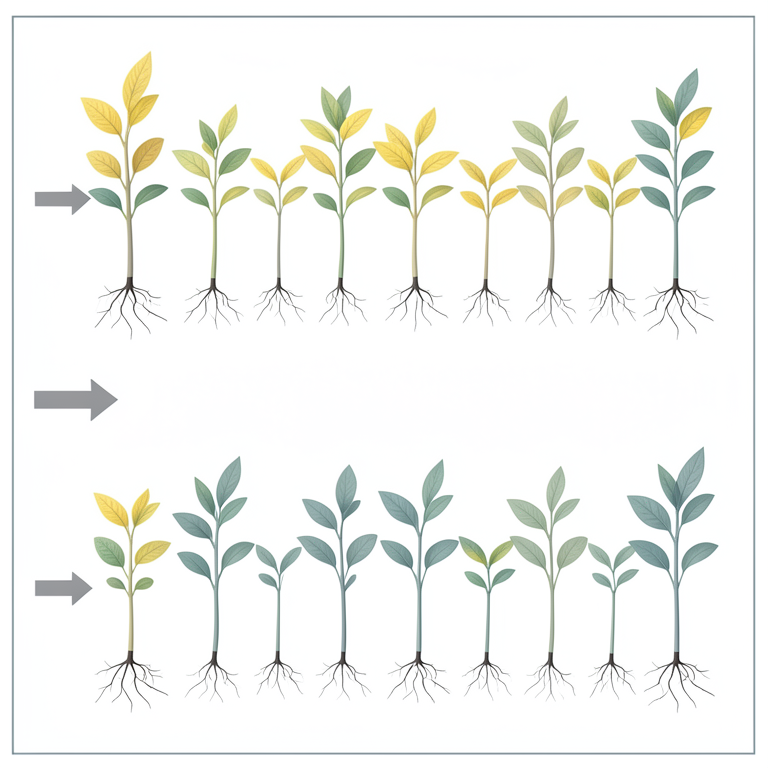
Dose-Response Toxicity Comparison
AI-generated conceptual illustration (black gram seedlings (Vigna mungo)). It explains the idea and does not show study data.
View source evidence ↗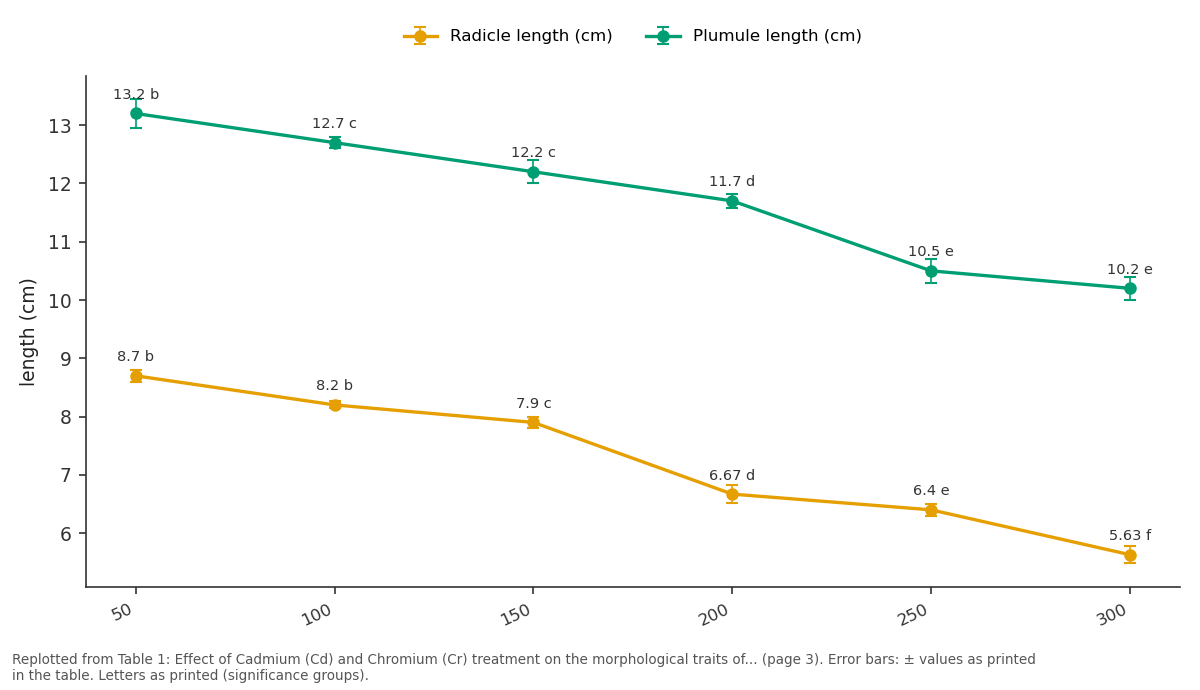
Radicle length (cm) and Plumule length (cm): 50 vs 100 vs 150 vs 200 vs 250
Replotted from Table 1 (page 3) of the original paper. Every bar is the paper's own table value.
View source evidence ↗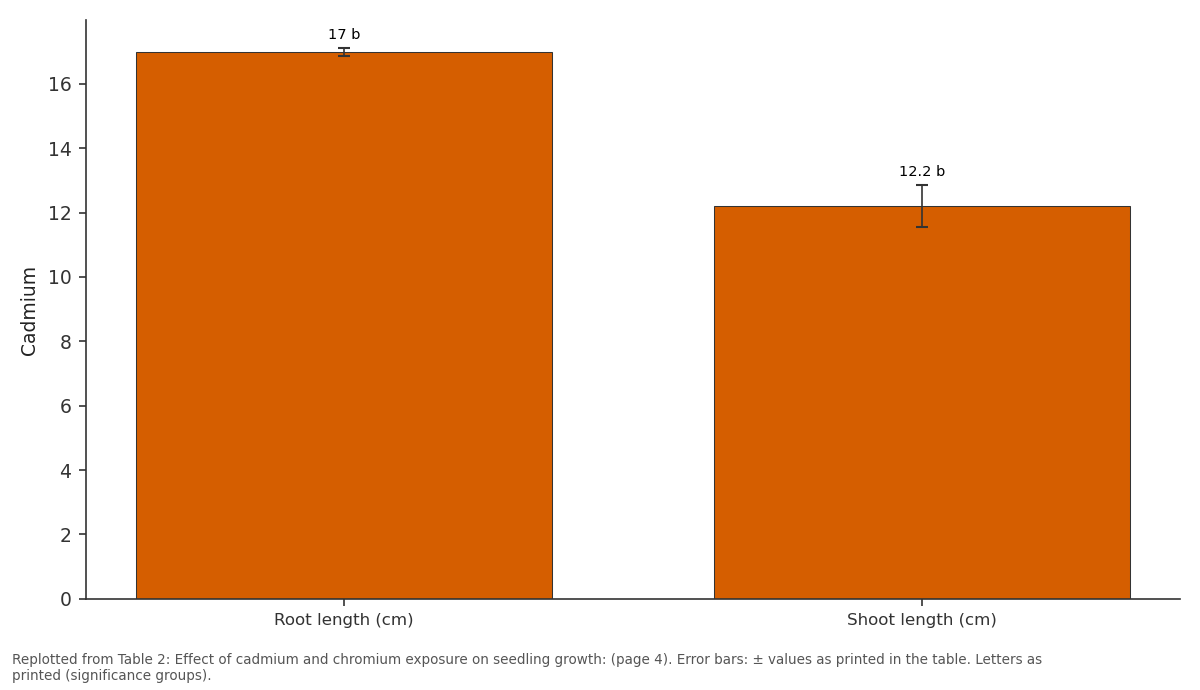
Cadmium: Root length (cm) vs Shoot length (cm)
Replotted from Table 2 (page 4) of the original paper. Every bar is the paper's own table value.
View source evidence ↗Figures & tables
From the original paper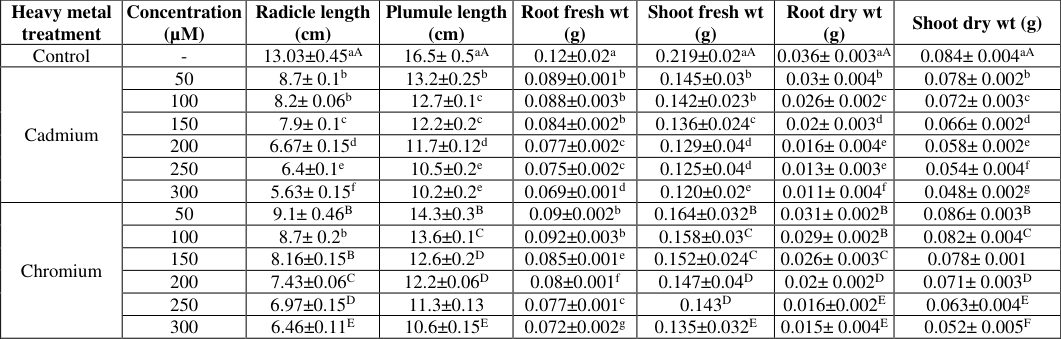 Table 1
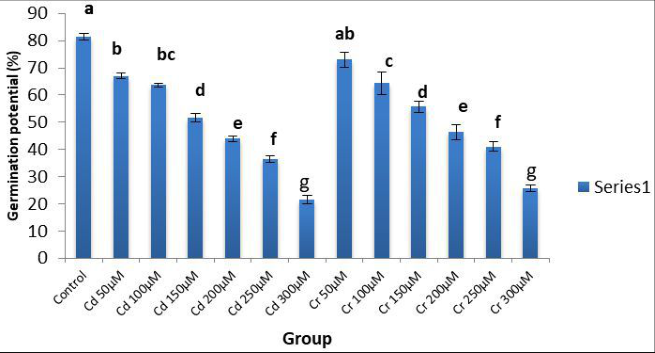 Figure 1
 Table 2
 Table 3
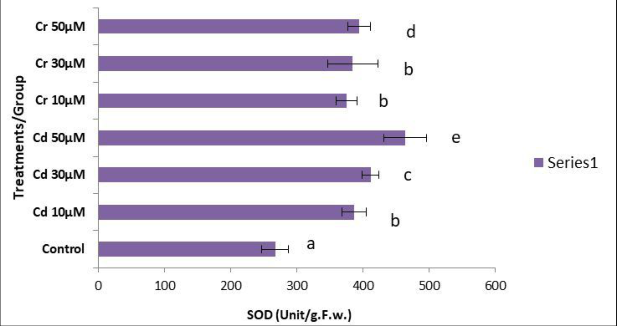 Figure 2
Introduction
Environment contamination by heavy metals has become a serious problem worldwide as it has negative effect on the ecosystem and human being. The use of fertilizers, pesticides, mining and industrial activities are the main anthropogenic activities that increase the pollution of environment. Uptake of these toxic pollutants by plants incorporates those in the food chain causing hazardous health effects. According to World health Organization (WHO), presence of heavy metal in the drinking water is one of the major causes for degradation of the ecosystem 1 . Heavy metals such as lead, arsenic, cadmium, chromium and mercury are extremely toxic causing acute and chronic poisoning in humans and animals and may even lead to cellular damage. Not only animals and humans, plants are also sensitive to such toxic chemicals as heavy metal toxicity can effect the seed germination and seedling growth, photosynthesis and other physiological events of plants. Heavy metals, particularly cadmium and chromium are persistent environmental pollutants that pose significant threats to plant growth and development. It was noticed that heavy metal like cadmium and chromium concentration levels between 10 to 200 ppm have significant effect in seed germination, viability of the seeds and their further development. In the present experiment the effect of cadmium and chromium toxicity on germination of black gram seeds (Vigna mungo), seedling growth, development and the effect on enzymatic parameters were studied.
The seeds were blotted dried. Cadmium and chromium stress solutions were prepared by diluting 0.1N solutions of Cd(NO 3 ) 2. 4H 2 O and K₂Cr₂O₇ to get concentrations of (50, 100, 150, 200, 250, and 300 µM) for each. 9-cm diameter petridish lined with two layers of filter paper were taken for germination testing experiment. Petriplates with filter paper were saturated with distilled water (Control), cadmium (Cd) and chromium (Cr) solutions of given concentrations. Twenty seeds were placed in each petriplates (n=3 replicates per treatment) and incubated at 24°C darkness. The number of germination seeds was recorded each day for 7 days and germination was defined as radicle emergence ≥ 2mm. The germination potential (GP), germination rate (GR), radical and plumule length, fresh and dry weigh of roots and shoots were collected. The germination potential (GP) was calculated using the following equation [21] .
where GP is the 3-day germination count (G3) divided by the tested count (Gn). And the formula for the germination rate (GR) is given by the following equation,
where GR is the 7-day germination count (G7) divided by Gn.
Seedling growth assessment
Seeds were allowed to germinate in plastic containers (depth 12 cm, width 12 cm, height 12 cm) containing cocopeat. Water was added everyday to keep the cocopeat moist. The 7-day old seedlings were transferred to 1-litre flasks filled with ½strength Hoagland's nutrient solution, 10 plants in each container. After 3 days, the Hoagland's solution in each pots was replaced with a fresh solution containing (10, 30, 50µM of Cd and Cr each). Plants growth and treatment continued for 20 days (maintaining 15±2°C, 70-80% relative humidity). After 10 days of Cd and Cr treatment seedlings were observed and the length of root and shoot was recorded. Moisture content was recorded following the method of Wang et al., 2025 [21] .
Chlorophyll pigment analysis
The whole seedlings from each pot per group were harvested separately 10 days after Cd and Cr treatment and were subjected to chlorophyll and other assays. Chlorophyll analysis was done as per methods described by Arnon (1949) [2] . 1g of leaf samples were cut into small pieces and immersed in 10 ml of 80% acetone in a glass tube. The open end of the tubes was wrapped with aluminum foil to avoid the loss of acetone solution. All the tubes were labeled and kept in a big beaker and then kept in the refrigerator at 4°C for three days (72 hrs.) after covering the beaker with carbon paper to avoid light penetration through the beaker. After 72 hrs, the supernatant was decanted, and absorbency for each sample was recorded at 645 nm, 480 nm, and 663 nm in a spectrophotometer taking acetone as a blank.
Estimation of Proline
Proline content was estimated according to Bates et al.
(1973) method [3] . 0.5 g plant tissue was homogenized in 5 ml of 3% sulphosalicylic acid. The homogenate was centrifuged at 1000 rpm. The supernatant was treated with 2 ml of acid ninhydrin and 2 ml of glacial acetic acid for 1 hour in a boiling water bath. After cooling the solution in an ice bath, free proline was extracted in 4 ml of toluene by shaking the tubes vigorously for a min. The Chromophore phase containing toluene was separated from the aqueous phase, and the optical density of the solution was measured at 520 nm. The proline concentration was determined from a standard curve.
Antioxidant enzyme activity
Antioxidant enzymes such as peroxidase (POX), and superoxide dismutase (SOD) activity were determined by spectrophotometer. For the extraction of the enzyme, 0.5g leaf samples were homogenized in ice-cold 0.1 M phosphate buffer (pH: 7.5) containing 0.5 mM EDTA with pre-chilled mortar and pestle. Each homogenate was transferred to centrifuge tubes and centrifuged at 4°C for 15 min at 15,000 × g. The supernatant was taken for the enzyme activity assay [8,9] . The nitro blue tetrazolium (NBT) photoreduction method measured superoxide dismutase activity. The reaction mixture (3ml) contains 1.7 ml of 50 mM phosphate buffer saline (PBS) (pH 7.8), 0.3 ml of 130 mM methionine, 0.3 ml of 0.75 mM nitroblue tetrazolium (NBT), 0.3 ml of 1 mM EDTA, 0.3 ml of 20 μM riboflavin and 0.1 ml of enzyme extract. The reaction was conducted for 20 min under 4000 lx fluorescent lamp. One unit of SOD activity was defined as the amount of enzyme needed to inhibit NBT photoreduction by 50%. It is expressed as U g -1 FW. Total peroxidase activity (POX) was determined with the guaiacol method with modifications [16,25] The reaction mixture (3 ml) was as follows: 2.75 ml of 50 mM potassium phosphate buffer (pH 6.1), 0.1 ml of 0.4% (v/v) H 2 O 2 , 0.1 ml of 1% (w/v) guaiacol and 0.05 ml of enzyme extract. One unit of POX activity was defined as the amount of enzyme causing the change in absorbance per minute. It is expressed as U g -1 FW.
Statistical Analysis
Data analysis was done using one-way ANOVA. Intergroup differences were measured using Turkeys post hoc test. All the data were analyzed and expressed as Mean±SD (standard deviation). p value ≤ 0.05 was considered to be significant. Microsoft Excel statistical software 365 was employed for this purpose.
Results
Effect on germination germination potential (GP), germination rate (GR), radical and plumule length, fresh and dry weigh of roots and shoots of cadmium and chromium treated Vigna mungo seedlings at different dosages (50, 100, 150, 200, 250, and 300 µM) was shown in Table 1 and Fig 1 .The cadmium and chromium treatment markedly reduced the morphological parameters of germinated seedlings in comparison to the control group (p≤0.05). It was seen that the lower dosages of Cd treatment has shown similar effect on morphological parameters but with the increase of dosages the toxic effects became more prominent. In case of Cr toxicity also similar effects was seen in lower dosages but in plumule length and biomass the differences are not significant but in higher dosages the toxic effects became more prominent. It was also seen that the Cd treatment effects more than Cr with respect to the toxicity. It was evident that Cr at higher concentrations can harm the roots and causing wilting and plasmolysis in root cells [6] . Moreover it was also proved by other scientists that Cd prevents root elongation [10] . Both heavy metals effect on the shoot length and biomass of germinating seedlings as reduced growth and chlorosis are easily identifiable symptoms caused by toxicity of Cd and chromium [5,13,20] . The Fig 1 shows that the Cd and Cr has reduced the germination percentage and germination potential of Vigna mungo seeds in a dose dependent manner. Similar results also proved by other scientists [4,17,21] .
| Heavy metal treatment | Concentration (µM) | Radicle length (cm) | Plumule length (cm) | Root fresh wt (g) | Shoot fresh wt (g) | Root dry wt (g) | Shoot dry wt (g) |
|---|---|---|---|---|---|---|---|
| Control | - | 13.03±0.45aA | 16.5± 0.5aA | 0.12±0.02a | 0.219±0.02aA | 0.036± 0.003aA | 0.084± 0.004aA |
| Cadmium | 50 | 8.7± 0.1b | 13.2±0.25b | 0.089±0.001b | 0.145±0.03b | 0.03± 0.004b | 0.078± 0.002b |
| 100 | 8.2± 0.06b | 12.7±0.1c | 0.088±0.003b | 0.142±0.023b | 0.026± 0.002c | 0.072± 0.003c | |
| 150 | 7.9± 0.1c | 12.2±0.2c | 0.084±0.002b | 0.136±0.024c | 0.02± 0.003d | 0.066± 0.002d | |
| 200 | 6.67± 0.15d | 11.7±0.12d | 0.077±0.002c | 0.129±0.04d | 0.016± 0.004e | 0.058± 0.002e | |
| 250 | 6.4±0.1e | 10.5±0.2e | 0.075±0.002c | 0.125±0.04d | 0.013± 0.003e | 0.054± 0.004f | |
| 300 | 5.63± 0.15f | 10.2±0.2e | 0.069±0.001d | 0.120±0.02e | 0.011± 0.004f | 0.048± 0.002g | |
| Chromium | 50 | 9.1± 0.46B | 14.3±0.3B | 0.09±0.002b | 0.164±0.032B | 0.031± 0.002B | 0.086± 0.003B |
| 100 | 8.7± 0.2b | 13.6±0.1C | 0.092±0.003b | 0.158±0.03C | 0.029± 0.002B | 0.082± 0.004C | |
| 150 | 8.16±0.15B | 12.6±0.2D | 0.085±0.001e | 0.152±0.024C | 0.026± 0.003C | 0.078± 0.001 | |
| 200 | 7.43±0.06C | 12.2±0.06D | 0.08±0.001f | 0.147±0.04D | 0.02± 0.002D | 0.071± 0.003D | |
| 250 | 6.97±0.15D | 11.3±0.13 | 0.077±0.001c | 0.143D | 0.016±0.002E | 0.063±0.004E | |
| 300 | 6.46±0.11E | 10.6±0.15E | 0.072±0.002g | 0.135±0.032E | 0.015± 0.004E | 0.052± 0.005F |
Table text extracted from the original PDF; superscript letters are shown inline. The original table image is below.
View original table image
Effect on seedling growth
The Cd and Cr stress significantly reduced the root and shoot length of the Vigna mungo seedlings (p≤0.05). The effects of Cd and Cr was found as dose dependent and Cd (50µM) concentration was found more toxic than Cr treatment for the same dose. The adverse effect on root, shoot growth and moisture content (%) was more pronounced at the higher dosages of Cd and Cr. Cd effects the seedlings growth more adversely than Cr (table 2).
| Heavy metal treatment | Concentration (µM) | Root length (cm) | Shoot length (cm) | Moisture content (%) |
|---|---|---|---|---|
| Control | - | 20.5± 0.62a | 15.6 ±0.54a | 85.4± 0.23* |
| Cadmium | 10 | 17± 0.12b | 12.2±0.65b | 82.4 ±0.33** |
| 30 | 14.6± 0.3c | 10.7±0.35c | 80.5± 0.43ɍ | |
| 50 | 11.5± 0.23d | 9.6±0.4d | 78.6± 0.32a | |
| Chromium | 10 | 17.4± 0.5b | 12.5±0.5b | 82.7 ± 0.24** |
| 30 | 17.8±0.32b | 11.3±0.8e | 81.3± 0.34*** | |
| 50 | 15.6± 0.5e | 10.8±0.87 | 80± 0.5ɍ |
Table text extracted from the original PDF; superscript letters are shown inline. The original table image is below.
View original table image
Impact of Cd and Cr treatment on Chlorophyll, carotenoid pigments and proline levels
Leaf Chlorophyll (a, b), carotenoid and proline levels significantly decreased with Cd and Cr treatment, Table 3 (p≤0.05) when compared with control group. The heavy metals effected the pigment levels and proline level in a dose dependent manner and the higher doses of Cd and Cr has more adverse effect.
| Heavy metal treatment | Concentration (µM) | Chlorophyll a (mg/g.F.W.) | Chlorophyll b (mg/g.F.W.) | Carotenoids (mg/g.F.W.) | Proline (µ Moles/g) |
|---|---|---|---|---|---|
| Control | - | 0.95±0.04aA | 0.48±0.03aA | 0.65±0.03aA | 2.54±0.04aA |
| Cadmium | 10 | 0.59± 0.03b | 0.25±0.02b | 0.42±0.02b | 2.86±0.01b |
| 30 | 0.42±0.01c | 0.17±0.03c | 0.36±0.01c | 2.96±0.02c | |
| 50 | 0.32±0.02d | 0.15±0.02d | 0.34±0.02c | 3.52±0.01d | |
| Chromium | 10 | 0.64± 0.2B | 0.31±0.02B | 0.46±0.01B | 2.73±0.02B |
| 30 | 0.45±0.01 C | 0.19±0.01C | 0.397±0.02 C | 2.89±0.02C | |
| 50 | 0.38±0.03 D | 0.17±0.02D | 0.37±0.02C | 3.13±0.05D |
Table text extracted from the original PDF; superscript letters are shown inline. The original table image is below.
View original table image
Effect of Cd and Cr treatment on antioxidant enzyme levels
The antioxidant enzyme levels were also effected by Cd and Cr toxicity as shown in Figure 2. The heavy metals treatment increased the peroxidise and SOD levels to many fold and maximum increase can be seen in Cd (50µM) dose.
Discussion
In the present research higher levels of Cd and Cr concentration effects the germination of seedling growth of Vigna mungo. The reduction in the germination rate can be described as Cd decreases the metabolic and physiological activities such as movement of water and reserves towards the embryonic axis [22] . Cd also leads to the membrane damage and solute leakage as on interaction with calmodulin causing inhibition of the transport of reserve substances in the seed and/or interference with the hormonal status of the seed during germination [15] . Chromium enters the plants through root systems and transported to other parts by nutrient uptake and effects the aerial parts and the roots systems of the plant. Reduction in the plant height is therefore a significant parameter for Cr induced stress [20] . Cr effects the nutrient and water uptake of the roots and thereby reduce the root and shoot biomass due to disproportion movement of Ca 2+ through the plasma membrane to the cytoplasm which alters the normal activity of calcium modulated binding protein (CAM) [7] . Cd and Cr treatment also decreased the moisture content and dry matter content of Vigna mungo seedlings. Cd toxicity decreases the root elongation, root formation, suppression of elongation growth rate of cells and effecting ultracellular structure of meristematic cells. It affects the plant-water relationships, loss of cellular turgor, inhibiting the activity of the cell and its enlargement, mineral nutrition, resulting in less moisture content, poor growth and low biomass [22] . Other scientists also proved that Cr reduce the biomass and growth of plants [7] . The Cd and Cr stress also elevated the proline and antioxidant enzyme (peroxidase and SOD) levels of the Vigna mungo seedlings. These heavy metals reduced the photosynthetic pigment levels of the plants. Proline is an important parameter to indicate the extent of stress in plants.
It acts as an osmoprotectant, helping to stabilize cell structures, scavenge ROS, and maintain cellular homeostasis. The Cd and Cr toxicity increased the proline levels of the plants proved the cellular damage of the plants.
Cr decreases the photosynthetic rate and stomatal conductance 11 . It was found by other researchers that Cr negatively affects the light harvesting capacity of the plants as it affects the performance index of photosystem II and lowers the rate of photosynthesis [18,19] . Cadmium is involved in chlorophyll reduction by inhibiting its biosynthetic enzymes (i.e., protochlorophyllide reductase and δ-aminolaevulinic acid dehydratase) [14] . Cadmium substitutes the central Mg 2+ molecule from chlorophyll due to its binding nature. The Mg 2+ atom substitution from chlorophyll reduces its absorption capacity [24] . Under normal condition, the plant systems maintains the dynamic balance of synthesis and decomposition of reactive oxygen species (ROS) but on exposure to biotic or abioic stresses the balance is disturbed and the ROS level increases significantly which induces hyperoxia affects and the production of antioxidant enzymes such as peroxidase (POX) and superoxide dismutase (SOD) levels increases in plants, which are used to resist the toxic effect of stress. In the present experiment the elevation of enzyme levels proved the toxic effects of the heavy metals as higher activity of antioxidant enzymes was i proportion to the concentration of Cd and Cr. Higher activity of antioxidant enzymes offers a greater detoxification efficiency which provides better resistance against heavy metal induced oxidative stress [12] .
Conclusion
The heavy metals cadmium (Cd) and chromium (Cr) effected the germination, seedling growth and antioxidant enzyme levels of Vigna mungo seedlings. The extent of toxicity of the heavy metals is proportional to the dosages. Cadmium shows more inhibitory and toxic effect in seed germination and seedling growth.
Acknowledgement
AcknowledgementThe authors are thankful to the Department of Botany, University of Science and Technology Meghalaya for providing necessary support to carry out the present work.
References
24 in the original paper- Angon PB, Islam MS, Shreejana KC, Das A, Anjum N, Poudel A, et al. RETRACTED: Sources, effects and present perspectives of heavy metals contamination: Soil, plants and human food chain. Heliyon. 2024;10(7):e28357.
- Arnon DI. Copper enzymes in isolated chloroplasts. Polyphenoloxidase in Beta vulgaris. Plant Physiol. 1949;24(1):1-15.
- Bates LS, Waldren RP, Teare ID. Rapid determination of free proline for water-stress studies. Plant Soil. 1973;39:205-207.
- Bramhaiah M, Keerthi Kumari M, Dakshayani L, Srinivasa Gowd S, Subhosh Chandra M, Adinarayana Reddy S, et al. Assessment of heavy metals (Cd, Co, Cr and Pb) effects on in vitro seed germination and seedling growth of Vigna mungo. Int J Pharma Bio Sci. 2021;11:153-158.
- Chowdhury B, Dualaguphu S. Seed priming with salicylic acid and CaCl2 improves the physiology and growth of Trigonella foenum-graecum seedlings subjected to chromium stress. Staps J. 2026;12(2):103123.
- Dey SR, Sharma M, Kumar P. Effects and responses of chromium on plants. In: Chromium in Plants and Environment. Cham: Springer; 2023. p. 385-427.
- Dotaniya ML, Rajendiran S, Elanchezhian R, Dotaniya CK, Saha JK. Effect of chromium and cations concentration on stress enzymes in spinach crop grown under vertisol of central India. J Agric Food Res. 2024;15:100969.
- Esfandiari E, Shakiba MR, Mahboob S, Alyari H, Toorchi M. Water stress, antioxidant enzyme activity and lipid peroxidation in wheat seedling. J Food Agric Environ. 2007;5:149-153.
- Esfandiari E, Shekari F, Shekari F, Esfandiari M. The effect of salt stress on antioxidant enzymes' activity and lipid peroxidation on the wheat seedling. Not Bot Horti Agrobot Cluj-Na. 2007;35(1):48-56.
- Feng Y, Li H, Zhang X, Li X, Zhang J, Shi L, et al. Effects of cadmium stress on root and root border cells of some vegetable species with different types of root meristem. Life. 2022;12(9):1401.
- Gupta S, Seth CS. Salicylic acid alleviates chromium (VI) toxicity by restricting its uptake, improving photosynthesis and augmenting antioxidant defense in Solanum lycopersicum L. Physiol Mol Biol Plants. 2021;27:2651-2664.
- Irfan M, Ahmad A, Hayat S. Effect of cadmium on the growth and antioxidant enzymes in two varieties of Brassica juncea. Saudi J Biol Sci. 2014;21(2):125-131. GR-IV GR-V GR-VI International Journal of Biology Sciences https://www.biologyjournal.net
- Jali P, Pradhan C, Das AB. Effects of cadmium toxicity in plants: A review article. Sch Acad J Biosci. 2016;4:1074-1081.
- Rahoui S, Chaoui A, El Ferjani E. Membrane damage and solute leakage from germinating pea seed under cadmium stress. J Hazard Mater. 2010;178:1128-1131.
- Sen Gupta A, Webb RP, Holaday AS, Allen RD. Overexpression of superoxide dismutase protects plants from oxidative stress. Plant Physiol. 1993;103:10671073.
- Shourie A. Effect of cadmium and lead stress on seed germination and seedling growth of Jatropha curcas L. Biosci Biotechnol Res Asia. 2022;19(3):671-678.
- Singh S, Parihar P, Singh R, Singh VP, Prasad SM. Heavy metal tolerance in plants: role of transcriptomics, proteomics, metabolomics, and ionomics. Front Plant Sci. 2016;6:1143.
- Singh VP, Kumar J, Singh M, Singh S, Prasad SM, Dwivedi R, et al. Role of salicylic acid-seed priming in the regulation of chromium(VI) and UV-B toxicity in maize seedlings. Plant Growth Regul. 2016;78:79-91.
- Turner MA, Rust RH. Effects of chromium on growth and mineral nutrition of soybeans. Soil Sci Soc Am J. 1971;35:755-758.
- Varaprasad D, Kumari MK, Narasimham D, Himabindu Y, Chakradhar T, Parveen SN, et al. In vitro effect of chromium, lead and manganese on seed germination, growth and mineral composition of finger millet (Eleusine coracana). Ann Plant Soil Res. 2021;23(2):129-134.
- Vijayaragavan M, Prabhahar C, Sureshkumar J, Natarajan A, Vijayarengan P, Sharavanan S. Toxic effect of cadmium on seed germination, growth and biochemical contents of cowpea (Vigna unguiculata L.) plants. Int Multidiscip Res J. 2011;1(5):1-6.
- Wang W, Yu L, Zhang X, Yu J, Jiang Z, Xu L, et al. Effects of cadmium stress on seed germination and physiological-biochemical characteristics in okra: a comparative study of red and green varieties. PeerJ. 2025;13:e19498.
- Willows RD. The Mg branch of chlorophyll synthesis: Biosynthesis of chlorophyll a from protoporphyrin IX. Adv Bot Res. 2019;90:141-182.
- Yamazaki J, Ohashi A, Hashimoto Y, Negishi E, Kumagai S, Kubo T, et al. Effects of high light and low temperature during harsh winter on needle photodamage of Abies mariesii growing at the forest limit on Mt. Norikura in Central Japan. Plant Sci. 2003;165:257-264.