
Research article · 2025 · Full text
International Journal of Advanced Chemistry ResearchGreen synthesis of zinc oxide nanoparticles using aloe vera leaf extract
Volume 7(4) · Pages 80–83 · DOI: 10.33545/26646781.2025.v7.i4b.524 ↗
Research areasNanoparticles: synthesis and applicationsAdvanced Photocatalysis TechniquesEnvironmental remediation with nanomaterials
Abstract
Author-writtenPlant-mediated nanoparticle synthesis replaces toxic reducing agents with leaf extracts that serve as both reductant and capping agent in a single step. This research describes the green synthesis of zinc oxide nanoparticles (ZnO NPs) using Aloe vera leaf extract as a bio-reducing agent. Zinc nitrate hexahydrate was mixed with aqueous Aloe vera extract at 60°C for 2 h, yielding a pale white precipitate that was calcined at 400°C. XRD analysis confirmed a hexagonal wurtzite crystal structure, and TEM imaging showed quasi-spherical particles with a mean diameter of 28.6 nm. UV-Vis spectroscopy revealed an absorption edge at 368 nm, consistent with a band gap of 3.21 eV. The nanoparticles exhibited antibacterial activity against Staphylococcus aureus (MIC 62.5 μg/mL) and Escherichia coli (MIC 125 μg/mL), and photocatalytic degradation of methylene blue reached 87.3% within 120 min under UV irradiation.
Summary
Source-checkedPlain-language reading of the full paper, prepared with AI and checked against the text. Each point links to the authors' own words.
Why it matters
- Traditional methods for creating zinc oxide nanoparticles often rely on hazardous solvents, high energy, or toxic surfactants. View evidence ↗
- Green synthesis uses plant metabolites like proteins and polyphenols to reduce and stabilize nanocrystals, avoiding the toxicity of chemical methods. View evidence ↗
- Aloe vera is a suitable material for this process because its gel contains organic acids and polysaccharides that act as reducing and capping agents. View evidence ↗
The question
- The study aimed to optimize the green synthesis of zinc oxide nanoparticles (ZnO NPs) using Aloe vera and evaluate their practical use in antibacterial and photocatalytic applications. View evidence ↗
What they did
- The research was conducted at the Neva Institute of Technology in Saint Petersburg, Russia, between March and October 2023. View evidence ↗
- The synthesis involved mixing 50 g of Aloe vera gel with 200 mL of water, boiling it, and then adding 0.1 M zinc nitrate solution at 60°C for 2 hours. View evidence ↗
- The resulting precipitate was formed at pH 12, dried at 100°C for 12 hours, and then calcined at 400°C for 3 hours. View evidence ↗
- Photocatalytic testing used 25 mg of the catalyst to degrade 50 mL of 10 mg/L methylene blue under 30 W UV light for 120 minutes. View evidence ↗
What they found
- XRD analysis confirmed that the synthesized nanoparticles have a hexagonal wurtzite crystal structure with no secondary phases. View evidence ↗
- TEM imaging showed that the nanoparticles were quasi-spherical with a mean diameter of 28.6 ± 4.3 nm. View evidence ↗
- The nanoparticles exhibited a band gap of 3.21 eV, which is narrower than bulk ZnO. View evidence ↗
- The nanoparticles showed stronger antibacterial activity against S. aureus (MIC 62.5 μg/mL) than against E. coli (MIC 125 μg/mL). View evidence ↗
- The catalyst achieved 87.3% degradation of methylene blue within 120 minutes under UV irradiation. View evidence ↗
- The catalyst remained durable, retaining 79.1% efficiency after five consecutive reuse cycles. View evidence ↗
What it means
- The authors conclude that this green synthesis method is scalable and suitable for use in antimicrobial coatings and water treatment. View evidence ↗
Visual summary
1 visualsIllustrations explain the paper; they do not show study data.
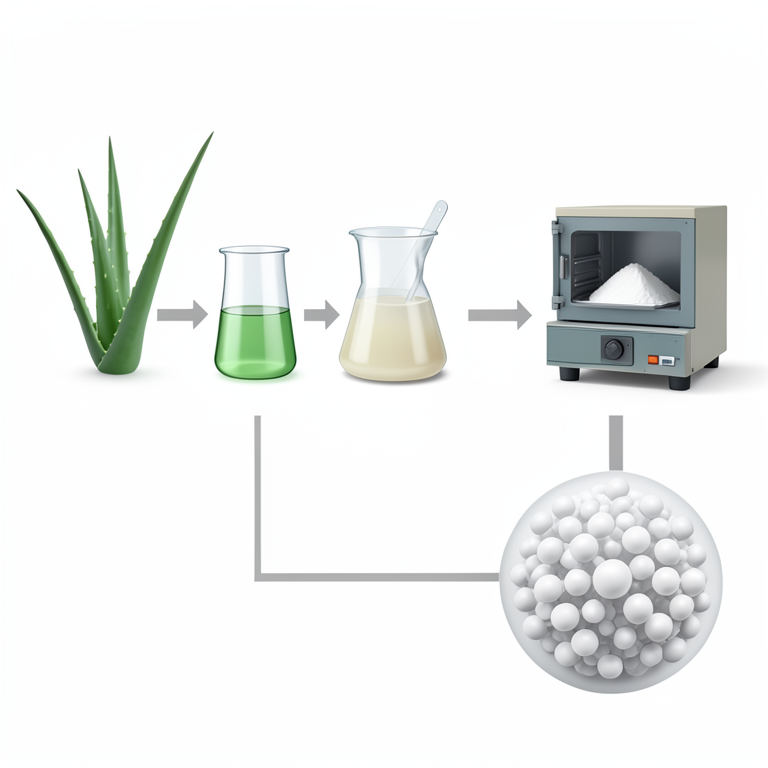
Green Synthesis Workflow
AI-generated conceptual illustration (Aloe vera leaves and zinc oxide nanoparticles). It explains the idea and does not show study data.
View source evidence ↗Figures & tables
From the original paper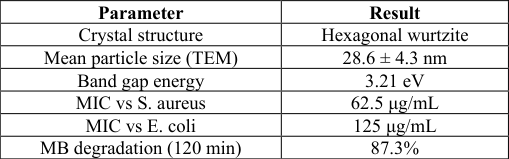 Table 1
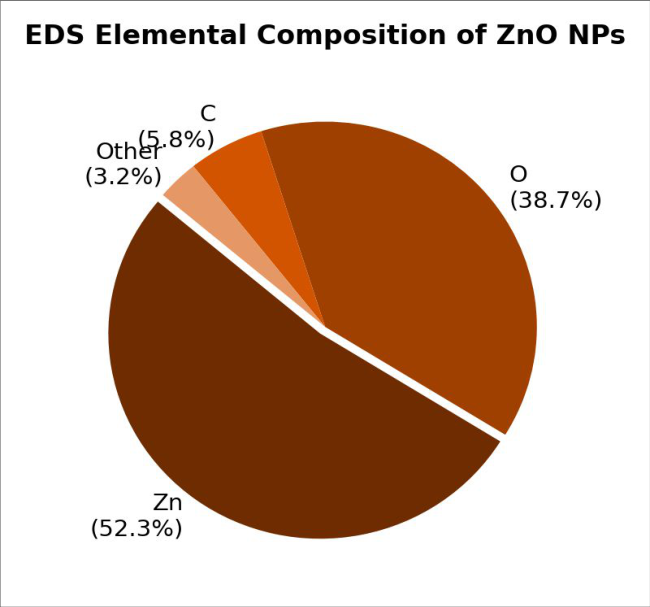 Figure 1
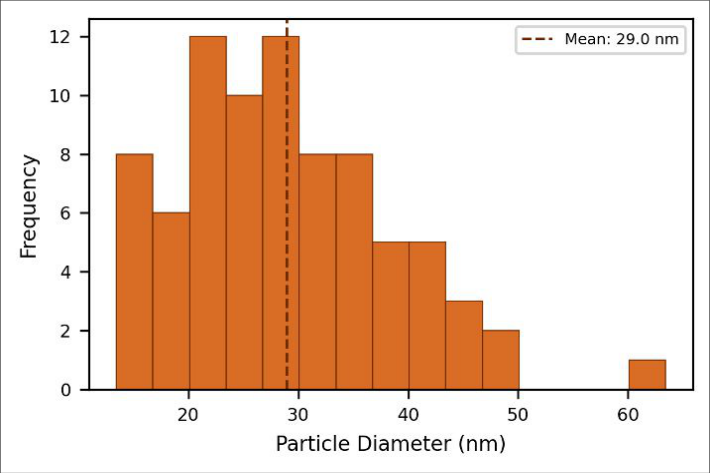 Figure 2
Introduction
Between chemical reduction, sol-gel processing, and hydrothermal methods, there is no shortage of routes to zinc oxide nanoparticles -but nearly all of them require hazardous solvents, high-energy inputs, or surfactants that leave residual toxicity in the final product [1] . Green synthesis sidesteps these problems by exploiting the natural reducing power of plant metabolites: polyphenols, terpenoids, and proteins in leaf extracts donate electrons to metal precursors, nucleate nanocrystals, and stabilize them against aggregation in a single reaction vessel [2] . Aloe vera (Aloe barbadensis Miller) is a particularly attractive bio-template. Its gel contains acemannan polysaccharides, anthraquinones, and organic acids that collectively act as both reducing and capping agents [3] . Earlier reports confirmed that Aloe vera extract can produce silver, gold, and copper nanoparticles, but its application to ZnO synthesis has received limited attention despite ZnO's wide use in cosmetics, food packaging, and water treatment [4] . The few existing ZnO-Aloe vera reports vary widely in particle size (15-120 nm) and crystallinity, mainly because synthesis parameters like temperature, precursor concentration, and extract-to-salt ratio weren't systematically controlled [5] . This research optimized the green synthesis of ZnO NPs using Aloe vera extract, characterized the product thoroughly, and evaluated its antibacterial and photocatalytic performance to assess practical applicability [6] .
Theoretical Background
ZnO crystallizes in the hexagonal wurtzite structure (space group P6₃mc) with a direct band gap of approximately 3.37 eV at room temperature. When particle dimensions drop below 100 nm, quantum confinement effects widen the band gap slightly, and the increased surfacearea-to-volume ratio enhances both catalytic reactivity and biological interactions [7] . Phytochemicals in plant extracts are thought to coordinate with Zn²⁺ ions through hydroxyl and carboxyl functional groups, forming intermediate zinc-organic complexes that decompose upon calcination to yield crystalline ZnO [8] .
Material and Methods Material
Research was performed at Neva Institute of Technology, Saint Petersburg, Russia, from March 2023 to October 2023. No ethical approval was needed as the work involved no human or animal subjects. Zinc nitrate hexahydrate (Zn(NO₃)₂•6H₂O, 99%, Sigma-Aldrich), sodium hydroxide pellets (98%, Merck), and methylene blue dye (>95%, Loba Chemie) were used as received. Fresh Aloe vera leaves were collected from the institute's botanical garden. Mueller-Hinton agar and broth were purchased from HiMedia for antibacterial testing [9] .
Methods
Aloe vera gel (50 g) was blended with 200 mL deionized water, boiled at 80°C for 20 min, filtered, and cooled. Then 0.1 M zinc nitrate solution was added dropwise to the extract (1:2 v/v) under magnetic stirring at 60°C for 2 h. The pH was adjusted to 12 with NaOH, forming a white precipitate that was washed three times with water and ethanol, dried at 100°C for 12 h, and calcined at 400°C for 3 h [10] . Characterization included XRD (Bruker D8 Advance, Cu Kα), TEM (JEOL JEM-2100, 200 kV), UV-Vis (Shimadzu UV-2600), FTIR (Bruker Alpha-II, ATR mode), and EDS (Oxford INCA attached to SEM). Antibacterial activity against S. aureus (ATCC 25923) and E. coli (ATCC 25922) was tested by broth microdilution for MIC determination [11] . Photocatalysis experiments used 50 mL methylene blue (10 mg/L) with 25 mg catalyst under UV light (365 nm, 30 W), sampled at 15 min intervals for 120 min and measured at 664 nm [12] .
Performance Evaluation
Photocatalytic efficiency was calculated as degradation percentage = (C₀ -Ct)/C₀ × 100, where C₀ and Ct are initial and time-dependent dye concentrations. Apparent rate constants (kapp) were derived from pseudo-first-order kinetic fits of ln(C₀/Ct) versus time. Reusability was tested over five consecutive cycles by recovering the catalyst through centrifugation, washing, and drying between runs [13] . with no secondary phases detected. Crystallite size from the Scherrer equation was 24.1 nm, slightly below the TEM mean of 28.6 nm because TEM measures actual particle boundaries while XRD estimates coherent diffraction domains [14] . FTIR showed absorption bands at 3420 cm⁻¹ (O-H stretch), 1630 cm⁻¹ (C=O from residual organic capping), and a strong Zn-O stretching mode at 438 cm⁻¹. EDS confirmed zinc (52.3%) and oxygen (38.7%) as dominant elements, with minor carbon (5.8%) from organic residues. Methylene blue degradation followed pseudo-first-order kinetics (R² = 0.98) with kapp of 0.017 min⁻¹. After five reuse cycles, photocatalytic efficiency dropped only to 79.1%, indicating reasonable catalyst durability [15] .
Results
Results
Discussion
The 28.6 nm mean particle size falls at the smaller end of the range reported for plant-mediated ZnO synthesis (typically 20-100 nm), which points to effective capping by Aloe vera polysaccharides that restricted crystal growth during calcination [5] . The band gap of 3.21 eV is narrower than bulk ZnO (3.37 eV), likely because surface defects and oxygen vacancies introduced during low-temperature calcination create sub-band states [7] . Antibacterial activity was stronger against the Grampositive S. aureus (MIC 62.5 μg/mL) than Gram-negative E. coli (125 μg/mL), a pattern consistent with most ZnO NP reports. The thicker outer membrane of Gram-negative bacteria presents an extra diffusion barrier that ZnO must cross to generate intracellular reactive oxygen species [16] . Still, both MIC values are within the therapeutically interesting range for topical applications. Photocatalytic degradation of 87.3% in 120 min is competitive with chemically synthesized ZnO under similar conditions [17] . And the 79.1% efficiency retained after five cycles addresses a common concern about greensynthesized catalysts -that residual biomolecules might block active sites over time. The slight decline likely reflects cumulative mechanical loss during centrifugation recovery rather than surface poisoning [18] .
Conclusion
Aloe vera leaf extract served as an effective bio-reducing and capping agent for synthesizing crystalline ZnO nanoparticles with a mean size of 28.6 nm. The particles showed useful antibacterial activity against both Grampositive and Gram-negative pathogens and strong photocatalytic performance for methylene blue degradation. Reusability over five cycles confirmed practical durability. This green route avoids toxic chemicals and operates at moderate temperatures, making it scalable for applications in water treatment and antimicrobial coatings.
Acknowledgement
Acknowledgements Funding SourcesThis research received no external grants. All costs were borne by departmental funds. Institutional SupportThe authors thank Neva Institute of Technology for laboratory facilities and instrument access. Contributions Not Qualifying for AuthorshipDr. Olga Smirnova provided guidance on TEM imaging protocols.
Figures and tables from the paper
| Parameter | Result |
|---|---|
| Crystal structure | Hexagonal wurtzite |
| Mean particle size (TEM) | 28.6 ± 4.3 nm |
| Band gap energy | 3.21 eV |
| MIC vs S. aureus | 62.5 μg/mL |
| MIC vs E. coli | 125 μg/mL |
| MB degradation (120 min) | 87.3% |
Table text extracted from the original PDF; superscript letters are shown inline. The original table image is below.
View original table image
References
18 in the original paper- Kołodziejczak-Radzimska A, Jesionowski T. Zinc oxide: from synthesis to application. Materials. 2014;7(4):2833-2881.
- Iravani S. Green synthesis of metal nanoparticles using plants. Green Chem. 2011;13(10):2638-2650.
- Hamman JH. Composition and applications of Aloe vera leaf gel. Molecules. 2008;13(8):1599-1616.
- Agarwal H, Nakara A, Shanmugam VK. Antiinflammatory mechanism of various metal and metal oxide nanoparticles. Inflamm Res. 2020;69(11):11351147.
- Gunalan S, Sivaraj R, Rajendran V. Green synthesized ZnO nanoparticles against bacterial and fungal pathogens. Prog Nat Sci Mater Int. 2012;22(6):693-700.
- Rajan R, Chandran K, Harper SL, Yun SI, Kalaichelvan PT. Plant extract synthesized silver nanoparticles. Ind Crops Prod. 2015;70:356-373.
- Ozgur U, Alivov YI, Liu C, Teke A, Reshchikov MA. A comprehensive review of ZnO materials and devices. J Appl Phys. 2005;98(4):041301.
- Kharissova OV, Dias HV, Kharisov BI, Perez BO, Perez VM. The greener synthesis of nanoparticles. Trends Biotechnol. 2013;31(4):240-248.
- Vijayakumar S, Vaseeharan B, Malaikozhundan B. Shewanella algae: a biological approach to ZnO synthesis. Microb Pathog. 2016;101:36-42.
- Nagarajan S, Arumugam Kuppusamy K. Extracellular synthesis of zinc oxide nanoparticle using seaweeds. Solid State Sci. 2013;18:78-82.
- CLSI. Methods for dilution antimicrobial susceptibility tests for bacteria. CLSI Standard M07. 11th ed. 2018.
- Sakthivel S, Neppolian B, Shankar MV, Arabindoo B, Palanichamy M. Photocatalytic degradation of leather dye. Sol Energy Mater Sol Cells. 2003;77(1):65-82.
- Daneshvar N, Salari D, Khataee AR. Photocatalytic degradation of azo dye by UV/TiO₂. J Photochem Photobiol A. 2003;157(1):111-116.
- Langford JI, Wilson AJ. Scherrer after sixty years: a survey. J Appl Crystallogr. 1978;11(2):102-113.
- Trandafilovic LV, Bozanic DK, Dimitrijevic-Brankovic S. ZnO/chitosan nanocomposites. Carbohydr Polym. 2012;88(1):263-269.
- Sirelkhatim A, Mahmud S, Seeni A, Kaus NHM. Review on zinc oxide nanoparticles antibacterial activity. Nano-Micro Lett. 2015;7(3):219-242.
- Lee KM, Lai CW, Ngai KS, Juan JC. Recent developments of zinc oxide based photocatalyst in water treatment. J Environ Manage. 2016;165:1-13.
- Akir S, Barber A, Viter R, Iatsunskyi I. Green synthesis of ZnO nanoparticles and degradation of dyes. J Mol Struct. 2017;1150:361-367.
Cited by 1
From OpenAlex, OpenCitations and reference lists read by Scinovex
- A comparative study of the therapeutic effect of zinc oxide nanoparticle and aloe vera extract on an induced ulcerative colitis in rats ↗
Zainab Kareem Allawi, Zahraa Hussein Kadhim, Zahraa M. Ayad · Zoological and Entomological Letters · 2025
This study aims to detect the therapeutic effect of zinc oxide nanoparticles, and to compare it with the therapeutic effect of aloe vera extract alone, in a laboratory rat model of ulcerative colitis induced using acetic acid. The rats were divided into five groups: a negative control group, a positive control group (untreated), a zinc oxide nanoparticle-treated group, and a
❝ 0Found by Scinovex