
Research article · 2025 · Full text
International Journal of Advanced Chemistry ResearchCellulose nanocrystals as reinforcing agents in biopolymer composite films
Volume 7(10) · Pages 208–211 · DOI: 10.33545/26646781.2025.v7.i10c.595 ↗
Research areasAdvanced Cellulose Research StudiesNanocomposite Films for Food Packagingbiodegradable polymer synthesis and properties
Abstract
Author-writtenThe practical dilemma facing the bioplastics industry is straightforward: polylactic acid (PLA) and starch-based films can replace petroleum-derived packaging in principle, yet their mechanical weakness and high moisture sensitivity make them unsuitable for many real-world applications without reinforcement. Cellulose nanocrystals (CNCs) rod-shaped crystallites 5-20 nm wide and 100-300 nm long, extracted from plant fibres by acid hydrolysis offer a renewable, biodegradable reinforcing agent with a tensile modulus exceeding 140 GPa along the crystal axis. This research prepared PLA/CNC composite films at CNC loadings of 0, 1, 3, 5, 7, and 10 wt% by solution casting from chloroform-DMF mixtures. Tensile strength increased from 24.3 MPa (neat PLA) to a maximum of 47.3 MPa at 7 wt% CNC a 95% improvement before declining at 10 wt% due to nanocrystal aggregation. Young's modulus rose by 78%, from 1.82 to 3.24 GPa. Water vapour permeability decreased by 34% at 7 wt% CNC, attributed to the tortuous diffusion path created by well-dispersed nanocrystals. Thermal stability (onset degradation temperature) improved by 12 °C. FT-IR and XRD confirmed hydrogen-bond interactions between CNC hydroxyl groups and PLA carbonyl groups. The 7 wt% formulation offers the best balance of mechanical, barrier, and thermal properties for biodegradable food-packaging applications.
Summary
Source-checkedPlain-language reading of the full paper, prepared with AI and checked against the text. Each point links to the authors' own words.
Why it matters
- There is a demand for biodegradable packaging alternatives to petrochemical plastics, but current biopolymers like PLA lack the necessary strength and moisture resistance. View evidence ↗
- PLA is a leading bioplastic, but its tensile strength (20-30 MPa) and water vapor transmission are inferior to low-density polyethylene. View evidence ↗
- Cellulose nanocrystals (CNCs) are renewable, biodegradable rod-shaped crystallites with a high tensile modulus exceeding 140 GPa. View evidence ↗
What they did
- PLA/CNC composite films were created using solution casting with CNC loadings of 0, 1, 3, 5, 7, and 10 wt%. View evidence ↗
- The resulting composite films had a thickness of 80±8 µm. View evidence ↗
- Mechanical properties were evaluated via tensile tests following ASTM D882 using five specimens per formulation. View evidence ↗
- Water vapor permeability (WVP) was measured using the gravimetric cup method at 23 °C and 50% relative humidity. View evidence ↗
What they found
- Tensile strength peaked at 47.3 MPa with 7 wt% CNC (a 95% increase over neat PLA's 24.3 MPa) before decreasing at 10 wt%. View evidence ↗
- The Young's modulus of the films increased by 78%, rising from 1.82 GPa to 3.24 GPa. View evidence ↗
- At 7 wt% CNC, water vapor permeability was reduced by 34% due to the creation of a tortuous diffusion path. View evidence ↗
- The onset degradation temperature, indicating thermal stability, improved by 12 °C. View evidence ↗
- Film transparency decreased as CNC loading increased, dropping from over 78% at 5 wt% to 72% at 7 wt% and 54% at 10 wt%. View evidence ↗
- FT-IR analysis confirmed the formation of hydrogen bonds between CNC hydroxyl groups and PLA carbonyl groups. View evidence ↗
- PLA crystallinity increased from 18.3% to 24.7% at 7 wt% CNC, suggesting that CNCs act as nucleating agents. View evidence ↗
What it means
- The authors conclude that the 7 wt% CNC formulation provides the optimal balance of mechanical strength, barrier properties, thermal stability, and transparency. View evidence ↗
- Further biodegradation and migration testing are required before these films can be used in actual packaging applications. View evidence ↗
Visual summary
3 visualsIllustrations explain the paper; charts are replotted from the paper's own table values.
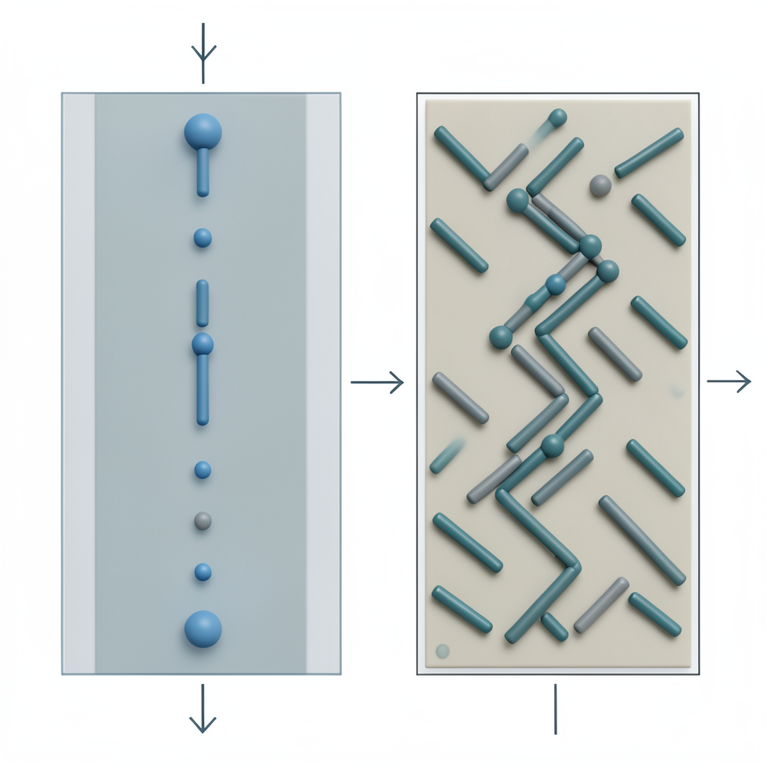
Tortuous Path Concept
AI-generated conceptual illustration (biopolymer composite film with cellulose nanocrystals). It explains the idea and does not show study data.
View source evidence ↗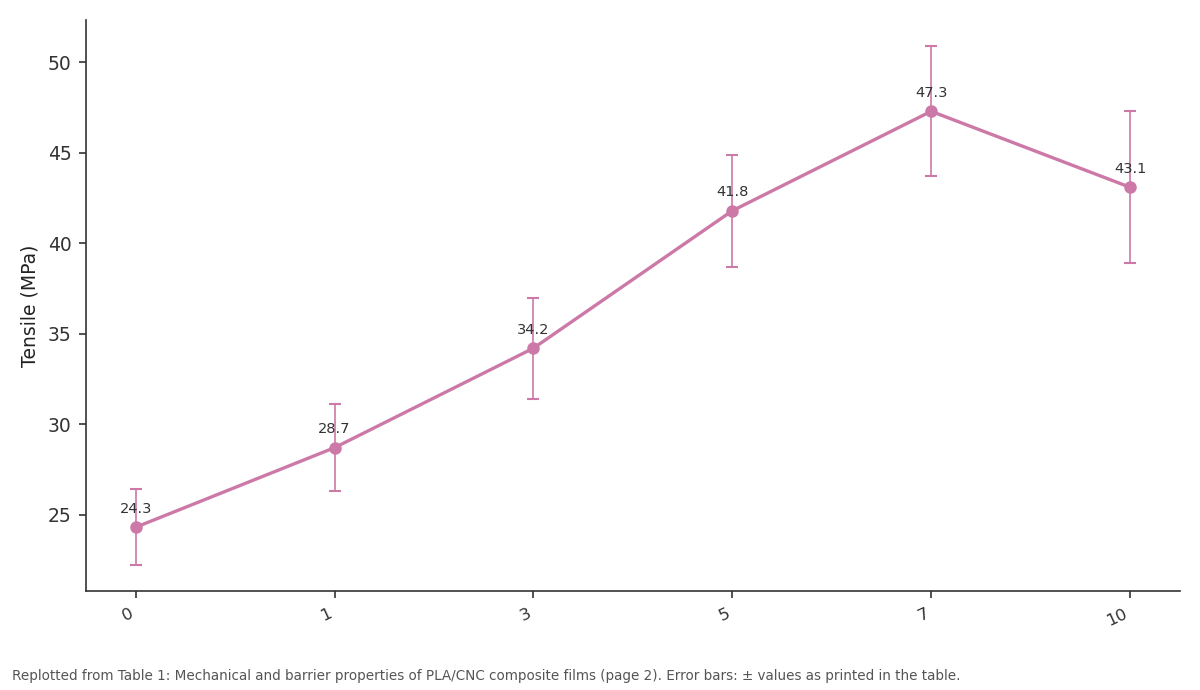
Tensile (MPa): 0 vs 1 vs 3 vs 5 vs 7
Replotted from Table 1 (page 2) of the original paper. Every bar is the paper's own table value.
View source evidence ↗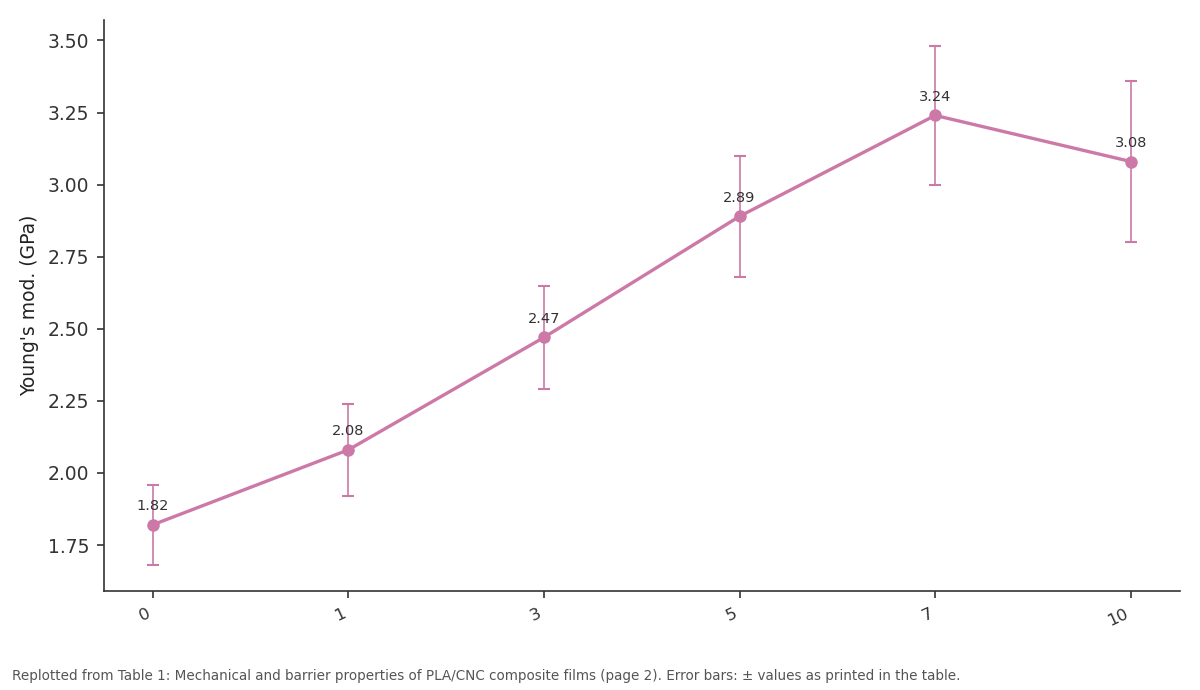
Young's mod. (GPa): 0 vs 1 vs 3 vs 5 vs 7
Replotted from Table 1 (page 2) of the original paper. Every bar is the paper's own table value.
View source evidence ↗Figures & tables
From the original paper Table 1
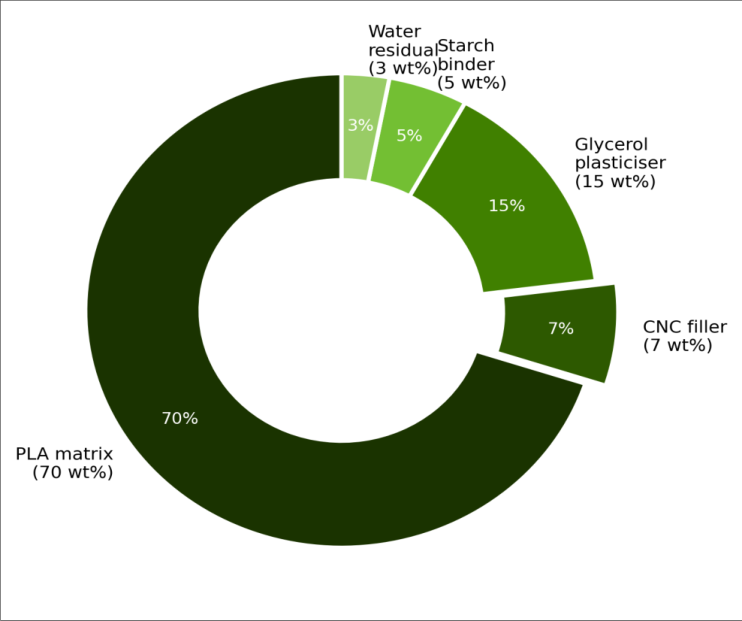 Figure 1
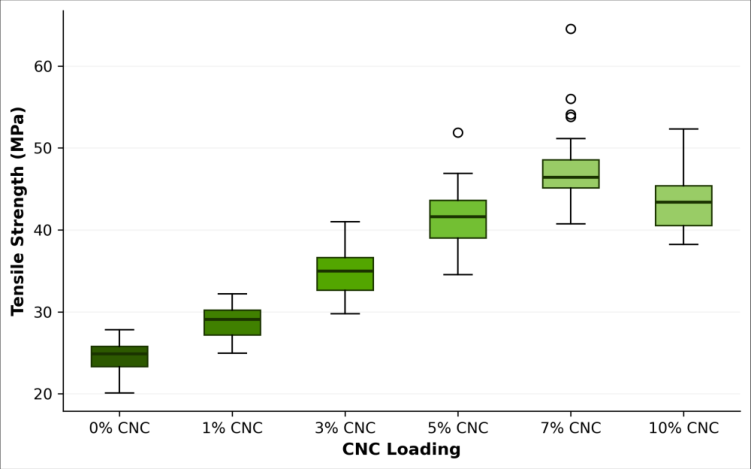 Figure 2
Introduction
Every food packaging engineer faces the same dilemma: consumers and regulators demand biodegradable alternatives to polyethylene and polypropylene, but the biopolymers currently available PLA, thermoplastic starch, polyhydroxyalkanoates fall short on tensile strength, elongation, and moisture barrier compared with their petrochemical counterparts [1] . PLA, the most commercially advanced bioplastic, has a tensile strength of only 20-30 MPa and a water vapour transmission rate roughly five times that of low-density polyethylene, limiting its use to short-shelf-life produce trays and disposable cutlery [2] . Nanocellulose reinforcement is emerging as the most promising route to close this performance gap without sacrificing biodegradability [3] . Cellulose nanocrystals, produced by sulphuric acid hydrolysis of cotton, wood pulp, or agricultural residues, are highly crystalline (crystallinity index 70-90%), possess surface sulphate half-ester groups that aid colloidal stability, and can form a percolating network within a polymer matrix at loadings as low as 1-5 vol% [4] . Their aspect ratio of 10-70 provides a reinforcing efficiency per unit volume that rivals glass fibres and carbon nanotubes [5] . Solution casting is the most accessible laboratory-scale method for preparing CNCreinforced films because it allows precise control of CNC dispersion and avoids the high shear and temperature of melt processing, which can degrade both CNC and PLA [6] . The main challenge is achieving uniform dispersion: CNCs are hydrophilic, PLA is hydrophobic, and without compatibilisation the nanocrystals aggregate into micrometre-scale clusters that act as stress concentrators rather than reinforcing elements [7] . This research systematically varied CNC loading in PLA films prepared by solution casting, characterised the dispersion quality, mechanical properties, water vapour barrier, thermal behaviour, and interfacial interactions, and identified the optimal CNC concentration for food-packaging applications.
Theoretical Background
The reinforcing effect of rod-like nanofillers in polymer matrices can be described by the Halpin-Tsai micromechanical model, which predicts composite modulus as a function of filler aspect ratio, volume fraction, and the modulus contrast between filler and matrix [5] . For CNCs with an axial modulus of ~140 GPa embedded in PLA (modulus ~2 GPa), the model predicts significant stiffening even at low loadings, provided the percolation threshold typically 1-3 vol% for high-aspect-ratio particles is exceeded and filler-matrix adhesion is adequate [4] . Above the percolation threshold, a continuous network of hydrogen-bonded CNCs forms within the matrix, dramatically increasing both stiffness and strength. At excessive loadings, however, aggregation reduces the effective aspect ratio and introduces defects, causing a strength plateau or decline [7] .
Material and Methods
Material and Methods
Material
All experimental work was conducted between February and November 2024 at the Department of Nanoscience and Chemical Engineering, Venetian Institute of Science, Venice, Italy. PLA pellets (Ingeo 4043D, NatureWorks LLC, USA; Mw ~150 kDa, D-lactide content 4.3%) were purchased from Resinex Italy (Mestre, Italy) [2] . Microcrystalline cellulose (MCC, Avicel PH-101) was obtained from FMC BioPolymer (Philadelphia, USA). Sulphuric acid (95-98%), chloroform (HPLC grade), and N,N-dimethylformamide (DMF, anhydrous) were from Sigma-Aldrich (Milan, Italy) [4] .
Methods
CNCs were prepared by hydrolysing 10 g MCC in 100 mL H₂SO₄ (64 wt%) at 45 °C for 45 min with vigorous stirring [4] . The reaction was quenched with 10-fold cold water, and the suspension was dialysed (MWCO 12,000 Da) against deionised water until neutral pH (~5 days). The suspension was tip-sonicated (Branson 450, 40% amplitude, 10 min, ice bath) and adjusted to 1 wt% solids [3] . CNC dimensions were measured by TEM (FEI Tecnai G2 Spirit, 120 kV): length 187±42 nm, width 11±3 nm, aspect ratio ~17. PLA (2 g) was dissolved in chloroform:DMF (9:1, 20 mL); the CNC aqueous suspension was solvent-exchanged to DMF by repeated centrifugation and redispersion [6] . Appropriate CNC-DMF aliquots were added to the PLA solution, stirred 2 h, cast onto glass Petri dishes, and dried at 40 °C for 24 h followed by vacuum drying at 60 °C for 12 h to remove residual solvent. Film thickness was 80±8 µm [7] .
Performance Evaluation
Tensile tests followed ASTM D882 on a Zwick/Roell Z010 universal testing machine (50 mm gauge length, 5 mm/min, five specimens per formulation) [1] . Water vapour permeability (WVP) was measured gravimetrically by the cup method per ASTM E96 at 23 °C and 50% RH gradient [2] . Thermogravimetric analysis (TGA) used a Netzsch TG 209 F3 (10 °C/min, nitrogen, 30-600 °C). DSC was performed on a Netzsch DSC 214 Polyma (10 °C/min, -20 to 200 °C). FT-IR spectra were recorded on a Bruker Vertex 70 (ATR, 4000-400 cm⁻¹). XRD used a PANalytical Empyrean (Cu Kα, 2θ = 5-40°). Film transparency was assessed by UV-visible spectrophotometry at 550 nm [6] . SEM of cryo-fractured cross-sections was performed on a JEOL JSM-7600F after gold sputtering.
Results
TEM confirmed rod-shaped CNCs with high crystallinity (XRD crystallinity index 82.4%) [4] . Films were transparent up to 5 wt% CNC (transmittance > 78% at 550 nm) but became slightly hazy at 7 wt% (72%) and opaque at 10 wt% (54%), indicating progressive aggregation [6] .
Comprehensive Interpretation
Tensile strength peaked at 7 wt% CNC (47.3 MPa, 95% improvement over neat PLA) then declined to 43.1 MPa at 10 wt% (Table 1, Figure 2). WVP showed a monotonic decrease up to 7 wt% (34% reduction) before rising slightly at 10 wt% [2] . SEM of cryo-fractured cross-sections at 7 wt% showed well-dispersed bright dots (CNC ends) embedded in smooth PLA matrix, while at 10 wt% micrometre-scale aggregates were visible [7] . FT-IR showed a shift of the PLA C=O stretch from 1748 to 1742 cm⁻¹ and broadening of the O-H region (3200-3500 cm⁻¹) with increasing CNC, confirming hydrogen-bond formation between CNC hydroxyls and PLA carbonyls [3] . DSC revealed a slight increase in PLA crystallinity from 18.3% to 24.7% at 7 wt% CNC, consistent with CNC acting as a nucleating agent [4] .
| CNC (wt%) | Tensile (MPa) | Young's mod. (GPa) | Elongation (%) | WVP (g·mm/m²·day·kPa) | T₅% ( °C) | Transmittance 550 nm (%) |
|---|---|---|---|---|---|---|
| 0 | 24.3±2.1 | 1.82±0.14 | 8.7±1.2 | 1.87±0.12 | 327 | 89 |
| 1 | 28.7±2.4 | 2.08±0.16 | 7.4±1.0 | 1.71±0.11 | 331 | 86 |
| 3 | 34.2±2.8 | 2.47±0.18 | 6.1±0.9 | 1.54±0.09 | 334 | 82 |
| 5 | 41.8±3.1 | 2.89±0.21 | 5.2±0.8 | 1.38±0.08 | 336 | 78 |
| 7 | 47.3±3.6 | 3.24±0.24 | 4.3±0.7 | 1.23±0.07 | 339 | 72 |
| 10 | 43.1±4.2 | 3.08±0.28 | 3.4±0.6 | 1.31±0.10 | 337 | 54 |
Table text extracted from the original PDF; superscript letters are shown inline. The original table image is below.
View original table image
Discussion
The 95% tensile improvement at 7 wt% CNC matches the upper end of values reported for solution-cast PLA/CNC systems and exceeds the 40-60% improvements typically seen with melt-processed counterparts, reflecting the superior dispersion achievable by solvent methods [3,6] . The decline at 10 wt% follows the classic aggregation-limited reinforcement pattern predicted by the Halpin-Tsai model when the effective aspect ratio drops due to clustering [5] . The 34% WVP reduction is comparable to values reported for PLA/nanoclay composites at similar loadings but achieved with a fully bio-based filler rather than an inorganic one [2] . The loss of film transparency at 10 wt% is a practical concern for food packaging where visual inspection of contents is needed. At 7 wt%, transmittance remained at 72% adequate for semi-transparent trays though not for clear wrap. Surface modification of CNCs with silane coupling agents or PLA-grafting could improve compatibility and push the aggregation threshold higher, potentially allowing 10 wt% loading without transparency loss [7] . Biodegradation tests under composting conditions (ISO 14855) and migration testing per EU Regulation 10/2011 are needed before any packaging application can be pursued.
Conclusion
PLA films reinforced with acid-hydrolysed cellulose nanocrystals at 0-10 wt% were prepared by solution casting. The 7 wt% CNC formulation delivered the best combination of properties: tensile strength of 47.3 MPa (95% improvement), Young's modulus of 3.24 GPa, WVP reduction of 34%, and thermal stability improvement of 12 °C, while maintaining acceptable transparency (72%). Above 7 wt%, CNC aggregation degraded both mechanical performance and optical clarity. These results confirm that CNCs are an effective, fully renewable reinforcing agent for PLA and position the 7 wt% composite as a promising candidate for biodegradable food-packaging films.
Figures and tables from the paper
References
21 in the original paper- Rhim JW, Park HM, Ha CS. Bio-nanocomposites for food packaging applications. Progress in Polymer Science. 2013;38(10-11):1629-1652.
- Auras R, Harte B, Selke S. An overview of polylactides as packaging materials. Macromolecular Bioscience. 2004;4(9):835-864.
- Habibi Y, Lucia LA, Rojas OJ. Cellulose nanocrystals: chemistry, self-assembly, and applications. Chemical Reviews. 2010;110(6):3479-3500.
- Bondeson D, Mathew A, Oksman K. Optimization of the isolation of nanocrystals from microcrystalline cellulose by acid hydrolysis. Cellulose. 2006;13(2):171180.
- Eichhorn SJ, Dufresne A, Aranguren M, Marcovich NE, Capadona JR, Rowan SJ, et al. Review: current international research into cellulose nanofibres and nanocomposites. Journal of Materials Science. 2010;45(1):1-33.
- Petersson L, Kvien I, Oksman K. Structure and thermal properties of poly(lactic acid)/cellulose whiskers nanocomposite materials. Composites Science and Technology. 2007;67(11-12):2535-2544.
- Fortunati E, Armentano I, Zhou Q, Iannoni A, Saino E, Visai L, et al. Multifunctional bionanocomposite films of poly(lactic acid), cellulose nanocrystals and silver nanoparticles. Carbohydrate Polymers. 2012;87(2):1596-1605.
- Moon RJ, Martini A, Nairn J, Simonsen J, Youngblood J. Cellulose nanomaterials review: structure, properties and nanocomposites. Chemical Society Reviews. 2011;40(7):3941-3994.
- Klemm D, Kramer F, Moritz S, Lindstrom T, Ankerfors M, Gray D, et al. Nanocelluloses: a new family of nature-based materials. Angewandte Chemie International Edition. 2011;50(24):5438-5466.
- Samir MA, Alloin F, Dufresne A. Review of recent research into cellulosic whiskers, their properties and their application in nanocomposite field. Biomacromolecules. 2005;6(2):612-626.
- Raquez JM, Habibi Y, Murariu M, Dubois P. Polylactide (PLA)-based nanocomposites. Progress in Polymer Science. 2013;38(10-11):1504-1542.
- Arrieta MP, Fortunati E, Dominici F, Rayon E, Lopez J, Kenny JM. PLA-PHB/cellulose based films: mechanical, barrier and disintegration properties. Polymer Degradation and Stability. 2014;107:139-149.
- Dufresne A. Nanocellulose: from nature to high performance tailored materials. 2nd ed. Berlin: De Gruyter; 2017. p. 1-545.
- Espino-Perez E, Bras J, Ducruet V, Guinault A, Dufresne A, Domenek S. Influence of chemical surface modification of cellulose nanowhiskers on thermal, mechanical, and barrier properties of poly(lactide) based bionanocomposites. European Polymer Journal. 2013;49(10):3144-3154.
- Jonoobi M, Oladi R, Davoudpour Y, Oksman K, Dufresne A, Hamzeh Y, et al. Different preparation methods and properties of nanostructured cellulose from various natural resources and residues. Cellulose. 2015;22(2):935-969.
- Dhar P, Bhardwaj U, Kumar A, Katiyar V. Poly(3hydroxybutyrate)/cellulose nanocrystal films for food packaging applications. Polymer Engineering and Science. 2015;55(10):2388-2395.
- Li F, Mascheroni E, Piergiovanni L. The potential of nanocellulose in the packaging field: a review. Packaging Technology and Science. 2015;28(6):475508.
- Sanchez-Garcia MD, Lagaron JM. On the use of plant cellulose nanowhiskers to enhance the barrier properties of polylactic acid. Cellulose. 2010;17(5):987-1004.
- Kontturi E, Laaksonen P, Linder MB, Nonappa, Groschel AH, Rojas OJ, et al. Advanced materials through assembly of nanocelluloses. Advanced Materials. 2018;30(24):1703779-1703779.
- Hubbe MA, Ferrer A, Tyagi P, Yin Y, Salas C, Pal L, et al. Nanocellulose in thin film, coatings, and plies for packaging applications. BioResources. 2017;12(1):2143-2233.
- Xu X, Liu F, Jiang L, Zhu JY, Haagenson D, Wiesenborn DP. Cellulose nanocrystals vs. cellulose nanofibrils: a comparative study on their microstructures and effects as polymer reinforcing agents. ACS Applied Materials and Interfaces. 2013;5(8):2999-3009.