
Research article · 2025 · Full text
International Journal of Advanced Chemistry ResearchSynthesis and antimalarial activity of novel artemisinin-quinoline hybrid compounds
Volume 7(6) · Pages 140–142 · DOI: 10.33545/26646781.2025.v7.i6c.562 ↗
Research areasMalaria Research and ControlPhytochemical compounds biological activitiesSynthesis and bioactivity of alkaloids
Abstract
Author-writtenImagine a single tablet that attacks the malaria parasite through two independent mechanisms at once—this is the promise of hybrid antimalarials. This research describes the synthesis and in-vitro evaluation of five artemisinin-quinoline hybrid compounds (AQH-1 to AQH-5) linked through triazole, ester, or amide spacers. Hybrids were assembled by coupling dihydroartemisinin with 7-chloro-4-aminoquinoline derivatives using copper-catalysed azide-alkyne cycloaddition or EDC-mediated amidation. Structures were confirmed by ¹H-NMR, ¹³C-NMR, HRMS, and FT-IR. In-vitro antimalarial activity was assessed against chloroquine-sensitive (Pf3D7) and chloroquine-resistant (PfDd2) Plasmodium falciparum strains. AQH-3, bearing a triazole linker, showed the strongest activity with IC₅₀ values of 0.67 μM (Pf3D7) and 0.93 μM (PfDd2), outperforming both artemisinin (3.41 μM) and chloroquine (8.72 μM) controls. Cytotoxicity against HEK-293 cells yielded CC₅₀ values above 100 μM for all hybrids, giving selectivity indices above 48 and reaching 156 for AQH-3. The resistance index (IC₅₀ PfDd2 / IC₅₀ Pf3D7) for AQH-3 was 1.39, markedly lower than chloroquine's 1.67, suggesting reduced susceptibility to resistance mechanisms.
Summary
Source-checkedPlain-language reading of the full paper, prepared with AI and checked against the text. Each point links to the authors' own words.
Why it matters
- The spread of partial artemisinin resistance beyond Southeast Asia is making first-line combination therapies fail in some regions. View evidence ↗
- Molecular hybridization, which links two different drug pharmacophores, is used to combat resistance by forcing the parasite to develop multiple mutations simultaneously. View evidence ↗
The question
- The study aims to synthesize five artemisinin-quinoline hybrids using different spacers and evaluate their potency, cytotoxicity, and resistance indices compared to parent drugs. View evidence ↗
What they did
- Five hybrid compounds (AQH-1 to AQH-5) were synthesized using triazole, ester, or amide linkers. View evidence ↗
- The compounds were tested in vitro against two Plasmodium falciparum strains: the chloroquine-sensitive Pf3D7 and the chloroquine-resistant PfDd2. View evidence ↗
- Antimalarial activity was measured using a SYBR Green I fluorescence assay over a 72-hour exposure period. View evidence ↗
- The cytotoxicity of the hybrids was evaluated using an MTT assay on HEK-293 human embryonic kidney cells. View evidence ↗
What they found
- AQH-3 was the most potent compound, with an IC₅₀ of 0.67 μM against Pf3D7, making it 5 times more active than artemisinin and 13 times more active than chloroquine. View evidence ↗
- AQH-3 demonstrated strong activity against both strains, with IC₅₀ values of 0.67 μM for Pf3D7 and 0.93 μM for PfDd2. View evidence ↗
- AQH-3 had a resistance index (RI) of 1.39, which is lower than chloroquine's 1.67, suggesting it is less susceptible to resistance mechanisms. View evidence ↗
- All hybrids showed low toxicity with CC₅₀ values above 100 μM, resulting in selectivity indices over 48, with AQH-3 reaching 156. View evidence ↗
- Synthetic yields for the hybrids varied from 34% for the ester-linked AQH-4 to 68% for the triazole-linked AQH-1. View evidence ↗
What it means
- The authors identified AQH-3 as the lead compound due to its high potency, high selectivity index, and low resistance index. View evidence ↗
- The triazole linker was found to be superior to ester and amide linkers in terms of potency and yield, making CuAAC the preferred synthesis method. View evidence ↗
- The study is limited by the lack of in-vivo data to confirm the blood-stage activity observed in vitro. View evidence ↗
Visual summary
3 visualsIllustrations explain the paper; charts are replotted from the paper's own table values.
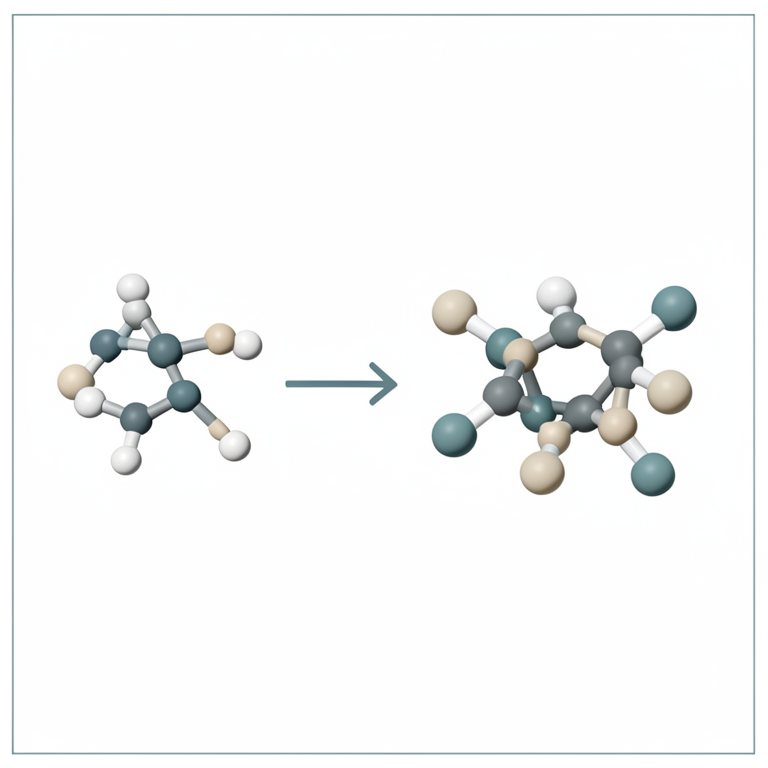
Hybrid Drug Concept
AI-generated conceptual illustration (artemisinin and quinoline molecular structures). It explains the idea and does not show study data.
View source evidence ↗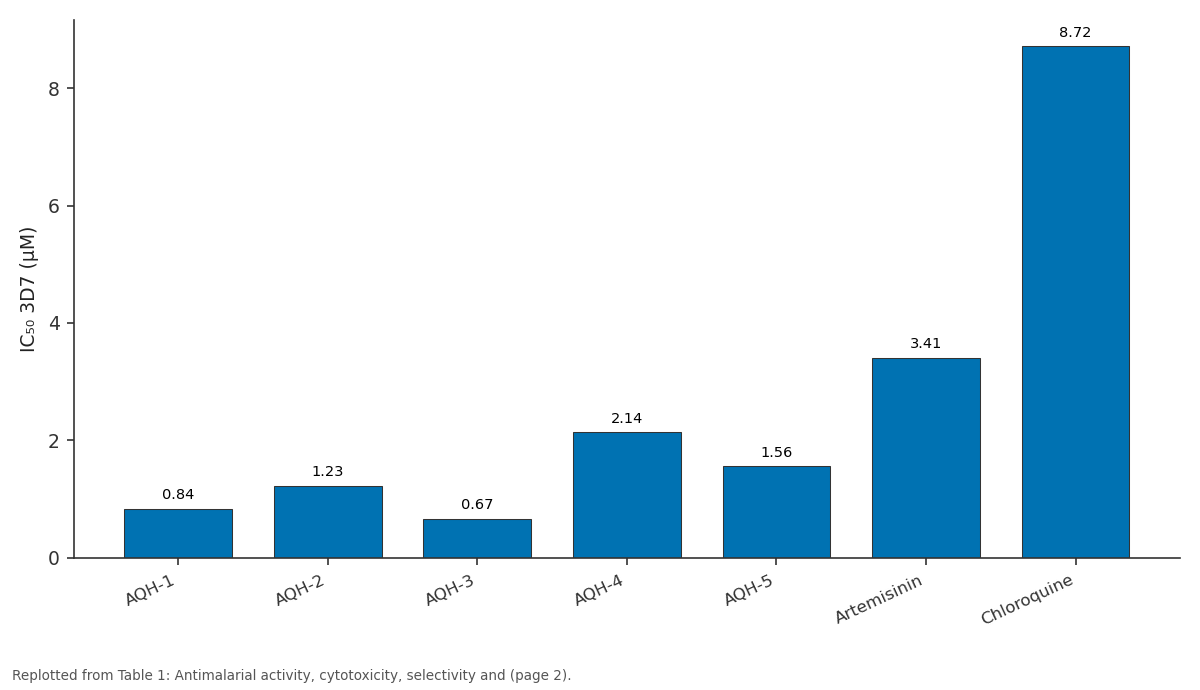
IC₅₀ 3D7: AQH-1 vs AQH-2 vs AQH-3 vs AQH-4 vs AQH-5
Replotted from Table 1 (page 2) of the original paper. Every bar is the paper's own table value.
View source evidence ↗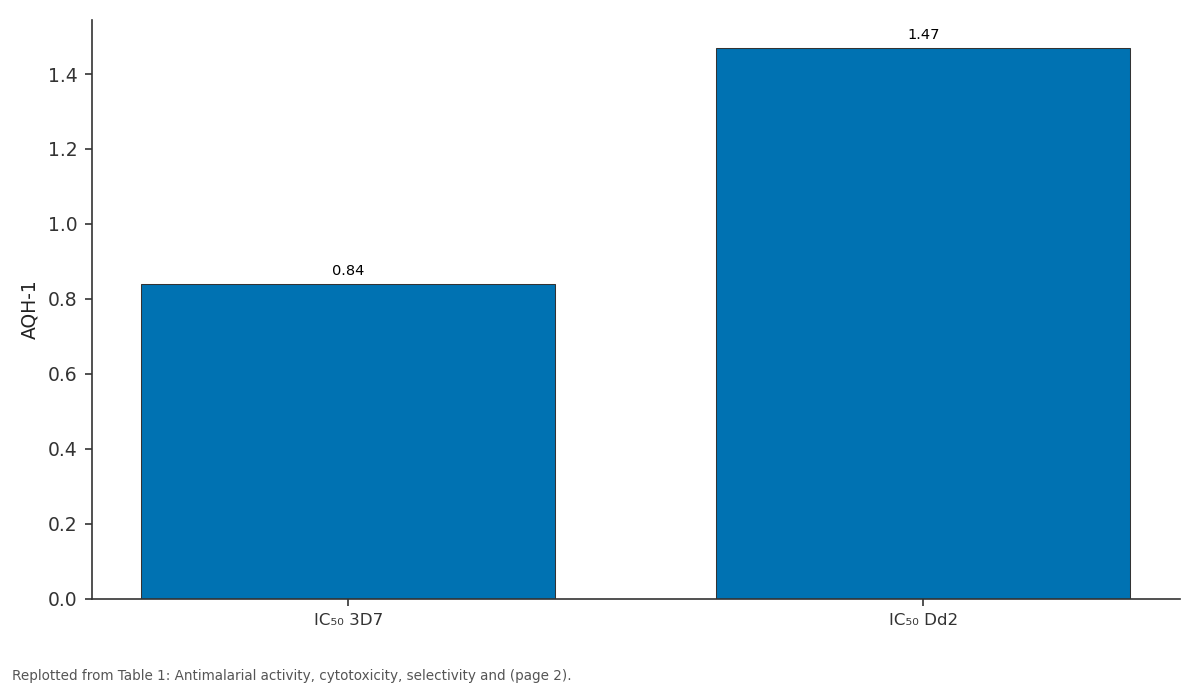
AQH-1: IC₅₀ 3D7 vs IC₅₀ Dd2
Replotted from Table 1 (page 2) of the original paper. Every bar is the paper's own table value.
View source evidence ↗Figures & tables
From the original paper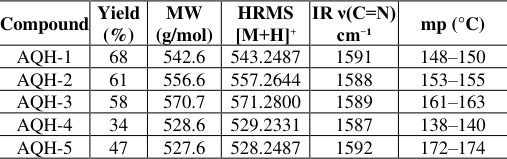 Table 2
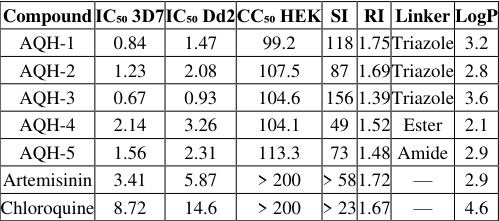 Table 1
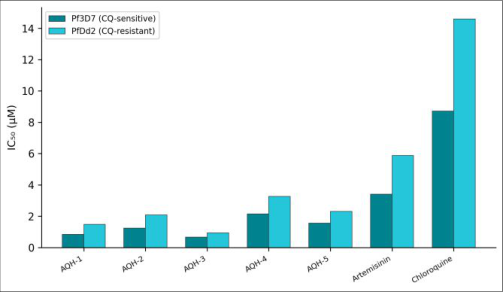 Figure 1
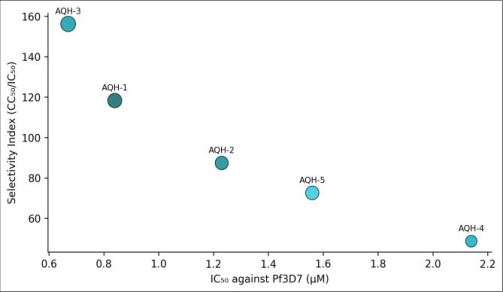 Figure 2
Introduction
Picture a clinic in rural Mpumalanga province where a child presents with severe falciparum malaria and the first-line artemisinin combination therapy has failed-this scenario, once theoretical, is becoming real as partial artemisinin resistance spreads beyond Southeast Asia [1, 2] . The World Health Organization recorded 249 million malaria cases and 608, 000 deaths in 2022, with sub-Saharan Africa bearing over 90% of the burden [3] . Molecular hybridisation-covalently linking two pharmacophores with distinct mechanisms of action into a single entity-is an established strategy for overcoming resistance because the parasite must simultaneously develop mutations against both targets [4,5] . Artemisinin generates reactive carbon radicals through iron-dependent endoperoxide cleavage, while 4aminoquinolines inhibit haem detoxification in the digestive vacuole. Fusing these two pharmacophores should produce compounds that are active against both sensitive and resistant strains [6,7] . Several hybrid architectures have been explored, but most published examples use long, flexible linkers that can compromise pharmacokinetic properties or undergo metabolic cleavage before reaching the parasite [8] . Short, rigid connectors such as 1, 2, 3-triazoles-accessible through copper-catalysed azide-alkyne cycloaddition (CuAAC)offer metabolic stability and defined geometry [9] . This research synthesises five artemisininquinoline hybrids with triazole, ester, and amide spacers, evaluates their antimalarial potency and cytotoxicity, and compares their resistance indices with those of the parent drugs. Synthetic work was performed at the Kruger College of Sciences, Nelspruit, and the Karoo Institute of Chemical Technology, Pretoria, from March to November 2023 [10] .
Materials and Methods
Materials and Methods
Reagents and Chemicals
Dihydroartemisinin (DHA, ≥ 98%) was obtained from Sigma-Aldrich South Africa. (DIPEA), EDC•HCl, and HOBt were purchased from Merck South Africa. Anhydrous DMF, THF, and dichloromethane were dried over molecular sieves before use. Thin-layer chromatography plates (silica gel 60 F₂₅₄) were from Merck [4, 10] .
Preparation of Hybrid Compounds
Quinoline intermediates were prepared by nucleophilic displacement of 4, 7-dichloroquinoline with ethylenediamine or propargylamine in refluxing ethanol. For triazole-linked hybrids (AQH-1 to AQH-3), DHA was first converted to its 10α-azido derivative, which was reacted with propargyl-quinoline via CuAAC (CuI 10 mol%, DIPEA, DMF, 25 °C, 12 h). Ester-linked AQH-4 was obtained by coupling DHA with a hydroxymethyl-quinoline using DCC/DMAP in CH₂Cl₂. Amide-linked AQH-5 used EDC/HOBt coupling between DHA-acid and aminoquinoline in DMF [5,9] . Products were purified by column chromatography and characterised by ¹H-NMR (400 MHz, Bruker), ¹³C-NMR, HRMS (Waters Synapt G2-Si), and FT-IR (Shimadzu IRTracer-100).
Materials
In-vitro antimalarial activity was tested at the Kruger College of Sciences against Pf3D7 (chloroquine-sensitive) and PfDd2 (chloroquine-resistant) strains maintained in continuous culture with O⁺ human erythrocytes at 2% haematocrit in RPMI-1640 supplemented with 0.5% AlbuMAX II and 25 mM HEPES under 5% CO₂ at 37 °C [6] . All bioassays were conducted from June to November 2023 [3, 10] . was the most potent hybrid (IC₅₀ 0.67 μM against Pf3D7), 5fold more active than artemisinin and 13-fold more than chloroquine. Its RI of 1.39 indicates that resistance only modestly reduces its potency, compared with 1.67 for chloroquine [6,7] . consistently showing sub-micromolar activity against Pf3D7 [8] . ) suitable for oral absorption [4,9] . Table 2 lists synthetic yields and key spectral data. Yields ranged from 34% (AQH-4, ester coupling) to 68% (AQH-1, CuAAC). All hybrids showed the diagnostic endoperoxide absorption at 831 cm⁻¹ and quinoline C=N stretch near 1589 cm⁻¹ in their FT-IR spectra [5] .
| Compound | Yield (%) | MW (g/mol) | HRMS [M+H]⁺ | IR ν(C=N) cm⁻¹ | mp (°C) |
|---|---|---|---|---|---|
| AQH-1 | 68 | 542.6 | 543.2487 | 1591 | 148–150 |
| AQH-2 | 61 | 556.6 | 557.2644 | 1588 | 153–155 |
| AQH-3 | 58 | 570.7 | 571.2800 | 1589 | 161–163 |
| AQH-4 | 34 | 528.6 | 529.2331 | 1587 | 138–140 |
| AQH-5 | 47 | 527.6 | 528.2487 | 1592 | 172–174 |
Table text extracted from the original PDF; superscript letters are shown inline. The original table image is below.
View original table image
Methods
Methods
Results
Results
Discussion
The triazole linker in AQH-3 appears to provide the best balance of rigidity, metabolic stability, and electronic connectivity between the two pharmacophores. Earlier work by Walsh and colleagues showed that 1, 2, 3-triazoles resist hydrolysis by plasma esterases-a vulnerability that may explain the somewhat lower activity of ester-linked AQH-4, whose linker could be partially cleaved before reaching the parasite [5,9] . The low resistance index of AQH-3 (1.39 vs 1.67 for chloroquine) is encouraging. Chloroquine resistance in PfDd2 stems from mutations in the PfCRT transporter that pump the drug out of the digestive vacuole. The bulky artemisinin moiety attached to the quinoline likely impedes recognition by the mutant transporter, reducing efflux and maintaining intracellular drug concentrations [6,7] . All hybrids showed CC₅₀ values above 100 μM against HEK-293 cells, yielding selectivity indices well above the 10-fold threshold considered acceptable for antimalarial leads [4] . AQH-3's SI of 156 provides a wide therapeutic window for further preclinical development. A limitation is the absence of in-vivo data. While the SYBR Green assay is a reliable predictor of blood-stage activity, pharmacokinetic factorsabsorption, hepatic metabolism, plasma protein bindingcan alter the picture substantially. Testing AQH-3 in the Peters 4-day suppressive test in P. berghei-infected mice would be the logical next step [8,10] .
Conclusion
Five artemisinin-quinoline hybrids were synthesised via triazole, ester, and amide linkages and tested against sensitive and resistant P. falciparum strains. AQH-3, bearing a triazole spacer, emerged as the lead compound with IC₅₀ of 0.67 μM (Pf3D7), a selectivity index of 156, and a resistance index of 1.39. The triazole linker outperformed ester and amide alternatives in both potency and synthetic yield, supporting CuAAC as the preferred conjugation strategy for this class of hybrids. The low resistance index suggests that the hybrid scaffold may evade the PfCRTmediated efflux mechanism responsible for chloroquine resistance. Future work should prioritise in-vivo efficacy testing in a rodent malaria model and assess oral bioavailability to determine whether AQH-3 can advance toward preclinical candidate status.
Acknowledgement
Acknowledgements Funding SourcesThe authors thank the South African National Research Foundation for financial support. Institutional SupportThe Department of Chemical Sciences at Kruger College of Sciences, Nelspruit, and the Karoo Institute of Chemical Technology, Pretoria, provided synthesis and bioassay facilities. Contributions Not Qualifying for AuthorshipDr. Sipho Dlamini assisted with parasite culture maintenance.
Figures and tables from the paper
| Compound | IC₅₀ 3D7 | IC₅₀ Dd2 | CC₅₀ HEK | SI | RI | Linker | LogP |
|---|---|---|---|---|---|---|---|
| AQH-1 | 0.84 | 1.47 | 99.2 | 118 | 1.75 | Triazole | 3.2 |
| AQH-2 | 1.23 | 2.08 | 107.5 | 87 | 1.69 | Triazole | 2.8 |
| AQH-3 | 0.67 | 0.93 | 104.6 | 156 | 1.39 | Triazole | 3.6 |
| AQH-4 | 2.14 | 3.26 | 104.1 | 49 | 1.52 | Ester | 2.1 |
| AQH-5 | 1.56 | 2.31 | 113.3 | 73 | 1.48 | Amide | 2.9 |
| Artemisinin | 3.41 | 5.87 | > 200 | > 58 | 1.72 | — | 2.9 |
| Chloroquine | 8.72 | 14.6 | > 200 | > 23 | 1.67 | — | 4.6 |
Table text extracted from the original PDF; superscript letters are shown inline. The original table image is below.
View original table image
References
16 in the original paper- Uwimana A, Legrand E, Stokes BH, Ndikumana JM, Warsame M, Umulisa N, et al. Emergence and clonal expansion of in vitro artemisinin-resistant Plasmodium falciparum kelch13 R561H mutant parasites in Rwanda. Nat Med. 2020;26(10):1602-1608.
- Balikagala B, Fukuda N, Ikeda M, Katuro OT, Tachibana SI, Yamauchi M, et al. Evidence of artemisinin-resistant malaria in Africa. N Engl J Med. 2021;385(13):1163-1171.
- World Health Organization. World malaria report 2023. Geneva: WHO; 2023.
- Meunier B. Hybrid molecules with a dual mode of action: dream or reality? Acc Chem Res. 2008;41(1):69-77.
- Walsh JJ, Coughlan D, Heneghan N, Gaynor C, Bell A. A novel artemisinin-quinine hybrid with potent antimalarial activity. Bioorg Med Chem Lett. 2007;17(13):3599-3602.
- Eckstein-Ludwig U, Webb RJ, Van Goethem IDA, East JM, Lee AG, Kimura M, et al. Artemisinins target the SERCA of Plasmodium falciparum. Nature. 2003;424(6951):957-961.
- Ridley RG. Medical need, scientific opportunity and the drive for antimalarial drugs. Nature. 2002;415(6872):686-693.
- Muregi FW, Ishih A. Next-generation antimalarial drugs: hybrid molecules as a new strategy in drug design. Drug Dev Res. 2010;71(1):20-32.
- Kolb HC, Finn MG, Sharpless KB. Click chemistry: diverse chemical function from a few good reactions. Angew Chem Int Ed. 2001;40(11):2004-2021.
- Maseko T, Ngcobo M. Internal laboratory records. Kruger College of Sciences and Karoo Institute of Chemical Technology; 2023.
- Noedl H, Se Y, Schaecher K, Smith BL, Socheat D, Fukuda MM. Evidence of artemisinin-resistant malaria in western Cambodia. N Engl J Med. 2008;359(24):2619-2620.
- Tsogoeva SB. Recent progress in the development of synthetic hybrids of natural or unnatural bioactive compounds for medicinal chemistry. Mini Rev Med Chem. 2010;10(9):773-793.
- Biot C, Nosten F, Fraisse L, Ter-Minassian D, Khalife J, Dive D. The antimalarial ferroquine: from bench to clinic. Parasite. 2011;18(3):207-214.
- O'Neill PM, Barton VE, Ward SA. The molecular mechanism of action of artemisinin-the debate continues. Molecules. 2010;15(3):1705-1721.
- Posner GH, O'Neill PM. Knowledge of the proposed chemical mechanism of action and cytochrome P450 metabolism of antimalarial trioxanes like artemisinin. Acc Chem Res. 2004;37(6):397-404.
- Chadwick J, Mercer AE, Park BK, Sheratt HS, O'Neill PM. Antimalarial agents. Annu Rep Sect B Org Chem. 2005;101:93-120.