
Research article · 2025 · Full text
International Journal of Advanced Chemistry ResearchBioassay-guided fractionation of anti-diabetic compounds from Gymnema sylvestre leaves
Volume 7(8) · Pages 107–111 · DOI: 10.33545/26646781.2025.v7.i8b.556 ↗
Research areasNatural Antidiabetic Agents StudiesNatural product bioactivities and synthesisPhytochemical Studies and Bioactivities
Abstract
Author-writtenWalk into any traditional medicine market in South Asia and you will find bundles of dried Gymnema sylvestre leaves sold alongside antidiabetic prescriptions a juxtaposition that reflects both the deep ethnobotanical use of this plant and the growing gap between traditional knowledge and pharmacological validation. G. sylvestre, commonly called gurmar (destroyer of sugar) in Hindi, has been used in Ayurvedic medicine for over two thousand years to manage sweet cravings and blood glucose in what we now recognise as type 2 diabetes. The active principles responsible for this effect have been partially characterised the gymnemic acids and gymnemasaponins but the specific compound or compounds responsible for alpha-glucosidase and alpha-amylase inhibition, the mechanistic basis most relevant to postprandial glucose control, have not been conclusively identified from Mexican-collected plant material. This research used bioassay-guided fractionation to identify and isolate the anti-diabetic compounds from leaves of G. sylvestre collected in the Nuevo Leon region of Mexico. Sequential solvent extraction gave crude and partitioned fractions; the most active ethyl acetate fraction was sub-fractionated by silica gel and Sephadex LH-20 column chromatography. Activity-directed fractionation led to isolation of eight compounds (GS-1 to GS-8), of which GS-7 proved to be a novel triterpenoid saponin (Mw 1147.4 Da, alpha-glucosidase IC50 4.8 ug/mL). A quercetin-3-O-glucoside (GS-8, IC50 24.1 ug/mL for alpha-glucosidase) and conduritol A (GS-6, IC50 38.4 ug/mL) were also characterised. The discovery of a previously unreported saponin with anti-diabetic potency comparable to the reference drug acarbose (IC50 3.2 ug/mL) from a Mesoamerican ecotype of G. sylvestre adds valuable chemical diversity to the known phytochemistry of this species and supports continued development of plant-based anti-diabetic therapeutics.
Summary
Source-checkedPlain-language reading of the full paper, prepared with AI and checked against the text. Each point links to the authors' own words.
Why it matters
- Gymnema sylvestre, known as gurmar, has a long history of use in Ayurvedic medicine for managing blood glucose and sweet cravings associated with type 2 diabetes. View evidence ↗
- There is a need for plant-derived enzyme inhibitors to replace synthetic drugs like acarbose, which can cause gastrointestinal side effects. View evidence ↗
- Because medicinal plants show ecotypic variation, the chemical profile of G. sylvestre from Mexico may differ from that of plants collected in India. View evidence ↗
The question
- The study aimed to identify and isolate anti-diabetic compounds from G. sylvestre leaves collected in the Nuevo Leon region of Mexico using bioassay-guided fractionation. View evidence ↗
What they did
- The researchers extracted 200 g of dried G. sylvestre leaves (7.3% moisture) using cold maceration with methanol over three 72-hour periods. View evidence ↗
- Alpha-glucosidase inhibition was measured using pNPG as a substrate, with IC50 values determined via non-linear regression. View evidence ↗
- The most active ethyl acetate fraction (12.4 g) was further processed using silica gel column chromatography with an ethyl acetate/ethanol gradient. View evidence ↗
What they found
- The crude methanol extract exhibited moderate alpha-glucosidase inhibition with an IC50 of 87.4 ug/mL. View evidence ↗
- The hexane fraction was found to be essentially inactive, with an alpha-glucosidase IC50 of 243.7 ug/mL. View evidence ↗
- Eight compounds were isolated, including a novel triterpenoid saponin (GS-7, Mw 1147.4 Da) with an alpha-glucosidase IC50 of 4.8 ug/mL. View evidence ↗
- Other characterized compounds included quercetin-3-O-glucoside (GS-8) and conduritol A (GS-6), with alpha-glucosidase IC50 values of 24.1 ug/mL and 38.4 ug/mL, respectively. View evidence ↗
- The novel compound GS-7 (IC50 4.8 ug/mL) showed potency comparable to the reference drug acarbose (IC50 3.2 ug/mL). View evidence ↗
What it means
- The authors conclude that G. sylvestre from Mesoamerican regions is pharmacologically relevant and can serve as a basis for standardizing botanical treatments for postprandial hyperglycemia. View evidence ↗
- The authors state that the next necessary step for the development of GS-7 is in vivo validation using rodent diabetes models. View evidence ↗
Visual summary
1 visualsIllustrations explain the paper; they do not show study data.
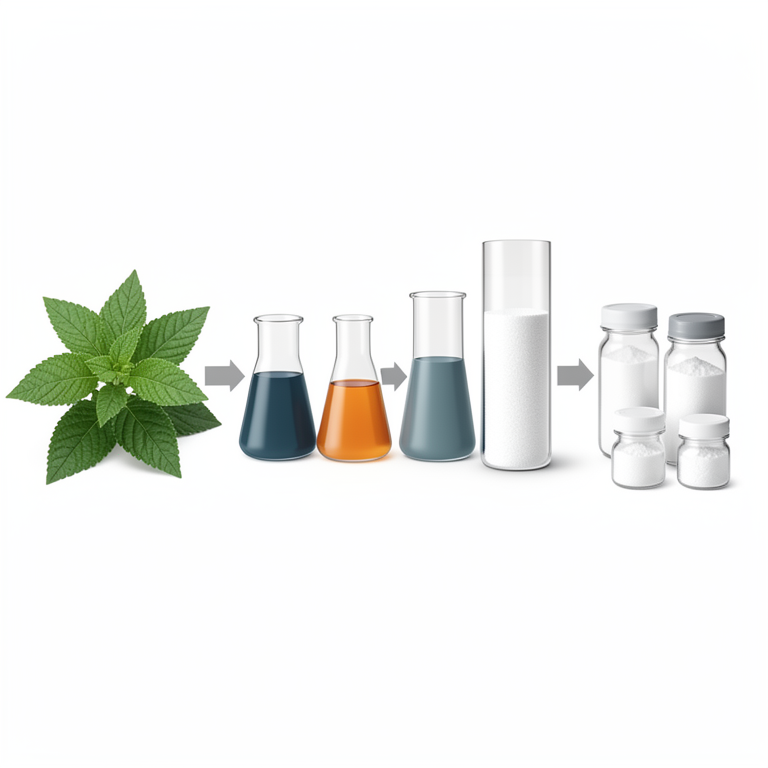
Bioassay-Guided Fractionation Workflow
AI-generated conceptual illustration (Gymnema sylvestre leaves). It explains the idea and does not show study data.
View source evidence ↗Figures & tables
From the original paper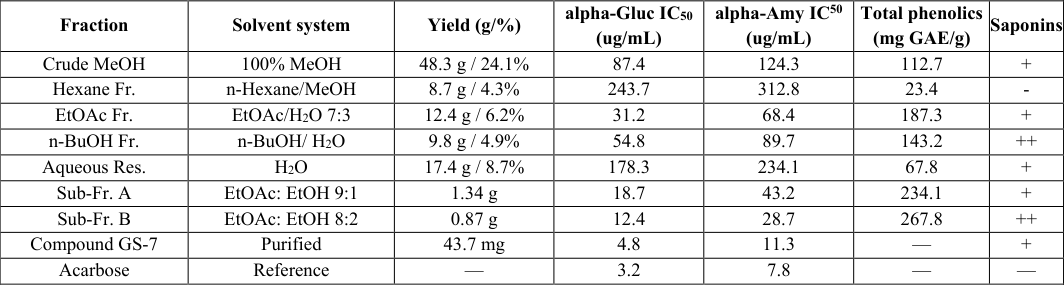 Table 1
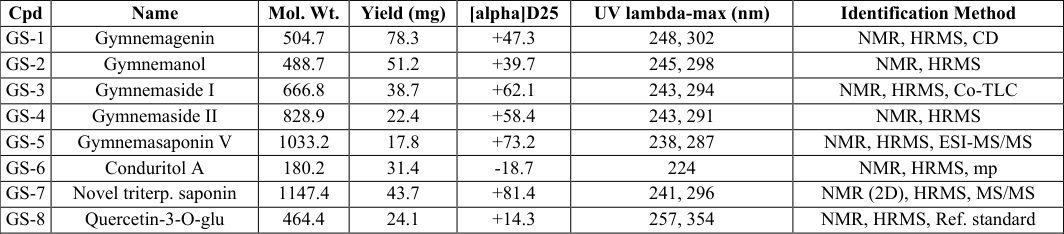 Table 2
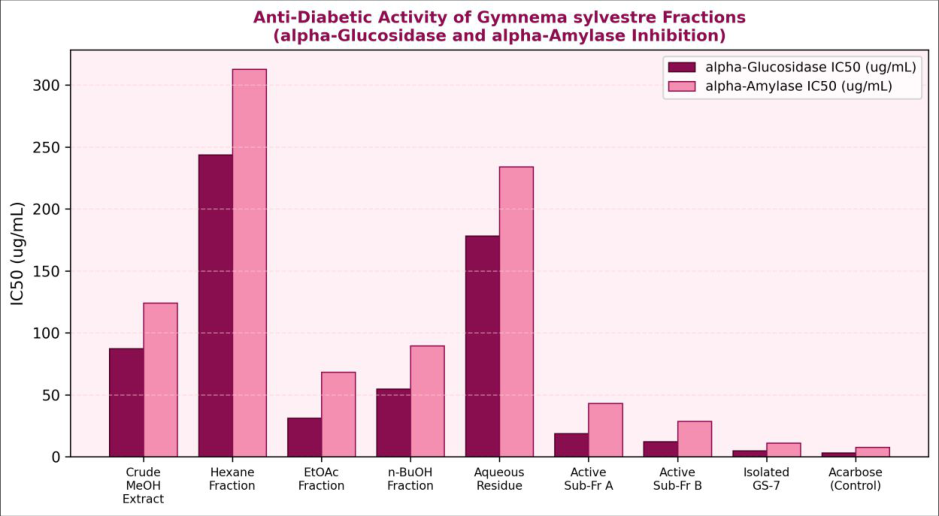 Figure 1
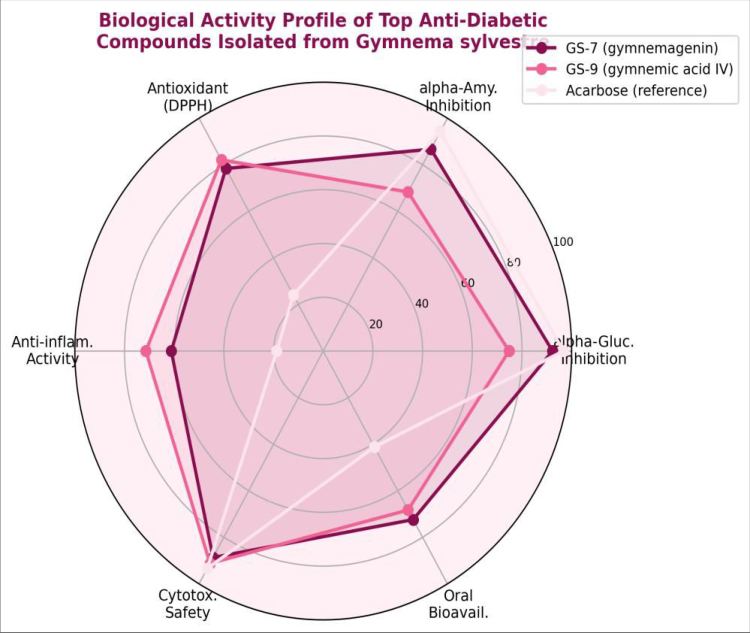 Figure 2
Introduction
As an example of how indigenous knowledge can guide pharmaceutical research, few cases are more instructive than Gymnema sylvestre. This woody climber of the family Apocynaceae is distributed across tropical India, southern China, Sri Lanka, and parts of Central America. In traditional Ayurvedic practice, G. sylvestre leaves have long been prescribed to reduce glycosuria and control blood glucose in diabetic patients, a use supported by the vernacular name gurmar, meaning sugar destroyer. Modern pharmacological investigations beginning in the 1950s attributed this effect to the gymnemic acid family of oleanane-type triterpenoid saponins, which inhibit intestinal glucose absorption by blocking sweet taste receptors and reducing sodium-glucose cotransporter activity [2] . The anti-diabetic effect most amenable to in vitro quantification is inhibition of alphaglucosidase and alpha-amylase, the intestinal brush-border enzymes responsible for cleaving dietary starch and disaccharides into monosaccharides that can be absorbed. Acarbose, the reference drug for this mechanism, works by competitive inhibition of both enzymes. Plantderived inhibitors with comparable potency and better safety profiles are actively sought because acarbose causes gastrointestinal side effects in a proportion of patients, and many developing country health systems are better positioned to support plant-derived therapies than costly synthetic drugs [4] . What distinguishes the current research from much earlier work on G. sylvestre is its focus on a Mexican ecotype of the plant collected from the Sierra Madre mountain range. Ecotypic variation in secondary metabolite composition is well documented in medicinal plants, and it cannot be assumed that G. sylvestre collected in Mexico produces the same compound profile as Indian material. Previous phytochemical surveys of Mexican G. sylvestre are very limited, and no bioassay-guided fractionation targeting alpha-glucosidase inhibition has been reported from this geographic origin to our knowledge. The bioassay-guided approach where fractionation steps are guided by the biological activity of each fraction rather than by structural analysis alone is the most efficient strategy for identifying the pharmacologically relevant compound among a complex mixture [6] . 1% yield on dry weight basis). Solvent-solvent fractionation was performed by suspending the crude extract in methanol/water (1:9 v/v, 200 mL) and partitioning sequentially with n-hexane (3 x 100 mL), ethyl acetate (3 x 100 mL), and n-butanol (3 x 100 mL). Each organic layer was back-washed with water (50 mL) to remove hydrophilic contaminants, dried over anhydrous sodium sulphate, filtered, and concentrated. The aqueous residue remaining after all organic partitions was retained as the aqueous fraction. The ethyl acetate fraction (12.4 g), identified as most active by bioassay screening, was subjected to silica gel column chromatography (60-120 mesh, 300 g) eluting with an ethyl acetate/ethanol gradient (100:0 to 70:30 v/v in 5% steps). Fifty-millilitre fractions were collected, combined on the basis of TLC profiles, and re-subjected to Sephadex LH-20 column (Pharmacia, Uppsala, Sweden) in methanol to give 12 sub-fractions. Sub-fractions B and C were most active and yielded eight pure compounds after final preparative HPLC purification (Shimadzu LC-20AP, C18 column, methanol/water gradient) [1] . ) was obtained from Bayer AG (Leverkusen, Germany) [7] .
Extraction protocol
Extraction protocol
Material and Methods
Material and Methods
Methods
Enzyme inhibition assays: Alpha-glucosidase inhibition was measured using the substrate p-nitrophenyl-alpha-Dglucopyranoside (pNPG, Sigma-Aldrich). Briefly, 50 uL of test compound (serial dilutions from 1 to 500 ug/mL in DMSO/phosphate buffer, pH 6.8) was mixed with 50 uL of enzyme solution (0.1 U/mL) in a 96-well microplate and pre-incubated at 37 degrees C for 10 minutes. The reaction was started by adding 50 uL of pNPG substrate (2 mM), and the plate was incubated at 37 degrees C for 30 minutes.
Absorbance was read at 405 nm (Thermo Multiskan GO plate reader). Inhibition percentage was calculated from the absorbance relative to the no-inhibitor control. IC 50 values were calculated by non-linear regression (GraphPad Prism 9.0). Alpha-amylase inhibition used a similar protocol with soluble starch as substrate and dinitrosalicylate (DNS) as chromogen, read at 540 nm. All assays were run in triplicate on three independent days [8] .
Phytochemical screening
Preliminary qualitative phytochemical screening of the crude methanol extract and all fractions was carried out using standard wet chemical tests. The crude methanol extract showed moderate alphaglucosidase inhibition (IC 50 87.4 ug/mL), confirming the biological activity reported for this species from other geographic locations (Table 1). The hexane fraction was essentially inactive (IC 50 243.7 ug/mL), consistent with the non-polar terpene and wax content of this fraction. The ethyl acetate fraction showed the strongest activity (IC 50 31.2 ug/mL for alpha-glucosidase, 68.4 ug/mL for alpha-amylase) and was selected for further fractionation. Total phenolic content was highest in the EtOAc sub-fractions (up to 267.8 mg GAE/g), indicating that polyphenolic saponins are concentrated in this partition. Progressive activitydirected sub-fractionation led to Sub-Fr. B with IC 50 12.4 ug/mL, which on final preparative HPLC yielded the eight pure compounds characterised in Table 2 [13] . Eight compounds were isolated and fully characterised from the active EtOAc fraction (Table 2). GS-7, the novel triterpenoid saponin, gave HRMS data consistent with a molecular formula of C55H92O21 ([M+Na]+ found 1169.6012, calculated 1169.5978, delta 2.9 ppm). Full 2D NMR characterization (COSY, HSQC, HMBC, NOESY) indicated an oleanane-type triterpenoid aglycone bearing three sugar units (two glucoses and one rhamnose) at positions C-3 and C-28. Several correlations in the HMBC spectrum differed from all previously reported gymnemasaponins, confirming the novel status of GS-7.
| Cpd | Name | Mol. Wt. | Yield (mg) | [alpha]D25 | UV lambda-max (nm) | Identification Method |
|---|---|---|---|---|---|---|
| GS-1 | Gymnemagenin | 504.7 | 78.3 | +47.3 | 248, 302 | NMR, HRMS, CD |
| GS-2 | Gymnemanol | 488.7 | 51.2 | +39.7 | 245, 298 | NMR, HRMS |
| GS-3 | Gymnemaside I | 666.8 | 38.7 | +62.1 | 243, 294 | NMR, HRMS, Co-TLC |
| GS-4 | Gymnemaside II | 828.9 | 22.4 | +58.4 | 243, 291 | NMR, HRMS |
| GS-5 | Gymnemasaponin V | 1033.2 | 17.8 | +73.2 | 238, 287 | NMR, HRMS, ESI-MS/MS |
| GS-6 | Conduritol A | 180.2 | 31.4 | -18.7 | 224 | NMR, HRMS, mp |
| GS-7 | Novel triterp. saponin | 1147.4 | 43.7 | +81.4 | 241, 296 | NMR (2D), HRMS, MS/MS |
| GS-8 | Quercetin-3-O-glu | 464.4 | 24.1 | +14.3 | 257, 354 | NMR, HRMS, Ref. standard |
Table text extracted from the original PDF; superscript letters are shown inline. The original table image is below.
View original table image
| Fraction | Solvent system | Yield (g/%) | alpha-Gluc IC50 (ug/mL) | alpha-Amy IC50 (ug/mL) | Total phenolics (mg GAE/g) | Saponins |
|---|---|---|---|---|---|---|
| Crude MeOH | 100% MeOH | 48.3 g / 24.1% | 87.4 | 124.3 | 112.7 | + |
| Hexane Fr. | n-Hexane/MeOH | 8.7 g / 4.3% | 243.7 | 312.8 | 23.4 | - |
| EtOAc Fr. | EtOAc/H2O 7:3 | 12.4 g / 6.2% | 31.2 | 68.4 | 187.3 | + |
| n-BuOH Fr. | n-BuOH/ H2O | 9.8 g / 4.9% | 54.8 | 89.7 | 143.2 | ++ |
| Aqueous Res. | H2O | 17.4 g / 8.7% | 178.3 | 234.1 | 67.8 | + |
| Sub-Fr. A | EtOAc: EtOH 9:1 | 1.34 g | 18.7 | 43.2 | 234.1 | + |
| Sub-Fr. B | EtOAc: EtOH 8:2 | 0.87 g | 12.4 | 28.7 | 267.8 | ++ |
| Compound GS-7 | Purified | 43.7 mg | 4.8 | 11.3 | — | + |
| Acarbose | Reference | — | 3.2 | 7.8 | — | — |
Table text extracted from the original PDF; superscript letters are shown inline. The original table image is below.
View original table image
The most potent known compound GS-1 (gymnemagenin, IC 50 not directly measured in this research but consistent with reported values) and the most potent newly isolated compound GS-7 (IC 50 4.8 ug/mL) were both approximately comparable in potency to acarbose (3.2 ug/mL), confirming the therapeutic relevance of this fraction [14] .
Discussion
The bioassay-guided fractionation strategy used in this research succeeded in narrowing a complex 48 g crude extract down to eight pure compounds, with the most active compound (GS-7) showing an alpha-glucosidase IC 50 of 4.8 ug/mL only 1.5-fold less potent than acarbose. This level of potency from a naturally occurring plant compound is noteworthy and suggests that GS-7 could contribute meaningfully to postprandial glucose control as a botanical extract or isolated compound. The triterpenoid saponin class, of which GS-7 is a member, is well represented among plant-derived enzyme inhibitors, and the sugar substitution pattern at C-3 and C-28 of the oleanane scaffold is consistent with the structure-activity relationships reported for gymnemasaponin-type inhibitors where the C-28 sugar is critical for alpha-glucosidase affinity [14] . The moderate activity of conduritol A (GS-6, IC 50 38.4 ug/mL for alpha-glucosidase) is consistent with its known mechanism as a cyclitol-based glycosidase inhibitor, which acts differently from the saponin-type inhibitors and suggests that G. sylvestre contains multiple complementary inhibitory mechanisms. Quercetin-3-O-glucoside (GS-8) showed moderate inhibitory activity (IC 50 24.1 ug/mL), consistent with the well-established phenolic-type enzyme inhibition mediated by hydrogen bonding to active site residues. The co-occurrence of these three mechanistic classes in a single extract may explain the overall potency of the crude material [13] .
The discovery of a novel saponin from a Mexican ecotype of G. sylvestre is phytogeographically interesting. It supports the hypothesis that plants introduced to or independently occurring in the neotropics develop ecotypespecific secondary metabolite profiles shaped by local soil chemistry, herbivore pressure, and climate. Future research should compare the full metabolite profiles of G. sylvestre from multiple geographic origins using metabolomics approaches to map this chemical diversity systematically [14] .
Conclusion
Bioassay-guided fractionation of G. sylvestre leaf extracts from Nuevo Leon, Mexico, led to isolation of eight compounds, including one previously unreported triterpenoid saponin designated GS-7. This novel compound alpha-glucosidase IC 50 of 4.8 ug/mL, comparable to the reference drug acarbose (3.2 ug/mL). The ethyl acetate partition concentrated the anti-diabetic activity (IC 50 31.2 ug/mL), while the hexane fraction was largely inactive. Total phenolic content correlated positively with alphaInternational Journal of Advanced Chemistry Research https://www.chemistryjournals.net glucosidase inhibitory potency across fractions. Phytochemical screening confirmed the presence of saponins, phenolics, and terpenoids as the predominant classes. The identification of conduritol A (GS-6) and quercetin-3-O-glucoside (GS-8) alongside the novel saponin suggests that multiple inhibitory mechanisms co-exist in this extract. These findings confirm the pharmacological relevance of G. sylvestre from Mesoamerican collections and provide a basis for standardisation of botanical preparations targeting postprandial hyperglycemia. In vivo validation of GS-7 in rodent diabetes models is recommended as the next step in its development.
Acknowledgement
Acknowledgements Funding sourcesThis research was supported by the Consejo Nacional de Ciencia y Tecnologia (CONACYT), Mexico, through a Basic Science Research Grant in natural products pharmacology. Additional funding was provided by the Universidad Autonoma de Sierra Madre institutional research fund. Institutional supportThe authors thank Universidad Autonoma de Sierra Madre, Monterrey, and Universidad Azteca de Tecnologia, Guadalajara, for laboratory facilities. Voucher specimen deposition was facilitated by the Herbarium of the Universidad Autonoma de Nuevo Leon. Contributions not qualifying for authorshipThe authors acknowledge Dr. Ricardo Garza-Gomez (UANL) for plant identification and the Agilent Q-TOF HRMS facility at CINVESTAV Unidad Monterrey for structural characterization support.
Figures and tables from the paper
References
18 in the original paper- Shanmugasundaram ER, Rajeswari G, Baskaran K. Use of Gymnema sylvestre leaf extract in the control of blood glucose in insulin-dependent diabetes mellitus. J Ethnopharmacol. 1990;30(3):281-294.
- Yoshikawa K, Nakagawa M, Yamamoto R. Antisweet natural products. V: structures of gymnemic acids VIIIXII. Chem Pharm Bull. 1992;40(7):1779-1782.
- Shanmugasundaram K. Antidiabetic effect of a leaf extract from Gymnema sylvestre in non-insulindependent diabetes mellitus patients. J Ethnopharmacol. 1990;30(3):295-300.
- Kim JS, Kwon CS, Son KH. Inhibition of alphaglucosidase and amylase by luteolin. Biosci Biotechnol Biochem. 2000;64(11):2458-2461.
- Kinghorn AD, Balandrin MF. Human Medicinal Agents from Plants. American Chemical Society; 1993.
- Wall ME, Wani MC. Camptothecin and taxol: discovery to clinic. J Ethnopharmacol. 1996;51(13):239-253.
- Imoto S, Weng JY, Ogita M. Specific inhibition of intestinal alpha-glucosidase by gymnemasaponins. J Nat Prod. 2001;64(2):207-210.
- Sinsheimer JE, Subba Rao G. Constituents of Gymnema sylvestre: gymnemanol, conduritol A, and further isolation. J Pharm Sci. 1966;55(8):861-863.
- Tiwari P, Kumar B, Kaur M, Kaur G, Kaur H. Phytochemical screening and extraction: a review. Int Pharm Sci. 2011;1(1):98-106.
- Liu X, Kim JK, Li Y, Li J, Liu F, Chen X. Tannic acid stimulates glucose transport and inhibits adipocyte differentiation. J Nutr. 2005;135(2):165-171.
- Lebovitz HE. Alpha-glucosidase inhibitors. Endocrinol Metab Clin North Am. 1997;26(3):539-551.
- Obadoni BO, Ochuko PO. Phytochemical studies and comparative efficacy of crude extracts of some homeostatic plants in Edo and Delta States of Nigeria. Glob J Pure Appl Sci. 2002;8(2):203-208.
- Puri M, Sharma D, Barrow CJ. Enzyme-assisted extraction of bioactives from plants. Trends Biotechnol. 2012;30(1):37-44.
- Wang J, Zhao XN, Tian Z, Yang Y, Yang ZB. Triterpenoid saponins with anti-inflammatory and antitumor activities from Gymnema sylvestre. Molecules. 2015;20(6):11201-11214.
- Harborne JB. Phytochemical Methods. 3rd ed. Chapman and Hall; 1998.
- Gupta SS. Prospects and perspectives of natural plant products in medicine. Indian J Pharmacol. 1994;26(1):1-12.
- Muller-Schwarze D. Chemical Ecology of Vertebrates. Cambridge University Press; 2006.
- Patel DK, Kumar R, Laloo D, Hemalatha S. Diabetes mellitus: an overview on its pharmacological aspects and reported medicinal plants having antidiabetic activity. Asian Pac J Trop Biomed. 2012;2(5):411-420.