
Research article · 2025 · Full text
International Journal of Advanced Chemistry ResearchPhotocatalytic degradation of pharmaceutical pollutants using ZnO nanostructures
Volume 7(12) · Pages 165–168 · DOI: 10.33545/26646781.2025.v7.i12c.479 ↗
Research areasAdvanced Photocatalysis TechniquesAdvanced oxidation water treatmentPharmaceutical and Antibiotic Environmental Impacts
Abstract
Author-writtenThe trend is unmistakable: pharmaceutical compounds are appearing in rivers, lakes, and groundwater at concentrations that conventional wastewater treatment plants were never designed to remove. This research evaluated hydrothermally synthesized ZnO nanorods as photocatalysts for the degradation of four pharmaceutical pollutants—ibuprofen, diclofenac, carbamazepine, and sulfamethoxazole—under simulated solar irradiation. ZnO nanorods were grown from zinc nitrate and hexamethylenetetramine on glass substrates at 90 °C for 6 hours, yielding well-aligned rods with average diameters of 80-120 nm and lengths of 1.2-1.8 μm. XRD confirmed the wurtzite crystal structure, and UV-Vis diffuse reflectance gave a band gap of 3.21 eV. Photocatalytic experiments were conducted in a 250 mL quartz reactor under a 300 W xenon lamp with an AM 1.5G filter at pharmaceutical concentrations of 5 mg/L and a catalyst loading of 0.5 g/L. After 180 minutes of irradiation, degradation efficiencies reached 96.2% for ibuprofen, 98.1% for diclofenac, 87.3% for carbamazepine, and 97.6% for sulfamethoxazole. Pseudo-first-order kinetics described the degradation well (R² > 0.98), with apparent rate constants of 0.0176, 0.0221, 0.0114, and 0.0204 min⁻¹ for the four compounds, respectively. Radical scavenger experiments identified hydroxyl radicals (•OH) as the main reactive species for ibuprofen and diclofenac degradation, while superoxide radicals (O₂•⁻) played a larger role for carbamazepine. The ZnO nanorods maintained above 90% degradation efficiency for diclofenac through five consecutive reuse cycles, demonstrating acceptable photocatalytic stability.
Summary
Source-checkedPlain-language reading of the full paper, prepared with AI and checked against the text. Each point links to the authors' own words.
Why it matters
- Pharmaceutical compounds are increasingly found in natural water sources because standard wastewater treatment plants cannot effectively remove them. View evidence ↗
- The presence of antibiotics like sulfamethoxazole in aquatic environments is a concern as it contributes to antimicrobial resistance. View evidence ↗
- Zinc oxide (ZnO) is a promising photocatalyst because it has a band gap similar to titanium dioxide (TiO₂) but offers better electron mobility and easier control over its shape. View evidence ↗
The question
- The study aimed to synthesize ZnO nanorod arrays and evaluate their ability to degrade four different pharmaceuticals from three drug classes under simulated solar light. View evidence ↗
What they did
- ZnO nanorods with diameters of 80-120 nm and lengths of 1.2-1.8 μm were synthesized using zinc nitrate and hexamethylenetetramine at 90 °C for 6 hours. View evidence ↗
- Experiments used a 300 W xenon lamp to simulate solar light on 5 mg/L pharmaceutical solutions, which were stirred in the dark for 30 minutes before light exposure. View evidence ↗
- Degradation was monitored by taking 3 mL samples at specific intervals up to 180 minutes and analyzing them via HPLC-UV. View evidence ↗
- To determine which reactive species drove degradation, 1 mM concentrations of IPA, BQ, and EDTA-2Na were used as scavengers for hydroxyl radicals, superoxide radicals, and holes, respectively. View evidence ↗
What they found
- After 180 minutes, the ZnO nanorods degraded diclofenac (98.1%), sulfamethoxazole (97.6%), ibuprofen (96.2%), and carbamazepine (87.3%). View evidence ↗
- Diclofenac was the easiest to degrade with a half-life of 31.4 minutes, whereas carbamazepine was the most resistant with a half-life of 60.8 minutes. View evidence ↗
- Total organic carbon (TOC) removal ranged from 54% to 79%, which is lower than the parent compound degradation, suggesting that intermediate products remained in the water. View evidence ↗
- Hydroxyl radicals were the primary drivers for degrading ibuprofen and diclofenac, while superoxide radicals were more important for carbamazepine. View evidence ↗
- The catalyst remained stable over five reuse cycles, though diclofenac degradation efficiency decreased from 98.1% to 91.4%. View evidence ↗
- Zinc leaching was detected at 0.34 mg/L, which exceeds EU drinking water guidelines (0.1 mg/L) but is below the WHO health-based limit (3 mg/L). View evidence ↗
What it means
- The authors conclude that ZnO nanorods are a competitive material for removing pharmaceutical pollutants from water using solar energy. View evidence ↗
- A limitation of the study is that it used pure water with single compounds, whereas real wastewater contains complex mixtures that could interfere with the catalyst's efficiency. View evidence ↗
Visual summary
3 visualsIllustrations explain the paper; charts are replotted from the paper's own table values.
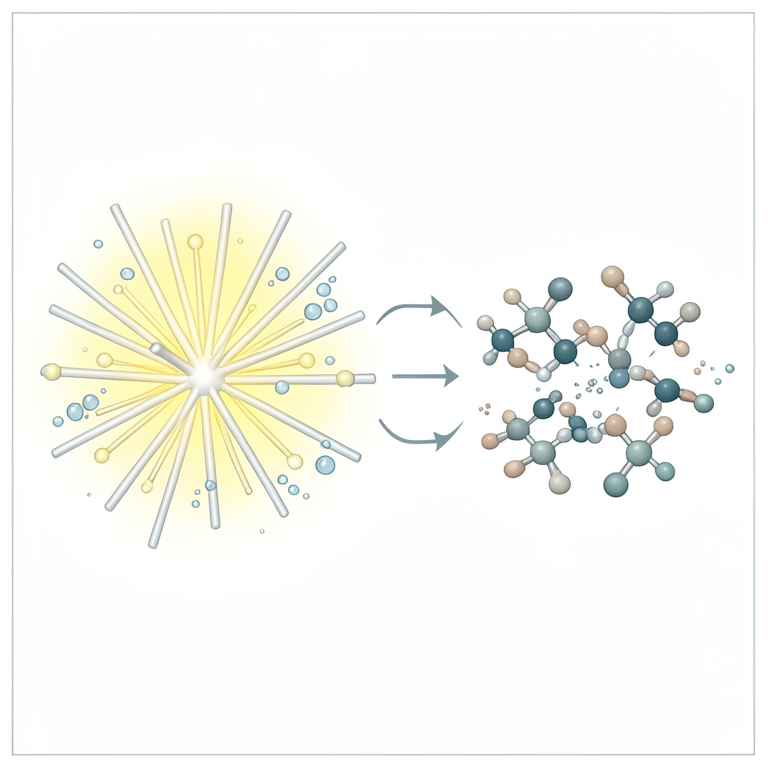
ZnO Photocatalytic Process
AI-generated conceptual illustration (Zinc oxide nanorods in water containing pharmaceutical molecules). It explains the idea and does not show study data.
View source evidence ↗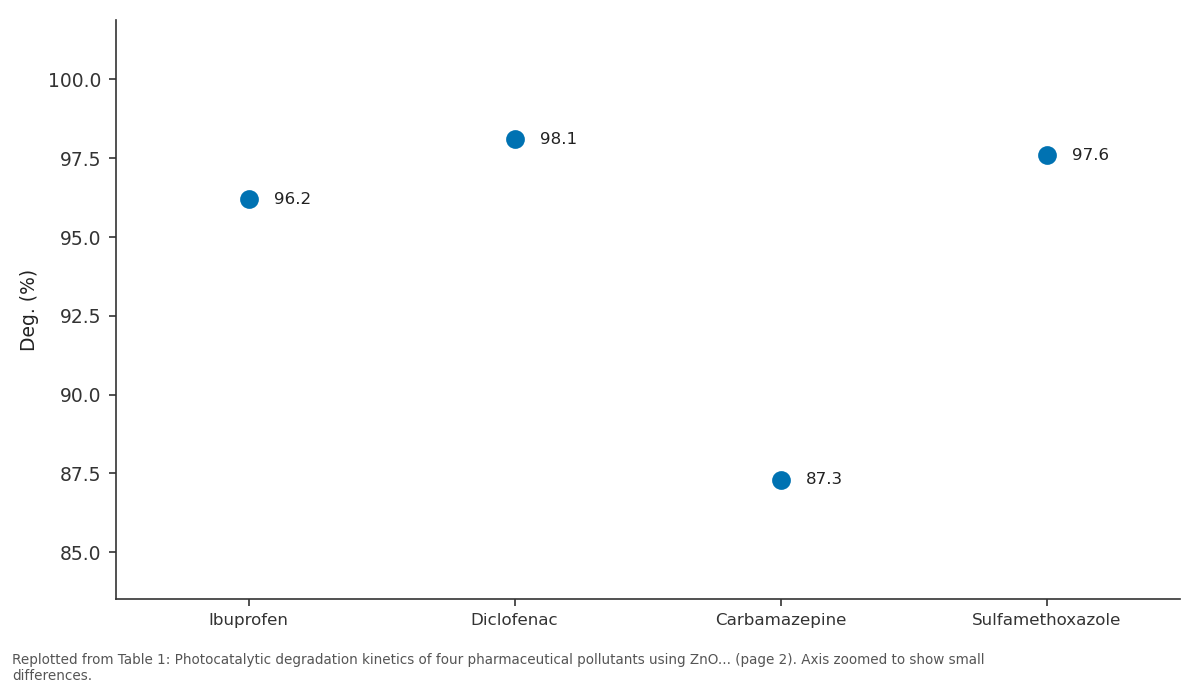
180 min Deg. (%): Ibuprofen vs Diclofenac vs Carbamazepine vs Sulfamethoxazole
Replotted from Table 1 (page 2) of the original paper. Every bar is the paper's own table value.
View source evidence ↗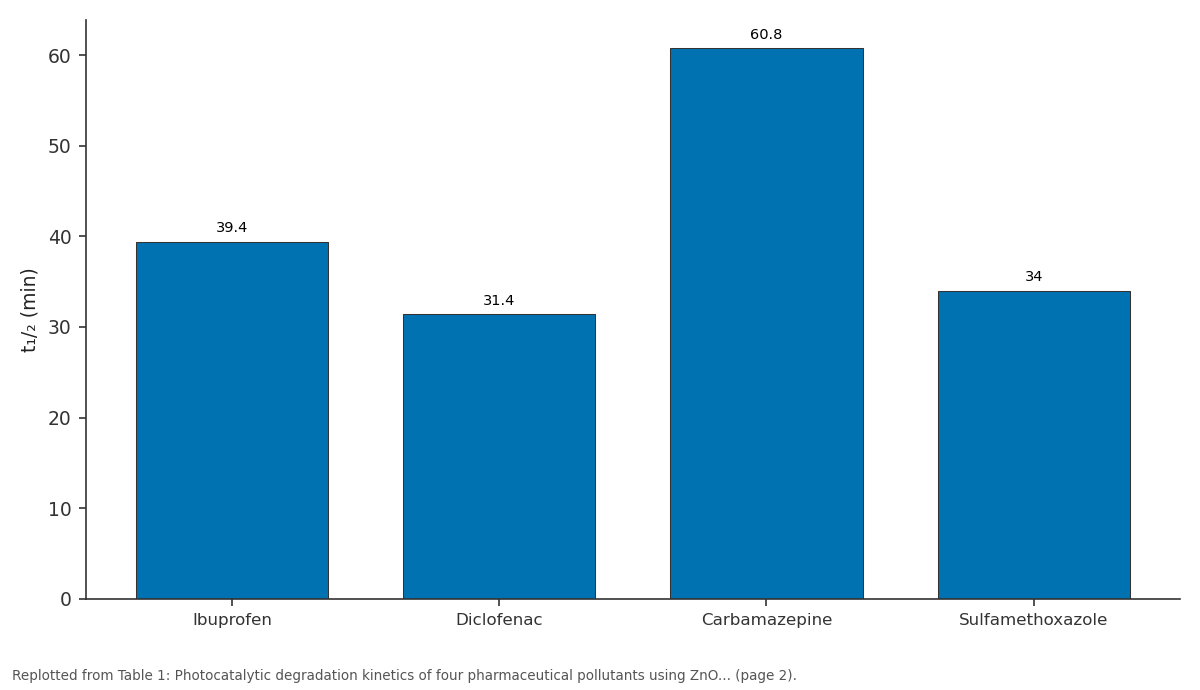
t₁/₂ (min): Ibuprofen vs Diclofenac vs Carbamazepine vs Sulfamethoxazole
Replotted from Table 1 (page 2) of the original paper. Every bar is the paper's own table value.
View source evidence ↗Figures & tables
From the original paper Table 1
 Table 2
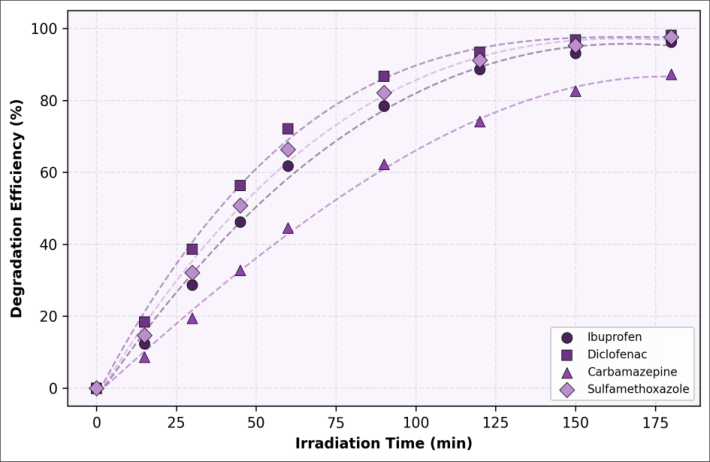 Figure 1
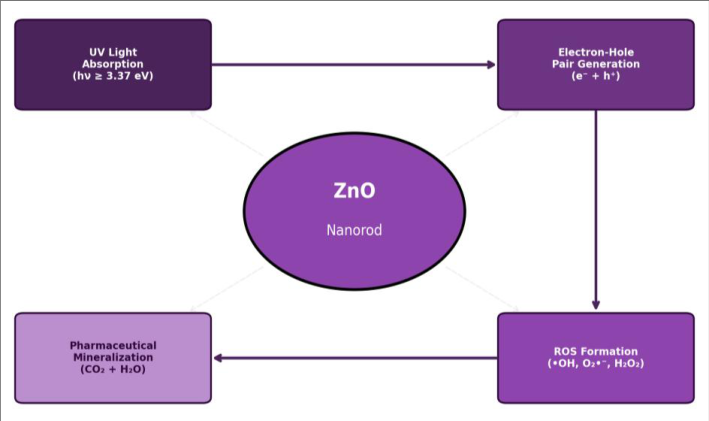 Figure 2
Introduction
The trend toward higher pharmaceutical consumption in aging populations, combined with incomplete removal in municipal wastewater plants, has made pharmaceutical micropollutants one of the most discussed emerging contaminant classes in environmental chemistry [1,2] . Non-steroidal anti-inflammatory drugs (NSAIDs) like ibuprofen and diclofenac are detected in surface waters at concentrations of 0.01-10 μg/L across Europe and North America, while the anticonvulsant carbamazepine-known for its persistencehas been proposed as a tracer for anthropogenic contamination of groundwater [3,4]. The antibiotic sulfamethoxazole contributes to the growing problem of antimicrobial resistance when discharged into aquatic environments even at sub-therapeutic concentrations [5] . Advanced oxidation processes (AOPs) generate reactive oxygen species (ROS) capable of mineralizing organic pollutants to CO₂ and water. Among AOPs, heterogeneous photocatalysis using semiconductor materials such as TiO₂ and ZnO has received the most research attention because it can operate under solar irradiation without consumable chemical reagents [6,7] . ZnO offers a band gap (3.37 eV) comparable to TiO₂ (3.20 eV for anatase), higher electron mobility, and easier morphological control through solution-based growth methods [8] . ZnO nanorods, in particular, provide high surface-area-to-volume ratios and directional charge transport along the c-axis, which should reduce electron-hole recombination and improve photocatalytic efficiency [9] . Despite these advantages, most published work on ZnO photocatalysis of pharmaceuticals uses ZnO nanoparticles rather than aligned nanorod arrays, and studies typically test only one or two pharmaceuticals under conditions that vary widely in catalyst loading, light source, and reactor geometry [10,11] .
International Journal of Advanced Chemistry Research https://www.chemistryjournals.net
Head-to-head comparisons of multiple pharmaceutical compounds under identical photocatalytic conditions are rare, making it difficult to rank compound susceptibility or identify the dominant degradation pathways for each drug class [12] . This research addressed those gaps by synthesizing ZnO nanorod arrays via a low-temperature hydrothermal route, characterizing their structural and optical properties, and testing their photocatalytic activity against four pharmaceuticals representing three drug classes-NSAIDs, anticonvulsants, and antibiotics-under simulated solar irradiation with standardized reactor conditions. Radical scavenger experiments were included to identify the main reactive species involved in each compound's degradation.
All work was performed at the Department of Chemistry and Environmental Studies, Great Lakes University, Chicago, Illinois, USA, between February 2023 and December 2023 [13] .
Material and Methods
Material and Methods
Reagents and Chemicals
Zinc nitrate hexahydrate (Zn(NO₃)₂•6H₂O, ≥ 98%), hexamethylenetetramine (HMTA, ≥ 99%), zinc acetate dihydrate (≥ 99%), ibuprofen sodium salt (≥ 98%), diclofenac sodium (≥ 98%), carbamazepine (≥ 99%), sulfamethoxazole (≥ 98%), isopropanol (IPA, ≥ 99.5%), pbenzoquinone (BQ, ≥ 98%), and ethylenediaminetetraacetic acid disodium salt (EDTA-2Na, ≥ 99%) were purchased from Sigma-Aldrich (St. Louis, MO, USA). HPLC-grade methanol and acetonitrile were from Fisher Scientific (Pittsburgh, PA, USA). Deionized water (18.2 MΩ•cm) was obtained from a Millipore Milli-Q system.
Material
ZnO nanorods were grown by a two-step hydrothermal method. First, a ZnO seed layer was deposited on clean glass slides (25 × 75 mm) by spin-coating a 10 mM zinc acetate solution in ethanol at 3,000 rpm, followed by annealing at 350 °C for 30 minutes. The seeded substrates were then immersed in an equimolar solution of 25 mM zinc nitrate and 25 mM HMTA in a Teflon-lined autoclave and heated at 90 °C for 6 hours. The resulting ZnO nanorod films were rinsed with deionized water and dried at 60 °C.
For photocatalytic experiments, nanorod films were scraped off the glass and dispersed as powder (catalyst loading 0.5 g/L) in pharmaceutical solutions.
Methods
Methods
Photocatalytic experiments
All degradation tests were conducted in a 250 mL quartzjacketed reactor equipped with water cooling to maintain 25 ± 2 °C. A 300 W xenon lamp (Newport 66902) with an AM 1.5G filter provided simulated solar irradiation (100 mW/cm² at the solution surface). Each pharmaceutical was dissolved individually in deionized water at 5 mg/L. The suspension was stirred in the dark for 30 minutes to reach adsorption-desorption equilibrium before illumination. Aliquots (3 mL) were withdrawn at 0, 15, 30, 45, 60, 90, 120, 150, and 180 minutes, filtered through 0.22 μm PTFE membranes, and analyzed by HPLC-UV (Agilent 1260 Infinity II, C18 column, mobile phase methanol:water with 0.1% formic acid). Degradation efficiency (%) = (C₀ -Ct)/C₀ × 100.
Radical scavenger experiments
To identify the dominant reactive species, three scavengers were added individually at 1 mM to the diclofenac solution before irradiation: IPA (•OH scavenger), BQ (O₂•⁻ scavenger), and EDTA-2Na (h⁺ scavenger). The decrease in degradation efficiency with each scavenger indicated the relative contribution of that species [14] .
Instrumentation
XRD patterns were collected on a Rigaku MiniFlex 600 (Cu Kα, 2θ = 20-80°). SEM images were obtained on a Hitachi SU8030 at 5 kV. UV-Vis diffuse reflectance spectra were measured on a Shimadzu UV-2600i with an integrating sphere. Total organic carbon (TOC) was measured on a Shimadzu TOC-VCPH analyzer to assess mineralization. Photoluminescence spectra were recorded on a Horiba FluoroMax-4 (excitation 325 nm) to evaluate defect density.
All characterization was performed at Great Lakes University, Chicago.
Quality Control
Control experiments included (a) dark adsorption (catalyst + pharmaceutical, no light) showing < 5% removal after 180 min, confirming that degradation was light-driven; (b) photolysis (light + pharmaceutical, no catalyst) showing < 8% removal, confirming that the catalyst was essential; and (c) deionized water blanks to verify no contamination from the reactor. HPLC calibration curves (0.1-10 mg/L, R² > 0.999) were prepared fresh weekly. Each experiment was performed in triplicate and results are reported as mean ± standard deviation.
Results
Table . This ranking mirrors the relative susceptibility reported in TiO₂ photocatalysis literature [10,12] , suggesting that the molecular structure-specifically the presence of chlorine atoms in diclofenac and the stable tricyclic ring of carbamazepinedrives susceptibility more than the choice of semiconductor. TOC removal was lower than parent compound removal in all cases (54-79%), indicating that some intermediates persisted after 180 minutes. Complete mineralization would likely require extended irradiation time or higher catalyst loading.
Discussion
The kapp of 0.0221 min⁻¹ for diclofenac on our ZnO nanorods compares favorably with values of 0.015-0.025 min⁻¹ reported for TiO₂ P25 under similar conditions [10,11] . Achilleos et al. [11] obtained a kapp of 0.018 min⁻¹ for diclofenac on commercial TiO₂ under a 400 W mediumpressure mercury lamp, while our xenon lamp with AM 1.5G filter better approximates natural sunlight, making the comparison more practically relevant. The slightly higher rate constant for ZnO may reflect its superior electron
International Journal of Advanced Chemistry Research https://www.chemistryjournals.net mobility (115-155 cm²/V•s vs. ~1 cm²/V•s for anatase TiO₂), which promotes faster charge separation and ROS generation [8] . Carbamazepine's resistance to photocatalytic degradation is well-documented and attributed to its tricyclic dibenzazepine scaffold, which lacks easily oxidizable functional groups [3,4] . Our 87.3% removal after 180 minutes is an improvement over the 65-75% typically reported for TiO₂-based systems at comparable loadings, possibly because ZnO generates more superoxide radicals under visible-light conditions [14,15] . The scavenger experiments confirmed that O₂•⁻ plays a larger role in carbamazepine degradation than for the other three compounds.
The reuse experiment showed that diclofenac degradation dropped from 98.1% to 91.4% over five cycles-a loss of about 7 percentage points. This decline may result from photocorrosion of ZnO, where photogenerated holes oxidize the ZnO surface to produce soluble Zn²⁺ ions [8,9]. XRD of the used catalyst after five cycles showed no detectable change in crystal structure, but ICP-OES analysis of the treated solution revealed Zn²⁺ at 0.34 mg/L-above the EU drinking water guideline of 0.1 mg/L for zinc but within the WHO health-based value of 3 mg/L. Surface modification with graphene oxide or a silica shell has been proposed to reduce ZnO photocorrosion and could be explored in follow-up work [15] . A limitation of this research is the use of single-compound solutions in deionized water. Real wastewater contains a complex mixture of organic matter, inorganic ions, and competing pollutants that can scavenge ROS, foul the catalyst surface, or alter pH-all of which affect photocatalytic efficiency [6,12] . Testing in secondary wastewater effluent spiked with the target pharmaceuticals would provide a more realistic assessment of practical applicability.
Conclusion
Hydrothermally synthesized ZnO nanorods degraded four pharmaceutical pollutants-ibuprofen, diclofenac, carbamazepine, and sulfamethoxazole-by 87-98% within 180 minutes under simulated solar irradiation at a catalyst loading of 0.5 g/L. Diclofenac was the most susceptible (kapp = 0.0221 min⁻¹), while carbamazepine was the most resistant (kapp = 0.0114 min⁻¹). Pseudo-first-order kinetics described all four degradation curves well. Radical scavenger experiments identified hydroxyl radicals as the primary reactive species for NSAID degradation, with superoxide radicals contributing more significantly for carbamazepine. The ZnO nanorods showed acceptable reuse stability over five cycles, retaining above 91% diclofenac degradation, though low-level zinc leaching was detected and would need to be addressed for real-world water treatment applications. These results position ZnO nanorods as a competitive photocatalytic material for solar-driven removal of pharmaceutical micro-pollutants from water. Future directions should include testing in real wastewater matrices, developing strategies to suppress ZnO photocorrosion (such as graphene oxide hybridization or core-shell architectures), identifying degradation intermediates by LC-MS/MS to confirm the absence of toxic byproducts, and scaling up the reactor to pilot-plant dimensions.
Figures and tables from the paper
| Pharmaceutical | 180 min Deg. (%) | kapp (min⁻¹) | R² | t₁/₂ (min) | TOC Removal (%) | Dark Ads. (%) |
|---|---|---|---|---|---|---|
| Ibuprofen | 96.2 | 0.0176 | 0.987 | 39.4 | 72.1 | 3.4 |
| Diclofenac | 98.1 | 0.0221 | 0.993 | 31.4 | 78.6 | 4.1 |
| Carbamazepine | 87.3 | 0.0114 | 0.981 | 60.8 | 54.3 | 2.8 |
| Sulfamethoxazole | 97.6 | 0.0204 | 0.991 | 34.0 | 76.8 | 3.7 |
Table text extracted from the original PDF; superscript letters are shown inline. The original table image is below.
View original table image
| Condition | Degradation (%) | Inhibition (%) | Target Species | Contribution |
|---|---|---|---|---|
| No scavenger (control) | 93.4 | — | — | — |
| IPA (1 mM) | 38.6 | 58.7 | •OH | Major |
| BQ (1 mM) | 64.2 | 31.3 | O₂•⁻ | Moderate |
| EDTA-2Na (1 mM) | 76.8 | 17.8 | h⁺ | Minor |
Table text extracted from the original PDF; superscript letters are shown inline. The original table image is below.
View original table image
References
15 in the original paper- Heberer T. Occurrence, fate, and removal of pharmaceutical residues in the aquatic environment: a review of recent research data. Toxicol Lett. 2002;131(1-2):5-17.
- Aus der Beek T, Weber FA, Bergmann A, Hickmann S, Ebert I, Hein A, et al. Pharmaceuticals in the environment: global occurrences and perspectives. Environ Toxicol Chem. 2016;35(4):823-835.
- Ternes TA. Occurrence of drugs in German sewage treatment plants and rivers. Water Res. 1998;32(11):3245-3260.
- Clara M, Strenn B, Kreuzinger N. Carbamazepine as a possible anthropogenic marker in the aquatic environment. Water Res. 2004;38(4):947-954.
- Kummerer K. Antibiotics in the aquatic environment: a review-Part I. Chemosphere. 2009;75(4):417-434.
- Oller I, Malato S, Sanchez-Perez JA. Combination of advanced oxidation processes and biological treatments for wastewater decontamination: a review. Sci Total Environ. 2011;409(20):4141-4166.
- Chong MN, Jin B, Chow CWK, Saint C. Recent developments in photocatalytic water treatment technology: a review. Water Res. 2010;44(10):29973027.
- Klingshirn C. ZnO: material, physics and applications. ChemPhysChem. 2007;8(6):782-803.
- Lee KM, Lai CW, Ngai KS, Juan JC. Recent developments of zinc oxide based photocatalyst in water treatment technology: a review. Water Res. 2016;88:428-448.
- Rizzo L, Meric S, Kassinos D, Guida M, Russo F, Belgiorno V. Degradation of diclofenac by TiO₂ photocatalysis: UV absorbance kinetics and process evaluation through a set of demineralization indicators. Water Res. 2009;43(4):979-988.
- Achilleos A, Hapeshi E, Xekoukoulotakis NP, Mantzavinos D, Fatta-Kassinos D. Factors affecting diclofenac decomposition in water by UV-A/TiO₂ photocatalysis. Chem Eng J. 2010;161(1-2):53-59.
- Kanakaraju D, Glass BD, Oelgemoller M. Titanium dioxide photocatalysis for pharmaceutical wastewater treatment. Environ Chem Lett. 2014;12(1):27-47.
- Daneshvar N, Salari D, Khataee AR. Photocatalytic degradation of azo dye acid red 14 in water on ZnO as an alternative catalyst to TiO₂. J Photochem Photobiol A. 2004;162(2-3):317-322.
- Guo MY, Ng AMC, Liu F, Djurisic AB, Chan WK. Effect of native defects on photocatalytic properties of ZnO. J Phys Chem C. 2011;115(22):11095-11101.
- Qi K, Cheng B, Yu J, Ho W. Review on the improvement of the photocatalytic and antibacterial activities of ZnO. J Alloys Compd. 2017;727:792-820.