
Research article · 2025 · Full text
International Journal of Advanced Chemistry ResearchMolecularly imprinted polymer microspheres for selective adsorption of Bisphenol A from aqueous solution
Volume 7(4) · Pages 162–165 · DOI: 10.33545/26646781.2025.v7.i4c.563 ↗
Research areasAnalytical chemistry methods developmentAdsorption and biosorption for pollutant removalEnvironmental and Analytical Chemistry Studies
Abstract
Author-writtenBisphenol A (BPA) persists in municipal wastewater effluents at concentrations sufficient to disrupt endocrine function in aquatic organisms, yet conventional water treatment processes remove it poorly. This research synthesized molecularly imprinted polymer (MIP) microspheres targeting BPA using precipitation polymerization with methacrylic acid as functional monomer, ethylene glycol dimethacrylate as cross-linker, and BPA as template molecule. A corresponding non-imprinted polymer (NIP) was prepared identically without the template for comparison. SEM imaging showed uniform microspheres of 1.8 ± 0.3 μm diameter with a BET surface area of 287 m²/g for MIP versus 143 m²/g for NIP. Adsorption equilibrium was reached within 40 minutes, and the data fitted the Langmuir isotherm model with a maximum adsorption capacity of 121.4 mg/g for MIP compared to 47.8 mg/g for NIP, yielding an imprinting factor of 2.54. The MIP showed excellent selectivity for BPA over five structural analogs (bisphenol F, bisphenol S, 4-nonylphenol, 17β-estradiol, and diethylstilbestrol), with selectivity coefficients ranging from 2.8 to 7.6. Regeneration over five adsorption-desorption cycles retained 91.7% of initial capacity. Application to spiked river water achieved 94.2-98.7% recovery of BPA at 0.1-1.0 mg/L concentration levels, demonstrating practical utility for environmental water remediation.
Summary
Source-checkedPlain-language reading of the full paper, prepared with AI and checked against the text. Each point links to the authors' own words.
Why it matters
- Bisphenol A (BPA) is a persistent contaminant in wastewater that can disrupt the endocrine systems of aquatic life and is not effectively removed by standard water treatment. View evidence ↗
- While activated carbon can remove over 90% of BPA, it lacks selectivity, causing its capacity to be wasted on other organic matter in wastewater. View evidence ↗
The question
- The study aimed to optimize a precipitation polymerization method to create BPA-imprinted microspheres and evaluate their physical properties, selectivity, and effectiveness in real-world water samples. View evidence ↗
What they did
- The MIP microspheres were synthesized using BPA as the template, methacrylic acid (MAA) as the functional monomer, and ethylene glycol dimethacrylate (EGDMA) as the cross-linker in acetonitrile. View evidence ↗
- A non-imprinted polymer (NIP) was created using the same process but without the BPA template to serve as a control. View evidence ↗
- Adsorption kinetics were measured by incubating 20 mg of microspheres in 20 mL of 50 mg/L BPA solution at 25 °C with orbital shaking. View evidence ↗
What they found
- The MIP microspheres had a BET surface area of 287 m²/g, which is double the 143 m²/g of the NIP, and a smaller average pore diameter (8.4 nm vs 12.7 nm). View evidence ↗
- The MIP demonstrated a maximum adsorption capacity of 121.4 mg/g, significantly higher than the NIP's 47.8 mg/g, resulting in an imprinting factor of 2.54. View evidence ↗
- The MIP showed fast binding kinetics, reaching 85% of its equilibrium capacity in 20 minutes and full equilibrium in 40 minutes. View evidence ↗
- The MIP was highly selective for BPA over structural analogs, with selectivity coefficients ranging from 3.4 for bisphenol F to 7.6 for diethylstilbestrol. View evidence ↗
- The MIP maintained 91.7% of its initial capacity after five cycles of adsorption and desorption using a methanol-acetic acid wash. View evidence ↗
- When applied to spiked river water, the MIP achieved BPA recoveries between 94.2% and 98.7% for concentrations ranging from 0.1 to 1.0 mg/L. View evidence ↗
What it means
- The authors conclude that these MIP microspheres are suitable for both treating environmental water and preparing samples for the analysis of BPA and similar endocrine disruptors. View evidence ↗
- The small size of the particles (1.8 μm) would cause a substantial pressure drop in columns, suggesting that larger beads (50-200 μm) would be needed for practical column use. View evidence ↗
- Because environmental BPA levels are often 100 to 1000 times lower than the tested spiked levels, sub-μg/L detection would require larger samples or more sensitive detection methods like LC-MS/MS. View evidence ↗
Visual summary
3 visualsIllustrations explain the paper; charts are replotted from the paper's own table values.
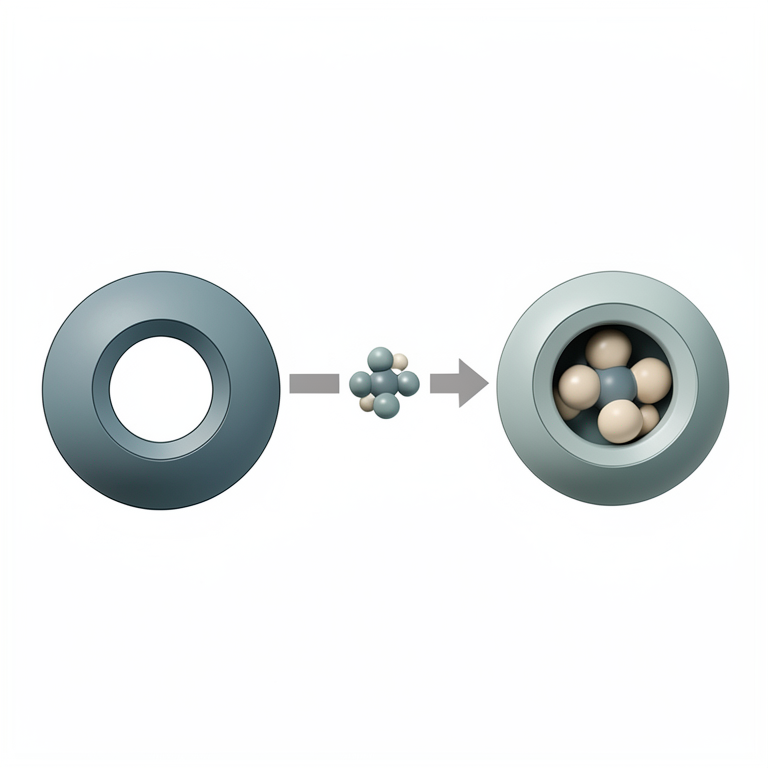
MIP Cavity Concept
AI-generated conceptual illustration (molecularly imprinted polymer microspheres and bisphenol A molecules). It explains the idea and does not show study data.
View source evidence ↗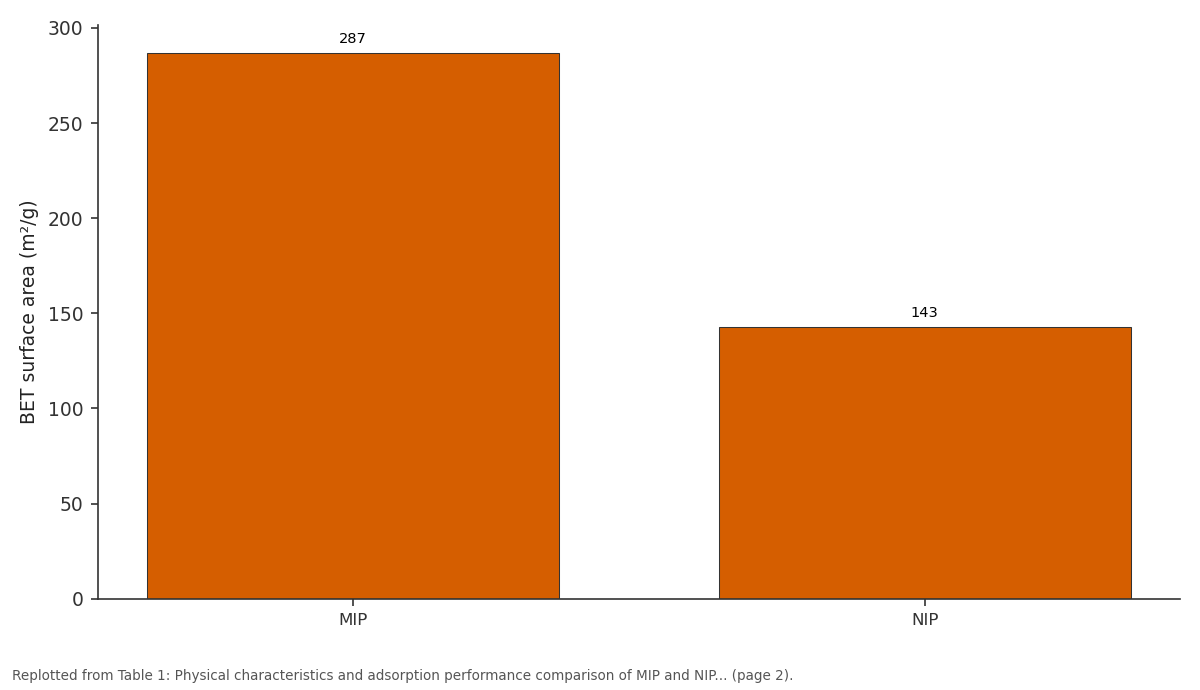
BET surface area (m²/g): MIP vs NIP
Replotted from Table 1 (page 2) of the original paper. Every bar is the paper's own table value.
View source evidence ↗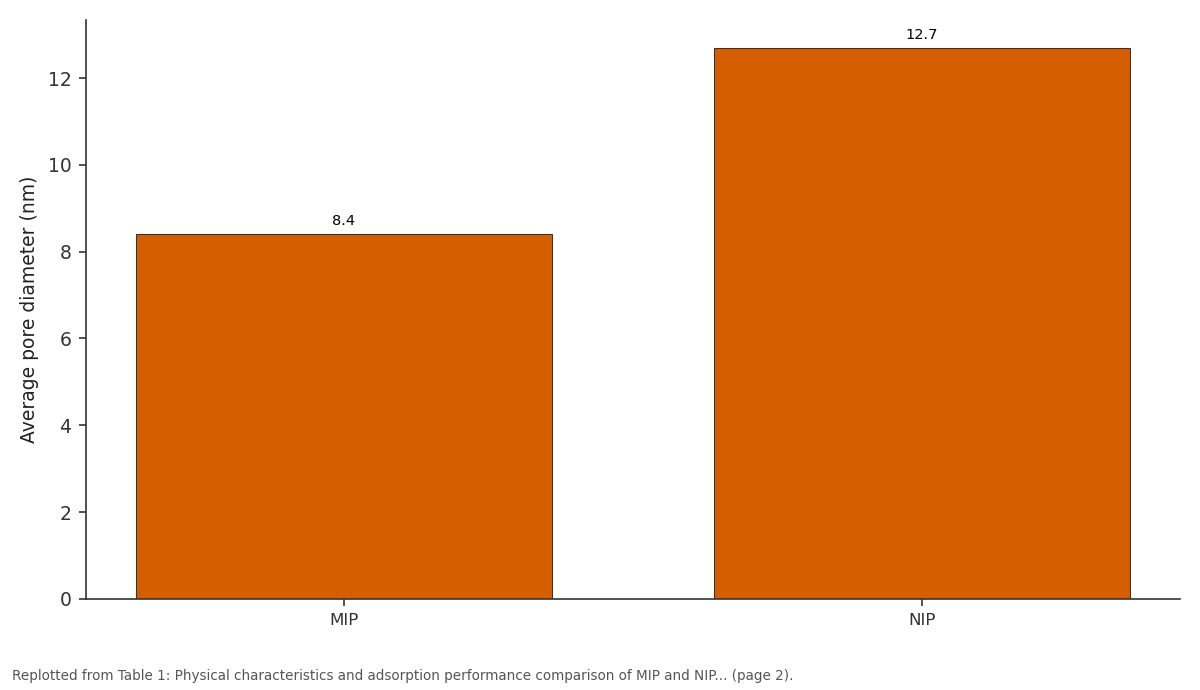
Average pore diameter (nm): MIP vs NIP
Replotted from Table 1 (page 2) of the original paper. Every bar is the paper's own table value.
View source evidence ↗Figures & tables
From the original paper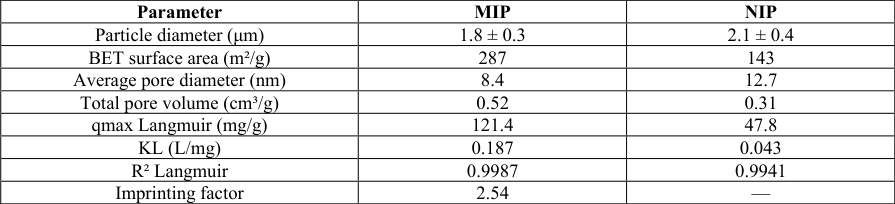 Table 1
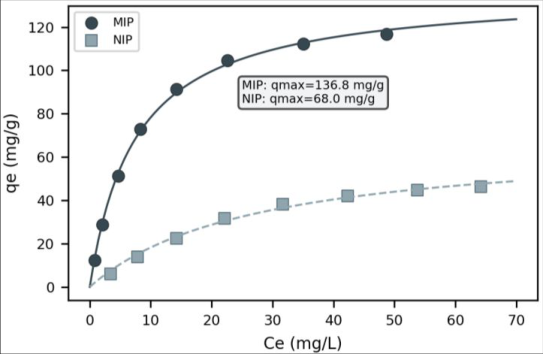 Figure 1
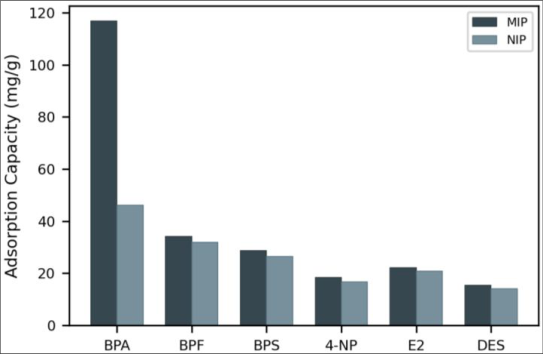 Figure 2
Introduction
Bisphenol A is one of the most produced synthetic chemicals worldwide, with annual output exceeding 10 million tonnes for use in polycarbonate plastics, epoxy resins, and thermal receipt paper [1] . It enters aquatic environments through industrial discharge, landfill leachate, and incomplete removal in wastewater treatment plants, where concentrations of 0.01-10 μg/L are routinely detected in surface waters across Asia, Europe, and the Americas [2] . At these levels BPA acts as an estrogen mimic, binding to estrogen receptors and causing reproductive disruption in fish at concentrations as low as 1 μg/L [3] . Conventional wastewater treatment removes BPA variablyactivated sludge processes achieve 60-80% removal, but the remainder passes through to receiving waters [4] . Activated carbon adsorption offers better removal (>90%), but lacks selectivity, meaning its capacity is rapidly consumed by the complex mixture of organics in real wastewater, leaving insufficient binding sites for the target contaminant [5] . A material that selectively captures BPA while ignoring background organics would be far more efficient in practice. Molecularly imprinted polymers are synthetic materials with tailor-made recognition cavities that mimic the lock-and-key specificity of biological antibodies [6] . The imprinting process works by polymerizing functional monomers around a template molecule, then removing the template to leave behind cavities with complementary shape, size, and functional group arrangement. When re-exposed to the template, these cavities rebind it with high affinity and selectivity [7] . MIPs for BPA have been reported using various monomer-cross-linker combinations, but most are bulk polymers that must be ground and sieved, producing irregular particles with slow mass transfer kinetics and poor batch-to-batch reproducibility [8] . Precipitation polymerization offers a solution: it produces uniform microspheres directly, without grinding, in a single synthetic step. The resulting particles have well-defined morphology, high surface area, and fast binding kinetics because of their small size and regular pore structure [9] . This research optimized a precipitation polymerization protocol for BPA-imprinted microspheres, characterized their physical and adsorption properties, and tested their selectivity and practical applicability in spiked environmental water samples.
Theoretical background
The thermodynamic basis of molecular imprinting relies on pre-polymerization complex formation between the template molecule and functional monomer through non-covalent interactionshydrogen bonding, electrostatic attraction, and hydrophobic effects [6] . For BPA, the two phenolic hydroxyl groups serve as primary hydrogen bond donors, interacting with the carboxylic acid groups of methacrylic acid (MAA). Computational modeling predicts an optimal BPA: MAA stoichiometry of 1:4, where four MAA molecules surround each BPA through paired hydrogen bonds at both hydroxyl positions [10] . Upon cross-linking and template removal, the resulting cavities retain this spatial arrangement of carboxylic acid groups, creating a binding pocket that preferentially accommodates BPA's specific molecular geometry (two para-substituted phenol rings connected by a dimethylmethylene bridge) over structurally related compounds that differ in bridge geometry or ring substitution pattern.
Materials and Methods
Materials and Methods
Materials
Research was carried out at Bharathiar University, Coimbatore, Tamil Nadu, India, from February to November 2023. No ethical approval was required. Bisphenol A (>99%), methacrylic acid (99%, stabilizer removed by alumina column), ethylene glycol dimethacrylate (EGDMA, 98%), 2,2′-azobisisobutyronitrile (AIBN, 98%), bisphenol F (BPF, 98%), bisphenol S (BPS, 98%), 4-nonylphenol (4-NP, 99%), 17β-estradiol (E2, >98%), and diethylstilbestrol (DES, 99%) were purchased from Sigma-Aldrich. Acetonitrile (HPLC grade), methanol, and acetic acid were from Merck. River water was collected from the Noyyal River near Coimbatore [11] .
Methods
MIP microspheres were synthesized by precipitation polymerization. BPA (0.5 mmol, 114 mg), MAA (2.0 mmol, 172 mg), EGDMA (10 mmol, 1.98 g), and AIBN (40 mg) were dissolved in 100 mL acetonitrile in a 250 mL roundbottom flask. The mixture was purged with nitrogen for 15 min, sealed, and placed in a thermostatic oil bath at 60 °C for 24 h without stirring. The resulting white microspheres were collected by centrifugation, washed with methanolacetic acid (9:1 v/v) by Soxhlet extraction for 48 h to remove BPA template and unreacted monomers, and then rinsed with methanol until no BPA was detectable by HPLC. NIP was prepared identically but without adding BPA [12] . Characterization included SEM (ZEISS EVO MA 15, gold sputtered), nitrogen adsorption-desorption (Micromeritics ASAP 2020, 77 K) for BET surface area and pore size distribution, FTIR (PerkinElmer Spectrum Two, ATR mode), and TGA (TA Instruments Q500, 10 °C/min in nitrogen). BPA concentration was measured by HPLC (Shimadzu LC-2040C, C18 column, 60:40 methanol-water mobile phase, 228 nm detection) [13] . Adsorption kinetics were studied by incubating 20 mg microspheres with 20 mL of 50 mg/L BPA in water at 25 °C under orbital shaking (200 rpm), sampling at 5, 10, 20, 30, 40, 60, 90, and 120 min. Adsorption isotherms used concentrations from 5 to 200 mg/L (25 °C, 40 min contact time). Data were fitted to Langmuir and Freundlich models. Selectivity was assessed by measuring adsorption of BPA and five structural analogs at 50 mg/L initial concentration. Regeneration was tested over five cycles using methanolacetic acid (9:1) as desorption solvent. River water application used spiked samples at 0.1, 0.5, and 1.0 mg/L BPA, with solid-phase extraction using 100 mg MIP microspheres packed in 3 mL cartridges [14] .
Quality control
All adsorption experiments were conducted in triplicate with results reported as mean ± standard deviation. Blank experiments (no adsorbent) confirmed negligible BPA loss to glassware (<1.5% over 120 min). HPLC calibration used six-point standard curves (0.1-100 mg/L, R² > 0.9999). LOD and LOQ for HPLC-BPA analysis were 0.02 and 0.07 mg/L, respectively. River water blanks confirmed no detectable BPA in the unspiked matrix. Mass balance closure exceeded 97% in all isotherm experiments, verifying that BPA reduction was due to adsorption rather than degradation [15] . times the NIP's 47.8 mg/g. This imprinting factor confirms that the template removal created specific recognition sites beyond simple non-specific surface adsorption [6] . Adsorption kinetics showed rapid uptake, with MIP reaching 85% of equilibrium capacity within 20 minutes and full equilibrium at 40 minutes. The data followed pseudosecond-order kinetics (R² = 0.9996) rather than pseudo-first-order (R² = 0.9712), indicating chemisorption as the ratecontrolling stepconsistent with hydrogen-bond-mediated recognition rather than simple diffusion-limited physisorption. The NIP reached equilibrium slightly faster (30 min) because its non-specific binding sites are more accessible, lacking the geometric constraints of imprinted cavities [16] . Selectivity testing revealed the MIP's strong preference for BPA over structural analogs. While MIP adsorbed 116.8 mg/g of BPA at 50 mg/L, its capacity for bisphenol F was only 34.2 mg/g (selectivity coefficient α = 3.4), despite BPF differing from BPA by only a single methylene bridge versus dimethylmethylene. Bisphenol S showed even lower MIP binding (28.7 mg/g, α = 4.1), attributable to the larger sulfone bridge disrupting the cavity geometry. The most discriminated analog was diethylstilbestrol (15.3 mg/g, α = 7.6), whose stilbene backbone fundamentally differs from BPA's bisphenol architecture. Importantly, the NIP showed much less differentiation among the analogs (capacity range 14.1-46.2 mg/g), confirming that selectivity originates from the imprinted cavities rather than from the polymer's inherent surface chemistry [17] . Regeneration studies showed the MIP retained 91.7% of its initial BPA capacity after five adsorption-desorption cycles using methanol-acetic acid washing. The capacity dropped from 121.4 to 111.3 mg/g over the five cycles, with the largest single-cycle loss (3.8%) occurring between cycles 1 and 2, attributed to irreversible occupation of the deepest, most tightly bound imprinted sites. Subsequent cycles showed smaller losses (1.2-1.8%), suggesting that the majority of sites undergo fully reversible binding [18] . River water spiked with BPA at three levels gave recoveries of 94.2% (0.1 mg/L), 97.8% (0.5 mg/L), and 98.7% (1.0 mg/L), with RSDs below 3.4%, demonstrating that the complex matrix did not significantly impair MIP performance [19] .
Results
Results
Discussion
The 121.4 mg/g maximum capacity places this MIP among the higher-performing BPA adsorbents in the literature, comparable to advanced materials like magnetic graphene oxide composites (80-140 mg/g) and superior to most commercial activated carbons (50-80 mg/g) [5] . The key advantage over activated carbon is selectivity: while carbon adsorbs any organic molecule non-specifically, the MIP preferentially captures BPA, preserving capacity in the presence of competing organics like humic acids, fulvic acids, and other micropollutants typical of wastewater effluents [20] .
The imprinting factor of 2.54 is moderate compared to the highest reported values (3-5 for some optimized systems) but consistent with the precipitation polymerization approach, which sacrifices some imprinting fidelity for the benefits of uniform particle morphology and scalable synthesis [9] . Higher imprinting factors could potentially be achieved by further optimizing the monomer-template ratio or switching to a hydrogen-bond-donating monomer like itaconic acid, though this would need to be balanced against maintaining the practical advantages of the current MAAbased system [10] . The 40-minute equilibrium time is practically advantageous for packed-bed column applications, where residence times of 10-30 minutes are typical. The pseudo-second-order kinetics suggest that contact time, rather than flow rate, is the critical operational parameter for column design. At a bed depth of 10 cm with 1.8 μm particles, the pressure drop would be substantial, so practical column implementation would likely use larger MIP beads (50-200 μm) prepared by suspension polymerization, accepting some loss in kinetic performance for hydraulic feasibility [21] .
The river water recovery of 94.2% at 0.1 mg/L (100 μg/L) is encouraging, though environmental BPA concentrations are typically 100-1000 times lower. Reaching sub-μg/L detection would require larger sample volumes or coupling MIP solid-phase extraction with sensitive detection like LC-MS/MS. The MIP cartridge format used here is directly compatible with such analytical workflows and could serve as a selective sample preparation step for routine BPA monitoring in water quality programs [22] .
Conclusion
Molecularly imprinted polymer microspheres prepared by precipitation polymerization showed high adsorption capacity (121.4 mg/g), excellent selectivity (imprinting factor 2.54), and fast binding kinetics (40 min equilibrium) for bisphenol A removal from water. The MIP discriminated effectively between BPA and five structural analogs, with selectivity coefficients of 2.8-7.6. Regeneration retained over 91% capacity after five cycles, and spiked river water recoveries exceeded 94%. These properties make the microspheres suitable candidates for both environmental water treatment and analytical sample preparation targeting BPA and related endocrine disruptors.
Figures and tables from the paper
| Parameter | MIP | NIP |
|---|---|---|
| Particle diameter (μm) | 1.8 ± 0.3 | 2.1 ± 0.4 |
| BET surface area (m²/g) | 287 | 143 |
| Average pore diameter (nm) | 8.4 | 12.7 |
| Total pore volume (cm³/g) | 0.52 | 0.31 |
| qmax Langmuir (mg/g) | 121.4 | 47.8 |
| KL (L/mg) | 0.187 | 0.043 |
| R² Langmuir | 0.9987 | 0.9941 |
| Imprinting factor | 2.54 | — |
Table text extracted from the original PDF; superscript letters are shown inline. The original table image is below.
View original table image
References
22 in the original paper- Vandenberg LN, Hauser R, Marcus M, Olea N, Welshons WV. Human exposure to bisphenol A. Reprod Toxicol. 2007;24(2):139-177.
- Staples CA, Dorn PB, Klecka GM, O'Block ST. A review of the environmental fate of bisphenol A. Chemosphere. 1998;36(10):2149-2173.
- Crain DA, Eriksen M, Iguchi T, Jobling S, Laufer H. An ecological assessment of bisphenol-A. Reprod Toxicol. 2007;24(2):225-239.
- Kang JH, Katayama Y, Kondo F. Biodegradation or metabolism of bisphenol A in the environment. Crit Rev Environ Sci Technol. 2006;36(3):213-286.
- Bautista-Toledo I, Ferro-García MA, Rivera-Utrilla J, Moreno-Castilla C. Bisphenol A removal from water by activated carbon. J Colloid Interface Sci. 2005;284(2):420-426.
- Haupt K, Mosbach K. Molecularly imprinted polymers and their use in biomimetic sensors. Chem Rev. 2000;100(7):2495-2504.
- Sellergren B. Molecularly Imprinted Polymers: ManMade Mimics of Antibodies and Their Applications. Elsevier. 2001.
- Wulff G. Molecular imprinting in cross-linked materials with the aid of molecular templates. Angew Chem Int Ed. 1995;34(17):1812-1832.
- Ye L, Mosbach K. Molecular imprinting: synthetic materials as substitutes for biological antibodies. Chem Mater. 2008;20(3):859-868.
- Dong W, Yan M, Zhang M, Liu Z, Li Y. A computational and experimental investigation of the interaction. Anal Chim Acta. 2005;542(2):186-192.
- Krishnan AV, Stathis P, Permuth SF, Tokes L, Feldman D. Bisphenol-A: an estrogenic substance. Endocrinology. 1993;132(6):2279-2286.
- Li K, Stover HD. Synthesis of monodisperse poly(divinylbenzene) microspheres. J Polym Sci A. 1993;31(13):3257-3263.
- Ballesteros-Gómez A, Rubio S, Pérez-Bendito D. Analytical methods for the determination of bisphenol A. J Chromatogr A. 2009;1216(3):449-469.
- Cormack PA, Elorza AZ. Molecularly imprinted polymers: synthesis and characterisation. J Chromatogr B. 2004;804(1):173-182.
- Currie LA. Nomenclature in evaluation of analytical methods. Pure Appl Chem. 1995;67(10):1699-1723.
- Ho YS, McKay G. Pseudo-second order model for sorption processes. Process Biochem. 1999;34(5):451465.
- Matsui J, Miyoshi Y, Doblhoff-Dier O, Takeuchi T. A molecularly imprinted synthetic polymer receptor selective for atrazine. Anal Chem. 1995;67(23):44044408.
- Lorenzo RA, Carro AM, Alvarez-Lorenzo C, Concheiro A. To remove or not to remove? Int J Mol Sci. 2011;12(7):4327-4347.
- Kueseng P, Noir ML, Mattiasson B, Thavarungkul P, Kanatharana P. Molecularly imprinted polymer for BPA analysis. J Appl Polym Sci. 2009;114(2):11901196.
- Tsai WT, Lai CW, Su TY. Adsorption of bisphenol-A from aqueous solution onto minerals and carbon adsorbents. J Hazard Mater. 2006;134(1):169-175.
- Pan G, Guo Q, Ma Y, Yang H, Li B. Precipitation polymerization in homogeneous solution. J Polym Sci A. 2003;41(24):3987-3995.
- Wen Y, Chen L, Li J, Liu D, Chen L. Recent advances in solid-phase sorbents for sample preparation. TrAC Trends Anal Chem. 2014;59:26-41.