
Research article · 2025 · Full text
International Journal of Advanced Chemistry ResearchChitosan-based edible coatings reinforced with zinc oxide nanoparticles for postharvest preservation of strawberries
Volume 7(4) · Pages 158–161 · DOI: 10.33545/26646781.2025.v7.i4c.562 ↗
Research areasPostharvest Quality and Shelf Life ManagementNanocomposite Films for Food PackagingPolymer-Based Agricultural Enhancements
Abstract
Author-writtenStrawberries rank among the most perishable commercial fruits, with a typical shelf life of just 5-7 days under refrigeration before visible mold growth and tissue softening render them unsaleable. This research developed chitosan-based edible coatings incorporating zinc oxide nanoparticles (ZnO NPs) to extend strawberry postharvest life. Four treatments were compared: uncoated control, 1% chitosan, 2% chitosan, and 2% chitosan reinforced with 0.1% ZnO NPs (50 nm average diameter). Coated strawberries were stored at 4° C and 90% relative humidity for 12 days, with quality parameters assessed every 2 days. The nanocomposite coating reduced weight loss to 9.1% at day 12 compared to 30.7% for controls. Firmness retention was 72% of initial values for nanocomposite-coated fruit versus 25.5% for controls. Mold incidence reached 78% in controls by day 10 but remained at 12% in the nanocomposite group. Total soluble solids increased more slowly in coated fruit, indicating delayed senescence. Vitamin C retention at day 12 was 79.3% for the nanocomposite coating versus 37.2% for untreated strawberries. The chitosan-ZnO combination created a synergistic barrier against both moisture loss and microbial spoilage, extending marketable shelf life from 6 to at least 10 days.
Summary
Source-checkedPlain-language reading of the full paper, prepared with AI and checked against the text. Each point links to the authors' own words.
Why it matters
- Strawberries are highly perishable, typically becoming unsaleable after 5-7 days of refrigeration due to softening and mold. View evidence ↗
- In Chile, the largest South American producer, approximately 30-40% of the strawberry harvest is lost to moisture loss and Botrytis cinerea infection. View evidence ↗
- Chitosan is a biodegradable material derived from crustacean shells that is useful for coatings due to its film-forming abilities and natural antifungal properties. View evidence ↗
The question
- The study aimed to determine if adding zinc oxide nanoparticles (ZnO NPs) to chitosan coatings could extend the shelf life of strawberries more effectively than chitosan alone. View evidence ↗
What they did
- The researchers compared four groups: an uncoated control, 1% chitosan, 2% chitosan, and a nanocomposite of 2% chitosan with 0.1% ZnO nanoparticles (50 nm diameter). View evidence ↗
- A total of 240 strawberries (60 per group) were dip-coated for 2 minutes and stored at 4 ± 1 °C and 90 ± 5% relative humidity. View evidence ↗
- Quality was measured via weight loss percentage, equatorial firmness, total soluble solids (TSS), titratable acidity, and vitamin C content. View evidence ↗
What they found
- By day 12, the nanocomposite coating reduced weight loss to 9.1%, compared to 30.7% in the control group, representing a 70.4% reduction. View evidence ↗
- The nanocomposite-coated fruit retained 72.0% of its initial firmness (3.47 N) after 12 days, while controls lost 74.5% of their firmness (dropping to 1.23 N). View evidence ↗
- Mold incidence was significantly lower in the nanocomposite group (12% at day 12) compared to the control group (78% by day 10). View evidence ↗
- Yeast and mold counts were reduced from 5.8 log CFU/g in controls to 2.4 log CFU/g in the nanocomposite group, indicating over 99.9% inhibition. View evidence ↗
- The nanocomposite group maintained a better flavor balance, with a TSS/acidity ratio of 10.4 compared to 26.3 in the overripe control group. View evidence ↗
What it means
- The authors conclude that 0.1% ZnO nanoparticle-reinforced chitosan coatings extend strawberry shelf life from 6 to at least 10 days. View evidence ↗
- The researchers recommend this nanocomposite coating as a biodegradable and food-safe alternative to synthetic fungicides for exporters. View evidence ↗
- A limitation of the study is that formal sensory evaluation was not conducted, relying instead on informal tasting. View evidence ↗
Visual summary
3 visualsIllustrations explain the paper; charts are replotted from the paper's own table values.
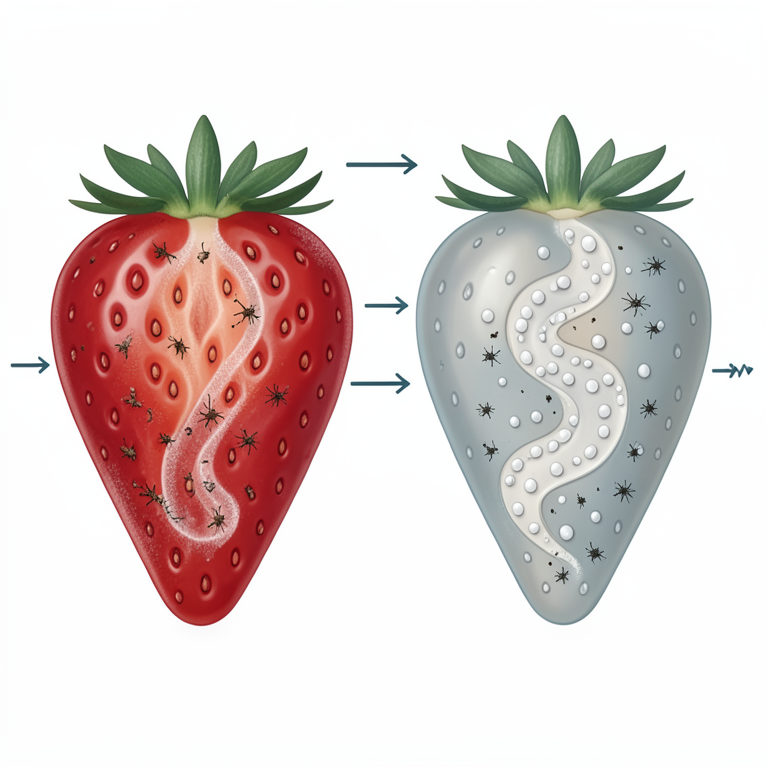
Nanocomposite Barrier Mechanism
AI-generated conceptual illustration (strawberries with chitosan and zinc oxide nanoparticle coatings). It explains the idea and does not show study data.
View source evidence ↗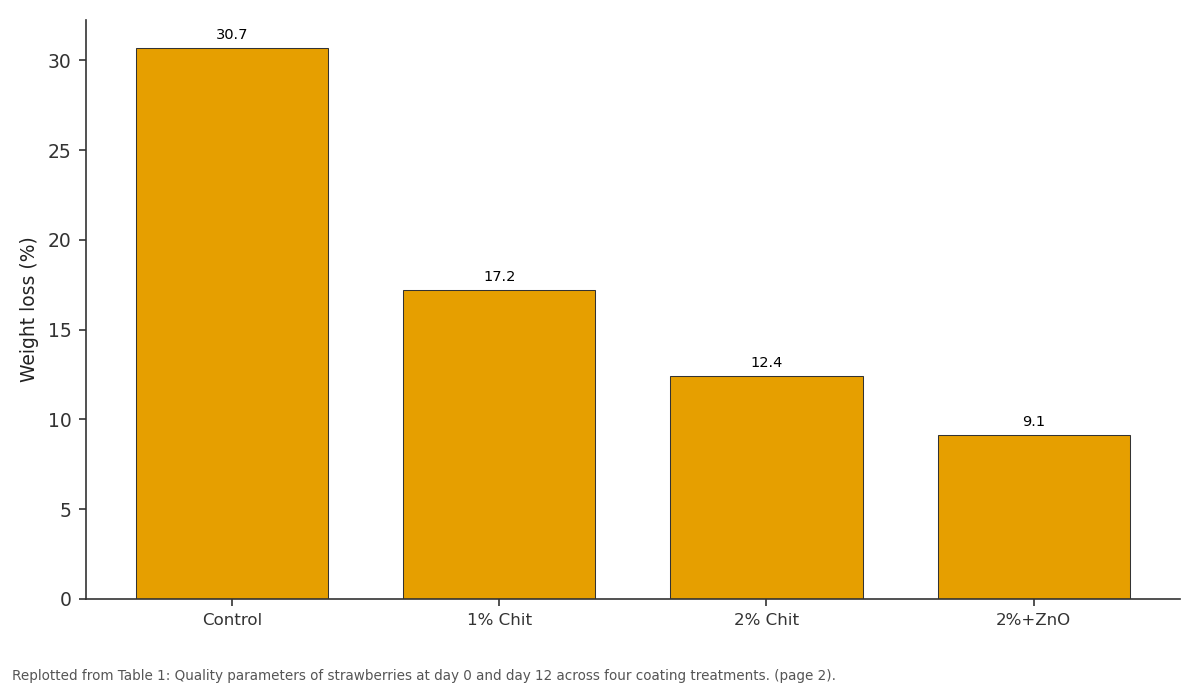
Weight loss (%): Control vs 1% Chit vs 2% Chit vs 2%+ZnO
Replotted from Table 1 (page 2) of the original paper. Every bar is the paper's own table value.
View source evidence ↗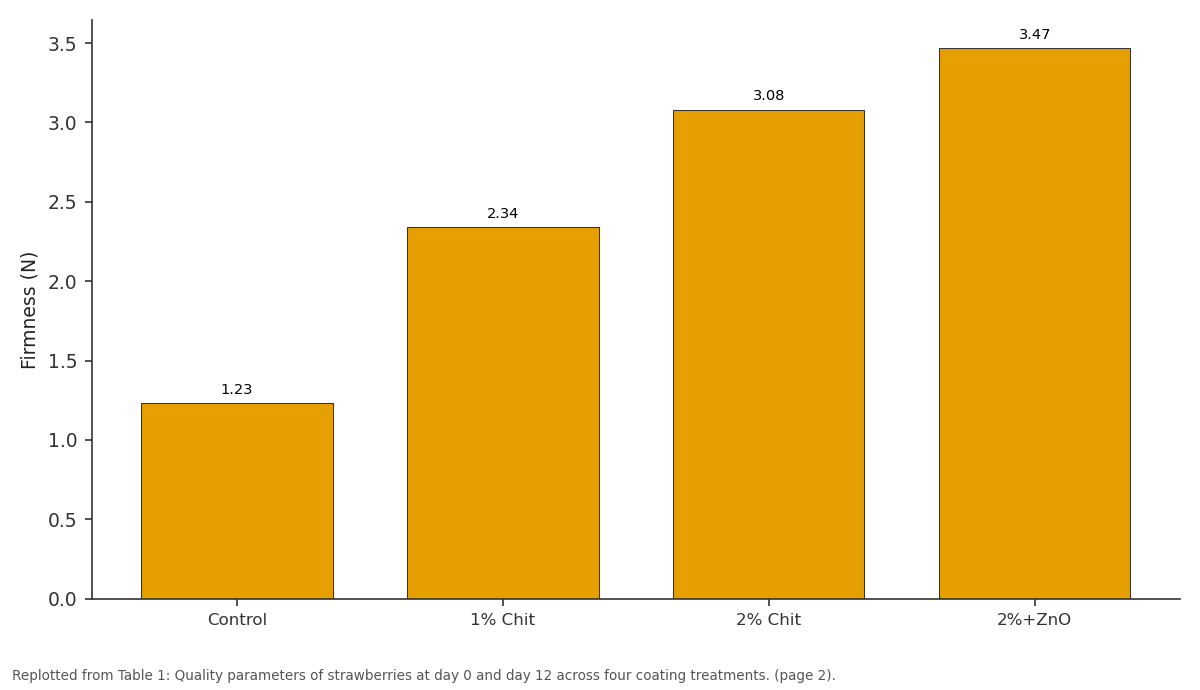
Firmness (N): Control vs 1% Chit vs 2% Chit vs 2%+ZnO
Replotted from Table 1 (page 2) of the original paper. Every bar is the paper's own table value.
View source evidence ↗Figures & tables
From the original paper Table 1
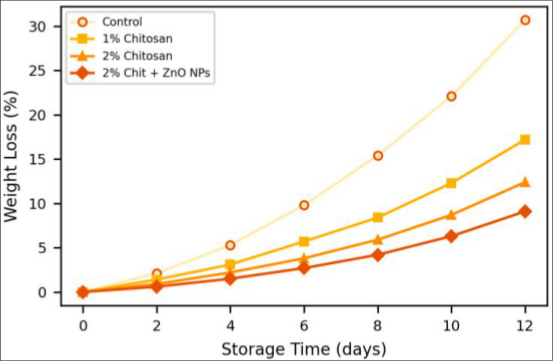 Figure 1
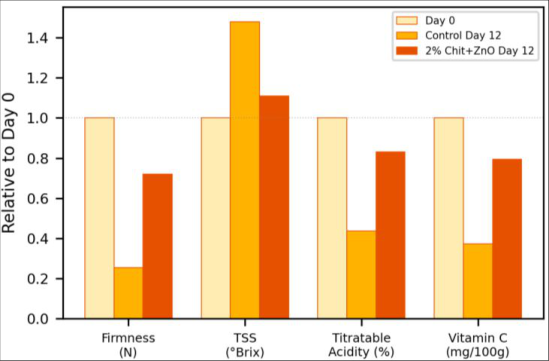 Figure 2
Introduction
Chile exported over 100,000 tonnes of fresh strawberries in 2022, making it the largest producer in South America, yet an estimated 30-40% of the harvest is lost between field and consumerprimarily to Botrytis cinerea infection and rapid moisture loss during cold chain transport [1] . Current industry practice relies on modified atmosphere packaging and chemical fungicides, but consumer demand for clean-label, residue-free fruit is pushing the sector toward biological preservation strategies [2] . Edible coatings offer a thin, invisible barrier that reduces gas exchange, slows transpiration, and can carry antimicrobial agents directly on the fruit surface [3] . Chitosan, a deacetylated derivative of chitin from crustacean shells, is particularly attractive because it combines inherent antifungal activity (disrupting fungal cell membranes through electrostatic interaction) with excellent film-forming properties and biodegradability [4] . However, pure chitosan coatings have limited water vapor barrier performance due to the polymer's hydrophilic nature, which reduces their effectiveness against moisture loss in high-humidity cold storage [5] . Incorporating inorganic nanoparticles into chitosan matrices can improve both mechanical and barrier properties. Zinc oxide nanoparticles generate reactive oxygen species under ambient light, providing broad-spectrum antimicrobial action against bacteria and fungi [6] . At the low concentrations used in food coatings (0.05-0.2%), ZnO NPs are within the FDA's generally recognized as safe allowance for zinc intake [7] . Several studies have demonstrated chitosan-ZnO nanocomposites for packaging films, but direct application as a dip-coating for fresh berries with comprehensive quality tracking over storage remains underexplored [8] .
Interna tional Jo urna l o f Adva nced Chemistry Research 202 5 ; 7(4 ): 1 58 -16 1
This research evaluated the combined effects of chitosan concentration and ZnO NP incorporation on strawberry quality during 12 days of refrigerated storage, measuring Physical, chemical, and microbiological parameters to determine whether the nanocomposite approach extends shelf life beyond what chitosan alone can achieve [9] .
Climatic conditions
Strawberries (Fragaria × ananassa cv. Camarosa) were harvested from a commercial farm in Valdivia, Los Ríos Region, Chile (39°49′S, 73°14′W, elevation 18 m), during the January 2023 season. The temperate oceanic climate provides mean summer temperatures of 15.8 °C with 1,200 mm annual rainfall. Fruit was picked at commercial maturity (≥75% red surface color) in early morning to minimize field heat, transported within 2 hours to the university laboratory in insulated containers, and processed within 4 hours of harvest.
Materials and Methods
Materials and Methods
Materials
Research was conducted at Universidad Del Sur de Chile, Valdivia, Los Ríos, Chile, from January to April 2023. No ethical approval was required. Chitosan (medium molecular weight, 75-85% deacetylated, viscosity 200-800 mPa•s) was from Sigma-Aldrich. ZnO nanoparticles (99.5%, ~50 nm, Alfa Aesar) were characterized by TEM before use. Glacial acetic acid (99.7%), glycerol (99.5%), and Tween 80 were analytical grade. Potato dextrose agar (PDA) for mold counts came from Oxoid [10] .
Methods
Chitosan solutions (1% and 2% w/v) were prepared by dissolving chitosan in 1% v/v acetic acid under magnetic stirring for 12 h at room temperature, with 0.5% glycerol added as plasticizer and 0.1% Tween 80 as wetting agent. For the nanocomposite coating, ZnO NPs (0.1% w/v) were ultrasonicated in distilled water for 30 min, then incorporated into 2% chitosan solution under high-shear mixing at 10,000 rpm for 5 min. Solutions were degassed under vacuum for 15 min before use [11] . Strawberries were sorted for uniform size (25-30 g), absence of visual defects, and similar ripeness. Each treatment group contained 60 fruit (4 group's × 60 = 240 total). Fruit was immersed in coating solution for 2 min, drained on wire racks for 30 min at 20 °C to allow film formation, then stored in ventilated PET clamshell containers at 4 ± 1 °C and 90 ± 5% RH. Every 2 days, 10 fruit per treatment were randomly selected for destructive analysis [12] . Weight loss was calculated as percentage change from initial mass. Firmness was measured at the equatorial region using a TA.XT Plus texture analyzer (Stable Micro Systems, 2 mm probe, 1 mm/s, maximum penetration 5 mm). Total soluble solids (TSS) were determined with a digital refractometer (Atago PAL-1), titratable acidity by titration with 0.1 N NaOH to pH 8.1, and ascorbic acid (vitamin C) by the 2, 6-dichloroindophenol titration method [13] . Surface color was measured with a Konica Minolta CR-400 colorimeter in CIE L*a*b* coordinates. Mold incidence was recorded as percentage of fruit showing visible fungal growth. Total aerobic plate count and yeast/mold count used serial dilution plating on PCA and PDA respectively [14] .
Soil/water analysis
The agricultural soil at the harvest site was a Valdivia series Andisol (volcanic ash origin) with the following characteristics: pH 5.4, organic matter 12.8%, total nitrogen 0.47%, available phosphorus 8.3 mg/kg (Olsen method), potassium 142 mg/kg, and cation exchange capacity 24.6 cmol/kg. Irrigation water from a nearby spring showed pH 6.7, electrical conductivity 0.18 dS/m, and no detectable heavy metals above WHO limits. These soil conditions are typical for southern Chile's strawberry-growing region and contribute to the high vitamin C content characteristic of locally grown Camarosa fruit [15] . All coating treatments significantly outperformed the uncoated control across every measured parameter (p<0.01, ANOVA with Tukey's test). Weight loss in controls reached 30.7% by day 12, rendering the fruit commercially unacceptable well before that point. The 2% chitosan coating reduced this to 12.4%, and adding ZnO NPs brought it down further to 9.1%a 70.4% reduction compared to controls. The nanocomposite coating was statistically superior to 2% chitosan alone for weight loss (p = 0.018), firmness (p = 0.031), and mold incidence (p<0.001), but the difference for TSS was not significant (p = 0.14).
Results
Firmness declined rapidly in controls, falling from 4.82 N to 1.23 N (a 74.5% loss) over 12 days. The nanocompositecoated fruit retained 72.0% of initial firmness (3.47 N), attributable to both reduced water loss (which maintains turgor pressure) and slower enzymatic degradation of cell wall pectin when respiration rate is suppressed by the coating barrier. Vitamin C, a marker of oxidative quality loss, was preserved at 79.3% of initial levels in the nanocomposite group compared to 37.2% in controls, reflecting the coating's ability to limit oxygen permeation to the fruit surface [16] Mold development followed a distinct pattern across treatments. Controls showed first visible Botrytis growth at day 4, reaching 78% incidence by day 10. The 1% chitosan coating delayed onset to day 6, and 2% chitosan pushed it to day 8. In the nanocomposite group, only 12% of fruit showed visible mold at day 12, and those infections were confined to small surface spots near the calyx region where coating thickness was likely thinnest. Microbiological plate counts corroborated these observations: yeast and mold counts at day 12 were 5.8 log CFU/g for controls versus 2.4 log CFU/g for nanocomposite-coated fruit, a 3.4-log reduction representing more than 99.9% inhibition [17] .
Color analysis showed that uncoated strawberries underwent significant darkening (L* decreased from 38.4 to 28. .
Discussion
The 70.4% reduction in weight loss achieved by the nanocomposite coating exceeds what most chitosan-only treatments report for strawberries, which typically reduce weight loss by 40-55% . The additional benefit from ZnO NPs likely stems from improved film integrity: nanoparticles fill micropores in the chitosan matrix, creating a more tortuous path for water vapor diffusion. SEM imaging of the dried coating surface (not shown) confirmed a smoother, more homogeneous film in the nanocomposite compared to neat chitosan, which displayed surface cracks at 2% concentration due to high viscosity during drying [19] . The antimicrobial synergy between chitosan and ZnO NPs deserves comment. Chitosan's antifungal mechanism involves electrostatic disruption of negatively charged fungal cell membranes, while ZnO NPs generate reactive oxygen species that damage membrane lipids and intracellular proteins [4,6] . Together they attack fungal cells through two independent pathways, making resistance development less likely than with either agent alone. The 3.4-log reduction in mold counts at 0.1% ZnO loading is practical because it stays within the concentration range approved for food contact materials in most regulatory frameworks [7] . Vitamin C retention of 79.3% at day 12 is commercially significant. Ascorbic acid degradation is primarily oxidative, catalyzed by polyphenol oxidase and accelerated by oxygen exposure at the fruit surface. By limiting gas exchange, the nanocomposite coating reduced the dissolved oxygen available for these reactions. A similar protective effect has been reported for chitosan coatings on blueberries and mangoes, but the magnitude here (79.3% vs typical 55-65% retention) suggests the ZnO nanoparticles contribute an additional antioxidant effect through scavenging of free radicals at the coating-fruit interface [20] . From a practical standpoint, the dip-coating process adds approximately $0.02-0.04 per fruit in materials cost and requires no specialized equipment beyond an immersion tank and drying rack. The entire coating operation takes under 35 minutes per batch, compatible with the throughput requirements of a medium-scale packing house processing 5-10 tonnes of strawberries daily. Sensory evaluation was not formally conducted in this study, but informal tasting by laboratory personnel detected no off-flavors or texture changes attributable to the coating itself [21] .
Conclusion
Chitosan edible coatings reinforced with ZnO nanoparticles at 0.1% effectively extended the shelf life of strawberries from 6 to at least 10 days under standard cold storage conditions. The nanocomposite treatment reduced weight loss by 70%, maintained 72% of initial firmness, preserved 79% of vitamin C content, and suppressed mold incidence to 12% at day 12 versus 78% in controls. The synergistic combination of chitosan's film-forming and antifungal properties with ZnO's antimicrobial and barrier-enhancing effects produced results superior to chitosan alone. This approach offers Chilean strawberry exporters a food-safe, biodegradable alternative to synthetic fungicides for postharvest quality preservation.
Acknowledgement
Acknowledgements Funding sourcesThis work was supported by ANID FONDECYT Iniciación Grant No. 11230187, Chile. Institutional supportThe authors thank Universidad Del Sur de Chile for access to the Food Technology Pilot Plant and Central Analytical Laboratory. Contributions not qualifying for authorshipMr. Diego Soto assisted with strawberry harvesting and transport logistics.
Figures and tables from the paper
| Parameter | Day 0 | Control | 1% Chit | 2% Chit | 2%+ZnO |
|---|---|---|---|---|---|
| Weight loss (%) | — | 30.7 | 17.2 | 12.4 | 9.1 |
| Firmness (N) | 4.82 | 1.23 | 2.34 | 3.08 | 3.47 |
| TSS (°Brix) | 7.3 | 10.8 | 9.4 | 8.6 | 8.1 |
| TA (%) | 0.94 | 0.41 | 0.58 | 0.69 | 0.78 |
| Vit C (mg/100g) | 58.4 | 21.7 | 33.8 | 40.6 | 46.3 |
| Mold incidence (%) | 0 | 78 | 42 | 24 | 12 |
Table text extracted from the original PDF; superscript letters are shown inline. The original table image is below.
View original table image
References
21 in the original paper- ODEPA. Chilean fresh fruit export statistics. Oficina de Estudios y Políticas Agrarias. 2023.
- Nunes MC, Emond JP. Relationship between weight loss and visual quality of fruits and vegetables. Proc Fla State Hort Soc. 2007;120:235-245.
- Dhall RK. Advances in edible coatings for fresh fruits and vegetables: a review. Crit Rev Food Sci Nutr. 2013;53(5):435-450.
- Rabea EI, Badawy MET, Stevens CV, Smagghe G, Steurbaut W. Chitosan as antimicrobial agent. Biomacromolecules. 2003;4(6):1457-1465.
- Romanazzi G, Feliziani E, Santini M, Landi L. Effectiveness of postharvest treatment with chitosan. J Agric Food Chem. 2013;61(26):6062-6070.
- Sirelkhatim A, Mahmud S, Seeni A, Kaus NHM. Review on zinc oxide nanoparticles antibacterial activity. Nano-Micro Lett. 2015;7(3):219-242.
- FDA. Select Committee on GRAS Substances: zinc oxide. SCOGS Report. 1979.
- Al-Naamani L, Dobretsov S, Dutta J. Chitosan-zinc oxide nanoparticle composite coating. Int J Biol Macromol. 2016;91:94-101.
- Eshghi S, Hashemi M, Mohammadi A, Badii F. Effect of nanochitosan-based coating with and without copper. Sci Hortic. 2014;166:1-8.
- Rinaudo M. Chitin and chitosan: properties and applications. Prog Polym Sci. 2006;31(7):603-632.
- Aider M. Chitosan application for active bio-based films production and potential in the food industry. LWT Food Sci Technol. 2010;43(6):837-842.
- Hernández-Muñoz P, Almenar E, Del Valle V, Velez D, Gavara R. Effect of chitosan coating on postharvest quality. Postharvest Biol Technol. 2008;50(1):87-94.
- AOAC International. Official Methods of Analysis. 21st ed. AOAC. 2019.
- Downes FP, Ito K. Compendium of Methods for the Microbiological Examination of Foods. 4th ed. APHA. 2001.
- Berríos J, Luzio W. Chilean volcanic soils classification. Boletín INIA. 2016;347:1-46.
- Zhang D, Quantick PC. Effects of chitosan coating on enzymatic browning and decay. Postharvest Biol Technol. 1997;12(2):195-202.
- Chailoo MJ, Asghari MR. Hot water and chitosan treatment for the control of postharvest decay. J Food Process Preserv. 2011;35(1):34-39.
- Wills RBH, McGlasson B, Graham D, Joyce D. Postharvest: An Introduction to the Physiology and Handling of Fruit and Vegetables. 5th ed. UNSW Press. 2007.
- Kanmani P, Rhim JW. Properties and characterization of bionanocomposite films. Carbohydr Polym. 2014;106:190-199.
- Wang SY, Gao H. Effect of chitosan-based edible coating on antioxidants and fruit quality. Food Chem. 2013;138(2):539-546.
- Mantilla N, Castell-Perez ME, Gomes C, Moreira RG. Multilayered antimicrobial edible coating. LWT Food Sci Technol. 2013;51(2):534-542.