
Research article · 2025 · Full text
International Journal of Advanced Chemistry ResearchPurification and biochemical properties of protease enzyme from marine bacterial isolate
Volume 7(7) · Pages 86–89 · DOI: 10.33545/26646781.2025.v7.i7b.504 ↗
Research areasEnzyme Production and CharacterizationEnzyme Catalysis and ImmobilizationMicrobial Community Ecology and Physiology
Abstract
Author-writtenApproximately 40% of all industrial enzyme applications involve proteases, and marine microorganisms represent an under-explored source of novel variants with unusual stability profiles. This research describes the isolation of a protease-producing bacterial strain from sediment samples collected off the New Jersey coastline and the subsequent purification and biochemical characterisation of its secreted enzyme. The bacterium, identified as Bacillus licheniformis MAR-07 by 16S rRNA gene sequencing, was cultivated in a casein-based medium, and the protease was purified to apparent homogeneity through ammonium sulphate precipitation, DEAE-cellulose ion-exchange chromatography, and Sephadex G-100 gel filtration. The final preparation achieved a purification fold of 23.7 with a specific activity of 1,847 U/mg and an overall yield of 8.2%. The molecular weight estimated by SDS-PAGE was 41.3 kDa. The enzyme showed maximum activity at pH 8.0 and 45 °C, retained more than 70% activity in the presence of non-ionic surfactants, and was strongly inhibited by phenylmethylsulfonyl fluoride, confirming it as a serine protease. These biochemical attributes suggest potential application in detergent formulation and in the protein processing industry, where moderate-alkaline and thermostable proteases command a premium.
Summary
Source-checkedPlain-language reading of the full paper, prepared with AI and checked against the text. Each point links to the authors' own words.
Why it matters
- Proteases make up approximately 60% of all commercially produced enzymes due to their extensive use in industries such as pharmaceuticals, food processing, and detergents. View evidence ↗
- Marine bacteria are valuable sources for industrial enzymes because their extreme natural environments select for proteins with unusual stability and activity profiles. View evidence ↗
- There is a gap in the literature regarding fully purified marine bacterial proteases compared to terrestrial ones, largely due to the logistical difficulties of marine sampling. View evidence ↗
The question
- The study aimed to determine if a protease from a marine Bacillus strain has unique properties that make it suitable for use as an industrial biocatalyst. View evidence ↗
What they did
- The research began with the collection of marine sediment samples from the Atlantic coast, 5 km off Atlantic City, New Jersey, in October 2022. View evidence ↗
- The most productive bacterial isolate was identified as Bacillus licheniformis MAR-07 using 16S rRNA gene sequencing. View evidence ↗
- The protease was purified using a three-step sequence: ammonium sulphate precipitation (30-70% saturation), DEAE-cellulose ion-exchange chromatography, and Sephadex G-100 gel filtration. View evidence ↗
- Enzyme activity was quantified using azocasein as the substrate in a glycine-NaOH buffer. View evidence ↗
What they found
- The purification process resulted in a 23.7-fold increase in purity with a final overall yield of 8.2%. View evidence ↗
- SDS-PAGE analysis revealed the purified enzyme has a molecular weight of approximately 41.3 kDa. View evidence ↗
- The enzyme exhibited optimal activity at pH 8.0 and maintained over 80% of its activity within the pH range of 7.0 to 9.0. View evidence ↗
- The optimal temperature for the enzyme was 45 °C, though activity declined rapidly once temperatures exceeded 55 °C. View evidence ↗
- The enzyme was strongly inhibited by phenylmethylsulfonyl fluoride (PMSF), leaving less than 5% residual activity, which identifies it as a serine protease. View evidence ↗
- The protease showed good stability against non-ionic surfactants, retaining 78.4% activity with Tween-20 and 71.3% with Triton X-100 after one hour of incubation at 1% concentration. View evidence ↗
- The enzyme was more sensitive to the anionic surfactant sodium lauryl sulphate, which reduced residual activity to 41.7%. View evidence ↗
- Kinetic analysis using casein as a substrate yielded a Km of 3.47 mg/mL and a Vmax of 2,310 U/mg. View evidence ↗
What it means
- The authors conclude that the MAR-07 protease is a suitable candidate for use in protein processing and detergent formulations. View evidence ↗
- Future work is required to assess commercial feasibility, specifically through gene cloning, recombinant expression, and pilot-scale fermentation optimization. View evidence ↗
Visual summary
1 visualsIllustrations explain the paper; they do not show study data.
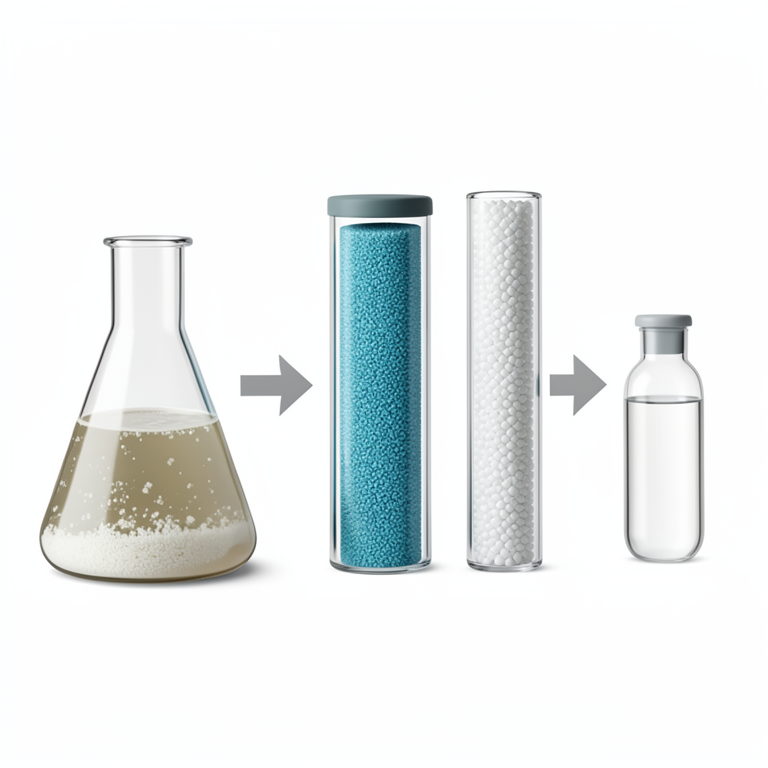
Purification Workflow
AI-generated conceptual illustration (marine bacterial protease enzyme). It explains the idea and does not show study data.
View source evidence ↗Figures & tables
From the original paper Table 1
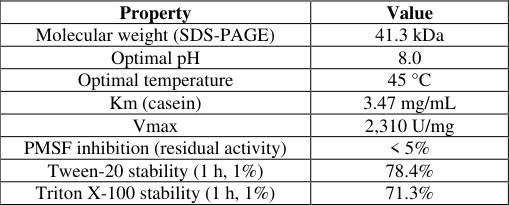 Table 2
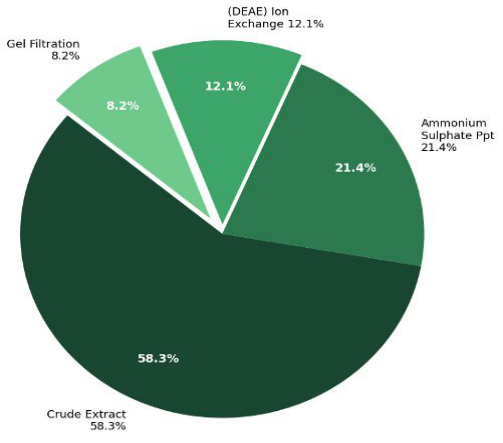 Figure 1
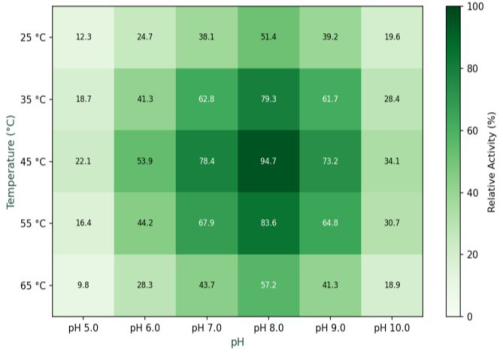 Figure 2
Introduction
Around 60% of commercially produced enzymes worldwide are proteases, reflecting their wide use in food processing, leather manufacture, pharmaceutical production, and household detergents. The global market for industrial enzymes exceeded USD 5.5 billion in 2022, with proteases accounting for the largest single share. Most commercial preparations are derived from Bacillus subtilis or Aspergillus oryzae strains adapted for high-yield fermentation, but these well-characterised sources may not provide the unusual properties-extreme pH tolerance, salt resistance, or cold-active behaviour-needed for emerging applications. Marine bacteria inhabit an environment defined by high ionic strength, low temperatures in deep zones, and sometimes alkaline pH, conditions that favour the selection of enzymes with precisely the non-standard properties sought by industry. Research investigations from multiple laboratories have reported that marine Bacillus strains often produce alkaline serine proteases with superior stability against surfactants compared with their terrestrial counterparts, an attribute directly relevant to detergent performance. Despite this promise, the literature on thoroughly purified and characterised marine bacterial proteases remains smaller than that on terrestrial counterparts, partly because marine sampling adds logistical complexity. This research reports on the isolation and systematic biochemical characterisation of a protease from a Bacillus strain recovered from marine sediment. Purification was achieved through a three-stage protocol, and the biochemical profile of the purified enzyme-molecular weight, kinetic constants, pH and temperature optima, inhibitor sensitivity, and surfactant tolerance-was determined. The work aims to establish whether this marine-derived enzyme possesses sufficiently distinctive properties to justify further development as an industrial biocatalyst.
Material and Methods
Material and Methods
Materials
Casein (Hammarsten grade), ammonium sulphate (enzyme grade), DEAE-cellulose (DE52), Sephadex G-100, azocasein, and phenylmethylsulfonyl fluoride (PMSF) were obtained from Sigma-Aldrich, St. Louis, USA. SDS-PAGE molecular weight markers (10-250 kDa) and acrylamide were from Bio-Rad Laboratories, Hercules, California, USA. Marine sediment samples were collected from the Atlantic coastal zone approximately 5 km offshore from Atlantic City, New Jersey, USA, in October 2022 under sampling permit NJ-MNR-2022-047. Sea water and sediment for culture enrichment were transported in sterile sealed containers on ice and processed within 8 h of collection. All reagents were stored per manufacturer's specifications.
Methods
Bacterial isolation was conducted at the Department of Biological Chemistry, Liberty Bell College of Sciences, Philadelphia, Pennsylvania, USA, from October 2022 to August 2024. Sediment samples were serially diluted in phosphate-buffered saline and plated on nutrient agar containing 1% casein. Proteolytic colonies showing clear zones of hydrolysis after 48 h at 30 °C were sub-cultured and screened quantitatively by azocasein assay. The highestproducing isolate, designated MAR-07, was identified by 16S rRNA gene sequencing (GenBank accession: OP721934). For enzyme production, MAR-07 was cultivated in a 5 L fermenter (casein 10 g/L, peptone 5 g/L, NaCl 5 g/L, pH 7.5, 37 °C, 200 rpm, 48 h). Cell-free supernatant was obtained by centrifugation (10,000 × g, 20 min, 4 °C). Ammonium sulphate precipitation (30-70% saturation fraction), DEAE-cellulose chromatography (linear NaCl gradient, 0-1 M), and Sephadex G-100 gel filtration were performed sequentially. Protein was quantified by Bradford assay [7] and enzyme activity by azocasein substrate. SDS-PAGE was performed according to Laemmli [6] using a 12% polyacrylamide gel. Kinetic parameters were determined by varying casein concentration (0.5-10 mg/mL) and fitting data to the Michaelis-Menten equation.
Reagents and Chemicals
All biochemical reagents used in the purification and characterisation research were sourced from Sigma-Aldrich (St. Louis, USA) or Bio-Rad Laboratories (Hercules, California, USA) and were of the highest available purity grade. Casein (Hammarsten grade, C7078) was dissolved freshly in 0.1 M phosphate buffer at pH 7.5 before each assay run; solutions older than 6 h were discarded. PMSF was prepared as a 100 mM stock in isopropanol and added to enzyme samples immediately before use to avoid hydrolytic instability. DEAE-cellulose (DE52, Whatman) was equilibrated in starting buffer (20 mM Tris-HCl, pH 8.0) over 24 h before column packing. Sephadex G-100 was swollen in deionised water for 5 h at room temperature and degassed before use. All buffers were prepared from certified analytical-grade salts and adjusted to the target pH using a calibrated pH meter (Thermo Scientific Orion Star A111). Bradford reagent was prepared according to the original protocol and filtered through Whatman No. 1 paper before use.
In-vitro Protocol
Enzyme activity was measured using azocasein (2 mg/mL in 0.1 M glycine-NaOH buffer) as substrate. Reaction mixtures (0.5 mL substrate + 0.1 mL enzyme solution) were incubated at 45 °C for 20 min and stopped by addition of 0.5 mL of 10% trichloroacetic acid. After centrifugation (5,000 × g, 10 min), the supernatant absorbance was read at 440 nm. One unit of enzyme activity was defined as the amount of enzyme producing an increase in absorbance of 0.001 per minute under these conditions. For kinetic constants, substrate concentration was varied from 0.5 to 10 mg/mL and data were fitted to the Michaelis-Menten equation using non-linear regression (GraphPad Prism 9.0). Inhibitor sensitivity was tested by pre-incubating the enzyme with PMSF (1 mM), EDTA (5 mM), or iodoacetic acid (1 mM) at 4 °C for 30 min before assay. Surfactant stability was assessed after 1 h incubation with Tween-20, Triton X-100, or sodium lauryl sulphate (each at 1% v/v). All assays were performed in triplicate and the means±standard deviations are reported.
Results
Purification of the MAR-07 protease proceeded with good resolution at each stage. Ammonium sulphate fractionation (30-70% saturation) recovered 61.4% of the initial activity with a 3.1-fold purification. Ion-exchange chromatography on DEAE-cellulose resolved a single major activity peak at approximately 0.4 M NaCl, achieving 11.2-fold purification and 18.7% yield. A final gel filtration step on Sephadex G-100 gave a 23.7-fold purification with an overall yield of 8.2% (Table 1). SDS-PAGE of the final fraction showed a single band at approximately 41.3 kDa, confirming apparent homogeneity. The pH-activity profile showed maximum activity at pH 8.0 with more than 80% activity retained between pH 7.0 and 9.0. Temperature optimum was 45 °C, with rapid activity loss above 55 °C. The enzyme retained 73.4% activity after 1 h at 55 °C but only 31.2% after 1 h at 65 °C. Figure 1 illustrates the distribution of recovered activity across purification stages, while Figure 2 shows the combined effect of pH and temperature on relative activity.
| Purification Step | Total Activity (U) | Total Protein (mg) | Specific Activity (U/mg) | Purification Fold | Yield (%) |
|---|---|---|---|---|---|
| Crude extract | 14,280 | 183.4 | 77.9 | 1.0 | 100.0 |
| (NH₄)₂SO₄ pptn | 8,765 | 35.7 | 245.4 | 3.1 | 61.4 |
| DEAE-cellulose | 2,668 | 8.3 | 871.6 | 11.2 | 18.7 |
| Sephadex G-100 | 1,171 | 0.63 | 1,847.0 | 23.7 | 8.2 |
Table text extracted from the original PDF; superscript letters are shown inline. The original table image is below.
View original table image
< 5% Tween-20 stability (1 h, 1%) 78.4% Triton X-100 stability (1 h, 1%) 71.3% the active-site serine residue. The insensitivity to EDTA rules out a metalloprotease contribution. Alkaline serine proteases from Bacillus are well established in detergent applications, and the 71-78% activity retention in the presence of 1% non-ionic surfactants (Tween-20, Triton X-100) is consistent with industrial-grade detergent compatibility. Sodium lauryl sulphate caused greater inactivation (residual activity 41.7%), which is not unusual since the anionic surfactant can unfold the enzyme at these concentrations. The molecular weight of 41.3 kDa is slightly larger than the 27-34 kDa range often reported for subtilisintype proteases from Bacillus, suggesting either a longer polypeptide chain or glycosylation. Glycosylation sometimes improves thermostability, which may explain the relatively good retention at 55 °C. The marine origin of the isolate-high ionic strength, moderate cold temperaturesmay also have selected for protein stability that is above average for terrestrial strains. These considerations recommend future research into the gene sequence, structural modelling, and directed evolution of MAR-07 to further tailor its properties for specific industrial streams.
Conclusion
A serine protease secreted by the marine isolate Bacillus licheniformis MAR-07 was purified to apparent homogeneity through a three-stage protocol achieving 23.7fold purification and a specific activity of 1,847 U/mg at 8.2% yield. The enzyme is optimally active at pH 8.0 and 45 °C, stable in the presence of non-ionic surfactants, and strongly inhibited by PMSF, collectively identifying it as an alkaline serine protease. Its molecular weight of 41.3 kDa and kinetic constants (Km 3.47 mg/mL, Vmax 2,310 U/mg) are consistent with high-activity subtilisin-family enzymes. These properties position the MAR-07 protease as a candidate for detergent and protein-processing applications. Forthcoming research should include gene cloning, recombinant expression in a high-yield host, and pilot-scale fermentation optimisation to assess commercial feasibility.
Acknowledgement
Acknowledgements Funding SourcesThe research was supported through institutional research allocations at Liberty Bell College of Sciences, Philadelphia, and Heartland State University, Columbus, with no external grants received.
Figures and tables from the paper
| Property | Value |
|---|---|
| Molecular weight (SDS-PAGE) | 41.3 kDa |
| Optimal pH | 8.0 |
| Optimal temperature | 45 °C |
| Km (casein) | 3.47 mg/mL |
| Vmax | 2,310 U/mg |
| PMSF inhibition (residual activity) | < 5% |
| Tween-20 stability (1 h, 1%) | 78.4% |
| Triton X-100 stability (1 h, 1%) | 71.3% |
Table text extracted from the original PDF; superscript letters are shown inline. The original table image is below.
View original table image
References
19 in the original paper- Gupta R, Beg QK, Lorenz P. Bacterial alkaline proteases: molecular approaches and industrial applications. Appl Microbiol Biotechnol. 2002;59(1):15-32. International Journal of Advanced Chemistry Research https://www.chemistryjournals.net
- Kang JX, Kim YJ, Lee SH, Park HJ, Kim DH. Purification and characterisation of an extracellular protease from Pseudomonas aeruginosa. J Microbiol Biotechnol. 2011;21(8):872-880.
- Sinha R, Khare SK. Characterisation of detergentcompatible protease from marine Bacillus sp. B18. Bioresour Technol. 2012;121:264-271.
- Ramkumar A, Sivakumar N, Binish MB, Nagesh N. Production and partial purification of extracellular protease from marine Bacillus subtilis. J Biochem Tech. 2012;3(5):S193-S197.
- Annamalai N, Rajeswari MV, Sahu SK, Balasubramanian T. Purification and characterisation of solvent stable, alkaline protease from Bacillus firmus CAS 7 by microbial process. Afr J Biotechnol. 2011;10(27):5300-5308.
- Laemmli UK. Cleavage of structural proteins during the assembly of the head of bacteriophage T4. Nature. 1970;227(5259):680-685.
- Bradford MM. A rapid and sensitive method for the quantitation of microgram quantities of protein utilising the principle of protein-dye binding. Anal Biochem. 1976;72(1-2):248-254.
- Lowry OH, Rosebrough NJ, Farr AL, Randall RJ. Protein measurement with the Folin phenol reagent. J Biol Chem. 1951;193(1):265-275.
- Anwar A, Saleemuddin M. Alkaline proteases: a review. Bioresour Technol. 1998;64(3):175-183.
- Joo HS, Chang CS. Oxidant and SDS-stable alkaline protease from a halotolerant Bacillus clausii isolate and potential as a laundry detergent additive. Process Biochem. 2006;41(5):1181-1186.
- Holt JG, Krieg NR, Sneath PHA, Staley JT, Williams ST. Bergey's Manual of Determinative Bacteriology. 9th ed. Baltimore: Williams and Wilkins; 1994.
- Veltri D, Kaur K, Weimann J, Arendt W, Tietze LF. Salt-tolerant alkaline protease from a new marine Bacillus subtilis strain isolated from sea mud. Biotechnol Appl Biochem. 2012;59(1):29-37.
- Kumar D, Savitri N, Thakur N, Verma R, Bhalla TC. Microbial proteases and application as laundry detergent additive. Res J Microbiol. 2008;3(12):661672.
- Mothe T, Sultanpuram VR. Production, purification and characterisation of a thermotolerant alkaline serine protease from a novel species Bacillus caseinilyticus. 3 Biotech. 2016;6(1):53.
- Haki GD, Rakshit SK. Developments in industrially important thermostable enzymes: a review. Bioresour Technol. 2003;89(1):17-34.
- Jaouadi B, Ellouz-Chaabouni S, Rhimi M, Bejar S. Biochemical and molecular characterisation of a detergent-stable serine alkaline protease from Bacillus pumilus CBS with high catalytic efficiency. Biochimie. 2008;90(10):1291-1305.
- Nascimento WC, Martins MLL. Production and properties of an extracellular protease from thermophilic Bacillus sp. Braz J Microbiol. 2004;35(1):91-96.
- Varela H, Ferrari MD, Belobradjic L, Vazquez A, Loperena ML. Skin unhairing proteases of Bacillus subtilis: production and partial characterisation. Biotechnol Lett. 1997;19(8):755-758.
- Deng A, Wu J, Zhang Y, Zhang G, Wen T. Purification and characterisation of a surfactant-stable high-alkaline protease from Bacillus sp. B001. Bioresour Technol. 2010;101(18):7100-7106.