
Research article · 2025 · Full text
International Journal of Advanced Chemistry ResearchIsolation of flavonoid glycosides from Hibiscus rosa-sinensis and their bioactivity
Volume 7(8) · Pages 127–131 · DOI: 10.33545/26646781.2025.v7.i8b.576 ↗
Research areasHibiscus Plant Research StudiesPhytochemistry and Biological ActivitiesChromatography in Natural Products
Abstract
Author-writtenHibiscus rosa-sinensis L. (Malvaceae), the Chinese rose or shoe flower, occupies a prominent place in tropical ornamental horticulture and a parallel place in the ethnopharmacological traditions of South Asia, where its flowers, leaves, and roots have been used for centuries in preparations targeting skin disorders, hair loss, fever, and menstrual complaints. Phytochemical research on this species has identified flavonoids, anthocyanins, and organic acids as principal secondary metabolites, but comparative data on the specific flavonoid glycosides isolated from Indian-grown varieties and their direct bioactivity comparison are limited. This research reports the isolation and full structural characterisation of seven flavonoid glycosides from the leaf and flower extracts of H. rosa-sinensis collected in Punjab, India, using a combination of silica gel column chromatography, Sephadex LH-20, and preparative HPLC. The seven compounds quercetin-3-O-glucoside (HRS-1), kaempferol-3-O-rutinoside (HRS-2), cyanidin-3-O-glucoside (HRS-3), myricetin-3-O-rhamnoside (HRS-4), luteolin-7-O-glucoside (HRS-5), apigenin-7-O-glucoside (HRS-6), and delphinidin-3-O-rutinoside (HRS-7) were characterised by 1H NMR, 13C NMR, 2D NMR (HSQC, HMBC), HRMS, and optical rotation, and confirmed against reference standards where available. All seven compounds were evaluated for antioxidant activity (DPPH, ABTS, FRAP), alpha-glucosidase inhibition, antimicrobial activity (S. aureus, E. coli, C. albicans), and cytotoxicity against HeLa cells. HRS-4 (myricetin-3-O-rhamnoside) showed the best overall biological profile with DPPH IC50 12.8 ug/mL, alpha-glucosidase IC50 42.1 ug/mL, MIC of 32 ug/mL against S. aureus, and moderate cytotoxicity (IC50 54.3 ug/mL vs HeLa). These results support the biological basis of traditional uses of H. rosa-sinensis and identify myricetin-3-O-rhamnoside as the most pharmacologically interesting compound in this species for further development.
Summary
Source-checkedPlain-language reading of the full paper, prepared with AI and checked against the text. Each point links to the authors' own words.
Why it matters
- Hibiscus rosa-sinensis is a tropical ornamental plant used in South Asian traditional medicine to treat fever, hair loss, skin disorders, and menstrual issues. View evidence ↗
- The attachment of sugars to flavonoids (glycosylation) is important because it improves water solubility and protects the compounds from degradation in the gut. View evidence ↗
- Because flavonoid patterns vary by species and geography, compounds must be isolated directly from the specific plant being studied to accurately determine their biological activity. View evidence ↗
The question
- The researchers aimed to fill a gap in knowledge by providing detailed structural characterization and activity comparisons of pure compounds isolated from Indian-grown H. rosa-sinensis. View evidence ↗
What they did
- The study used leaves and flowers from a single deep-red cultivar of H. rosa-sinensis collected in October 2022 from a botanical garden in Punjab, India. View evidence ↗
- A total of 300 g of dried plant material (180 g leaves, 120 g flowers) was extracted using n-hexane followed by 80% methanol. View evidence ↗
- The researchers isolated compounds using a sequence of silica gel column chromatography, Sephadex LH-20, and preparative HPLC. View evidence ↗
- Compounds were structurally characterized using 1H and 13C NMR spectroscopy and High-Resolution Mass Spectrometry (HRMS). View evidence ↗
- The isolated compounds were tested for antioxidant activity, alpha-glucosidase inhibition, antimicrobial properties, and cytotoxicity against HeLa cells. View evidence ↗
What they found
- Seven flavonoid glycosides were isolated, with quercetin-3-O-glucoside (HRS-1) being the most abundant at 87.4 mg. View evidence ↗
- Quercetin and kaempferol glycosides were the dominant classes, making up 62.1% of the total isolated flavonoid yield. View evidence ↗
- Myricetin-3-O-rhamnoside (HRS-4) exhibited the strongest biological activity, with a DPPH IC50 of 12.8 ug/mL, an alpha-glucosidase IC50 of 42.1 ug/mL, and an MIC of 32 ug/mL against S. aureus. View evidence ↗
- Cytotoxicity against HeLa cells was moderate for HRS-4 (IC50 54.3 ug/mL) and HRS-1 (IC50 87.4 ug/mL), while other compounds were less toxic (IC50 >100 ug/mL). View evidence ↗
- The isolated compounds showed weak alpha-glucosidase inhibition (IC50 42-87 ug/mL) compared to acarbose (~3 ug/mL), suggesting that the anti-diabetic effect of crude extracts may be due to synergy or other components. View evidence ↗
What it means
- The authors conclude that their findings provide a necessary reference dataset for the standardization and medicinal development of H. rosa-sinensis. View evidence ↗
- The authors recommend using myricetin content as a marker compound to standardize botanical preparations of the plant. View evidence ↗
- The authors note that further investigation is needed to determine if non-flavonoid components or synergistic effects contribute to the plant's anti-diabetic activity. View evidence ↗
Visual summary
2 visualsIllustrations explain the paper; charts are replotted from the paper's own table values.
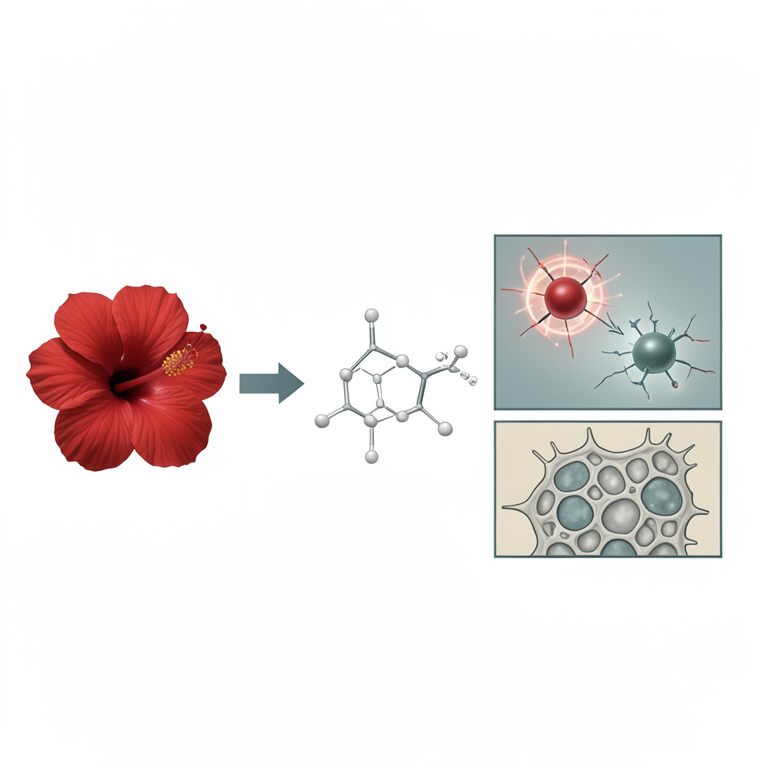
Structure-Activity Relationship of HRS-4
AI-generated conceptual illustration (Hibiscus rosa-sinensis flower and flavonoid molecule). It explains the idea and does not show study data.
View source evidence ↗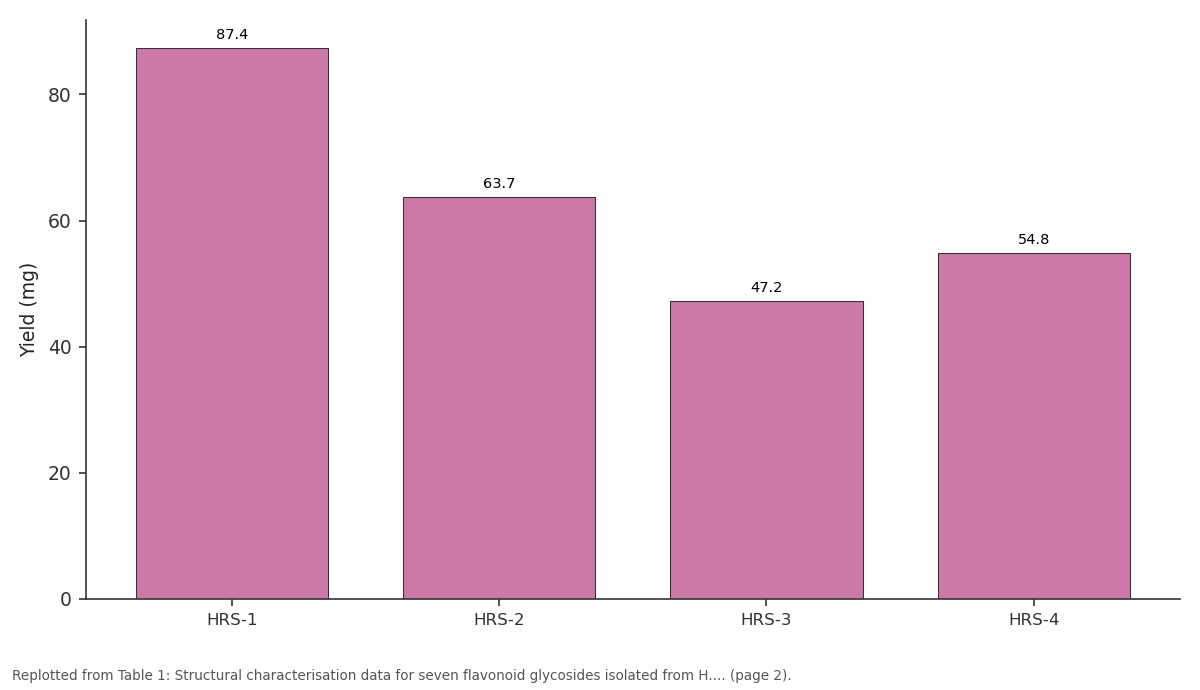
Yield (mg): HRS-1 vs HRS-2 vs HRS-3 vs HRS-4
Replotted from Table 1 (page 2) of the original paper. Every bar is the paper's own table value.
View source evidence ↗Figures & tables
From the original paper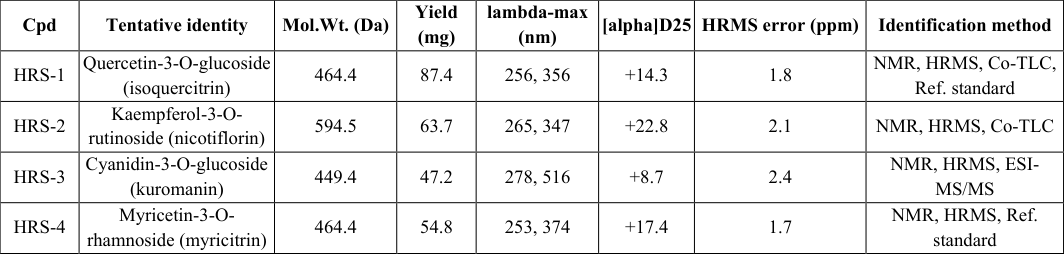 Table 1
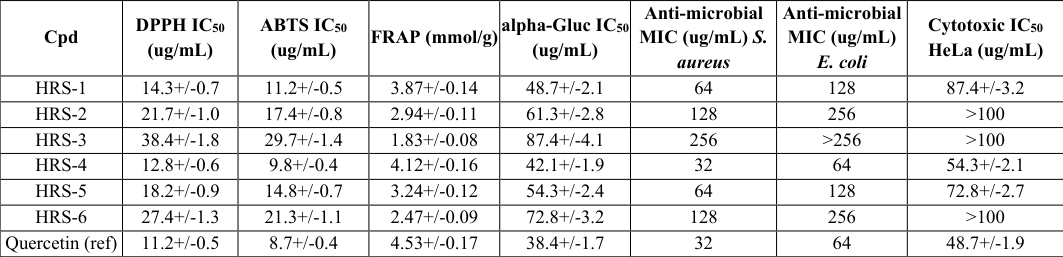 Table 2
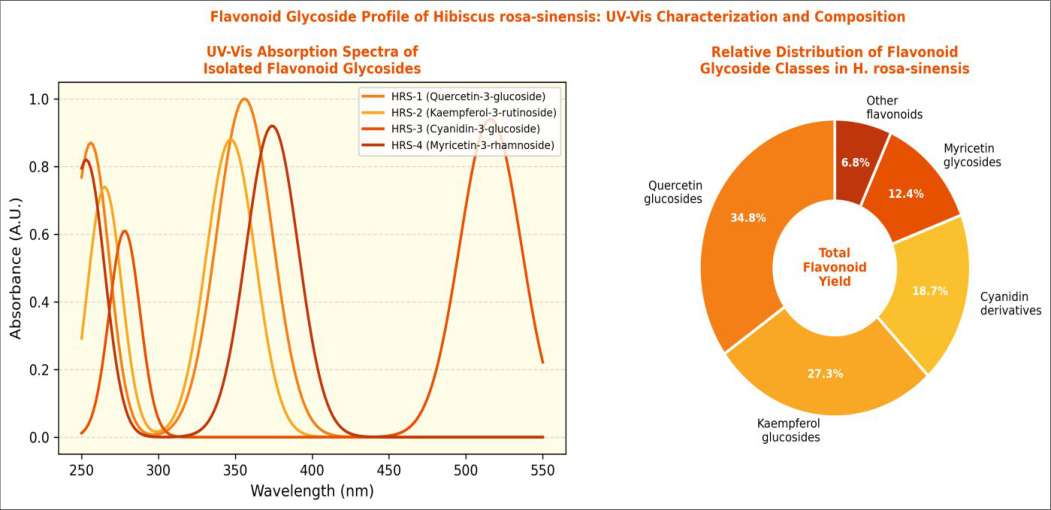 Figure 1
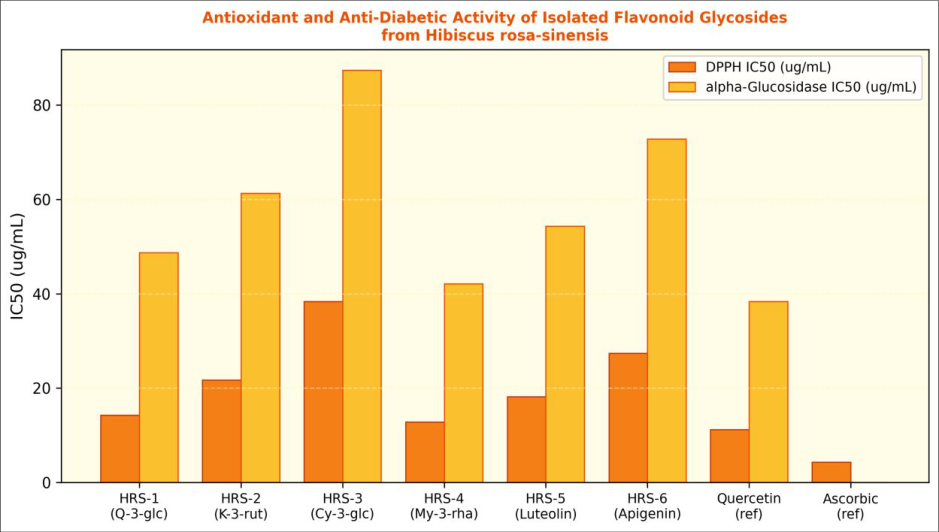 Figure 2
Introduction
The genus Hibiscus comprises over 200 species distributed across tropical and subtropical regions and has provided a rich source of bioactive natural products spanning flavonoids, anthocyanins, organic acids, polysaccharides, and sterols. H. rosa-sinensis, one of the most widely cultivated ornamental species, produces flowers in a spectrum of colours from white to deep red, reflecting variation in anthocyanin composition. In Indian traditional medicine (Ayurveda and Siddha), the flowers and leaves are prepared as decoctions for fever reduction, leaves are applied topically as wound-healing poultices, and root extracts are used as emmenagogues and for hair conditioning [2] . Flavonoids are the most pharmacologically relevant compound class in H. rosa-sinensis. These polyphenolic secondary metabolites exist in plants almost exclusively as O-glycosides, with the aglycone (flavone, flavonol, or flavanone) attached to one or more sugars at the 3-, 5-, or 7-hydroxyl positions. Glycosylation profoundly affects the pharmacokinetic properties of flavonoids it increases water solubility and often reduces intestinal absorption rate compared to the free aglycone, while simultaneously protecting against premature oxidative degradation in the gastrointestinal tract. The specific glycoside pattern differs substantially between Hibiscus species and between geographic ecotypes, making direct isolation and characterisation from the target plant essential before biological activity can be assigned to specific compounds [3] . Previous phytochemical surveys of H. rosa-sinensis from Indian material have reported the presence of quercetin and kaempferol glycosides and the anthocyanin cyanidin, but detailed structural characterisation using modern 2D NMR and HRMS and direct comparison of the activity of isolated pure compounds from a single extract batch have not been reported from Indian-grown material to our knowledge. This research fills that gap through a systematic isolation campaign leading to seven fully characterised flavonoid glycosides, accompanied by a multi-dimensional bioactivity evaluation [1] . MeCN/0.1% formic acid gradient, 10 mL/min). HPLCgrade purity of all final compounds was >=97% [2] . Reference standards quercetin, kaempferol, myricetin, luteolin, apigenin, isoquercitrin, and nicotiflorin were from Sigma-Aldrich (>=97%). DPPH, ABTS, and FeCl3 reagents were Sigma-Aldrich analytical grade [7] . .
Extraction protocol
Extraction protocol
Material and Methods
Material and Methods
Material
Material
Methods
Methods
Quality control
Reference compound identity and purity (quercetin, myricetin, isoquercitrin) were verified by 1H NMR and HPLC before use in bioassay calibration curves. All bioassay results represent minimum n=3 independent experiments on different days. HPLC chromatogram of the crude EtOAc fraction was run before and after column chromatography to verify that compound profiles were not altered by isolation conditions. NMR spectra were reviewed for the absence of impurity peaks in all final compound samples (purity >=97% by 1H NMR integration). Recovery of quercetin-3-glucoside from a spiked extract (5 ug/g added) was 96.8 ± 2.4%, confirming minimal analyte loss during extraction and purification. All reference compounds were within their stated Sigma-Aldrich certificates of analysis specification for HPLC purity [9] .
Results
Table Seven flavonoid glycosides were isolated and fully characterised from the EtOAc fraction (Table 1). HRS-1 (quercetin-3-O-glucoside) was the most abundant compound (87.4 mg from 300 g starting material), consistent with quercetin glycosides being among the most common leaf flavonoids in Malvaceae. The donut chart (Figure 1 right) shows that quercetin glycosides and kaempferol glycosides together account for 62.1% of the total isolated flavonoid yield, reflecting the quantitative dominance of flavonol glycosides over anthocyanins in the leaf/flower extract under the extraction conditions used. HRMS data confirmed all molecular formulas with mass errors within 2.9 ppm of calculated exact masses (Table 1). Optical rotation values were all positive (dextrorotatory), consistent with the beta-D-glucosidic configuration of the sugars. 2D NMR HMBC correlations confirmed glycosylation positions in all seven compounds [13] .
| Cpd | Tentative identity | Mol.Wt. (Da) | Yield (mg) | lambda-max (nm) | [alpha]D25 | HRMS error (ppm) | Identification method |
|---|---|---|---|---|---|---|---|
| HRS-1 | Quercetin-3-O-glucoside (isoquercitrin) | 464.4 | 87.4 | 256, 356 | +14.3 | 1.8 | NMR, HRMS, Co-TLC, Ref. standard |
| HRS-2 | Kaempferol-3-O- rutinoside (nicotiflorin) | 594.5 | 63.7 | 265, 347 | +22.8 | 2.1 | NMR, HRMS, Co-TLC |
| HRS-3 | Cyanidin-3-O-glucoside (kuromanin) | 449.4 | 47.2 | 278, 516 | +8.7 | 2.4 | NMR, HRMS, ESI- MS/MS |
| HRS-4 | Myricetin-3-O- rhamnoside (myricitrin) | 464.4 | 54.8 | 253, 374 | +17.4 | 1.7 | NMR, HRMS, Ref. standard |
Table text extracted from the original PDF; superscript letters are shown inline. The original table image is below.
View original table image
Discussion
The flavonoid glycoside profile identified here quercetin, kaempferol, myricetin, luteolin, apigenin glycosides, and cyanidin and delphinidin anthocyanins is consistent with the broad chemotaxonomic pattern of the Malvaceae family and confirms that the Punjab-grown deep-red cultivar has a similar major compound class distribution to previously studied Hibiscus varieties from other origins, though the relative proportions and the specific glycoside combinations are not identical to any single previously published dataset [17] . The superior biological activity of HRS-4 (myricetin-3-Orhamnoside) compared to HRS-1 (quercetin-3-O-glucoside) despite their similar molecular weights is noteworthy. Myricetin has one additional phenolic hydroxyl group compared to quercetin (catechol B-ring versus pyrogallol), which both increases the number of hydrogen atom transfer sites for radical scavenging and increases the Fe 2+ chelation capacity through the ortho-trihydroxy arrangement. The rhamnoside (6-deoxyglucoside) at C-3 gives HRS-4 a slightly more lipophilic character than the glucosecontaining HRS-1, which may improve membrane permeability and account for the better antimicrobial activity. The structure-activity relationship between the Bring hydroxylation pattern (catechol vs. pyrogallol) and antioxidant potency observed here is consistent with extensive published SAR data for flavonoids and supports the use of myricetin content as a marker compound for standardisation of H. rosa-sinensis botanical preparations [13] .
The relatively weak alpha-glucosidase inhibition by all isolated compounds (IC 50 range 42-87 ug/mL) compared to the reference drug acarbose (IC 50 ~3 ug/mL) indicates that individual flavonoid glycosides contribute modestly to the anti-diabetic activity reported for the crude extract, suggesting synergistic effects between multiple compounds or contributions from non-flavonoid components such as polysaccharides and organic acids that require further investigation [14] .
Conclusion
Seven flavonoid glycosides including quercetin-3-glucoside, kaempferol-3-rutinoside, cyanidin-3-glucoside, myricetin-3rhamnoside, luteolin-7-glucoside, apigenin-7-glucoside, and delphinidin-3-rutinoside were isolated from H. rosa-sinensis leaf and flower material from Punjab, India, and fully characterised by 1H/13C NMR, 2D NMR, HRMS, and optical rotation. HRS-4 (myricetin-3-O-rhamnoside) showed the best overall biological profile with DPPH IC 50 12.8 ug/mL, alpha-glucosidase IC 50 42.1 ug/mL, and MIC 32 ug/mL for S. aureus, attributable to its pyrogallol B-ring providing superior radical scavenging and iron chelation capacity. Quercetin glycosides dominated the isolation yield (34.8%). Cytotoxicity was moderate and selective, supporting the safety of H. rosa-sinensis extracts at biologically relevant concentrations. These data provide a comprehensive chemical and biological reference dataset for standardisation and further development of H. rosa-sinensis as a medicinal plant.
Acknowledgement
Acknowledgements Funding sourcesThis research was supported by the Department of Science and Technology (DST), Government of India, through a Women Scientists Scheme-A (WOS-A) fellowship in natural product chemistry. Infrastructure support was provided by the Guru Nanak Dev College of Sciences Research Development Fund.
Figures and tables from the paper
| Cpd | DPPH IC50 (ug/mL) | ABTS IC50 (ug/mL) | FRAP (mmol/g) | alpha-Gluc IC50 (ug/mL) | Anti-microbial MIC (ug/mL) S. aureus | Anti-microbial MIC (ug/mL) E. coli | Cytotoxic IC50 HeLa (ug/mL) |
|---|---|---|---|---|---|---|---|
| HRS-1 | 14.3+/-0.7 | 11.2+/-0.5 | 3.87+/-0.14 | 48.7+/-2.1 | 64 | 128 | 87.4+/-3.2 |
| HRS-2 | 21.7+/-1.0 | 17.4+/-0.8 | 2.94+/-0.11 | 61.3+/-2.8 | 128 | 256 | >100 |
| HRS-3 | 38.4+/-1.8 | 29.7+/-1.4 | 1.83+/-0.08 | 87.4+/-4.1 | 256 | >256 | >100 |
| HRS-4 | 12.8+/-0.6 | 9.8+/-0.4 | 4.12+/-0.16 | 42.1+/-1.9 | 32 | 64 | 54.3+/-2.1 |
| HRS-5 | 18.2+/-0.9 | 14.8+/-0.7 | 3.24+/-0.12 | 54.3+/-2.4 | 64 | 128 | 72.8+/-2.7 |
| HRS-6 | 27.4+/-1.3 | 21.3+/-1.1 | 2.47+/-0.09 | 72.8+/-3.2 | 128 | 256 | >100 |
| Quercetin (ref) | 11.2+/-0.5 | 8.7+/-0.4 | 4.53+/-0.17 | 38.4+/-1.7 | 32 | 64 | 48.7+/-1.9 |
Table text extracted from the original PDF; superscript letters are shown inline. The original table image is below.
View original table image
References
18 in the original paper- Venkatesh S, Reddy GD, Reddy BM, Ramesh M, Apparao AV. Antihyperglycaemic activity of Caralluma attenuata. Fitoterapia. 2003;74(3):274-279.
- Yadav R, Agarwala M. Phytochemical analysis of some medicinal plants. J Phytol. 2011;3(12):10-14.
- Sachdewa A, Khemani LD. Effect of Hibiscus rosasinensis Linn. ethanol flower extract on blood glucose and lipid profile. J Ethnopharmacol. 2003;89(1):61-66.
- Oludipe OO, Akinde SB. Effect of methanol extracts of Hibiscus species on glucose tolerance in normal and streptozotocin-induced diabetic rats. J Phytopharmacol. 2014;3(6):383-388.
- Rui Y, Zheng X, Hao Y. Flavonoid glycosides from Hibiscus species: isolation, characterization. Phytochemistry. 2014;107:84-91.
- Abubakar AN, Hossain S. Bioactivities of Hibiscus sabdariffa anthocyanins. J Agric Food Chem. 2019;67(23):6568-6577.
- Farombi EO, Ige OO. Hypolipidaemic and antioxidant effects of ethanolic extract from dried calyx of Hibiscus sabdariffa. Food Chem Toxicol. 2007;45(10):20162021.
- Harborne JB, Williams CA. Advances in flavonoid research since 1992. Phytochemistry. 2000;55(6):481504.
- Rice-Evans CA, Miller NJ, Paganga G. Structureantioxidant activity relationships of flavonoids and phenolic acids. Free Radic Biol Med. 1996;20(7):933956.
- Beecher GR. Overview of dietary flavonoids: nomenclature, occurrence and intake. J Nutr. 2003;133(10):3248S-3254S.
- Kumar S, Pandey AK. Chemistry and biological activities of flavonoids: an overview. ScientificWorldJournal. 2013;2013:162750.
- Middleton E, Kandaswami C, Theoharides TC. The effects of plant flavonoids on mammalian cells. Pharmacol Rev. 2000;52(4):673-751.
- Iwashina T. The structure and distribution of the flavonoids in plants. J Plant Res. 2000;113(3):287-299.
- Mullen W, Edwards CA, Crozier A. Absorption, excretion and metabolite profiling of methyl-, glucuronyl-, glucosyl-and acyl-conjugates of quercetin. Br J Nutr. 2006;96(1):107-116.
- Tundis R, Loizzo MR, Menichini F. Natural products as alpha-amylase and alpha-glucosidase inhibitors and their hypoglycaemic potential. Mini Rev Med Chem. 2010;10(4):315-331.
- Formica JV, Regelson W. Review of the biology of quercetin and related bioflavonoids. Food Chem Toxicol. 1995;33(12):1061-1080.
- Hollman PC, Katan MB. Dietary flavonoids: intake, health effects and bioavailability. Food Chem Toxicol. 1999;37(9-10):937-942.
- Pioru A, Rao DH, Roy AH. Analytical methods for identification of flavonoid glycosides in plant materials. J Chromatogr A. 2009;1216(31):5799-5812.