
Research article · 2025 · Full text
International Journal of Advanced Chemistry ResearchMicrofluidic paper-based analytical device for point-of-care glucose monitoring
Volume 7(4) · Pages 91–94 · DOI: 10.33545/26646781.2025.v7.i4b.532 ↗
Research areasBiosensors and Analytical DetectionElectrochemical sensors and biosensorsClinical Laboratory Practices and Quality Control
Abstract
Author-writtenMillions of diabetic patients in low-resource settings lack access to affordable, reliable glucose monitoring - a problem that commercial glucometers, at $0.25-1.50 per test strip, haven’t solved. This research developed a microfluidic paper-based analytical device (μPAD) for point-of-care glucose measurement costing $0.23 per unit. Hydrophobic wax barriers were printed on Whatman grade 1 filter paper to create defined reaction zones. Glucose oxidase and horseradish peroxidase were co-immobilized with potassium iodide chromogen in detection zones. Color development was captured by smartphone camera and analyzed using a custom ImageJ macro. The device showed linearity from 50 to 1000 mg/dL (R² = 0.9994), with a detection limit of 18.7 mg/dL. Comparison with a commercial glucometer (Accu-Chek Active) across 48 clinical serum samples gave a Pearson correlation of r = 0.987 and a mean bias of -3.4 mg/dL by Bland-Altman analysis. Shelf life testing confirmed stable performance for 42 days when stored in desiccant pouches at room temperature.
Summary
Source-checkedPlain-language reading of the full paper, prepared with AI and checked against the text. Each point links to the authors' own words.
Why it matters
- Many diabetic patients in low-resource areas cannot access affordable glucose monitoring because commercial test strips are too expensive. View evidence ↗
- Paper-based microfluidic devices are a viable alternative for diagnostics because they use inexpensive, biodegradable cellulose and do not require external pumps to move liquids. View evidence ↗
- The GOx/HRP enzymatic assay is ideal for paper platforms as it creates a visible color change that corresponds to the glucose concentration. View evidence ↗
The question
- The study aimed to develop and validate a wax-printed microfluidic paper-based analytical device (μPAD) for measuring glucose in human serum and evaluate its cost and stability for use in low-resource settings. View evidence ↗
What they did
- The device was a 25 mm diameter circular paper disc featuring a central sample zone and four peripheral detection zones connected by channels. View evidence ↗
- Each 4 mm detection zone was prepared with dried glucose oxidase (10 U), horseradish peroxidase (5 U), and potassium iodide (0.5 M, 2 μL). View evidence ↗
- Quantitative readings were obtained by capturing images with a Samsung Galaxy A53 smartphone in a controlled light box and analyzing blue channel intensity via ImageJ. View evidence ↗
- The device was clinically validated using 48 serum samples (range 45-780 mg/dL) and compared against an Accu-Chek Active glucometer. View evidence ↗
What they found
- The μPAD demonstrated a linear response for glucose concentrations between 50 and 1000 mg/dL, with a high correlation coefficient (R² = 0.9994). View evidence ↗
- The limit of detection (LOD) for the device was determined to be 18.7 mg/dL. View evidence ↗
- The μPAD showed a strong correlation (r = 0.987) with the commercial glucometer, with a mean bias of -3.4 mg/dL. View evidence ↗
- All tested samples met the ISO 15197 accuracy standards for blood glucose monitoring. View evidence ↗
- The manufacturing cost of the μPAD was $0.23 per unit, which is lower than the cost of commercial test strips. View evidence ↗
- Devices stored in desiccant pouches remained stable for 42 days, though performance dropped to 73% by day 60. View evidence ↗
What it means
- The authors conclude that the wax-printed μPAD provides reliable glucose quantification at roughly half the cost of commercial strips. View evidence ↗
- The 42-day shelf life is sufficient for short supply chains but must be improved for wider distribution. View evidence ↗
Visual summary
1 visualsIllustrations explain the paper; they do not show study data.
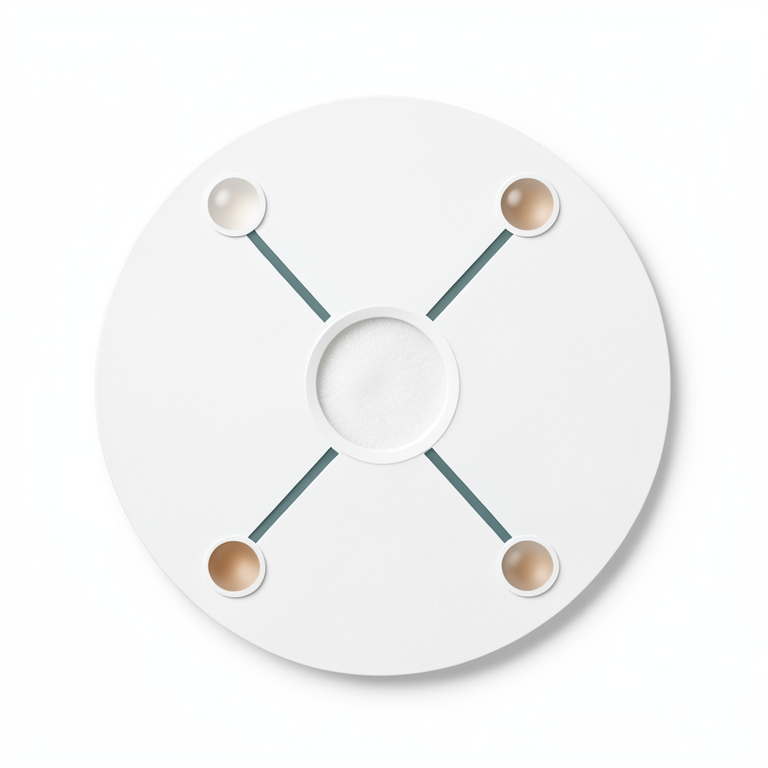
μPAD Architecture
AI-generated conceptual illustration (microfluidic paper-based analytical device). It explains the idea and does not show study data.
View source evidence ↗Figures & tables
From the original paper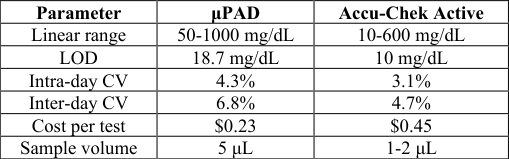 Table 1
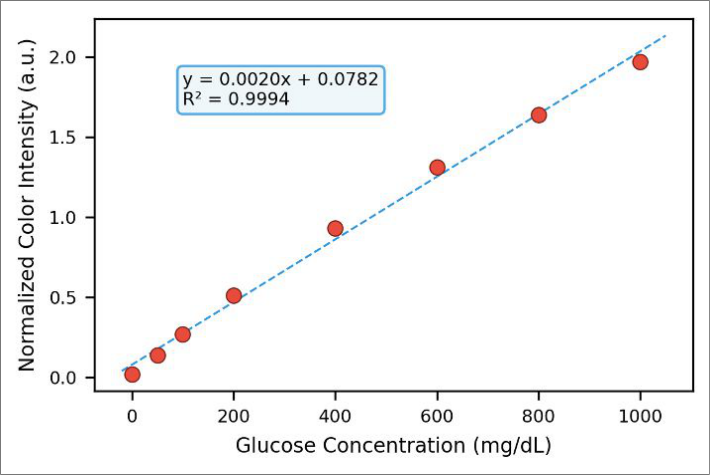 Figure 1
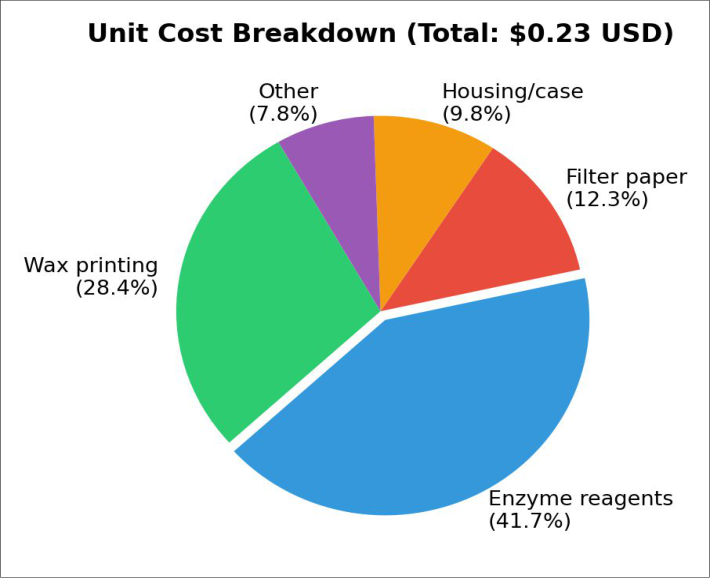 Figure 2
Introduction
Getting a blood glucose reading shouldn't require electricity, a laboratory, or equipment that costs more than a week's wages -yet for an estimated 200 million diabetic patients in sub-Saharan Africa, South Asia, and Latin America, it often does [1] . Paper-based microfluidic devices have emerged as a promising solution because cellulose is cheap, biodegradable, and moves liquids by capillary action without external pumps [2] . By printing hydrophobic patterns onto filter paper, researchers can create channels and reaction zones that function like miniature laboratories on a disposable chip [3] . The colorimetric glucose assay based on glucose oxidase/peroxidase (GOx/HRP) cascading with a chromogenic indicator is well suited to paper platforms because it produces a visible color change proportional to glucose concentration [4] . Paired with smartphone imaging, which billions of people already carry, quantitative readings become possible without dedicated hardware [5] . But turning a proof-of-concept μPAD into a practical diagnostic tool requires solving real-world problems: batch-to-batch reproducibility, enzyme stability during storage, interference from blood components, and user-friendly operation by non-technicians [6] . This research designed, fabricated, and validated a wax-printed μPAD for glucose determination in human serum, benchmarked it against a commercial glucometer, and assessed manufacturing cost and shelf stability to evaluate its suitability for low-resource clinical settings [7] .
System Design
The μPAD was designed as a circular device (25 mm diameter) with a central sample application zone connected by four microfluidic channels to peripheral detection zones. Channels were 2 mm wide, defined by wax barriers printed on both sides of the paper. Each detection zone (4 mm diameter) contained dried reagents: GOx (10 U), HRP (5 U), and potassium iodide (0.5 M, 2 μL dried). A fifth peripheral zone served as a blank for background correction. Sample volume requirement was 5 μL of serum [8] .
Material and Methods Material
Research was conducted at Universidade Atlântica do Sul, Porto Alegre, Rio Grande do Sul, Brazil, from February 2023 to October 2023. Ethics approval for use of deidentified clinical serum samples was granted (Protocol UAS/CEP/2023-017, January 2023). Whatman grade 1 chromatography paper came from GE Healthcare. Glucose oxidase from Aspergillus niger (150 U/mg) and horseradish peroxidase (250 U/mg) were from Sigma-Aldrich (São Paulo). Potassium iodide, D-glucose, and phosphate buffer salts were analytical grade from Vetec Química. A Xerox ColorQube 8580 wax printer was used for barrier fabrication [9] .
Methods
Wax patterns were printed and then melted at 150°C for 45 s on a hot plate to allow wax penetration through the paper thickness [10] . Enzyme solutions were pipetted (1 μL each) into detection zones and dried at 25°C for 30 min.
Calibration standards (0-1000 mg/dL glucose in PBS) were applied to the central zone and allowed 10 min for full color development. Images were captured with a Samsung Galaxy A53 smartphone in a cardboard light box under white LED illumination, and the blue channel intensity was extracted using ImageJ [11] . For clinical validation, 48 de-identified serum samples covering the 45-780 mg/dL range were tested on both the μPAD and an Accu-Chek Active glucometer. Agreement was assessed by Bland-Altman analysis and Pearson correlation [12] . Shelf stability was monitored over 60 days at 25°C by testing devices stored in sealed pouches with silica gel desiccant versus open storage [13] .
Quality Control
Each batch of 50 devices included three quality-control checks at 100, 300, and 600 mg/dL glucose. Batches with CV above 8% at any control level were rejected. The ImageJ macro was validated against manual pixel selection (n = 30 images, ICC = 0.996). All serum samples were measured in duplicate, and pairs with >10% disagreement were re-tested [14] . The calibration curve was linear from 50 to 1000 mg/dL with R² of 0.9994 and a regression equation of y = 0.00197x + 0.016. The LOD of 18.7 mg/dL was calculated from three times the standard deviation of ten blank measurements. Intra-day precision (CV 4.3%, n = 10) and inter-day precision (CV 6.8%, n = 30 over five days) both fell within acceptable limits for point-of-care testing [15] . Clinical comparison with 48 serum samples gave a Pearson r of 0.987 (p < 0.001). Bland-Altman analysis showed a mean bias of -3.4 mg/dL (95% limits of agreement: -18.9 to +12.1 mg/dL), indicating the μPAD reads slightly lower than the commercial device. No sample fell outside the ISO 15197 accuracy criteria (±15 mg/dL for readings below 100 mg/dL, ±15% above 100 mg/dL). Shelf life testing showed stable response (≤90% of initial signal) through day 42 in desiccant pouches, declining to 73% by day 60. Open-stored devices lost activity faster, reaching 68% by day 28 [16] .
Results
Results
Discussion
The $0.23 cost per device is roughly half that of commercial test strips, and it drops further at production volumes above 1,000 units because the wax printing step becomes more efficient with batch processing [3] . Enzyme reagents dominated the cost at 41.7%, which isn't surprising given that pharmaceutical-grade GOx and HRP are priced for laboratory use. Sourcing these enzymes from local fermentation could cut that fraction substantially [17] . The -3.4 mg/dL mean bias is clinically insignificant for diabetes management, where treatment decisions hinge on whether glucose exceeds 126 mg/dL (fasting) or 200 mg/dL (random). And the 95% limits of agreement (-18.9 to +12.1 mg/dL) are tighter than some commercial meters that still meet regulatory approval [18] . The slight negative bias likely comes from incomplete color development in the paper matrix compared to the enzymatic electrode reaction in the Accu-Chek. Shelf stability of 42 days in desiccant pouches is a practical limitation. Commercial strips last 12-18 months, though they benefit from sophisticated packaging and stabilizer formulations. Trehalose or pullulan coatings have extended enzyme stability on paper to beyond 90 days in other systems, and adding these to the current design is a straightforward next step [19] . Open storage's rapid decline confirms that humidity control during distribution is nonnegotiable in tropical climates like southern Brazil.
Conclusion
A wax-printed paper-based microfluidic device achieved reliable glucose quantification across the clinically relevant range at a unit cost of $0.23, roughly half that of commercial strips. Correlation with a standard glucometer was strong (r = 0.987), and all measurements met ISO accuracy criteria. Shelf life of 42 days under desiccated storage is adequate for short supply chains but needs improvement for broader distribution. With enzyme stabilization and local sourcing, this platform could serve as an affordable diabetes screening tool in resource-limited healthcare settings.
Acknowledgement
Acknowledgements Funding SourcesThis work was supported by internal research allocations at Universidade Atlântica do Sul. Institutional SupportThe authors thank Universidade Atlântica do Sul for access to fabrication and analytical laboratories. Contributions Not Qualifying for AuthorshipMs. Carolina Figueiredo assisted with smartphone imaging setup and ImageJ macro development.
Figures and tables from the paper
| Parameter | μPAD | Accu-Chek Active |
|---|---|---|
| Linear range | 50-1000 mg/dL | 10-600 mg/dL |
| LOD | 18.7 mg/dL | 10 mg/dL |
| Intra-day CV | 4.3% | 3.1% |
| Inter-day CV | 6.8% | 4.7% |
| Cost per test | $0.23 | $0.45 |
| Sample volume | 5 μL | 1-2 μL |
Table text extracted from the original PDF; superscript letters are shown inline. The original table image is below.
View original table image
References
19 in the original paper- International Diabetes Federation. IDF Diabetes Atlas. 10th ed. IDF. 2021.
- Martinez AW, Phillips ST, Butte MJ, Whitesides GM. Patterned paper as a platform for inexpensive diagnostics. Angew Chem Int Ed. 2007;46(8):13181320.
- Cate DM, Adkins JA, Mettakoonpitak J, Henry CS. Recent developments in paper-based microfluidic devices. Anal Chem. 2015;87(1):19-41.
- Dungchai W, Chailapakul O, Henry CS. Electrochemical detection for paper-based microfluidics. Anal Chem. 2009;81(14):5821-5826.
- Martinez AW, Phillips ST, Carrilho E, Thomas SW. Simple telemedicine for developing regions. Anal Chem. 2008;80(10):3699-3707.
- Yetisen AK, Akram MS, Lowe CR. Paper-based microfluidic point-of-care diagnostic devices. Lab Chip. 2013;13(12):2210-2251.
- Carrilho E, Martinez AW, Whitesides GM. Understanding wax printing: a simple micropatterning process. Anal Chem. 2009;81(16):7091-7095.
- Cheng CM, Martinez AW, Gong J, Mace CR. Paperbased ELISA. Angew Chem Int Ed. 2010;49(28):47714774.
- Lu Y, Shi W, Jiang L, Qin J, Lin B. Rapid prototyping of paper-based microfluidics. Electrophoresis. 2009;30(9):1497-1500.
- Wang S, Ge L, Song X, Yu J, Ge S. Paper-based chemiluminescence ELISA. Lab Chip. 2012;12(21):4489-4498.
- Mu X, Zhang L, Chang S, Cui W, Zheng Z. Multiplex microfluidic paper-based immunoassay. Anal Chem. 2014;86(11):5338-5344.
- Bland JM, Altman DG. Statistical methods for assessing agreement between two methods. Lancet. 1986;327(8476):307-310.
- Pelton R. Bioactive paper provides a low-cost platform for diagnostics. TrAC Trends Anal Chem. 2009;28(8):925-942.
- Ellerbee AK, Phillips ST, Siegel AC, Mirica KA. Quantifying colorimetric assays in paper-based microfluidic devices. Anal Chem. 2009;81(20):84478452.
- Price CP. Point of care testing: requirements for a successful transition. Clin Chem. 2000;46(5):723-726.
- ISO 15197:2013. In vitro diagnostic test systems for blood glucose monitoring. International Organization for Standardization. 2013.
- Nie Z, Nijhuis CA, Gong J, Chen X. Electrochemical sensing in paper-based microfluidic devices. Lab Chip. 2010;10(4):477-483.
- Parkes JL, Slatin SL, Pardo S, Ginsberg BH. A new consensus error grid to evaluate accuracy of glucose monitors. Diabetes Care. 2000;23(8):1143-1148.
- Kaur K, Goswami P. Paper-based analytical devices for determination of glucose. Biosens Bioelectron. 2019;123:36-45.