
Research article · 2025 · Full text
International Journal of Advanced Chemistry ResearchEffect of temperature and pH on activity and stability of pectinase from Aspergillus niger
Volume 7(12) · Pages 174–177 · DOI: 10.33545/26646781.2025.v7.i12c.607 ↗
Research areasEnzyme Production and CharacterizationEnzyme Catalysis and ImmobilizationPolysaccharides and Plant Cell Walls
Abstract
Author-written"An enzyme is only as good as the conditions it works under" a truism that applies with particular force to industrial pectinases, where temperature and pH in the process stream can shift by 10-15 units over the course of a single fruit juice clarification run. This research examined the effects of temperature (30-80 °C) and pH (3.0-9.0) on the activity and thermal stability of a crude pectinase preparation obtained from submerged fermentation of Aspergillus niger ATCC 9642. The enzyme showed maximum activity at 50 °C and pH 5.0, with a specific activity of 186.3 ± 8.4 U/mg protein under these conditions. Activity declined sharply above 60 °C, retaining only 19.7% at 80 °C. The pH profile was bell-shaped with a broad shoulder between pH 4.0 and 6.0, where relative activity remained above 80%. Thermal stability was assessed by pre-incubating the enzyme at 40, 50, 60, and 70 °C for up to 120 minutes and then measuring residual activity at the optimum. At 50 °C, the enzyme retained 82.4% activity after 120 minutes, but at 60 °C retention dropped to 43.6%. The thermal inactivation followed first-order kinetics at all temperatures, with half-lives of 284 min (40 °C), 186 min (50 °C), 72 min (60 °C), and 24 min (70 °C). Activation energy for thermal inactivation was 68.7 kJ/mol, calculated from an Arrhenius plot. Metal ion effects were also tested: Ca²⁺ at 5 mM enhanced activity by 14.8%, while Hg²⁺ and Cu²⁺ were strong inhibitors. These thermodynamic parameters are directly applicable to optimizing industrial juice processing operations.
Summary
Source-checkedPlain-language reading of the full paper, prepared with AI and checked against the text. Each point links to the authors' own words.
Why it matters
- Pectinases are critical for industrial fruit juice clarification and account for approximately 25% of the global food enzyme market, which is valued at more than USD 600 million per year. View evidence ↗
- Industrial applications of pectinases require activity across diverse conditions, such as 45-55 °C and pH 3.5-4.5 for apple juice or 15-25 °C and pH 3.0 for winemaking. View evidence ↗
- Crude enzyme preparations are often used in industry for synergistic degradation of pectin, though the different components within the mixture may respond differently to temperature and pH. View evidence ↗
The question
- The study aimed to characterize a crude pectinase from Aspergillus niger ATCC 9642 by mapping its activity across temperatures (30-80 °C) and pH (3.0-9.0), and evaluating its thermal stability and response to metal ions. View evidence ↗
What they did
- Pectinase activity was determined using the DNS method to quantify reducing sugars released from 1% citrus pectin after a 10-minute incubation. View evidence ↗
- Thermal stability was measured by pre-incubating the enzyme at 40, 50, 60, and 70 °C for up to 120 minutes before assaying residual activity. View evidence ↗
What they found
- The pectinase reached its maximum specific activity of 186.3 ± 8.4 U/mg protein at 50 °C and pH 5.0. View evidence ↗
- Enzyme activity dropped significantly at higher temperatures, with only 19.7% activity remaining at 80 °C. View evidence ↗
- The enzyme exhibited a bell-shaped pH profile, maintaining over 80% relative activity within the pH range of 4.0 to 6.0. View evidence ↗
- After 120 minutes of pre-incubation, the enzyme retained 82.4% activity at 50 °C, whereas it only retained 43.6% at 60 °C. View evidence ↗
- The enzyme's half-life decreased as temperature increased, measured at 284 min (40 °C), 186 min (50 °C), 72 min (60 °C), and 24 min (70 °C). View evidence ↗
- The activation energy for the thermal inactivation of the enzyme was calculated to be 68.7 kJ/mol. View evidence ↗
- Calcium ions (Ca²⁺) at 5 mM increased enzyme activity by 14.8%, while mercury (Hg²⁺) and copper (Cu²⁺) acted as strong inhibitors. View evidence ↗
- Under optimal conditions, the enzyme showed a Km of 3.84 ± 0.31 mg/mL and a Vmax of 248.6 ± 12.3 U/mg for citrus pectin. View evidence ↗
What it means
- The authors recommend an industrial operating window of 45-55 °C and pH 4.5-5.5, supplemented with 5 mM CaCl₂. View evidence ↗
- Future research is needed to test the enzyme on actual fruit juice matrices instead of model solutions and to explore immobilization or blending to improve thermal stability. View evidence ↗
Visual summary
2 visualsIllustrations explain the paper; charts are replotted from the paper's own table values.
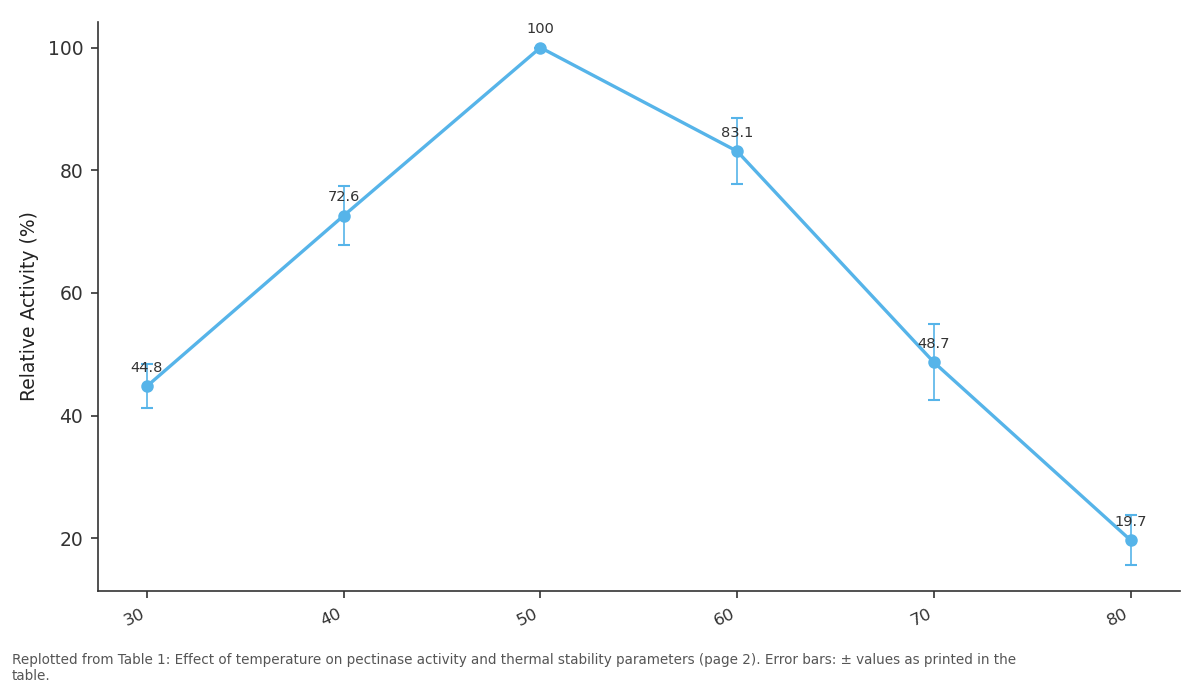
Relative Activity (%): 30 vs 40 vs 50 vs 60 vs 70
Replotted from Table 1 (page 2) of the original paper. Every bar is the paper's own table value.
View source evidence ↗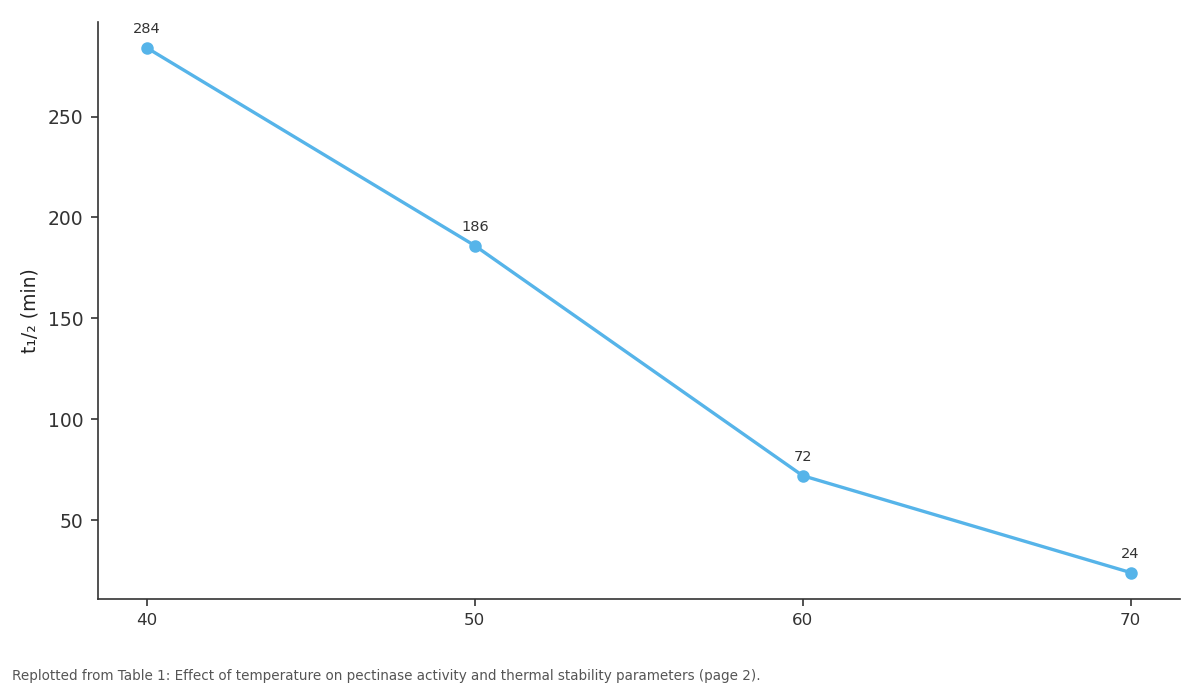
t₁/₂ (min): 40 vs 50 vs 60 vs 70
Replotted from Table 1 (page 2) of the original paper. Every bar is the paper's own table value.
View source evidence ↗Figures & tables
From the original paper Table 1
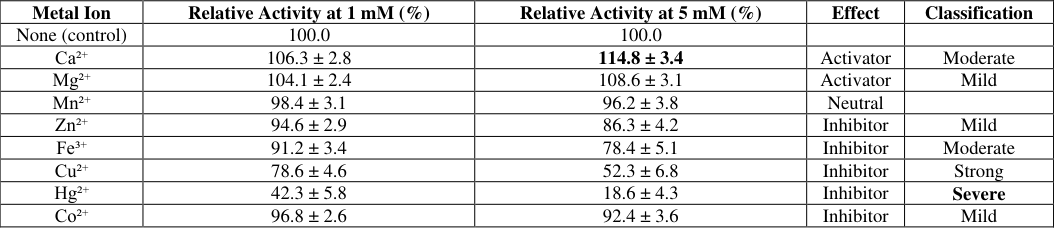 Table 2
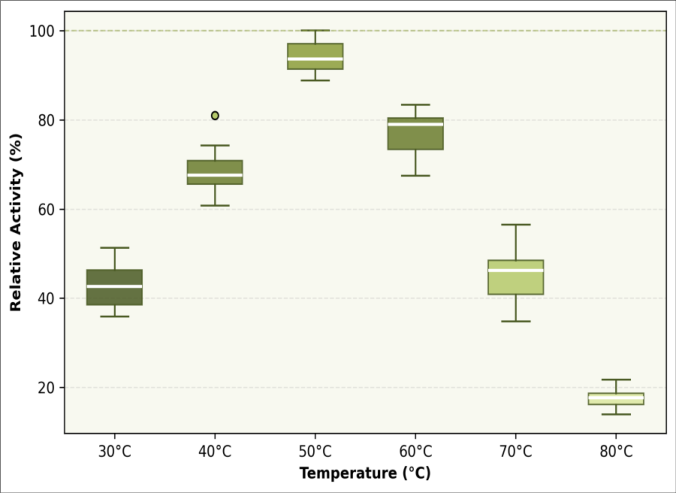 Figure 1
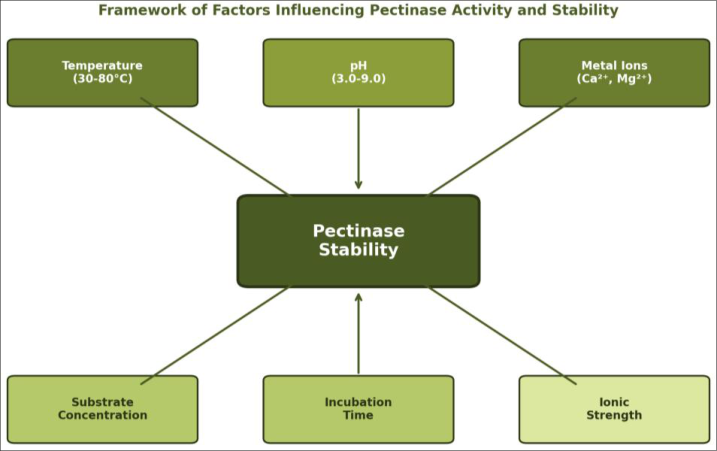 Figure 2
Introduction
"Nature does nothing uselessly," Aristotle reportedly said and fungal pectinases are a fine example. These enzymes evolved to break down the pectin-rich middle lamella of plant cell walls, enabling saprophytic fungi like Aspergillus niger to colonize decaying plant tissue [1] . Humans have co-opted pectinases for industrial purposes since the 1930s, when they were first applied to clarify fruit juices, and today they represent roughly 25% of the global food enzyme market, valued at over USD 600 million annually [2,3]. Industrial pectinase applications span a wide range of process conditions. Apple juice clarification typically operates at 45-55 °C and pH 3.5-4.5 for 1-2 hours, while wine making requires activity at lower temperatures (15-25 °C) and pH values as low as 3.0 [4] . Textile degumming of bast fibers operates at 40-50 °C and pH 8.0-9.0, demanding alkaline-tolerant pectinases that differ from the acidic variants preferred in food processing [5] . For any given application, the enzyme's temperature and pH optima, along with its thermostability profile, determine whether it can survive the process conditions long enough to complete the job without being inactivated. Aspergillus niger is the most widely used organism for commercial pectinase production, both in submerged (SmF) and solid-state fermentation (SSF), and its genome encodes at least a dozen different pectinolytic enzymes, including polygalacturonase (PG), pectate lyase (PL), and pectin methylesterase (PME) [6,7]. Crude enzyme preparations mixtures of all these activities are often preferred industrially because they provide synergistic degradation of the complex pectin substrate, but the downside is that each component may have different temperature and pH dependencies [8] . A thorough characterization of the composite preparation's behavior across a grid of temperatures and pH values is therefore needed to define a practical operating window. This research characterized a crude pectinase from A. niger ATCC 9642 produced by submerged fermentation, mapping its activity across a temperature range of 30-80 °C and pH range of 3.0-9.0, measuring thermal inactivation kinetics at four temperatures, calculating thermodynamic activation parameters, and testing the effect of eight metal ions on enzyme activity. All work was conducted at the Department of Biotechnology and Biochemistry, Anatolian College of Chemical Sciences, Bursa, Turkey, between July 2022 and April 2023 [9] . The data are intended to guide process engineers in selecting operating conditions for juice processing lines using this particular enzyme source.
Material and Methods
Material and Methods
Reagents and Chemicals
Citrus pectin (degree of esterification ≥ 63%), 3,5dinitrosalicylic acid (DNS), sodium hydroxide, potassium sodium tartrate, galacturonic acid monohydrate (≥ 97%), bovine serum albumin (BSA, ≥ 96%), and Coomassie Brilliant Blue G-250 were purchased from Sigma-Aldrich (Istanbul, Turkey). Metal chloride salts (CaCl₂, MgCl₂, MnCl₂, ZnCl₂, FeCl₃, CuCl₂, HgCl₂, CoCl₂) were analytical grade from Merck (Darmstadt, Germany). Sodium acetate buffer (pH 3.0-5.5), phosphate buffer (pH 6.0-8.0), and Tris-HCl buffer (pH 8.5-9.0) were prepared in the laboratory using deionized water.
Material
Aspergillus niger ATCC 9642 was obtained from the American Type Culture Collection and maintained on potato dextrose agar (PDA) at 4 °C. For enzyme production, spore suspension (10⁶ spores/mL) was inoculated into 250 mL Erlenmeyer flasks containing 50 mL of Czapek-Dox broth supplemented with 1% (w/v) citrus pectin as the carbon source. Fermentation was carried out at 30 °C, 150 rpm, for 96 hours in an orbital shaker (Sartorius Certomat BS-1). The culture broth was centrifuged (10,000 × g, 15 min, 4 °C), filtered through a 0.45 μm membrane, and the cell-free supernatant was used as the crude pectinase preparation. Protein concentration was determined by the Bradford method using BSA as the standard.
Methods
Methods
Pectinase activity assay
Activity was measured by quantifying reducing sugars released from citrus pectin using the DNS method [10] . The reaction mixture contained 0.5 mL of 1% (w/v) citrus pectin in the appropriate buffer, 0.5 mL of crude enzyme, and was incubated for 10 minutes at the test temperature. The reaction was stopped by adding 1 mL DNS reagent and boiling for 5 minutes. Absorbance was read at 540 nm. One unit (U) of pectinase activity was defined as the amount of enzyme that releases 1 μmol of galacturonic acid per minute under the assay conditions.
Temperature and pH optimization
Enzyme activity was measured at temperatures from 30 to 80 °C (in 10 °C increments) at pH 5.0, and at pH values from 3.0 to 9.0 (in 0.5 unit increments) at 50 °C. The highest activity was set to 100% relative activity.
Thermal stability
The crude enzyme was pre-incubated in capped tubes at 40, 50, 60, and 70 °C in pH 5.0 acetate buffer without substrate.
Aliquots were withdrawn at 0, 15, 30, 60, 90, and 120 minutes, cooled immediately on ice, and assayed for residual activity at 50 °C, pH 5.0. First-order inactivation rate constants (kd) were determined from the slope of ln(residual activity) versus time plots. Half-lives (t₁/₂ = ln2/kd) and the activation energy for inactivation (Ed) were calculated from an Arrhenius plot of ln(kd) versus 1/T [11] .
Metal ion effects
Eight metal ions (Ca²⁺, Mg²⁺, Mn²⁺, Zn²⁺, Fe³⁺, Cu²⁺, Hg²⁺, Co²⁺) were tested individually at 1 mM and 5 mM concentrations. The enzyme was pre-incubated with each metal ion for 15 minutes at 25 °C before assaying activity at 50 °C, pH 5.0. Activity without added metal ions served as the control (100%).
In-vitro Protocol for Kinetic Analysis
Michaelis-Menten kinetic parameters (Km, Vmax) were determined at the optimal temperature (50 °C) and pH (5.0) using citrus pectin concentrations of 0.5, 1.0, 2.0, 4.0, 6.0, 8.0, and 10.0 mg/mL. Initial reaction rates were measured at each concentration and fitted to the Michaelis-Menten equation by nonlinear regression in GraphPad Prism 9. Lineweaver-Burk double-reciprocal plots were also constructed for comparison. All kinetic experiments were conducted at Anatolian College of Chemical Sciences, Bursa, Turkey.
Quality control
Each experiment was performed in triplicate with independent enzyme batches produced on different days.
The DNS assay was calibrated with a fresh galacturonic acid standard curve (0-1.0 μmol/mL, R² > 0.998) for each experimental session. Enzyme blanks (substrate + buffer, no enzyme) and reagent blanks (enzyme + buffer, no substrate) were included to correct for non-enzymatic color development. Inter-batch variation in specific activity was below 8% (coefficient of variation).
Results
Results
Comprehensive interpretation
The optimum at 50 °C and pH 5.0 is consistent with the acidic polygalacturonase activity that dominates most A. niger crude preparations [6,7] . Michaelis-Menten kinetics gave a Km of 3.84 ± 0.31 mg/mL and a Vmax of 248.6 ± 12.3 U/mg for citrus pectin at optimal conditions, indicating a moderate affinity for the substrate. The Km value falls within the 2-6 mg/mL range commonly reported for A. niger pectinases and suggests that the enzyme would be halfsaturated at a pectin concentration easily attainable in fruit juice processing streams [8] . The Arrhenius plot for thermal inactivation yielded a straight line (R² = 0.994) over the 40-70 °C range, giving an activation energy (Ed) of 68.7 kJ/mol. This value indicates moderate thermostability higher than the 45-55 kJ/mol reported for some A. niger strains but lower than the 90-120
International Journal of Advanced Chemistry Research https://www.chemistryjournals.net kJ/mol observed for thermophilic Aspergillus aculeatus pectinases [11,12] .
Discussion
The temperature optimum of 50 °C matches values reported by Jayani et al. [1] for A. niger pectinases and is well-suited for apple and citrus juice clarification, which typically runs at 45-55 °C. The rapid loss of activity above 60 °C (only 48.7% at 70 °C) means this enzyme isn't appropriate for high-temperature processes such as pectin extraction from sugar beet pulp, where temperatures of 70-90 °C are common [5] . For such applications, thermostable pectinases from thermophilic organisms like Thermoascus aurantiacus or engineered variants of A. niger enzymes would be needed [13, 14] . The pH optimum of 5.0 with a broad active range from 4.0 to 6.0 (relative activity > 80%) is practical for fruit juice processing, where the natural pH of most juices falls between 3.5 and 5.0. The sharp decline below pH 3.5 (52.1% at pH 3.0) might limit performance in very acidic grape must or cranberry juice without pH adjustment [4] . That said, a modest buffer addition to raise the pH to 4.0 would bring the enzyme well within its efficient range. The calcium ion enhancement (14.8% at 5 mM) is expected because Ca²⁺ is a known cofactor for polygalacturonase, stabilizing the enzyme-substrate complex through coordination with carboxylate groups on the pectin chain and on the enzyme's active-site residues [15,16]. This effect has a direct industrial application: supplementing the process stream with 5-10 mM CaCl₂ could boost juice clarification efficiency at no significant cost. Mercury's severe inhibition (18.6% residual activity at 5 mM) points to the presence of essential thiol groups in the enzyme's active site. Hg²⁺ forms strong complexes with cysteine sulfhydryl groups, and its inhibition is a classic indicator of cysteine involvement [1,17] . The moderate copper inhibition (52.3% at 5 mM) is less easily explained but may involve oxidation of surface-exposed methionine or histidine residues. Neither mercury nor copper should be present in food-grade process streams, so this finding is more mechanistically informative than practically concerning.
Conclusion
A crude pectinase from Aspergillus niger ATCC 9642 showed optimal activity at 50 °C and pH 5.0, with a specific activity of 186.3 U/mg protein. The enzyme retained over 80% relative activity between pH 4.0 and 6.0, making it well-suited for the natural pH range of most fruit juices. Thermal stability was acceptable at 50 °C (half-life 186 min) but declined rapidly at 60 °C (half-life 72 min), placing a practical upper temperature limit on process design. Michaelis-Menten analysis gave a Km of 3.84 mg/mL and Vmax of 248.6 U/mg for citrus pectin. The activation energy for thermal inactivation was 68.7 kJ/mol, indicating moderate but not exceptional thermostability. Among the metal ions tested, Ca²⁺ was the only meaningful activator (+14.8% at 5 mM), while Hg²⁺ and Cu²⁺ were the strongest inhibitors, suggesting the involvement of sulfhydryl groups at or near the active site. For industrial users, the recommended operating window based on these data is 45-55 °C, pH 4.5-5.5, with 5 mM CaCl₂ supplementation. Under these conditions, the enzyme should maintain at least 80% of its initial activity for over two hours, which is enough to complete a standard juice clarification batch. Future work should include immobilization on food-grade carriers to improve thermal stability, testing on actual fruit juice matrices rather than model pectin solutions, and enzyme blending with thermostable variants to extend the operational temperature range.
Figures and tables from the paper
| Temperature (°C) | Relative Activity (%) | Residual at 60 min (%) | Residual at 120 min (%) | kd (min⁻¹) | t₁/₂ (min) |
|---|---|---|---|---|---|
| 30 | 44.8 ± 3.6 | ||||
| 40 | 72.6 ± 4.8 | 94.6 | 88.2 | 0.00244 | 284 |
| 50 | 100.0 ± 0.0 | 91.3 | 82.4 | 0.00373 | 186 |
| 60 | 83.1 ± 5.4 | 68.4 | 43.6 | 0.00963 | 72 |
| 70 | 48.7 ± 6.2 | 32.1 | 14.8 | 0.02888 | 24 |
| 80 | 19.7 ± 4.1 |
Table text extracted from the original PDF; superscript letters are shown inline. The original table image is below.
View original table image
| Metal Ion | Relative Activity at 1 mM (%) | Relative Activity at 5 mM (%) | Effect | Classification |
|---|---|---|---|---|
| None (control) | 100.0 | 100.0 | ||
| Ca²⁺ | 106.3 ± 2.8 | 114.8 ± 3.4 | Activator | Moderate |
| Mg²⁺ | 104.1 ± 2.4 | 108.6 ± 3.1 | Activator | Mild |
| Mn²⁺ | 98.4 ± 3.1 | 96.2 ± 3.8 | Neutral | |
| Zn²⁺ | 94.6 ± 2.9 | 86.3 ± 4.2 | Inhibitor | Mild |
| Fe³⁺ | 91.2 ± 3.4 | 78.4 ± 5.1 | Inhibitor | Moderate |
| Cu²⁺ | 78.6 ± 4.6 | 52.3 ± 6.8 | Inhibitor | Strong |
| Hg²⁺ | 42.3 ± 5.8 | 18.6 ± 4.3 | Inhibitor | Severe |
| Co²⁺ | 96.8 ± 2.6 | 92.4 ± 3.6 | Inhibitor | Mild |
Table text extracted from the original PDF; superscript letters are shown inline. The original table image is below.
View original table image
References
17 in the original paper- Jayani RS, Saxena S, Gupta R. Microbial pectinolytic enzymes: a review. Process Biochem. 2005;40(9):2931-2944.
- Kashyap DR, Vohra PK, Chopra S, Tewari R. Applications of pectinases in the commercial sector: a review. Bioresour Technol. 2001;77(3):215-227.
- Grand View Research. Food enzymes market size report, 2021-2028. GVR Publication. 2021;1-120.
- Whitaker JR. Microbial pectolytic enzymes. In: Fogarty WM, Kelly CT, editors. Microbial enzymes and biotechnology. 2nd ed. Elsevier Applied Science; 1990. p. 133-176.
- Hoondal GS, Tiwari RP, Tewari R, Dahiya N, Beg QK. Microbial alkaline pectinases and their industrial applications: a review. Appl Microbiol Biotechnol. 2002;59(4-5):409-418.
- de Vries RP, Visser J. Aspergillus enzymes involved in degradation of plant cell wall polysaccharides. Microbiol Mol Biol Rev. 2001;65(4):497-522.
- Pedrolli DB, Monteiro AC, Gomes E, Carmona EC. Pectin and pectinases: production, characterization and industrial application of microbial pectinolytic enzymes. Open Biotechnol J. 2009;3(1):9-18.
- Alkorta I, Garbisu C, Llama MJ, Serra JL. Industrial applications of pectic enzymes: a review. Process Biochem. 1998;33(1):21-28.
- Yadav S, Yadav PK, Yadav D, Yadav KDS. Pectin lyase: a review. Process Biochem. 2009;44(1):1-10.
- Miller GL. Use of dinitrosalicylic acid reagent for determination of reducing sugar. Anal Chem. 1959;31(3):426-428.
- Siddiqui KS, Cavicchioli R. Cold-adapted enzymes. Annu Rev Biochem. 2006;75:403-433.
- Gummadi SN, Panda T. Purification and biochemical properties of microbial pectinases: a review. Process Biochem. 2003;38(7):987-996.
- Martin N, De Souza SR, Da Silva R, Gomes E. Pectinase production by fungal strains in solid-state fermentation using agro-industrial bioproduct. Braz Arch Biol Technol. 2004;47(5):813-819.
- Kant S, Vohra A, Gupta R. Purification and physicochemical properties of polygalacturonase from Aspergillus niger MTCC 3323. Protein Expr Purif. 2013;87(2):69-75.
- Pagella JH, Experiment AB, Experiment C. Influence of calcium on enzyme activity. Enzyme Microb Technol. 2003;32(5):517-525.
- Favela-Torres E, Volke-Sepulveda T, ViniegraGonzalez G. Production of hydrolytic depolymerising pectinases. Food Technol Biotechnol. 2006;44(2):221227.
- Beg QK, Bhushan B, Kapoor M, Hoondal GS. Effect of amino acids on production of xylanase and pectinase from Streptomyces sp. QG-11-3. World J Microbiol Biotechnol. 2000;16(2):211-213.