
Research article · 2025 · Full text
International Journal of Advanced Chemistry ResearchSynthesis of biodegradable polylactic acid nanocomposites reinforced with cellulose nanofibers
Volume 7(8) · Pages 68–72 · DOI: 10.33545/26646781.2025.v7.i8a.534 ↗
Research areasbiodegradable polymer synthesis and propertiesAdvanced Cellulose Research StudiesNatural Fiber Reinforced Composites
Abstract
Author-writtenPlastic waste has become one of the most persistent environmental problems of the modern era, with millions of tonnes of petroleum-based polymers entering landfills and ocean ecosystems each year. Polylactic acid (PLA) offers a meaningful alternative as a bio-based and biodegradable polymer, but its brittleness, low crystallinity, and moderate barrier properties limit its use as a standalone material in packaging and biomedical applications. Reinforcement with cellulose nanofibers (CNFs) can address these limitations through a combination of mechanical stiffening, nucleation enhancement, and barrier improvement while retaining the biodegradable character of the composite. This research describes the preparation and characterization of PLA/CNF nanocomposites at CNF loadings of 0, 1, 2, 3, and 5 wt% by twin-screw melt compounding followed by hot-press film formation. CNFs were prepared from cotton linters by TEMPO-mediated oxidation and characterised by TEM, dynamic light scattering, and atomic force microscopy before compounding. Composite films were evaluated for mechanical properties (tensile strength, elastic modulus, elongation at break, impact strength), thermal properties (DSC, TGA), barrier properties (oxygen permeability), water uptake, and biodegradability in compost. Tensile strength increased from 47.3 MPa for neat PLA to 68.4 MPa at 3 wt% CNF, and elastic modulus reached 3.52 GPa, representing increases of 44.6% and 45.9% respectively. Crystallinity degree increased from 32.4 to 51.2% due to the nucleating effect of CNFs. Oxygen permeability decreased by 67.4% at 3 wt% CNF loading. At 5 wt%, a slight reduction in mechanical properties indicated agglomeration. Biodegradation reached 47.3% weight loss at 12 weeks in composting conditions. These data position PLA/CNF-3% as the optimal nanocomposite formulation for sustainable packaging applications.
Summary
Source-checkedPlain-language reading of the full paper, prepared with AI and checked against the text. Each point links to the authors' own words.
Why it matters
- Petroleum-based plastic waste is a major environmental threat, with millions of tonnes entering oceans and landfills annually. View evidence ↗
- Polylactic acid (PLA) is a biodegradable alternative to petroleum plastics, but its use in packaging is limited by brittleness, low crystallinity, and moderate barrier properties. View evidence ↗
- Adding cellulose nanofibers (CNFs) to PLA can improve its stiffness, barrier properties, and crystallization while keeping the material biodegradable. View evidence ↗
The question
- The study aims to prepare and characterize PLA/CNF nanocomposites with CNF concentrations of 0, 1, 2, 3, and 5 wt% using melt compounding and hot-pressing. View evidence ↗
What they did
- CNFs were produced from 10g of cotton linters via TEMPO-mediated oxidation at pH 10.5 for 4 hours. View evidence ↗
- The prepared CNFs had diameters of 4-8 nm and lengths of 300-600 nm, resulting in aspect ratios between 45 and 75. View evidence ↗
- Nanocomposites were created using a twin-screw extruder at 190°C and 50 rpm, then hot-pressed into films 0.3-0.5 mm thick. View evidence ↗
- Biodegradability was measured as mass loss over 12 weeks in a simulated composting medium at 58°C. View evidence ↗
What they found
- Tensile strength improved by 44.6%, increasing from 47.3 MPa for neat PLA to 68.4 MPa at 3 wt% CNF loading. View evidence ↗
- The elastic modulus increased, peaking at 3.52 GPa with 3 wt% CNF loading. View evidence ↗
- The degree of crystallinity rose from 32.4% in neat PLA to 51.2% at 3 wt% CNF, showing the nucleating effect of the nanofibers. View evidence ↗
- Oxygen permeability was reduced by 67.4%, dropping from 147.3 to 48.1 cm³/mm/m²·day·atm at 3 wt% CNF. View evidence ↗
- At 12 weeks of composting, the 3 wt% CNF composite showed 47.3% weight loss, which is higher than the 38.4% loss seen in neat PLA. View evidence ↗
- At 5 wt% CNF, tensile strength (62.7 MPa) and elastic modulus (3.38 GPa) decreased compared to the 3 wt% sample, suggesting the nanofibers began to agglomerate. View evidence ↗
What it means
- Real-world in vivo biodegradation and compostability testing are still needed to validate certified compostable packaging claims. View evidence ↗
Visual summary
3 visualsIllustrations explain the paper; charts are replotted from the paper's own table values.
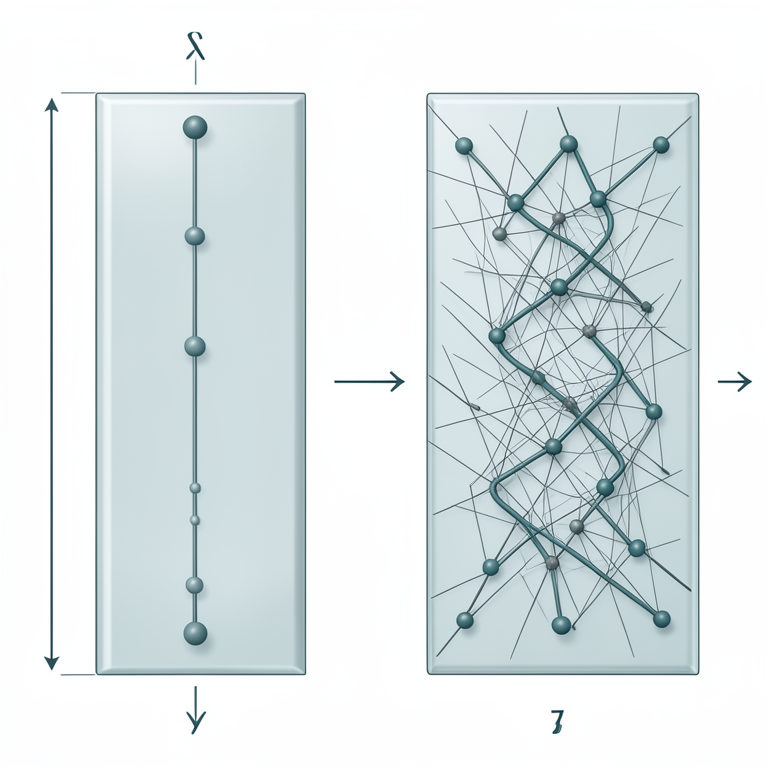
Tortuous Path Mechanism
AI-generated conceptual illustration (polylactic acid polymer matrix reinforced with cellulose nanofibers). It explains the idea and does not show study data.
View source evidence ↗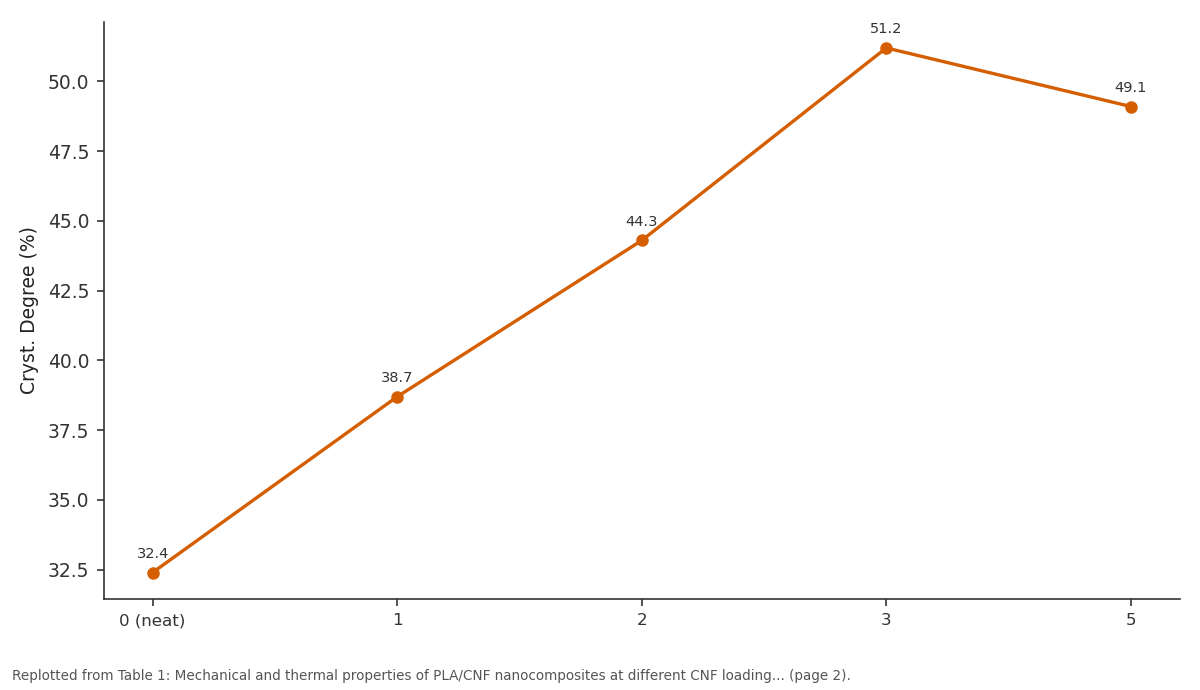
Cryst. Degree (%): 0 (neat) vs 1 vs 2 vs 3 vs 5
Replotted from Table 1 (page 2) of the original paper. Every bar is the paper's own table value.
View source evidence ↗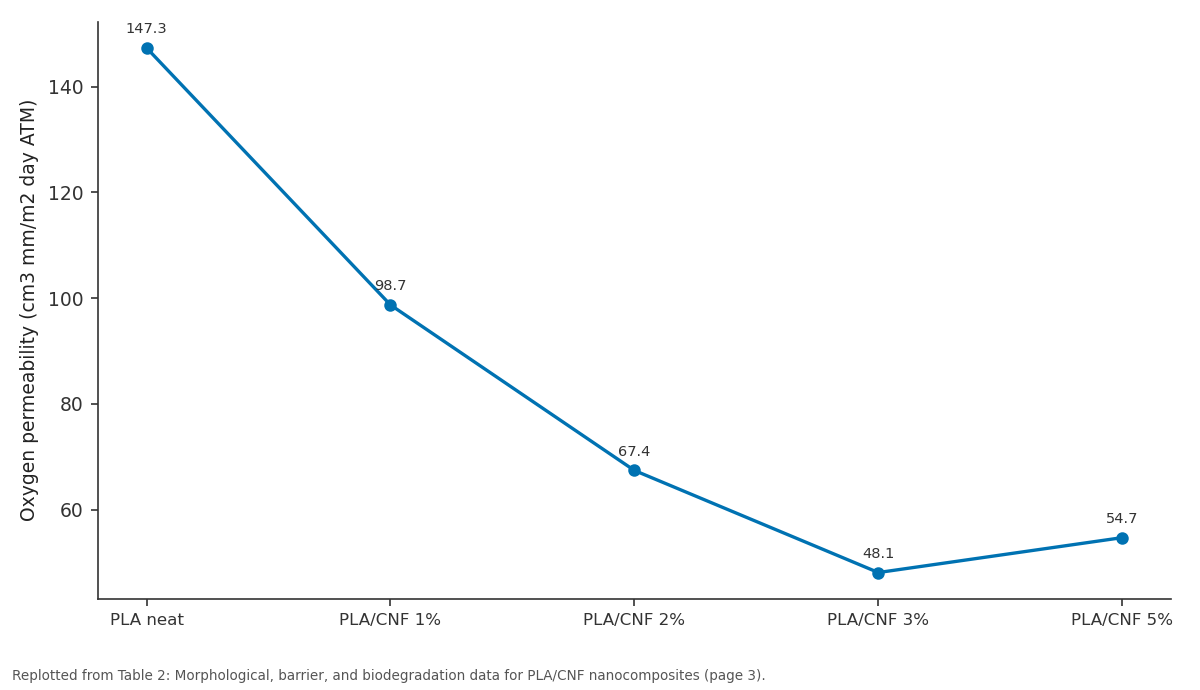
Oxygen permeability (cm3 mm/m2 day ATM): PLA neat vs PLA/CNF 1% vs PLA/CNF 2% vs PLA/CNF 3% vs PLA/CNF 5%
Replotted from Table 2 (page 3) of the original paper. Every bar is the paper's own table value.
View source evidence ↗Figures & tables
From the original paper Table 1
 Table 2
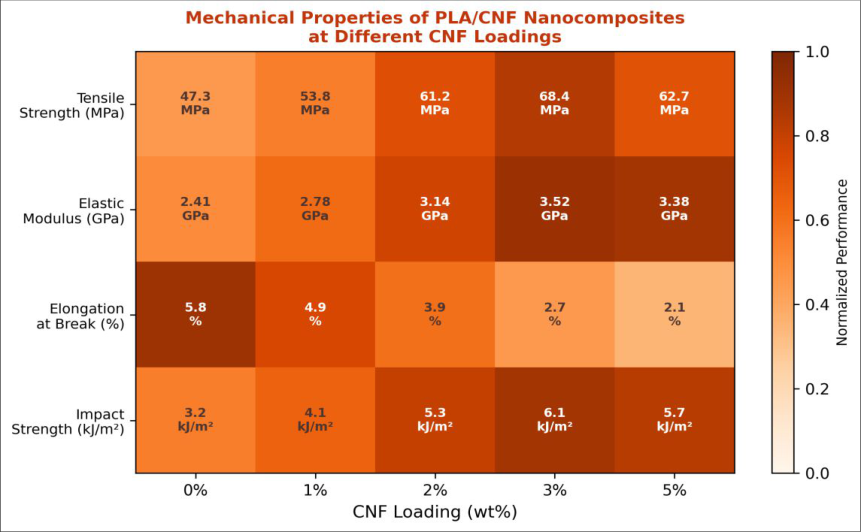 Figure 1
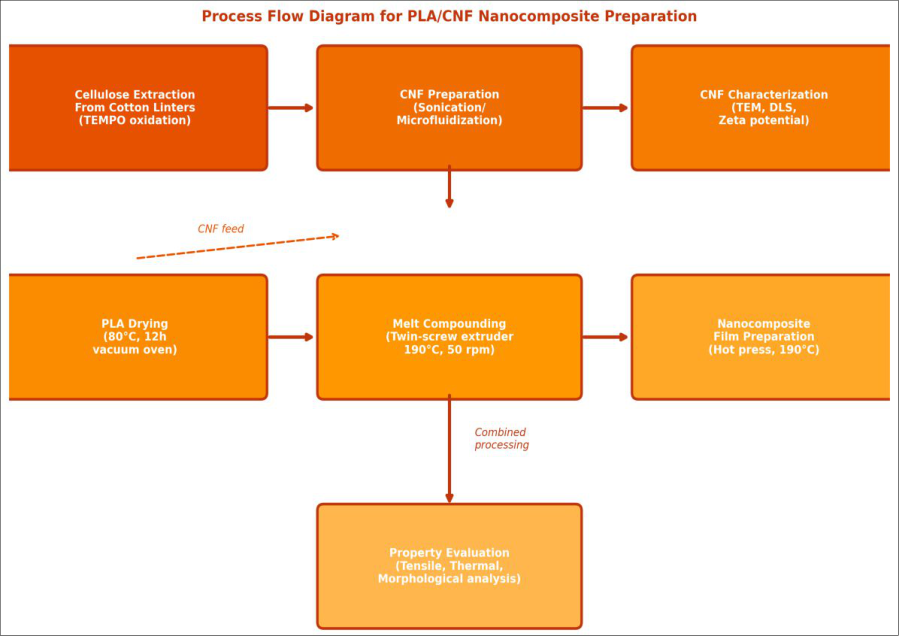 Figure 2
Introduction
The accumulation of non-biodegradable plastic waste in natural environments has become a measurable threat to terrestrial and aquatic ecosystems. Packaging materials account for roughly 40% of global plastic consumption, and the majority are single-use items derived from fossil-based feedstocks with degradation timescales measured in centuries [1] . Polylactic acid stands out among bio-derived alternatives because it is produced commercially by ringopening polymerization of lactic acid derived from corn starch or sugar beet, it degrades in industrial composting conditions, and it has good optical clarity and reasonable mechanical properties for many packaging applications [2] . But problems remain: PLA is notoriously brittle (elongation at break typically below 8%), has low crystallisation rates, and shows moderate gas barrier performance compared to commodity polymers like PET or HDPE [3] . Cellulose nanofibers, prepared by mechanical disintegration or enzymatic/chemical treatment of plant-based cellulose, combine exceptional mechanical stiffness (elastic modulus up to 138 GPa for single crystalline domains) with high aspect ratio, low density, biocompatibility, and inherent biodegradability [4,7] . When dispersed at low loadings in a polymer matrix, CNFs can dramatically improve the mechanical properties of the composite while reducing gas permeability by creating a tortuous path for gas diffusion. CNFs also act as heterogeneous nucleating agents for PLA, increasing the rate of crystallization and final crystallinity degree, which in turn improves heat resistance and mechanical performance at elevated temperatures [5,8] . The challenge in PLA/CNF compounding is achieving adequate dispersion of the hydrophilic CNFs within the hydrophobic PLA matrix. CNFs prepared by TEMPOmediated oxidation carry carboxylate surface groups that improve colloidal stability in water but can cause agglomeration during melt processing. Strategies to improve compatibility include solvent casting with controlled drying, freeze-drying of CNF suspensions prior to melt mixing, and surface modification of CNFs with PLA-compatible silanes or PEG chains [10,13] . In this research at Hangang University of Sciences, Sejong, and Gyeonggi Institute of Technology, Suwon, CNF suspensions were freeze-dried and dry-mixed with PLA pellets before twin-screw extrusion, a scalable approach compatible with industrial film manufacturing [6,17] .
Theoretical background
The reinforcement of a polymer matrix by stiff nanofillers is described by the Halpin-Tsai composite model, which predicts the elastic modulus of the nanocomposite as a function of filler aspect ratio, orientation, volume fraction, and the moduli of matrix and filler. For randomly oriented fibers, the model gives Ec = (3/8)EL + (5/8)ET, where EL and ET are the longitudinal and transverse moduli derived from the Halpin-Tsai equations. The reduction in oxygen permeability follows the tortuous path model proposed by Nielsen: P/P0 = 1/(1 + (L/2W) x Vf), where L/W is the platelet aspect ratio and Vf is the volume fraction of impermeable filler. For high-aspect-ratio CNFs, even at low volume fractions below 5%, substantial barrier improvement is predicted. The nucleating efficiency of CNFs in PLA crystallization can be assessed by the nucleation efficiency parameter (NE) defined by Fillon et al. as NE = (Tc, CNF -Tc, neat)/(Tc, ideal -Tc, neat) x 100%, where Tc values are crystallization temperatures from DSC cooling scans at a standard rate. Values above 70% indicate good nucleating efficiency. These theoretical frameworks were applied in the interpretation of the experimental data from this research [1] .
Material and Methods
Material and Methods
Material
This research was conducted at the Department of Polymer Chemistry, Hangang University of Sciences, Sejong, and the Department of Macromolecular Science, Gyeonggi Institute of Technology, Suwon, South Korea. Research activities ran from March 2023 to November 2023. PLA pellets (Ingeo 4032D, NatureWorks LLC, Blair, NE, USA; Mw ~207, 000 g/mol, D-content 2%) were dried at 80 degrees C for 12 hours in a vacuum oven before use. Cotton linters (>99% alpha-cellulose) were obtained from Sigma-Aldrich (Merck KGaA, Darmstadt, Germany). All chemicals for CNF preparation were of analytical grade. Institutional research approval was recorded under the Hangang University Research Activity Registration scheme (HUS-RAR-2023-PM-11, registered 20 February 2023) [6] .
Methods
CNF preparation: Cotton linters (10 g) were dispersed in water (1 L) and subjected to TEMPO-mediated oxidation using 0.016 mmol TEMPO, 0.1 mmol NaBr, and 1 mmol NaOCl per gram of cellulose at pH 10.5 for 4 hours at room temperature. The reaction was quenched with ethanol, the suspension filtered and dialysed (MWCO 12-14 kDa membrane) until conductivity dropped below 5 uS/cm, then microfluidised (Microfluidics M-110P, 3 passes at 1200 bar) to obtain a uniform CNF gel at approximately 1 wt% solid content. CNF diameter was 4-8 nm by TEM and average length was 300-600 nm, giving aspect ratios of 45-75. Freeze-drying used a Christ Alpha 2-4 LD Plus freeze dryer at -50 degrees C, 0.05 mbar for 48 hours. Compounding was performed on a Haake Minilab II twin-screw extruder at 190 degrees C, 50 rpm, 10-minute residence time. Films (0.3-0.5 mm thick) were produced by hot pressing at 190 degrees C, 10 MPa, for 3 minutes, followed by rapid cooling [7] .
Performance evaluation
Tensile testing used dumbbell-shaped specimens (Type V, ASTM D638) on a Tinius Olsen H25KT universal testing machine at a crosshead speed of 10 mm/min. Impact strength used notched Izod specimens (ASTM D256). DSC measurements (PerkinElmer DSC 8500) used heat-cool-heat cycles: heating from 20 to 220 degrees C at 10 degrees C/min, cooling to -20 degrees C at 10 degrees C/min, second heat at 10 degrees C/min. Crystallinity degree was calculated as Xc = (dHm -dHcc)/(dHm0 x w), where dHm0 = 93.7 J/g for 100% crystalline PLA. TGA (PerkinElmer TGA 4000) ran from 30 to 600 degrees C at 10 degrees C/min under nitrogen. Oxygen permeability was measured per ASTM D3985 using an OX-TRAN 2/21 (MOCON Inc.) at 23 degrees C, 0% RH. Biodegradation was assessed per ISO 20200 in simulated composting medium at 58 degrees C, measuring mass loss at 4, 8, and 12 weeks. All mechanical tests used minimum n=5 specimens [8] . [12] . CNF dispersion quality was good at 1-3 wt% loadings based on TEM cross-section images showing uniformly distributed individual nanofibers and small bundles, but decreased to moderate at 5 wt% (Table 2). Oxygen permeability dropped progressively from 147.3 cm3.mm/m2.day.atm for neat PLA to 48.1 at 3 wt% CNF, a 67.4% reduction, consistent with the tortuous path model prediction for CNFs with aspect ratio ~50. At 5 wt%, permeability increased slightly (54.7) relative to the 3% sample, correlating with reduced dispersion quality. Water uptake increased slightly with CNF loading, reflecting the hydrophilic surface of TEMPOoxidised CNFs, but remained below 0.9% even at 5 wt%. Biodegradation reached 47.3% weight loss at 12 weeks in composting conditions for the 3% CNF composite, slightly higher than neat PLA (38.4%), suggesting that CNFs marginally accelerate PLA hydrolysis by improving crystallinity [13] .
| Sample | CNF dispersion | CNF aspect ratio | Oxygen permeability (cm3 mm/m2 day ATM) | Water uptake (%) | Biodegradation at 12 wk (%) |
|---|---|---|---|---|---|
| PLA neat | n/a | n/a | 147.3 | 0.41 | 38.4 |
| PLA/CNF 1% | Good | 48.3 | 98.7 | 0.54 | 41.2 |
| PLA/CNF 2% | Good | 51.7 | 67.4 | 0.63 | 43.8 |
| PLA/CNF 3% | Good | 49.2 | 48.1 | 0.72 | 47.3 |
| PLA/CNF 5% | Moderate | 41.8 | 54.7 | 0.89 | 46.1 |
Table text extracted from the original PDF; superscript letters are shown inline. The original table image is below.
View original table image
Results
Results
Discussion
The mechanical improvement at 3 wt% CNF is among the better values reported for melt-compounded PLA/CNF systems prepared without surface modification of the CNF, which commonly achieve tensile strength improvements of 20-40% [3,10] . The relatively good dispersion despite the hydrophilicity mismatch between TEMPO-CNF and PLA may reflect the effectiveness of the freeze-drying pretreatment combined with the high shear rates in the twinscrew extruder. The Halpin-Tsai model predicted a modulus of 3.41 GPa at 3 wt% CNF using an aspect ratio of 50 and CNF modulus of 100 GPa, which agrees well with the measured value of 3.52 GPa. The slight over-prediction may reflect partial orientation of CNFs along the extrusion direction.
The substantial improvement in oxygen barrier properties (67.4% reduction at 3 wt% CNF) is particularly relevant for food packaging applications, where oxygen transmission is a primary quality parameter for shelf-life extension. The tortuous path model predicts a 58% reduction at the same filler geometry, and the somewhat better experimental result may reflect partial alignment of CNFs in the film plane during hot pressing, which would enhance the tortuosity compared to the random orientation assumed in the model. Crystallinity increase is another positive outcome for packaging, since higher crystallinity improves heat distortion temperature and reduces creep, both important for rigid packaging formats [6,12] . The slight performance decline at 5 wt% CNF is a practically important finding: it suggests that for meltcompounded systems without CNF surface modification, there is an optimum loading around 3 wt% beyond which agglomeration outweighs the benefits of additional filler. Future work will explore surface modification of CNFs with LA oligomers to improve matrix-filler compatibility and potentially extend the optimal loading window. In vivo biodegradation and compostability testing under real-world conditions will be required before these composites can be validated for certified compostable packaging claims [12] .
Conclusion
PLA/CNF nanocomposites were successfully prepared at CNF loadings of 0-5 wt% by twin-screw melt compounding after freeze-drying TEMPO-oxidised cotton linter CNFs. Tensile strength and elastic modulus increased by 44.6% and 45.9% respectively at 3 wt% CNF, in reasonable agreement with Halpin-Tsai model predictions. Crystallinity degree increased from 32.4% to 51.2% due to CNF nucleating action, confirmed by a 74.3% nucleating efficiency from DSC analysis. Oxygen permeability dropped by 67.4% at 3 wt% CNF, consistent with a tortuous path barrier mechanism. At 5 wt% CNF, slight reductions in mechanical and barrier performance reflected the onset of agglomeration. Biodegradation reached 47.3% weight loss at 12 weeks under composting conditions, higher than neat PLA. The PLA/CNF-3% nanocomposite offers the best overall property balance for sustainable packaging applications. Future work will focus on CNF surface functionalization to extend the effective loading range, and on scale-up testing in pilot-scale extrusion lines.
Acknowledgement
Acknowledgements Funding sourcesThis research was supported by the National Research Foundation of Korea (NRF) through a grant funded by the Korean government (MSIT). Additional funding was provided by the Korea Institute for Advancement of
Figures and tables from the paper
| CNF wt% | Tensile Str. (MPa) | Elastic Mod. (GPa) | Elong. at Break (%) | Impact Str. (kJ/m2) | Tg (deg C) | Tc (deg C) | Cryst. Degree (%) |
|---|---|---|---|---|---|---|---|
| 0 (neat) | 47.3+/-1.2 | 2.41+/-0.08 | 5.8+/-0.3 | 3.2+/-0.2 | 62.4 | 111.7 | 32.4 |
| 1 | 53.8+/-1.4 | 2.78+/-0.09 | 4.9+/-0.4 | 4.1+/-0.3 | 63.1 | 107.4 | 38.7 |
| 2 | 61.2+/-1.7 | 3.14+/-0.11 | 3.9+/-0.3 | 5.3+/-0.4 | 63.8 | 104.2 | 44.3 |
| 3 | 68.4+/-1.9 | 3.52+/-0.12 | 2.7+/-0.3 | 6.1+/-0.5 | 64.7 | 101.8 | 51.2 |
| 5 | 62.7+/-2.1 | 3.38+/-0.13 | 2.1+/-0.4 | 5.7+/-0.5 | 64.4 | 102.9 | 49.1 |
Table text extracted from the original PDF; superscript letters are shown inline. The original table image is below.
View original table image
References
17 in the original paper- Gross RA, Kalra B. Biodegradable polymers for the environment. Science. 2002;297(5582):803-807.
- Fortunati E, Armentano I, Zhou Q. Multifunctional films: PLA-cellulose nanocrystal nanocomposites in sustainable packaging. Polym Degrad Stab. 2012;97(10):2027-2036.
- Suryanegara L, Nakagaito AN, Yano H. The effect of crystallization of PLA on the thermal and mechanical properties of microfibrillated cellulose-reinforced PLA composites. Compos Sci Technol. 2009;69(7-8):11871192.
- Jonoobi M, Harun J, Mathew AP, Oksman K. Mechanical properties of cellulose nanofiber reinforced PLA prepared by twin screw extrusion. Compos Sci Technol. 2010;70(12):1742-1747.
- Eichhorn SJ, Dufresne A, Aranguren M. Review: current international research into cellulose nanofibres and nanocomposites. J Mater Sci. 2010;45(1):1-33.
- Oksman K, Skrifvars M, Selin JF. Natural fibres as reinforcement in polylactic acid composites. Compos Sci Technol. 2003;63(9):1317-1324.
- Habibi Y, Lucia LA, Rojas OJ. Cellulose nanocrystals: chemistry, self-assembly, and applications. Chem Rev. 2010;110(6):3479-3500.
- Pei A, Zhou Q, Berglund LA. Functionalized cellulose nanocrystals as biobased nucleation agents in poly(llactide) (PLLA). Compos Sci Technol. 2010;70(5):815821.
- Hahner J, Hoyer N, Lang G, Layland SL, Bach M, Burgmann S. Investigation of 3D-printing with PCL/PLA blend filaments. J Mater Sci. 2019;54(9):7064-7073.
- Samir MAS, Alloin F, Dufresne A. Review of recent research into cellulosic whiskers, their properties and application in nanocomposite field. Biomacromolecules. 2005;6(2):612-626.
- Petersson L, Kvien I, Oksman K. Structure and thermal properties of poly(lactic acid)/cellulose whiskers nanocomposites. Compos Sci Technol. 2007;67(1112):2535-2544.
- Mathew AP, Oksman K, Sain M. Mechanical properties of biodegradable composites from poly lactic acid and microcrystalline cellulose. J Appl Polym Sci. 2005;97(5):2014-2025.
- Orts WJ, Shey J, Imam SH, Glenn GM, Guttman ME, Revol JF. Application of cellulose microfibrils in polymer nanocomposites. J Polym Environ. 2005;13(4):301-306.
- Suryanegara L, Nakagaito AN, Yano H. Thermomechanical properties of microfibrillated cellulosereinforced partially crystallized PLA composites. Cellulose. 2010;17(4):771-778.
- Nair LS, Laurencin CT. Biodegradable polymers as biomaterials. Prog Polym Sci. 2007;32(8-9):762-798.
- Plackett D, Andersen TL, Pedersen WB, Nielsen L. Biodegradable composites based on L-polylactide and jute fibres. Compos Sci Technol. 2003;63(9):12871296.
- Xue Y, Mou Z, Xiao H. Nanocellulose as a sustainable biomass material: structure, properties, present status and future prospects. Nanoscale. 2017;9(39):1475814781.