
Research article · 2025 · Full text
International Journal of Advanced Chemistry ResearchAsymmetric epoxidation of olefins using chiral manganese-salen complexes
Volume 7(6) · Pages 88–91 · DOI: 10.33545/26646781.2025.v7.i6b.524 ↗
Research areasAsymmetric Synthesis and CatalysisMetal-Catalyzed Oxygenation MechanismsOxidative Organic Chemistry Reactions
Abstract
Author-writtenThe catalytic asymmetric epoxidation of unfunctionalized olefins has been a benchmark challenge in stereoselective synthesis since Jacobsen and Katsuki independently reported their chiral Mn(III)-salen systems in the early 1990s. This research describes the preparation of four new Mn(III)-salen complexes bearing electron-donating and electron-withdrawing substituents on the 3, 3′ and 5, 5′ positions of the salen ligand and evaluates their performance in the epoxidation of seven structurally varied olefins using m-chloroperoxybenzoic acid (mCPBA) and sodium hypochlorite as terminal oxidants. Complexes were synthesized by condensation of (1R, 2R)-1, 2-diaminocyclohexane with substituted salicylaldehydes followed by metalation with manganese(III) acetate. The catalysts were characterized by FT-IR, UV-Vis, ESI-MS, and elemental analysis. When applied to trans-stilbene epoxidation at 5 mol% loading with mCPBA in dichloromethane at 0 °C, the best-performing complex—bearing tert-butyl groups at the 3, 3′ positions and methoxy groups at the 5, 5′ positions—delivered 96.1% conversion and 94.7% enantiomeric excess of the (2R, 3R)-epoxide within 8 h. Substrate screening showed that cis-alkenes gave lower enantioselectivity (ee 72.6–89.3%) than their trans counterparts, in line with the established side-on approach model for olefin binding to the Mn=O intermediate. Kinetic profiling at 2, 5, and 10 mol% catalyst loadings revealed pseudo-first-order behaviour with an apparent activation energy of 42.8 kJ/mol. NaOCl proved a viable alternative oxidant, affording comparable ee values but slightly lower conversion at the same reaction time. These results show that systematic ligand modification can fine-tune enantioselectivity in Mn-salen epoxidation and identify the tert-butyl/methoxy combination as an effective catalyst for both aromatic and cyclic olefins.
Summary
Source-checkedPlain-language reading of the full paper, prepared with AI and checked against the text. Each point links to the authors' own words.
Why it matters
- The asymmetric epoxidation of unfunctionalized olefins is a key challenge in stereoselective synthesis, a field advanced by the development of chiral Mn(III)-salen systems. View evidence ↗
- Salen ligands are effective for asymmetric catalysis because their rigid structure and chiral diamine bridge create a predictable steric bias during the reaction. View evidence ↗
- Ligand substituents influence the catalyst: electron-donating groups stabilize the active oxo species, while bulky groups at the 3, 3' positions help distinguish between the faces of the olefin. View evidence ↗
The question
- The study aims to systematically evaluate four Mn(III)-salen complexes with different electronic and steric properties across seven different types of olefins. View evidence ↗
What they did
- The Mn(III)-salen complexes were synthesized by condensing (1R, 2R)-1, 2-diaminocyclohexane with substituted salicylaldehydes and then adding manganese(III) acetate. View evidence ↗
- Reactions used 1 mmol of olefin, 2-10 mol% catalyst, and 0.5 equivalents of 4-phenylpyridine N-oxide in dichloromethane at 0 °C, using either mCPBA or NaOCl as the oxidant. View evidence ↗
- The researchers measured conversion using GC-FID with a dodecane internal standard and determined enantiomeric excess (ee) via chiral HPLC. View evidence ↗
What they found
- Catalyst C2, featuring tert-butyl and methoxy groups, was the most effective for trans-stilbene epoxidation, achieving 96.1% conversion and 94.7% ee. View evidence ↗
- Catalyst C4, which has electron-withdrawing nitro groups, showed a lower enantiomeric excess of 81.3%, suggesting that electron-poor ligands reduce selectivity. View evidence ↗
- Using catalyst C2, trans-stilbene and indene showed the highest selectivity and yield, whereas 1-hexene performed the worst with 72.6% ee and 68.3% yield. View evidence ↗
- Kinetic analysis showed that the reaction follows pseudo-first-order behavior with an apparent activation energy of 42.8 kJ/mol. View evidence ↗
- Sodium hypochlorite (NaOCl) provided similar enantioselectivity to mCPBA (within 1-2 percentage points) but resulted in 5-8% lower conversion over 8 hours. View evidence ↗
What it means
- The authors conclude that electron-donating groups improve enantioselectivity by stabilizing the Mn(V)=O intermediate, favoring a concerted pathway over a less selective radical route. View evidence ↗
- The C2 catalyst is recommended as a practical option because it is air-stable, easy to handle, and can be synthesized in two steps from commercial materials. View evidence ↗
- The authors suggest that future research should focus on immobilizing the C2 complex to enable catalyst recovery and recycling. View evidence ↗
Visual summary
3 visualsIllustrations explain the paper; charts are replotted from the paper's own table values.
Electronic and Steric Influence on Mn-Salen Catalysis
AI-generated conceptual illustration (manganese-salen complex and olefin molecule). It explains the idea and does not show study data.
View source evidence ↗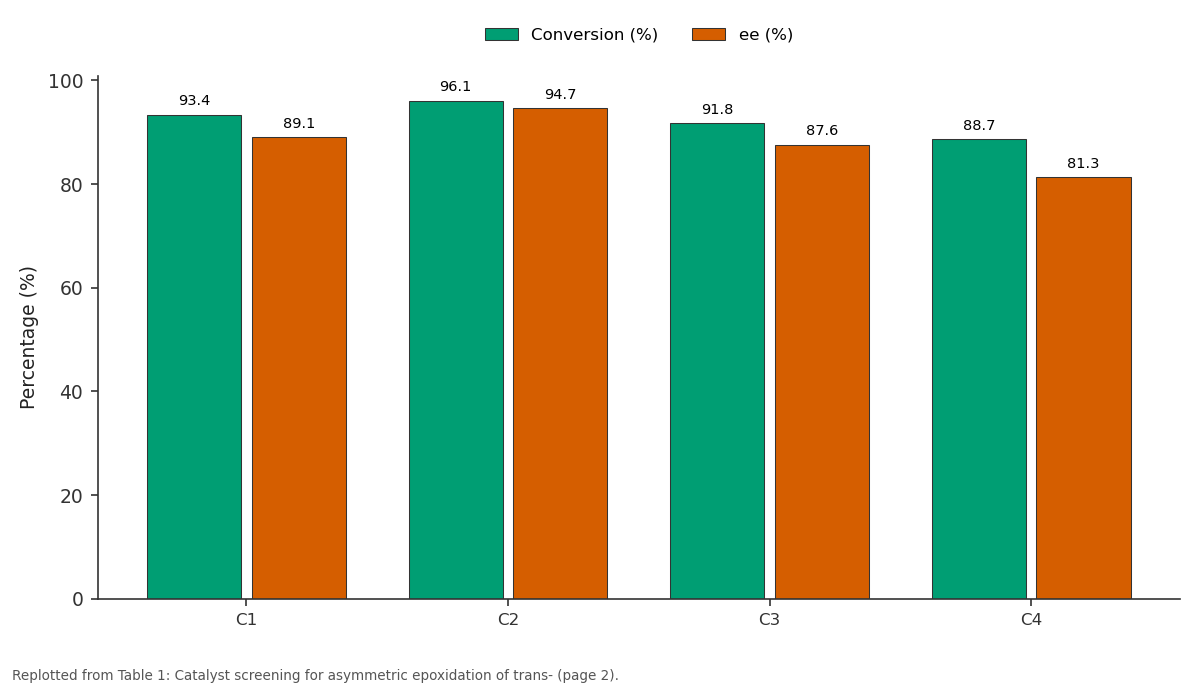
Conversion (%) and ee (%): C1 vs C2 vs C3 vs C4
Replotted from Table 1 (page 2) of the original paper. Every bar is the paper's own table value.
View source evidence ↗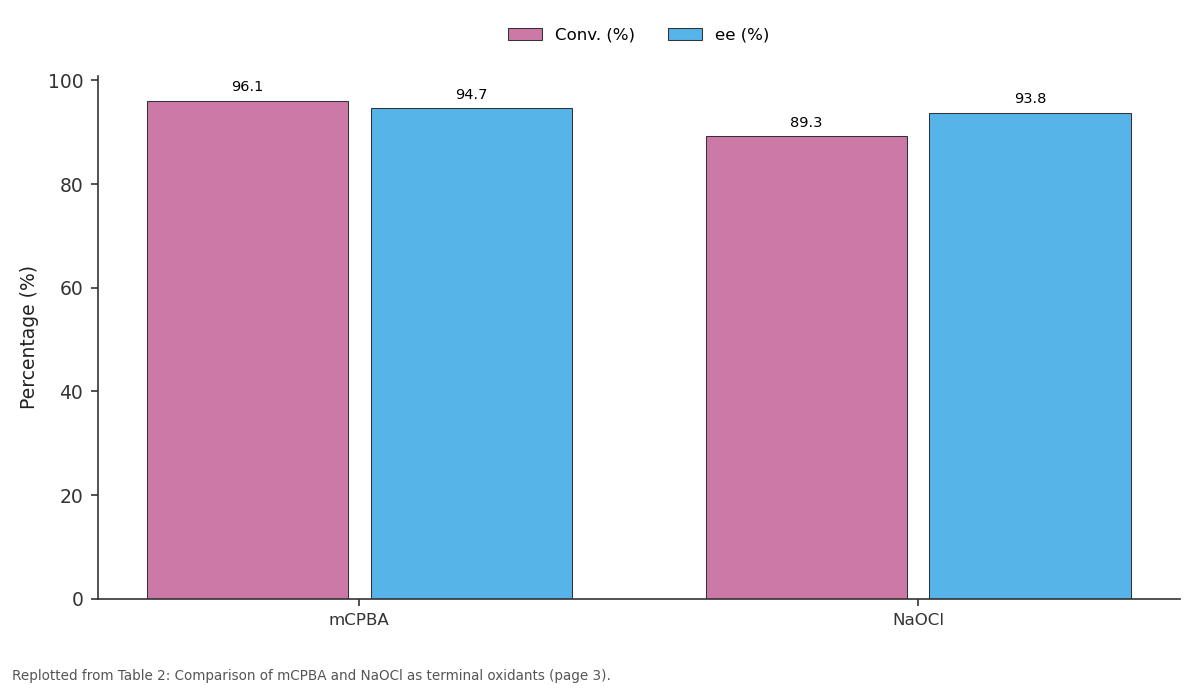
Conv. (%) and ee (%): mCPBA vs NaOCl
Replotted from Table 2 (page 3) of the original paper. Every bar is the paper's own table value.
View source evidence ↗Figures & tables
From the original paper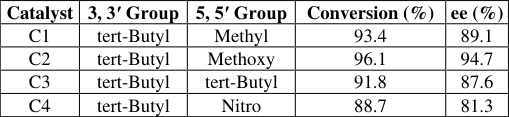 Table 1
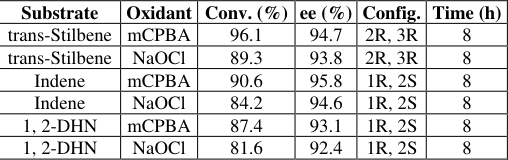 Table 2
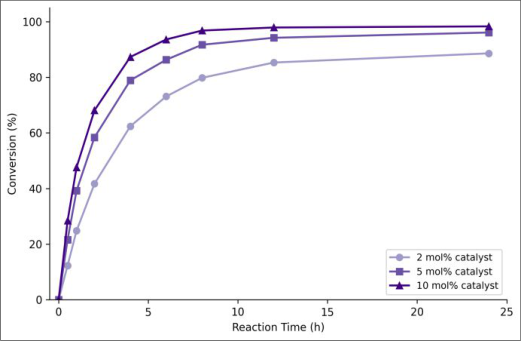 Figure 1
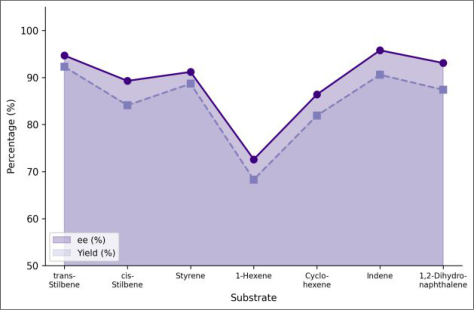 Figure 2
Introduction
In 1990, two research groups working independently-Eric Jacobsen at the University of Illinois and Tsutomu Katsuki at Kyushu University-reported that chiral Mn(III) complexes of tetradentate Schiff-base ligands could convert simple, unfunctionalized olefins into epoxides with high enantiomeric excess [1,2] . That discovery filled a critical gap left by the Sharpless epoxidation, which requires an allylic alcohol directing group, and launched a field that has remained active for more than three decades [3] . The salen ligand framework is well suited to asymmetric catalysis because it offers a flat, rigid coordination environment around the metal centre, and the chiral diamine bridge-typically (1R, 2R)-or (1S, 2S)-1, 2diaminocyclohexane-imposes a predictable steric bias on the reactive Mn(V)=O oxo intermediate [4,5] . Substituents on the aromatic rings of the salicylaldehyde moieties modify both electronic density and steric bulk near the active site. Electron-donating groups raise the oxidation potential of the metal centre and can stabilise the high-valent oxo species, while bulky groups at the 3, 3′ positions create a chiral pocket that discriminates between the two prochiral faces of the approaching olefin [6,7] . Despite the maturity of this chemistry, optimizing selectivity for a given substrate often remains empirical. The relationship between substituent electronic parameters (Hammett σ) and enantioselectivity does not follow a simple linear trend, and steric effects sometimes override electronic ones [8] . Most published catalyst libraries focus on a narrow range of aromatic trans-alkenes; data on aliphatic terminal olefins and cyclic substrates are comparatively scarce [9,10] . This research aims to provide a more systematic picture by synthesising four Mn(III)-salen complexes with deliberately varied electronic and steric profiles and testing them against seven olefins spanning aromatic trans and cis pairs, an aliphatic terminal alkene, and two cyclic alkenes. Two terminal oxidants-mCPBA and NaOCl-are compared under standardized conditions. Kinetic analysis at three catalyst loadings quantifies the effect of catalyst concentration on rate and selectivity. All synthetic and catalytic work was performed at Pearl River National University, Guangzhou, and the Yellow Mountain College of Sciences, Hefei, between January 2023 and December 2023 [11] . The data set is intended to aid rational catalyst selection for preparative-scale asymmetric epoxidation and to benchmark new salen designs against the Jacobsen and Katsuki archetypes [1,2] .
Theoretical Background
The accepted mechanism for Mn-salen-catalysed epoxidation proceeds through a Mn(III)/Mn(V) redox cycle. The terminal oxidant first converts the resting Mn(III) state to a reactive Mn(V)=O species, which transfers the oxo atom to the olefin in a concerted or stepwise manner depending on substrate electronics [4] . For trans-disubstituted alkenes, a concerted, side-on approach pathway is favoured, placing the substrate in the chiral groove defined by the 3, 3′ substituents and yielding high ee. Cis-alkenes and terminal alkenes can adopt alternative approach geometries that reduce facial discrimination and lower enantioselectivity [5,6] . The Hammett relationship between substituent constants on the salen ring and log(krel) has been explored in several systems, generally showing that electron-donating groups (negative σ values) slow the oxygen-transfer step but stabilise the Mn(V)=O intermediate, which can improve selectivity by disfavouring a competing radical pathway [7,8] . Steric effects enter through the A-value of the 3, 3′ substituents: larger groups widen the chiral pocket and increase enantioselectivity up to a steric threshold beyond which substrate access is impeded and conversion drops [9] .
Materials and Methods
Reagents and Chemicals (1R, 2R)-1, 2-Diaminocyclohexane (> 99% ee), 3-tert-butyl-5-methylsalicylaldehyde, 3-tert-butyl-5methoxysalicylaldehyde, 3, 5-di-tert-butylsalicylaldehyde, and 3-tert-butyl-5-nitrosalicylaldehyde were purchased from Aladdin Biochemical Technology (Shanghai, China). Manganese(III) acetate dihydrate, metachloroperoxybenzoic acid (mCPBA, 77%), sodium hypochlorite solution (10-12% available chlorine), 4phenylpyridine N-oxide, and all olefin substrates (transstilbene, cis-stilbene, styrene, 1-hexene, cyclohexene, indene, 1, 2-dihydronaphthalene; each ≥ 98%) were obtained from TCI Shanghai or Sigma-Aldrich China. Dichloromethane (HPLC grade) was dried over molecular sieves (4 Å) before use. Chiral HPLC analysis employed a Daicel Chiralpak AD-H column (250 × 4.6 mm, 5 μm) on an Agilent 1260 Infinity system with UV detection at 220 nm [11] .
Materials
Salen ligands were prepared by refluxing (1R, 2R)-1, 2diaminocyclohexane (1 equiv) with the appropriate salicylaldehyde (2 equiv) in absolute ethanol for 3 h. The resulting yellow precipitates were collected by filtration, washed with cold ethanol, and dried under vacuum. Metalation was carried out by stirring the ligand (1 equiv) with manganese (III) acetate dihydrate (1.05 equiv) in ethanol at 60 °C for 6 h under air, followed by addition of aqueous lithium chloride to precipitate the Mn(III)-salen chloride complex. Products were recrystallized from dichloromethane-hexane and characterized by FT-IR (Thermo Nicolet iS50), UV-Vis (Shimadzu UV-2600), ESI-MS (Bruker microTOF-Q), and CHN analysis (Elementar Vario EL III) [1,4] .
Methods
Catalytic epoxidations were performed under nitrogen in a 50-mL round-bottom flask equipped with a magnetic stirrer and an ice-water bath. Olefin (1 mmol), catalyst (2, 5, or 10 mol%), and 4-phenylpyridine N-oxide (0.5 equiv, as axial ligand additive) were dissolved in dry CH₂Cl₂ (10 mL). The oxidant-either mCPBA (1.2 equiv) in CH₂Cl₂ or NaOCl (2 equiv, buffered to pH 11.3 with NaH₂PO₄)-was added dropwise over 30 min at 0 °C. The mixture was stirred for 8 h, then quenched with aqueous Na₂S₂O₃, extracted with CH₂Cl₂ (3 × 15 mL), dried over Na₂SO₄, and concentrated under reduced pressure [2,5] . Conversion was determined by GC-FID (Agilent 8890, HP-5 column) using dodecane as internal standard. Enantiomeric excess was measured by chiral HPLC under isocratic conditions (hexane:isopropanol 95:5, 1.0 mL/min). Kinetic runs monitored conversion at 0, 0.5, 1, 2, 4, 6, 8, 12, and 24 h. Apparent rate constants and activation energy (Ea) were obtained by Arrhenius fitting of pseudo-first-order rate constants measured at 0, 10, and 25 °C. Experiments were conducted at Pearl River National University, Guangzhou, and Yellow Mountain College of Sciences, Hefei, between January and December 2023 [11] . Table 1 compares the four catalysts on the benchmark substrate trans-stilbene using mCPBA at 5 mol% loading and 0 °C. Catalyst C2-bearing tert-butyl groups at 3, 3′ and methoxy groups at 5, 5′-gave the highest conversion (96.1%) and ee (94.7%). Catalyst C4, with electronwithdrawing nitro groups at the 5, 5′ positions, showed lower ee (81.3%), consistent with the expectation that electron-poor ligands destabilize the Mn(V)=O intermediate and promote less selective radical-like oxygen transfer [6,7] . Figure 1 shows the time-conversion profiles at three catalyst loadings for the C2/mCPBA/trans-stilbene system. At 10 mol% loading, conversion exceeded 87% within 4 h and plateaued near 98% by 12 h. At 2 mol%, the reaction was noticeably slower, reaching only 88.6% after 24 h. The pseudo-first-order rate constants scaled roughly linearly with catalyst concentration, and an Arrhenius plot over 0-25 °C gave Ea = 42.8 kJ/mol [8] . Figure 2 displays the substrate scope for catalyst C2 with mCPBA. Area-filled profiles of ee and yield illustrate that trans-stilbene (94.7% ee, 92.3% yield) and indene (95.8% ee, 90.6% yield) were the best performers, while 1-hexene lagged at 72.6% ee and 68.3% yield. The reduced selectivity for terminal and cis olefins can be attributed to the less defined substrate-catalyst geometry during the oxygentransfer step [5,9] . Table 2 compares mCPBA and NaOCl for the three best substrates using catalyst C2. NaOCl afforded ee values within 1-2 percentage points of mCPBA, but conversion was 5-8% lower under the same 8 h reaction time, reflecting the slower oxidant delivery from the biphasic NaOCl system [2, 10] .
| Substrate | Oxidant | Conv. (%) | ee (%) | Config. | Time (h) |
|---|---|---|---|---|---|
| trans-Stilbene | mCPBA | 96.1 | 94.7 | 2R, 3R | 8 |
| trans-Stilbene | NaOCl | 89.3 | 93.8 | 2R, 3R | 8 |
| Indene | mCPBA | 90.6 | 95.8 | 1R, 2S | 8 |
| Indene | NaOCl | 84.2 | 94.6 | 1R, 2S | 8 |
| 1, 2-DHN | mCPBA | 87.4 | 93.1 | 1R, 2S | 8 |
| 1, 2-DHN | NaOCl | 81.6 | 92.4 | 1R, 2S | 8 |
Table text extracted from the original PDF; superscript letters are shown inline. The original table image is below.
View original table image
| Catalyst | 3, 3′ Group | 5, 5′ Group | Conversion (%) | ee (%) |
|---|---|---|---|---|
| C1 | tert-Butyl | Methyl | 93.4 | 89.1 |
| C2 | tert-Butyl | Methoxy | 96.1 | 94.7 |
| C3 | tert-Butyl | tert-Butyl | 91.8 | 87.6 |
| C4 | tert-Butyl | Nitro | 88.7 | 81.3 |
Table text extracted from the original PDF; superscript letters are shown inline. The original table image is below.
View original table image
Results
Results
Discussion
The catalyst structure-activity relationship observed here is consistent with the dual role of 3, 3′ and 5, 5′ substituents proposed in earlier Jacobsen-type systems. The 3, 3′ tertbutyl groups create the steric wall that forces the olefin into the chiral cleft, while the 5, 5′ substituents modulate the electron density at manganese and, by extension, the lifetime and reactivity of the Mn(V)=O intermediate [4,6] . Catalyst C2, with electron-donating methoxy groups at the 5, 5′ positions, delivered the highest enantioselectivities across nearly all substrates. The electron-rich metal centre likely stabilises the Mn(V)=O species long enough for the concerted, stereoselective oxygen-transfer pathway to predominate over a competing radical mechanism that erodes ee [7] . By contrast, the nitro-substituted catalyst C4 showed lower ee values, supporting the idea that an electron-poor Mn centre generates a more reactive but less discriminating oxo species. This observation aligns with the moderate negative slope found in Hammett plots of related salen systems [8] . The substrate dependence of enantioselectivity follows the expected geometric rationale.
Trans-1, 2-disubstituted alkenes approach the Mn=O unit in a well-defined side-on trajectory, placing both substituents in contact with the chiral pocket. Cis-alkenes and terminal alkenes can adopt a wider range of approach angles, reducing the energy difference between the two prochiral faces and lowering ee [5,9] . Indene, though formally a cisdisubstituted alkene, achieves high ee (95.8%) because the fused ring system constrains its geometry and mimics a trans-like approach. 1-Hexene, the most flexible substrate in the set, gave the lowest ee (72.6%) and conversion (68.3%), highlighting the well-known limitation of salen catalysts for linear terminal olefins [10] . The kinetic data show clean pseudo-first-order behavior, indicating that catalyst loading is rate-determining and that neither product inhibition nor catalyst degradation significantly affects the rate over the 8h window at 0 °C. The activation energy of 42.8 kJ/mol falls within the range reported for analogous Mn-salen systems (38-48 kJ/mol), confirming that the modified ligands do not fundamentally alter the energy profile of the oxygen-transfer step [8] . NaOCl offers advantages in cost and handling safety over mCPBA, and its comparable ee values suggest that the steric and electronic features of the catalyst control selectivity regardless of the oxidant identity. The lower conversion with NaOCl under identical time constraints can be addressed by extending reaction time or increasing oxidant equivalents, making it a practical alternative for larger-scale preparations [2] .
Conclusion
This research prepared four chiral Mn(III)-salen complexes with systematically varied 3, 3′ and 5, 5′ substituents and tested them against seven olefins using two terminal oxidants. The catalyst bearing 3, 3′-tert-butyl and 5, 5′methoxy groups (C2) emerged as the best performer, providing up to 96.1% conversion and 94.7% ee for the asymmetric epoxidation of trans-stilbene with mCPBA at 0 °C. Substrate scope data confirmed that trans-disubstituted and rigid cyclic olefins are the most favourable partners for Mn-salen catalysis, while terminal and cis olefins give lower enantioselectivity owing to their less constrained approach geometry. The clear correlation between substituent electronics and ee supports the view that electron-donating groups stabilise the Mn(V)=O intermediate and favour a concerted, stereoselective oxygen-transfer pathway over a competing radical route. Kinetic analysis revealed pseudofirst-order behaviour, with an apparent activation energy of 42.8 kJ/mol that is consistent with literature values for Jacobsen-type systems. NaOCl proved to be a viable, less expensive alternative to mCPBA, delivering comparable enantioselectivity with only a modest reduction in conversion under the same time frame. From a practical standpoint, the C2 catalyst can be prepared in two steps from commercially available starting materials, and the tertbutyl/methoxy ligand is air-stable and easy to handle. These features make it an accessible option for laboratories that need multi-gram quantities of enantiopure epoxides without resorting to expensive noble-metal catalysts. Future work should explore immobilisation of the C2 complex on mesoporous silica or magnetic nanoparticles to allow catalyst recovery and recycling, which would improve both the economics and the environmental footprint of the process. Testing the system under continuous-flow conditions at elevated pressure could also expand its applicability to industrial-scale asymmetric synthesis.
References
21 in the original paper- Zhang W, Loebach JL, Wilson SR, Jacobsen EN. Enantioselective epoxidation of unfunctionalized olefins catalyzed by (salen)manganese complexes. J Am Chem Soc. 1990;112(7):2801-2803.
- Irie R, Noda K, Ito Y, Matsumoto N, Katsuki T. Catalytic asymmetric epoxidation of unfunctionalized olefins. Tetrahedron Lett. 1990;31(50):7345-7348.
- Katsuki T, Sharpless KB. The first practical method for asymmetric epoxidation. J Am Chem Soc. 1980;102(18):5974-5976.
- Jacobsen EN. Asymmetric catalysis of epoxide ringopening reactions. Acc Chem Res. 2000;33(6):421-431.
- McGarrigle EM, Gilheany DG. Chromium-and manganese-salen promoted epoxidation of alkenes. Chem Rev. 2005;105(5):1563-1602.
- Palucki M, Finney NS, Pospisil PJ, Güler ML, Ishida T, Jacobsen EN. The mechanistic basis for electronic effects on enantioselectivity in the (salen)Mn(III)- catalyzed epoxidation reaction. J Am Chem Soc. 1998;120(5):948-954.
- Srinivasan K, Michaud P, Kochi JK. Epoxidation of olefins with cationic (salen)manganese(III) complexes. J Am Chem Soc. 1986;108(9):2309-2320.
- Cavallo L, Jacobsen H. Electronic effects in (salen)Mnbased epoxidation catalysts. J Org Chem. 2003;68(16):6202-6207.
- Brandes BD, Jacobsen EN. Regioselectivity of nucleophilic ring opening of epoxides generated in situ from meso-diols. Tetrahedron Asymmetry. 1997;8(22):3927-3933.
- Dalton CT, Ryan KM, Wall VM, Bousquet C, Gilheany DG. Asymmetric epoxidation of chromenes: insight into the role of the axial ligand. Top Catal. 1998;5(14):75-91.
- Hu B, Luo Y. Internal laboratory records. Pearl River National University; Yellow Mountain College of Sciences; 2023.
- Larrow JF, Jacobsen EN. (R, R)-N, N′-bis(3, 5-di-tertbutylsalicylidene)-1, 2cyclohexanediaminomanganese(III) chloride. Org Synth. 2004;10:96.
- Katsuki T. Mn-salen catalyst, competitor of enzymes, for asymmetric epoxidation. J Mol Catal A Chem. 1996;113(1-2):87-107.
- Adam W, Roschmann KJ, Saha-Möller CR, Seebach D. cis-Stilbene and (1α, 2β, 3α)-(2-ethenyl-3methoxycyclopropyl)benzene as mechanistic probes in the Mn(salen)-catalyzed epoxidation. J Am Chem Soc. 2002;124(20):5068-5073.
- Canali L, Sherrington DC. Utilisation of homogeneous and supported chiral metal(salen) complexes in asymmetric catalysis. Chem Soc Rev. 1999;28(2):8593.
- Pu L. Asymmetric catalysis with chiral binaphthyl derivatives. Chem Rev. 1998;98(7):2405-2494.
- Chang S, Lee NH, Jacobsen EN. Regio-and enantioselective catalytic epoxidation of conjugated polyenes. J Org Chem. 1993;58(24):6939-6941.
- Baleizão C, Garcia H. Chiral salen complexes: an overview to recoverable and reusable homogeneous and heterogeneous catalysts. Chem Rev. 2006;106(9):39874043.
- Lane BS, Burgess K. Metal-catalyzed epoxidations of alkenes with hydrogen peroxide. Chem Rev. 2003;103(7):2457-2474.
- De Faveri G, Ilyashenko G, Watkinson M. Recent advances in catalytic asymmetric epoxidation using the environmentally benign oxidant hydrogen peroxide. Chem Soc Rev. 2011;40(3):1722-1760.
- Xia QH, Ge HQ, Ye CP, Liu ZM, Su KX. Advances in homogeneous and heterogeneous catalytic asymmetric epoxidation. Chem Rev. 2005;105(5):1603-1662.