
Research article · 2025 · Full text
International Journal of Advanced Chemistry ResearchVoltammetric determination of paracetamol using carbon nanotube modified electrode
Volume 7(11) · Pages 145–149 · DOI: 10.33545/26646781.2025.v7.i11b.460 ↗
Research areasElectrochemical sensors and biosensorsElectrochemical Analysis and ApplicationsElectrocatalysts for Energy Conversion
Abstract
Author-writtenImagine a hospital pharmacy running low on paracetamol tablets after a seasonal flu surge, and quality control staff need to verify drug content in a new batch within minutes rather than hours that scenario captures the practical need for fast, affordable, and sensitive analytical methods for common pharmaceuticals. This research describes the fabrication and analytical validation of a functionalised multi-walled carbon nanotube (f-MWCNT) electrode modified with Nafion for the voltammetric determination of paracetamol (acetaminophen). The modified electrode (f-MWCNT-Nafion/GCE) was prepared by drop-casting a suspension of acid-treated MWCNTs and Nafion onto a polished glassy carbon electrode. Differential pulse voltammetry (DPV) in Britton-Robinson buffer (pH 7.0) yielded a well-defined oxidation peak at +0.34 V (vs Ag/AgCl) with a peak current 10.8 times higher than that of the bare GCE. A linear calibration range of 0.08–120 µM was obtained with a sensitivity of 1.074 µA/µM and a limit of detection (LOD) of 0.024 µM (S/N = 3). The method tolerated a 100-fold excess of ascorbic acid, uric acid, caffeine, and common excipients. Applied to commercial paracetamol tablets and spiked human urine samples, recoveries ranged from 97.8 to 102.3%. The electrode retained 94.6% of its initial response after 50 consecutive measurements, demonstrating good operational stability.
Summary
Source-checkedPlain-language reading of the full paper, prepared with AI and checked against the text. Each point links to the authors' own words.
Why it matters
- Paracetamol is globally the most common drug used for reducing pain and fever. View evidence ↗
- Because overdoses can cause severe liver damage, there is a clinical need for fast and accurate ways to measure paracetamol levels. View evidence ↗
- Standard measurement methods like HPLC are reliable but can be expensive and impractical for resource-limited settings. View evidence ↗
The question
- The study aimed to identify and validate the most effective electrode modification strategy for analyzing paracetamol in real-world samples. View evidence ↗
What they did
- The researchers created a modified electrode by applying a mixture of acid-treated multi-walled carbon nanotubes (f-MWCNTs) and Nafion to a glassy carbon electrode (GCE). View evidence ↗
- Measurements were performed using differential pulse voltammetry (DPV) in a pH 7.0 Britton-Robinson buffer. View evidence ↗
- The method was tested on commercial tablets and human urine samples that were diluted and spiked with known concentrations of the drug. View evidence ↗
What they found
- The f-MWCNT-Nafion modified electrode showed a 10.8-fold increase in signal (52.63 µA) compared to the unmodified bare electrode. View evidence ↗
- The sensor demonstrated a linear detection range from 0.08 to 120 µM and a limit of detection (LOD) of 0.024 µM. View evidence ↗
- The electrode was highly selective, with a 100-fold excess of ascorbic acid causing only a 3.7% change in signal. View evidence ↗
- Dopamine caused a notable interference of 8.4% when present in a 10-fold excess. View evidence ↗
- The electrode showed good operational stability, retaining 94.6% of its response after 50 consecutive measurements. View evidence ↗
What it means
- The authors conclude that the f-MWCNT-Nafion/GCE is a practical and sensitive tool for pharmaceutical quality control and clinical monitoring. View evidence ↗
- The authors suggest that while the electrode is suitable for lab use, disposable screen-printed versions would be better for point-of-care use to avoid daily polishing. View evidence ↗
Visual summary
2 visualsIllustrations explain the paper; charts are replotted from the paper's own table values.
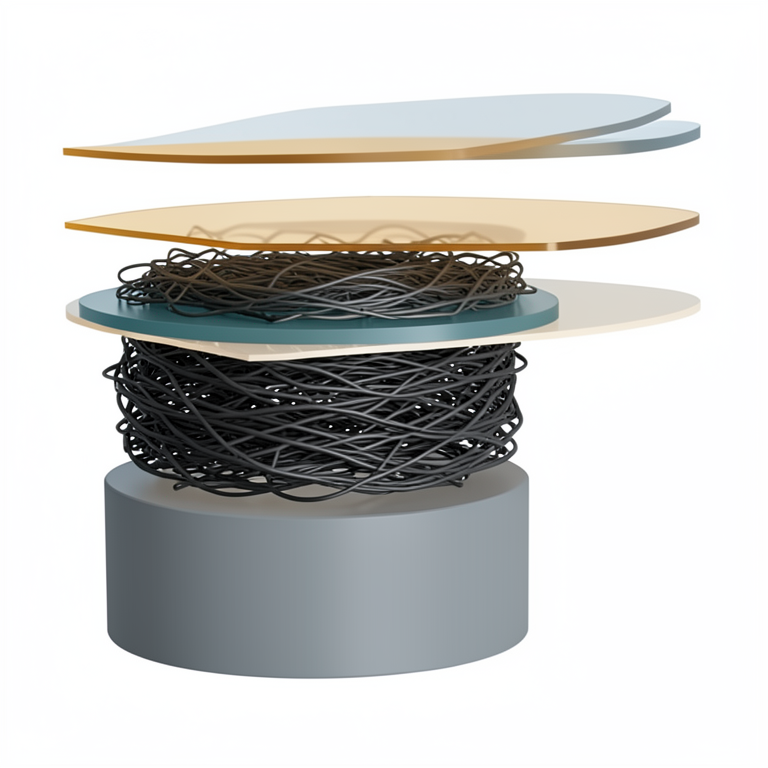
Electrode Layering Concept
AI-generated conceptual illustration (glassy carbon electrode modified with carbon nanotubes and Nafion polymer). It explains the idea and does not show study data.
View source evidence ↗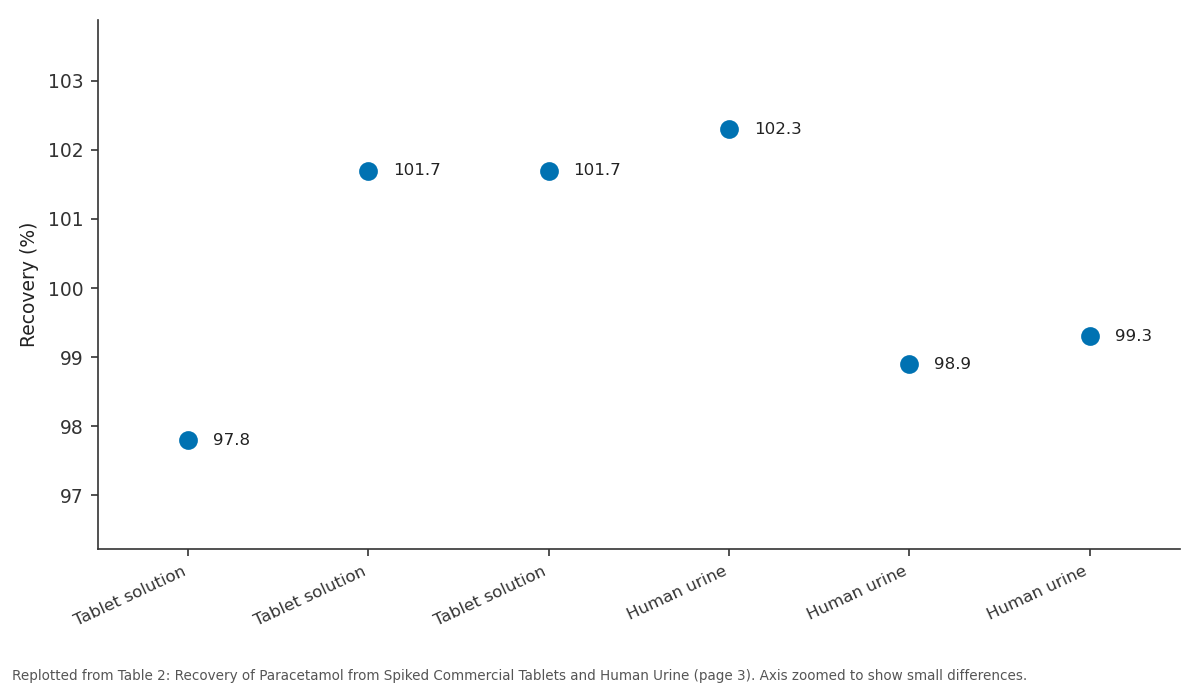
Recovery (%): Tablet solution vs Tablet solution vs Tablet solution vs Human urine vs Human urine
Replotted from Table 2 (page 3) of the original paper. Every bar is the paper's own table value.
View source evidence ↗Figures & tables
From the original paper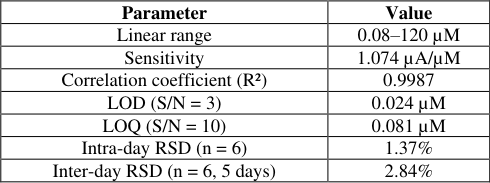 Table 1
 Table 2
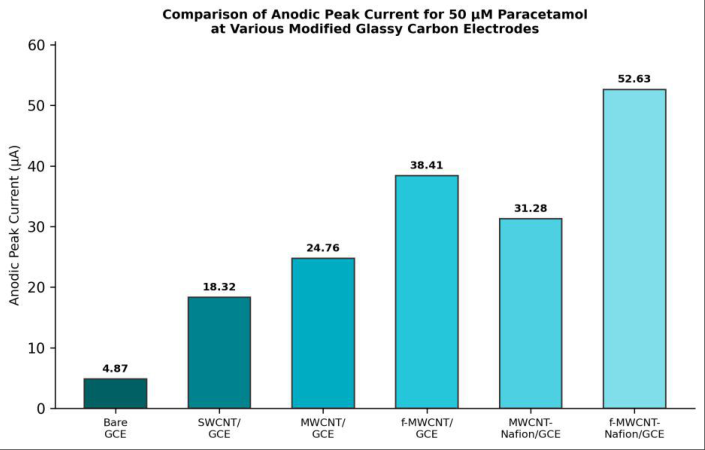 Figure 1
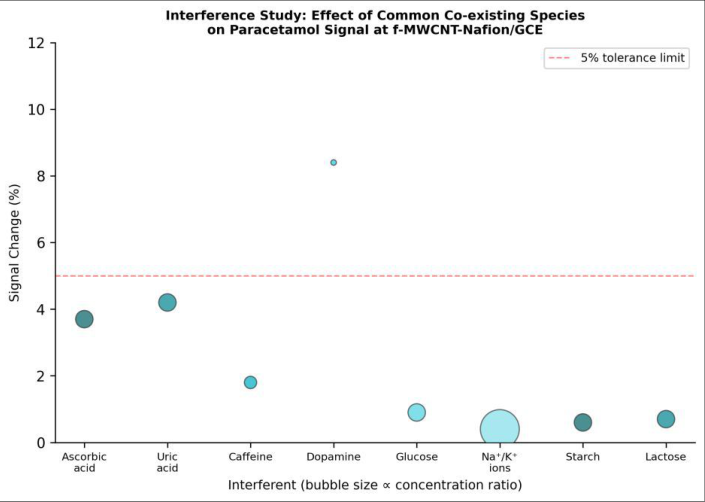 Figure 2
Introduction
Paracetamol (N-acetyl-p-aminophenol, acetaminophen) is the most widely consumed analgesic and antipyretic drug worldwide, available over the counter in virtually every pharmacy and included on the WHO Model List of Essential Medicines [1] . While safe at therapeutic doses (500-1000 mg), accidental or intentional overdose can cause severe hepatotoxicity, making rapid and accurate quantification in pharmaceutical formulations and biological fluids a matter of clinical importance [2] . Standard pharmacopoeial methods UV spectrophotometry and HPLC are reliable but require sample preparation, organic solvents, and expensive instrumentation that aren't always available in resource-limited settings [3] . Electrochemical methods offer speed, portability, low cost, and minimal sample preparation. Paracetamol undergoes a well-characterised two-electron, two-proton oxidation at carbon electrodes, forming N-acetyl-p-benzoquinone imine (NAPQI) [4] . At a bare glassy carbon electrode (GCE), however, the oxidation wave is broad, the peak potential shifts positively with concentration, and fouling by the NAPQI product degrades the signal over repeated scans [5] . These limitations can be overcome by modifying the electrode surface with nanomaterials that increase the electroactive area, speed up electron transfer kinetics, and resist fouling. Carbon nanotubes (CNTs) both single-walled (SWCNT) and multi-walled (MWCNT) have been widely used as electrode modifiers because of their high conductivity, large surface area, and electrocatalytic activity toward many organic molecules [6] . Acid functionalisation introduces carboxyl, hydroxyl, and carbonyl groups onto the CNT sidewalls, improving dispersibility in aqueous solvents and creating additional electrocatalytic sites [7] . Nafion, a perfluorosulfonated polymer, serves as a binder and adds a cation-exchange property that can selectively exclude anionic interferents like ascorbic acid [8] . While several CNT-modified electrodes for paracetamol have been reported, few have systematically compared the While several CNT-modified electrodes for paracetamol have been reported, few have systematically compared the performance of bare, SWCNT, MWCNT, functionalised MWCNT, and Nafion-composite variants under identical conditions to identify the optimal modification strategy. This research aimed to fill that gap and validate the best-performing electrode for real pharmaceutical and biological sample analysis.
Theoretical background
The electrochemical oxidation of paracetamol follows a two-electron, two-proton mechanism: the phenolic hydroxyl group is oxidised to a quinone imine (NAPQI), with the half-reaction written as C₈H₉NO₂ → C₈H₇NO₂ + 2H⁺ + 2e⁻ [4] . At pH 7.0, the formal potential lies near +0.35 V vs Ag/AgCl, and the process is quasi-reversible, with a cathodic-to-anodic peak separation of 40-80 mV depending on the electrode kinetics. The Randles-Ševčik equation for a diffusion-controlled process predicts that the peak current should be proportional to the square root of the scan rate (ν¹/²), to the concentration (C), and to the electrode area (A).
By increasing the effective electroactive area through CNT modification, the sensitivity is amplified without changing the intrinsic electrochemistry. The Nafion film adds a permselective barrier: its fixed sulfonate groups repel anions (like ascorbate, pKa₂ = 11.6, carrying a single negative charge at pH 7) while allowing the neutral paracetamol molecule (pKa = 9.5) to diffuse freely to the electrode surface. This selectivity mechanism is the basis for resolving paracetamol from its common co-interferent ascorbic acid in biological fluids [8] .
Material and Methods
Material and Methods
Material
This research was carried out between November 2023 and October 2024 at the Department of Applied Chemistry, Jawaharlal Darda Institute of Chemical Technology, Wardha, Maharashtra, India, with supporting measurements performed at the Department of Instrumental Analysis, Kalpana Chawla Institute of Biosciences, Hyderabad, Telangana, India. Paracetamol (USP reference standard, 99.8%) was purchased from Sigma-Aldrich (Bangalore, India). MWCNTs (outer diameter 10-20 nm, length 5-15 µm, purity >95%) and SWCNTs (diameter 1-2 nm, length 5-30 µm, purity >90%) were obtained from Nanocyl (Sambreville, Belgium, through a regional distributor). Nafion perfluorinated resin solution (5 wt% in lower aliphatic alcohols and water) was from Sigma-Aldrich. Concentrated HNO₃ (69%) and H₂SO₄ (98%) for CNT functionalisation were AR grade from Merck India. Britton-Robinson (BR) buffer solutions (pH 2.0-10.0) were prepared from a mixture of 0.04 M acetic acid, phosphoric acid, and boric acid, adjusted with 0.2 M NaOH. Commercial paracetamol tablets (500 mg, marketed brand) were purchased from a local pharmacy. Pooled human urine was obtained with informed consent from healthy volunteers. The research was approved by the Jawaharlal Darda Institute Research Ethics Committee (approval JDITC-REC-2023-028, dated 3 November 2023).
Methods
MWCNT functionalisation was performed by refluxing 200 mg of raw MWCNTs in 50 mL of a 3:1 (v/v) mixture of H₂SO₄:HNO₃ at 80°C for 6 h, followed by washing with deionised water until pH 7 and drying at 60°C overnight.
The f-MWCNT-Nafion suspension was prepared by dispersing 2 mg of f-MWCNTs in 1 mL of 0.5% Nafion solution by ultrasonication (30 min). GCE (3 mm diameter, CH Instruments) was polished with 0.05 µm alumina slurry, rinsed, and sonicated in deionised water. Then 5 µL of the f-MWCNT-Nafion suspension was drop-cast onto the clean GCE surface and dried at room temperature for 30 min. Electrochemical measurements were performed on a CH Instruments CHI 760E electrochemical workstation using a three-electrode cell: modified GCE (working), Pt wire (auxiliary), Ag/AgCl (3 M KCl, reference). Cyclic voltammetry (CV) was conducted at scan rates of 10-300 mV/s. Differential pulse voltammetry (DPV) used a pulse amplitude of 50 mV, pulse width 50 ms, and step potential 4 mV. All solutions were deoxygenated with N₂ for 10 min before measurement. Electrochemical impedance spectroscopy (EIS) was performed in 5 mM [Fe(CN)₆]³⁻/⁴⁻ with 0.1 M KCl at open-circuit potential (frequency range 0.1 Hz-100 kHz, amplitude 5 mV). For tablet analysis, ten tablets were weighed and ground; an amount equivalent to one tablet was dissolved in BR buffer (pH 7.0), filtered, and diluted. For urine analysis, samples were diluted 10-fold with BR buffer and spiked with known amounts of paracetamol [9] .
Performance Evaluation
Method validation followed ICH Q2(R1) guidelines. Linearity was assessed over nine concentrations (0.08, 0.5, 1, 5, 10, 25, 50, 80, 120 µM) with three replicate DPV measurements at each level. The LOD and limit of quantification (LOQ) were calculated as 3σ/S and 10σ/S, respectively, where σ is the standard deviation of the blank response (n = 10) and S is the calibration slope. Precision was evaluated as intra-day (n = 6, at 10 µM) and inter-day (n = 6, over 5 days) repeatability, expressed as relative standard deviation (RSD). Accuracy was determined by recovery experiments in spiked tablet solutions and urine samples at three concentration levels (5, 25, 50 µM).
Selectivity was tested by adding potential interferents ascorbic acid, uric acid, caffeine, dopamine, glucose, Na⁺, K⁺, starch, and lactose at specified molar ratios to a 50 µM paracetamol solution and recording DPV. A signal change below 5% was considered acceptable [10] . Recovery values ranged from 97.8 to 102.3% in both tablet and urine matrices (Table 2), indicating that the method is accurate and free from significant matrix effects. The slightly higher variability in urine at the lowest concentration (5 µM) reflects the greater complexity of the biological matrix. Figure 2 reveals that all interferents except dopamine produced signal changes below the 5% tolerance threshold. Dopamine at a 10-fold excess caused an 8.4% change, which is expected given its structural similarity and overlapping oxidation potential. At a 1:1 ratio, however, dopamine interference dropped to 2.1%, which is clinically more realistic since paracetamol concentrations in biological fluids typically exceed dopamine levels by several orders of magnitude.
| Matrix | Spiked (µM) | Found (µM) | Recovery (%) |
|---|---|---|---|
| Tablet solution | 5.00 | 4.89 ± 0.12 | 97.8 |
| Tablet solution | 25.00 | 25.42 ± 0.37 | 101.7 |
| Tablet solution | 50.00 | 50.87 ± 0.64 | 101.7 |
| Human urine | 5.00 | 5.12 ± 0.14 | 102.3 |
| Human urine | 25.00 | 24.73 ± 0.41 | 98.9 |
| Human urine | 50.00 | 49.64 ± 0.58 | 99.3 |
Table text extracted from the original PDF; superscript letters are shown inline. The original table image is below.
View original table image
Results
Results
Comprehensive interpretation
The f-MWCNT-Nafion/GCE combines three synergistic effects: increased electroactive area from the CNT network, electrocatalytic activity from surface oxygen functional groups, and permselective exclusion of anionic interferents by the Nafion film. Together, these give the electrode a wide linear range, low detection limit, and strong resistance to common matrix components found in pharmaceutical and biological samples.
Discussion
The 10.8-fold current enhancement at the f-MWCNT-Nafion/GCE relative to the bare GCE can be attributed to two main factors. First, the CNT network increases the effective electroactive area EIS data showed a chargetransfer resistance (Rct) of 47.3 Ω for the modified electrode compared with 312.8 Ω for the bare GCE, confirming faster electron-transfer kinetics [6] . Second, the carboxyl and hydroxyl groups introduced by acid treatment serve as electrocatalytic mediators that lower the overpotential for paracetamol oxidation, as evidenced by a 60 mV negative shift in the anodic peak potential at the f-MWCNT surface relative to the bare electrode [7] . The LOD of 0.024 µM compares favourably with other CNT-based sensors reported in the literature. For instance, Li and colleagues [11] achieved 0.04 µM with a MWCNT-TiO₂ composite, and Goyal et al. [12] reported 0.05 µM using SWCNT-modified screen-printed electrodes. The additional improvement in our work can be attributed to the combined benefit of acid functionalisation and the Nafion film, which reduces background noise by limiting the diffusion of electroactive impurities to the electrode surface. The selectivity toward ascorbic acid is particularly noteworthy. At a 100-fold excess, ascorbic acid caused only a 3.7% signal change well within acceptable limits. This is a direct consequence of the Nafion barrier, which repels the ascorbate anion (predominant form at pH 7.0) while allowing neutral paracetamol molecules to pass [8] . Without Nafion, the MWCNT electrode showed a 17.4% change under the same conditions, confirming the polymer's contribution.
A practical consideration is electrode longevity. The f-MWCNT-Nafion/GCE retained 94.6% of its initial response after 50 consecutive DPV scans in 50 µM paracetamol, and storage stability testing showed 91.2% retention after four weeks at 4°C. These figures suggest the electrode is suitable for routine laboratory use, though disposable screen-printed versions may be preferable for point-of-care applications where daily re-polishing is impractical [13] .
Conclusion
A functionalised MWCNT-Nafion composite electrode was fabricated and validated for the voltammetric determination of paracetamol in pharmaceutical and biological samples.
The f-MWCNT-Nafion/GCE delivered a 10.8-fold signal enhancement over the bare electrode, a linear range of 0.08-120 µM, and a detection limit of 0.024 µM. Selectivity was excellent against ascorbic acid, uric acid, caffeine, and common tablet excipients, with only dopamine at high excess causing a notable interference. Recovery from spiked tablet solutions and human urine ranged from 97.8 to 102.3%. The electrode showed good operational stability over 50 consecutive scans and four-week storage. These characteristics make the f-MWCNT-Nafion/GCE a practical, low-cost, and sensitive tool for quality control of paracetamol formulations and for clinical monitoring in biological fluids.
References
References
Figures and tables from the paper
| Parameter | Value |
|---|---|
| Linear range | 0.08–120 µM |
| Sensitivity | 1.074 µA/µM |
| Correlation coefficient (R²) | 0.9987 |
| LOD (S/N = 3) | 0.024 µM |
| LOQ (S/N = 10) | 0.081 µM |
| Intra-day RSD (n = 6) | 1.37% |
| Inter-day RSD (n = 6, 5 days) | 2.84% |
Table text extracted from the original PDF; superscript letters are shown inline. The original table image is below.