
Research article · 2026 · Full text
International Journal of Horticulture and Food ScienceDevelopment of a coconut-based circular bioeconomy model for low-emission agriculture in Karnataka
Volume 8(4) · Pages 10–18 · DOI: 10.33545/26631067.2026.v8.i4a.505 ↗
Research areasAgronomic Practices and Intercropping SystemsSustainable Agricultural Systems AnalysisPlant and soil sciences
Abstract
Author-writtenDeveloping agricultural Net Zero models that simultaneously enhance productivity, restore degraded soils, and mitigate greenhouse gas (GHG) emissions is critical for climate-aligned transformation of tropical perennial farming systems. This study develops and field-tests a coconut-based Agricultural Net Zero framework grounded in circular bio-economy principles and implemented through Inhana Rational Farming (IRF) Technology under the IBM-IORF Sustainability Project in Mandya district, Karnataka, India. The model integrates coconut-based intercropping with on-farm valorization of coir pith waste using Novcom Composting Technology. Three intercropping systems—coconut-millet-vegetable, coconut-maize-vegetable, and coconut-ginger—were evaluated against conventional farmer practices on red loamy soils characterized by long-term degradation. System performance was assessed using coconut equivalent yield (CEY), crop productivity, net farm income, soil physicochemical and biological indicators, energy-use efficiency, and carbon footprint. GHG emissions and mitigation potential were quantified using the Agriculture Carbon Footprint Assessor (ACFA v1.0) following IPCC-aligned methodologies. Across all intercropping models, CEY and total system productivity increased substantially relative to conventional practices, with gains typically ranging between ~30-40%, depending on crop configuration. The coconut-ginger system recorded the highest CEY and economic returns, while coconut-maize-vegetable demonstrated superior energy efficiency (138 - 234%) and emission mitigation (553.49 tonCO2e / ha/year) performance. Application of Novcom coir pith compost resulted in marked improvements in soil organic carbon, available macronutrients, microbial biomass carbon, and enzymatic activity, reversing soil productivity losses previously estimated at 50-66% under conventional management. Net farm income increased consistently across systems, supported by reduced synthetic input dependence. Carbon footprint analysis revealed significant GHG mitigation across all models, with mitigation intensity varying by intercropping system and reaching the highest levels in the coconut-maize-vegetable configuration. The results demonstrate that coconut-based circular bioeconomy systems can provide a scalable framework for improving productivity and soil health while supporting measurable GHG mitigation in tropical perennial farming systems.
Summary
Source-checkedPlain-language reading of the full paper, prepared with AI and checked against the text. Each point links to the authors' own words.
Why it matters
- Creating agricultural Net Zero models is essential for transforming tropical perennial farming to align with climate goals by improving productivity, restoring soil, and reducing greenhouse gas emissions. View evidence ↗
- Despite having the second largest coconut cultivation area in India at 0.64 million hectares, Karnataka has the lowest average productivity at 7656 nuts/ha, which is nearly 19% below the national average. View evidence ↗
- Coconut monocultures are inefficient, utilizing only 21% of land area and 45-50% of solar radiation, leaving farmers vulnerable to market fluctuations and pest or disease attacks. View evidence ↗
The question
- The study aims to develop a coconut-based bio-economy agricultural net-zero model that supports farmer livelihoods while mitigating climate change. View evidence ↗
What they did
- The research was conducted during 2022-23 in Kalenahalli village, Mandya District, Karnataka, India, as part of the IBM-IORF Sustainability Project. View evidence ↗
- The study compared three intercropping systems (coconut-millet-vegetable, coconut-maize-vegetable, and coconut-ginger) against conventional farming practices on degraded red loamy soils. View evidence ↗
- The model utilized Novcom Composting Technology to convert waste coir pith into stable compost within a 30-day period. View evidence ↗
- Greenhouse gas emissions and mitigation potential were measured using the Agriculture Carbon Footprint Assessor (ACFA v1.0) based on IPCC methodologies. View evidence ↗
What they found
- All intercropping models showed substantial increases in coconut equivalent yield (CEY) and total system productivity, typically gaining 30-40% over conventional practices. View evidence ↗
- The coconut-ginger intercropping system under the Clean Food Net Zero program achieved the highest increase in coconut equivalent yield at 23.9%. View evidence ↗
- Energy use decreased significantly under the Clean Food Net Zero approach, with the coconut-maize-vegetable system being the most efficient, dropping from 3.09 to 0.93 MJ/kg. View evidence ↗
- The coconut-maize-vegetable intercropping system demonstrated the highest greenhouse gas mitigation potential at 553.49 MT CO2e/ha/year. View evidence ↗
- The application of 40 tons/ha of Novcom coir pith compost led to a 28-30% increase in soil organic carbon. View evidence ↗
- Novcom composting successfully degraded coir pith, reducing the C:N ratio from 100:1 to under 30:1, increasing total nitrogen by 98%, and degrading lignin by 60%. View evidence ↗
What it means
- The authors conclude that the coconut-based circular bioeconomy model using IRF technology increases crop productivity and farm income while improving soil health and reducing greenhouse gases. View evidence ↗
- The authors note that the endeavor was somewhat rushed, which may affect the ability to draw definitive conclusions. View evidence ↗
Visual summary
2 visualsIllustrations explain the paper; charts are replotted from the paper's own table values.
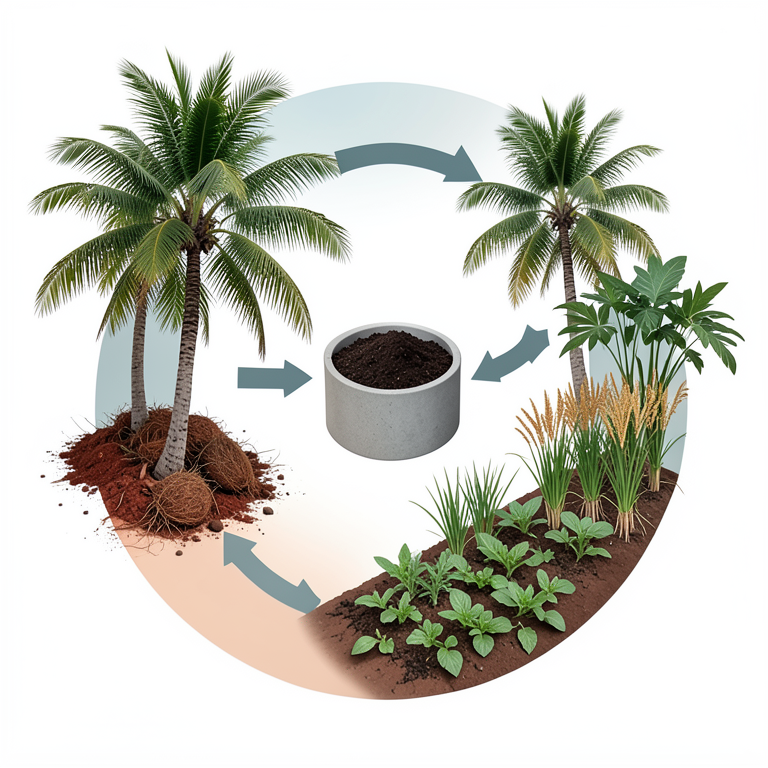
Coconut Circular Bioeconomy Flow
AI-generated conceptual illustration (Coconut palms intercropped with millet and vegetables in red loamy soil). It explains the idea and does not show study data.
View source evidence ↗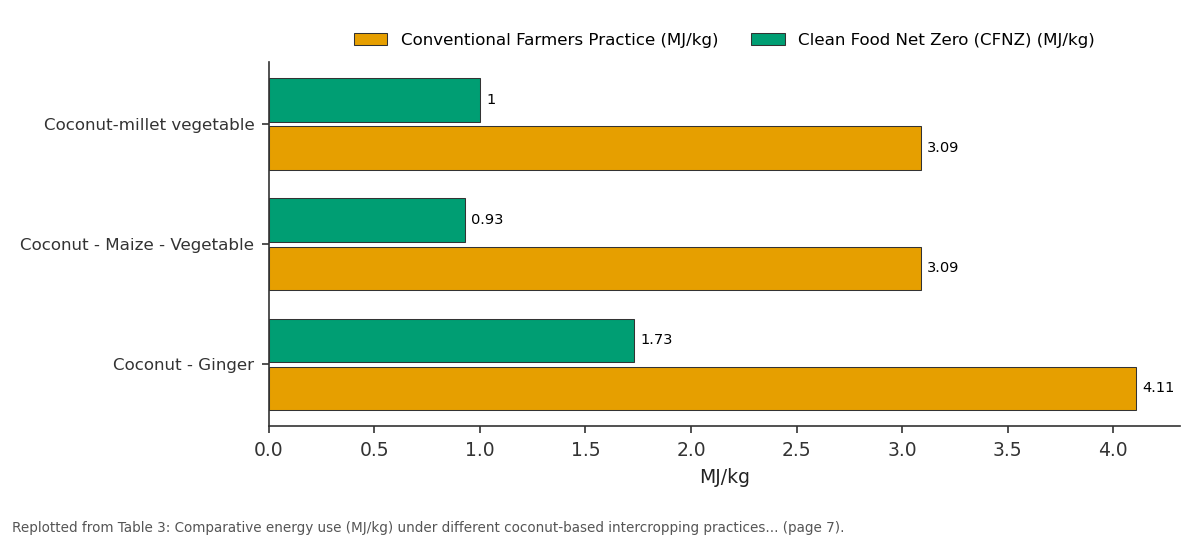
Conventional Farmers Practice (MJ/kg) and Clean Food Net Zero (CFNZ) (MJ/kg): Coconut-millet vegetable vs Coconut - Maize -... vs Coconut - Ginger
Replotted from Table 3 (page 7) of the original paper. Every bar is the paper's own table value.
View source evidence ↗Figures & tables
From the original paper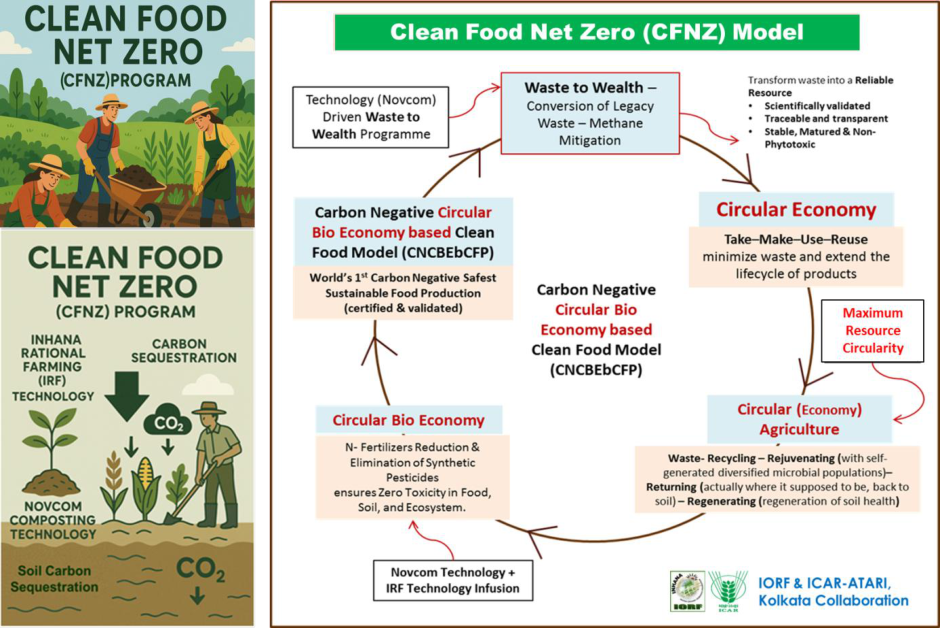 Figure 1
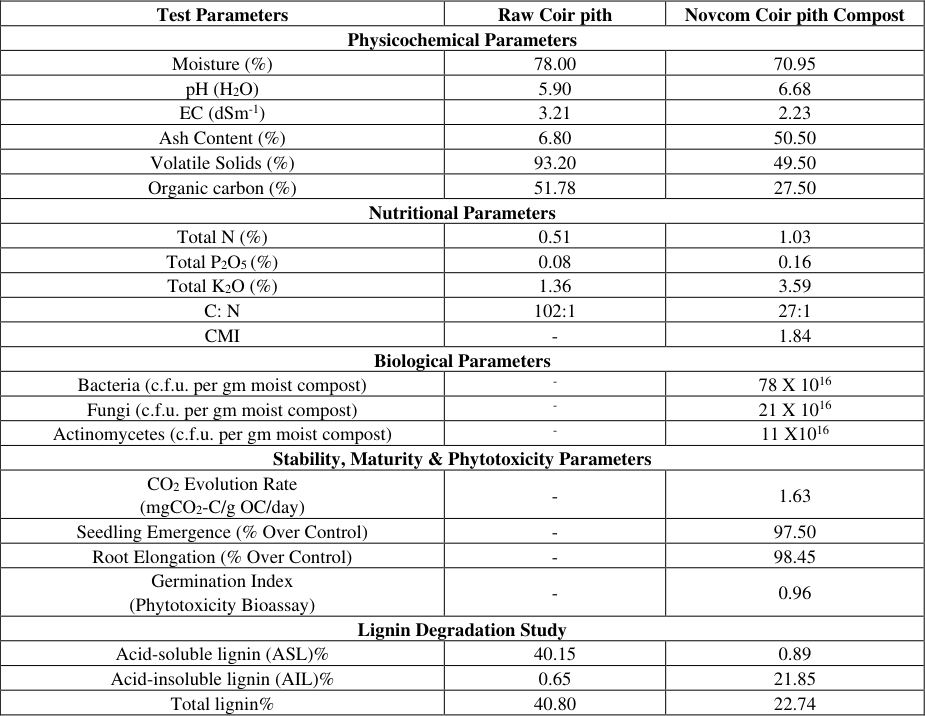 Table 1
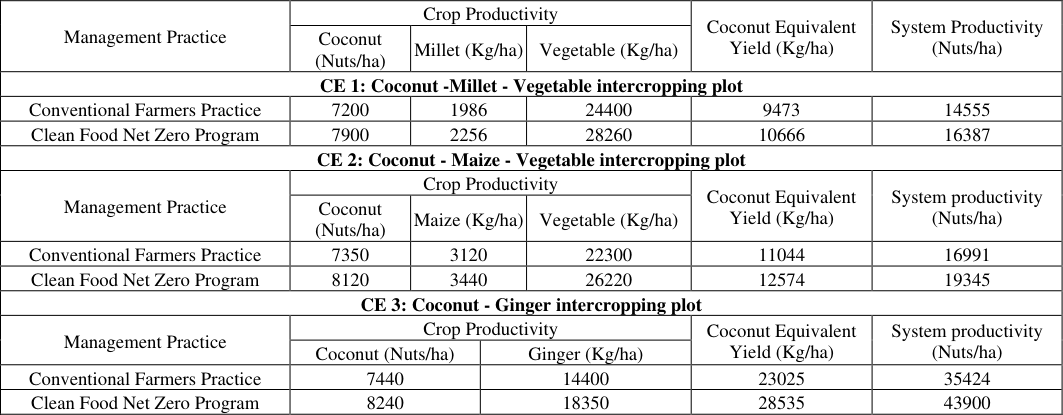 Table 2
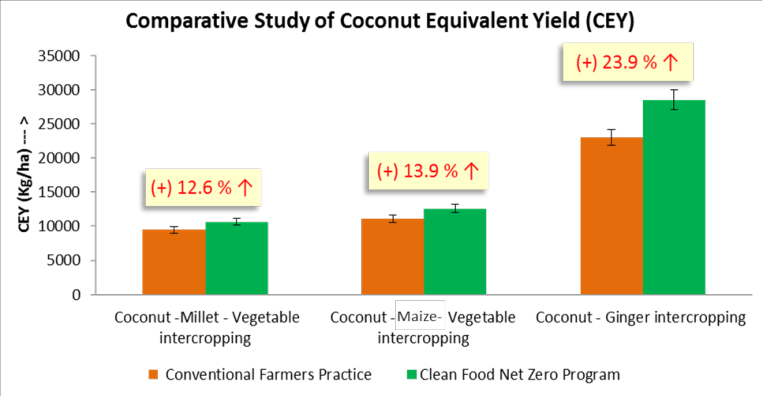 Figure 2
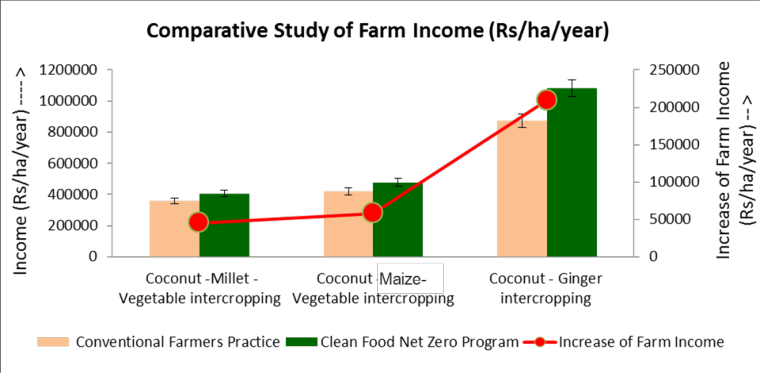 Figure 3
 Table 3
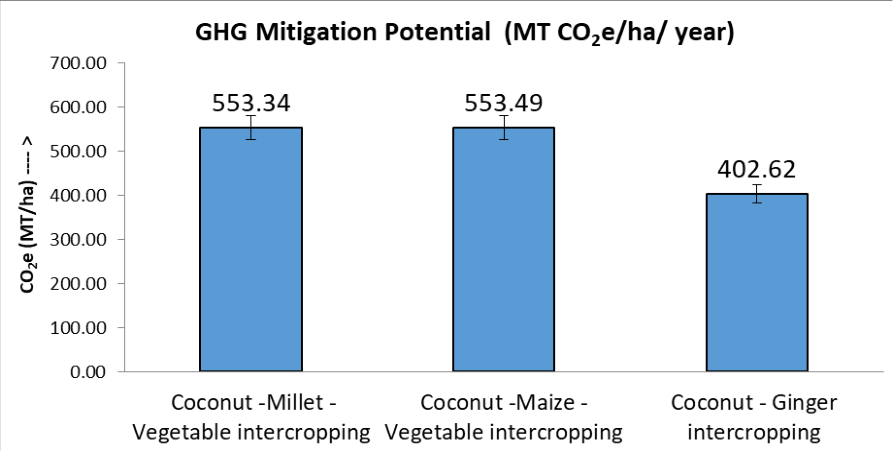 Figure 4
 Table 4
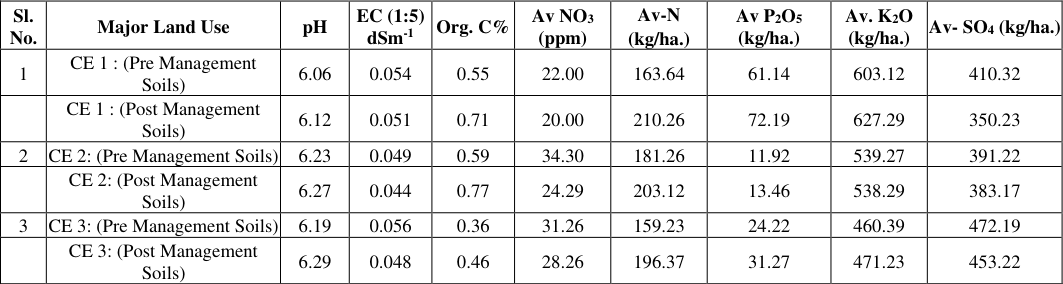 Table 5
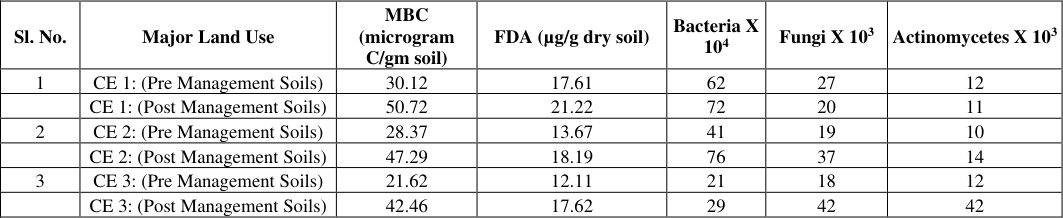 Table 6
Introduction
There is a strong connection between climate change and inequality in the world. With the accumulating effects of climate change, millions of vulnerable individuals' experience disproportional challenges by extreme events, health outcomes, food, water, and livelihood security, migration, and forced displacement, loss of cultural identity, and other associated risks (World Bank, 2022) [25] . One of the priority missions by both the government and corporate sectors around the world is to achieve the net-zero goal to fight against the impacts of climate change. To ensure that global warming is kept at no more than 1.5 C as the Paris Agreement demands, emissions should be cut by half by 2030, and must be eliminated by 2050 (UN, 2023) [23] . As a carbon sink or source, agriculture can now play a determinant role as it can achieve the net-zero goal. Photosynthesis causes the carbon dioxide to be removed from the atmosphere as crops grow and is stored in the crops and the soil. The mechanisms leading to the buildup of carbon are referred to as carbon sinks or carbon sequestration. Conversely, the release of carbon dioxide gets back into the atmosphere through soil and plant respiration, when microbes or plants decompose molecules to generate energy.
However, industrial agriculture increases emissions, the usage of fossil fuels, use of chemical fertilizers (particularly N), synthetic chemicals, and use of machinery (Bera, 2022) [26] . in 2018, global emissions of CO2 due to agriculture (within the farm gate and including land use/land use change) were estimated at 9.3 billion tonnes of CO 2 equivalent (CO2eqv.), which recorded 14 percent growth since 2000, and the total GHG emissions due to all sources (FAO, 2020) [9] . In an estimate, the carbon sink potential of agricultural and degraded soils in the world has been estimated to be 50 to 66 percent of the past capacity. This is that 42 to 78 billion metric tons of carbon can be held in our soil (Lal, 2004) [14] . Hiking the content of carbon in soil also leads to more productive soils for farmers, but this goal can only be achieved through sustainable farming strategies. Alternatively, coconut is among the significant constituents of the the Indian agricultural economy, and now India ranks third in the world in terms of coconut production, having yielded 20736 million nuts out of a coconut planted area of about 2.198 million hectares (CDB, 2023) [7] . It has around 12 million Indians who rely on coconuts to make a living. In Kerala, Karnataka, Tamil Nadu, and Andhra Pradesh, coconut is an important component of the rural economy, and is cultivated on an estimated 1,950 million hectares (other states would only have 160 million hectares). Around 3.16 million families in these four states are into coconut farming (Jacob, 2021) [13] . Karnataka ranks second in the area of coconut cultivation (0.64 million hectares), but with the average productivity of only 7656 nuts/ha (nearly 19% less than the average coconut productivity in India (9430 nuts/ha)), it ranks last. As a monoculture, coconut uses just 45-50% of the solar radiation, 21% of the land area (Maheswarappa et al., 2010) [15] , and tends to make farmers suffer primarily through the loss of crops related to pest and disease attacks and the market price variation (Padma, 2022) [19] . Nevertheless, coconut-based integrated agriculture has the potential to boost the output of the area covered and trigger a significant increase in farm revenues, expand the range of new jobs, and, not to mention, sequester carbon (Padma, 2022) [19] . through the introduction of a naturefriendly, sustainable package of practice. Since coconutbased intercropping resembles a forest system and will have huge storage of carbon and carbon dioxide elimination in the atmosphere, thereby playing a crucial role in maintaining the environment. (Bhagya et al, 2017) [6] Meanwhile, circular bio-economy gives us the chance to revolutionize our land, food, health, and industrial set-ups, and it may provide new sustainable sources of income. This change will also come with the prospect of decarbonization and help to govern and reconstruct ecosystems and landscapes that are in dire need of it. Implementation of this new economic development model, which will seek to decouple environmental development from fossil fuel reliance and supply biomass-based feedstock to be consumed. Therefore, the bioeconomy will value-add to the biomass resources, and the economic gains of a given resource can be assessed through a value web (Nagarajan et al, 2021) [17] . Therefore, the two giant pillars in bioeconomy are the resource efficiency or replacement of fossil fuel-derived feedstock and innovations in the biotechnological perspective that necessitate the introduction of new sustainable technology to propel (Nagarajan et al, 2021) [17] . This is due to the fact that the circular bio-economy needs low-carbon energy sources and the disruptive conversion technologies to ensure the sustainable transformation of renewable bioresources to high-value bio-based products (Tan and Lamers, 2021) [22] . In this way, the bio-based circular carbon economy, specifically, emphasizes capturing carbon in the atmosphere through photosynthesis and it occupies the place in the intersection of the concept of the circular economy and the concept of the bioeconomy, which leads the creation of an opportunity to create a new carbon sink capacity in the technosphere through the use of biogenic carbon to produce products and materials that are reused and recycled in the same or better We attempt to create an agricultural net-zero model that depicts a coconut-based bio-economy that can not only sustain the livelihood of the farmers but also help mitigate climate change in the present research. This project is part of the IBM-IORF Sustainability Project that intends to create a circular bioeconomy model that utilizes coconuts and could help to enhance productivity, regenerate soil, and achieve quantifiable improvement in net GHG emissions.
Materials and methods
Materials and methods
Study area
It was started under the IBM-IORF Sustainability Project in 2022-23 in the Kalenahalli village, Mandya District, Karnataka, India. The region falls under the hot and moist semi-arid agro-ecological sub-region 8.2 that has medium to deep red loamy soils, low Available Water holding Capacity (AWC), and a length of Growing Period 120 -150 days.
Clean food net zero program demonstrating coconutbased circular economy models
Within the context of the IBM-IORF Sustainability Project, there was a push created to implement a coconut-based intercropping model to broaden the parameters of enhancing crop diversity in addition to farm productivity in reference to the marginal soil. This model was created taking into consideration the Inhana Rational Farming Technology, which is an overall organic bundle of practices. In this technology, coir pith, which is waste produced by the coir industry and a source of soil and water pollution and the generation of methane, was used to manage the health of soils; this was done after successful bioconversion using Novcom Composting Technology. Novcom Composting Technology can also be used to bioconvert waste coir pith into a safe, stable, and mature compost in 30 days, and the final product contains self-generated native microflora; this can assist in accelerated regeneration of soil microbial population. The compost that was used was Novcom coir pith compost applied in the soil, which was practically unsuitable for field crops, particularly for vegetables. Then, the second application of Novcom coir pith compost applied was 40 ton/ha used to grow maize.n. The Inhana Plant Health Management solutions (IPHM) were also sprayed after crop transplantation periodically according to the recommended timetable. This management was done in the direction of growth balance and enhancement of the immunity and defense mechanism of plants against pests and diseases that cause the natural elimination of the plants, thereby reducing the need for pesticides. The practice controlled the pest issues, and any other slight issue was managed using on-farm concoctions made out of neem.
Program undertaken at Mandya towards development of coconut-based Circular Economy (CE) models
The plantation had 3 types of cropping models that were planted as an intercrop. The importance behind this was that this intercropping system was mainly exhibited on the marginal soils (red gravelly soils of low soil fertility and microbial activity), which were not fit, especially in the cultivation of the nutrient-sensitive short-period vegetable crops, besides the total absence of N-fertilizers and chemical pesticides. The models of the circle economy were examined in terms of their contribution to yield, nutrient utilization, soil health, energy consumption, Greenhouse Gas (GHG) emissions, and cost-benefit ratio, which are all important parameters of the circle economy that can affect the livelihoods of the resource-poor farmers. These models will ensure that the efficiency of resources is maximized, wastage is reduced, and that there is sustainability in the agricultural value chain. Circular economy approaches aim to maximize productivity and minimize environmental effects through the focus on such practices as recycling, reusing, and regenerating resources. This was to be presented under the the IBM-IORF Sustainability Project, where, it is intended that the scientific technological intervention (IRF Technology) can be used to demonstrate how the principles of the circular economy can be applied to the agricultural systems to enhance the well-being and economic opportunities of the farmers who are limited in their resources. Inhana farming technology rational Dr. P. Das Biswas is connected with the study of organic methods during the past 15 years, and is the inventor of the Inhana Rational Farming (IRF) Technology, which is a complete organic technology to produce organic crops sustainably. The technology offers a receptive nature pathway towards crop production based on the interrelated and integrated relationship of all the components of the ecosystem that eventually results in ecological enhancement, hence economic sustainability. The technology aims at (i) energizing the soil system, i.e., to allow soil to act as an efficient growth medium of plants and (ii) energizing the plant system, i.e., to allow efficient extraction, utilization, and assimilation of nutrients and biochemical and structural defense leading to activation of the host's defense mechanism of plants (Bera et al 2014a) [2] . Inhana Rational Farming (IRF) Technology employs different In-House solutions in energizing the soils and plants. The selection of technology-specific plants, which accumulate the energy of these five basic elements and five basic life forces, is done in accordance with the parameters in relation to sunset, seasons, and other factors. The extracts of such plants are then potentized and energised in accordance with the the Element Energy Activation Principle (E.E.A.). All the solutions are individual in nature, but when they are used as a whole, the solutions will interact in an integrated fashion, providing a total outcome. The situations are, however, different given the species of crops and agro-climatic scenario, thus Inhana Rational Farming Technology also provides need-based solutions to all issues.
Element Energy Activation (E.E.A.) 0 principle -A Brief description
1. Every living body is a machine, and the life-giving power or energy of it is the Chaitanya Shakti or Basic Life Force.
2. The expression of the Chaitanya Shakti is solar energy.
In any living body, two processes occur majorly except at birth and death.
A. Self-Nourishment
The Five basic elements (Panchamahabhutas): Soil, Air, Water, Fire, and Space, take care of nourishment until the the time we Humans do not intervene with these qualities, it works without any difficulty. The role or individual elements that cause or participate in a particular mechanism of nourishment are as follows Earth: Structure and formation of nutrition. Water: Movement of nutrients to be transpired. Fire: Metabolism, fruiting of fruits, Photosynthesis. Air: Respiration. Space: Providing space where any biochemical reaction and growth of plants can occur.
B. Self-Protection
In case there is any imbalance in sub-functions such as Structure Formation, Circulation, Metabolism, Respiration, among other functions, and even nourishment, the entire system attempts to defend itself. This is a self-defense mechanism that is governed by five various Life Forces or Prana Shaktis. These originate from the Basic life-force, i.e., Solar Energy. These fundamental elements are, in fact, transported by the life forces or Prana-Shaktis and the circulation of nutrients cannot take place without these forces.
Their functions in the plant system are the following Apana Prana: Regulates the actions of roots and nutrient removal. Samana Prana: Governs the perspiration. Udana Prana: Governs Photosynthesis and the release of enzymes and hormones. Prana Prana: regulates breathing and facilitates the flow of respiratory products. Vyana Prana: Provide space to all functions. All these processes, functions, and sub-functions are interdependent, and they work in an orchestral-like manner. Any disproportion results in the illness, the infestation by the pests, or the absence of food. According to the Element-Energy-Activation Principle Ⓡ (E.E.A.), to overcome the disease or pest infestation, life-forces are to be stimulated instead of being encountered from outside, leading to unfavourable repercussions. The technology-specific plants, which store the energy of these five basic elements and five life-forces, are chosen according to the parameters of sunrise and sunset, season, and other parameters. They use their extracts through the principle of Energy Management without using external agents to treat the diseased plant. The result would be optimum extraction of nutrients, in a balanced way, both in the sources and their usage at particular locations by the plants.
Novcom composting technology of coir pith composting
Novcom coir pith preparation A 10 ft. x 8ft x 6ft support in the form of bamboo strips and coconut leaves was prepared at one of the upland and flat spots where the coir pith compost pile (about 8-9 tons) was to be erected. The bottom layer was the slurry of cow dung, which was sprayed on the inside walls of the support structure. Coir pith was combined with a slurry of cow dung in the proportion of 80:20 (coir pith and cow dung on a weight basis) and then applied in layers (which measured around 0.5 ft. in depth) till the top of the construction was reached. Approximately 60 ml of Novcom solution (diluted in 5-liter of water 25 ml) was sprayed in each layer. It took 16 layers to attain a height of 6ft, since the height of the heap was slowly decreasing with compression and, therefore, 2000ml of Novcom solution was needed in this heap (Bera et al, 2023) [3] . This pile was bound with coconut leaves and stored in that way for 9 days. On the 10 th day, one side of the stack structure was removed, and the material was changed and blended well with JCB. The content was once again placed to the pile and the cycle was repeated. Again, 2000 ml Novcom solution was taken. This procedure was repeated on the 20th day, and the compost was ready on the 30th day.
Compost quality analysis 25 samples in 25 heaps of the Novcom coir pith compost were taken and examined according to various quality parameters of compost as per the standard procedure mentioned in Seal et al. (2012) [21] . The quality index of compost was determined according to the procedure used by Bera et al. (2013b) [4] .
Soil quality analysis
The samples were taken at 0 to 30 cm deep soil samples of the study area at the time of experiment commencement and 1 year later. The parameters of soil physicochemical and fertility were studied according to the standard methods (Jackson, 1973) [12] . The dichromate oxidation method was used to measure the microbial biomass carbon (Vance et al. 1987) [24] . The chemical titration of trapped CO 2 and Soil FDAH was used to measure soil respiration according to the conventional procedure (Haney et al. 2008) [27] .
Crop productivity and Economics
Crop productivity was calculated according to the standard guideline (Patrick, 1999) [20] and then transformed to yield in terms of coconut equivalent. Lastly, the total system productivity was calculated according to the standard methodology (Ghosh et al, 2021; Naveen Kumar et al, 2017) [10,18] .
Energetics and Carbon footprint analysis
The efficiency of energy use, energy productivity, specific energy, energy intensiveness, and net energy were determined according to the conventional methodology (Banaeian et al, 2011) [1] . The calculation of carbon footprint was done using ACFA (version 1.0) -a carbon computing standard used to evaluate the carbon footprint in the agriculture sector in India, created by Inhana Organization Research Foundation (IORF) and ICAR-ATARI, Kolkata (Zone-V), in collaboration with i-NoCarbon Limited (i-NC), UK (based on the IPCC Guidelines applicable and empirical scientific research works).
Result and Discussion
Result and Discussion
Novcom coir pith compost analysis
The most significant parameter that indicates the maturity and stability of any compost is the variations of organic carbon and the C: N ratio (Bera et al, 2023) [3] . The degradation was proved to be successful by periodic observation of the composites of Novcom coir pith samples on 0, 10, 20, and 30 days, during which the C: N ratio dropped from 100:1 to less than 30:1, total nitrogen gained 98 percent, and lignin degraded 60 percent as per the sample (Table 1). Oxygen and moisture are needed by microorganisms to break down the chemical bonds of organic matter, and the rate at which the carbon content of waste reduces with time is an indicator of how fast biodegradation will occur during composting (Dell'Abate et al, 2000; Mondini et al, 2006) [8,16] . Organic carbon content of Novcom coir pith compost declined in raw material to final compost (i.e., on day 30 of composting) from 51.78 to 27.50, which was indicative of faster biodegradation, and at the same time, compost maturity (organic carbon ranges between 16 and 38) within a short period of time. The actual population of bacteria, fungi, and actinomycetes is very high (in the order of 1016 c.f.u. per gm or one Trillion Billion microflorae per ton of compost), which supports the facts. Phytotoxicity Bioassay test results not only established the non-existence of the phytotoxic elements in the compost, but also proved that this compost may even be used to enhance the speed of the process of seed germination and root development. Potential of mitigation of methane under this technology, as estimated using the carbon assessment tool -Agriculture Carbon Footprint Assessor (ACFA, version: 1.0), showed that under the Novcom Composting Technology, methane mitigation is possible in the range of 6000-ton CO 2 equivalent per 1000-ton waste directly at the source point (Bera et al, 2023) [3] . Comparative study of coconut equivalent yield (CEY) showed that the highest increase (23.9%) of CEY (kg/ha) was in the case of coconut-ginger inter-cropping practice with adoption of Clean Food Net Zero program. However, the other two models also showed a significant increment of CEY under the program, which might be due to the adoption of Inhana Rational Farming (IRF) Technology as experienced under different crops under the IBM-IORF sustainability program, irrespective of the Agro-ecological zone. This is evident in the comparative energy use analysis of coconut-based intercropping systems within the IBMIORF Sustainability Project in Mandaya, Karnataka, where the energy efficiency is clearly and consistently improved under the Clean Food Net Zero (CFNZ) approach as opposed to the conventional practice of farmers. In all of the crop sequences, CFNZ systems consumed much less energy per kilogram of produce, which implies more effective use of resources. The energy use in the coconut-millet-vegetable system decreased significantly compared to the conventional practice of 3.09 MJ kg -1 to 1.00 MJ kg -1, and the same case in the coconut-maize-vegetable system, which showed the highest efficiency of the evaluated systems of 3.09 to 0.93 MJ kg -1. Even though the coconutginger chain was a relatively less efficient process because the input requirements of ginger production were higher, CFNZ management attained a significant energy-saving of 4.11 to 1.73 MJ kg -1, which proves a significant efficiency improvement. In general, the intercropping systems of CFNZ had almost 2.5-3 times the reduced energy usage per unit of output when compared to traditional methods. The fact that this is improved by the use of optimized input, less dependency on external synthetic inputs, enhanced biological functioning of soil, and enhanced internal recycling of resources in the system. Findings highlight the fact that management strategy is a critical factor that can define energy efficiency, and that CFNZ practices have the potential to transform coconut-based intercropping to a lowenergy and climate-focused production regime and retain productive and diversified cropping portfolios. A comparative analysis on the GHG mitigation potential of Clean Food Net Zero program and practice by conventional farmers demonstrated that the GHG mitigation potential was highest in the case of coconut -maize -vegetable intercropping (553.49 MT CO 2 e/ha/year). The research found that the adoption of the Clean Food Net Zero program can make a significant contribution to the reduction of climate change.
| Test Parameters | Raw Coir pith | Novcom Coir pith Compost |
|---|---|---|
| Physicochemical Parameters | ||
| Moisture (%) | 78.00 | 70.95 |
| pH (H2O) | 5.90 | 6.68 |
| EC (dSm-1) | 3.21 | 2.23 |
| Ash Content (%) | 6.80 | 50.50 |
| Volatile Solids (%) | 93.20 | 49.50 |
| Organic carbon (%) | 51.78 | 27.50 |
| Nutritional Parameters | ||
| Total N (%) | 0.51 | 1.03 |
| Total P2O5 (%) | 0.08 | 0.16 |
| Total K2O (%) | 1.36 | 3.59 |
| C: N | 102:1 | 27:1 |
| CMI | - | 1.84 |
| Biological Parameters | ||
| Bacteria (c.f.u. per gm moist compost) | - | 78 X 1016 |
| Fungi (c.f.u. per gm moist compost) | - | 21 X 1016 |
| Actinomycetes (c.f.u. per gm moist compost) | - | 11 X1016 |
| Stability, Maturity & Phytotoxicity Parameters | ||
| CO2 Evolution Rate (mgCO2-C/g OC/day) | - | 1.63 |
| Seedling Emergence (% Over Control) | - | 97.50 |
| Root Elongation (% Over Control) | - | 98.45 |
| Germination Index (Phytotoxicity Bioassay) | - | 0.96 |
| Lignin Degradation Study | ||
| Acid-soluble lignin (ASL)% | 40.15 | 0.89 |
| Acid-insoluble lignin (AIL)% | 0.65 | 21.85 |
| Total lignin% | 40.80 | 22.74 |
Table text extracted from the original PDF; superscript letters are shown inline. The original table image is below.
View original table image
Impact of coconut-based Circular Economy (CE) models on soil quality
In the study focused on soil health management within coconut-based Circular Economy (CE) models, soil samples were collected both at the outset of the research and at the conclusion of the harvesting phase to assess the impact of the initiative. Despite the somewhat rushed nature of the endeavor to draw definitive conclusions, the aim was to glean insights from the program. Initial findings revealed significant deficiencies in soil carbon levels, fertility status, and microbial activity. Moreover, the presence of small to medium-sized gravel particles exceeding 50% of the soil's weight rendered it largely unsuitable for cultivating sensitive crops. These observations underscore the pressing need for interventions to address soil health issues within the context of circular economy models in coconut-based intercropping. Comparison of the pre-and post-experimentation of the soil quality during Coconut-based 'Net Zero' Intercropping showed that there were no significant changes in soil pH and EC. Nonetheless, there was a slight increment (28% -30%) in the organic carbon, but this was primarily as a result of using Novcom coir pith compost of 40 tons/ha. Available N, P, and K showed an increasing trend, though the difference is not significant. The microorganisms in the soil are important in controlling the dynamics of organic matter breakdown and the supply of plant nutrients. The favourable impact of Novcom coir pith compost on the rejuvenation of soil microflora was indicated by the comparatively high value of soil microbial pollution, soil MBC, and its activity (determined by the value of FDAH activity) after soil analysis. This was likely because of the very high (one trillion billion microbes/ton compost) self-generated microbial presence in Novcom coir pith compost, which, after application, assists in regenerating microbes in soil in the quickest way. The synthetic fertilizers and pesticides are also counteracted in totality to provide a favourable environment by making it toxic-free to promote the growth of microbes. Concisely, the experiment also concluded that the adoption of coconut-based intercropping systems in the CFNZ program, in conjunction with the adoption of IRF Technology, could boost soil properties and productivity. This is done through a dynamic balance of biotic and abiotic factors of the soil, a continuation of biochemical processes, and the renewal of microflora in the soil. Various species beneath coconut trees also enhance constant replenishment of nutrients through recycling and add-on, and this results in better crop production than the traditional farming methods.
Conclusion
The most holistic way to a sustainable future is a circular, bio-based economy because it protects and recycles the well-being of our (agro)ecosystems, does not produce nonessential products, and instead uses and recycles the byproducts of (agro)ecosystems, uses renewable energy, and minimizes overall energy consumption. In the project of IBM-IORF Sustainability at Mandya, Karnataka, we have been able to achieve a model of coconut-based circular bio economy with the introduction of IRF technology, which not only contributes to the increase in crop productivity and, accordingly, increases the total farm income but also helps to improve the condition of the soil and reduce greenhouse gases. The formation of the Coconut-based Circular Economy (CE) Model may serve as a model study in the design of any sustainable agricultural program, particularly with reference to climate change mitigation.
Figures and tables from the paper
| Crop sequence | Conventional Farmers Practice (MJ/kg) | Clean Food Net Zero (CFNZ) (MJ/kg) |
|---|---|---|
| Coconut-millet vegetable | 3.09 | 1.00 |
| Coconut - Maize - Vegetable | 3.09 | 0.93 |
| Coconut - Ginger | 4.11 | 1.73 |
Table text extracted from the original PDF; superscript letters are shown inline. The original table image is below.
View original table image
| Sl. No. | Land Use | Soil Gravels% | Sand% | Silt% | Clay% | Texture |
|---|---|---|---|---|---|---|
| 1 | CE 1: Coconut-based Millet - Vegetable intercropping plot | 57.89 | 72.00 | 16.00 | 12.00 | Loamy Sand |
| 2 | CE 2: Coconut-based Maize - Vegetable intercropping plot | 63.29 | 82.00 | 5.00 | 13.00 | Loamy Sand |
| 3 | CE 3: Coconut-based Ginger intercropping plot | 59.55 | 74.00 | 15.00 | 11.00 | Loamy Sand |
Table text extracted from the original PDF; superscript letters are shown inline. The original table image is below.
View original table image
| Sl. No. | Major Land Use | pH | EC (1:5) dSm-1 | Org. C% | Av NO3 (ppm) | Av-N (kg/ha.) | Av P2O5 (kg/ha.) | Av. K2O (kg/ha.) | Av- SO4 (kg/ha.) |
|---|---|---|---|---|---|---|---|---|---|
| 1 | CE 1 : (Pre Management Soils) | 6.06 | 0.054 | 0.55 | 22.00 | 163.64 | 61.14 | 603.12 | 410.32 |
| CE 1 : (Post Management Soils) | 6.12 | 0.051 | 0.71 | 20.00 | 210.26 | 72.19 | 627.29 | 350.23 | |
| 2 | CE 2: (Pre Management Soils) | 6.23 | 0.049 | 0.59 | 34.30 | 181.26 | 11.92 | 539.27 | 391.22 |
| CE 2: (Post Management Soils) | 6.27 | 0.044 | 0.77 | 24.29 | 203.12 | 13.46 | 538.29 | 383.17 | |
| 3 | CE 3: (Pre Management Soils) | 6.19 | 0.056 | 0.36 | 31.26 | 159.23 | 24.22 | 460.39 | 472.19 |
| CE 3: (Post Management Soils) | 6.29 | 0.048 | 0.46 | 28.26 | 196.37 | 31.27 | 471.23 | 453.22 |
Table text extracted from the original PDF; superscript letters are shown inline. The original table image is below.
View original table image
| Sl. No. | Major Land Use | MBC (microgram C/gm soil) | FDA (µg/g dry soil) | Bacteria X 104 | Fungi X 103 | Actinomycetes X 103 |
|---|---|---|---|---|---|---|
| 1 | CE 1: (Pre Management Soils) | 30.12 | 17.61 | 62 | 27 | 12 |
| CE 1: (Post Management Soils) | 50.72 | 21.22 | 72 | 20 | 11 | |
| 2 | CE 2: (Pre Management Soils) | 28.37 | 13.67 | 41 | 19 | 10 |
| CE 2: (Post Management Soils) | 47.29 | 18.19 | 76 | 37 | 14 | |
| 3 | CE 3: (Pre Management Soils) | 21.62 | 12.11 | 21 | 18 | 12 |
| CE 3: (Post Management Soils) | 42.46 | 17.62 | 29 | 42 | 42 |
Table text extracted from the original PDF; superscript letters are shown inline. The original table image is below.
View original table image
References
26 in the original paper- Banaeian N, Omid M, Ahmadi H. Energy and economic analysis of greenhouse strawberry production in Tehran province of Iran. Energy Conversion and Management. 2011;52(2):1020-1025.
- Bera R, Seal A, Datta A, Saha S, Dolui AK, Khan M, Mazumdar D. Formulation of a Soil Development Index (SDI) to evaluate the effectiveness of organic soil management under FAO-CFC-TBI project at Maud Tea Estate, Assam, India. Journal of Recent Advances in Agriculture. 2014;2(12):318-329.
- Bera R, Datta A, Bose S, Barik AK, Mallick R, Ganguli M, Narasimhan VL, Quah E, Mukherjee K, Bhattacharya P, Seal A. Technological breakthrough for large scale bioconversion of coir pith towards sustainable soil health management and development of source point methane abatement model. International Journal of Environment and Climate Change. 2023;13(7):75-102.
- Bera R. Net zero commitment: how technology can help offsetting GHG emission with social and environmental impact -a success story from IBM sustainability project. Available at: http://www.inhana.in/superadmin/inhana/upload/16708 48104_Net_zero.pdf. Accessed 4 June 2023.
- Bera R, Datta A, Bose S, Dolui AK, Chatterjee AK, Dey GC, Barik AK, Sarkar RK, Majumdar D, Seal A. Comparative evaluation of compost quality, process convenience and cost under different composting methods to assess their large scale adoptability potential, as also complemented by compost quality index. International Journal of Scientific and Research Publications. 2013;3(6):1-11.
- Bhagya HP, Maheswarappa HP, Surekha, Bhat R. Carbon sequestration potential in coconut-based cropping systems. Indian Journal of Horticulture. 2017;74:1-10.
- Coconut Development Board (CDB). Coconut statistics 2021-22. Ministry of Agriculture & Farmers Welfare, Government of India. 2023. Available at: https://coconutboard.gov.in/Statistics.aspx. Accessed 4 June 2023.
- Dell'Abate M, Benedetti A, Sequi P. Thermal methods of organic matter maturation monitoring during a composting process. Journal of Thermal Analysis and Calorimetry. 2000;61(2):389-396.
- Food and Agriculture Organization (FAO). Emissions due to agriculture: global, regional and country trends 2000-2018. FAOSTAT Analytical Brief Series No. 18. Rome; 2020.
- Ghosh DK, Chattopadhyay N, Bandyopadhyay A, Bar A, Maheswarappa HP. Coconut-based cropping system model with spices and tuber crops -a novel approach for higher economic return. Journal of Crop and Weed. 2021;17(2):66-71.
- Hanway JJ, Heidal H. Soil analysis methods as used in Iowa State College. Agricultural Bulletin. Iowa State University. 1952;57:1-13.
- Jackson ML. Soil chemical analysis. New Delhi: Prentice Hall of India Pvt Ltd; 1973.
- Jacob J. Why Kerala has a coconut problem. India Today. 2021. Available at: https://www.indiatoday.in/india-todayinsight/story/why-kerala-has-a-coconut-problem1838024-2021-08-10. Accessed 4 June 2023.
- Lal R. Soil carbon sequestration impacts on global climate change and food security. Science. 2004;304(5677):1623-1627.
- Maheswarappa HP, Palaniswami C, Dhanapal R, Subramanian P. Coconut-based intercropping and mixed cropping systems. In: Coconut Based Cropping/Farming Systems. CPCRI, Kasaragod; 2010. p. 9-31.
- Mondini C, Sánchez-Monedero MA, Sinicco T, Leita L. Evaluation of extracted organic carbon and microbial biomass as stability parameters in ligno-cellulosic waste composts. Journal of Environmental Quality. 2006;35:2313-2320.
- Nagarajan D, Lee DJ, Chang JS. Circular bioeconomy: an introduction. In: Circular Bioeconomy. 2021. doi:10.1016/B978-0-12-821878-5.00006-4.
- Naveen Kumar KS, Maheswarappa HP, Basavaraju TB. Productivity and economic benefits of coconut-based vegetable cropping systems under central dry zone of Karnataka. Journal of Plantation Crops. 2017;45:49-56.
- Padma TV. Coconut-based integrated farming could help sequester carbon, improve farm productivity: study. Mongabay. 2022. Available at: https://india.mongabay.com/2022/11/coconut-basedintegrated-farming-could-help-sequester-carbonimprove-farm-productivity-study/. Accessed 4 June 2023.
- Patrick D. Agricultural productivity indicators measurement guide. Arlington, VA: Food Security and Nutrition Monitoring Project; 1999.
- Seal A, Bera R, Chatterjee AK, Dolui AK. Evaluation of a new composting method in terms of its biodegradation pathway and assessment of compost quality, maturity and stability. Archives of Agronomy and Soil Science. 2012;58(9):995-1012.
- Tan ECD, Lamers P. Circular bioeconomy concepts -a perspective. Frontiers in Sustainability. 2021;2. Available at: https://www.frontiersin.org/articles/10.3389/frsus.2021. 701509.
- United Nations (UN). For a livable climate: net-zero commitments must be backed by credible action. 2023. Available at: https://www.un.org/en/climatechange/netzero-coalition. Accessed 4 June 2023.
- Vance ED, Brookes PC, Jenkinson DS. An extraction method for measuring soil microbial biomass. Soil Biology and Biochemistry. 1987;19:703-707.
- World Bank. Social dimensions of climate change. 2022. Available at: https://www.worldbank.org/en/topic/social-dimensionsof-climate-change. Accessed 4 June 2023.
- Bera K, Braman N, Gupta A, Velcheti V, Madabhushi A. Predicting cancer outcomes with radiomics and artificial intelligence in radiology. Nature reviews Clinical oncology. 2022