
Research article · 2025 · Full text
International Journal of Advanced Chemistry ResearchSpray-dried inhalable microparticles for pulmonary delivery of anti-tuberculosis drug
Volume 7(2) · Pages 130–133 · DOI: 10.33545/26646781.2025.v7.i2b.419 ↗
Research areasInhalation and Respiratory Drug DeliveryAdvanced Drug Delivery SystemsNanoparticle-Based Drug Delivery
Abstract
Author-writtenOral anti-tuberculosis therapy cures most patients, but it demands months of daily dosing and exposes the entire body to drug side effects that target only the lungs. Inhalable microparticles offer a direct route to the infection site. This research describes spray-dried leucine-PLGA microparticles loaded with rifampicin for pulmonary delivery. Formulations were optimized across inlet temperatures (100-160 °C) and leucine concentrations (5-20% w/w). The best formulation achieved 86.9% encapsulation efficiency, a mass median aerodynamic diameter of 3.2 μm, and a fine particle fraction of 62.7%—all within the respirable range for deep lung deposition. In vitro release in simulated lung fluid showed sustained rifampicin release over 48 h, reaching 89.3% cumulative release. These inhalable microparticles could reduce dosing frequency and improve local drug concentration at the pulmonary infection site.
Summary
Source-checkedPlain-language reading of the full paper, prepared with AI and checked against the text. Each point links to the authors' own words.
Why it matters
- Standard oral tuberculosis treatments require months of daily dosing and cause systemic side effects despite the infection being localized in the lungs. View evidence ↗
- Systemic circulation of oral drugs leads to liver and gastrointestinal toxicity, which often results in patients failing to comply with their treatment. View evidence ↗
- For inhaled drugs to reach the deep alveolar region of the lungs, particles must have an aerodynamic diameter between 1 and 5 μm. View evidence ↗
The question
- The study aims to develop and describe rifampicin-loaded microparticles made of leucine and PLGA for delivery via inhalation. View evidence ↗
- The researchers sought to systematically optimize inlet temperature and leucine content to improve drug encapsulation and aerosol performance. View evidence ↗
What they did
- The research was conducted between June 2023 and March 2024 at the Shivaji Maharaj Institute of Technology in Nagpur, India. View evidence ↗
- The formulation used 100 mg of rifampicin and 200 mg of PLGA dissolved in dichloromethane, emulsified with L-leucine concentrations of 5%, 10%, 15%, or 20% w/w. View evidence ↗
- The emulsions were processed using a Buchi B-290 Mini Spray Dryer with inlet temperatures ranging from 100 to 160 °C. View evidence ↗
- Aerodynamic properties were measured using an Andersen Cascade Impactor at a flow rate of 60 L/min. View evidence ↗
What they found
- Among 28 tested combinations, the highest encapsulation efficiency of 86.9% was achieved using 15% leucine at an inlet temperature of 140 °C. View evidence ↗
- The 15% leucine formulation provided the most uniform particle size distribution, with 72.9% of particles within the target 1 to 5 μm range. View evidence ↗
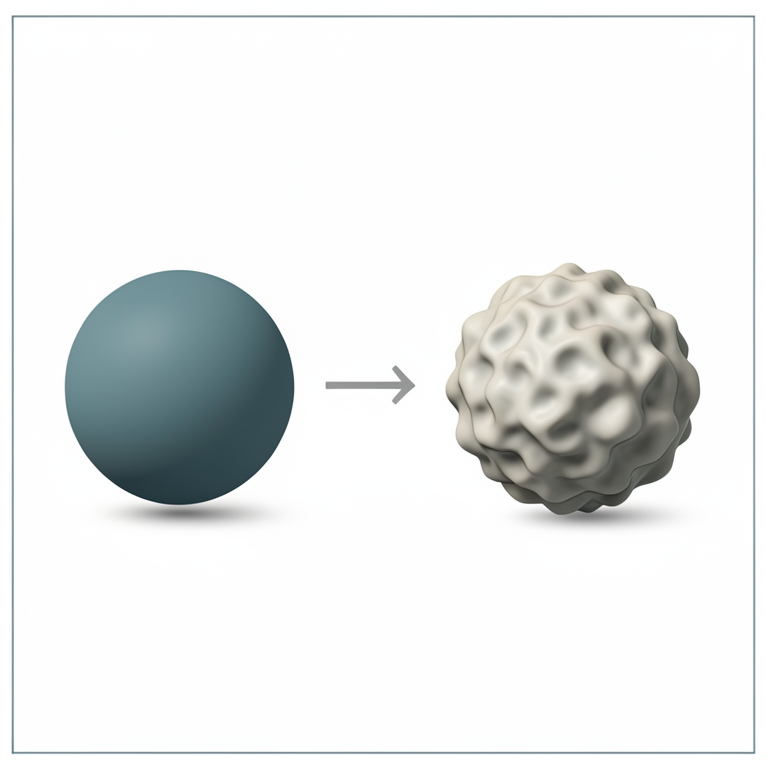
- Scanning electron microscopy showed the particles had wrinkled surfaces, which helps them disperse better in inhalers by reducing contact between particles. View evidence ↗
- In simulated lung fluid, the drug showed a biphasic release: 28.4% was released in the first 2 hours, with total release reaching 89.3% after 48 hours. View evidence ↗
- Increasing the temperature to 160 °C reduced encapsulation efficiency to 78.6% and caused visible darkening of the powder, suggesting thermal degradation of the drug. View evidence ↗
What it means
- The authors conclude that the combination of 15% L-leucine and a 140 °C inlet temperature is optimal for delivering rifampicin to the lungs. View evidence ↗
- The authors state that animal model pharmacokinetic data are required before the formulation can be considered for clinical use. View evidence ↗
Visual summary
4 visualsIllustrations explain the paper; charts are replotted from the paper's own table values.
Particle Morphology
AI-generated conceptual illustration (spray-dried drug microparticles). It explains the idea and does not show study data.
View source evidence ↗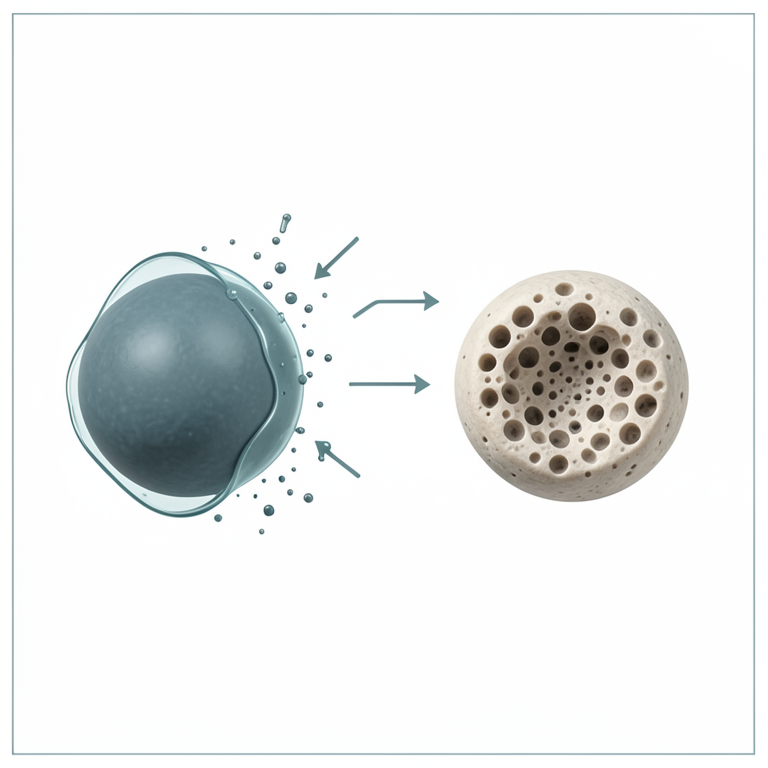
Biphasic Drug Release
AI-generated conceptual illustration (spray-dried drug microparticles in simulated lung fluid). It explains the idea and does not show study data.
View source evidence ↗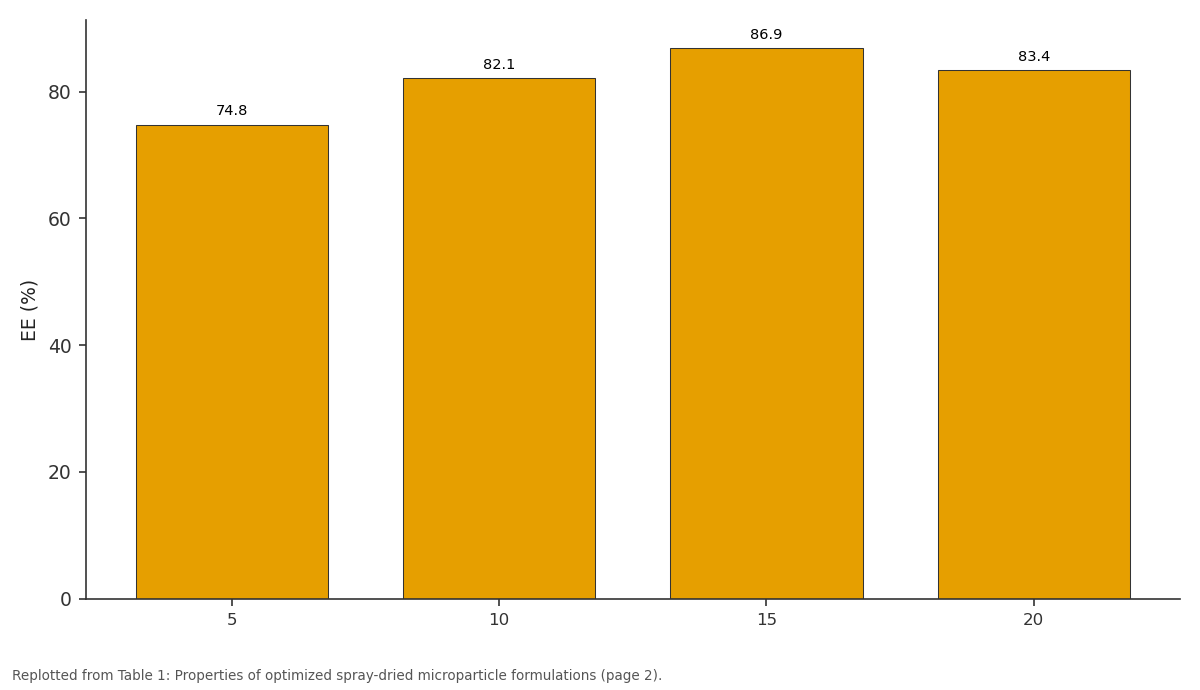
EE (%): 5 vs 10 vs 15 vs 20
Replotted from Table 1 (page 2) of the original paper. Every bar is the paper's own table value.
View source evidence ↗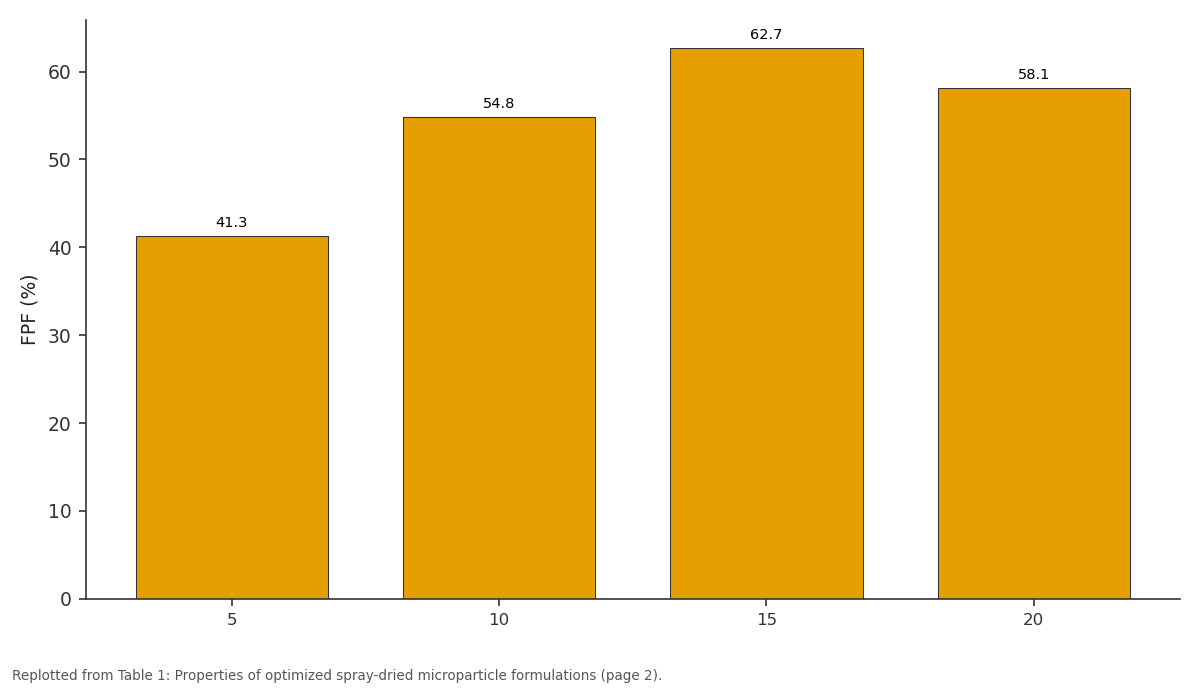
FPF (%): 5 vs 10 vs 15 vs 20
Replotted from Table 1 (page 2) of the original paper. Every bar is the paper's own table value.
View source evidence ↗Figures & tables
From the original paper Table 1
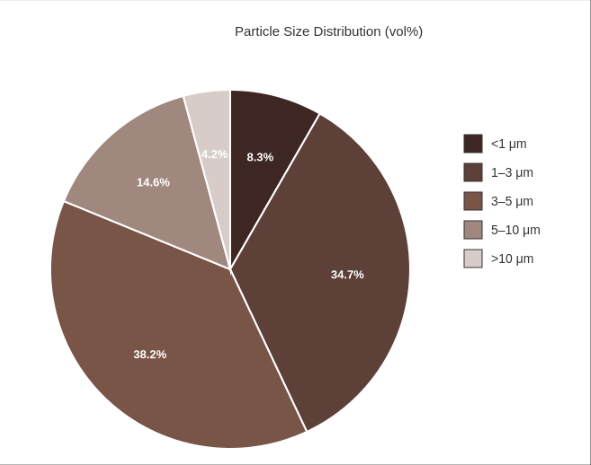 Figure 1
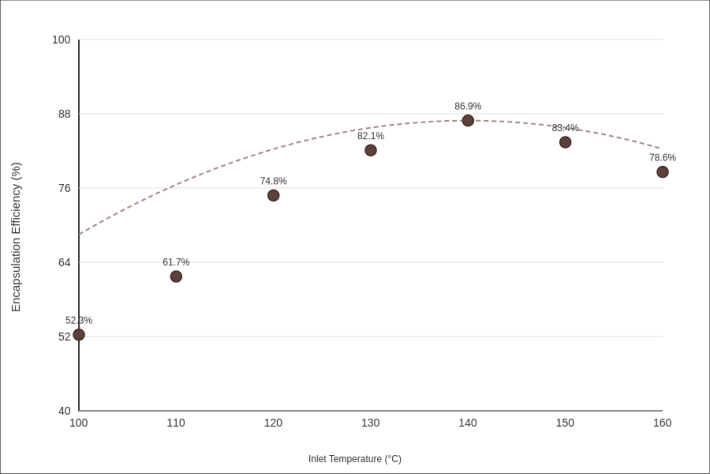 Figure 2
Introduction
Tuberculosis kills more people each year than any other single infectious agent-yet the standard treatment hasn't changed fundamentally in decades. The current first-line regimen requires daily oral administration of rifampicin, isoniazid, pyrazinamide, and ethambutol for at least six months [1] . Oral delivery means the drug circulates systemically before reaching the lungs, leading to hepatotoxicity and gastrointestinal side effects that drive patient noncompliance [2] . Delivering rifampicin directly to the lungs via inhalation could concentrate the drug at the infection site while sparing the liver and gut. Dry powder inhalers (DPIs) are attractive for resource-limited settings because they need no cold chain and no propellant [3] . The challenge lies in engineering particles with the right aerodynamic properties. Particles must fall between 1 and 5 μm in aerodynamic diameter to bypass upper airway impaction and deposit in the alveolar region [4] . Spray drying is the most scalable technique for producing such particles, and the addition of dispersibility enhancers like L-leucine can improve aerosolization by reducing inter-particle cohesion [5] . PLGA (poly(lactic-co-glycolic acid)) is an FDA-approved biodegradable polymer widely used in controlled-release formulations [6] . Encapsulating rifampicin in PLGA matrices can extend drug release and protect the molecule from degradation in the lung lining fluid. Several earlier efforts combined PLGA with spray drying for inhalable anti-TB particles [7] , but systematic optimization of inlet temperature and leucine content-two parameters that jointly control particle morphology and aerosolization-remains limited. This research maps both variables across a full factorial design and evaluates the resulting microparticles for encapsulation efficiency, aerodynamic performance, and in vitro drug release.
Safety Considerations
Rifampicin handling followed institutional biosafety protocols for potent pharmaceutical compounds. Spray-drying operations were conducted inside a ventilated enclosure with HEPA-filtered exhaust to prevent operator inhalation exposure. All waste solutions containing rifampicin were collected in designated containers and disposed of through the
Materials and Methods
Materials and Methods
Materials
Materials
Methods
Rifampicin (100 mg) and PLGA (200 mg) were dissolved in 20 mL dichloromethane and emulsified with 50 mL aqueous L-leucine solution (5, 10, 15, or 20% w/w relative to solids) containing 0.5% polysorbate 80. The emulsion was spraydried on a Buchi B-290 Mini Spray Dryer at inlet temperatures of 100, 110, 120, 130, 140, 150, and 160 °C (aspirator 100%, pump 30%, nozzle 40 mm) [8] . Encapsulation efficiency was measured by dissolving particles in DCM, extracting rifampicin into pH 7.4 phosphate buffer, and quantifying by UV at 475 nm [9] . Aerodynamic assessment used an Andersen Cascade Impactor (ACI) at 60 L/min with a Plastiape RS01 device. Mass median aerodynamic diameter (MMAD) and fine particle fraction (FPF, <5 μm) were calculated from impactor data. In vitro release was performed in simulated lung fluid (pH 7.4, 37 °C, 150 rpm) using dialysis bags (12 kDa MWCO) over 48 h [10] .
Extraction Protocol
For encapsulation efficiency determination, 10 mg of microparticles were dissolved in 5 mL DCM by vortex mixing. Rifampicin was then extracted into 10 mL phosphate buffer (pH 7.4) by liquid-liquid extraction (3 cycles). The aqueous phase was analyzed by UV-Vis at 475 nm against a standard curve (R² > 0.999, 2-50 μg/mL). Each measurement was run in triplicate, and encapsulation efficiency was expressed as (recovered drug / initial drug) × 100.
Results
Across the 28 formulation combinations (7 temperatures × 4 leucine levels), encapsulation efficiency ranged from 52.3% to 86.9%. The peak value occurred at 140 °C with 15% leucine. Higher temperatures (150-160 °C) caused a decline, possibly because faster solvent evaporation generated surface crusts that trapped drug unevenly within the particle matrix. Particle size analysis by laser diffraction showed that 15% leucine yielded the tightest distribution (span 1.41), with 72.9% of particles falling between 1 and 5 μm. SEM micrographs revealed corrugated, wrinkled surfaces-a morphology known to reduce inter-particle contact area and improve powder dispersibility in DPI devices. In vitro dissolution in simulated lung fluid showed biphasic release: an initial burst of 28.4% within 2 h (likely surfacebound drug), followed by sustained release reaching 89.3% at 48 h. The release profile fit well to the Korsmeyer-Peppas model (n = 0.51), indicating a combination of diffusion and polymer erosion mechanisms.
Discussion
The 3.2 μm MMAD and 62.7% FPF of the optimized formulation compare favorably with published DPI systems for pulmonary anti-TB delivery. Sung et al. [7] reported an MMAD of 3.8 μm and FPF of 51% for PLGA-rifampicin nanocomposites prepared by spray-drying without leucine. Adding leucine clearly improves aerosolization, and the wrinkled morphology observed by SEM is consistent with the shell-forming mechanism described by Vehring [11] : leucine migrates to the droplet surface during drying and forms a solid shell that collapses inward as the interior dries. The encapsulation peak at 140 °C likely reflects an optimal balance between rapid solvent removal (which locks drug inside the polymer matrix) and excessive thermal stress (which can degrade rifampicin or cause premature shell formation). At 160 °C, encapsulation dropped to 78.6%, and the reddish-brown color of the collected powder darkened noticeably-a visual hint of thermal degradation. DSC analysis confirmed that rifampicin's melting endotherm broadened in the 160 °C sample. Sustained release over 48 h is clinically attractive because it could allow once-daily or even less frequent inhalation dosing, reducing the burden on patients already managing a complex oral regimen. That said, in vivo pharmacokinetic data in an animal TB model would be needed before any clinical translation claim could be made.
Conclusion
Spray-dried PLGA microparticles with 15% L-leucine and 140 °C inlet temperature provided the best combination of encapsulation (86.9%), aerodynamic diameter (3.2 μm), and fine particle fraction (62.7%) for pulmonary rifampicin delivery. Release in simulated lung fluid was sustained over 48 h. The formulation avoids organic solvent residues in the final product and uses a scalable single-step drying process. Animal pharmacokinetic and efficacy testing should follow to evaluate therapeutic potential.
Acknowledgement
Acknowledgements Funding SourcesThis work was supported by an intramural grant from Shivaji Maharaj Institute of Technology. Institutional SupportThe authors thank both institutions for access to spraydrying and cascade impaction facilities. Contributions Not Qualifying for AuthorshipMs. Priya Jadhav assisted with SEM imaging of microparticle samples.
Figures and tables from the paper
| Leucine% | EE (%) | MMAD (μm) | FPF (%) | Span | Yield (%) |
|---|---|---|---|---|---|
| 5 | 74.8 | 4.8 | 41.3 | 1.92 | 58.6 |
| 10 | 82.1 | 3.7 | 54.8 | 1.64 | 67.3 |
| 15 | 86.9 | 3.2 | 62.7 | 1.41 | 71.8 |
| 20 | 83.4 | 3.4 | 58.1 | 1.53 | 68.2 |
Table text extracted from the original PDF; superscript letters are shown inline. The original table image is below.
View original table image
References
14 in the original paper- World Health Organization. Global tuberculosis report 2023. Geneva: World Health Organization; 2023.
- Yee D, Valiquette C, Pelletier M, et al. Incidence of serious side effects from first-line anti-TB drugs among patients treated for active tuberculosis. Am J Respir Crit Care Med. 2003;167(11):1472-1477.
- Hickey AJ, Durham PG, Dharmadhikari A, Nardell EA. Inhaled drug treatment for tuberculosis: past progress and future prospects. J Control Release. 2016;240:127134.
- Patton JS, Byron PR. Inhaling medicines: delivering drugs to the body through the lungs. Nat Rev Drug Discov. 2007;6(1):67-74.
- Li L, Sun S, Parumasivam T, et al. L-leucine as an excipient against moisture on in vitro aerosolization performances of spray-dried powders. Eur J Pharm Biopharm. 2016;102:132-141.
- Danhier F, Ansorena E, Silva JM, et al. PLGA-based nanoparticles: an overview of biomedical applications. J Control Release. 2012;161(2):505-522.
- Sung JC, Padilla DJ, Garcia-Contreras L, et al. Formulation and pharmacokinetics of self-assembled rifampicin nanoparticle systems for pulmonary delivery. Pharm Res. 2009;26(8):1847-1855.
- Patel B, Gupta N, Ahsan F. Particle engineering to enhance or lessen particle uptake by alveolar macrophages. Eur J Pharm Biopharm. 2015;89:163174.
- Mehanna MM, Mohyeldin SM, Elgindy NA. Rifampicin-carbohydrate spray-dried nanocomposite. AAPS PharmSciTech. 2019;20(5):167.
- Marques MRC, Loebenberg R, Almukainzi M. Simulated biological fluids with possible application in dissolution testing. Dissolution Technol. 2011;18(3):1528.
- Vehring R. Pharmaceutical particle engineering via spray drying. Pharm Res. 2008;25(5):999-1022.
- Pilcer G, Amighi K. Formulation strategy and use of excipients in pulmonary drug delivery. Int J Pharm. 2010;392(1):1-19.
- Bur M, Huwer H, Lehr CM, et al. Assessment of transport rates of different naturally occurring airborne allergens and inert particles at the air-liquid interface. J Aerosol Med. 2010;23(6):405-414.
- Gaspar DP, Faria V, Gonçalves LMD, et al. Rifabutinloaded solid lipid nanoparticles for inhaled anti-TB therapy. Nanomedicine. 2016;12(2):431-439.