
Research article · 2025 · Full text
International Journal of Advanced Chemistry ResearchValorization of rice husk ash as silica source for synthesis of zeolite catalysts
Volume 7(2) · Pages 121–123 · DOI: 10.33545/26646781.2025.v7.i2b.415 ↗
Research areasZeolite Catalysis and SynthesisThermochemical Biomass Conversion ProcessesMesoporous Materials and Catalysis
Abstract
Author-writtenAgricultural waste holds untapped chemical value that most supply chains ignore entirely. Rice husk ash (RHA), a byproduct generated in vast quantities across tropical regions, contains 85-95% amorphous silica when properly calcined—making it a viable precursor for zeolite synthesis. In this research, RHA collected from a rice mill in Antioquia, Colombia was calcined at 500-850 °C, acid- leached, and used as the sole silica source for hydrothermal preparation of ZSM-5 and NaY zeolites. Products were characterized by XRD, BET surface area, SEM, and FT-IR. The RHA-derived ZSM-5 reached a BET area of 338 m²/g, roughly 91% of a commercial reference. Catalytic testing in cumene cracking showed conversion within 8% of the benchmark, confirming RHA-based zeolites perform comparably in acid-catalyzed reactions.
Summary
Source-checkedPlain-language reading of the full paper, prepared with AI and checked against the text. Each point links to the authors' own words.
Why it matters
- Rice husk ash (RHA) is an abundant agricultural byproduct in tropical regions that can contain 85-95% amorphous silica, making it a potential raw material for creating zeolites. View evidence ↗
- Utilizing rice husk for chemical synthesis helps reduce the environmental damage caused by open-field burning, which releases harmful pollutants like carbon monoxide and particulate matter. View evidence ↗
- The standard production of zeolites is expensive because it depends on high-cost, reagent-grade silica. View evidence ↗
The question
- The study aims to find the best calcination temperature to maximize silica purity from Colombian rice husk ash and compare the resulting ZSM-5 and NaY zeolites to commercial versions. View evidence ↗
What they did
- The research was conducted between May 2023 and February 2024 at the Universidad del Caribe Colombiano in Medellín. View evidence ↗
- Rice husk was dried, calcined at eight different temperatures between 500 and 850 °C, and then treated with 1 M HCl at 80 °C to remove impurities. View evidence ↗
- The catalytic performance of the synthesized zeolites was evaluated by testing cumene cracking at 400 °C. View evidence ↗
What they found
- The highest silica purity (94.7%) was achieved at a calcination temperature of 700 °C; purity was lower at 500 °C (62.4%) and 850 °C (84.2%). View evidence ↗
- The RHA-derived ZSM-5 zeolite had a BET surface area of 338 m²/g, which is approximately 91% of the commercial reference. View evidence ↗
- In cumene cracking tests, the RHA-derived ZSM-5 showed a conversion rate of 68.3%, which is only 5.8 percentage points lower than the commercial catalyst. View evidence ↗
- Using RHA instead of commercial sodium silicate (which costs 0.8-1.2 USD/kg) could reduce raw material costs by 60-70% per batch. View evidence ↗
What it means
- The authors conclude that this method successfully turns agricultural waste into a low-cost silica source for zeolite production in tropical regions. View evidence ↗
- The authors state that future work should include scaling trials and tests for long-term catalyst stability. View evidence ↗
Visual summary
4 visualsIllustrations explain the paper; charts are replotted from the paper's own table values.
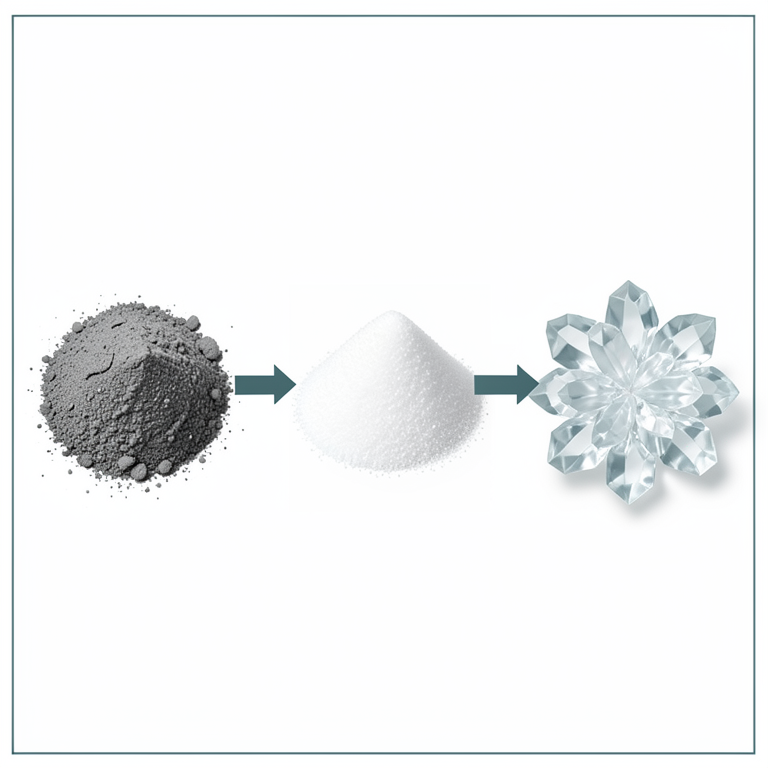
Silica Purity vs. Temperature
AI-generated conceptual illustration (rice husk ash and zeolite crystals). It explains the idea and does not show study data.
View source evidence ↗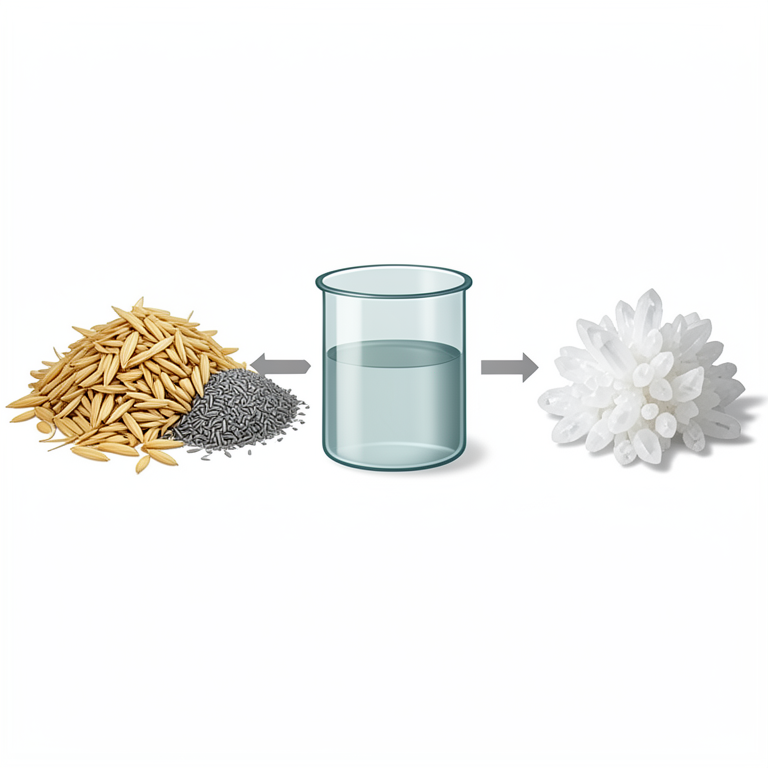
Circular Economy Loop
AI-generated conceptual illustration (Rice husks, rice husk ash, and zeolite crystals). It explains the idea and does not show study data.
View source evidence ↗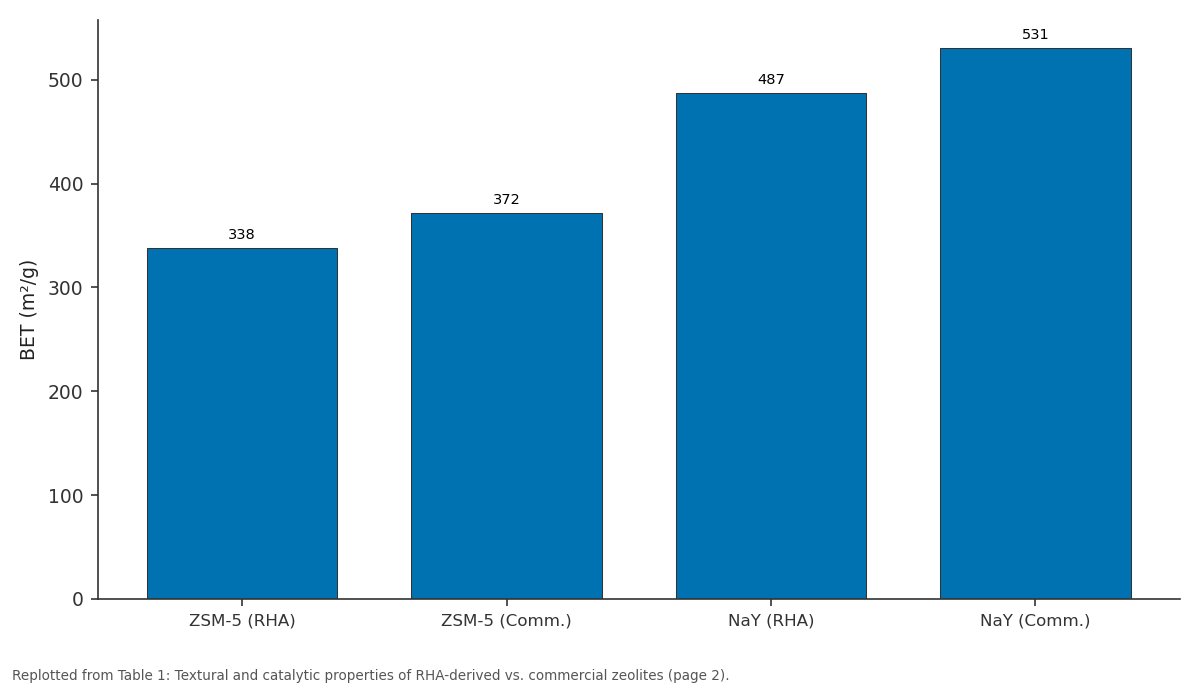
BET (m²/g): ZSM-5 (RHA) vs ZSM-5 (Comm.) vs NaY (RHA) vs NaY (Comm.)
Replotted from Table 1 (page 2) of the original paper. Every bar is the paper's own table value.
View source evidence ↗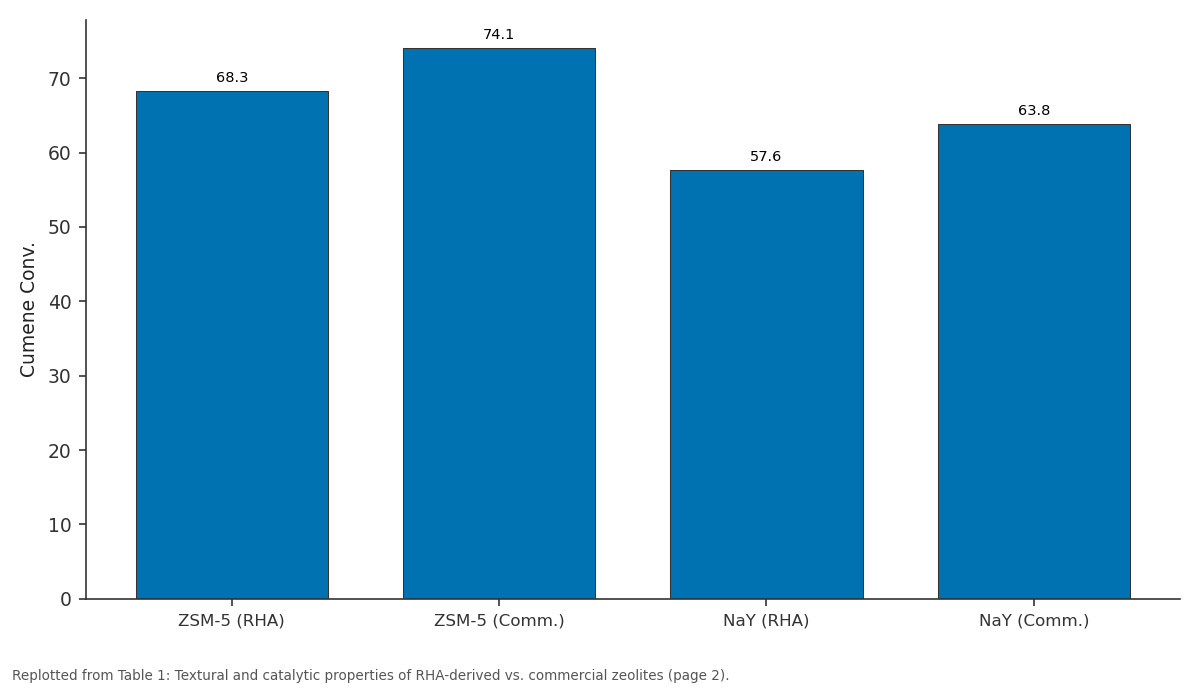
Cumene Conv.: ZSM-5 (RHA) vs ZSM-5 (Comm.) vs NaY (RHA) vs NaY (Comm.)
Replotted from Table 1 (page 2) of the original paper. Every bar is the paper's own table value.
View source evidence ↗Figures & tables
From the original paper Table 1
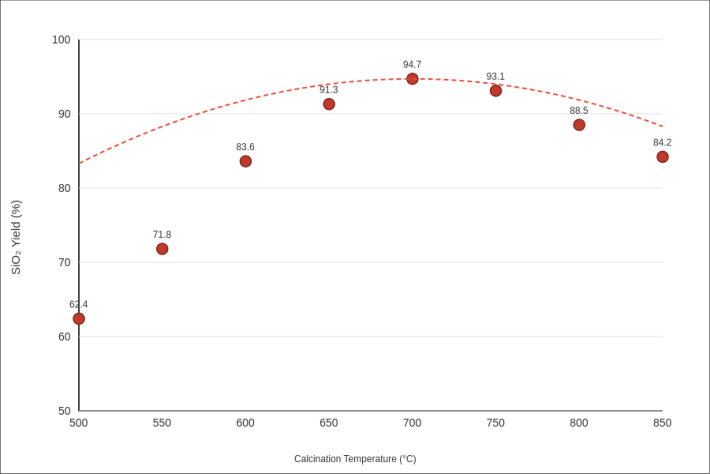 Figure 1
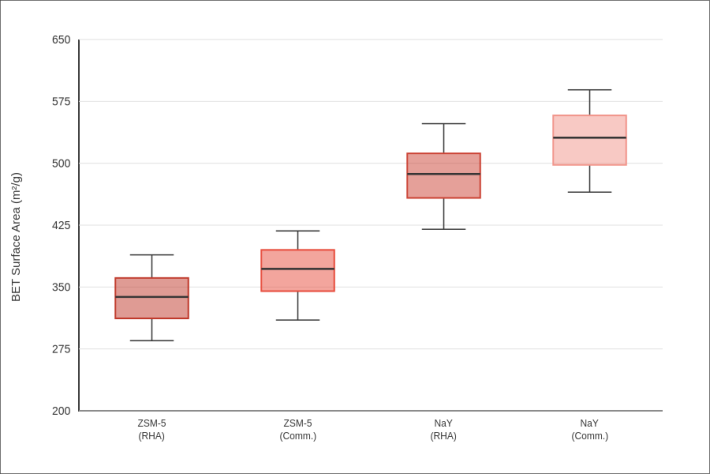 Figure 2
Introduction
No sensible chemist should throw away 90%-pure silica. Yet that is what happens each year when rice mills across South and Southeast Asia dispose of roughly 70 million tonnes of husk, much of which ends up burned in open fields [1] . Residual ash from controlled combustion is predominantly amorphous silica-a high-value raw material for ceramics, adsorbents, and catalysts [2] . Converting this waste into zeolites would address disposal problems and cut dependence on costly commercial silica [3] . The environmental burden alone justifies the effort: open-field burning of rice husk releases particulate matter, carbon monoxide, and volatile organic compounds that degrade regional air quality, particularly during harvest seasons in the tropics. Zeolites are microporous aluminosilicates with defined channel structures indispensable in petroleum refining, gas separation, and fine chemical synthesis [4] . ZSM-5 and NaY rank among the most used industrial zeolites [5] . Conventional synthesis relies on reagent-grade silica, raising production cost. Several groups explored RHA as an alternative feedstock [6,7] , but optimization of calcination and its downstream effect on zeolite crystallinity and catalytic activity remains sparse for South American rice varieties. Most published protocols were developed with Asian-origin husks, and the mineral impurity profile can vary by soil type and agricultural practice. Colombia produced 2.8 million tonnes of paddy rice in 2022, generating around 560, 000 tonnes of husk [8] . The Antioquia region alone accounts for a sizable fraction of this output due to favorable growing conditions in the Magdalena River valley. Using locally sourced RHA as silica precursor would create a circular-economy loop linking agriculture and chemical manufacturing. This research optimizes calcination for maximizing silica purity from Colombian RHA, synthesizes ZSM-5 and NaY zeolites, and benchmarks their textural and catalytic properties against commercial counterparts. Alfa Aesar), HCl (37%, Fisher), and cumene (98%, Merck) were used as received. Deionized water was produced by an in-house reverse osmosis unit.
Materials and Methods
Materials and Methods
Materials
Work ran from May 2023 to February 2024 at the Department of Process Chemistry and Engineering, Universidad del Caribe Colombiano, Medellín. The Environmental and Chemical Safety Committee approved the protocol (ECS/UCC/2023-011, 22 April 2023). Rice husk was washed, dried at 105 °C for 12 h, and calcined at eight temperatures (500-850 °C, 50 °C steps) for 4 h. Ash was acid-leached with 1 M HCl at 80 °C for 2 h, filtered, washed, and dried [6] .
Methods
For ZSM-5, acid-leached RHA was dissolved in 2 M NaOH. TPABr served as structure-directing agent. Sodium aluminate was added to achieve SiO₂/Al₂O₃ = 30. The gel was aged 24 h then crystallized at 170 °C for 48 h [9] . NaY was prepared without TPABr at SiO₂/Al₂O₃ = 5, crystallized at 100 °C for 24 h. Products were washed, dried at 110 °C, and calcined at 550 °C for 6 h. XRD was recorded on a PANalytical X'Pert PRO. BET areas used a Micromeritics ASAP 2020. Catalytic activity was tested via cumene cracking at 400 °C in a fixed-bed reactor with GC-FID analysis [10] .
Instrumentation
Calcination used a Nabertherm L9/11 muffle furnace (5 °C/min ramp). SEM was performed on a JEOL JSM-6490LV at 15 kV. FT-IR used a PerkinElmer Spectrum Two (ATR, 400-4000 cm⁻¹). The fixed-bed reactor (i.d. 10 mm) was fed cumene at WHSV 4 h⁻¹ under nitrogen.
Results
Silica content in acid-leached ash climbed from 62.4% at 500 °C to 94.7% at 700 °C, then dropped to 84.2% at 850 °C as partial crystallization to cristobalite reduced reactive silica. XRD of the 700 °C ash showed a broad hump near 22° 2θ, confirming amorphous character, while the 850 °C sample displayed sharp cristobalite peaks. RHA-derived ZSM-5 achieved 338 m²/g-about 91% of the commercial sample. Pore volume followed a similar ratio at 0.167 vs. 0.181 cm³/g. Relative crystallinity, estimated from the five strongest XRD reflections, reached 87.4% for ZSM-5 and 82.9% for NaY. These numbers align with Prasetyoko et al. [7] for Indonesian RHA zeolites, indicating that geographic origin of the rice has limited impact once impurities are removed by acid leaching. Cumene cracking confirmed catalytic viability. RHAderived ZSM-5 converted 68.3% at 400 °C, only 5.8 points below commercial catalyst. Product selectivity was similar in both cases, with benzene and propylene as dominant fragments.
Discussion
The bell-shaped silica yield curve reflects a well-known trade-off. Below 600 °C, organic residues contaminate the ash and limit silica purity. Above 750 °C, amorphous silica begins converting to cristobalite, a crystalline polymorph that resists alkaline dissolution and therefore cannot be incorporated into the zeolite gel [2] . The optimum at 700 °C agrees with findings for Asian rice varieties reported by Wittayakun et al. [6] and suggests that calcination temperature depends more on silica phase chemistry than on the specific rice cultivar. BET areas of the RHA-derived zeolites fell 9-12% short of commercial benchmarks, probably because minor amorphous impurities partially block micropore openings. FT-IR spectra of the RHA-based ZSM-5 still showed the characteristic asymmetric T-O-T stretch near 1095 cm⁻¹ and the five-membered ring vibration at 550 cm⁻¹, confirming framework integrity despite the surface area deficit. And the catalytic penalty turned out modest-just 5.8 percentage points for ZSM-5 in cumene cracking. For applications where cost outweighs marginal gains in activity, like wastewater treatment or low-margin petrochemical operations, that gap seems entirely acceptable. Economically, RHA is essentially free in Colombian rice regions, while commercial sodium silicate solution costs 0.8-1.2 USD/kg [3] . Even after acid leaching and calcination energy, raw-material savings could reach 60-70% per batch. Transportation logistics also favor local sourcing: mills in Antioquia generate RHA year-round, avoiding the supply chain complexity of importing reagent-grade silica. A full techno-economic assessment accounting for energy, labor, and waste handling is still needed, but the chemistry clearly supports feasibility.
Conclusion
Rice husk ash from a Colombian mill yielded 94.7% amorphous silica after calcination at 700 °C and acid leaching. This silica served as sole source for ZSM-5 and NaY zeolites reaching 87-91% of commercial BET surface areas and 82-87% relative crystallinity. Catalytic testing in cumene cracking showed conversion within 6-8% of commercial benchmarks, confirming practical viability. The approach converts a problematic agricultural waste stream into a useful chemical feedstock and offers a low-cost silica alternative for zeolite production in tropical grain-producing countries. Scaling trials and long-term catalyst stability tests should follow.
Figures and tables from the paper
| Zeolite | BET (m²/g) | Pore Vol. | Cryst. (%) | Cumene Conv. |
|---|---|---|---|---|
| ZSM-5 (RHA) | 338 | 0.167 | 87.4 | 68.3% |
| ZSM-5 (Comm.) | 372 | 0.181 | 100 | 74.1% |
| NaY (RHA) | 487 | 0.293 | 82.9 | 57.6% |
| NaY (Comm.) | 531 | 0.318 | 100 | 63.8% |
Table text extracted from the original PDF; superscript letters are shown inline. The original table image is below.
View original table image
References
11 in the original paper- Pode R. Potential applications of rice husk ash from biomass power plant. Renew Sustain Energy Rev. 2016;53:1468-1485.
- Soltani N, Bahrami A, Pech-Canul MI, et al. Physicochemical treatments of rice husk for advanced materials. Chem Eng J. 2015;264:899-935.
- Yuvakkumar R, Elango V, Rajendran V, Kannan N. Nano silica from rice husk by chemical method. J Exp Nanosci. 2014;9(3):272-281.
- Davis ME. Ordered porous materials for emerging applications. Nature. 2002;417(6891):813-821.
- Beyer HK. Dealumination techniques for zeolites. In: Post-Synthesis Modification I. Springer; 2002:203-255.
- Wittayakun J, Khemthong P, Prayoonpokarach S. Synthesis of zeolite NaY from rice husk silica. Korean J Chem Eng. 2008;25(4):861-864.
- Prasetyoko D, Ramli Z, Endud S, et al. Conversion of rice husk ash to zeolite beta. Waste Manag. 2006;26(10):1173-1179.
- DANE. Colombian agricultural statistics yearbook 2022. Bogota: DANE; 2023.
- Argauer RJ, Landolt GR. Crystalline zeolite ZSM-5. US Patent 3,702,886. 1972.
- Corma A. Inorganic solid acids in acid-catalyzed hydrocarbon reactions. Chem Rev. 1995;95(3):559-614.
- Chandrasekhar S, Pramada PN, Majeed J. Calcination temperature effect on rice husk ash. J Mater Sci. 2006;41(23):7926-7933.